

P0446 on 2000-2006 Chevrolet Tahoe: EVAP Vent System Causes and Fixes
On a 2000-2006 Tahoe, code P0446 is almost always caused by a faulty or clogged EVAP vent valve solenoid located near the spare tire. This part is highly susceptible to dirt and debris. Replacing this part, often with an updated kit that relocates the filter, is a common, DIY-friendly fix costing around $25-$60 for the part.
- P0446 on a 2000-2006 Tahoe almost always points to a problem with the EVAP vent valve solenoid, not the gas cap or purge valve.
- The most common symptom, besides the Check Engine Light, is the gas pump shutting off repeatedly during fueling.
- The faulty part is located above the spare tire and is a straightforward DIY replacement for most owners with basic tools.
- To prevent the issue from recurring, consider using an updated vent valve kit that relocates the air filter to a cleaner location.
- This is an emissions-related fault and will not harm your engine, but it will cause you to fail an emissions test.
What's Unique About the 2000-2006 Chevrolet Tahoe
On this generation of GM trucks and SUVs (GMT800 platform), the P0446 code is notoriously common. It is frequently caused by the original EVAP vent valve solenoid's design and location, which is susceptible to dirt, dust, and even spider webs clogging the mechanism. GM released several Technical Service Bulletins (TSBs) acknowledging this issue on vehicles operated in dusty environments. The official fix involves replacing the original vent valve with an updated part that includes a filter box relocated to a less exposed area (e.g., higher on the frame rail or near the transmission) to prevent future blockages.
Generation note: The 2000 model year was a transition year. This guide primarily applies to the dominant GMT800 platform (2000-2006). The EVAP system components are largely the same across this range, but always verify the part location for your specific model year. The issue is shared across nearly all GMT800 platform vehicles.
Symptoms You May Notice
- Check Engine Light is on
- Difficulty filling the fuel tank (gas pump clicks off repeatedly)
- A faint fuel odor near the rear of the vehicle
- Reduced fuel efficiency (less common)
- Replacing the gas cap. While a bad gas cap can cause other EVAP codes (like P0455 or P0457), it is not a typical cause for P0446, which points to a vent-side restriction, not a system leak.
- Replacing the EVAP Purge Valve/Solenoid. The purge valve is located in the engine bay and controls vapor flow to the engine. A failure here typically sets other codes (like P0443 or P0496) and is a separate component from the vent valve, which is the primary cause of P0446.
Most Likely Causes
- Faulty or Clogged EVAP Vent Valve Solenoid 🔴 High Probability → Shop Vapor Canister The original part is located near the spare tire and is prone to contamination from road dust, dirt, and debris, causing it to stick closed. Spiders and insects building nests in the vent tube is also a well-documented issue. According to NHTSA ODI #10494422, a dealership confirmed that a restricted or blocked EVAP vent path often requires replacing the vent valve solenoid to clear the check engine light.
How to confirm: Locate the vent valve above the spare tire. You can test it by applying 12V power to its terminals; a healthy solenoid will make an audible click. A scan tool can also command the valve to open and close. Visually inspect the valve and its hoses for blockages. If you remove the valve, it is normally open, so you should be able to blow through it; if you cannot, it is stuck closed.
Typical fix: Replace the EVAP vent valve solenoid. It is highly recommended to replace it with an updated kit that includes a filter box to relocate the air intake to a cleaner location, like higher up the frame rail or near the transmission bell housing, as outlined in TSBs.
Est. part cost: $25 - $70 - Blocked or Pinched EVAP Vent Hose 🟡 Medium Probability Hoses can become clogged with dirt or debris, especially on vehicles used in dusty environments or where insects are prevalent. They can also be pinched or damaged during other repairs or off-roading.
How to confirm: Disconnect the hoses from the vent valve and charcoal canister and attempt to blow compressed air through them to check for restrictions. Visually inspect the entire length of the hoses for kinks, cracks, or damage.
Typical fix: Clear the blockage with compressed air or replace the damaged section of hose.
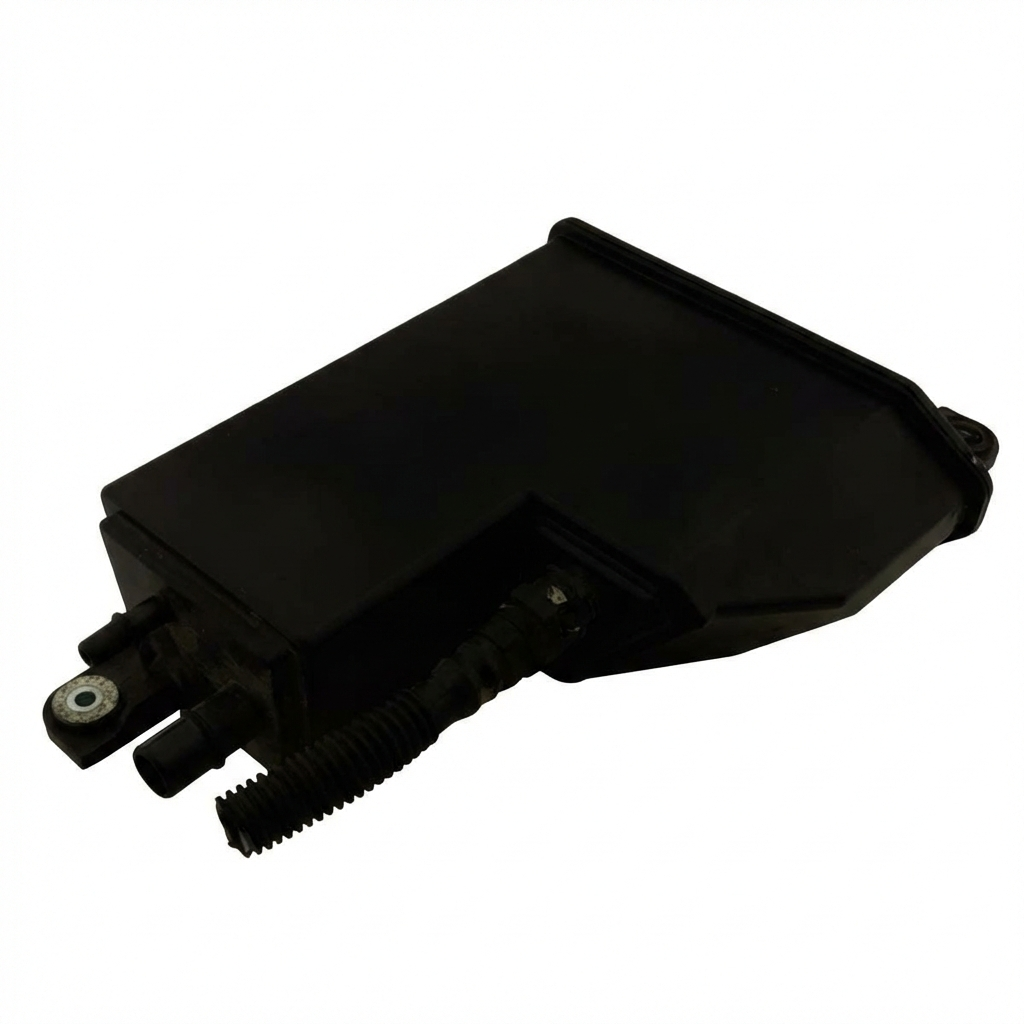
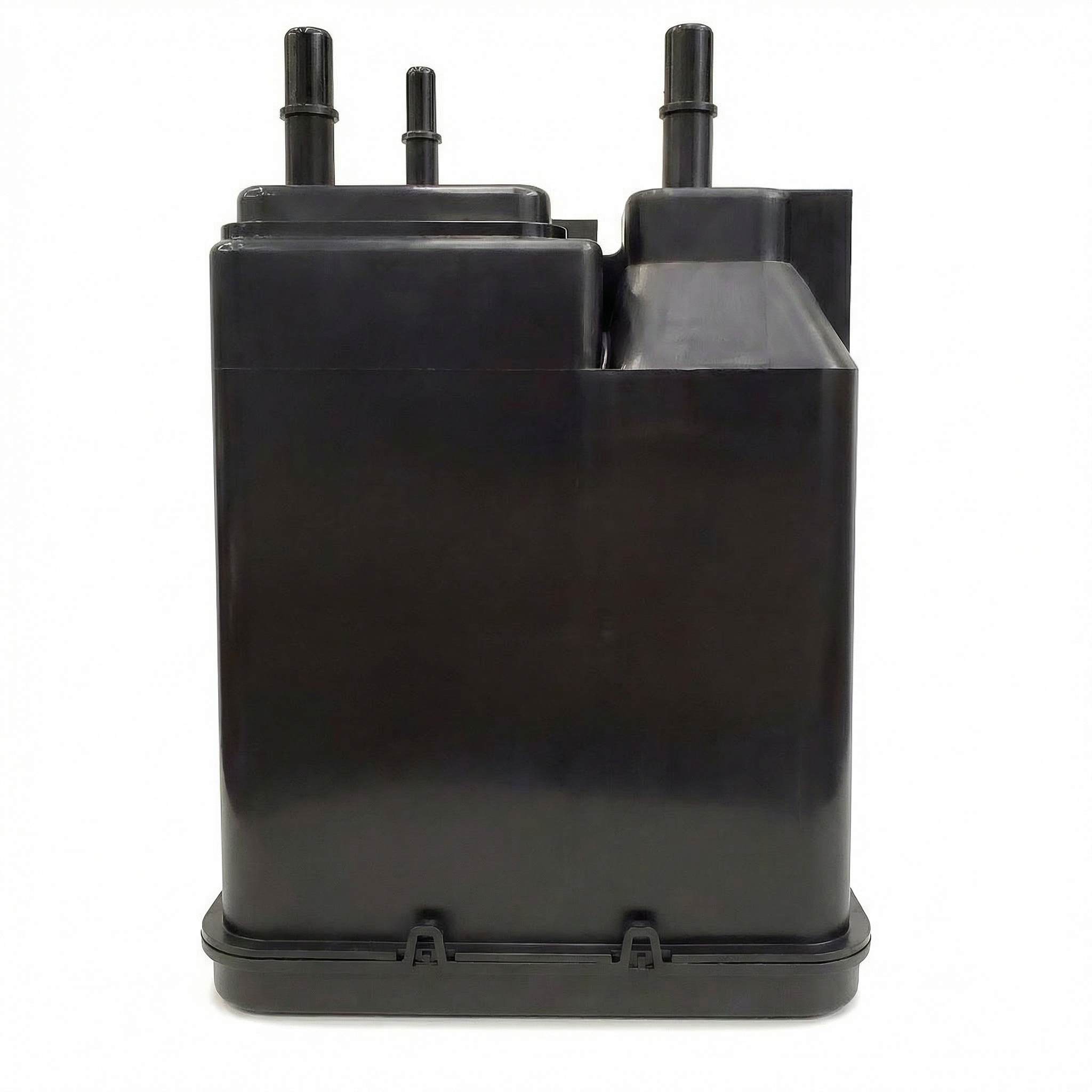
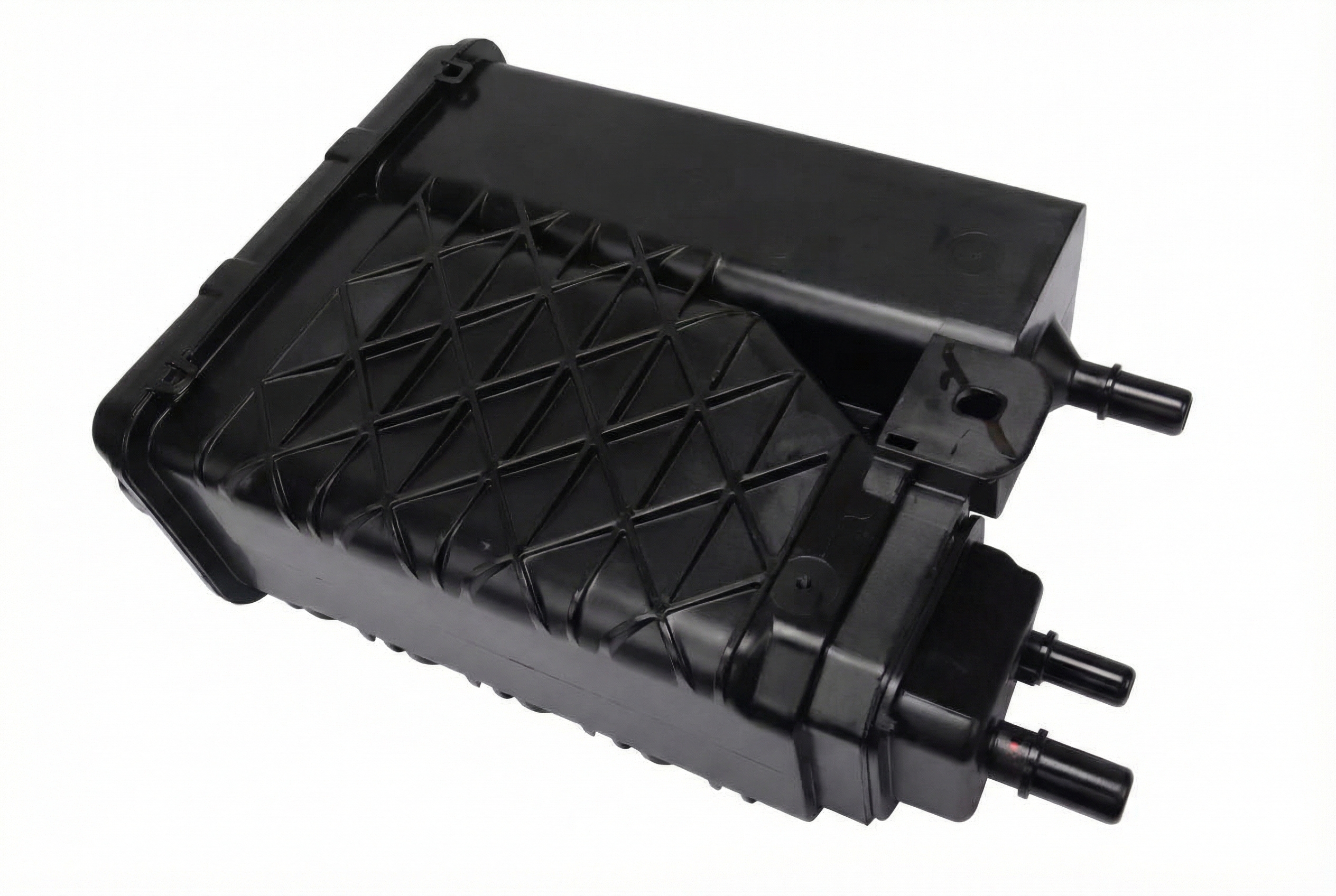
Est. part cost: $10 - $30 - Damaged or Saturated Charcoal Canister ⚪ Low Probability → Shop Vapor Canister Consistently overfilling the fuel tank (topping off after the pump clicks) can force raw fuel into the charcoal canister, saturating the carbon pellets and causing a blockage that can trigger P0446.
How to confirm: The canister will feel heavy, and you may smell raw fuel. If you disconnect the lines, charcoal pellets may fall out, indicating an internal failure. A canister clogged with dirt can also cause this code.
Typical fix: Replace the charcoal canister. This is typically only done if the vent valve replacement does not solve the code.
Est. part cost: $100 - $200 - Wiring Issue at Vent Valve Connector ⚪ Low Probability
How to confirm: Inspect the electrical connector and wiring going to the vent valve for corrosion, breaks, or loose connections. Wires can break inside the insulation right at the connector. Check for 12V power on one wire (typically red/white) and a ground signal from the ECM on the other (typically white) with the key on.
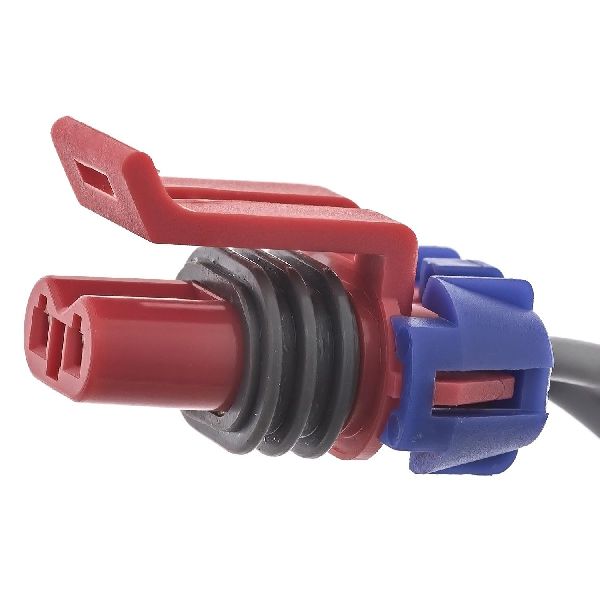
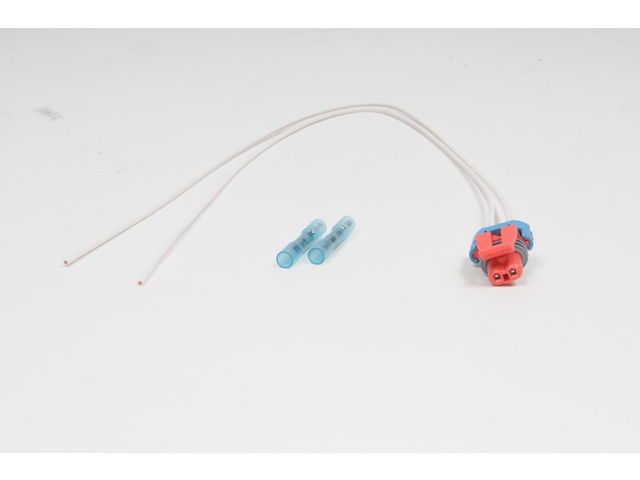
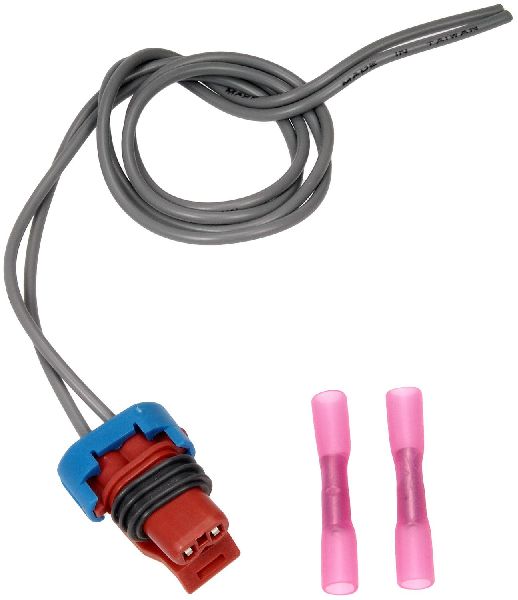
Typical fix: Repair the damaged wiring or replace the connector pigtail. Sometimes the updated vent valve requires a new connector harness adapter.
Est. part cost: $15 - $40
Rare But Worth Checking
- Faulty Fuel Tank Pressure (FTP) Sensor: → Shop Fuel Tank This is rare for a P0446 code alone and would usually be accompanied by other codes (like P0452). The sensor can send incorrect data to the ECM, making it think there is a vent restriction when there isn't one. NHTSA ODI #11363765 notes that structural stressing can cause leaks at the tank and fuel pump module connector, which may affect pressure readings.
Diagnosis Steps
- Read the code with an OBD-II scanner to confirm P0446 is present.
- Visually inspect the gas cap to ensure it is tight, but do not replace it as a first step.
- Raise the vehicle and locate the EVAP vent valve solenoid, which is mounted on a bracket near the charcoal canister, usually above the spare tire. Lowering the spare tire is often necessary for access.
- Inspect the vent valve, its electrical connector, and all attached hoses for obvious damage, cracks, or blockages from dirt/debris. Pay close attention to the wiring right at the connector for breaks.
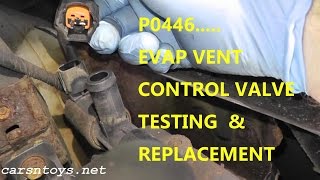
- If possible, use a bidirectional scan tool to command the vent valve to close and open. Listen for an audible click. If it doesn't click, 🎬 See how to test and replace the vent control valve. the solenoid is likely bad.
- If you don't have a scan tool, disconnect the electrical connector. Check for 12V on one pin. Then, apply 12V directly to the solenoid's pins to test for a click. No click means a bad solenoid.
- If the solenoid clicks, disconnect the hoses and blow compressed air through them to check for blockages. Check the vent filter box if present.
- If the solenoid is bad or the hoses are clogged, replace the faulty component. The most common and recommended fix is replacing the vent valve solenoid with the updated relocation kit.
- After the repair, clear the code with the scanner and perform a drive cycle to see if the Check Engine Light returns.
Parts You'll Likely Need
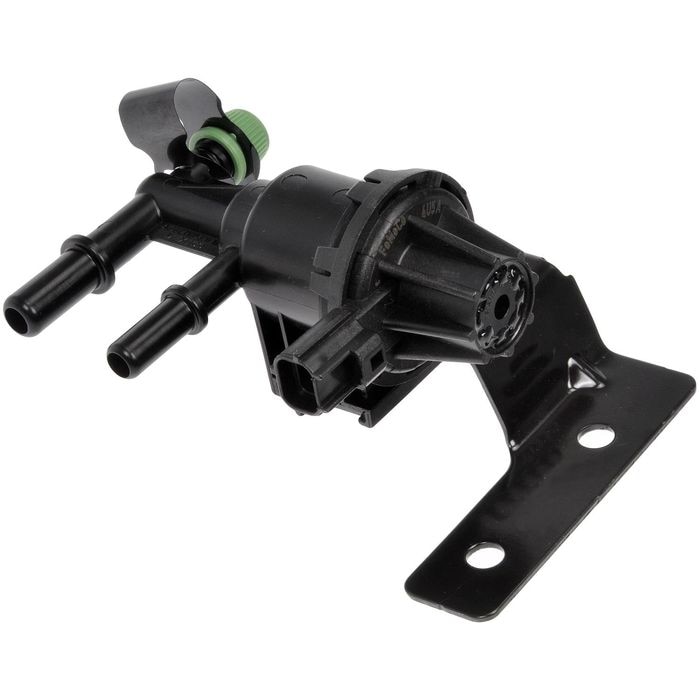
- EVAP Vapor Canister Vent Valve Solenoid
(OEM #ACDelco 214-2149 (GM 25932571))— This is the most frequent failure point for code P0446 on this platform, typically due to getting clogged with dirt and debris.
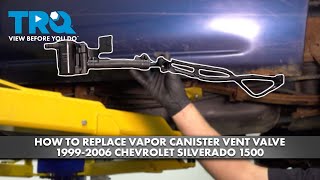
Trusted brands: ACDelco, Dorman (911-032), Standard Motor Products (CVS6) 🎬 Watch this step-by-step guide to replacing the vapor canister valve.
OEM price range: $40-$70
Aftermarket price range: $25-$50 - EVAP Vent Valve Relocation/Filter Kit
(OEM #GM 19207762 (for 1999-2003 models))— This is the official GM-recommended fix to prevent recurrence. It includes a new sealed valve and a filter box that is mounted in a cleaner location, away from road debris.
Trusted brands: ACDelco, Dorman
OEM price range: $50-$80
Aftermarket price range: $40-$60
Related Codes That Often Appear With This One
- P0449 — P0449 (EVAP Vent Solenoid Control Circuit Malfunction) is very similar to P0446 and often points to the same failure of the vent valve solenoid or its wiring. The distinction can be subtle and manufacturer-specific, but for this platform, the diagnosis is virtually identical.
Technical Service Bulletins (TSBs) & Recalls
- 02-06-04-037H: Recommends replacing the EVAP vent valve assembly with a new kit that includes a remote filter box to prevent dust intrusion causing P0446. Details the procedure for routing the new filter up along the frame rail to the transmission area.
- 04-06-04-055A: Specifically addresses P0446 on 2000-2003 models operated in dusty environments, instructing technicians to replace the vent solenoid with a more robust, cleanable version and NOT to replace the canister.
- Bulletin #23-NA-073: Provides repair information to correct customer concerns regarding EVAP DTCs including P0446, specifically noting they are caused by dust intrusion into the evaporative canister.
Platform-Specific Known Issues
- GM issued TSB #02-06-04-037H for this issue on 1999-2007 trucks/SUVs, acknowledging that vehicles operated in dusty environments are prone to P0446 due to dirt intrusion. The fix involves replacing the original vent valve with a new service kit (P/N 19207762 for 1999-2003 models) that includes a sealed valve and a remote filter box to prevent future contamination. The procedure involves routing a new hose along the frame rail to a higher location, often near the transmission.
- A later TSB (23-NA-073) also describes adding an external filter to the EVAP system as a customer-pay alteration to prevent dust intrusion from causing codes like P0446.
- Owner Experience: A user on TahoeYukonForum.com with a 2007 Yukon XL reported P0446 and inability to fill the gas tank. They noted the previous owner drove on gravel roads. After replacing the vent solenoid, they could dump dirt out of the old line, confirming the cause of the clog.
Mechanic-Grade Diagnostic Values
- EVAP Vent Valve Solenoid Coil Resistance — expected: 20 - 50 Ohms. Failure: A reading outside this range, especially an open circuit (infinite resistance) or a short (near zero resistance), indicates a failed solenoid coil.
- Voltage at Vent Valve Connector (Key On, Engine Off) — expected: ~12 Volts (Battery Voltage). Failure: No voltage indicates a problem with the power supply from the fuse block. This should be checked between the power pin (often Red/White) and a known good chassis ground.
- Fuel Tank Pressure (FTP) Sensor Voltage at Atmospheric Pressure — expected: ~1.5 Volts. Failure: A voltage that is stuck high (e.g., 2.2V or higher) or low, and does not change when the gas cap is removed, points to a faulty FTP sensor, even if it doesn't set a specific FTP sensor code.
Scan Tool Commands That Help
- GM Tech2 / High-End Bidirectional Scanner: EVAP Purge/Seal — This function allows the technician to manually command the purge and vent solenoids on and off to seal the EVAP system. It is used to check if the solenoids are responding to commands and to trap smoke or vacuum in the system for leak testing.
- GM Tech2 / High-End Bidirectional Scanner: EVAP Vent Solenoid Test — This is a direct command to cycle the vent solenoid on and off. The technician should listen for an audible click from the solenoid each time it is commanded. Lack of a click indicates a faulty solenoid or an issue in the control circuit.
Wiring & Ground Locations
- EVAP Vent Solenoid Connector — At the EVAP vent solenoid, near the charcoal canister above the spare tire.. The connector itself and the wires leading to it are exposed to road debris and moisture. The power wire is typically Red/White, and the control wire (grounded by the PCM) is typically White. Checking for 12V power and a good ground signal here is a primary diagnostic step.
- Frame Ground (Fuel System) — On the frame rail, typically under the driver's side near the fuel tank area.. A corroded or loose frame ground can cause intermittent electrical issues for multiple components in the rear of the vehicle, including the fuel pump and EVAP system components. Cleaning this ground is good preventative maintenance.
- G103 / G104 — G103 is on the right rear of the engine, G104 is on the left rear of the engine.. These are primary engine-to-chassis grounds. While not directly for the vent solenoid, a poor engine ground can cause a variety of PCM and sensor-related issues, leading to incorrect diagnostics. Ensuring these are clean and tight is crucial for overall system health.
Real Owner Repair Stories
- YouTube channel 'South Main Auto LLC' (Chevy Truck with 5.3L V8 (GMT800 platform)) — Check Engine Light with code P0446. The vent solenoid had already been replaced with the updated relocation kit.
❌ Tried (didn't work) Replacing the EVAP vent solenoid (the problem persisted).
✅ What actually fixed it The Fuel Tank Pressure (FTP) sensor was faulty. It was stuck at a reading of 2.2 volts and would not change, tricking the PCM into thinking the system was not venting correctly. The technician was able to access and replace the FTP sensor without dropping the fuel tank by reaching over the heat shield. - TahoeYukonForum.com user (2007 Yukon SLT) — P0446 code that would return a day or so after being cleared.
❌ Tried (didn't work) Replaced purge valve by the alternator., Replaced gas cap., Replaced vent valve solenoid above the spare tire with a new connector.
✅ What actually fixed it The final fix was replacing the entire charcoal canister. The user suspected it was internally clogged or failing, and after replacing all other common components, this resolved the persistent P0446 code. - NHTSA ODI #10457176 — An owner reported that their vehicle failed emissions testing due to code P0446, described as "EVAP Vent Performance," requiring a visit to a local dealership for diagnosis and service.
"I Checked Everything" — The Actual Cause
- A common scenario for a persistent P0446 after a smoke test passes is a faulty Fuel Tank Pressure (FTP) sensor. The system may hold smoke perfectly, indicating no leaks, but the P0446 is for a *restriction*, not a leak. If the FTP sensor is stuck biased (e.g., reading 2.2V instead of the normal ~1.5V at atmospheric pressure), the PCM will command the vent valve open after a test cycle and expect to see the pressure return to atmospheric. When the sensor's reading doesn't change, the PCM incorrectly concludes the vent path is blocked and sets P0446.
OEM Part Supersession History
19207762→19352776— Updated service kit for 1999-2004 models. This is the complete relocation kit recommended by TSBs.
Heads up: Part number 19207762 was the original relocation kit for early GMT800s. It has been superseded by 19352776. Both kits serve the same purpose of relocating the vent filter.10382105→25932571— Standard replacement vent valve solenoid. This is just the valve itself, not the full relocation kit.
Heads up: 25932571 is the common ACDelco replacement. It has superseded several older numbers including 10382105, 15750484, and 22728634. Always verify fitment with VIN, as some vendors note this part has been redesigned.
Model Year Variations Within This Range
- 1999-2003: TSB 04-06-04-055A specifically calls out these earlier model years for a replacement vent solenoid (P/N 10382105) with an enhanced, cleanable filter, explicitly stating NOT to replace the canister for a P0446 code.
- 2004+: Later models often used a different vent valve design and the relocation kit part numbers can vary. The TSB for the relocation kit (02-06-04-037H) covers a wide range of years, but the specific part number in the TSB (19207762) is listed for 1999-2003 models, implying later years may have had a revised original design or require a different kit.
Diagnostic Flowchart
Real Owner Stories
Aggregated from forums and TSBs cited above. Mileages and costs reflect what owners reported in those sources.
2007 GMC Yukon XL
Symptoms: Experienced code P0446 and the classic symptom of the gas pump constantly clicking off while trying to fill the tank. The vehicle had previously been driven on gravel roads.
What fixed it: Replaced the vent solenoid. During the repair, the owner was able to dump dirt directly out of the old line, confirming a clog caused by gravel road dust.
Source hint: TahoeYukonForum.com - Thread 'P0446 Can't Fill Up Tank'
2004 Chevy Avalanche
Symptoms: Triggered a P0446 EVAP error code. The owner replaced both the purge valve and the vent solenoid, but the code remained.
What fixed it: The persistent code highlighted the need for thorough diagnosis of the wiring and hoses (such as checking for breaks in the insulation at the connector or pinched lines), rather than just replacing parts.
Source hint: CarKiller.com - 'P0446 evap error on 2004 Chevy Avalanche'
Related OBD-II Codes
Frequently Asked Questions
Does TSB 02-06-04-037H apply to my 2000-2006 Chevrolet Tahoe?
Why does the gas pump keep clicking off when I try to fill my Tahoe?
Should I replace the charcoal canister to fix code P0446?
Where is the EVAP vent valve located on the 2000-2006 Tahoe?
Can I just clean the EVAP vent valve instead of replacing it?
Are other GM vehicles prone to this same P0446 issue?
Helpful Videos
Used OEM Parts in Stock
New Aftermarket Parts Available


The information in this article is provided for general reference and educational purposes only. Vehicle specifications, procedures, and part compatibility can vary by production date, trim level, and region. Always consult your vehicle's factory service manual and verify part numbers before purchasing or performing repairs. Safety-critical components such as airbags, seat belts, and braking systems should be installed by a qualified professional.
- Chevrolet Tahoe:
- 🧭 Diagnostic Flowchart
- 🎬 Helpful Videos
- 🛍️ Shop This Part
- What's Unique About the 2000-2006 Chevrolet Tahoe
- Symptoms You May Notice
- Most Likely Causes
- Rare But Worth Checking
- Diagnosis Steps
- Parts You'll Likely Need
- Related Codes That Often Appear With This One
- Technical Service Bulletins (TSBs) & Recalls
- Platform-Specific Known Issues
- Mechanic-Grade Diagnostic Values
- Scan Tool Commands That Help
- Wiring & Ground Locations
- Real Owner Repair Stories
- "I Checked Everything" — The Actual Cause
- OEM Part Supersession History
- Model Year Variations Within This Range
- Real Owner Stories
- 2007 GMC Yukon XL
- 2004 Chevy Avalanche
- Related OBD-II Codes
- Frequently Asked Questions
- 🎟️ Get 5% Off