

P0446 on 2018-2023 Chevrolet Traverse: EVAP Vent System Fixes
Code P0446 on a 2018-2023 Traverse usually points to a faulty EVAP canister vent solenoid or a blockage in the vent system. The most common fix is replacing the vent solenoid, which is often sold as part of the charcoal canister assembly. Driving in dusty areas is a known trigger due to a specific TSB.
- P0446 on a 2018-2023 Traverse points to a problem with the EVAP vent system, usually a faulty vent solenoid or a blockage.
- The most common fix is replacing the EVAP vent solenoid, which is located near the fuel tank, not under the hood.
- Before replacing parts, inspect the vent hoses and canister inlet for dirt, debris, or insect nests, especially if you drive in dusty conditions.
- Do not confuse the vent solenoid (near the tank, for P0446) with the purge solenoid (in the engine bay, often for P0496).
- This is a manageable DIY repair for those comfortable working under the vehicle, but accessing the part may require lowering the fuel tank slightly in some cases.
What's Unique About the 2018-2023 Chevrolet Traverse
The second-generation Traverse (2018-present) shares its C1XX platform with other GM vehicles like the Buick Enclave and GMC Acadia, which experience the same issue. For this code, a common issue across these models can be the vent solenoid itself, which is located on the charcoal canister near the fuel tank. GM has also issued a technical service bulletin (23-NA-073) for vehicles operated in dusty environments, where dust intrusion can clog the EVAP canister and vent solenoid, triggering this code. The official fix involves retrofitting a remote filter kit to move the air intake to a cleaner location. While there is a well-known Special Coverage program (N232395300) for the purge valve (P0496) on 2019 models, P0446 is more directly related to the vent valve at the rear of the vehicle.
Symptoms You May Notice
- Check Engine Light is on
- Possible fuel odor near the rear of the vehicle.
- Difficulty refueling (the fuel nozzle clicks off repeatedly before the tank is full).
- Failed emissions test
- Replacing the gas cap. While a loose or faulty gas cap can cause other EVAP codes (like P0455 for a large leak), it is not a typical cause for a P0446 vent restriction code.
- Replacing the EVAP purge valve/solenoid under the hood. The purge valve (often related to code P0496) is a different component from the vent valve/solenoid, which is located near the fuel tank. Confusing the two is a very common mistake.
Most Likely Causes
- Faulty EVAP Vent Solenoid 🔴 High Probability → Shop Vapor Canister The vent solenoid is a common failure point on many GM vehicles. It is an electromechanical valve that can fail electrically or become mechanically stuck open or closed due to age, debris, or internal wear.
How to confirm: Use a capable OBD-II scanner to command the vent solenoid open and closed. You should hear a clicking sound from the rear of the vehicle near the canister. You can also remove the solenoid and apply 12V directly to its pins to test its function. If it doesn't click or is stuck, it needs replacement.
Typical fix: Replace the EVAP vent solenoid. On the Traverse, this part is attached to the charcoal canister near the fuel tank, just forward of the driver's side rear wheel. It can be replaced separately from the canister.
Est. part cost: $30-$80 - Clogged or Blocked EVAP Canister or Vent Hose (Dust Intrusion) 🟡 Medium Probability → Shop Vapor Canister Per TSB 23-NA-073, vehicles operated on dusty or gravel roads are prone to ingesting dust through the EVAP system's fresh air intake. This dust clogs the vent solenoid, filter, and canister, causing a restriction that triggers P0446.
How to confirm: Visually inspect the vent hoses and the canister's fresh air inlet for blockages like dirt, mud dauber nests, or spider webs. If the vehicle is frequently driven on dirt roads, this is a very likely cause. Check if the filter relocation kit from the TSB has been installed.
Typical fix: If clogged with dust, the official fix is to install the EVAP Fresh Air Vent Relocation Kit (P/N 85597510) per TSB 23-NA-073. This moves the intake to a cleaner area near the fuel filler neck. If the canister itself is saturated with fuel or internally blocked with charcoal pellets, the entire canister assembly must be replaced.
Est. part cost: $50-$300 - Damaged Wiring or Electrical Connector ⚪ Low Probability
How to confirm: Visually inspect the wiring harness leading to the vent solenoid for any signs of damage, corrosion, or loose connections. Use a multimeter to check for 12V power and ground at the connector with the key on.
Typical fix: Repair the damaged section of the wiring harness or clean/replace the corroded connector.
Est. part cost: $10-$50
Rare But Worth Checking
- Faulty Fuel Tank Pressure (FTP) Sensor: → Shop Fuel Tank While less common for P0446 specifically, a faulty FTP sensor can provide incorrect readings to the ECU, leading it to misinterpret the EVAP system's state and potentially trigger this code. This is more likely if other EVAP codes are also present.
- Cracked or Damaged Charcoal Canister: → Shop Vapor Canister A physical crack in the canister housing can cause a leak, but it can also allow debris to enter and cause a restriction, potentially leading to a P0446 code. This usually requires replacement of the entire canister assembly.
Diagnosis Steps
- Read the code with an OBD-II scanner and check for any other pending or active codes.
- Visually inspect the gas cap to ensure it is tight and the seal is intact, although this is an unlikely cause.
- Locate the EVAP canister and vent solenoid near the fuel tank, typically just ahead of the driver-side rear wheel.
- Inspect the vent hoses for any cracks, kinks, or obvious blockages from dirt or debris. Pay close attention to the fresh air intake filter box.
- Check if the vehicle has the filter relocation kit from TSB 23-NA-073 installed. If so, inspect the remote filter (often near the fuel filler neck) for clogging.
- Inspect the electrical connector at the vent solenoid for corrosion or damage. Ensure it is securely plugged in.
- If you have a bidirectional scanner, command the vent solenoid to close. Attempt to blow low-pressure air through the vent hose; it should be blocked. Command it to open; you should be able to blow air through.
- If you do not have a bidirectional scanner, remove the solenoid and test it by applying 12V power and ground to its terminals to see if it actuates (clicks).
- If the solenoid tests good, the problem is likely a blockage in the canister itself or a wiring issue. Check for power and ground at the solenoid connector.
- If the solenoid is faulty or the canister is clogged, replace the necessary component.
Parts You'll Likely Need
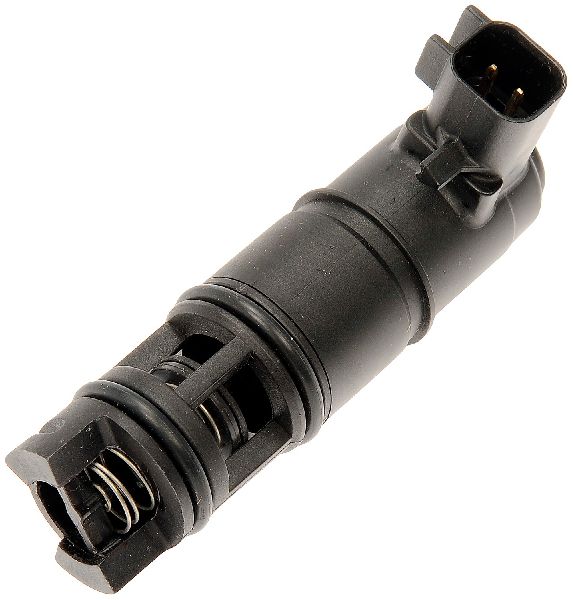
- EVAP Canister Vent Valve / Solenoid
(OEM #84707391 (Supersedes 85123399))— This solenoid is the most common failure point for code P0446. It is an electromechanical part that can fail electrically or become mechanically stuck.
Trusted brands: ACDelco, GM Genuine Parts, Dorman
OEM price range: $40-$80
Aftermarket price range: $25-$50 - EVAP Vapor Canister
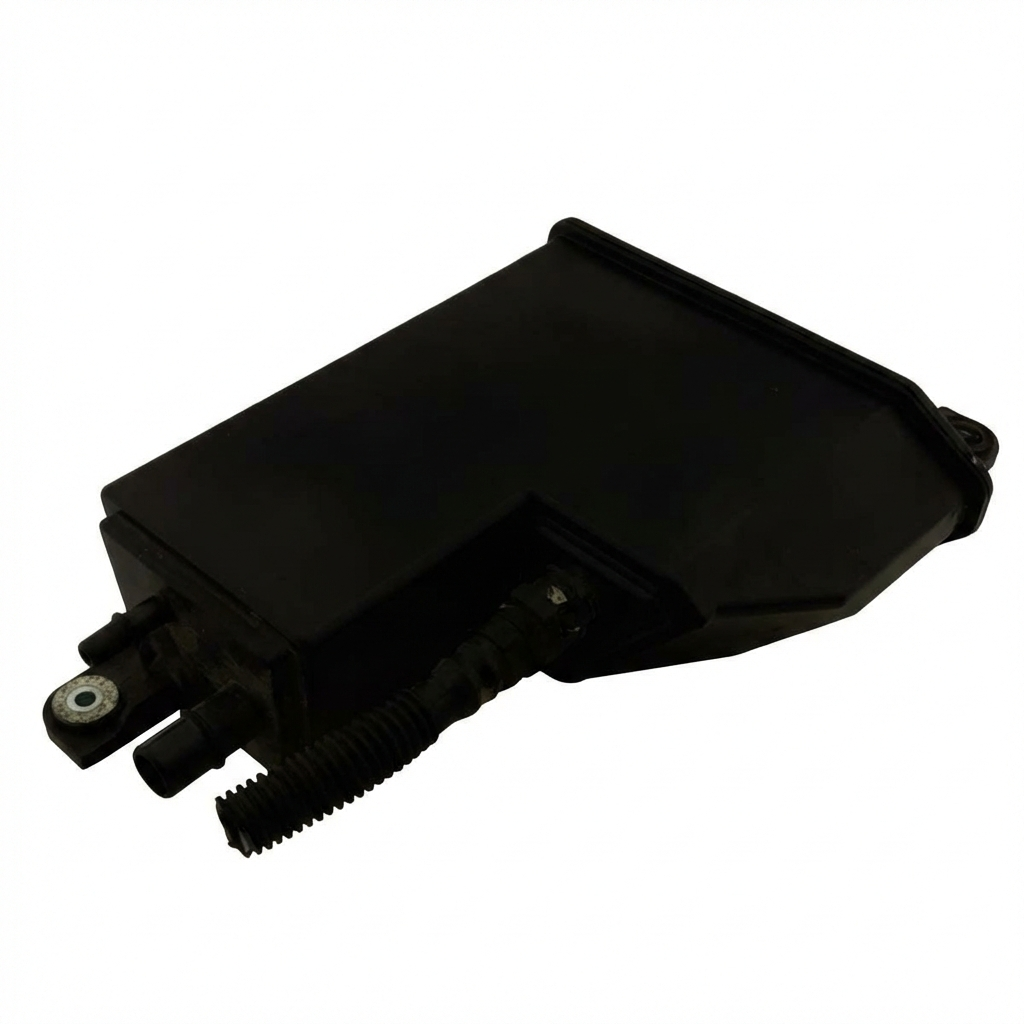
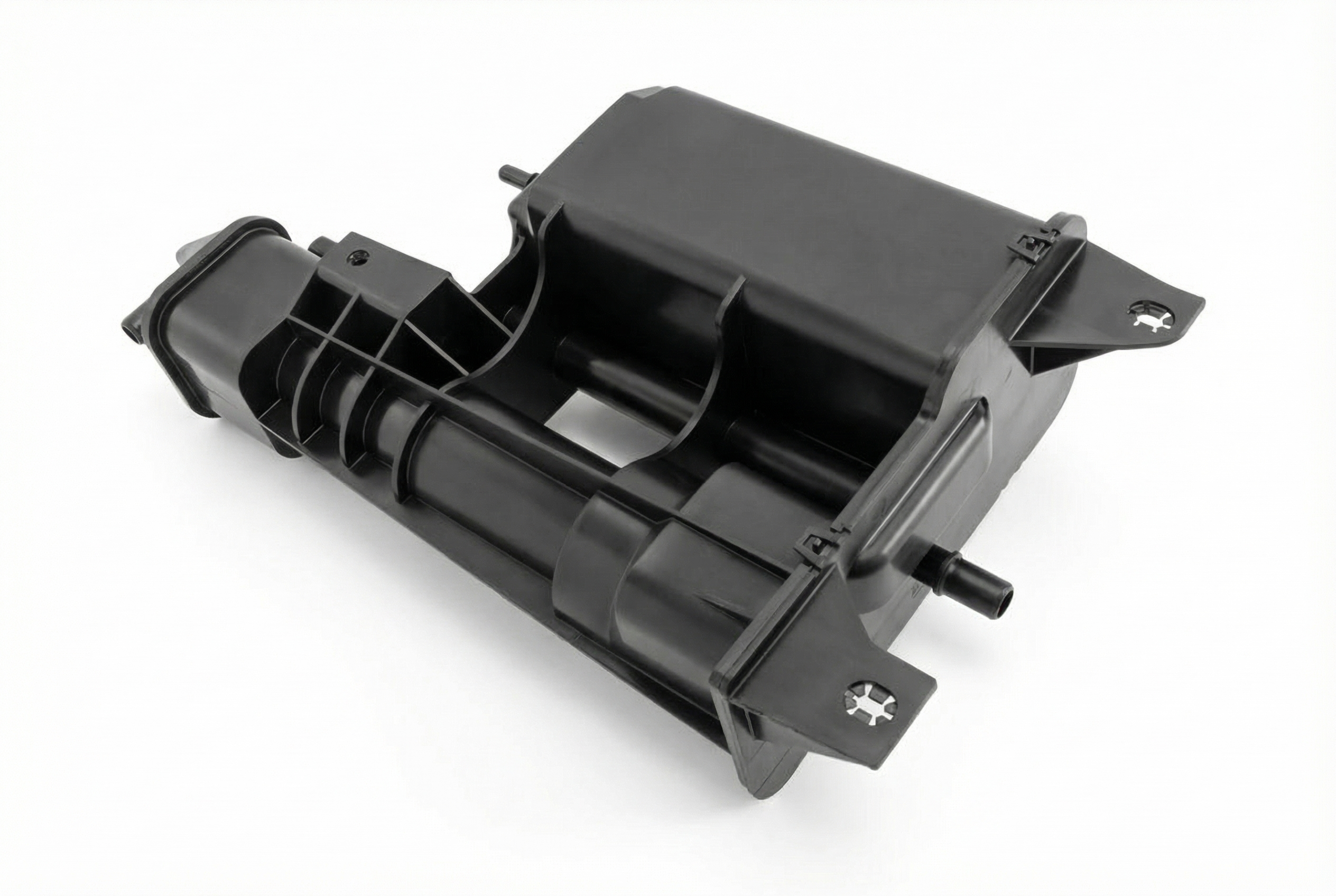
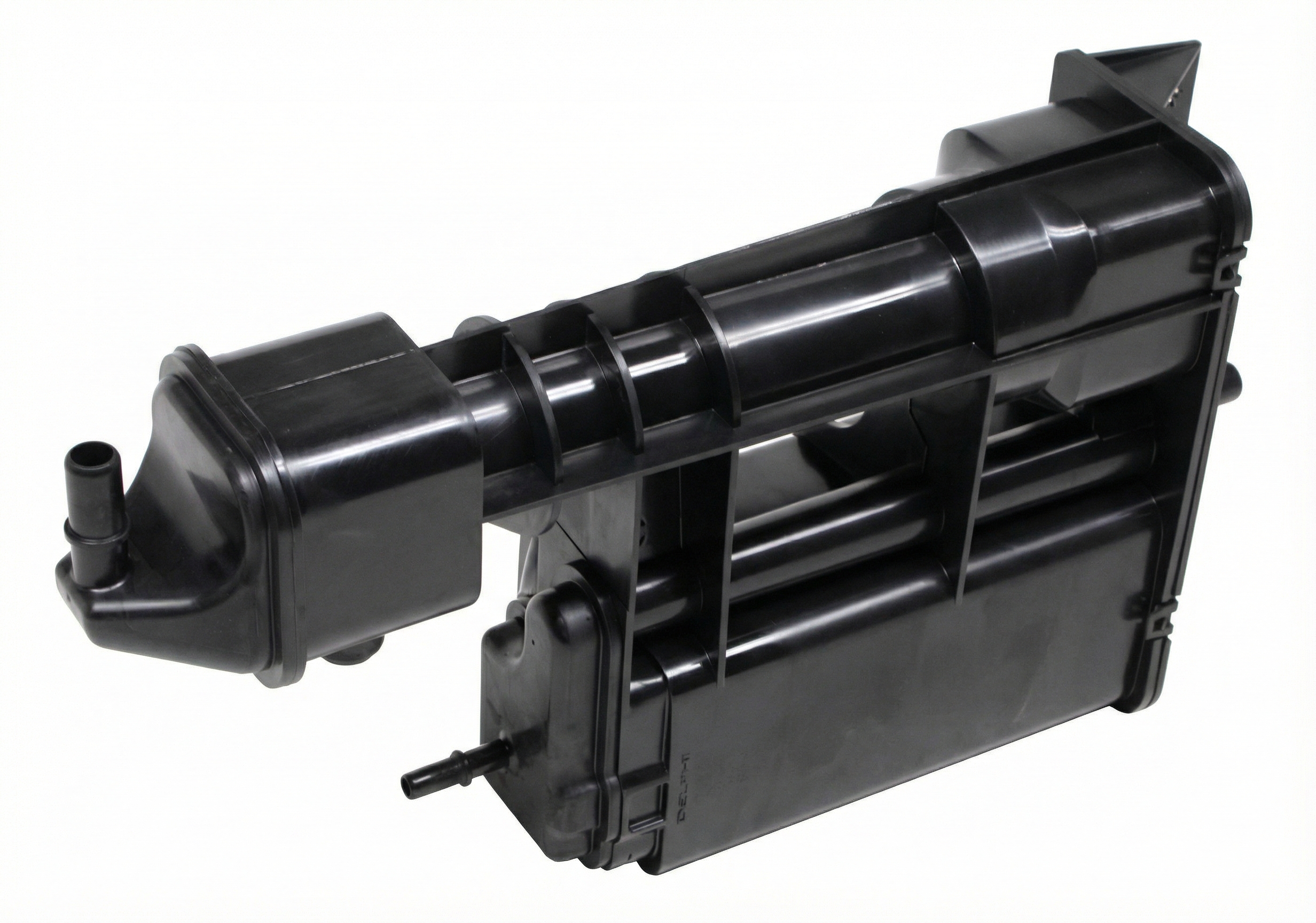
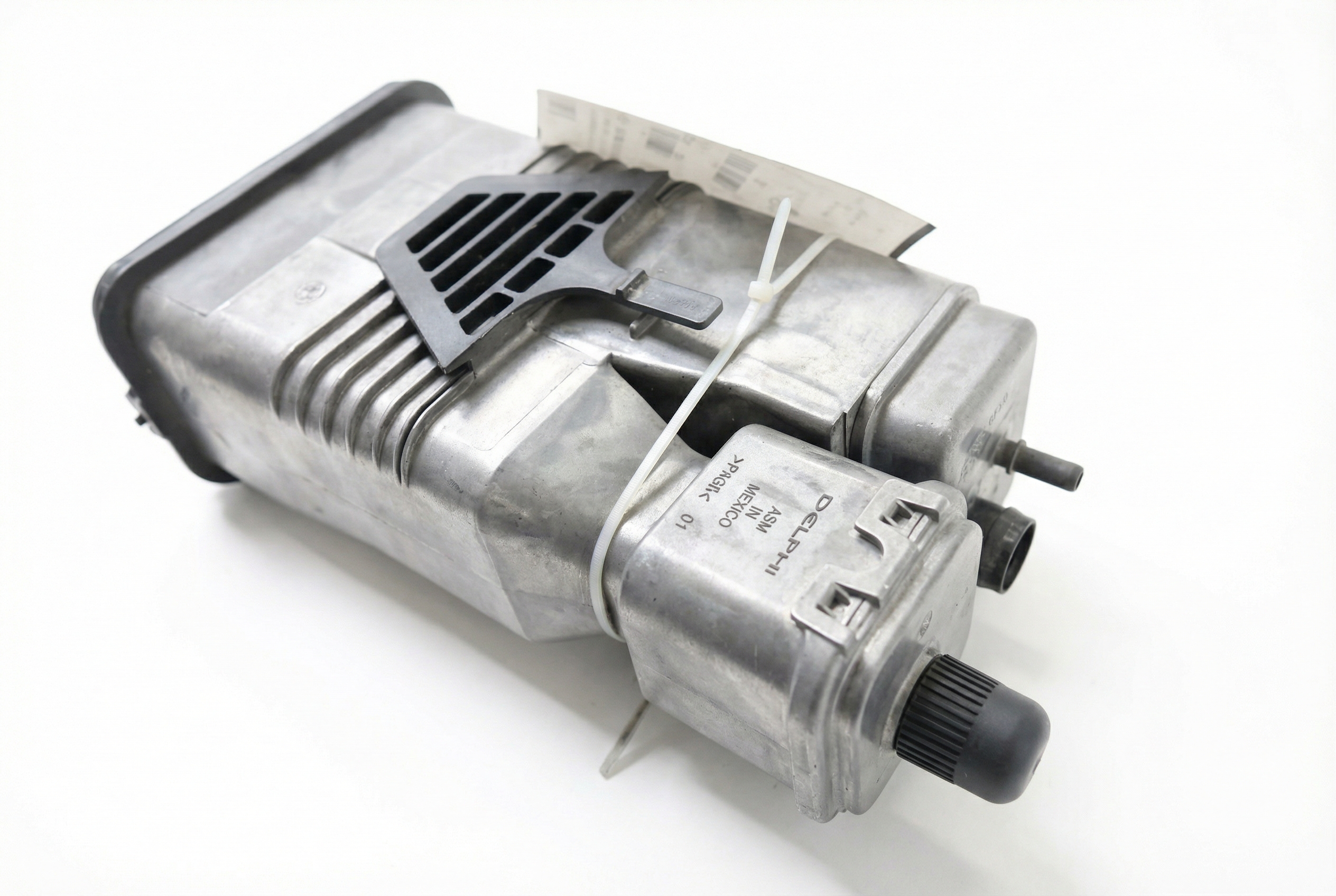
(OEM #85158838)— Needed if the canister is internally clogged with charcoal pellets, saturated with fuel, or if the vent solenoid is integrated and cannot be purchased separately (though on this model, it is separable).
Trusted brands: ACDelco, GM Genuine Parts
OEM price range: $150-$250
Aftermarket price range: $100-$180 - EVAP Fresh Air Vent Relocation Kit
(OEM #85597510)— Required to fix dust/dirt intrusion per TSB 23-NA-073. Includes a new filter and hose to move the intake to a cleaner location.
Trusted brands: GM Genuine Parts
OEM price range: $50-$70
Related Codes That Often Appear With This One
- P0449 — P0449 is another code for the EVAP Vent Control Circuit. They are very similar, and diagnostic procedures often overlap. Some manufacturers use one code over the other for specific fault conditions, but for GM, they point to the same problem.
- P0442 — If a blockage or faulty vent valve causes other issues during the EVAP system self-test, a small leak code (P0442) could potentially be triggered alongside P0446.
Technical Service Bulletins (TSBs) & Recalls
- 23-NA-073: Addresses EVAP DTCs P0442, P0446, P0455, or P0449 caused by dust intrusion into the canister and vent solenoid.
- PIE0528: This engineering informational bulletin requested information on warranty parts for complete canister assemblies when technicians found DTCs P0442, P0455, P0446, P0449, or P0498.
- N232395300: This is a Special Coverage program extending the warranty on the PURGE valve (related to P0496) on 2019 models to 15 years/150,000 miles. It is a notable EVAP system issue on this platform but is for a different part than P0446.
Platform-Specific Known Issues
- GM issued Technical Service Bulletin 23-NA-073 for some vehicles, including the Traverse, noting that operation in very dusty environments can clog the EVAP canister and vent solenoid, causing codes like P0446. The fix involves retrofitting a filter kit (P/N 85597510) to the vent hose, relocating the intake to the fuel filler neck area.
- An Engineering Information bulletin (EI-10163910-9999) was released for 2019 models to investigate the root cause of P0446 and other EVAP codes, suggesting GM was actively tracking issues with canister assemblies.
Mechanic-Grade Diagnostic Values
- Fuel Tank Pressure (FTP) Sensor Voltage — expected: 1.3V to 1.7V with the gas cap off (vehicle at atmospheric pressure).. Failure: A reading stuck high (e.g., 4.8V) or near zero suggests a faulty sensor or a wiring issue, not necessarily a vent blockage.
- EVAP Vent Solenoid Coil Resistance — expected: 20 to 50 Ohms between the two pins on the solenoid.. Failure: A reading of infinite resistance (Open Loop) means the coil is burned out. A reading of zero would indicate a short.
- EVAP Vent Solenoid Connector Voltage — expected: One wire should have ~12V with the key on, engine off. The other wire is a ground controlled by the PCM.. Failure: Absence of 12V power points to a fuse or wiring issue upstream. Absence of a ground signal when commanded by a scan tool points to a wiring or PCM driver issue.
Scan Tool Commands That Help
- GDS2 / Tech2: EVAP Service Bay Test — This is a guided, automated test to verify a repair and run the EVAP monitor without performing a lengthy drive cycle. It requires specific preconditions like fuel level between 15-85% and a cold engine (e.g., ECT below 70°C/158°F).
- Bidirectional OBD-II Scanner: EVAP Vent Solenoid ON/OFF (or OPEN/CLOSE) — This is a fundamental diagnostic step. Use it to listen for the solenoid's 'click' to confirm it's not seized. Command it closed to perform a smoke test, or command it open to confirm the vent path is clear.
Wiring & Ground Locations
- EVAP Vent Solenoid Connector — At the EVAP vent solenoid, which is mounted to the charcoal canister assembly just forward of the driver's side rear wheel.. This 2-pin connector is the primary test point for electrical diagnosis. One pin should have 12V power (Key On), and the other is the ground control wire from the Engine Control Module (ECM). A fault here can mimic a failed solenoid.
Real Owner Repair Stories
- Diagnostic video on a similar GM truck (Chevy Silverado with P0446) — Check Engine Light with code P0446.
❌ Tried (didn't work) Initial diagnosis pointed towards a vent solenoid or blockage, as is typical for P0446.
✅ What actually fixed it The Fuel Tank Pressure (FTP) sensor was stuck reading 4.8V, even with the gas cap off (it should have been ~1.5V). The ECM interpreted this false high-pressure reading as a vent path restriction. Replacing only the FTP sensor resolved the code. - Colorado-Fans.com forum user (Chevy Colorado (similar EVAP design) driven on dirt roads) — Check Engine Light with code P0446.
❌ Tried (didn't work) Initial inspection of the vent solenoid itself.
✅ What actually fixed it The owner traced the vent hose from the solenoid up towards the fuel filler area and found a small breather filter completely impacted with dirt and dust. After cleaning out a large amount of dirt from the filter and associated lines, the code was resolved. This is a real-world example of the dust intrusion issue described in GM's TSB. - NHTSA ODI #10494422 — An owner reported a check engine light for DTC P0446 (restricted/blocked EVAP vent path). The dealership found a bulletin on the problem and replaced the EVAP vent valve solenoid to resolve the issue.
- NHTSA ODI #10457176 — An owner reported that their vehicle failed an emissions test due to code P0446, described as EVAP vent performance.
"I Checked Everything" — The Actual Cause
- A known pattern on older GM vehicles involves the EVAP system passing a smoke test (no leaks) and a pressure/vacuum hold test, yet still setting a P0446. In one documented case, the root cause was an internally restricted charcoal canister. Loose charcoal pellets were blocking the passages, causing a vent restriction that a smoke test would not identify as a leak. The fix was to replace the entire vapor canister assembly.
- NHTSA ODI #11363765 describes a complex scenario where structural stressing caused leaks at the tank and fuel pump module connector, leading to codes P0446 and P0451, with cracking found in the plastic fuel supply.
When the Usual Fixes Don't Work
- While the most common fixes are the vent solenoid or a clogged filter, a notable number of owners may replace these parts without success. In a documented case on a 2019 Traverse, the owner replaced the vent valve, canister, and purge valve with genuine GM parts, yet the P0446 code persisted. This points towards less common but critical diagnostic paths, such as checking for a faulty Fuel Tank Pressure (FTP) sensor providing false data or a break/short in the wiring harness between the ECM and the vent solenoid.
OEM Part Supersession History
85123399→84707391— Unknown, likely a minor revision for durability or manufacturing improvement.
Diagnostic Flowchart
Other Known Issues on This Vehicle
Issues unrelated to this code that are worth knowing about as an owner of this generation:
- 9-Speed Transmission Shudder 🔴 High — Very common, often appearing between 30,000-60,000 miles. Feels like driving over rumble strips at light throttle. (Ref: TSB 18-NA-355. The official fix is to perform a transmission fluid exchange with a specific fluid (Mobil 1 Synthetic LV ATF HP).)
- 'Shift to Park' Message When in Park 🟠 Medium — Widespread issue where the vehicle doesn't detect it's in Park, preventing it from shutting off and causing battery drain. (Ref: TSB 19-NA-206. The fix involves installing a new jumper harness (P/N 84733196) or replacing the shifter assembly.)
- Faulty EVAP Purge Valve (P0496) 🟠 Medium → Shop Vapor Canister — Extremely common failure, often causing rough idle and hard starting after refueling. (Ref: Special Coverage N232395300 extends the warranty for the purge valve on 2019 models to 15 years/150,000 miles.)
- Auto Start/Stop System Malfunctions 🟡 Low — Frequently reported. Often caused by a weakening AGM battery, a faulty hood latch sensor, or other electrical issues.
Used vs. New Parts: Buying Guide for This Vehicle
When a used part is the smart pick: A used part can be a cost-effective choice for the charcoal canister assembly or vent hoses, provided they are inspected for physical damage. Given the low cost of a new vent solenoid, it is often better to buy that part new.
Donor-vehicle mileage cap: roughly under 80000 miles for the part to have meaningful remaining life.
What to inspect on the donor part:
- Inspect the plastic housing of the canister and solenoid for cracks or brittleness.
- Check the vent solenoid's filter inlet for excessive dirt, mud, or signs of being from a vehicle used heavily on unpaved roads.
- Ensure all hose connection points and electrical connectors are intact and not broken or corroded.
OEM-only on this vehicle (don't cheap out):
- EVAP Fresh Air Vent Relocation Kit (P/N 85597510) - As this is a specific TSB fix, using the genuine GM kit is highly recommended to ensure proper fit and function.
Aftermarket brands forum-validated for this vehicle:
- ACDelco (OEM)
- Dorman
- Standard Motor Products (SMP)
- Wells
Real Owner Stories
Aggregated from forums and TSBs cited above. Mileages and costs reflect what owners reported in those sources.
2019 Chevrolet Traverse
Symptoms: Check engine code P0446 persisted even after replacing the canister, vent valve, and purge valve with genuine GM parts.
What fixed it: The owner's report suggested the issue required further investigation into the wiring harness or a potentially defective new replacement part.
Source hint: r/MechanicAdvice: 2019 Traverse P0446 CANT FIX NEED HELP
2018-2023 Chevrolet Traverse
Symptoms: Code P0446 appeared after frequently driving on dusty gravel roads.
What fixed it: Cleaning or replacing the vent filter and solenoid, often involving the installation of a relocation kit to move the intake to a cleaner area.
Source hint: TraverseForum.com: Multiple threads on P0446/P0449
Related OBD-II Codes
Frequently Asked Questions
Does TSB 23-NA-073 apply to my Chevrolet Traverse if I drive on gravel roads?
Is there a special warranty for EVAP issues on the 2019 Chevrolet Traverse?
Where is the EVAP vent solenoid located on the 2018-2023 Traverse?
Why does the gas pump nozzle keep clicking off when I try to fill my Traverse?
Can I test the vent solenoid myself without a professional scanner?
What part number do I need to fix the dust intrusion issue mentioned in the GM bulletin?
Helpful Videos

Used OEM Parts in Stock
New Aftermarket Parts Available


The information in this article is provided for general reference and educational purposes only. Vehicle specifications, procedures, and part compatibility can vary by production date, trim level, and region. Always consult your vehicle's factory service manual and verify part numbers before purchasing or performing repairs. Safety-critical components such as airbags, seat belts, and braking systems should be installed by a qualified professional.
- Chevrolet Traverse:
- 🧭 Diagnostic Flowchart
- 🎬 Helpful Videos
- 🛍️ Shop This Part
- What's Unique About the 2018-2023 Chevrolet Traverse
- Symptoms You May Notice
- Most Likely Causes
- Rare But Worth Checking
- Diagnosis Steps
- Parts You'll Likely Need
- Related Codes That Often Appear With This One
- Technical Service Bulletins (TSBs) & Recalls
- Platform-Specific Known Issues
- Mechanic-Grade Diagnostic Values
- Scan Tool Commands That Help
- Wiring & Ground Locations
- Real Owner Repair Stories
- "I Checked Everything" — The Actual Cause
- When the Usual Fixes Don't Work
- OEM Part Supersession History
- Other Known Issues on This Vehicle
- Used vs. New Parts: Buying Guide for This Vehicle
- Real Owner Stories
- 2019 Chevrolet Traverse
- 2018-2023 Chevrolet Traverse
- Related OBD-II Codes
- Frequently Asked Questions
- 🎟️ Get 5% Off