

P0446 on 2001-2007 Ford Escape: EVAP Vent Circuit Causes and Fixes
On a 2001-2007 Ford Escape, code P0446 is most often caused by a faulty EVAP vent valve/solenoid located near the fuel tank, which gets stuck or clogged with rust and debris. A very common and tell-tale symptom is the fuel pump nozzle clicking off constantly when trying to fill the gas tank. Expect to pay $50-$100 for a new vent valve, and it's a DIY-friendly fix for many.
- P0446 on your 2001-2007 Escape is almost always linked to the EVAP vent valve or its associated hose near the rear wheel.
- The most obvious symptom, besides the Check Engine Light, is the gas pump repeatedly shutting off during refueling.
- The most likely fix is replacing the vent valve/solenoid, which is a relatively inexpensive part and a manageable DIY repair.
- Do not confuse the vent valve (under the car) with the purge valve (in the engine bay).
- Check the vent hose for blockages from mud or insects before replacing parts.
What's Unique About the 2001-2007 Ford Escape
The first-generation Ford Escape and its platform mates (Mazda Tribute, Mercury Mariner) are well-known for a very specific and frustrating symptom tied to code P0446: extreme difficulty filling the fuel tank. The fuel pump nozzle will click off every few seconds as if the tank is full. This happens because the vent valve, which is supposed to let air out of the tank as fuel goes in, gets stuck closed due to rust, dirt, or internal failure. Owners often notice this refueling issue long before the Check Engine Light comes on. In some cases, owners report taking over 10 minutes to fill the tank.
Symptoms You May Notice
- Check Engine Light is on
- Difficulty filling the fuel tank (gas pump nozzle shuts off repeatedly)
- Audible 'whoosh' sound of air when opening the gas cap (pressure or vacuum buildup)
- Possible faint fuel odor
- Replacing the gas cap. While a bad gas cap can cause other EVAP codes (like P0455 or P0457 for leaks), it is not a typical cause for P0446, which points to a vent circuit/blockage issue. Some Escapes have a capless fuel filler, making this irrelevant.
- Replacing the purge valve/solenoid. The purge valve is located in the engine bay and controls vapor flow to the engine. The vent valve is under the car by the tank. P0446 specifically relates to the vent circuit, not the purge circuit (which has its own codes like P0443). 🎬 Watch: How to replace the purge valve if you have a P0455 code. Confusing the two parts is a common mistake. 🎬 Watch: A mechanic explains why it's the vent valve, not the purge valve.
Most Likely Causes
- Faulty or Clogged EVAP Vent Valve/Solenoid 🔴 High Probability → Shop Vapor Canister The vent valve is located under the vehicle near the rear wheel, making it highly susceptible to rust, dirt, and road debris, which can cause it to seize or clog. The location in the wheel well is noted by owners as a poor design choice, as it can ingest water and mud during heavy rain.
How to confirm: Locate the valve near the charcoal canister under the vehicle, typically on the driver's side. Inspect it for heavy rust or blockages. Disconnect the electrical connector and hoses. The valve should be normally open; try blowing through it. If no air passes, the valve is stuck closed and must be replaced. You can also apply 12V power to the terminals 🎬 See this video for a deep dive into P0446 causes and fixes. to see if it clicks and closes.
Typical fix: Replace the EVAP vent valve/solenoid. They are often inexpensive and accessible for a DIY repair in about an hour.
Est. part cost: $40-$110 - Blocked EVAP Canister Vent Hose 🟡 Medium Probability → Shop Vapor Canister Insects (like spiders) and mud can build nests inside the vent hose, creating a blockage that mimics a failed valve. TSB 07-11-1 was issued for 2005-2008 models to modify the vent line for this reason, specifically in cold climates.
How to confirm: Disconnect the vent hose from the valve and inspect it for obstructions. Use compressed air to blow through it and ensure it's clear. Some owners have found the hose completely caked with mud.
Typical fix: Clear the blockage from the hose. If the hose is cracked or brittle, replace it.
Est. part cost: $10-$30 - Clogged or Saturated Charcoal Canister ⚪ Low Probability → Shop Vapor Canister Repeatedly over-filling the gas tank (topping off after the pump clicks) can force liquid fuel into the charcoal canister, saturating the carbon pellets and causing a blockage. This can lead to charcoal pellets breaking loose and contaminating other EVAP components like the purge valve.
How to confirm: If the vent valve and hoses are clear, the canister itself may be clogged. Disconnect the hoses and check if you can blow a small amount of air through it. If it feels heavy or you see black carbon pellets in the EVAP lines, it's likely failed.
Typical fix: Replace the entire charcoal canister assembly. The vent valve is often sold with the canister on later models, but for this generation, it is typically a separate part.
Est. part cost: $150-$350 - Damaged Wiring or Blown Fuse ⚪ Low Probability
How to confirm: Inspect the wiring harness leading to the vent solenoid for any breaks, corrosion, or loose connections. Use a multimeter to check for 12V power at the connector with the key on. One wire should have constant power, and the other is the control wire that the PCM grounds to activate the solenoid.
Typical fix: Repair the damaged section of wiring or replace the blown fuse.
Est. part cost: $5-$50
Rare But Worth Checking
- Faulty Powertrain Control Module (PCM): This is extremely rare. Only consider this after you have replaced the vent valve and thoroughly tested the wiring circuit and confirmed it is sound. A mechanic diagnosed a bad PCM driver on a 2008 Escape after a new valve didn't fix the code; the PCM was no longer able to provide the ground signal to control the valve.
Diagnosis Steps
- Confirm the Symptoms: Check if you have difficulty filling the gas tank. This is a strong indicator for this specific problem on this vehicle.
- Inspect the Gas Cap: Ensure it is tight and the seal is not cracked. While unlikely to be the cause, it's a free and easy check.
- Visual Inspection Under Vehicle: Safely raise the vehicle. Locate the charcoal canister and vent valve near the rear axle, on the driver's side. Look for obvious signs of damage, heavy rust on the valve, or cracked/disconnected hoses.
- Check for Blockages: Disconnect the vent hose from the valve and check both the hose and the valve's port for dirt, mud, or insect nests. A forum user reported the fresh air hose being 'caked with mud'.
- Test the Vent Valve: Disconnect the electrical connector. The valve should be normally open. Try to blow air through it. If no air passes, the valve is stuck closed and must be replaced.
- Test the Electrical Circuit: If the valve itself seems okay, use a multimeter to check for 12V at the connector with the key on. One pin should have power. Then, connect a test light between the two pins and have a scan tool command the valve closed; the light should illuminate, indicating the PCM is providing a ground signal.
- Consider a Smoke Test: If all components seem to work, a professional smoke test can be performed to find any hard-to-see blockages or cracks in the system. This is usually not necessary as the failure is typically the vent valve itself.
Parts You'll Likely Need
- EVAP Vapor Canister Vent Valve / Solenoid — This is the most common failure point. It gets stuck closed due to rust and debris, causing the P0446 code and refueling problems.
Trusted brands: Motorcraft, Dorman (e.g., 911-216), Standard Motor Products
OEM price range: $80-$120
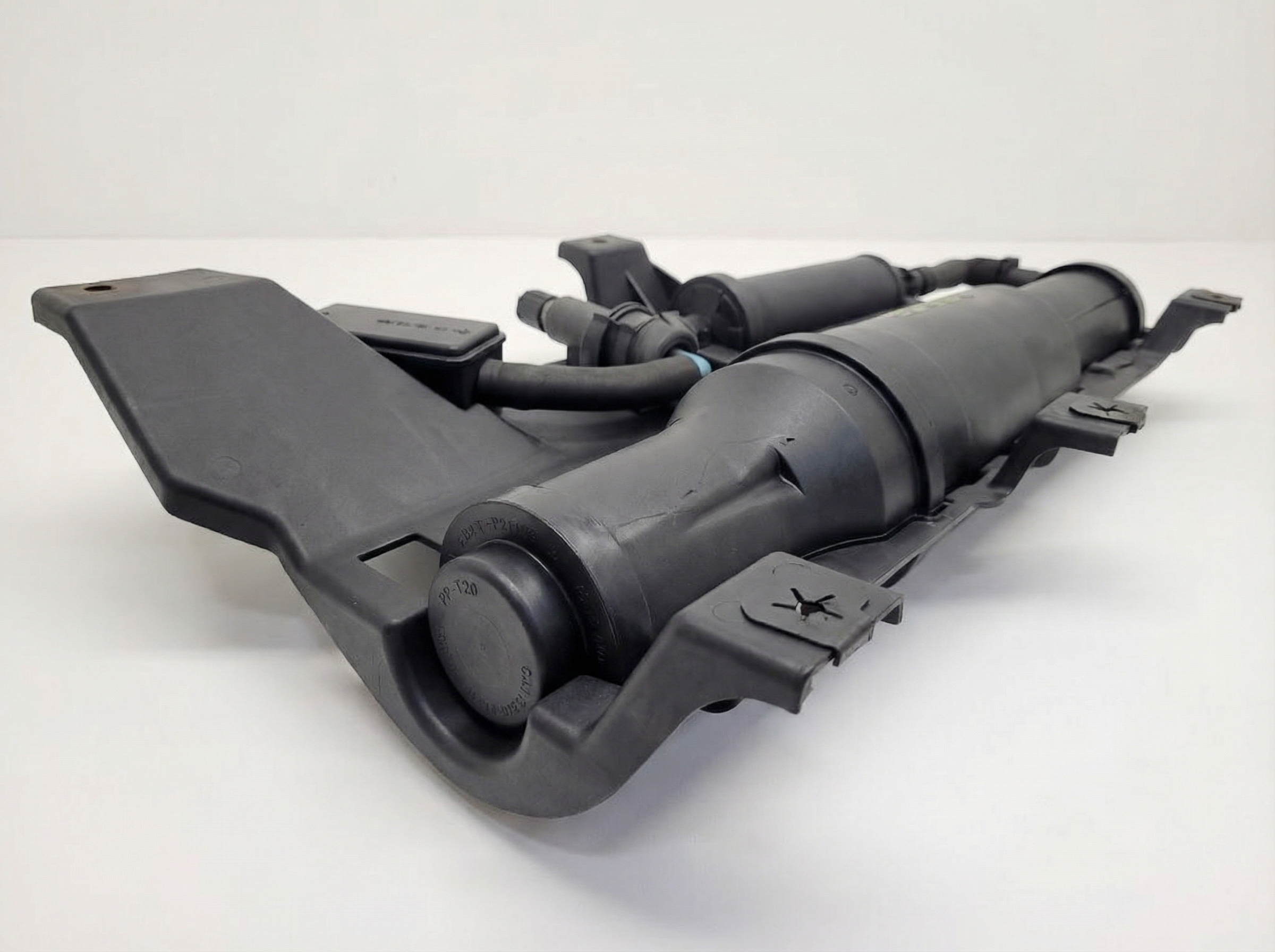
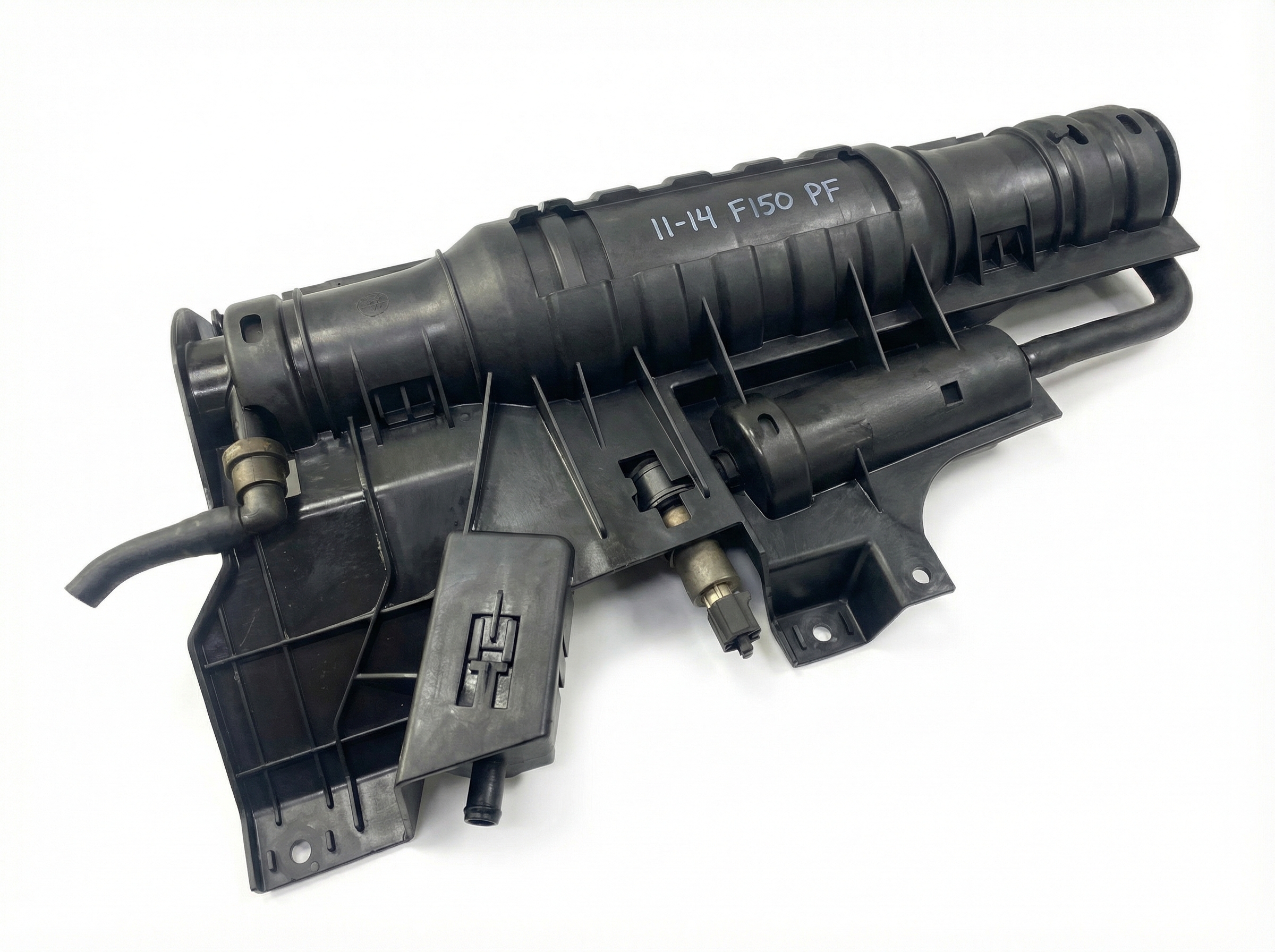
Aftermarket price range: $40-$90 - EVAP Charcoal Canister
(OEM #6L8Z-9D653-A (for 2005-2008 models, may vary for earlier years))— Replaced if it becomes saturated with fuel from topping-off the tank or if it's internally blocked. The part number 6L8Z-9D653-A is listed for 2005-2008 models and has been discontinued by Ford, but aftermarket replacements are available.
Trusted brands: Motorcraft (discontinued), Dorman
OEM price range: $250-$350
Aftermarket price range: $150-$250
Related Codes That Often Appear With This One
- P0443 (Evaporative Emission System Purge Control Valve Circuit): If there is an electrical issue affecting the entire EVAP system, it's possible to see this code alongside P0446.
Technical Service Bulletins (TSBs) & Recalls
- TSB 07-11-1: Addresses 'COLD CLIMATE SLOW FUEL FILL' on 2005-2008 models by modifying the EVAP vent line.
- TSB 19536 (Dec 2006): Generally addresses 'SLOW FUEL FILL DUE TO CLOGGED VENT'.
Platform-Specific Known Issues
- A Technical Service Bulletin (TSB 07-11-1) was issued for 2005-2008 models to address slow fuel filling, specifically in cold climates, by modifying the EVAP vent line. This confirms it's a known issue from the manufacturer.
- Another TSB (#19536) from 2006 also mentions 'SLOW FUEL FILL DUE TO CLOGGED VENT', further highlighting the prevalence of this problem.
Mechanic-Grade Diagnostic Values
- EVAP Canister Vent Valve Solenoid Resistance — expected: 20 to 30 Ohms. Failure: A reading outside of this range indicates a damaged solenoid winding.
- Voltage at Vent Valve Connector (Key On, Engine Off) — expected: ~12V (Battery Voltage). Failure: No voltage suggests a blown fuse or an open in the power supply wire. For a 2005 model, this is often Fuse 27 in the Smart Junction Box.
Scan Tool Commands That Help
- Ford IDS (or equivalent professional scanner): EVAP Canister Vent Solenoid On/Off Command — This bidirectional control is used to manually command the vent valve closed and open to test its mechanical function and the integrity of the control circuit. A technician can command it 'on' (closed) and check for a change in state with a test light or scope on the control wire.
- Ford IDS (or equivalent professional scanner): EVAP System Test — This is an automated test that commands the entire EVAP system through its self-test procedure, closing the vent valve and pulling a vacuum to check for leaks. It can confirm if the system is capable of sealing after a repair.
Wiring & Ground Locations
- Fuse 27 (Smart Junction Box) — On 2005 models, the Smart Junction Box (SJB) is located on the passenger side, behind the kick panel. Fuse 27 is in the second row up from the left.. This fuse provides power to the EVAP canister vent valve. A missing or blown fuse will prevent the valve from closing, causing the EVAP monitor test to fail and setting code P0446.
- G109 — On a 2006 Escape, this ground is located at the rear of the engine compartment, on the firewall.. This is a major ground point for several engine compartment components. While not the direct ground for the rear-mounted vent valve, a poor connection here can cause various electrical issues that could indirectly affect PCM operation and sensor readings.
- Vent Valve Connector — At the EVAP canister vent valve, located under the vehicle near the rear axle on the driver's side.. This is the primary point for electrical testing. One wire should have ~12V with the key on (power from fuse), and the other is the control wire that the PCM grounds to close the valve.
Real Owner Repair Stories
- YouTube channel 'Ford Boss Me' (2005 Ford Escape) — Check Engine Light on, P0446 code, would not pass emissions test.
❌ Tried (didn't work) The previous owner had already replaced the EVAP vent valve solenoid, but the code remained.
✅ What actually fixed it The technician discovered that Fuse 27 in the passenger-side Smart Junction Box was missing. This fuse supplies power to the vent valve. After installing the correct fuse, the EVAP system test passed. - NHTSA ODI #11670709 — An owner reported that their engine warning light was illuminated, and upon using a vehicle scanner, they retrieved DTC: P0446 (Evaporative Emission Control System (EVAP) vent control circuit malfunction). This record from a similar Ford platform reinforces the commonality of the vent circuit failure across the manufacturer's lineup.
Model Year Variations Within This Range
- 2001-2004: These are considered the early first-generation models before the 2005 refresh. While the core P0446 issue is the same, interior and some exterior styling differs.
- 2005-2007: These post-refresh models have an updated fascia, interior tweaks, and are specifically mentioned in TSB 07-11-1 for slow fuel fill issues. The 2006 model year introduced a new electronic throttle control system.
Diagnostic Flowchart
Other Known Issues on This Vehicle
Issues unrelated to this code that are worth knowing about as an owner of this generation:
- Front Subframe Rust / Lower Control Arm Separation 🔴 High — Very common in 'salt belt' regions, leading to a major safety recall. (Ref: Recall 14S02: Affects 2001-2004 models. The fix involves installing a reinforcement crossbrace, but does not replace the rusted subframe itself.)
- Automatic Transmission (CD4E) Failure 🔴 High — Widespread problem, particularly in 2001-2004 models. Symptoms include slipping, harsh shifting, or flashing O/D light. Often requires a full rebuild or replacement. (Ref: A recall existed for remanufactured transmissions with improperly tightened bolts, but the primary issue is internal wear.)
- Alternator Failure 🟠 Medium — Common across all years. Often caused by leaking valve cover gaskets dripping oil onto the alternator. Symptoms include dimming lights, battery warning light, and electrical glitches.
- Ignition Coil Failure (V6) 🟠 Medium — Common on the 3.0L V6 engine, causing engine misfires (e.g., P0301-P0306). Often due to moisture intrusion or oil leaks from the valve cover gaskets fouling the coil boots and spark plug wells.
- Transfer Case Failure (4WD Models) 🟠 Medium — Internal gears can fail, leading to grinding or metallic noises from the drivetrain and loss of 4WD capability.
- Rear Wheel Well Rust 🟡 Low — Very common in snow climates. The rear wheel arches are prone to significant rust-through, which is primarily a cosmetic issue but can become structural if neglected.
Used vs. New Parts: Buying Guide for This Vehicle
When a used part is the smart pick: A used charcoal canister assembly can be a cost-effective option if the original is saturated with fuel, as they are generally durable unless physically damaged or contaminated. A used vent hose is also acceptable if it is pliable and not cracked.
Donor-vehicle mileage cap: roughly under 100000 miles for the part to have meaningful remaining life.
What to inspect on the donor part:
- For a charcoal canister, ensure there are no visible cracks in the plastic housing.
- Shake the canister; there should be no sound of loose charcoal pellets inside.
- Check that all hose ports are intact and not broken off.
- Avoid parts from vehicles in the rust belt, as the attached metal brackets and valves will have heavy corrosion.
Aftermarket brands forum-validated for this vehicle:
- Dorman (e.g., 911-216 for the vent valve) is a widely available and commonly used aftermarket brand for this repair.
- Standard Motor Products (SMP) is another reputable aftermarket supplier for EVAP components like the vent valve.
Brands owners have reported issues with on this vehicle:
- No specific brands are consistently cited as problematic, but ultra-low-cost, unbranded parts from online marketplaces may have questionable quality control and are best avoided for emissions components.
Real Owner Stories
Aggregated from forums and TSBs cited above. Mileages and costs reflect what owners reported in those sources.
2001-2007 Ford Escape
Symptoms: It took over 10 minutes of constant stopping and starting to get a full tank of gas.
What fixed it: The owner addressed the vent valve after finding that clearing mud from the vent hose alone did not resolve the issue.
Source hint: Ford Truck Enthusiasts Forums (ford-trucks.com) thread titled 'code-p0446-and-slow-gas-filling'
2001-2007 Ford Escape
Symptoms: Classic symptoms of P0446 and slow filling at the pump.
What fixed it: Cleaning a junk-filled vent line solved the refueling issue, though the owner noted the code remained, suggesting further electrical or valve inspection was needed.
Source hint: Reddit (r/fordescape) thread titled 'p0446_p0443_codes/'
2005-2008 Ford Escape
Symptoms: Slow fuel fill specifically occurring in cold climates.
What fixed it: Modifying the EVAP vent line as per the manufacturer's technical instructions.
Source hint: TSB 07-11-1
Related OBD-II Codes
Frequently Asked Questions
Does TSB 07-11-1 apply to my 2005 Ford Escape if I'm having trouble at the gas pump?
Why does the gas pump nozzle keep shutting off when I try to fill my 2001-2007 Escape?
Can I just replace the gas cap to fix P0446 on my Escape?
Is the vent valve on the 2001-2007 Escape sold as part of the charcoal canister?
I hear a 'whoosh' sound when I open my gas cap; is this related to the P0446 code?
Does the Mazda Tribute share this same EVAP vent problem?
Helpful Videos

Used OEM Parts in Stock
New Aftermarket Parts Available


The information in this article is provided for general reference and educational purposes only. Vehicle specifications, procedures, and part compatibility can vary by production date, trim level, and region. Always consult your vehicle's factory service manual and verify part numbers before purchasing or performing repairs. Safety-critical components such as airbags, seat belts, and braking systems should be installed by a qualified professional.
- Ford Escape:
- 🧭 Diagnostic Flowchart
- 🎬 Helpful Videos
- 🛍️ Shop This Part
- What's Unique About the 2001-2007 Ford Escape
- Symptoms You May Notice
- Most Likely Causes
- Rare But Worth Checking
- Diagnosis Steps
- Parts You'll Likely Need
- Related Codes That Often Appear With This One
- Technical Service Bulletins (TSBs) & Recalls
- Platform-Specific Known Issues
- Mechanic-Grade Diagnostic Values
- Scan Tool Commands That Help
- Wiring & Ground Locations
- Real Owner Repair Stories
- Model Year Variations Within This Range
- Other Known Issues on This Vehicle
- Used vs. New Parts: Buying Guide for This Vehicle
- Real Owner Stories
- 2001-2007 Ford Escape
- 2001-2007 Ford Escape
- 2005-2008 Ford Escape
- Related OBD-II Codes
- Frequently Asked Questions
- 🎟️ Get 5% Off