

P0446 on 2008-2012 Ford Escape: EVAP Vent Control Circuit Causes and Fixes
On a 2008-2012 Ford Escape, code P0446 is most often caused by a faulty EVAP canister vent solenoid, which is located under the vehicle on the charcoal canister. A common symptom is difficulty filling the gas tank. Replacing the solenoid, OEM part number 9L8Z-9F945-B (Motorcraft CX2418), costs around $30-$70 for an aftermarket part and is a common DIY fix.
- P0446 on a 2008-2012 Escape almost always points to the EVAP vent solenoid or its wiring.
- The most telling symptom, besides the Check Engine Light, is the gas pump repeatedly shutting off when you try to refuel.
- The vent solenoid is located under the car on the driver's side, attached to the charcoal canister; do not confuse it with the purge valve in the engine bay.
- Before replacing parts, visually inspect the vent solenoid's connector and wiring for corrosion or damage, as this is a common and cheaper fix.
- Replacing the vent solenoid is a very manageable DIY repair for about $30-$70 and can save you hundreds compared to a shop visit.
What's Unique About the 2008-2012 Ford Escape
The 2008-2012 Ford Escape (second generation) is known for having issues with the EVAP vent solenoid, often due to its location under the vehicle where it's exposed to moisture and road debris. This can lead to corrosion in the connector or failure of the solenoid itself. A very common and telling symptom on these Escapes is the fuel pump nozzle clicking off repeatedly during refueling, which happens because the stuck-closed vent valve prevents air from escaping the tank as fuel goes in. The fresh air intake hose for the system is also located in the driver's side rear wheel well, a position that makes it prone to ingesting mud and water, which can clog the system or damage the solenoid.
Symptoms You May Notice
- Check Engine Light is on
- Difficulty filling the fuel tank (gas pump nozzle shuts off repeatedly)
- A whooshing sound of air when opening the gas cap (indicating pressure or vacuum buildup)
- Fuel odor near the vehicle (less common for this specific code, but possible if other EVAP issues are present)
- Rough idle or stalling immediately after refueling (less common, but can occur if the system is overwhelmed)
- Replacing the gas cap. While a bad gas cap can cause other EVAP codes (like P0455 or P0457), it is not a typical cause for a P0446 circuit code.
- Replacing the EVAP Purge Valve. The purge valve is located in the engine bay and controls vapor flow to the engine. P0446 points specifically to the vent circuit, which is under the vehicle. Confusing these two parts is a 🎬 Watch: How to replace the purge valve in the engine bay. common mistake.
Most Likely Causes
- Faulty EVAP Canister Vent Solenoid 🔴 High Probability → Shop Vapor Canister The solenoid is mounted under the vehicle near the charcoal canister, exposing it to road salt, water, and dirt, which can cause it to fail or its connector to corrode. The part is designed to be normally open and requires power to close; corrosion can cause it to stick shut.
How to confirm: Locate the vent solenoid on the charcoal canister under the driver's side of the vehicle. Check for 12V power at the connector with the key on. Use a scan tool to command the solenoid on and off; you should hear a click. Alternatively, apply 12V and ground directly to the solenoid pins to test for actuation. A key diagnostic step is to measure the solenoid's coil resistance; it should be between 48 and 65 ohms. A reading outside this range indicates a failed solenoid.
Typical fix: Replace the EVAP canister vent solenoid. It often twists a quarter-turn into the 🎬 See how to replace the vent solenoid under the vehicle. charcoal canister assembly. The OEM part is Ford 9L8Z-9F945-B (Motorcraft CX2418). A popular aftermarket equivalent is Dorman 911-222.
Est. part cost: $30-$70 - Damaged Wiring or Corroded Connector 🟡 Medium Probability The wiring harness to the vent solenoid is in a vulnerable location under the car and can be damaged by road debris or suffer from corrosion, especially in Salt Belt states. Wires can break internally inside the insulation right at the connector, appearing visually intact but causing an open circuit.
How to confirm: Visually inspect the wiring harness leading to the vent solenoid for any breaks, chafing, or corrosion. Unplug the connector and check the pins for green or white corrosion. Test for continuity between the PCM and the solenoid connector. The control wire is Violet/White and goes to Pin 13 of PCM connector C175B. A test light can be used to confirm power and the ground signal from the PCM.
Typical fix: Repair the damaged section of wire or clean/replace the electrical connector pigtail.
Est. part cost: $5-$25 - Clogged EVAP Canister or Vent Hose ⚪ Low Probability → Shop Vapor Canister The fresh air intake for the EVAP system is located in the driver's side rear wheel well, where it can ingest mud, water, or debris, clogging the lines or the canister itself. Insect nests (particularly from mud daubers) are also a known cause of blockages in the vent line.
How to confirm: Disconnect the hoses from the charcoal canister and vent solenoid and attempt to blow through them. If they are blocked, they need to be cleaned or replaced. Inspect the canister for signs of saturation with fuel or water. A user on Ford Truck Enthusiasts forum noted their fresh air hose was caked with mud after a rainstorm, leading to the code.
Typical fix: Clean out the blocked hose with compressed air or replace the charcoal canister if it is saturated or internally blocked.
Est. part cost: $100-$200
Rare But Worth Checking
- Faulty Powertrain Control Module (PCM): This is very rare. A diagnostic video on a 2008 Escape showed a failed driver circuit inside the PCM was the ultimate cause after a new 🎬 Watch: This diagnostic walkthrough shows how to find the fault. vent solenoid did not fix the issue. This should only be considered after all other possibilities (solenoid, wiring) have been exhaustively ruled out by confirming the solenoid has 12V power but the PCM is not providing a proper ground signal when commanded. The faulty PCM was providing a partial ground, keeping the solenoid partially closed at all times.
Diagnosis Steps
- Read the Code: Confirm P0446 is the primary code present. Note any other codes, such as P0455 or P1450.
- Visual Inspection: Safely raise the vehicle. Locate the EVAP canister and vent solenoid under the vehicle, on the driver's side, just ahead of the rear wheel. Inspect the solenoid, its connector, and the nearby wiring for obvious damage, corrosion, or blockages.
- Check for Blockages: Disconnect the vent hose from the solenoid and the fresh air intake box in the wheel well. Check for obstructions like mud, debris, or insect nests.
- Test the Circuit: With the ignition on (engine off), use a multimeter to verify 12-volt power is present at one of the pins on the vent solenoid connector. The other pin is the control wire that the PCM grounds.
- Test the Solenoid: If you have a capable bidirectional scan tool, command the vent solenoid to close (energize) and listen for an audible click. Alternatively, you can apply 12V and ground directly to the solenoid pins with jumper wires to see if it actuates. With the solenoid de-energized, you should be able to blow through it; when energized, it should be sealed.
- Measure Solenoid Resistance: Disconnect the solenoid and measure the resistance between its two pins with a multimeter. A good solenoid should measure between 48 and 65 Ohms. An open circuit (infinite resistance) or a short (near zero resistance) indicates a bad solenoid.
- Check the Control Wire: If power is present but the solenoid doesn't work with a scan tool, check the ground-side control wire (Violet/White) for continuity back to Pin 13 on PCM connector C175B. A break in this wire will cause the code. Also check for a partial ground from the PCM with the solenoid commanded OFF; voltage on the control wire should be equal to battery voltage, not a lower value like 3-4 volts.
Parts You'll Likely Need
- EVAP Canister Vent Solenoid
(OEM #9L8Z-9F945-B)— This is the most common failure point for code P0446 on this vehicle, typically due to its exposed location under the car.
Trusted brands: Motorcraft (CX2418), Dorman (911-222), Standard Motor Products (CVS20)
OEM price range: $60-$100
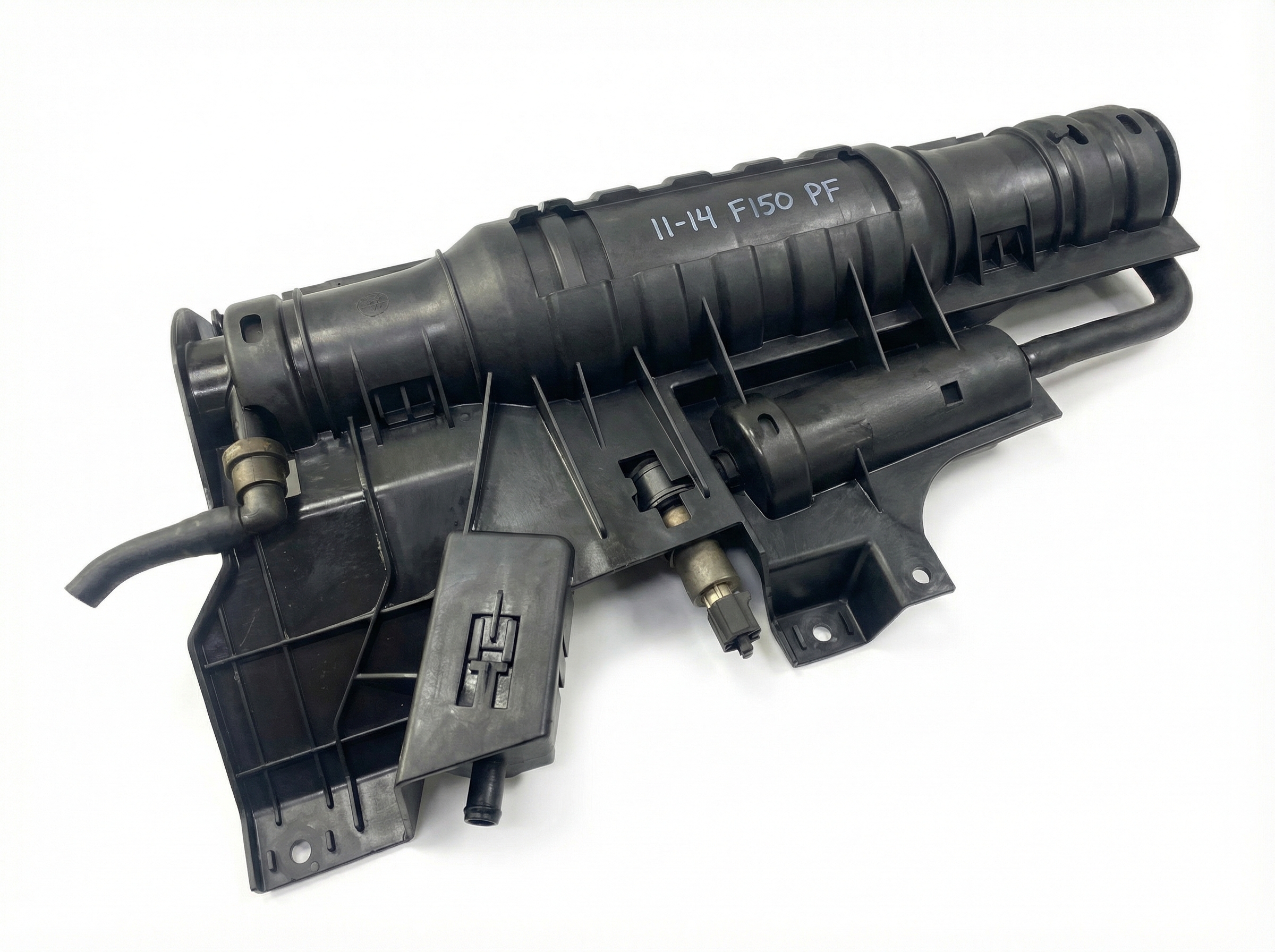
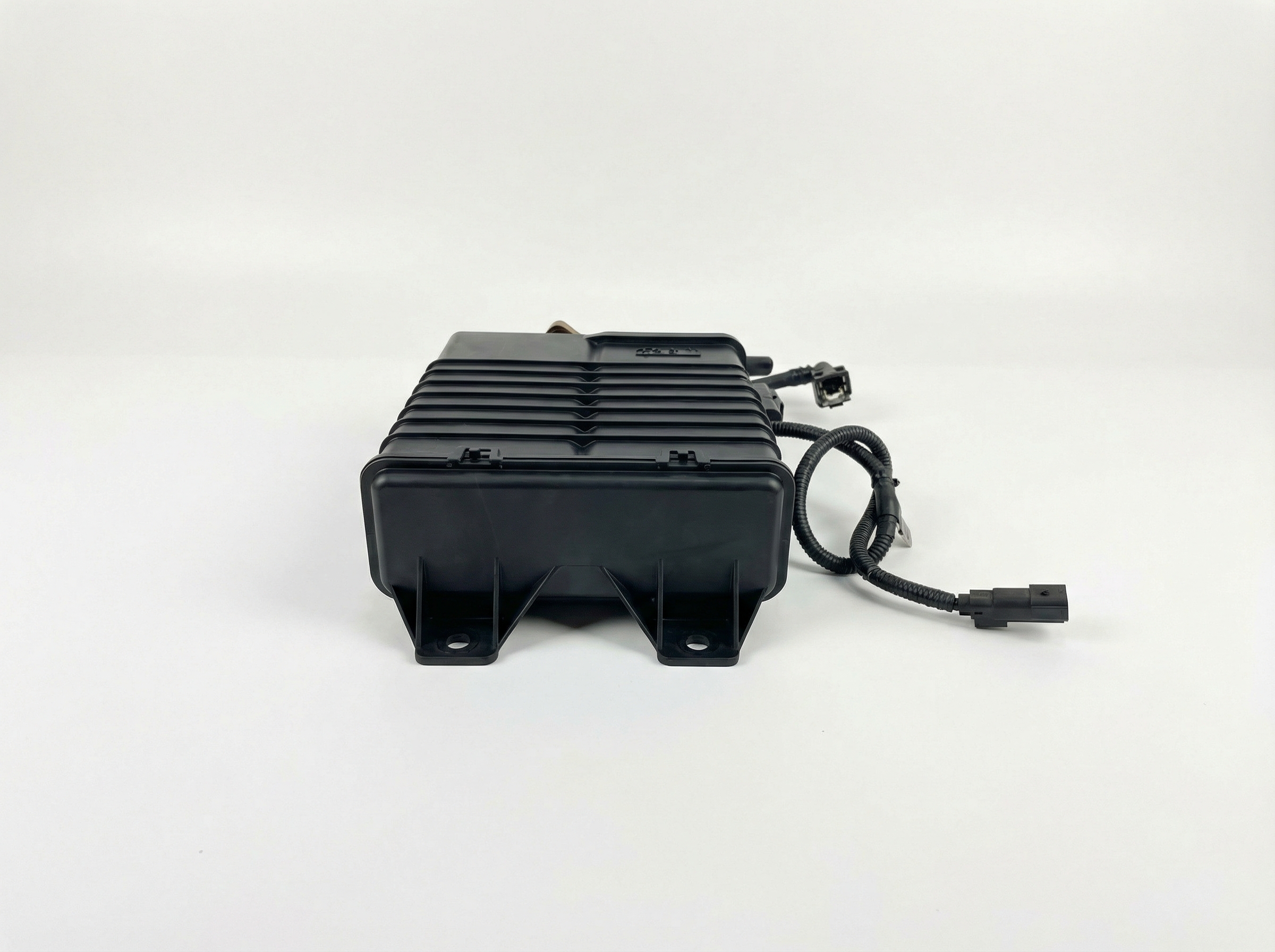
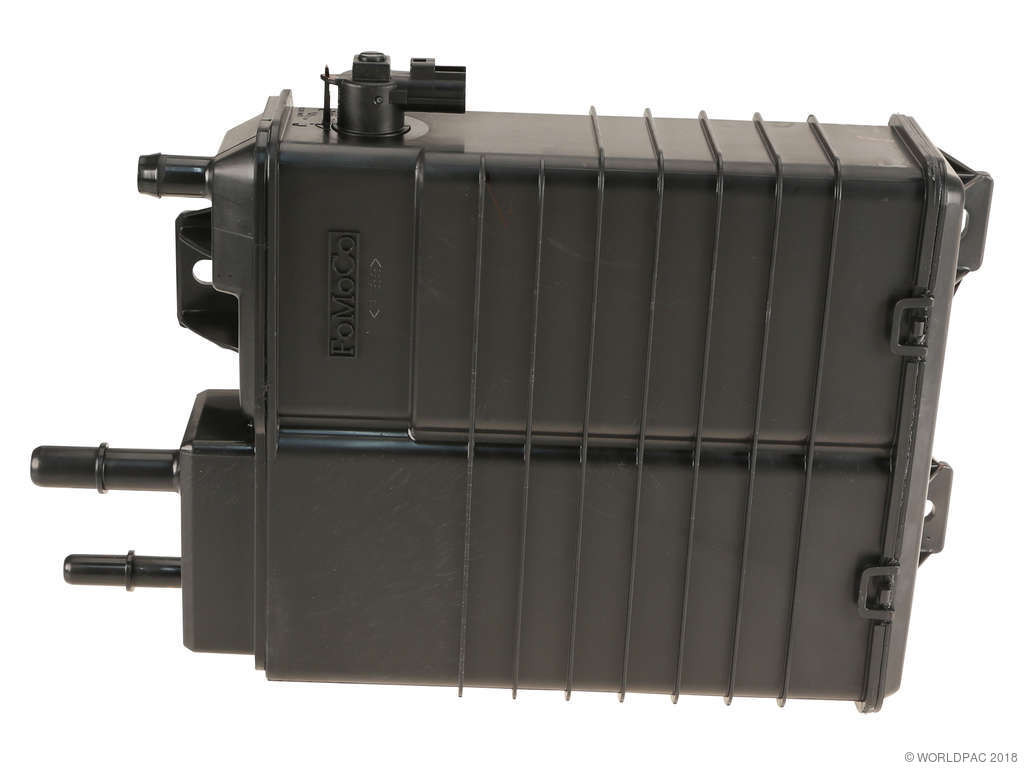
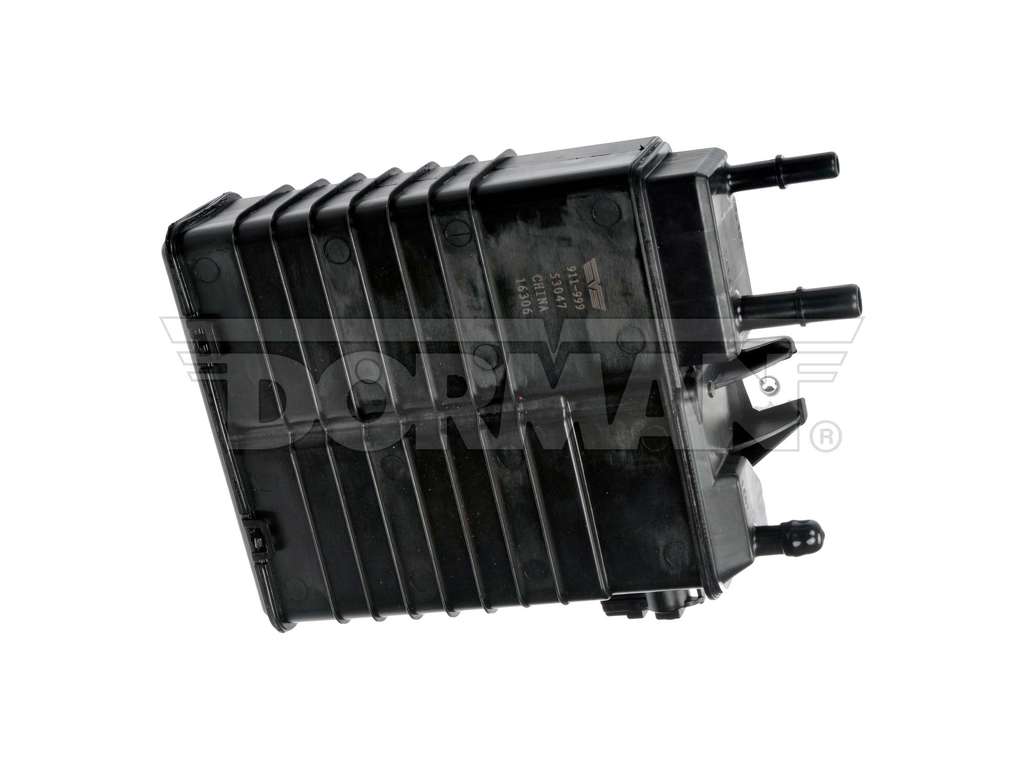
Aftermarket price range: $30-$70 - EVAP Charcoal Canister — Replaced if it becomes clogged with debris or saturated with fuel, which can happen if the vent system is compromised for a long time. Sometimes the vent solenoid is serviced with the canister, but for this vehicle it is typically sold separately.
Trusted brands: Motorcraft, Bosch
OEM price range: $150-$250
Aftermarket price range: $100-$180
Related Codes That Often Appear With This One
- P0443 — This code indicates a fault in the EVAP Purge Control Circuit. If there is a shared power or ground issue, or a widespread wiring problem, both the purge and vent valve circuits can be affected simultaneously.
- P0455 — This code means "EVAP System Gross Leak Detected." If the vent valve circuit fails in a way that leaves the valve stuck open, the system cannot seal for its self-test, which the PCM interprets as a large leak.
- P1450 — This code means "Unable to Bleed Up Fuel Tank Vacuum." It can be set if the vent valve is stuck closed or the vent path is restricted, preventing the system from equalizing pressure. This is a strong companion code for P0446.
Technical Service Bulletins (TSBs) & Recalls
- TSB 07-11-1: While not directly for P0446, this TSB addresses the 'slow fill' issue on 2005-2008 Escapes and suggests a modification to the vent line.
- GM TSB 09-06-04-028D: Though for GM vehicles, this TSB is highly relevant as it details how water and debris ingestion into the vent solenoid—a problem common on the Escape—can cause P0446, P0442, and P0455, and hard-to-fill symptoms. It recommends relocating the vent filter to a cleaner location.
Platform-Specific Known Issues
- A forum user with a 2008 Escape on Ford Truck Enthusiasts reported that driving through a heavy rainstorm led to the P0446 code and difficulty refueling. They found the EVAP system fresh air intake hose in the wheel well had ingested water and mud, which then contaminated the entire system.
- A user on 2CarPros forum described the exact symptoms of P0446 and slow fueling. After replacing both the vent solenoid and purge valve with no success, an expert suggested the vent line itself could be pinched or blocked, or an internal tank valve had failed.
- In a cross-manufacturer reference, NHTSA ODI #11670709 describes a Ford owner who retrieved DTC P0446 (EVAP vent control circuit malfunction) after an engine warning light illuminated, highlighting the persistence of this circuit fault across the Ford lineup.
Mechanic-Grade Diagnostic Values
- EVAP Canister Vent Solenoid Coil Resistance — expected: 48 - 65 Ohms. Failure: A reading of infinite resistance (open) or near-zero resistance (short).
- Vent Solenoid Control Wire Voltage (Key On, Commanded OFF) — expected: Should be equal to battery voltage (approx. 12V).. Failure: A reading significantly lower than battery voltage (e.g., 3-4V) indicates a partial ground, likely from a faulty PCM driver.
- Fuel Tank Pressure (FTP) Sensor (Normal Purge Operation) — expected: -2.0 to -4.0 inches of H2O.. Failure: A negative pressure greater than -8.0 in-H2O can indicate a restriction and may set a P1450 code.
Hidden / Shadow Codes Worth Checking
- Mode $06, EVAP Monitor: Mode $06 provides access to the raw results of the PCM's self-tests for non-continuously monitored systems like EVAP. For the vent valve circuit test, it will show a test value alongside minimum and maximum thresholds. A value that has passed but is very close to the limit can indicate a marginal component or wiring issue that may soon set a P0446 code. (see via A professional scan tool or an advanced consumer OBD-II scanner with Mode $06 capability. The specific Test ID (TID) and Component ID (CID) for the vent circuit must be referenced from Ford's service data for the specific year/engine.)
Scan Tool Commands That Help
- Ford IDS (or equivalent professional scan tool): EVAP Canister Vent Solenoid On/Off Command — This bidirectional control is essential for diagnosis. It allows a technician to manually command the solenoid closed (energized) and open (de-energized) to listen for a click, check for changes in system pressure, and verify the integrity of the control circuit from the PCM.
Wiring & Ground Locations
- Vent Solenoid Connector — Under the vehicle on the driver's side, plugged into the vent solenoid on the charcoal canister.. This is the primary point of failure for wiring due to corrosion and debris. One pin should have 12V+ with key on, the other is the ground control from the PCM.
- PCM Connector C175B, Pin 13 — At the Powertrain Control Module (PCM), located at the rear center of the firewall.. This is the specific pin for the EVAP canister vent solenoid control wire (Violet/White). Testing here can confirm if the PCM is sending the ground signal and if the wire has continuity.
- Ground Point G104 / G105 — At the left front corner of the engine compartment, near the Battery Junction Box (BJB).. These are primary chassis grounds for the PCM. A poor ground connection here can cause a variety of unpredictable issues with PCM-controlled components, including the vent solenoid driver.
Real Owner Repair Stories
- Ford Truck Enthusiasts Forums user (2008 Ford Escape) — Check Engine Light with code P0446 and extreme difficulty filling the gas tank, which started the day after driving through a heavy rainstorm.
❌ Tried (didn't work) Clearing the code resulted in it returning immediately.
✅ What actually fixed it The user inspected the EVAP system and found the fresh air intake hose in the wheel well was caked with mud. Water had been ingested into the hose and a small amount got into the charcoal canister. Cleaning the entire system and drying it out resolved the issue. - South Main Auto Repair (YouTube) (2008 Ford Escape V6 AWD) — P0446 code and inability to fill with gas.
❌ Tried (didn't work) Replacing the EVAP vent solenoid. The code returned.
✅ What actually fixed it The technician diagnosed a faulty driver circuit inside the Powertrain Control Module (PCM). The PCM was sending a partial ground (reading ~4V on the control wire when it should have been 12V) at all times, keeping the new solenoid partially energized and stuck closed. Replacing the PCM was the final fix.
"I Checked Everything" — The Actual Cause
- In a documented case on a 2008 Escape, the P0446 code persisted after a new vent solenoid was installed. The wiring harness showed good continuity and power, meaning a smoke test would have passed as there were no leaks. The root cause was a failed driver in the PCM providing a constant, partial ground to the solenoid's control circuit, holding it closed. This type of electrical fault is invisible to a smoke test and requires checking voltages on the control wire with a multimeter or oscilloscope.
When the Usual Fixes Don't Work
- While the vast majority of P0446 codes on this vehicle are fixed by replacing the vent solenoid, there are confirmed cases where this does not solve the problem. The most notable counter-example involved replacing the solenoid, only to find the code returned immediately. The final repair required replacing the PCM due to a failed internal driver that was holding the new solenoid closed. This highlights the importance of verifying the control circuit's voltage and ground signal at the component before assuming the component itself is the only possible point of failure.
OEM Part Supersession History
7U5Z-9F945-E→9U5Z-9F945-C— Part revision/update by Ford. While not the exact part number for this Escape, it shows a history of supersession for this type of solenoid in the Ford ecosystem.
Model Year Variations Within This Range
- 2008-2012: For this generation, Ford uses P0446 specifically to indicate an electrical circuit malfunction (open, short, or faulty solenoid). On some older Ford models, this code could be triggered by a mechanical blockage preventing the canister from venting, but on the 2008-2012 Escape, it is almost always an electrical or solenoid coil failure.
Diagnostic Flowchart
Other Known Issues on This Vehicle
Issues unrelated to this code that are worth knowing about as an owner of this generation:
- Electric Power Steering (EPAS) Failure 🔴 High — Very common. Can occur at any mileage. Subject to recall 14S05, but problems may persist. (Ref: NHTSA #14V284000 (Recall 14S05))
- 6F35 Transmission Failure 🔴 High — Common, particularly in 2008-2009 models. Failures often occur before 100,000 miles, with symptoms like harsh shifting and slipping.
- Rear Shock Tower Rust 🔴 High — Extremely common in Salt Belt regions. The passenger side tower often rusts completely through, causing the shock to detach. (Ref: Aftermarket repair panels like Dorman 924-358 are available.)
- Leaking Driver's Side Axle Seal 🟠 Medium — Common issue on 2009-2012 models, leading to transmission fluid loss. (Ref: Ford offers a repair kit for the seal and housing.)
- Throttle Body Failure 🟠 Medium — Fairly common around 70,000 miles, causing stalling or 'limp mode'.
Used vs. New Parts: Buying Guide for This Vehicle
When a used part is the smart pick: For this repair, using a used part is generally not recommended for the electronic components. However, a used charcoal canister assembly from a low-mileage, non-corroded donor vehicle could be a cost-effective option if the original is cracked or saturated with fuel. Hoses and mounting brackets are also good candidates for used parts.
Donor-vehicle mileage cap: roughly under 80000 miles for the part to have meaningful remaining life.
What to inspect on the donor part:
- For a charcoal canister, ensure there are no visible cracks, especially around the hose ports.
- Shake the canister; it should not rattle, which would indicate broken internal charcoal media.
- Check that the donor vehicle is from a dry, non-salt-belt region to minimize the risk of corrosion and moisture saturation.
- Avoid any parts that appear to have been submerged in mud or water.
OEM-only on this vehicle (don't cheap out):
- Powertrain Control Module (PCM) - Due to programming and security requirements (PATS), a new or professionally refurbished and programmed PCM is required if it is found to be faulty.
Aftermarket brands forum-validated for this vehicle:
- Motorcraft (OEM)
- Dorman (for solenoids and valves, widely available and generally reliable for this application)
- Standard Motor Products (SMP)
Brands owners have reported issues with on this vehicle:
- No-name, unbranded parts from online marketplaces should be avoided, as their coil windings and internal seals may not meet OEM specifications, leading to premature failure.
Real Owner Stories
Aggregated from forums and TSBs cited above. Mileages and costs reflect what owners reported in those sources.
2008 Ford Escape
Symptoms: The Check Engine Light came on with code P0446 after driving through a heavy rainstorm. The owner also experienced significant difficulty refueling the vehicle.
What fixed it: The owner found that the EVAP system fresh air intake hose in the wheel well had ingested water and mud, contaminating the system. Cleaning the blockage resolved the issue.
Source hint: Ford Truck Enthusiasts Forums
2008-2012 Ford Escape
Symptoms: The owner reported P0446 and slow fueling symptoms. They replaced both the vent solenoid and the purge valve, but the problem persisted.
What fixed it: An expert diagnosis suggested the issue was likely a pinched or blocked vent line or a failed internal tank valve.
Source hint: 2CarPros forum
Related OBD-II Codes
Frequently Asked Questions
Why does the gas pump nozzle keep shutting off when I try to fill my 2008-2012 Ford Escape?
Where is the EVAP canister vent solenoid located on my Ford Escape?
What is the specific Motorcraft part number for the vent solenoid replacement?
Does TSB 07-11-1 apply to my P0446 code and slow-filling issue?
What should the resistance be when testing the vent solenoid with a multimeter?
Can driving through mud or heavy rain cause this code on my Escape?
Helpful Videos

Used OEM Parts in Stock

New Aftermarket Parts Available


The information in this article is provided for general reference and educational purposes only. Vehicle specifications, procedures, and part compatibility can vary by production date, trim level, and region. Always consult your vehicle's factory service manual and verify part numbers before purchasing or performing repairs. Safety-critical components such as airbags, seat belts, and braking systems should be installed by a qualified professional.
- Ford Escape:
- 🧭 Diagnostic Flowchart
- 🎬 Helpful Videos
- 🛍️ Shop This Part
- What's Unique About the 2008-2012 Ford Escape
- Symptoms You May Notice
- Most Likely Causes
- Rare But Worth Checking
- Diagnosis Steps
- Parts You'll Likely Need
- Related Codes That Often Appear With This One
- Technical Service Bulletins (TSBs) & Recalls
- Platform-Specific Known Issues
- Mechanic-Grade Diagnostic Values
- Hidden / Shadow Codes Worth Checking
- Scan Tool Commands That Help
- Wiring & Ground Locations
- Real Owner Repair Stories
- "I Checked Everything" — The Actual Cause
- When the Usual Fixes Don't Work
- OEM Part Supersession History
- Model Year Variations Within This Range
- Other Known Issues on This Vehicle
- Used vs. New Parts: Buying Guide for This Vehicle
- Real Owner Stories
- 2008 Ford Escape
- 2008-2012 Ford Escape
- Related OBD-II Codes
- Frequently Asked Questions
- 🎟️ Get 5% Off