

P0446 on 2005-2008 Ford Escape Hybrid: EVAP Vent Circuit Causes and Fixes
On a 2005-2008 Ford Escape Hybrid, code P0446 is most often caused by a faulty or rusted EVAP canister vent solenoid located near the fuel tank. This can also cause difficulty when refueling. Expect to pay $40-$100 for a replacement solenoid. In some cases, a shorted solenoid can damage the PCM, requiring a more expensive repair.
- P0446 on your Escape Hybrid is most likely a bad EVAP vent solenoid near the rear of the car.
- A major symptom, besides the Check Engine Light, is the gas pump clicking off constantly when you try to refuel.
- The part is relatively inexpensive and accessible for DIY replacement, but check the wiring and fuse first.
- Be aware that a shorted solenoid can damage the computer (PCM), which is a more complex and expensive repair.
What's Unique About the 2005-2008 Ford Escape Hybrid
For the first-generation Ford Escape, the EVAP canister vent solenoid is exposed to the elements at the rear of the vehicle, making it highly susceptible to rust and corrosion from road salt and water. This often leads to the valve physically seizing shut. A key issue documented on this platform is that a failed, shorted vent solenoid can overload and damage the driver circuit within the Powertrain Control Module (PCM), turning a simple part replacement into a much more complex and expensive repair.
Symptoms You May Notice
- Check Engine Light is on.
- Difficulty refueling (gas pump nozzle clicks off repeatedly).
- A faint fuel odor may be present in some cases.
- No noticeable impact on engine performance or drivability.
- Replacing the gas cap. While a bad gas cap can cause other EVAP codes (like P0455 or P0457 for leaks), it is not the direct cause for a P0446 circuit malfunction code.
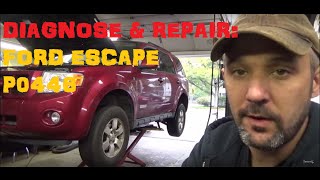
- Replacing the purge valve. The purge valve is located in the engine bay and has its own specific trouble codes (e.g., P0443). P0446 points specifically to the vent circuit 🎬 Watch: Common causes and fixes for the P0446 code at the rear of the vehicle.
Most Likely Causes
- Faulty EVAP Canister Vent Solenoid 🔴 High Probability → Shop Vapor Canister The solenoid is located under the vehicle near the rear driver's side wheel, where it is exposed to road salt, water, and debris, leading to heavy rust and mechanical failure.
How to confirm: Inspect the solenoid (located on or near the charcoal canister) for severe rust. With a capable scan tool, command the valve to open and close; listen for a click. You can also apply 12V directly to the solenoid pins to test for activation. If the valve is stuck closed, you will not be able to blow through it when it is unpowered.
Typical fix: Replace the EVAP canister vent solenoid. The OEM part number for the vent valve solenoid is 5L8Z-9C985-A. It is often sold as a standalone part.
Est. part cost: $40 - $100 - Damaged Wiring or Connector 🟡 Medium Probability The wiring to the vent solenoid is also in a vulnerable location and can be damaged by road debris, or the connector pins can corrode from moisture.
How to confirm: Visually inspect the wiring harness leading to the vent solenoid for any breaks, chafing, or corrosion. Use a multimeter to check for 12V power and a proper ground signal from the PCM at the connector with the key on.
Typical fix: Repair the damaged section of wire or replace the connector pigtail.
Est. part cost: $15 - $30 - Clogged EVAP Canister or Vent Hoses ⚪ Low Probability → Shop Vapor Canister Insects (like spiders) or mud can build nests in the vent tube, blocking airflow. Overfilling the fuel tank can also saturate the charcoal canister over time, causing it to become clogged with fuel or charcoal pellets.
How to confirm: Disconnect the hoses from the canister and vent valve and attempt to blow through them to check for blockages. Inspect the canister for signs of fuel saturation or loose charcoal granules.
Typical fix: Clear the blockage from the hoses. If the charcoal canister is saturated or internally damaged, it must be replaced.
Est. part cost: $150 - $250
Rare But Worth Checking
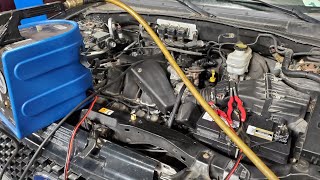
- Failed Powertrain Control Module (PCM) Driver: A short-circuited vent solenoid can burn out the control circuit inside the PCM. If a new vent solenoid and good wiring don't fix the code, the PCM is the likely culprit. This was documented in a detailed diagnostic video on a 2008 Escape, where a new solenoid worked but the code remained due to a faulty driver in the PCM 🎬 Watch: Detailed diagnostic video on a 2008 Escape PCM failure that could not properly ground the circuit.
- Missing or Blown Fuse: In one documented case on a 2005 Escape, the fuse for the EVAP system (Fuse 27 in the under-hood fuse box 🎬 See this 2005 Escape emissions test and vent valve fix) was missing, causing the P0446 code and a failed emissions test. The vent valve requires power to close and seal the system for testing.
Diagnosis Steps
- Read the code with an OBD-II scanner to confirm P0446 is present.
- Visually inspect the EVAP canister vent solenoid, located near the rear driver's side wheel, mounted to the charcoal canister. Look for obvious signs of heavy rust, corrosion, or physical damage.
- Inspect the associated wiring and connector for breaks, corrosion, or loose connections.
- If you have difficulty refueling, it strongly suggests the vent valve is stuck closed.
- With the ignition on, use a multimeter to check for 12V power on one pin of the vent solenoid connector. Check the associated fuse (e.g., Fuse 27 on a 2005 model) if power is absent.
- If power is present, check the control wire (the other pin) for a ground signal from the PCM. A scan tool with bidirectional controls is ideal here, as you can command the valve closed and see if the PCM provides a ground.
- If wiring is confirmed good, test the solenoid itself. Apply 12V and ground directly to the solenoid's pins and listen for a click. It should be open (allow air to pass) when unpowered and closed when powered. If it doesn't click or is stuck, it has failed.
- Check the vent hoses connected to the canister and solenoid for any blockages from mud, debris, or insects.
- If the solenoid and wiring are good, but the code persists, the issue may be a clogged charcoal canister or, in rare cases, a faulty PCM driver.
Parts You'll Likely Need
- EVAP Canister Vent Valve Solenoid
(OEM #5L8Z-9C985-A)— This is the most common failure point due to its location and susceptibility to rust and corrosion, causing it to seize.
Trusted brands: Motorcraft, Dorman (911-217), Standard Motor Products (CVS22)
OEM price range: $70-$120
Aftermarket price range: $40-$80 - EVAP Vapor Canister — Needed if the original canister is clogged with fuel, debris, or if the vent valve is integrated and not sold separately.
Trusted brands: Motorcraft, Dorman
OEM price range: $200-$300
Aftermarket price range: $150-$250
Related Codes That Often Appear With This One
- P0455 (EVAP System Gross Leak Detected) - This can occur if the vent valve circuit fault prevents the valve from closing, making the system unable to seal for a leak test.
Platform-Specific Known Issues
- A failed vent solenoid on this platform has been shown to damage the control circuit within the PCM, requiring PCM repair or replacement in addition to the solenoid itself.
Mechanic-Grade Diagnostic Values
- EVAP Canister Vent Solenoid Coil Resistance — expected: 48 - 65 Ohms. Failure: A reading of infinite ohms (open circuit) or near-zero ohms (short circuit) indicates a failed solenoid.
- EVAP Vent Solenoid Connector Power — expected: Battery Voltage (~12V) with Key On, Engine Off. Failure: No voltage indicates a blown fuse or a break in the power supply wiring.
- Fuel Tank Pressure (FTP) Sensor Voltage (Static) — expected: 2.6V - 2.65V with Key On, Engine Off, system vented to atmosphere.. Failure: A value that is significantly different or that drops immediately upon starting the engine (before the purge valve is commanded) can indicate other system faults.
- PCM Driver Voltage on Control Wire (Solenoid Commanded OFF) — expected: Full battery voltage (~12V). Failure: A lower voltage (e.g., ~4V) indicates the PCM driver is partially shorted to ground and not fully opening the circuit, which can keep the solenoid partially energized.
Hidden / Shadow Codes Worth Checking
- Mode 22 PID: EVAPCV: This Ford-specific PID shows the commanded duty cycle of the EVAP Canister Vent Solenoid in percent (0% = open). It allows a technician to see what the PCM is telling the solenoid to do in real-time. (see via A capable scan tool like FORScan or Ford IDS. The specific PID is likely 1167 (hex).)
- Mode 22 PID: EVAPCVF: This Ford-specific PID is a simple Yes/No flag for 'Evaporative Emissions Canister Purge Vent Fault'. It indicates if the PCM has registered an electrical fault with the vent circuit. (see via A capable scan tool like FORScan or Ford IDS. The specific PID is likely 1630 (hex), bit 3.)
Scan Tool Commands That Help
- Ford IDS / FORScan: EVAP Canister Vent Solenoid On/Off Command — This bidirectional control is essential for diagnosis. It allows a technician to manually command the solenoid closed (ON) and open (OFF) to test both the solenoid's mechanical function (listening for a click) and the integrity of the control circuit with a test light or multimeter.
- Ford IDS: EVAP System Test (On-Demand Self Test) — This function forces the vehicle to run the entire EVAP monitor test sequence. It is used after a repair to verify the fix without having to perform a full, lengthy drive cycle.
- Ford IDS / FORScan: Datalogger — Used to monitor live data PIDs like FTP Sensor Voltage, EVAPCV command, and fuel trims simultaneously to understand system behavior during testing.
Wiring & Ground Locations
- EVAP Canister Vent Solenoid Connector — Under the vehicle, near the rear driver's side wheel, mounted on or next to the charcoal canister.. This is the primary connection to test. One wire should have ~12V with key-on, and the other is the ground-side control from the PCM. Corrosion here is common.
- G405 — Under the rear center of the vehicle.. This is a chassis ground point located in the vicinity of the EVAP system components. A corroded or loose ground here could cause erratic behavior or faults in rear-mounted electrical components, though the vent solenoid is typically powered and then grounded through the PCM.
- G107 — On the bulkhead at the left rear of the engine compartment.. This is a primary ground point for components in the engine bay. While not directly for the vent solenoid, it's relevant for the overall engine control system that commands it.
Real Owner Repair Stories
- South Main Auto Repair YouTube Channel (2008 Ford Escape 3.0L AWD (Non-Hybrid, but EVAP system is analogous)) — P0446, unable to fill the fuel tank.
❌ Tried (didn't work) Replacing the physically seized and rusted EVAP vent solenoid cleared the refueling issue, but the P0446 code returned.
✅ What actually fixed it The original shorted vent solenoid had damaged the driver circuit inside the PCM. When commanded 'off', the faulty driver was still allowing ~4V to the control wire, partially energizing the new solenoid. When commanded 'on', it couldn't provide a full ground. Replacing the PCM was the final fix. - NHTSA ODI #11670709 — In a report involving a similar Ford platform, an owner noted that the engine warning light was illuminated and a vehicle scanner retrieved DTC P0446, specifically identifying an Evaporative Emission Control System (EVAP) vent control circuit malfunction.
"I Checked Everything" — The Actual Cause
- Because P0446 is a 'Circuit Malfunction' code, it's common for a smoke test to show no leaks. The code points to an electrical problem (open, short, bad resistance) or a functional problem (stuck/clogged valve), not a system leak like P0455. A prime example is when the vent solenoid shorts out and damages the PCM driver; the system can still be perfectly sealed, but the PCM cannot properly control the valve, triggering the P0446.
Diagnostic Flowchart
Other Known Issues on This Vehicle
Issues unrelated to this code that are worth knowing about as an owner of this generation:
- Cracked ABS Tone Ring 🔴 High — Very common, especially in regions with road salt. Corrosion builds under the ring on the front CV axle, causing it to crack and send erratic signals to the ABS module. (Ref: No recall, but a well-known issue. The Ford part number for the replacement ring is 7L8Z-2C182-B.)
- Motor Electronics Coolant Pump (MECS) Failure 🔴 High — Extremely common. The original pump's motor brushes wear out prematurely, causing the hybrid electronics to overheat, which can lead to a sudden loss of motive power. (Ref: Ford Safety Recall 14S19 (NHTSA 14V-526) was issued to replace the original pump with an improved brushless version.)
- Hybrid Battery Cooling Fan Failure 🟠 Medium — Common failure as the vehicles age. The fans inside the high-voltage battery pack fail, causing the battery to overheat and preventing the vehicle from entering EV mode. (Ref: No recall, but covered under the hybrid component warranty (8yr/100k or 10yr/150k miles depending on state). The replacement kit part number is 5M6Z-10C659-B.)
- Clicking Blend Door Actuator 🟡 Low — A very common annoyance. The plastic gears inside the HVAC blend door actuators strip, causing a repetitive clicking or percolating sound from behind the dashboard when the climate control is adjusted or the car is started.
Used vs. New Parts: Buying Guide for This Vehicle
When a used part is the smart pick: A used charcoal canister from a junkyard can be a cost-effective option if it comes from a dry, non-salt-belt region and shows no signs of physical damage or fuel saturation. The vent solenoid itself is inexpensive enough that buying new is almost always the better choice.
Donor-vehicle mileage cap: roughly under 100000 miles for the part to have meaningful remaining life.
What to inspect on the donor part:
- Check the canister for cracks or physical damage.
- Smell the ports on the canister; a strong raw fuel smell indicates it's saturated and should be avoided.
- Look for a donor vehicle from a southern or dry climate to minimize rust on any attached components like the vent solenoid.
- Ensure all hose connection nipples are intact and not brittle.
OEM-only on this vehicle (don't cheap out):
- Powertrain Control Module (PCM) - While a used PCM is possible, it requires professional reprogramming (flashing) to the vehicle's VIN and security system. A professionally refurbished unit or a new OEM unit is a more reliable, albeit more expensive, repair.
Aftermarket brands forum-validated for this vehicle:
- Motorcraft (OEM)
- Dorman (911-217) - Widely available and commonly used aftermarket replacement for the vent solenoid.
Brands owners have reported issues with on this vehicle:
- Unnamed, no-brand parts from online marketplaces can be a gamble regarding fit, quality, and longevity. Given the critical role and the potential for a failed part to damage the PCM, sticking with known brands is recommended.
Real Owner Stories
Aggregated from forums and TSBs cited above. Mileages and costs reflect what owners reported in those sources.
2008 Ford Escape Hybrid — 120000 miles
Symptoms: The check engine light was intermittently on and off, then stayed on. The owner also noted a drop in MPG.
What fixed it: The owner replaced the vent valve after a diagnostic computer confirmed it was sticking, though the light returned immediately after being cleared, suggesting further electrical or PCM issues.
Source hint: Car Talk Community thread titled 'Power Loss Escape Hybrid - Maintenance/Repairs'
2008 Ford Escape XLT
Symptoms: Check engine light P0446 and difficulty in refueling (slow gas filling).
What fixed it: The vent valve was confirmed as the culprit for the slow filling and the code.
Source hint: Ford Truck Enthusiasts Forum thread 'code p0446 and slow gas filling 08 escape xlt'
2006 Ford Escape
Symptoms: P0446 code present.
What fixed it: Investigation revealed the possibility of broken wires near the rear of the vehicle causing the code.
Source hint: Ford Truck Enthusiasts Forum thread regarding 2006 Escape with P0446
Related OBD-II Codes
Frequently Asked Questions
Why is it so difficult to pump gas into my 2005-2008 Ford Escape Hybrid?
Where is the EVAP canister vent solenoid located on the Escape Hybrid?
What is the specific OEM part number for the replacement vent valve?
Can a bad vent solenoid damage other parts of my Ford Escape Hybrid?
Is there a specific fuse I should check if my vent solenoid isn't getting power?
Does the Mercury Mariner Hybrid have this same P0446 issue?
Helpful Videos

Used OEM Parts in Stock
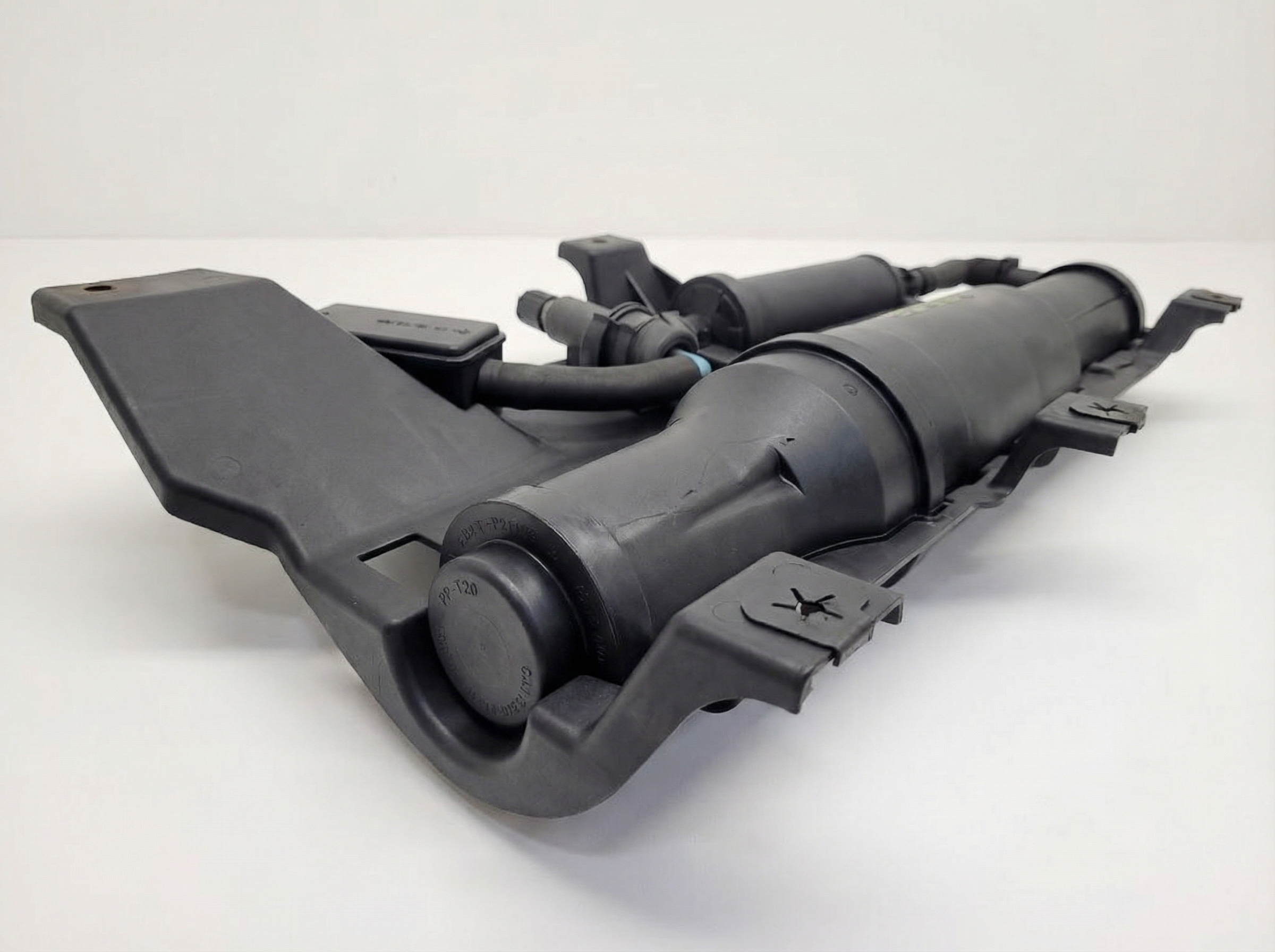
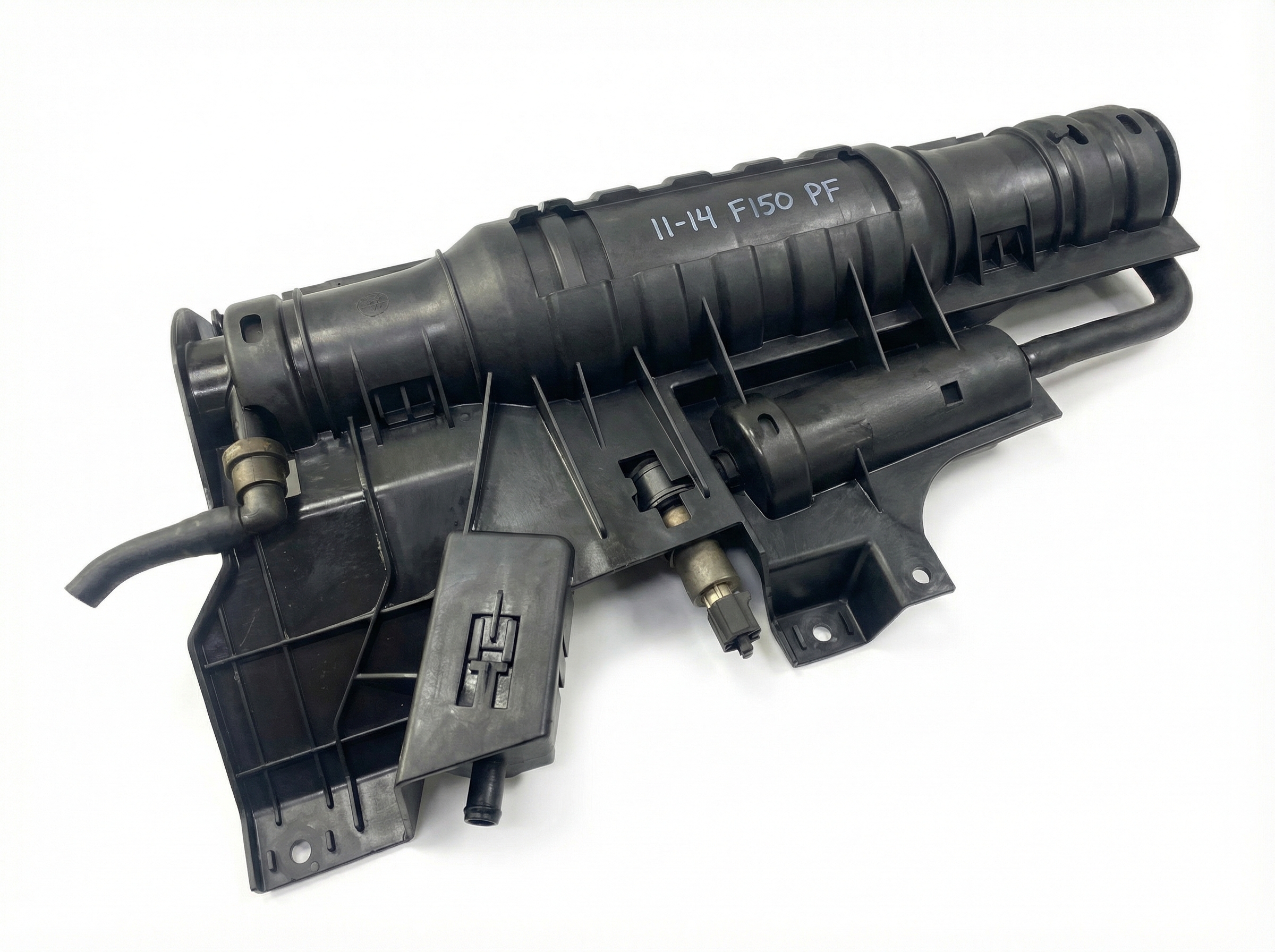

New Aftermarket Parts Available

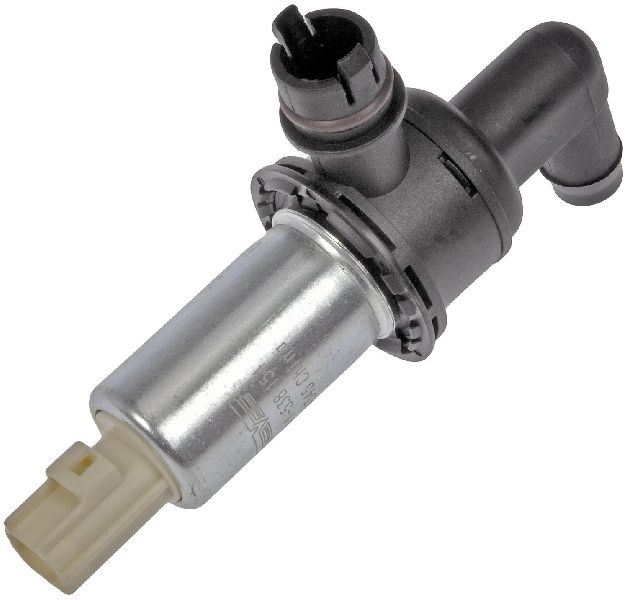

The information in this article is provided for general reference and educational purposes only. Vehicle specifications, procedures, and part compatibility can vary by production date, trim level, and region. Always consult your vehicle's factory service manual and verify part numbers before purchasing or performing repairs. Safety-critical components such as airbags, seat belts, and braking systems should be installed by a qualified professional.
- Ford Escape Hybrid:
- 🧭 Diagnostic Flowchart
- 🎬 Helpful Videos
- 🛍️ Shop This Part
- What's Unique About the 2005-2008 Ford Escape Hybrid
- Symptoms You May Notice
- Most Likely Causes
- Rare But Worth Checking
- Diagnosis Steps
- Parts You'll Likely Need
- Related Codes That Often Appear With This One
- Platform-Specific Known Issues
- Mechanic-Grade Diagnostic Values
- Hidden / Shadow Codes Worth Checking
- Scan Tool Commands That Help
- Wiring & Ground Locations
- Real Owner Repair Stories
- "I Checked Everything" — The Actual Cause
- Other Known Issues on This Vehicle
- Used vs. New Parts: Buying Guide for This Vehicle
- Real Owner Stories
- 2008 Ford Escape Hybrid — 120000 miles
- 2008 Ford Escape XLT
- 2006 Ford Escape
- Related OBD-II Codes
- Frequently Asked Questions
- 🎟️ Get 5% Off