

P0446 on 2011-2019 Ford Explorer: EVAP Vent Circuit Causes and Fixes
On a 2011-2019 Ford Explorer, code P0446 is most often caused by a failed EVAP canister vent solenoid, located near the fuel tank. A key symptom is the gas pump nozzle repeatedly shutting off during refueling. Replacing the vent solenoid is a common DIY fix, with parts costing between $35 and $70.
- P0446 on a 2011-2019 Explorer almost always points to a problem with the EVAP canister vent solenoid or its circuit, located near the fuel tank.
- The most telling symptom, besides the Check Engine Light, is the gas pump nozzle clicking off repeatedly when you try to refuel.
- Do not confuse the vent solenoid (by the tank) with the purge solenoid (in the engine bay). Replacing the purge solenoid will not fix a P0446 code.
- The repair is DIY-friendly, typically requiring the replacement of the vent solenoid, which costs between $35 and $70 for a part.
- Before replacing parts, always perform a quick visual inspection of the wiring and connector underneath the vehicle for obvious damage or corrosion.
What's Unique About the 2011-2019 Ford Explorer
The 2011-2019 Ford Explorer (fifth generation) uses a capless fuel filler system, which can sometimes cause confusion with EVAP codes. However, P0446 rarely points to the filler neck itself. The most common real-world symptom for this code on the Explorer is extreme difficulty when refueling, where the gas pump clicks off constantly. This is a strong indicator that the vent valve is stuck closed or the vent path is blocked, preventing air from escaping the tank as fuel enters. 🎬 Watch: Understanding the common causes and fixes for the P0446 code. While the valve itself is the most common failure point, this platform has also had documented, though rare, cases of the PCM itself failing and causing the P0446 code by improperly grounding the circuit.
Symptoms You May Notice
- Check Engine Light is on
- Difficulty refueling (gas pump nozzle shuts off every few seconds)
- A 'whoosh' sound of air releasing when opening the fuel filler door (less common)
- Replacing the Canister Purge Valve. The P0446 code specifically refers to the VENT valve circuit (located near the fuel tank), not the PURGE valve/solenoid (located in the engine bay). The purge valve is a common failure item on these Explorers but typically sets other codes like P0456 or P1450. 🎬 See how to replace the purge valve if you have those codes.
- Replacing the Gas Cap/Cleaning the Capless Filler Neck. A faulty seal at the fuel filler usually causes a leak code (e.g., P0455, P0456, P0457), not a vent circuit malfunction code like P0446.
Most Likely Causes
- Failed EVAP Canister Vent Solenoid/Valve 🔴 High Probability → Shop Vapor Canister The vent solenoid is located underneath the vehicle near the charcoal canister, where it is exposed to road debris, moisture, and temperature extremes, leading to electrical failure or the valve becoming mechanically stuck. Dirt and dust intrusion is a common cause of failure.
How to confirm: With a capable scan tool, command the vent solenoid to open and close; you should hear an audible click. Alternatively, remove the valve and apply 12V power to its terminals to see if it actuates. If it's stuck closed, you won't be able to blow air through it when it's unpowered (it is a normally open valve). A good solenoid should have a resistance between 48 and 65 ohms. A reading of 12V on both wires at the connector (when back-probed with key on) indicates an open circuit inside the solenoid itself.
Typical fix: Replace the canister vent solenoid. It is typically mounted directly to the charcoal canister under the rear of the vehicle, near the spare tire.
Est. part cost: $35-$70 - Damaged Wiring or Corroded Connector 🟡 Medium Probability The wiring and connector for the vent solenoid are also under the vehicle, making them susceptible to damage from road debris, moisture, and salt, which can cause shorts, opens, or poor connections. Wires can break internally inside the insulation right at the connector, appearing visually intact.
How to confirm: Visually inspect the wiring harness leading to the vent solenoid for any breaks, chafing, or signs of damage. Disconnect the connector and check for corrosion (green or white powder) on the pins. Use a multimeter to check for battery voltage on the power wire (often Yellow/Red) with the key on. The PCM provides the ground on the control wire (often Green/Violet, changing to Green/Blue after connector C213). Gently tug on the wires at the back of the connector to check for internal breaks.
Typical fix: Clean the connector terminals with an electrical contact cleaner or replace the connector pigtail if it is heavily corroded or damaged. Repair any broken wires, ensuring a weatherproof seal.
Est. part cost: $10-$30 - Blocked EVAP Canister or Vent Hoses ⚪ Low Probability → Shop Vapor Canister Dust, dirt, or insect nests (like mud daubers) can clog the fresh air intake hose for the EVAP system or the charcoal canister itself, preventing proper venting. While this typically causes a restriction code like P1450, a severe blockage can sometimes be misinterpreted by the PCM as a circuit fault on this platform.
How to confirm: Disconnect the hoses from the canister and vent valve and inspect them for blockages. Attempt to blow low-pressure compressed air through them to ensure they are clear. A smoke test of the EVAP system can also reveal a blockage if pressure builds abnormally.
Typical fix: Clear the blockage from the hose or replace the hose if it is cracked or damaged. In severe cases, the charcoal canister may need to be replaced if it is saturated or internally clogged.
Est. part cost: $0-$200
Rare But Worth Checking
- Faulty Powertrain Control Module (PCM): In a documented case for a 2013 Explorer, the PCM driver circuit failed and was constantly grounding the vent valve. This is an expensive, last-resort diagnosis. If the control wire at the PCM connector (C175B, Pin 20) shows a constant ground (near 0V) when it shouldn't be, and the wiring is confirmed to be intact, the PCM is likely at fault. This requires specialized diagnostic procedures and should be confirmed before replacing the PCM.
Diagnosis Steps
- Confirm Symptoms: Verify if the primary symptom, besides the Check Engine Light, is difficulty refueling. This strongly suggests a vent path restriction.
- Inspect the Vent Valve Connector: Safely raise the vehicle and locate the EVAP canister and vent solenoid near the fuel tank, often behind the driver's side rear wheel. Visually inspect the electrical connector for corrosion, damage, or loose wires.
- Test the Circuit: With the key on, engine off, use a multimeter to confirm there is battery voltage on the power wire to the vent solenoid. The other wire is the control wire that the PCM grounds to activate the solenoid. With the solenoid plugged in and the key on, you should read battery voltage on BOTH wires when back-probing the connector if the circuit is healthy and the PCM is not commanded the valve closed.
- Test the Solenoid: Using a capable bidirectional scan tool (like Ford's IDS or ForScan), command the vent solenoid on and off. Listen for a distinct clicking sound and watch the voltage on the control wire switch from 12V to near 0V.
- Bench Test the Solenoid (if no scan tool): Remove the solenoid from the vehicle. It is a normally open valve, so you should be able to blow through it. Apply 12V and ground to the pins; it should click closed and you should no longer be able to blow through it. Also, check the resistance across the two pins; it should be between 48 and 65 ohms.
- Check for Blockages: While the solenoid is removed, inspect the attached hoses and the ports on the charcoal canister for any dirt, debris, or insect nests that could cause a blockage.
- Advanced Diagnosis (if parts test good): If the valve and wiring are good, the fault may lie with the PCM. This requires advanced diagnostics, like checking for a constant ground 🎬 Watch: A real-world diagnosis of a P0446 code on this Explorer. on the control wire (Green/Blue) at PCM connector C175B, pin 20. This step should be performed by a professional.
Parts You'll Likely Need
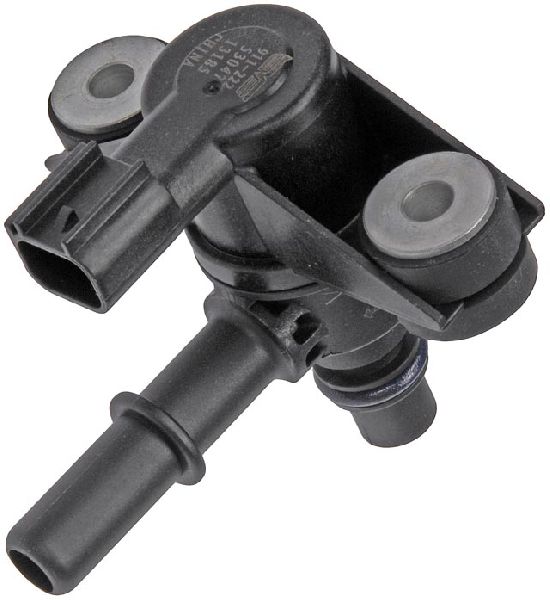
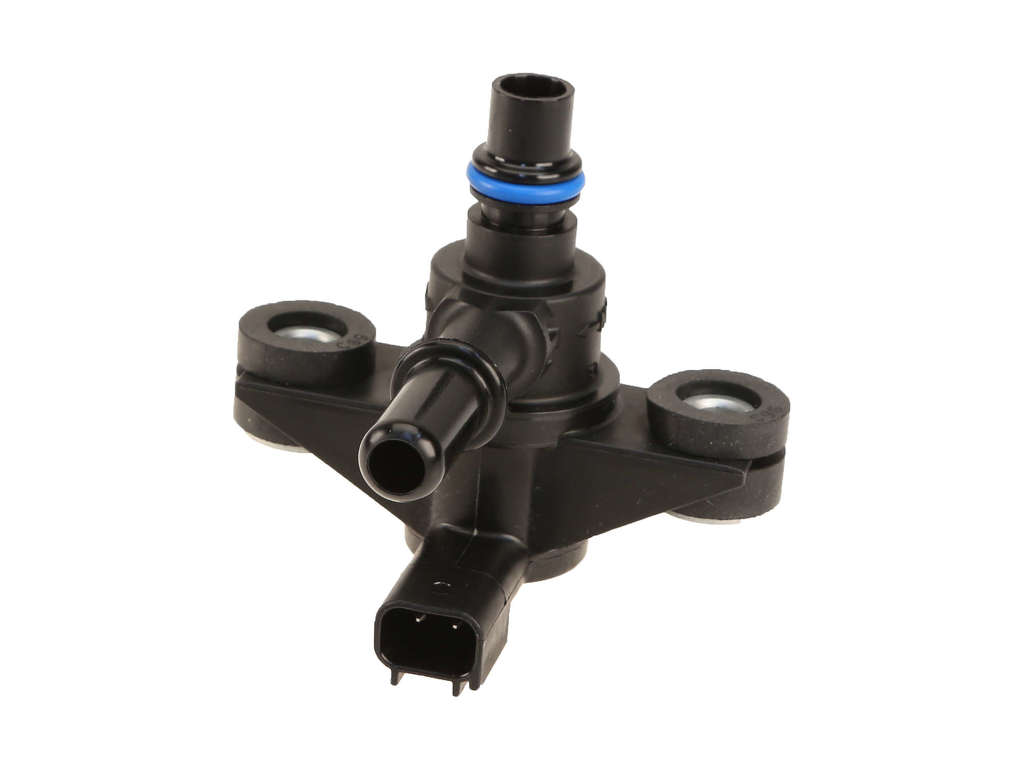
- EVAP Canister Vent Solenoid
(OEM #BL3Z-9F945-B)— This is the most common failure point for code P0446. It can fail electrically (open coil) or become mechanically stuck, causing the circuit fault and the common symptom of difficulty refueling.
Trusted brands: Motorcraft (BL3Z-9F945-B), Dorman (911-535), Standard Motor Products (CP806)
OEM price range: $60-$80
Aftermarket price range: $35-$60
Platform-Specific Known Issues
- There is a known Ford safety recall (18S32 / 18V735) for a stuck-open *canister purge valve* on some Ford models, which can cause fuel tank deformation. While this is not for the vent valve and does not directly cause P0446, it highlights the prevalence of EVAP system component issues on Ford vehicles from this era.
Mechanic-Grade Diagnostic Values
- EVAP Canister Vent Solenoid Coil Resistance — expected: 48 to 65 Ohms. Failure: A reading of infinity (OL) indicates an open coil. A reading significantly outside the range indicates a faulty coil.
- Voltage at Vent Solenoid Connector (Control Wire) — expected: Battery Voltage (approx. 12V) with key on, engine off, solenoid not commanded closed.. Failure: A reading near 0V when not commanded indicates a short to ground in the wiring or a faulty PCM driver. A reading of 1.5-2V could also indicate a faulty PCM driver providing a constant weak ground.
- Ford Mode $06 - EVAP Monitor (EONV) — expected: Monitor ID $3C, Test IDs $81 (Positive Pressure) and $82 (Negative Pressure) will show pressure values in Pascals (Pa).. Failure: While P0446 is a circuit code, if these tests fail to run or show incomplete, it can point to the vent valve not actuating correctly to seal the system for the test.
Hidden / Shadow Codes Worth Checking
- Mode $06, Monitor ID $3C: This is not a trouble code, but a monitor for the Engine Off Natural Vacuum (EONV) leak test. Test IDs $81 and $82 show the results of the positive and negative pressure tests used to detect small leaks (P0456). A technician can view this data to see if the EVAP system is sealing properly, which relies on the vent solenoid functioning correctly. (see via A professional scan tool or advanced DIY tool (like ForScan) that can display Mode $06 non-continuous monitor test results.)
Scan Tool Commands That Help
- Ford IDS, ForScan, or other professional bidirectional scanner: EVAP System Test / Canister Vent (CV) Solenoid Command — This is a primary diagnostic step. Use this command to manually close the vent solenoid. You should hear an audible click from the valve, and the voltage on the control wire should drop from ~12V to near 0V, confirming the PCM driver, wiring, and solenoid coil are all functioning electrically.
Wiring & Ground Locations
- Vent Solenoid Connector — On the EVAP canister vent solenoid, located under the vehicle near the rear axle/fuel tank.. This is the primary connection point to test. The power wire (often Red/Yellow) should have 12V KOEO. The control wire (Green/Violet) is grounded by the PCM.
- Connector C213 — Behind the driver's side kick panel, near the pedals.. This is a major inline connector where the control wire for the vent solenoid passes through and changes color from Green/Violet to Green/Blue on its way to the PCM. It's a key place to test for continuity if a wiring break is suspected between the front and rear of the vehicle.
- PCM Connector C175B, Pin 20 — At the Powertrain Control Module (PCM), typically located in the engine bay near the firewall.. This is the final pin on the control circuit. Testing here can definitively determine if the PCM is correctly sending the ground signal or if it is faulty (e.g., constantly grounded). The wire color here should be Green/Blue.
- Ground Points (e.g., G400, G401) — General rear vehicle grounds are located on the frame rail above the rear axle or under the tailgate area. Specific diagrams for the 2011 Explorer show numerous ground points throughout the vehicle.. While the vent solenoid is controlled by a PCM ground, a poor chassis or PCM ground can cause a variety of unpredictable electrical issues, including faulty driver operation. Verifying main body and PCM grounds are clean and tight is a good practice in complex electrical diagnoses.
Real Owner Repair Stories
- YouTube channel 'Passion For Knowledge' (2013 Ford Explorer) — Check Engine Light on, difficulty refueling (gas pump keeps shutting off).
❌ Tried (didn't work) Initial diagnosis pointed towards the common vent valve failure.
✅ What actually fixed it The PCM driver was faulty and constantly grounding the vent valve circuit. The control wire showed a constant 1.5V instead of the expected 12V. Replacing the PCM resolved the issue. - YouTube channel 'Ford Tech Makuloco' (Ford F-150 (similar EVAP principle)) — Check Engine Light with P0446, difficulty refueling.
❌ Tried (didn't work) Bench-tested the original vent solenoid, and it actuated correctly with 12V power.
✅ What actually fixed it A corroded wire in the harness leading to the vent solenoid was found. The wire was broken internally but looked fine from the outside. Repairing the wire fixed the circuit fault and cleared the code. - NHTSA ODI #11670709 (Ford Edge - cross-manufacturer reference) — An owner reported that the engine warning light was illuminated and a vehicle scanner retrieved DTC P0446 (Evaporative Emission Control System (EVAP) vent control circuit malfunction).
"I Checked Everything" — The Actual Cause
- A smoke test will almost always come back clean for a P0446 code, which can be misleading. This code specifically indicates an electrical CIRCUIT fault, not a physical leak in the system. Technicians may waste time smoke testing for a leak (which would set codes like P0455 or P0456) when they should be diagnosing the electrical circuit. The actual cause is typically an open in the solenoid's coil, a break in the wiring, or a faulty PCM driver, none of which a smoke test can detect.
OEM Part Supersession History
BL3Z-9F945-B→Not directly specified, but Ford frequently supersedes EVAP components.— Often for design improvements to increase durability against heat, moisture, or internal failure.
Heads up: While no direct supersession was found for this specific part, other similar Ford vent solenoids like 7U5Z-9F945-D have been replaced by 9U5Z-9F945-C. It is always critical to verify the part number with the vehicle's VIN at the dealership to ensure you are getting the latest, correct revision.
Diagnostic Flowchart
Other Known Issues on This Vehicle
Issues unrelated to this code that are worth knowing about as an owner of this generation:
- Internal Water Pump Failure (3.5L V6) 🔴 High — Common issue, typically occurring around 100,000 miles. Failure can lead to coolant mixing with engine oil, causing catastrophic engine damage if not caught early.
- Power Transfer Unit (PTU) Failure (AWD Models) 🔴 High — Widespread due to the unit's proximity to the hot exhaust and non-serviceable design, leading to fluid breakdown and gear failure. Symptoms include grinding noises and a burning smell.
- Exhaust Odor / Carbon Monoxide In Cabin 🔴 High — A well-documented issue investigated by NHTSA, often linked to cracked exhaust manifolds or unsealed body seams in the rear of the vehicle, allowing fumes to enter the cabin. (Ref: Multiple TSBs issued, e.g., TSB 16-0166, to address sealing the vehicle body.)
- Power Steering Rack Failure 🟠 Medium — A common complaint area with numerous NHTSA reports. Failures can range from a loss of power assist to complete breakage of the rack and pinion. (Ref: Several recalls were issued, but problems persist even on repaired vehicles.)
- Coolant Intrusion in 2.0L/2.3L EcoBoost Engines 🔴 High — A design flaw in the engine block can lead to cracks between cylinders, causing coolant to leak into the combustion chamber. Symptoms include white smoke and misfires. (Ref: TSB 19-2346 addresses this issue, recommending a long block replacement.)
- MyFord Touch / SYNC System Glitches 🟡 Low — Very common on earlier models (2011-2015). Issues include screen freezing, unresponsiveness, and random reboots. Often requires software updates or module resets.
Used vs. New Parts: Buying Guide for This Vehicle
When a used part is the smart pick: A used EVAP vent solenoid is generally not recommended. The part fails due to electrical coil burnout or mechanical sticking from exposure to elements, and a used part from a junkyard has unknown remaining life and is likely exposed to the same conditions. Given the low cost of a new aftermarket part ($35-$60), buying new is the smarter choice.
Donor-vehicle mileage cap: roughly under 20000 miles for the part to have meaningful remaining life.
What to inspect on the donor part:
- Check for heavy rust or corrosion on the electrical pins.
- Ensure the plastic housing is not cracked or brittle.
- If possible, test the resistance with a multimeter before purchase; it should be between 48-65 ohms.
OEM-only on this vehicle (don't cheap out):
- Powertrain Control Module (PCM) - Due to programming requirements (PATS key system, VIN), a PCM must be new or a specialized remanufactured unit programmed specifically for the vehicle.
Aftermarket brands forum-validated for this vehicle:
- Dorman (specifically part 911-535) is a widely available and generally well-regarded option for this repair.
- Standard Motor Products (SMP)
Brands owners have reported issues with on this vehicle:
- No-name, unbranded parts from online marketplaces should be avoided, as their internal coil quality and valve sealing can be inconsistent, leading to a quick repeat failure.
Real Owner Stories
Aggregated from forums and TSBs cited above. Mileages and costs reflect what owners reported in those sources.
2013 Ford Explorer
Symptoms: Check engine light on; extensive diagnosis revealed a constant ground-side switched circuit issue.
What fixed it: Replacement of the PCM after identifying it was the source of the constant ground on the control wire.
Source hint: YouTube - '2013 Ford Explorer P0446'
2011-2019 Ford Explorer (3.5L V6) — ~100000 miles
Symptoms: Coolant mixing with engine oil, potentially leading to catastrophic engine damage.
What fixed it: Replacement of the internal water pump.
Source hint: vehicle_specific_issues - Internal Water Pump Failure (3.5L V6)
Related OBD-II Codes
Frequently Asked Questions
Is there a recall for the EVAP system on my 2011-2019 Ford Explorer that causes the P0446 code?
Why does the gas pump nozzle keep shutting off every few seconds when I try to fill up my Explorer?
Where is the vent solenoid located on my Ford Explorer?
What is the correct electrical resistance for a healthy vent solenoid on this vehicle?
Can a bad PCM cause a P0446 on a 2013 Ford Explorer?
I see green powder in my vent valve connector; is this a problem?
Helpful Videos

Used OEM Parts in Stock
New Aftermarket Parts Available


The information in this article is provided for general reference and educational purposes only. Vehicle specifications, procedures, and part compatibility can vary by production date, trim level, and region. Always consult your vehicle's factory service manual and verify part numbers before purchasing or performing repairs. Safety-critical components such as airbags, seat belts, and braking systems should be installed by a qualified professional.
- Ford Explorer:
- 🧭 Diagnostic Flowchart
- 🎬 Helpful Videos
- 🛍️ Shop This Part
- What's Unique About the 2011-2019 Ford Explorer
- Symptoms You May Notice
- Most Likely Causes
- Rare But Worth Checking
- Diagnosis Steps
- Parts You'll Likely Need
- Platform-Specific Known Issues
- Mechanic-Grade Diagnostic Values
- Hidden / Shadow Codes Worth Checking
- Scan Tool Commands That Help
- Wiring & Ground Locations
- Real Owner Repair Stories
- "I Checked Everything" — The Actual Cause
- OEM Part Supersession History
- Other Known Issues on This Vehicle
- Used vs. New Parts: Buying Guide for This Vehicle
- Real Owner Stories
- 2013 Ford Explorer
- 2011-2019 Ford Explorer (3.5L V6) — ~100000 miles
- Related OBD-II Codes
- Frequently Asked Questions
- 🎟️ Get 5% Off