

P0446 on 2004-2008 Ford F-150 4.6L: EVAP Vent Circuit Causes and Fixes
On a 2004-2008 F-150, code P0446 is almost always an electrical problem with the EVAP canister vent solenoid or its wiring, located above the spare tire. Expect to fix a broken wire or replace the solenoid for $30-$90 in parts, making it a common DIY repair. The issue is rarely the PCM.
- P0446 on this F-150 is an electrical circuit code, not a leak code. Do not start by replacing the gas cap.
- The most likely cause is a broken wire or corroded connector for the vent solenoid, located above the spare tire.
- Before buying parts, always perform a visual inspection and a 'tug test' of the wiring and check the 7.5A fuse (F5) in the passenger kick panel.
- The repair is very accessible for a DIYer; lowering the spare tire is the main step required to gain access.
- The vent solenoid and the purge solenoid are two different parts; P0446 relates to the vent solenoid at the rear of the truck.
What's Unique About the 2004-2008 Ford F-150
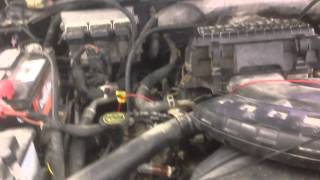
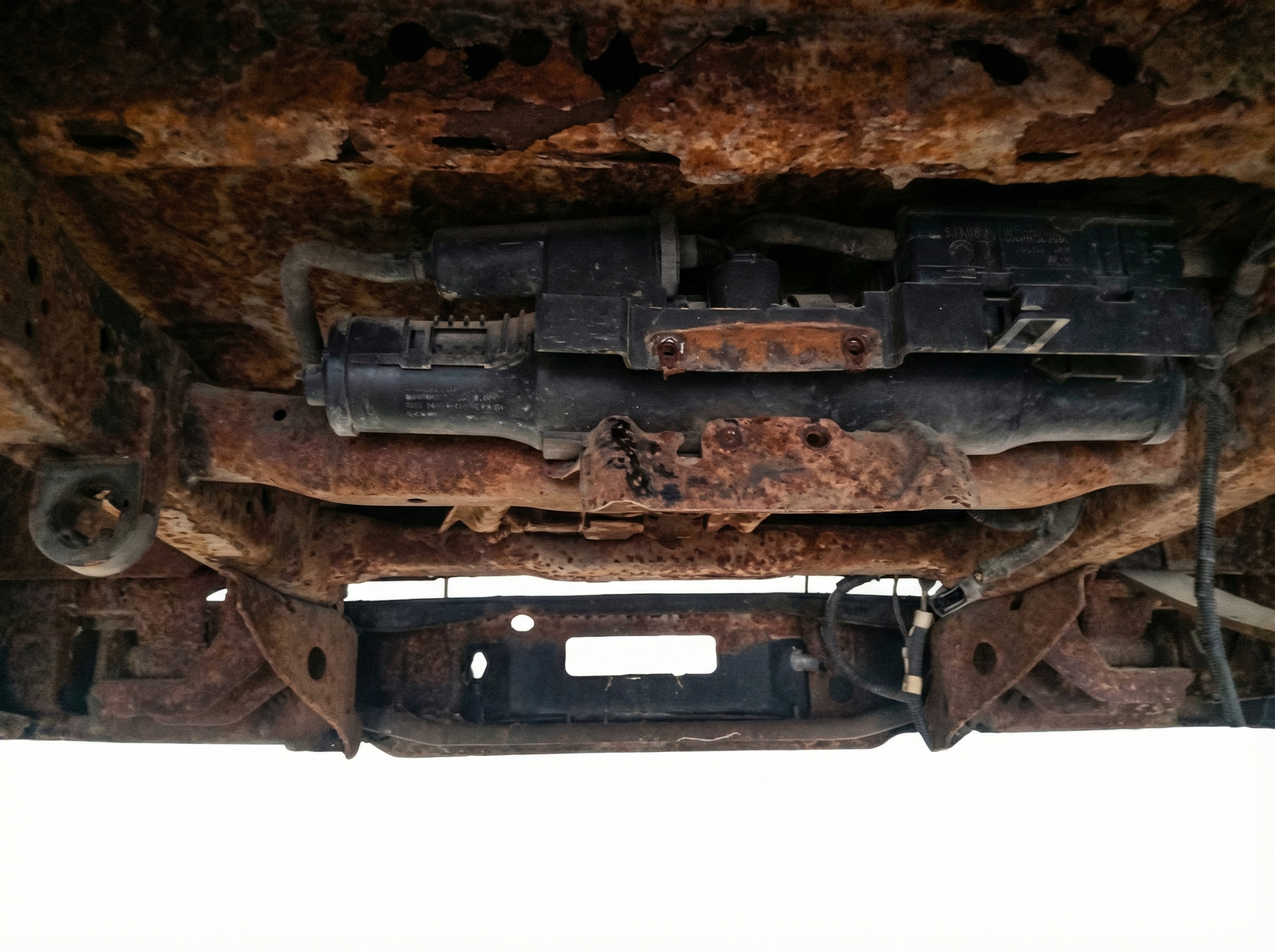
For the 11th generation F-150 (2004-2008), the P0446 code is overwhelmingly an electrical circuit fault, not a mechanical blockage. Owners frequently find the solution is not the part itself, but the wiring leading to it. The vent solenoid and its connector are located above the spare tire, leaving them exposed to road debris, moisture, and corrosion. This often leads to broken wires right at the connector 🎬 Watch: How to find and repair broken vent solenoid wires. or along the frame rail. This area also houses the failure-prone Fuel Pump Driver Module (FPDM), highlighting the general vulnerability of components mounted to the rear frame crossmember on these trucks.
Symptoms You May Notice
- Check Engine Light is on.
- Difficulty filling the fuel tank (gas pump clicks off before the tank is full).
- A faint fuel smell near the rear of the truck (less common than with leak codes).
- Message on dash display such as "Check Fuel Fill Inlet" on some models, although this is more common on newer F-150s.
- Replacing the gas cap. A bad gas cap will typically cause a leak-related code (like P0455 or P0457), not a circuit code like P0446.
- Replacing the EVAP purge valve/solenoid. The purge valve is located in the engine bay and has its own circuit code (P0443). P0446 specifically refers to the vent circuit at the rear of the vehicle.
Most Likely Causes
- Damaged Wiring or Connector to Vent Solenoid 🔴 High Probability The wiring harness runs along the frame and up to the solenoid above the spare tire, making it highly susceptible to corrosion, road debris, and rodent damage. Wires often corrode internally and break inside the insulation, sometimes several inches or feet from the connector.
How to confirm: Visually inspect the connector and wires leading to the canister vent solenoid. Gently tug on each wire at the connector; a corroded wire will often break or pull out. Check for continuity on the control wire (often Violet/White) from the solenoid connector to the PCM. Check for battery voltage on the power wire (often Dark Green or Red/Yellow); a low reading like ~2.25V indicates a corroded wire or connection upstream. Also inspect the large harness connector on the outside of the frame under the driver's side door, as pins here are known to fail.
Typical fix: Repair the broken wire(s) with heat-shrink butt connectors or replace the entire connector pigtail if it is corroded or damaged. If a pin in the main frame harness connector is the cause, it may be necessary to bypass the connector for that specific wire.
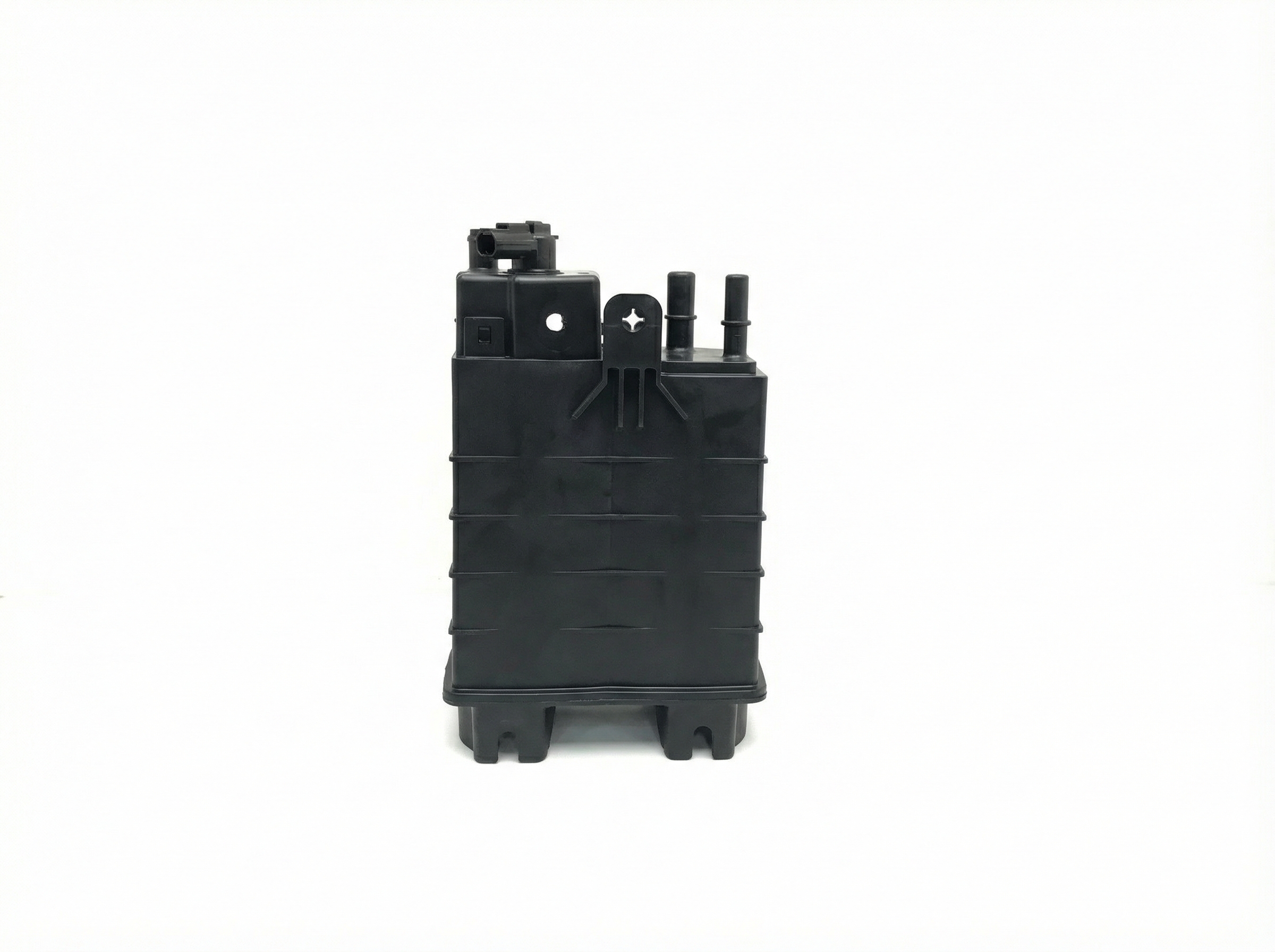
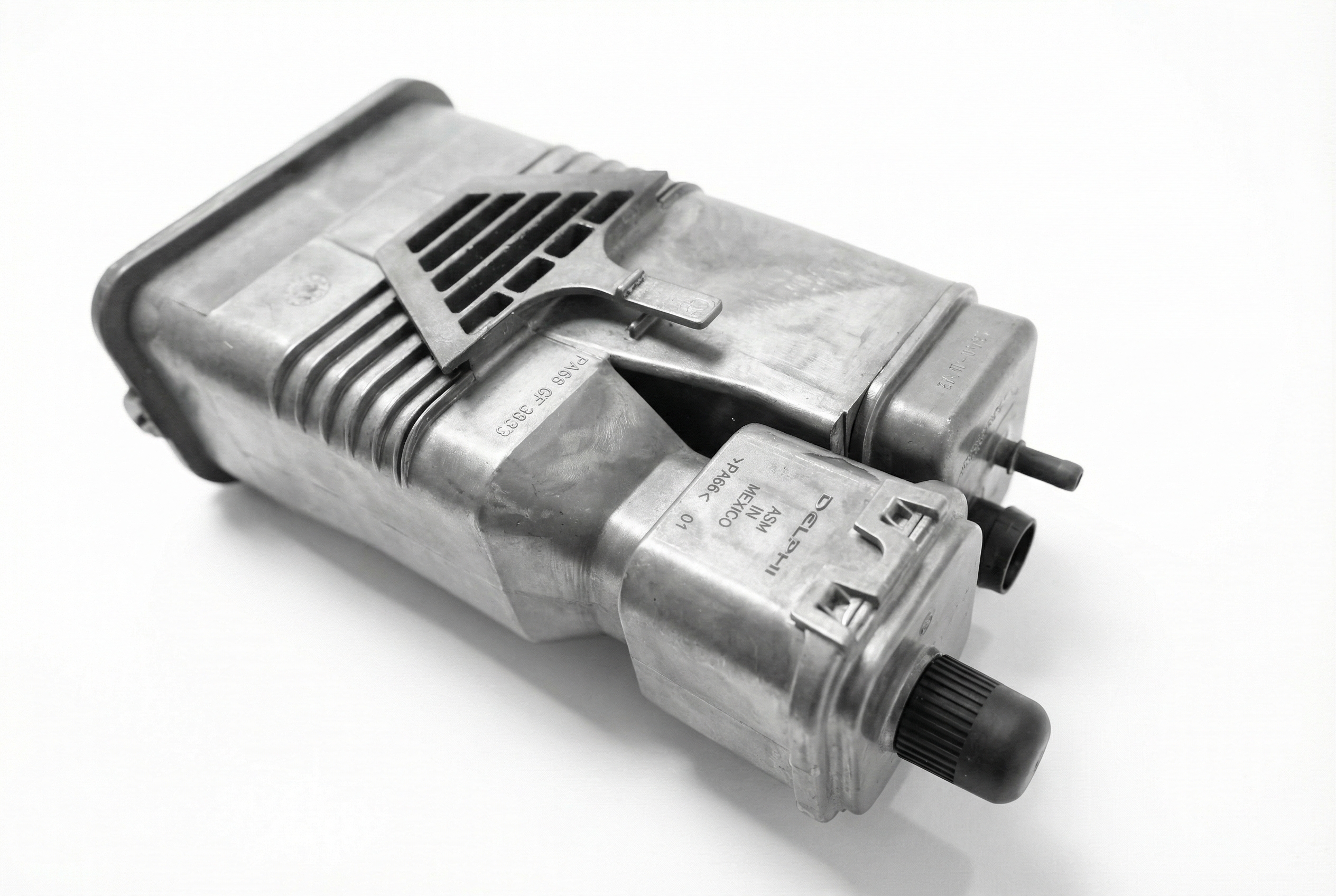
Est. part cost: $15-$40 - Faulty Canister Vent Solenoid 🔴 High Probability → Shop Vapor Canister The solenoid is an electromechanical part that can fail over time due to heat cycles and internal corrosion, causing an open or shorted coil.
How to confirm: Disconnect the solenoid and measure the resistance across its two pins with a multimeter. A reading of approximately 45-68 ohms is expected. A reading of infinity (OL) indicates an open coil, while a reading near zero indicates a short. You can also try applying 12V directly to the solenoid to see if it clicks open and closed.
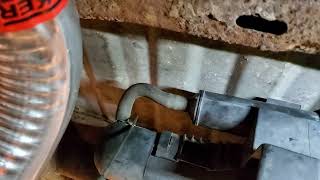
Typical fix: Replace the canister vent solenoid. The part is located above the spare tire and is often attached directly to the charcoal canister. 🎬 Watch: Step-by-step guide to replacing the canister vent solenoid.
Est. part cost: $30-$90 - Blown Fuse ⚪ Low Probability
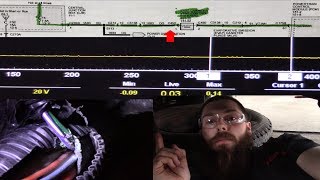
How to confirm: Check fuse F5 (7.5A) in the passenger compartment fuse panel, located under the dashboard on the passenger side. A YouTube repair video confirms this is the correct fuse to check for the vent 🎬 See this video for a full P0446 diagnostic walkthrough. solenoid circuit.
Typical fix: Replace the blown fuse. If it blows again immediately, a short circuit exists in the wiring that must be found and repaired.
Est. part cost: $1-$5
Rare But Worth Checking
- Damaged Powertrain Control Module (PCM): This is extremely rare. The PCM driver for the vent solenoid circuit can fail, but this should only be considered after the solenoid, wiring, and fuse have all been confirmed to be good.
Diagnosis Steps
- Scan for any other stored trouble codes to get a full picture of the issue.
- Lower the spare tire to gain access to the EVAP canister and vent solenoid, located above the rear differential.
- Perform a close visual inspection of the vent solenoid's electrical connector and the surrounding wires. Look for green/white corrosion, chafed insulation, or obviously broken wires. Perform a 'tug test' on the wires; corroded wires often break with a gentle pull.
- Check fuse F5 (7.5A) in the passenger-side kick panel fuse box.
- If the wiring and fuse look good, disconnect the solenoid. Test the solenoid's coil resistance with a multimeter. A reading between 45 and 68 ohms is good.
- Test the circuit. With the key on, engine off, one wire at the connector should have full battery voltage (often a Dark Green or Red/Yellow wire). If voltage is low (e.g., ~2V), suspect a corroded wire upstream. The other wire (often Violet/White) is the control wire that goes to the PCM; check it for continuity back to the PCM (Pin 61).
- If the solenoid has failed, replace it. If the wiring is damaged, repair the wire or replace the connector pigtail.
- Inspect other nearby components for corrosion, such as the Fuel Pump Driver Module (FPDM), as its failure can cause unrelated starting/stalling issues.
- Clear the codes with a scan tool and perform a drive cycle to confirm the fix.
Parts You'll Likely Need
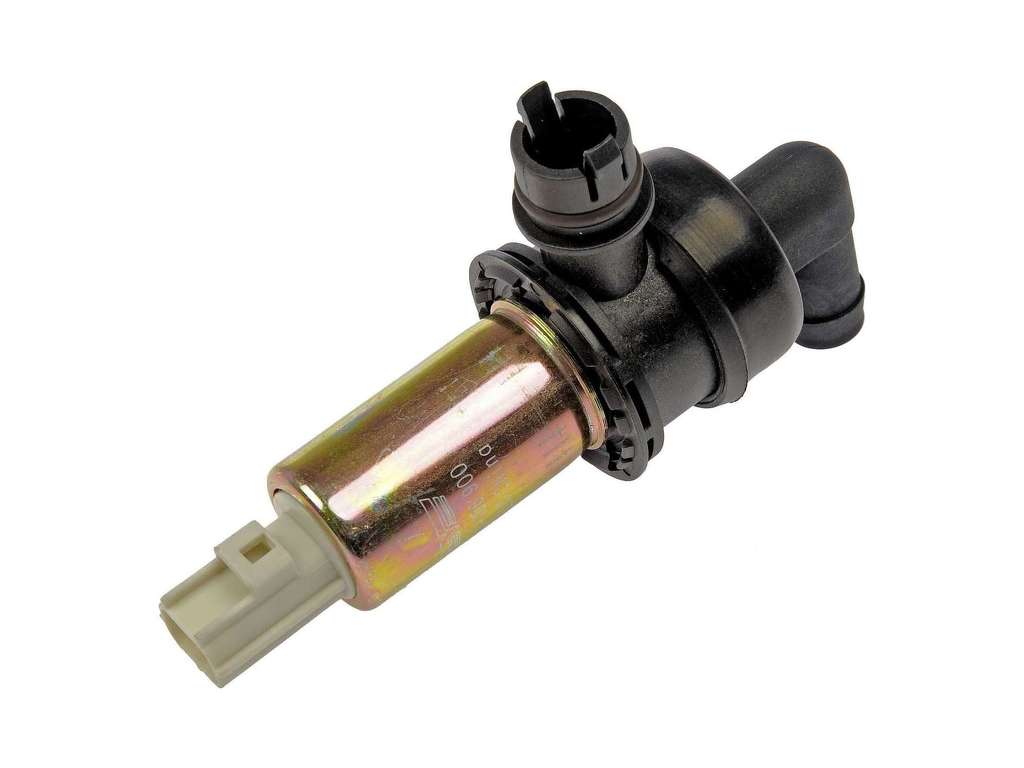
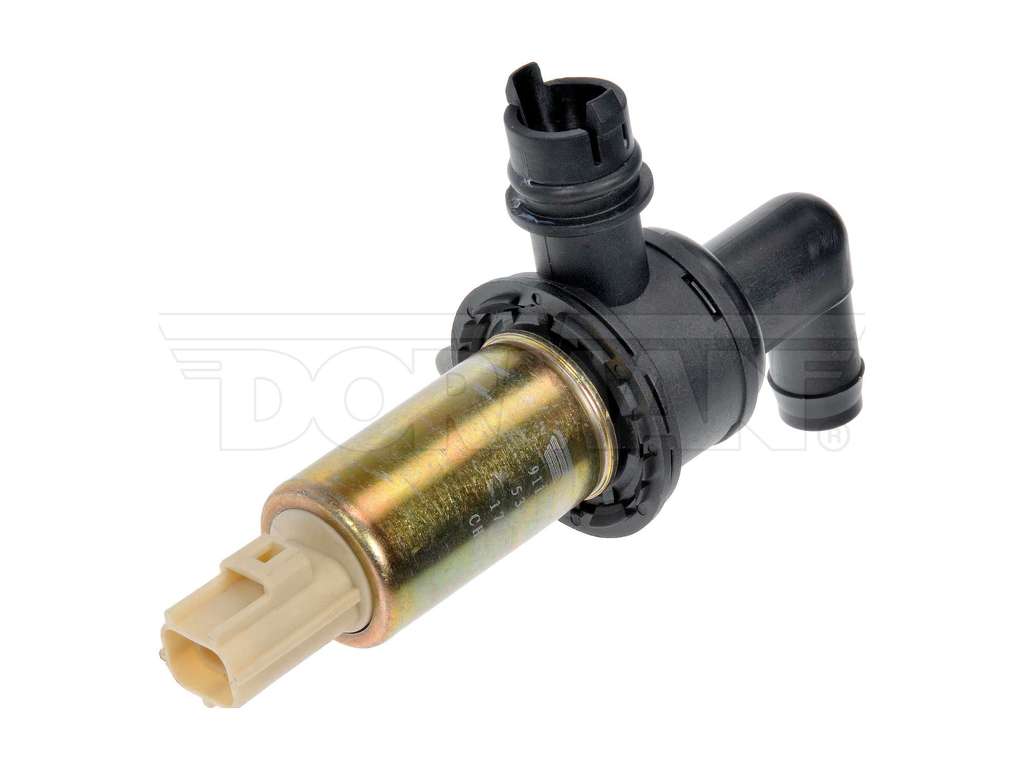
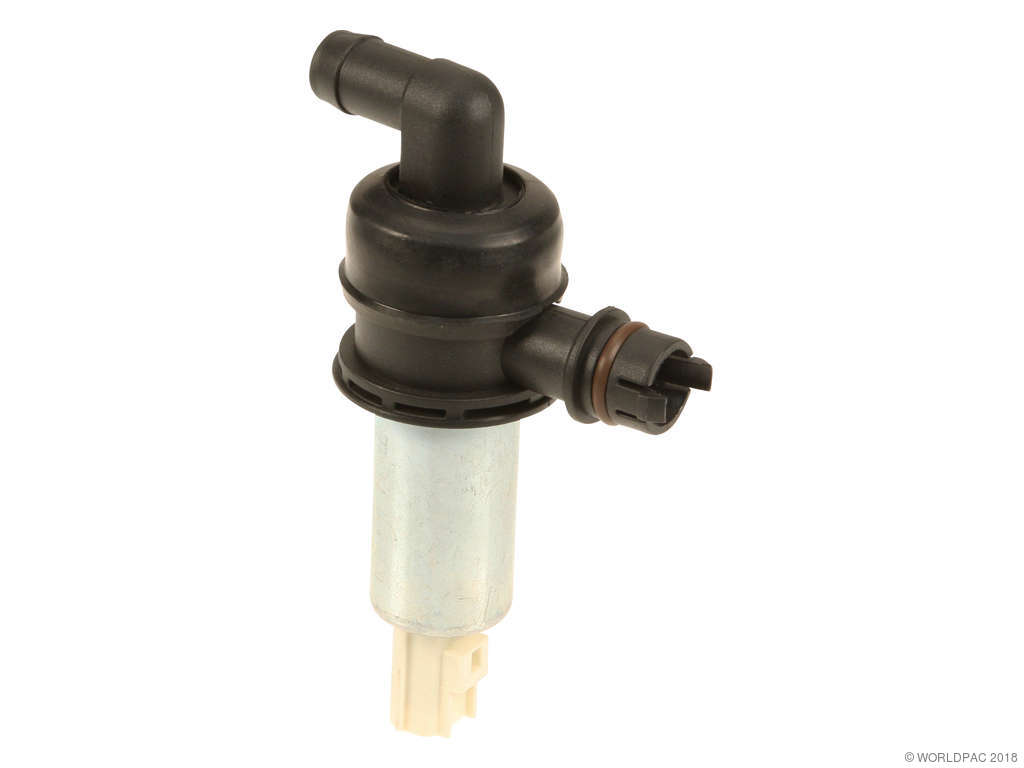
- EVAP Canister Vent Solenoid
(OEM #7L3Z-9C915-A (Verify by VIN))— This is the most common component to fail electrically, causing the P0446 circuit code.
Trusted brands: Motorcraft, Standard Motor Products (CVS80), Dorman (911-237)
OEM price range: $70-$120
Aftermarket price range: $30-$90 - EVAP Canister Vent Solenoid Connector Pigtail
(OEM #WPT-1105 (Unconfirmed, Visually Match))— The connector itself is a frequent failure point due to corrosion from its exposed location under the truck. The specific WPT pigtail number is difficult to confirm; visually matching the connector is the best practice.
Trusted brands: Motorcraft (WPT-series), Standard Motor Products (S-1080), Dorman
OEM price range: $30-$50
Aftermarket price range: $15-$30
Related Codes That Often Appear With This One
- P0442 — If the vent solenoid is malfunctioning (e.g., stuck partially open), it can cause the system to fail a small leak test, triggering a P0442 (Small Leak Detected) code alongside the circuit code.
Platform-Specific Known Issues
- Corroded Main Harness Connector: A user on Ford-Trucks.com traced their P0446 fault to a corroded multi-pin connector located on the outside of the frame rail under the driver's side door. After cleaning it previously, the pins eventually failed, and they had to run a jumper wire around the connector to restore power to the vent solenoid circuit.
- Internal Wire Breakage: A detailed YouTube repair video for a P0446 on an F-150 showed that the power wire (Dark Green) had corroded internally and broke away from the connector when tugged, despite looking intact from the outside. This highlights the importance of physically testing the wires, not just visually inspecting them.
Mechanic-Grade Diagnostic Values
- Canister Vent (CV) Solenoid Coil Resistance — expected: 45 - 65 Ohms (A common value cited is 55 +/- 10 ohms).. Failure: A reading of infinity/OL (open circuit) or near zero ohms (short circuit) indicates a failed solenoid.
- CV Solenoid Connector Power Wire Voltage — expected: Battery Voltage (~12V) with Key On, Engine Off.. Failure: A reading of 0V indicates an open circuit or blown fuse. A low reading, such as 2.5V, strongly suggests high resistance from corrosion in the wire or an upstream connector.
- CV Solenoid Control Wire Continuity — expected: Near zero ohms of resistance between the solenoid connector and PCM pin 61.. Failure: A reading of infinity/OL indicates a broken wire.
- Fuel Tank Pressure (FTP) Sensor Voltage (KOEO) — expected: ~2.6 Volts at atmospheric pressure.. Failure: This is a baseline reading. While not a direct test for the P0446 circuit code, an incorrect baseline voltage could indicate a faulty sensor that may trigger other EVAP codes.
Scan Tool Commands That Help
- Ford IDS, FORScan, or equivalent professional scan tool: EVAP Canister Vent Solenoid (EVAPCV) On/Off Command — This bidirectional control is used to verify the integrity of the circuit from the PCM to the solenoid. A technician connects a test light to the solenoid connector and commands the solenoid on and off with the scan tool. If the test light illuminates and extinguishes as commanded, it proves the PCM driver and the wiring are capable of controlling the circuit, isolating the fault to a bad solenoid or an intermittent connection.
Wiring & Ground Locations
- PCM Connector C175B, Pin 61 — This is the middle connector on the Powertrain Control Module (PCM), which is located on the passenger-side firewall in the engine bay.. This is the specific pin for the Canister Vent Solenoid control wire (typically Violet/White). Checking for continuity from this pin to the solenoid connector is a definitive test of the control wire's integrity.
- Fuse F5 (Passenger Compartment) — Located in the Central Junction Box (passenger kick panel fuse box).. This 7.5A fuse provides power to the Canister Vent Solenoid circuit. If this fuse is blown, there will be no power at the solenoid.
- Ground G401 — Under the center rear of the vehicle, on a rear frame crossmember.. This is a primary chassis ground point in the vicinity of the EVAP canister and Fuel Pump Driver Module. While the vent solenoid is grounded through the PCM, a poor chassis ground in this area can cause electrical noise and voltage drop issues for multiple components, potentially affecting sensor readings and component performance. The source document is for a 1992 model, but the location of rear frame grounds is often consistent across generations.
Real Owner Repair Stories
- YouTube video by 'a DIY mechanic' (Ford F-150 (2004-2008 generation)) — Check Engine Light with code P0446, difficulty refueling.
❌ Tried (didn't work) Testing the canister vent solenoid with 12V power (it clicked, indicating it was mechanically okay)., Checking the ground circuit from the PCM (it was within spec).
✅ What actually fixed it The mechanic found fluctuating, low voltage on the Dark Green power wire at the solenoid connector. By performing a 'tug test,' the wire broke, revealing it had corroded internally and was making a poor connection. The fix was to cut back the harness, find clean wire, and splice in a new section to repair the corroded power wire. - Ford F150 Forum user 'ProjectSHO89' (2006 Ford F-150 5.4L) — Hard P0446 code that comes back immediately after clearing.
❌ Tried (didn't work) Clearing the code., Mistakenly suspecting the gas cap (which causes leak codes, not circuit codes).
✅ What actually fixed it The user, a knowledgeable forum member, provided the definitive diagnostic procedure that leads to the fix: 1) Check solenoid resistance for 55 +/- 10 ohms. 2) Verify battery power on the Red/Yellow wire (KOEO). 3) Check continuity of the Violet/White wire from the solenoid back to PCM connector C175B, pin 61. Following these steps isolates the electrical fault to the solenoid or the specific wire that has failed. - NHTSA ODI #11670709 — An owner of a similar Ford platform reported that the engine warning light was illuminated and a vehicle scanner retrieved DTC P0446 (Evaporative Emission Control System (EVAP) vent control circuit malfunction).
Model Year Variations Within This Range
- 2004-2008: The wire color for the 12V power feed to the canister vent solenoid may vary. Some diagrams and user reports indicate a Red/Yellow wire, while others show a Dark Green wire. Technicians should be prepared for either color when testing for power at the connector.
Diagnostic Flowchart
Other Known Issues on This Vehicle
Issues unrelated to this code that are worth knowing about as an owner of this generation:
- Spark Plug Breakage/Ejection 🔴 High — Very common, especially on the 5.4L 3V engine. The 4.6L 2V engine is more prone to spark plug ejection (stripping threads) than breakage. The two-piece plugs on the 3V engine are notorious for breaking during removal after 60,000+ miles due to carbon buildup.
- Fuel Pump Driver Module (FPDM) Failure 🔴 High → Shop Fuel Pump — Extremely common in regions with road salt. The module is mounted to a frame cross-member above the spare tire, and its aluminum body corrodes, exposing the internal electronics to moisture. Leads to crank-no-start or stalling.
- Power Window Regulator Failure 🟠 Medium — Common, particularly in 2004-2005 models. The regulator cable or plastic components fail, causing the window to suddenly drop into the door, often accompanied by a grinding or popping noise.
- Exhaust Manifold Leak (Ticking Noise) 🟠 Medium — Common across all model years. The exhaust manifold studs, especially those nearest the firewall, rust and break, or the manifold itself warps. This creates a leak that produces a ticking sound, most noticeable when the engine is cold.
Used vs. New Parts: Buying Guide for This Vehicle
When a used part is the smart pick: For this repair, buying new aftermarket parts is generally recommended due to the low cost and high failure rate of the original components from corrosion. However, if sourcing a complete charcoal canister assembly, a used part from a low-mileage, dry-climate (non-salt-belt) vehicle can be a viable, cost-effective option.
Donor-vehicle mileage cap: roughly under 100000 miles for the part to have meaningful remaining life.
What to inspect on the donor part:
- Check for zero rust or corrosion on the solenoid's metal body and electrical pins.
- Inspect the plastic housing for cracks or heat damage.
- Ensure the wiring pigtail on the donor part is clean and flexible, not brittle.
- Ask for the VIN to verify the donor vehicle's origin (prefer southern/western states over rust-belt states).
OEM-only on this vehicle (don't cheap out):
- Powertrain Control Module (PCM) - Should only be replaced with a new or professionally remanufactured, correctly programmed unit as a last resort.
Aftermarket brands forum-validated for this vehicle:
- Motorcraft (OEM)
- Standard Motor Products (SMP)
- Dorman
Real Owner Stories
Aggregated from forums and TSBs cited above. Mileages and costs reflect what owners reported in those sources.
2004-2008 Ford F-150
Symptoms: The power wire (Dark Green) looked intact from the outside but had corroded internally and broke away from the connector when tugged.
What fixed it: Repaired the broken wire using a 'tug test' to identify the internal break and restored the circuit connection.
Source hint: YouTube (Ford F150 P0446 Diagnosis and Repair)
2004-2008 Ford F-150
Symptoms: P0446 fault traced to a multi-pin connector on the outside of the frame rail under the driver's side door where pins eventually failed due to corrosion.
What fixed it: Ran a jumper wire around the corroded main harness connector to restore power to the vent solenoid circuit.
Source hint: ford-trucks.com - Provided user experiences with diagnosing the circuit
2004-2008 Ford F-150
Symptoms: An owner reported the engine warning light was illuminated and a scan retrieved DTC P0446, indicating an EVAP vent control circuit malfunction.
What fixed it: Diagnostic verification of the vent control circuit as described in NHTSA ODI #11670709.
Source hint: NHTSA ODI #11670709
Related OBD-II Codes
Frequently Asked Questions
Where is the EVAP vent solenoid located on my 2004-2008 F-150?
Why does the gas pump click off repeatedly when I try to fill my truck?
Which fuse should I check for the P0446 circuit on my F-150?
I see a 'Check Fuel Fill Inlet' message on my dash; is this related to P0446?
What are the common wire colors for the vent solenoid circuit on this Ford?
Can a bad Fuel Pump Driver Module (FPDM) cause a P0446 code?
Helpful Videos

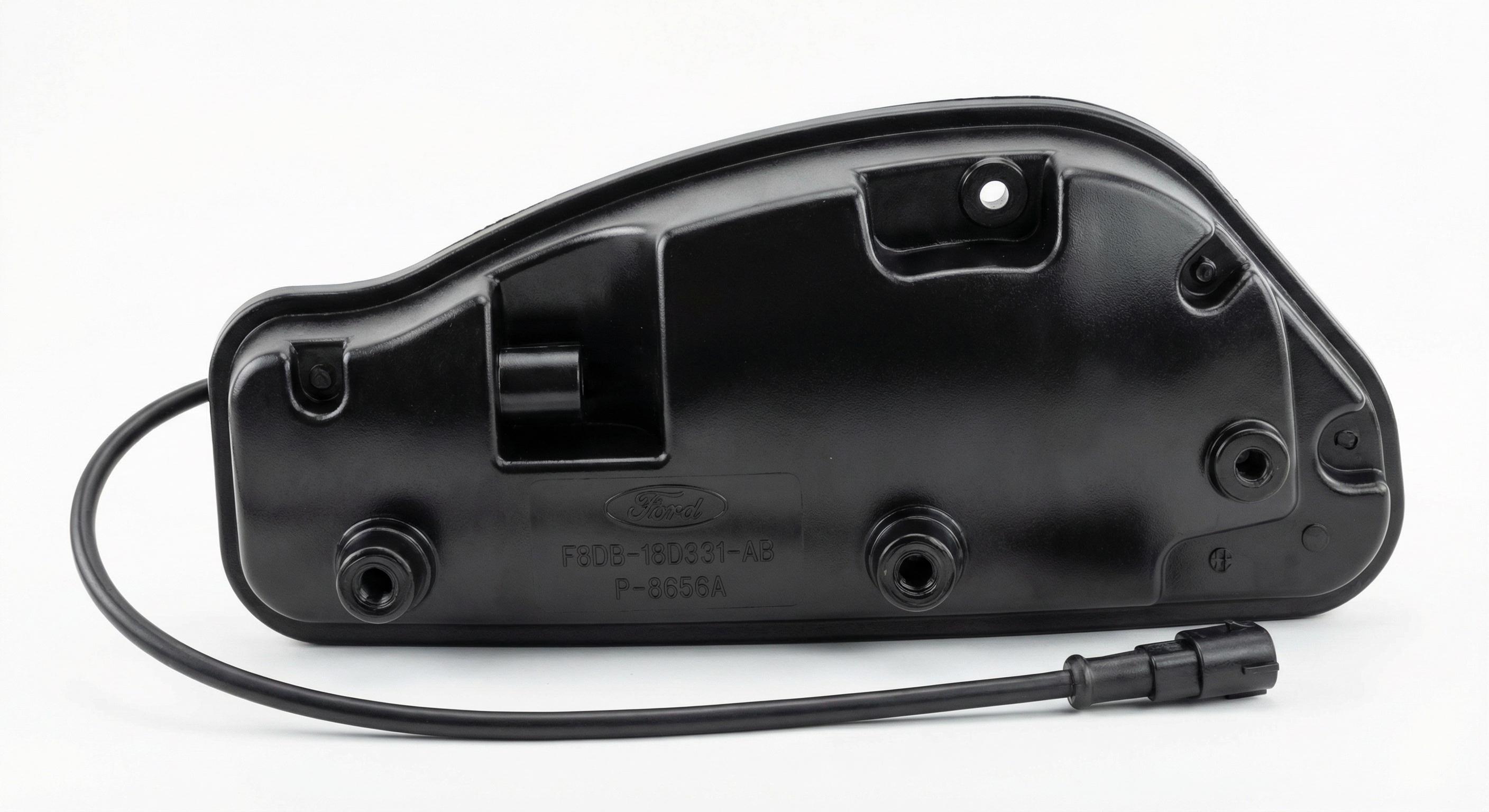
Used OEM Parts in Stock
New Aftermarket Parts Available


The information in this article is provided for general reference and educational purposes only. Vehicle specifications, procedures, and part compatibility can vary by production date, trim level, and region. Always consult your vehicle's factory service manual and verify part numbers before purchasing or performing repairs. Safety-critical components such as airbags, seat belts, and braking systems should be installed by a qualified professional.
- Ford F-150:
- 🧭 Diagnostic Flowchart
- 🎬 Helpful Videos
- 🛍️ Shop This Part
- What's Unique About the 2004-2008 Ford F-150
- Symptoms You May Notice
- Most Likely Causes
- Rare But Worth Checking
- Diagnosis Steps
- Parts You'll Likely Need
- Related Codes That Often Appear With This One
- Platform-Specific Known Issues
- Mechanic-Grade Diagnostic Values
- Scan Tool Commands That Help
- Wiring & Ground Locations
- Real Owner Repair Stories
- Model Year Variations Within This Range
- Other Known Issues on This Vehicle
- Used vs. New Parts: Buying Guide for This Vehicle
- Real Owner Stories
- 2004-2008 Ford F-150
- 2004-2008 Ford F-150
- 2004-2008 Ford F-150
- Related OBD-II Codes
- Frequently Asked Questions
- 🎟️ Get 5% Off