

P0446 on 2012-2018 Ford Focus 2.0L: Purge Valve and EVAP Causes
On a 2012-2018 Ford Focus, code P0446 almost always points to a faulty canister purge valve located in the engine bay, not the vent valve mentioned in the code's generic definition. This is a very common failure, was subject to a major safety recall (18S32), and is a relatively inexpensive DIY fix (~$30-$60 for the part). A stuck-open purge valve can also cause stalling and difficulty starting after refueling.
- For a 2012-2018 Ford Focus, P0446 almost always means the canister purge valve in the engine bay has failed.
- Before purchasing parts, check if your vehicle is eligible for the free repair under Ford safety recall 18S32.
- Symptoms like a rough idle, stalling, and difficulty starting after fueling are strong indicators of this specific purge valve failure.
- Do not confuse the purge valve (in the engine bay) with the vent valve (at the rear of the car). Replacing the wrong part is the most common misdiagnosis.
- Replacing the purge valve is a very simple, 15-minute DIY job that can save you hundreds at a repair shop.
What's Unique About the 2012-2018 Ford Focus
While the P0446 code's name points to the vent circuit at the rear of the car, the 2012-2018 Focus has a well-documented history of failures with the canister purge valve in the engine bay. This specific part was the subject of a major safety recall (Ford 18S32 / NHTSA 18V-735) because when it sticks open, it can create excessive vacuum in the fuel system. This deforms the plastic fuel tank, which can lead to an inaccurate fuel gauge, and in some cases, cause the engine to stall while driving, increasing the risk of a crash. For this reason, when a Mk3 Focus owner sees P0446, often accompanied by P1450, the purge valve should be the primary suspect, despite the misleading code definition.
Symptoms You May Notice
- Check Engine Light illuminated
- Rough, unstable, or surging idle
- Engine stalling, especially at low speeds or when coming to a stop
- Difficulty starting the engine right after refueling 🎬 Watch: Why your Focus stalls after getting gas
- Inaccurate or erratic fuel gauge reading
- A 'whoosh' sound of air when opening the gas cap
- Poor fuel economy
- Misfire on startup (may be accompanied by code P0316)
- Replacing the canister vent valve at the rear of the car first, based on the generic code definition, when the issue is the purge valve in the engine bay.
- Replacing the gas cap. A bad gas cap typically causes large or small leak codes (like P0455 or P0457), not a P0446 circuit/flow code on this platform.
Most Likely Causes
- Faulty Canister Purge Valve (Purge Solenoid) 🔴 High Probability → Shop Vapor Canister This part has a very high failure rate on this platform and was subject to safety recall 18S32. It commonly gets stuck open, allowing a constant flow of un-metered fuel vapor into the engine and creating excessive vacuum in the fuel tank.
How to confirm: The valve is located in the engine bay near the firewall, with hoses connected to the intake manifold and the EVAP line. A simple test is to disconnect the electrical connector and the hose leading to the EVAP canister (the line from the firewall). Start the engine. If you can feel vacuum suction from the valve's port where the hose was connected, the valve is stuck open and has failed. A healthy valve should be closed with no electrical power. You can also test the two pins on the valve with a multimeter; a healthy valve should have a resistance of around 20-30 ohms.
Typical fix: Replace the canister purge valve assembly. This is a simple DIY job involving disconnecting two quick-connect hoses and an electrical connector.
Est. part cost: $30-$60 - Faulty Canister Vent Valve (Vent Solenoid) ⚪ Low Probability → Shop Vapor Canister While this is the part named in the code definition, it is a much less common failure on this specific vehicle compared to the purge valve. It should only be investigated after the purge valve has been confirmed to be working correctly.
How to confirm: The vent valve is located at the rear of the vehicle, attached to the charcoal canister behind the driver's side rear wheel well. Diagnosis involves checking for power at the connector and testing if the solenoid actuates. It is normally open and should close when 12V is applied. Clogs from dirt or spider webs can also cause issues.
Typical fix: Replace the canister vent valve. This is more difficult than the purge valve due to its location and exposure to road grime.
Est. part cost: $45-$85 - Damaged Wiring or Connectors ⚪ Low Probability Less common than component failure, but wiring to either the purge or vent valve can be damaged. One owner on a forum reported that a rubbing harness caused multiple, difficult-to-diagnose EVAP codes. Rodent damage to the wiring for the Fuel Tank Pressure (FTP) sensor on top of the fuel tank is also a known issue.
How to confirm: Visually inspect the wiring and connectors for both the purge valve (engine bay) and vent valve (rear of car) for any signs of corrosion, breaks, chafing, or rodent damage. The FTP sensor wiring can be accessed by reaching above the fuel tank without dropping it.
Typical fix: Repair or replace the damaged section of the wiring harness or the connector.
Est. part cost: $5-$50
Rare But Worth Checking
- Clogged or Saturated Charcoal Canister: → Shop Vapor Canister This can happen if the fuel tank is consistently overfilled, forcing liquid gasoline into the canister, which is designed only for vapor. A faulty purge valve that causes fuel tank deformation can also lead to the canister being flooded with raw fuel, requiring its replacement as part of the recall procedure.
- Faulty Fuel Tank Pressure Sensor (FTP): → Shop Fuel Tank A bad sensor can send incorrect data to the computer, causing it to believe there is a fault in the vent circuit. However, this will typically set other specific sensor-related codes, like P0452 (Fuel Tank Pressure Sensor/Switch 'A' Circuit Low).
- Failed PCM Software Logic: The original PCM software was not adequate to detect a stuck-open purge valve. A key part of recall 18S32 is a mandatory PCM software update to improve detection and prevent fuel tank damage. If the recall was not performed, the vehicle is susceptible.
Diagnosis Steps
- Check for Recalls: First, use your VIN on the NHTSA website or call a Ford dealer to see if recall 18S32 was performed. If the recall is open, the dealer will perform a PCM software update and inspect/replace the purge valve and potentially the fuel tank and canister for free.
- Scan for Other Codes: Check for other codes, especially P1450, which strongly points to the purge valve on this car.
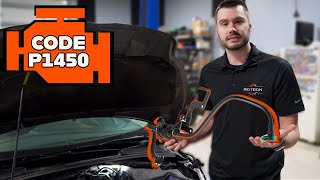
- Test the Canister Purge Valve: Locate the purge valve in the engine bay. Disconnect the electrical plug. Disconnect the EVAP line coming from the firewall. Start the engine. Place your finger over the port on the valve where the firewall line was connected. If you feel any vacuum suction, the valve is stuck open and must be replaced. This is the most definitive and simple test. 🎬 See a quick test and repair for code P1450
- Check Purge Valve Resistance (Alternate Test): With the engine off and valve unplugged, use a multimeter to check the resistance between the two pins on the valve. A good valve will read between 20-30 ohms. A reading of infinity (open circuit) or zero (short) indicates failure.
- Inspect Vent Valve (Only if Purge Valve is OK): If the purge valve tests good, move to the less likely cause. Raise the rear of the vehicle and locate the vent valve on the charcoal canister behind the driver's side rear wheel. Inspect its wiring for damage and the vent port for blockages like dirt or nests.
- Smoke Test: If no faulty component is found, a professional smoke test of the EVAP system is the next step. This will pressurize the system with smoke to reveal any hard-to-find cracks in hoses or other leaks.
Parts You'll Likely Need
- Canister Purge Valve / Solenoid
(OEM #BV6Z-9D289-R)— This is the most common failure point for code P0446 on the 2012-2018 Ford Focus. It is a complete assembly including the valve and attached hoses. The original part number BV6Z-9D289-A was superseded 🎬 Watch: Step-by-step guide to replacing the purge valve by -B, and the current part is BV6Z-9D289-R.
Trusted brands: Motorcraft (OEM), Bosch, Dorman
OEM price range: $45-$70
Aftermarket price range: $25-$50
Related Codes That Often Appear With This One
- P1450 — This code for 'Unable to Bleed Up Fuel Tank Vacuum' is extremely common with a stuck-open purge valve on this vehicle and is explicitly mentioned in the recall notice as a primary indicator.
- P2196 — This code for 'O2 Sensor Signal Stuck Rich' can be triggered by a stuck-open purge valve allowing un-metered fuel vapors into the engine, creating a rich condition. It is also listed in the recall documentation.
- P0456 / P0455 — These codes for small and large EVAP leaks can sometimes appear alongside P0446 if the purge valve is failing in a way that the system interprets as a leak.
- P0316 — A code for 'Misfire Detected on Startup (First 1000 Revolutions)' can occur because a stuck-open purge valve floods the intake with fuel vapors after refueling, causing a rough start.
Technical Service Bulletins (TSBs) & Recalls
- 18S32 / NHTSA 18V-735 (Safety Recall): Covers 2012-2018 Focus models with 2.0L GDI/GTDI engines for a stuck-open canister purge valve (CPV). The malfunction can lead to fuel tank deformation, inaccurate fuel gauge, MIL illumination (with codes like P1450, P2196, P0456), and engine stalling. The remedy involves a PCM software update and, if diagnostic codes are present, replacement of the CPV and potentially the carbon canister and fuel tank.
Platform-Specific Known Issues
- Recall 18S32 / NHTSA 18V-735: Canister Purge Valve: → Shop Vapor Canister Ford issued a safety recall for a faulty canister purge valve (CPV) that could stick open. This creates excessive vacuum, deforming the plastic fuel tank, causing inaccurate fuel gauge readings, and potentially leading to engine stalling while driving. The fix involves a PCM software update to better detect the fault, and if necessary, replacement of the CPV, charcoal canister, and fuel tank.
Documented NHTSA Reports
- NHTSA ODI #11670709: While reported on a similar Ford platform (Edge), an owner noted that the engine warning light was illuminated and a vehicle scanner retrieved DTC P0446, specifically identifying an Evaporative Emission Control System (EVAP) vent control circuit malfunction.
Mechanic-Grade Diagnostic Values
- Canister Purge Valve (CPV) Solenoid Resistance — expected: 20-30 Ohms. Failure: A reading significantly outside this range, or infinite (open) / zero (short) resistance.
- Canister Purge Valve Connector Voltage (Power Pin) — expected: ~12V (Battery Voltage) with Key On, Engine Off (KOEO).. Failure: 0V indicates a blown fuse or an open in the power supply wire (typically Yellow/Red).
- Fuel Tank Pressure (FTP) Sensor Voltage (KOEO, atmospheric pressure) — expected: Approximately 2.6V to 2.65V.. Failure: An immediate voltage drop upon starting the engine strongly suggests a stuck-open purge valve. A reading far from this range at rest can indicate a faulty sensor or wiring.
- Scan Tool Live Data: Short-Term Fuel Trim (STFT) during purge valve test — expected: STFT should go negative (indicating a rich condition and fuel removal) when the purge valve is commanded open.. Failure: No change in STFT when the valve is commanded open suggests a blockage or failed valve. STFT going negative when the valve is commanded closed indicates it's stuck open.
Scan Tool Commands That Help
- Ford IDS (or equivalent professional scanner): EVAP System Leak Test — This is a guided diagnostic test that automatically commands the purge and vent valves to seal the system, pulls a vacuum, and monitors the FTP sensor for decay to check for leaks. It's the factory-prescribed way to test the entire system's integrity.
- Ford IDS / Pro-level Scan Tool: EVAP Canister Vent Valve Command (On/Off) — Used to manually close the normally-open vent valve to seal the system for testing. You can listen for a click from the valve at the rear of the car to confirm mechanical operation.
- Ford IDS / Pro-level Scan Tool: EVAP Vapor Management Valve Command (Duty Cycle %) — Used to manually command the purge valve open by a specific percentage. When commanding it to 0% (closed) with the engine running, you can monitor the FTP sensor. If the FTP voltage drops (vacuum increases), the purge valve is mechanically stuck open.
Wiring & Ground Locations
- Canister Purge Valve Connector — In the engine bay, near the firewall, under the foam engine cover.. This 2-pin connector is where you test for power and the PCM control signal. Pin 1 (often Yellow/Red) is the ~12V supply, and Pin 2 (often Blue/Green) is the ground-side control from the PCM.
- Canister Vent Valve Connector — At the rear of the vehicle, attached to the charcoal canister, which is located behind the driver's side rear wheel well, above the subframe.. This is the connector for the component named in the P0446 definition. A fault here is less common on this car but can be caused by corrosion or wire damage due to its exposed location.
- Fuel Tank Pressure (FTP) Sensor Connector — On top of the fuel tank. It can often be accessed by reaching up above the tank without needing to lower it.. The wiring to this sensor is a known spot for rodent damage. Chewed wires here can cause erratic FTP readings, potentially leading to incorrect EVAP codes.
- G100 — Left front of the engine compartment.. This is a primary ground point for the engine bay. While not directly for the EVAP solenoids, a poor ground here can cause erratic behavior and incorrect voltage readings for various engine systems, complicating diagnosis.
Real Owner Repair Stories
- Reddit user in r/FocusST (Ford Focus ST (2.0L GTDI)) — Check Engine Light with code P0446.
❌ Tried (didn't work) Clearing the code with a Snap-on scan tool.
✅ What actually fixed it The user replaced the canister purge valve in the engine bay, which resolved the code. Another user confirmed this is a very easy DIY replacement.
"I Checked Everything" — The Actual Cause
- On many Ford platforms, a P0446 code indicates a vent control circuit or performance fault, not necessarily a leak. Therefore, the system may pass a smoke test (which is designed to find leaks) but still have the code. The actual issue is often the canister vent solenoid failing to respond to the PCM's command to close, or the purge valve being stuck open causing a vacuum the system can't bleed, which the PCM interprets as a vent fault.
OEM Part Supersession History
BV6Z-9D289-A / B→BV6Z-9D289-R— Part revision to improve reliability and prevent the valve from sticking open, which was the cause of safety recall 18S32.
Model Year Variations Within This Range
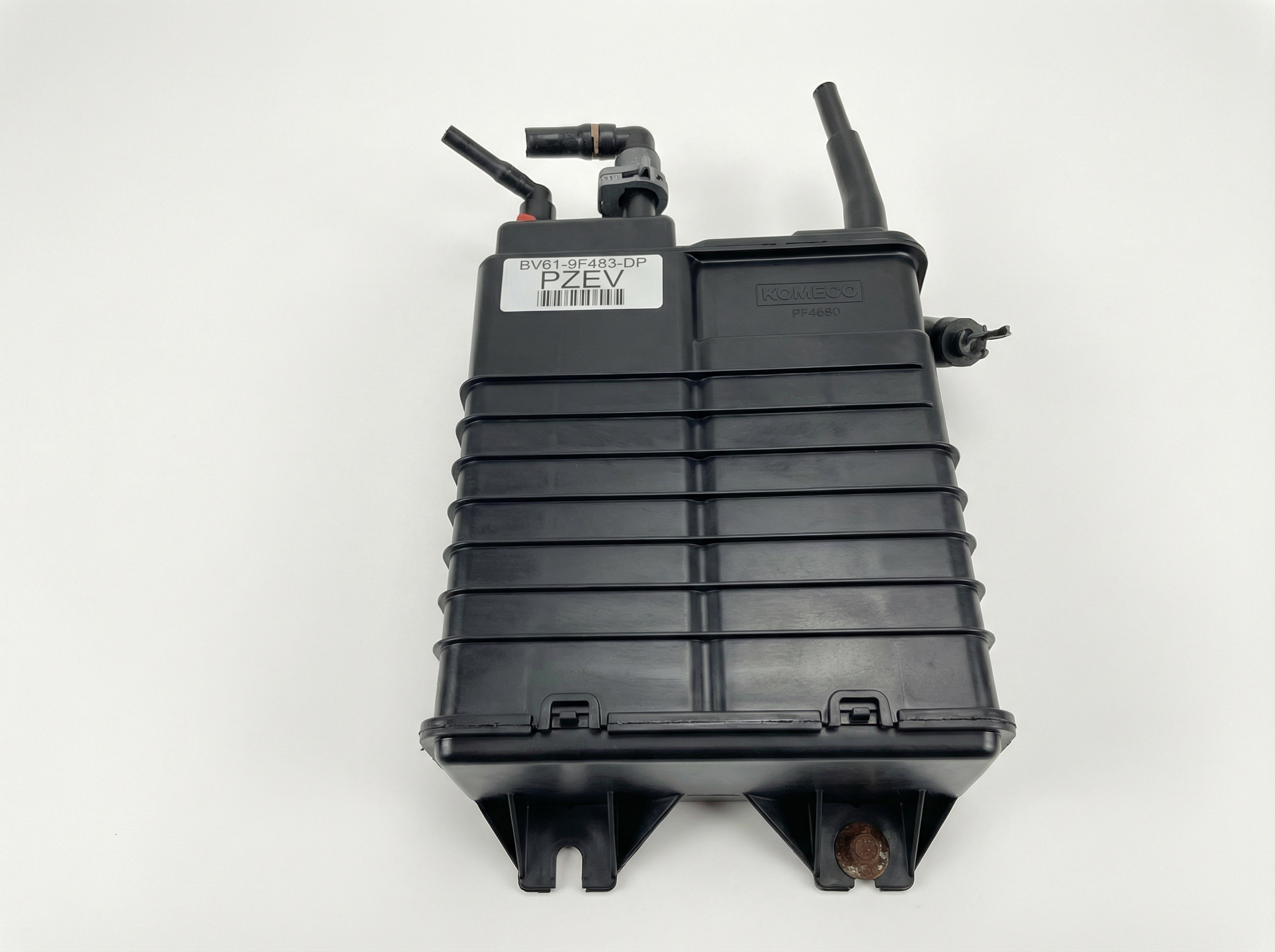
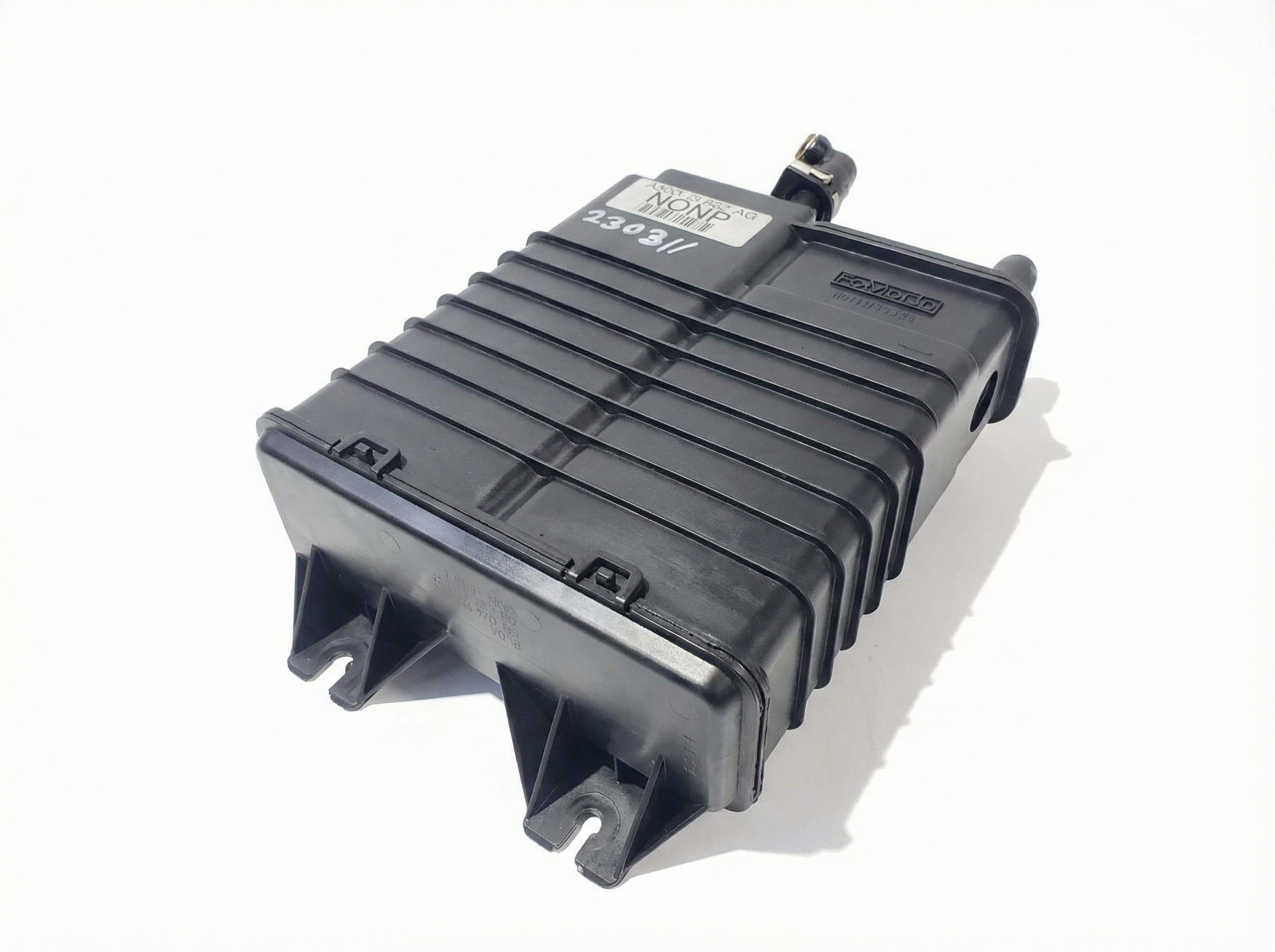
- 2012-2018: Vehicles were built with either a Federal (Non-PZEV) or a PZEV (Partial Zero Emission Vehicle) emissions system, primarily for states like California. The vapor canisters and some related plumbing are different and not interchangeable. You must verify which system your car has by checking the underhood emissions label before replacing the canister, though the purge valve itself is the same for both.
Diagnostic Flowchart
Other Known Issues on This Vehicle
Issues unrelated to this code that are worth knowing about as an owner of this generation:
- DPS6 PowerShift Transmission Failure 🔴 High — Extremely common on 2012-2016 models with automatic transmission. Can occur at any mileage. (Ref: Multiple lawsuits, warranty extensions (e.g., 14M01, 14M02), and customer satisfaction programs were issued, but no full safety recall for the core issue.)
- Passenger-Side Engine Mount Collapse 🟠 Medium — Common failure, often after 60,000 miles. Causes excessive vibration in the cabin at idle. (Ref: No recall, but a well-known issue in the community.)
- Steering Gear / EPAS Failure 🔴 High — Less common than transmission issues, but can occur without warning, leading to a sudden loss of power steering. (Ref: Safety Recall 14S05 / NHTSA 14V-284 was issued for some 2012-2014 models for loss of power steering.)
- Coolant Intrusion / Engine Failure (1.0L EcoBoost) 🔴 High — Specific to the 1.0L 3-cylinder engine, not the 2.0L. A known defect can cause coolant to leak into the cylinders, leading to engine failure. (Ref: Subject of lawsuits and service campaigns in Europe; less formally addressed in North America.)
Used vs. New Parts: Buying Guide for This Vehicle
When a used part is the smart pick: For this specific P0446 issue on the Focus, buying a used Canister Purge Valve is NOT recommended. The part is a known high-failure item with a safety recall against it, and a new OEM or quality aftermarket part is inexpensive. A used part carries a very high risk of being faulty or failing soon after installation.
What to inspect on the donor part:
- Not applicable, as used purge valves should be avoided for this repair.
OEM-only on this vehicle (don't cheap out):
- Canister Purge Valve: While quality aftermarket options exist, the OEM Motorcraft part (BV6Z-9D289-R) is the safest bet given the history of failures and the critical safety recall. The cost difference is often minimal.
Aftermarket brands forum-validated for this vehicle:
- Bosch
- Standard Motor Products (SMP)
Brands owners have reported issues with on this vehicle:
- No-name, unbranded parts from online marketplaces should be avoided due to the critical function of this valve and the potential for engine stalling or fuel system damage if the part fails.
Real Owner Stories
Aggregated from forums and TSBs cited above. Mileages and costs reflect what owners reported in those sources.
2015 Ford Focus 2.0L GDI
Symptoms: Code P1450, negative vacuum issues, poor gas mileage, and hard starting specifically after refueling.
What fixed it: DIY replacement of the EVAP purge valve in the engine bay.
Source hint: Reddit: r/FordFocus - "2015 Focus P1450 Issue"
2012-2018 Ford Focus 2.0L GDI
Symptoms: Check engine light with code P1450; owner replaced the valve but the light returned.
What fixed it: Investigation revealed a chafed wiring harness was causing the persistent EVAP issues.
Source hint: Reddit: r/FordFocus - "Error code p1450"
2014 Ford Focus ST 2.0L GTDI
Symptoms: Code P0446 appeared; community noted it was likely a purge valve or a deformed gas tank.
What fixed it: Replacement of the purge valve, which is the well-known culprit for this platform.
Source hint: Reddit: r/FocusST - "Need help code P0446"
Related OBD-II Codes
Frequently Asked Questions
Is there a recall for the EVAP system on my 2012-2018 Ford Focus?
Why does my Focus have trouble starting only after I fill up the gas tank?
Can a bad purge valve cause my fuel gauge to read incorrectly?
How can I quickly tell if the purge valve or the vent valve is causing my P0446 code?
What does the dealer do to fix the issues related to recall 18S32?
I hear a 'whoosh' sound when I open my gas cap; is this related to P0446?
Helpful Videos



Used OEM Parts in Stock

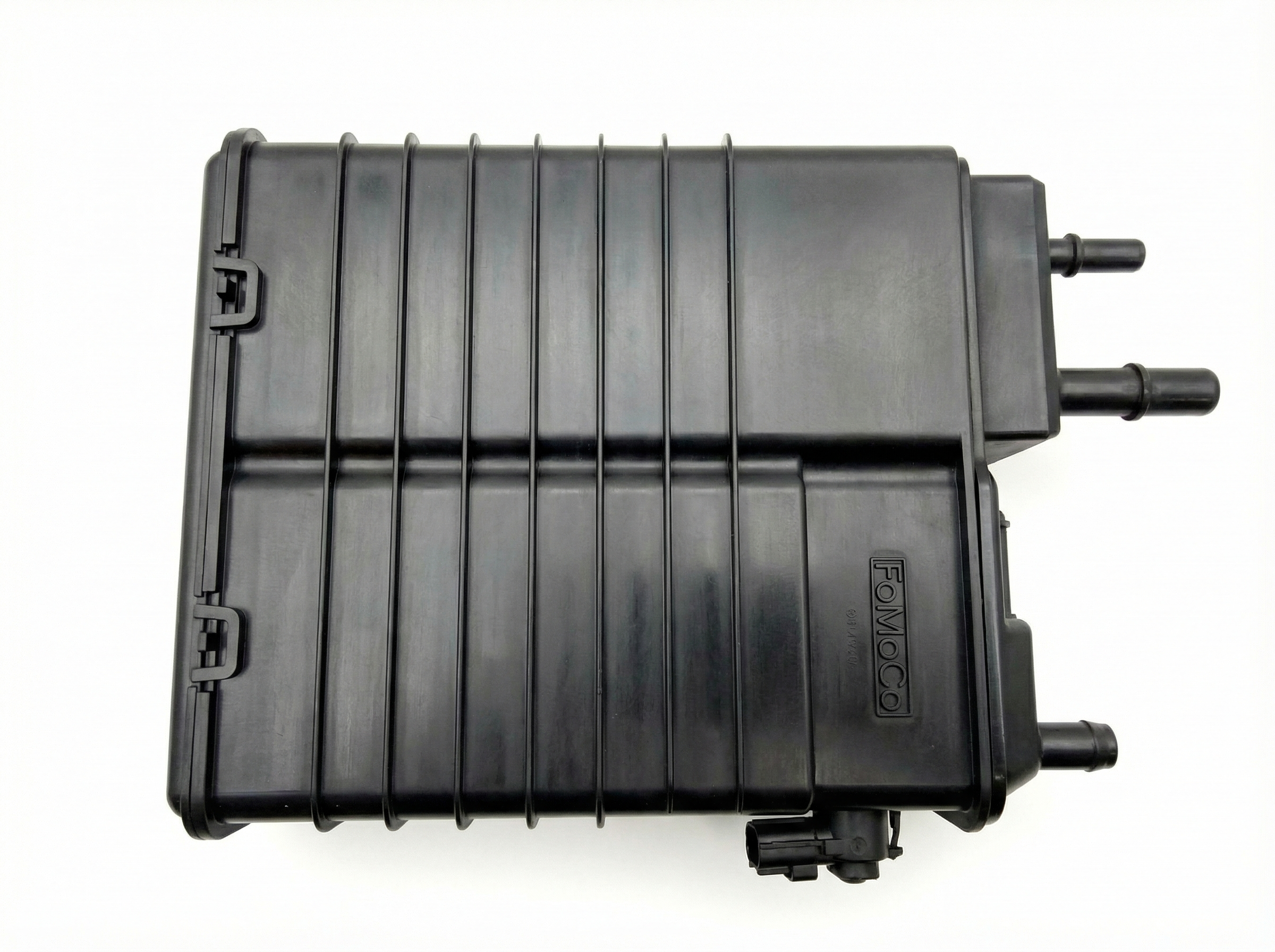
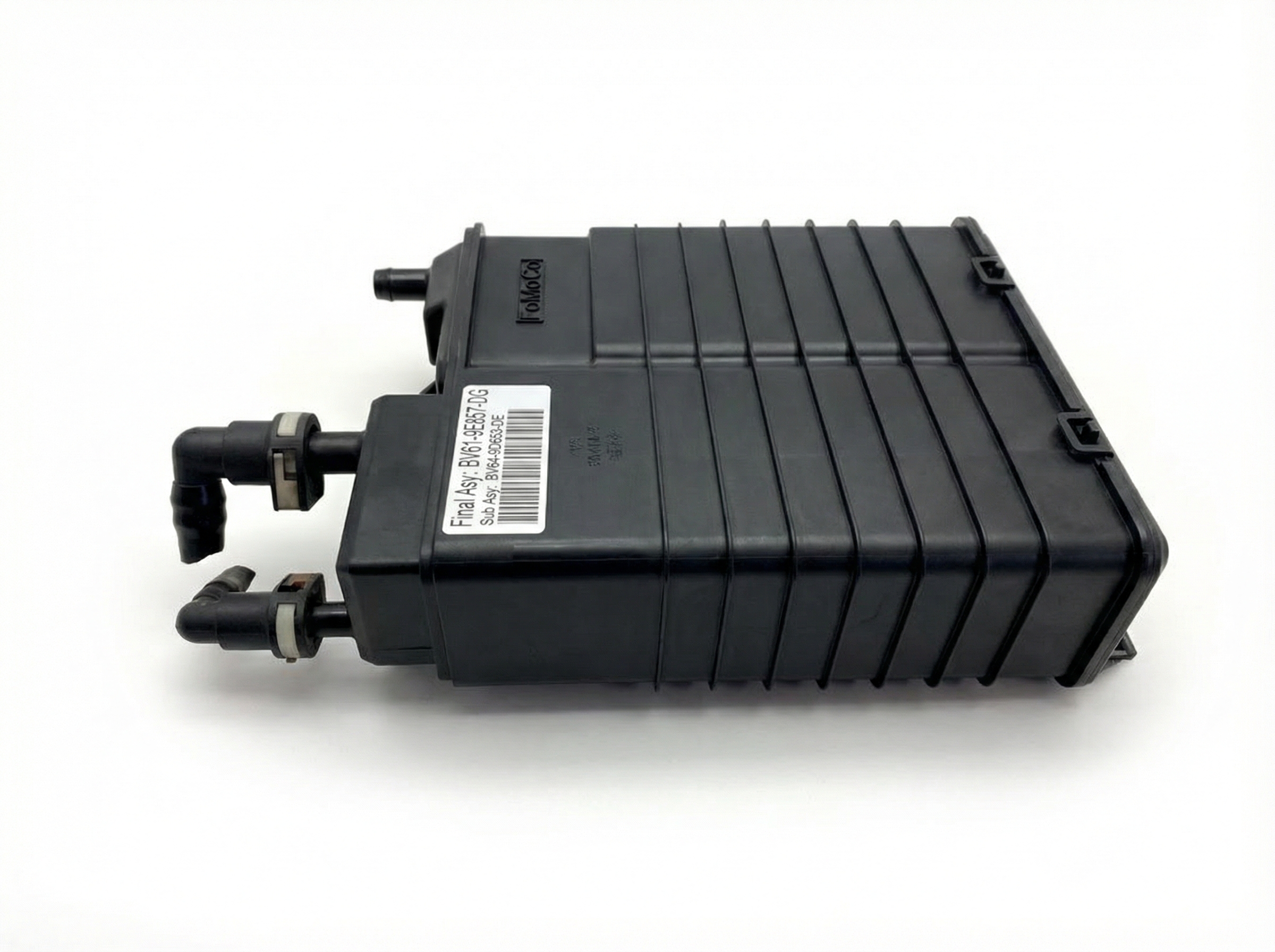
New Aftermarket Parts Available

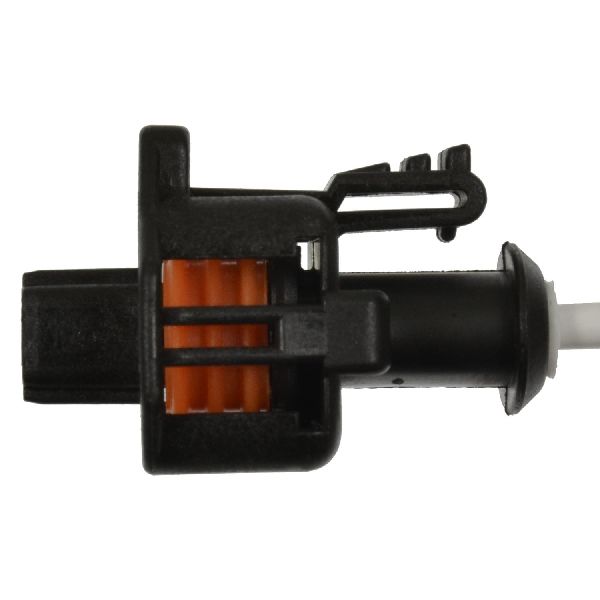
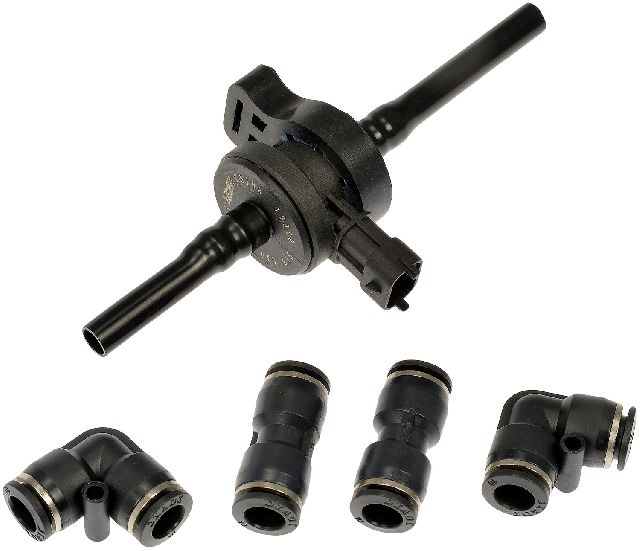

The information in this article is provided for general reference and educational purposes only. Vehicle specifications, procedures, and part compatibility can vary by production date, trim level, and region. Always consult your vehicle's factory service manual and verify part numbers before purchasing or performing repairs. Safety-critical components such as airbags, seat belts, and braking systems should be installed by a qualified professional.
- Ford Focus:
- 🧭 Diagnostic Flowchart
- 🎬 Helpful Videos
- 🛍️ Shop This Part
- What's Unique About the 2012-2018 Ford Focus
- Symptoms You May Notice
- Most Likely Causes
- Rare But Worth Checking
- Diagnosis Steps
- Parts You'll Likely Need
- Related Codes That Often Appear With This One
- Technical Service Bulletins (TSBs) & Recalls
- Platform-Specific Known Issues
- Documented NHTSA Reports
- Mechanic-Grade Diagnostic Values
- Scan Tool Commands That Help
- Wiring & Ground Locations
- Real Owner Repair Stories
- "I Checked Everything" — The Actual Cause
- OEM Part Supersession History
- Model Year Variations Within This Range
- Other Known Issues on This Vehicle
- Used vs. New Parts: Buying Guide for This Vehicle
- Real Owner Stories
- 2015 Ford Focus 2.0L GDI
- 2012-2018 Ford Focus 2.0L GDI
- 2014 Ford Focus ST 2.0L GTDI
- Related OBD-II Codes
- Frequently Asked Questions
- 🎟️ Get 5% Off