

P0446 on 2004-2007 Ford Taurus: EVAP Vent System Causes and Fixes
For a 2004-2007 Ford Taurus, code P0446 is most often caused by a faulty or clogged vapor canister vent solenoid located at the rear of the car. This part is prone to failure from road debris and moisture. A key symptom is difficulty filling the gas tank. Expect to pay around $40-$85 for an aftermarket part, and it's a relatively easy DIY fix.
- P0446 on your Taurus almost always points to a problem with the EVAP vent system at the rear of the car, not the engine bay.
- The most likely cause is a faulty or clogged vapor canister vent solenoid, which is exposed to the elements.
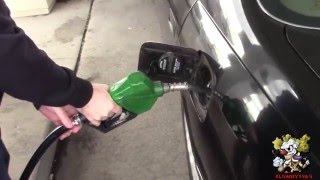
- A key symptom, besides the Check Engine Light, is the gas pump repeatedly shutting off when you try to refuel.
- Before replacing parts, check the vent hoses for blockages from dirt or debris and inspect the wiring for damage.
- This is a DIY-friendly repair that can usually be done in under an hour with basic tools.
What's Unique About the 2004-2007 Ford Taurus
On older Fords like the 2004-2007 Taurus, the P0446 code is typically triggered by a mechanical failure rather than a purely electrical one. The most common issue is a physical restriction or blockage in the EVAP system's vent path, often due to a stuck-closed vent solenoid or a hose clogged by debris or insects. This is a frequent failure point as the components are located underneath the rear of the car, exposed to road debris, moisture, and road salt, which leads to corrosion and blockages. A similar issue is noted in a GM TSB for trucks operated in dusty environments, where a remote filter box was added to prevent debris from clogging the vent system.
Symptoms You May Notice
- Check Engine Light illuminated on the dashboard.
- Difficulty refueling the vehicle; the gas pump nozzle clicks off every few seconds 🎬 Watch: How to fix a gas pump that keeps shutting off before the tank is full.
- A noticeable smell of fuel around the rear of the car, although this is less common for P0446 specifically.
- In rare cases, a rough or surging idle if the EVAP system malfunction affects the air-fuel mixture.
- Replacing the gas cap. While a faulty gas cap can cause other EVAP codes (like P0455 or P0457 for large leaks), it is not a primary cause for P0446, which specifically points to a vent restriction 🎬 See this breakdown of P0446 causes and common fixes or circuit issue, not a system leak.
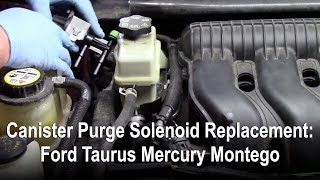
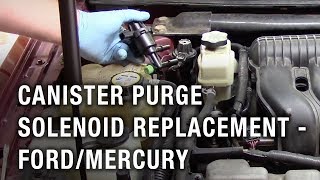
- Replacing the EVAP purge valve/solenoid. The purge valve is located in the engine bay and controls the flow of vapors from the canister to the engine. It typically sets its own distinct codes (like P0443) when it fails.
Most Likely Causes
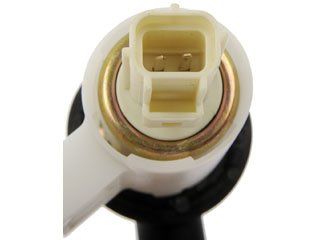
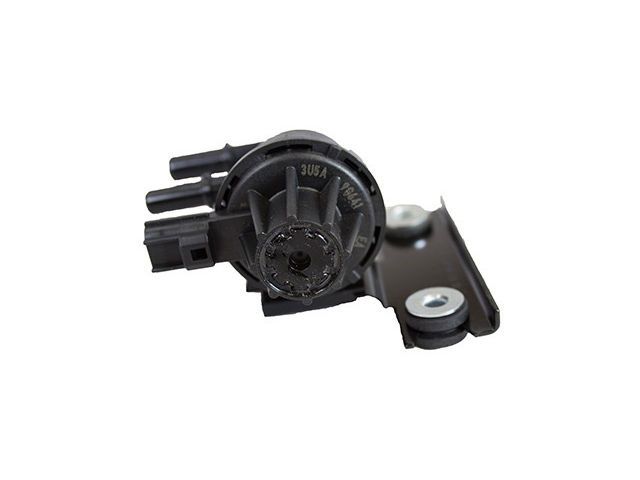
- Faulty or Clogged Vapor Canister Vent Solenoid 🔴 High Probability → Shop Vapor Canister Vent Solenoid The vent solenoid is located underneath the rear of the car, making it highly susceptible to corrosion, dirt, and road debris, which can cause it to stick closed or fail electrically.
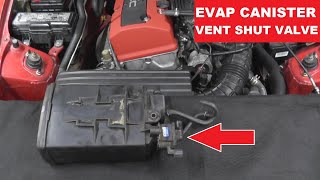
How to confirm: Locate the solenoid near the charcoal canister at the rear of the vehicle. Test it by applying 12V power to see if it clicks 🎬 Watch: How to test and replace the canister vent valve open and closed. When unpowered, the valve should be open, allowing you to blow air through it. A scan tool can also be used to command the valve on and off while listening for an audible click.
Typical fix: Replace the vapor canister vent solenoid. This is often the most direct fix.
Est. part cost: $40-$85 - Blocked EVAP Vent Hose or Filter 🟡 Medium Probability The vent hose outlet, which may have a small filter box, can get clogged with dirt, road grime, or even insect nests (like spiders or mud daubers), preventing the system from drawing in fresh air to vent.
How to confirm: Visually inspect the vent hoses connected to the charcoal canister and vent solenoid for any blockages, kinks, or damage. Disconnect the hose and try to blow compressed air through it to check for restrictions. Check the vent opening for any visible debris.
Typical fix: Clear the blockage from the hose or replace the damaged hose section. Sometimes the filter at the end of the hose needs to be cleaned or replaced.
Est. part cost: $10-$30 - Damaged or Corroded Wiring ⚪ Low Probability The wiring harness to the vent solenoid is exposed to the elements under the car and can become damaged or corroded over time, leading to a poor connection or a short/open circuit.
How to confirm: Inspect the electrical connector and wiring leading to the vent solenoid for any signs of corrosion, breaks, or frayed wires. Use a multimeter to check for 12V power and ground at the connector with the key on. A common failure is a wire breaking inside the insulation right at the connector.
Typical fix: Repair the damaged section of wiring or clean/replace the electrical connector.
Est. part cost: $5-$25
Rare But Worth Checking
- Clogged Charcoal Canister: → Shop Vapor Canister While less common, the charcoal canister itself can become clogged with dust or saturated with fuel, especially on higher mileage vehicles or if the fuel tank is consistently overfilled. This will restrict airflow and can trigger a P0446 code. If the canister is saturated, you might hear charcoal pellets rattling inside.
- Faulty Fuel Tank Pressure (FTP) Sensor: → Shop Fuel Tank A malfunctioning FTP sensor can send incorrect pressure readings to the car's computer, causing it to mistakenly believe there is a vent restriction. This will typically set other codes alongside P0446.
Diagnosis Steps
- Verify the code with an OBD-II scanner.
- Check the gas cap to ensure it is tight and the seal is not cracked, as this is a simple first step, though an unlikely cause.
- Raise the rear of the vehicle and safely support it with jack stands.
- Locate the charcoal canister and the attached vent solenoid. On the Taurus, this is typically mounted to a bracket near the rear subframe/fuel tank.
- Visually inspect the vent solenoid, hoses, and electrical connector for any obvious signs of damage, corrosion, or blockage. Pay close attention to the vent hose's fresh air inlet for spider webs or dirt clogs.
- Disconnect the vent hose and check for obstructions. Try blowing low-pressure air through it.
- Test the solenoid. If you have a bi-directional scan tool, command the vent valve to close and listen for a click. Alternatively, disconnect the electrical connector, remove the solenoid, and apply 12V and ground to its pins to check for actuation. The valve is normally open, so you should be able to blow through it when it's unpowered.
- If the solenoid does not click or is stuck closed, it has failed and needs replacement.
- If the solenoid clicks, check the wiring. With the key on, use a multimeter to confirm 12V at the electrical connector. Check for continuity to ground on the other wire when the PCM commands the valve closed (requires a scan tool) or check the wire's integrity back to the PCM.
- If all other components check out, the charcoal canister may be restricted. Disconnect its hoses and check if you can pass air through it. If it feels heavy or rattles, it may be saturated with fuel or have broken internal components.
Parts You'll Likely Need
- Vapor Canister Vent Solenoid
(OEM #CX2005 (Note: This is often listed as a 'Purge Solenoid' but serves the vent function on some applications, verify location))— This is the most common failure point for code P0446 on this vehicle, as it gets stuck or clogged due to its exposed location under the car.
Trusted brands: Dorman (911-105), Standard Motor Products (CVS24), Motorcraft, Carquest Premium (CPC1038)
OEM price range: $95-$145
Aftermarket price range: $40-$85
Technical Service Bulletins (TSBs) & Recalls
- While not for Ford, GM Technical Service Bulletin 02-06-04-037H details a nearly identical P0446 issue on trucks caused by dirt and dust intrusion. The fix involves replacing the vent solenoid and relocating the air inlet to a less exposed area, which is a relevant concept for the Taurus's issue.
- GM Service Bulletin 09-06-04-028D also addresses P0446 and difficulty fueling caused by water and debris ingestion into the vent solenoid, requiring a redesigned replacement part.
Platform-Specific Known Issues
- A user on 2CarPros.com with a 2005 Taurus described the classic symptom of the gas pump shutting off every few seconds, taking 20 minutes to fill the tank, which points directly to a vent path restriction.
Mechanic-Grade Diagnostic Values
- Vapor Canister Vent Solenoid Coil Resistance — expected: 20 to 50 Ohms. Failure: A reading of infinite resistance (open circuit) or near zero Ohms (short circuit) indicates a failed solenoid coil.
- Voltage at Vent Solenoid Connector — expected: Approximately 12V (battery voltage) on one pin with the key in the ON position.. Failure: No voltage suggests a problem with the power supply wire or a blown fuse.
- Ford IDS Scan Tool Fuel Tank Pressure (FTP) PID — expected: Approximately 2.6 to 2.65 Volts with the key on, engine off, and the EVAP system vented to the atmosphere.. Failure: A significantly different static voltage may indicate an issue with the FTP sensor itself, which could mislead the P0446 diagnosis.
Hidden / Shadow Codes Worth Checking
- EVAP Vent Solenoid - Short to Ground or Open: → Shop Vapor Canister This is not a DTC but a specific PID status available in advanced scan tools like the Ford IDS. It indicates that the PCM has detected an electrical fault (open circuit or short) on the control side of the vent solenoid circuit. (see via View live data PIDs in the powertrain control module using a Ford IDS or a high-level bidirectional scan tool.)
Scan Tool Commands That Help
- Ford IDS (or equivalent bidirectional scanner): EVAP Vent Solenoid On/Off (or Close/Open) Test — This active test is used to verify the electrical integrity of the circuit and the mechanical function of the solenoid. Command the valve closed and listen for a click. While the valve is commanded closed, monitor the FTP sensor PID; pressure should hold or rise slightly, confirming the system is sealed. Commanding it back open should return the FTP voltage to its atmospheric baseline.
Wiring & Ground Locations
- EVAP Canister Vent Valve Connector — Under the vehicle, on or near the charcoal canister, which is located near the fuel tank.. This is the primary connection point for the component. It is highly exposed to road debris and moisture, making corrosion or physical damage to the connector or wires common. A known failure mode is a wire breaking inside the insulation right at the connector, which is not visually apparent.
- G103 (Example Ground) — Wiring diagrams for a 2005 Taurus show a ground point G103 located on the right rear side of the engine compartment.. While not confirmed to be the specific ground for the vent solenoid, a poor ground connection at any point in the system can cause erratic electrical behavior and trigger circuit codes. Verifying main chassis and PCM grounds is a valid diagnostic step.
"I Checked Everything" — The Actual Cause
- While P0446 is not a leak code, a similar diagnostic dead-end occurs when the vent solenoid clicks when tested off the vehicle but the code persists. A common cause for this is an intermittent open in the wiring harness near the solenoid's connector. The wire can be broken inside the insulation and only lose connection when the harness is in its installed position or vibrated by the moving vehicle. A 'wiggle test' of the harness while monitoring voltage can often expose this type of hidden break.
Model Year Variations Within This Range
- 2004-2007: The 2004-2007 Ford Taurus belongs to the fourth generation. Within this specific date range, there are no significant documented variations in the EVAP system design or the common causes for a P0446 code. The primary distinction is between this generation and the next (2008+).
Diagnostic Flowchart
Other Known Issues on This Vehicle
Issues unrelated to this code that are worth knowing about as an owner of this generation:
- Automatic Transmission Failure (AX4S/AX4N) 🔴 High — Very common, with failures often reported between 60,000 and 100,000 miles. Issues include stripped torque converter splines, no forward engagement, or harsh shifting.
- Camshaft Synchronizer Failure (3.0L Vulcan V6) 🟠 Medium — A frequent issue on the 3.0L OHV engine. Failure is often preceded by a 'chirping' or 'squeaking' noise from the engine. If it fails completely, it can cause engine misfires and potentially lead to more severe engine damage.
- Broken Front Coil Springs 🔴 High — Subject to a recall (NHTSA Campaign ID: 04V332000), the front coil springs can fracture due to corrosion. This can cause a loss of steering control or puncture the tire. (Ref: Ford Recall 04S17)
- Stalling / Rough Idle 🟠 Medium — Often caused by a dirty or failing Idle Air Control (IAC) valve, a dirty throttle body, or a failed PCV valve. Symptoms include stalling at stops and a hunting/surging idle.
- Oil Pan Gasket Leak 🟡 Low — A common leak point on the 3.0L Vulcan engine, leading to oil drips under the vehicle. It is a persistent but generally minor issue.
Used vs. New Parts: Buying Guide for This Vehicle
When a used part is the smart pick: For the vapor canister vent solenoid, a used part is not recommended. This component is a relatively inexpensive plastic and metal solenoid that is constantly exposed to road salt, water, and debris under the car. The failure rate is high due to these conditions, so a used part from a junkyard has a high probability of being near the end of its service life or already faulty.
What to inspect on the donor part:
- Not applicable as a used part is not recommended for this repair.
OEM-only on this vehicle (don't cheap out):
- No components related to this repair are considered 'OEM-only'. Aftermarket solutions are widely available and functional.
Aftermarket brands forum-validated for this vehicle:
- Dorman (specifically part 911-105) is a very common and readily available replacement.
- Standard Motor Products (SMP) (specifically part CVS24) is another well-regarded aftermarket brand often cited as a quality alternative.
Brands owners have reported issues with on this vehicle:
- No specific aftermarket brands were consistently reported as problematic for this part in owner forums or repair databases.
Real Owner Stories
Aggregated from forums and TSBs cited above. Mileages and costs reflect what owners reported in those sources.
2004 Ford Taurus SES 3.0L
Symptoms: Check engine light (MIL) illuminated on the dashboard.
What fixed it: A smoke check identified a very slight leak at the canister vent valve located on the right rear with the carbon canister.
Source hint: iATN owner report
2005 Ford Taurus
Symptoms: Extreme difficulty filling the fuel tank; the gas pump shuts off every few seconds, taking 20 minutes to fill the tank.
What fixed it: The symptoms point directly to a vent path restriction, typically resolved by addressing the vent solenoid or charcoal canister.
Source hint: 2CarPros.com: A 2005 Ford Taurus owner reported extreme difficulty filling the fuel tank
Ford Owner Report
Symptoms: The engine warning light was illuminated. A vehicle scanner retrieved DTC: P0446 (Evaporative Emission Control System (EVAP) vent control circuit malfunction).
What fixed it: While the specific fix was not detailed in this record, the diagnosis confirmed a vent control circuit malfunction.
Source hint: NHTSA ODI #11670709
Related OBD-II Codes
Frequently Asked Questions
Why does the gas pump nozzle click off every few seconds when I try to fill my 2005 Taurus?
Where is the vapor canister vent solenoid located on a 2004-2007 Ford Taurus?
Is there a recall for the EVAP system or P0446 on this vehicle?
Can I test the vent solenoid myself without a professional scan tool?
Does the Mercury Sable have the same P0446 issues as the Taurus?
Could a bad gas cap be causing my P0446 code?
Helpful Videos

We Have This Part in Stock


The information in this article is provided for general reference and educational purposes only. Vehicle specifications, procedures, and part compatibility can vary by production date, trim level, and region. Always consult your vehicle's factory service manual and verify part numbers before purchasing or performing repairs. Safety-critical components such as airbags, seat belts, and braking systems should be installed by a qualified professional.
- Ford Taurus:
- 🧭 Diagnostic Flowchart
- 🎬 Helpful Videos
- 🛍️ Shop This Part
- What's Unique About the 2004-2007 Ford Taurus
- Symptoms You May Notice
- Most Likely Causes
- Rare But Worth Checking
- Diagnosis Steps
- Parts You'll Likely Need
- Technical Service Bulletins (TSBs) & Recalls
- Platform-Specific Known Issues
- Mechanic-Grade Diagnostic Values
- Hidden / Shadow Codes Worth Checking
- Scan Tool Commands That Help
- Wiring & Ground Locations
- "I Checked Everything" — The Actual Cause
- Model Year Variations Within This Range
- Other Known Issues on This Vehicle
- Used vs. New Parts: Buying Guide for This Vehicle
- Real Owner Stories
- 2004 Ford Taurus SES 3.0L
- 2005 Ford Taurus
- Ford Owner Report
- Related OBD-II Codes
- Frequently Asked Questions
- 🎟️ Get 5% Off