

P0446 on 2022-2025 GMC Sierra 1500: EVAP Vent Control Circuit Causes and Fixes
On a 2022-2025 GMC Sierra 1500, code P0446 is most often caused by a faulty EVAP vent solenoid or a dust-clogged charcoal canister. GM released TSB #23-NA-073 acknowledging the dust issue and recommends retrofitting a filter kit. A faulty vent solenoid is a common failure, while a stuck Fuel Tank Pressure sensor can also incorrectly trigger this code.
- P0446 on a 2022-2025 Sierra almost always points to the EVAP vent solenoid or the charcoal canister near the fuel tank.
- There is a manufacturer TSB (#23-NA-073) confirming that dust clogging the canister is a known problem on these trucks.
- The most likely fix is replacing the vent solenoid, but if you frequently drive on dirt or gravel roads, the entire charcoal canister may need to be replaced.
- Do not waste money replacing the gas cap for this specific code; it is not the cause.
- This repair is generally accessible for DIYers with basic tools, but requires safely working under the vehicle.
What's Unique About the 2022-2025 Gmc SIERRA 1500

The GMC Sierra, especially when used in dusty conditions, is highly prone to this issue. General Motors released Technical Service Bulletin (TSB) #23-NA-073 for 2019-2025 Sierra and Silverado models that directly identifies P0446 being caused by dust getting inside the EVAP charcoal canister. The official GM correction is not a simple part replacement, but rather retrofitting an external, serviceable air filter (P/N 23103351) to the canister's vent line to prevent future dust intrusion. The TSB explicitly states this is a customer-pay alteration, not a warranty repair, and the filter should be periodically checked as a maintenance item.
Diagnostic Flowchart

Tap your situation to follow the diagnostic path that matches what you're seeing on this vehicle.
Symptoms You May Notice
- Check Engine Light is on
- Difficulty filling the fuel tank (fuel pump nozzle clicks off repeatedly)
- A faint fuel smell near the rear of the truck
- Slightly reduced fuel efficiency in some cases.
- Replacing the gas cap. A bad gas cap typically causes a large leak code (P0455) or a small leak code (P0442), not a vent circuit-specific code like P0446.
- Replacing the EVAP Purge Solenoid. The purge solenoid is on the engine, while the vent solenoid (related to P0446) is near the fuel tank. They are two different parts with different functions.
Most Likely Causes

- Faulty EVAP Vent Solenoid/Valve 🔴 High Probability → Shop Vapor Canister The vent solenoid is exposed to the elements under the truck and is highly susceptible to failure from dust and debris, a known issue for this platform.
How to confirm: Use a capable scan tool to command the vent solenoid to open 🎬 See how to use scan data to diagnose the circuit. and close; you should hear an audible click. If it doesn't respond, test for 12V power and ground at the connector with the key on. If power and ground signal are present but the valve is silent, the solenoid itself has failed.
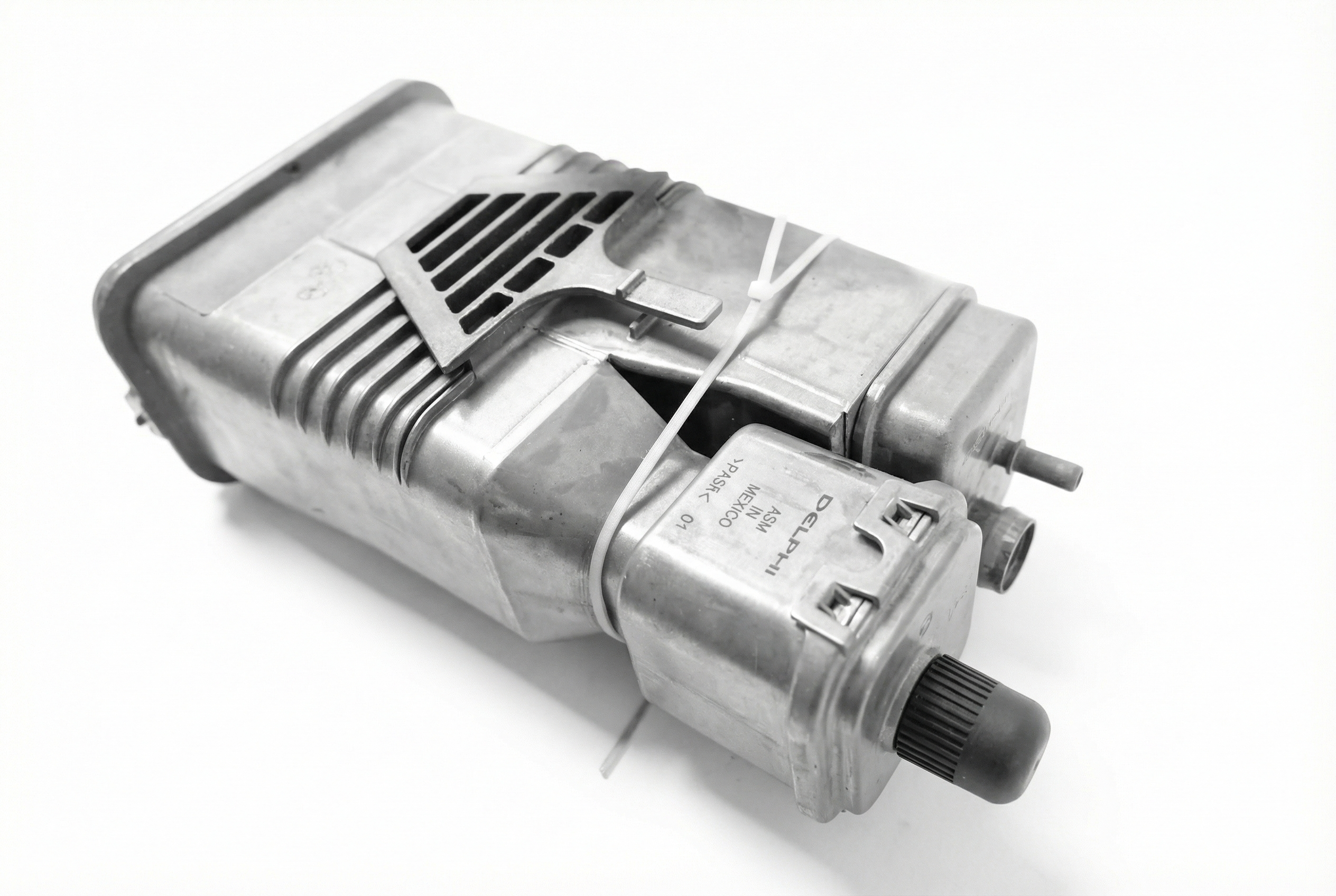
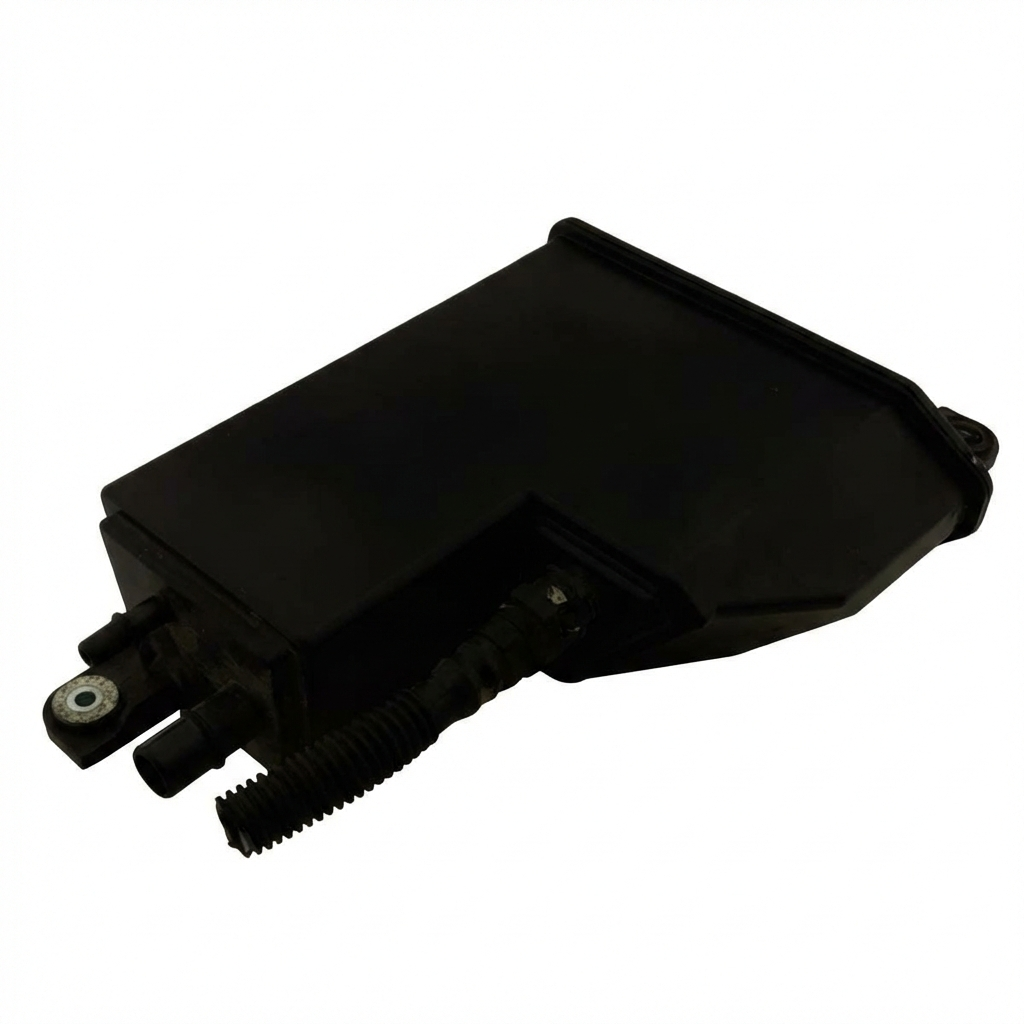
Typical fix: Replace the EVAP vent solenoid. It is typically located on or near the charcoal canister by the fuel tank.
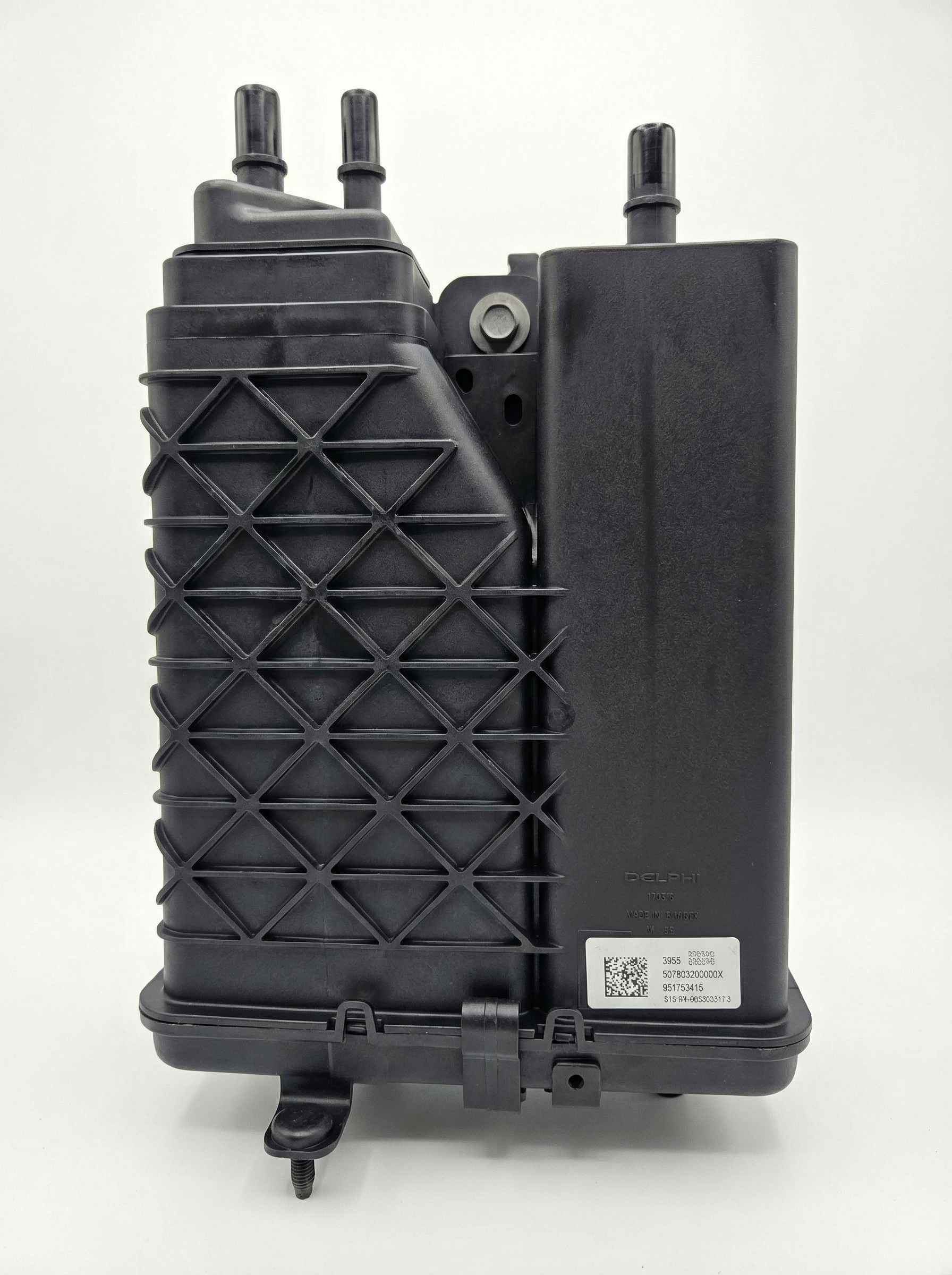
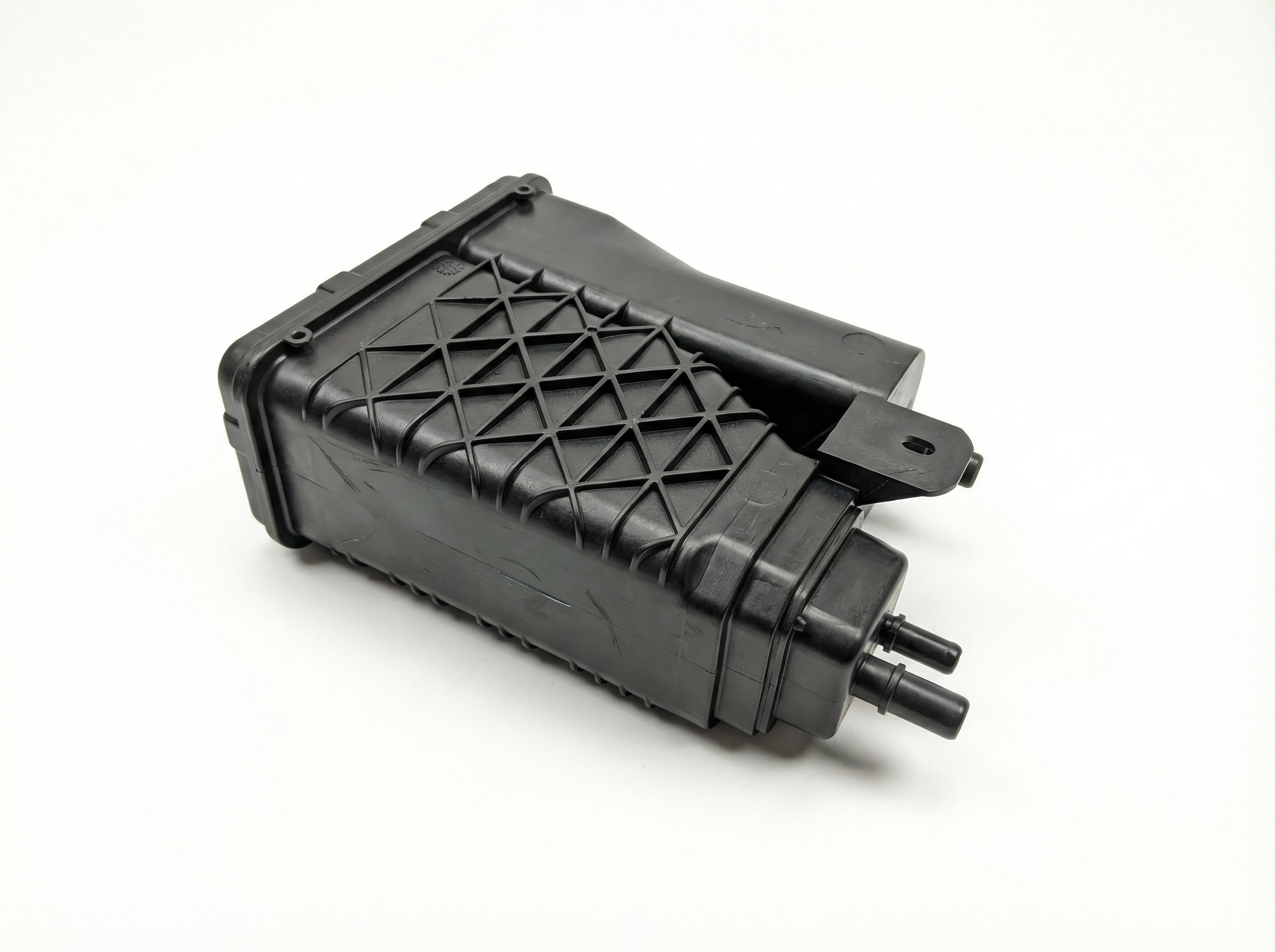
Est. part cost: $45-$70 - Clogged or Contaminated EVAP Charcoal Canister 🔴 High Probability → Shop Vapor Canister TSB #23-NA-073 directly states that dust intrusion into the canister is a primary cause for this code on these trucks. The canister becomes saturated with dust, which can block airflow and damage the vent solenoid.
How to confirm: Disconnect the hoses from the canister. If charcoal pellets or significant dust/dirt comes out, the canister is compromised. It will be difficult to blow air through a clogged canister.
Typical fix: Replace the charcoal canister assembly. Per TSB #23-NA-073, the permanent fix involves retrofitting an external vent filter kit (P/N 23103351) to prevent recurrence.
Est. part cost: $150-$250 - Blocked or Damaged EVAP Vent Hose 🟡 Medium Probability As a truck, the vent hoses are routed under the body and can be clogged by mud, dirt, or even insects and spiders building nests inside.
How to confirm: Visually inspect the entire length of the vent hose from the canister to its filter box. Disconnect it and attempt to blow compressed air through it to check for blockages. A real-world owner fixed their issue by blowing out all EVAP lines after multiple failed part replacements.
Typical fix: Clean the blockage from the hose or replace the hose if it is cracked or damaged.
Est. part cost: $20-$50 - Wiring or Connector Issue ⚪ Low Probability
How to confirm: Visually inspect the wiring harness and connector going to the vent solenoid for any signs of corrosion, breaks, or chafing. Use a multimeter to check for continuity from the connector back to the ECM.
Typical fix: Repair the damaged section of wire or replace the connector pigtail.
Est. part cost: $15-$30
Rare But Worth Checking
- Faulty Fuel Tank Pressure (FTP) Sensor: → Shop Fuel Tank A failing FTP sensor can get stuck and send incorrect pressure data to the ECM, which may be misinterpreted as a vent valve failure. 🎬 Watch: Common causes and fixes for the P0446 code. A quick test is to remove the gas cap (with the engine off) to equalize tank pressure to zero. If a scan tool still shows positive pressure, the FTP sensor is likely bad. This is a common issue on GM trucks.
- Faulty Powertrain Control Module (PCM): This is extremely rare. The PCM's internal driver for the vent solenoid circuit can fail, but every other possibility should be exhausted before considering PCM replacement.
Diagnosis Steps
- Confirm P0446 is the primary code using an OBD-II scanner. Note any other EVAP codes like P0449, P0442, or P0455.
- Perform a visual inspection of the underside of the truck near the fuel tank. Look for the charcoal canister, vent solenoid, and all associated hoses. Check for obvious damage, cracks, or blockages from mud/dirt.
- FTP Sensor Quick Check: With the engine off, remove the gas cap. Connect a scan tool and monitor the Fuel Tank Pressure (FTP) sensor reading. It should be at or very near 0. If it shows significant positive pressure, the FTP sensor is likely faulty.
- Using a bi-directional scan tool, command the EVAP vent solenoid to close. Listen for a distinct click from the solenoid.
- If no click is heard, access the vent solenoid connector. With the key on, check for battery voltage (around 12V) on the power wire.
- If voltage is present, use the scan tool to command the solenoid closed again while checking the ground signal from the ECM. If the ECM is providing a ground signal but the valve doesn't click, the solenoid is bad.
- If voltage or the ground signal is missing, inspect the wiring harness for opens or shorts between the solenoid and the ECM.
- If the solenoid clicks with the scan tool, the problem is likely a mechanical blockage. Disconnect the vent hose from the canister and the filter box and blow compressed air through it to check for obstructions.
- If the hose is clear, the charcoal canister itself is likely clogged with dust. At this point, refer to TSB #23-NA-073 for the official GM procedure to replace the canister and retrofit the external vent filter kit.
Parts You'll Likely Need
- EVAP Vapor Canister Vent Solenoid
(OEM #84613138)— This is the component most directly indicated by the code and is a common failure item due to its location and contamination from dust.
Trusted brands: ACDelco, Standard Motor Products
OEM price range: $45-$70
Aftermarket price range: $35-$55 - EVAP Charcoal Canister
(OEM #85107747)— A GM Technical Service Bulletin points to dust intrusion clogging the canister on these trucks, often requiring replacement of the entire unit along with a filter retrofit.
Trusted brands: ACDelco
OEM price range: $150-$250
Aftermarket price range: $100-$180 - EVAP Canister Vent Filter Kit
(OEM #23103351)— This is the official GM-recommended part to fix the root cause of dust intrusion as detailed in TSB #23-NA-073. It relocates the vent's air source and adds a serviceable filter.
Trusted brands: ACDelco / GM Genuine Parts
OEM price range: $80-$100
Aftermarket price range: N/A
Related Codes That Often Appear With This One
- P0449 — This code is also for the EVAP Vent Control Circuit. GM groups P0449 and P0446 together in TSB #23-NA-073, indicating they often share the same root cause of dust intrusion.
- P0442 — Small EVAP Leak Detected. If the vent valve is stuck partially open or not sealing correctly, the system will fail its pressure test and log a small leak code. This code is also mentioned in TSB #23-NA-073.
- P0455 — Large EVAP Leak Detected. Similar to P0442, a vent valve that is completely stuck open will be seen by the ECM as a very large leak. This code is also mentioned in TSB #23-NA-073.
Technical Service Bulletins (TSBs) & Recalls
- #23-NA-073: Addresses Evaporative DTCs P0442, P0446, P0455 or P0449, caused by dust intrusion into the evaporative canister. Recommends installing a remote vent filter kit as a customer-pay repair. Applies to 2019-2025 Silverado and Sierra 1500/2500/3500 models.
Platform-Specific Known Issues
- A Technical Service Bulletin (TSB #23-NA-073) was issued for 2019-2025 models for DTCs P0442, P0446, P0455, or P0449. It confirms the cause is dust intrusion into the evaporative canister from operating in dusty environments.
- The official repair outlined in TSB #23-NA-073 is to retrofit an external, serviceable filter to the vent line. This is considered a customer-pay alteration, not a warranty repair.
Mechanic-Grade Diagnostic Values
- EVAP Vent Solenoid Coil Resistance — expected: 20-50 Ohms. Failure: A reading outside this range, or an open circuit (infinite resistance), indicates a failed solenoid coil.
- Fuel Tank Pressure (FTP) Sensor Voltage (Key On, Engine Off, Gas Cap Removed) — expected: Approximately 1.5 Volts. Failure: If the voltage remains significantly different from 1.5V (e.g., stuck at 0.2V or 2.2V) after the gas cap is removed to equalize pressure, the sensor is faulty and stuck.
- EVAP Vent Solenoid Connector Voltage — expected: ~12 Volts (Battery Voltage) on the power wire with key on.. Failure: No voltage indicates a problem with the power supply wire or the controlling module (FPDM).
Hidden / Shadow Codes Worth Checking
- N/A (Descriptive Status): While not a discrete code, dealer-level scanners like the GM GDS2 may show a detailed status like 'EVAP Vent solenoid valve control circuit low voltage test status: malfunctioning'. This provides more specific information than the generic P0446 code. (see via GM GDS2 or equivalent professional-grade bidirectional scan tool.)
Scan Tool Commands That Help
- GDS2 / Professional Scan Tool: EVAP Vent Solenoid On/Off Command (or Venting/Not Venting) — Used to functionally test the vent solenoid. The technician can command the valve to change state while listening for an audible click from the solenoid and observing FTP sensor data to confirm it is sealing the system.
- GDS2 / Professional Scan Tool: EVAP System Test (or Purge/Seal Test) — This automated test commands the purge and vent solenoids through a sequence to check for leaks and restrictions. It will command the vent valve closed and the purge valve open to apply engine vacuum to the tank, then monitor the FTP sensor's response to diagnose the system's integrity and flow.
Wiring & Ground Locations
- EVAP Vent Solenoid Wiring — The wiring harness leading to the EVAP vent solenoid, located on or near the charcoal canister by the fuel tank.. On 2019+ models, the two wires are typically white and red. Damage to this harness can cause an open or short in the circuit, triggering P0446.
- Fuel Pump Driver Module (FPDM) — Under the truck, often mounted to a frame crossmember near the spare tire.. On this generation of Sierra, the FPDM (not the main ECM/PCM) directly controls the EVAP vent solenoid. A fault in the FPDM or its wiring can cause P0446, even if the vent solenoid itself is good.
Real Owner Repair Stories
- ANCEL support article citing a real-world case (2001 GMC Sierra (demonstrates a long-standing diagnostic pattern)) — Persistent EVAP codes
❌ Tried (didn't work) Replacing the gas cap, Replacing the purge valve, Replacing the vent valve
✅ What actually fixed it The Fuel Tank Pressure (FTP) sensor, located on top of the fuel tank, was faulty and ultimately needed to be replaced to resolve the code. - Reddit user on r/gmcsierra (2022 Sierra 1500 SLE) — Check Engine Light for an EVAP issue (code not specified but context implies P0446 or related)
❌ Tried (didn't work) Waiting for the dealer.
✅ What actually fixed it The issue was not yet fixed; the user reported that the required replacement part was on national backorder with no ETA from the dealer, highlighting potential supply chain issues for these components.
"I Checked Everything" — The Actual Cause
- A common scenario for P0446 is when a smoke test shows no leaks, but the code persists. The most frequent cause is a faulty Fuel Tank Pressure (FTP) sensor. The system is mechanically sound and can hold pressure/vacuum, but the sensor provides incorrect data to the computer. A definitive test is to remove the gas cap with the engine off and watch the FTP sensor data on a scan tool. If the pressure reading does not return to atmospheric (approx. 1.5V on GM trucks), the sensor is stuck and must be replaced.
When the Usual Fixes Don't Work
- While the most common causes are the vent solenoid and charcoal canister, owner-submitted stories show that these fixes are not always sufficient. In one documented case, after replacing the vent valve, purge valve, canister, and gas cap, the P0446 code and refueling problems were only resolved after the owner used a shop vacuum and compressor to blow out all EVAP lines, clearing a hidden obstruction. In another instance, the final culprit was a faulty Fuel Tank Pressure sensor that was sending bad data, even after other common parts were replaced. This highlights the importance of comprehensive diagnosis, including checking for physical blockages and verifying sensor accuracy, before replacing multiple components.
OEM Part Supersession History
23357382→84613138, which was then superseded by 85753450— Part revision and design updates by the manufacturer.
Heads up: Always verify the latest part number with a dealer based on the vehicle's VIN.84050713→85107747— Part revision for the EVAP Charcoal Canister.
Model Year Variations Within This Range
- 2019-2025: Unlike many older vehicles where the Engine Control Module (ECM) directly controls the EVAP vent solenoid, on this generation the Fuel Pump Driver Module (FPDM) is responsible for controlling the solenoid. This changes the diagnostic path for electrical faults, as the FPDM itself or its wiring becomes a point of potential failure.
Helpful Videos

We Have This Part in Stock

The information in this article is provided for general reference and educational purposes only. Vehicle specifications, procedures, and part compatibility can vary by production date, trim level, and region. Always consult your vehicle's factory service manual and verify part numbers before purchasing or performing repairs. Safety-critical components such as airbags, seat belts, and braking systems should be installed by a qualified professional.
- Gmc SIERRA 1500:
- 🧭 Diagnostic Flowchart
- 🎬 Helpful Videos
- 🛍️ Shop This Part
- What's Unique About the 2022-2025 Gmc SIERRA 1500
- Symptoms You May Notice
- Most Likely Causes
- Rare But Worth Checking
- Diagnosis Steps
- Parts You'll Likely Need
- Related Codes That Often Appear With This One
- Technical Service Bulletins (TSBs) & Recalls
- Platform-Specific Known Issues
- Mechanic-Grade Diagnostic Values
- Hidden / Shadow Codes Worth Checking
- Scan Tool Commands That Help
- Wiring & Ground Locations
- Real Owner Repair Stories
- "I Checked Everything" — The Actual Cause
- When the Usual Fixes Don't Work
- OEM Part Supersession History
- Model Year Variations Within This Range
- 🎟️ Get 5% Off