

P0446 on 2011-2015 GMC Sierra 2500: EVAP Vent Circuit Causes and Fixes
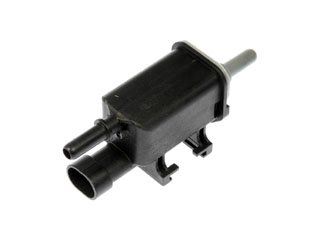
For 2011-2015 GMC Sierra 2500 trucks, code P0446 is most often caused by a faulty EVAP vent solenoid, a clogged EVAP canister, or a blocked vent filter/hose due to dust and debris. Replacing the vent solenoid (Part No. ACDelco 23481275) is the most common fix, costing between $40 and $115 for the part. However, a faulty Fuel Tank Pressure (FTP) sensor giving false readings is a very common misdiagnosis.
- P0446 points to a problem with the EVAP system's vent control, not a gas cap leak.
- The most common fix is replacing the EVAP vent solenoid, located near the fuel tank.
- A key symptom, besides the Check Engine Light, is the fuel pump nozzle shutting off frequently when refueling.
- Before replacing parts, check for clogged vent hoses and filters, as cleaning them can sometimes resolve the issue for free.
- The official GM part number for the vent valve is often 23481275, but always confirm with your truck's VIN.
What's Unique About the 2011-2015 Gmc SIERRA 2500

On these GM trucks, a common issue leading to P0446 is the location of the EVAP components, which are susceptible to dirt and debris, especially if driven on dusty roads. This can clog the vent valve, hoses, or the canister itself. GM issued Technical Service Bulletin #15-06-04-002 specifically because dust and water intrusion were causing restrictions and corrosion in the EVAP canister vent solenoid (CVS) valve. The 2011-2015 year range also spans the end of the 2nd generation (GMT900: 2011-2014) and the start of the 3rd generation (K2XX: 2015) Sierra HD, which may have slight variations in part location, but the function and common failures of the EVAP system remain consistent.
Diagnostic Flowchart

Tap your situation to follow the diagnostic path that matches what you're seeing on this vehicle.
Generation note: The 2011-2015 model years cover two generations of the GMC Sierra 2500 HD: the second generation (GMT900, 2011-2014) and the first year of the third generation (K2XX, 2015). While the underlying EVAP system principles are the same, the exact location and part numbers for components like the vent solenoid may differ slightly between these generations. Always verify the part with your vehicle's VIN. TSB 15-06-04-002 covers models in both generations, indicating a shared design flaw.
Symptoms You May Notice

- Check Engine Light is on
- Difficulty filling the fuel tank (gas pump nozzle clicks off repeatedly).
- A faint smell of fuel near the vehicle.
- Audible noise or humming from the EVAP canister area after shutting the truck off as the system tries and fails its self-test.
- Replacing the gas cap. While a bad gas cap can cause other EVAP codes (like P0455 for a large leak), it is not a typical cause for the P0446 vent circuit/restriction code.
- Replacing the purge valve solenoid. The purge valve is located in the engine bay and has its own set of diagnostic codes (e.g., P0443, P0496). While part of the EVAP system, its failure does not typically cause P0446.
Most Likely Causes

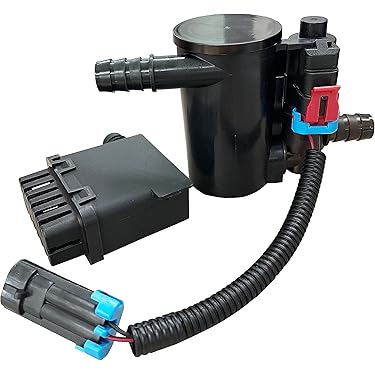
- Faulty EVAP Vent Solenoid/Valve 🔴 High Probability → Shop Vapor Canister The vent solenoid is a moving part that can fail electrically or become stuck open or closed. Its location under the truck exposes it to road grime, dust, and moisture, leading to internal corrosion and failure, a problem acknowledged by GM in a TSB.
How to confirm: Use a capable OBD-II scanner to command the vent solenoid to open and close 🎬 Watch: Professional diagnostic steps for the GM P0446 vent system.; you should hear an audible click. You can also apply 12V power directly to the solenoid's two pins to test its function; it should click shut. Check for proper voltage and ground at the connector. Resistance across the solenoid's pins should be between 10 and 50 Ohms.
Typical fix: Replace the EVAP vent solenoid. This part is typically located near the charcoal canister by the fuel tank. The OEM part is ACDelco 23481275. A popular aftermarket alternative is Dorman 911-070.
Est. part cost: $40-$115 - Blocked or Damaged EVAP Hoses/Vent Filter 🟡 Medium Probability The vent hose has a remote filter box at the end which is notorious for getting clogged with dust, dirt, or even spider webs, restricting airflow. Its location, often high on the frame rail near the transmission, makes it a magnet for debris kicked up by the tires. Hoses can also become brittle and crack over time.
How to confirm: Visually inspect all EVAP hoses for cracks, kinks, or blockages. Locate the remote filter box and blow it out with compressed air. 🎬 Watch: How to fix P0446 for free by cleaning the lines. A smoke test can definitively identify restrictions.
Typical fix: Clean or replace the clogged filter and replace any damaged hoses. Some owners modify the filter or add a secondary foam filter to better protect the system.
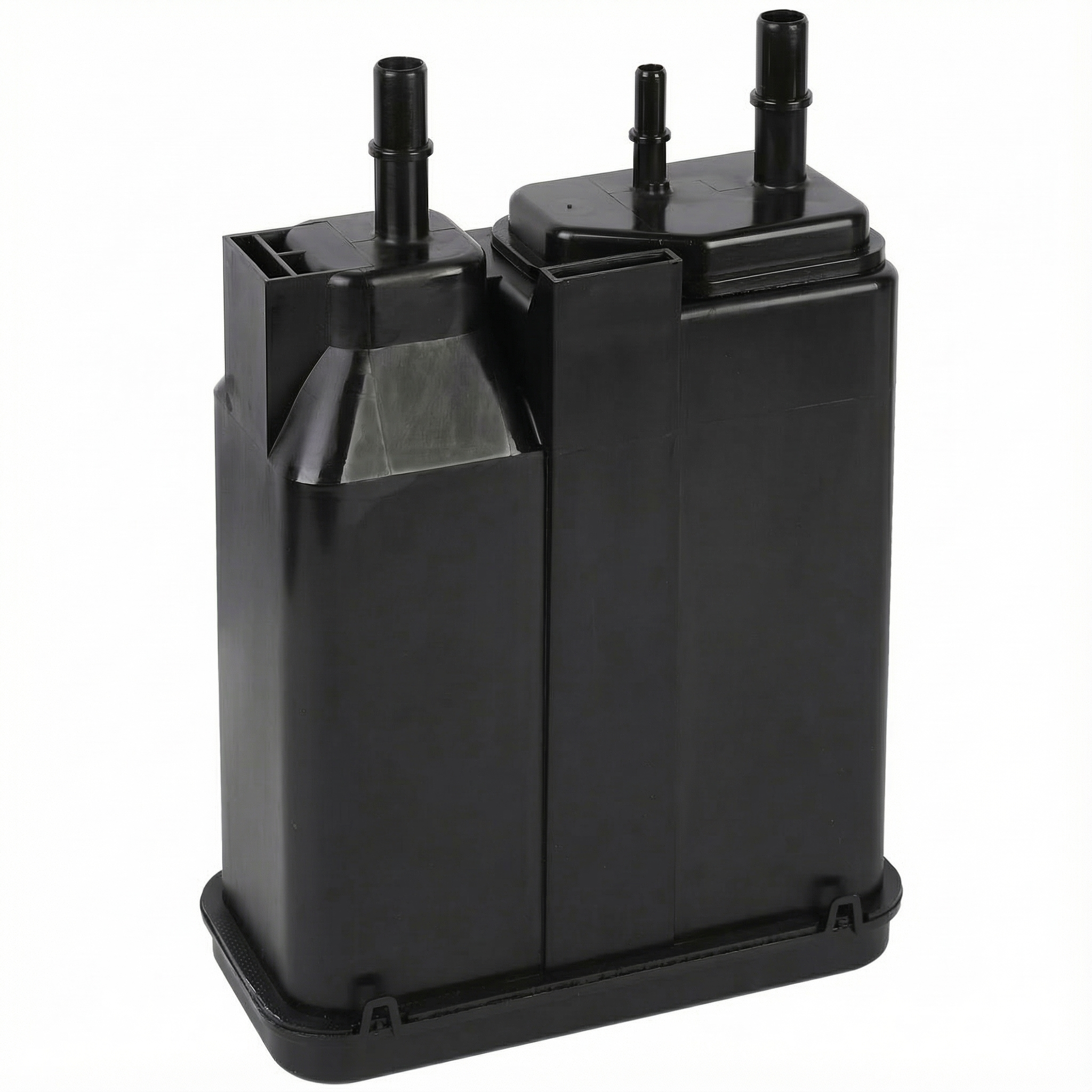
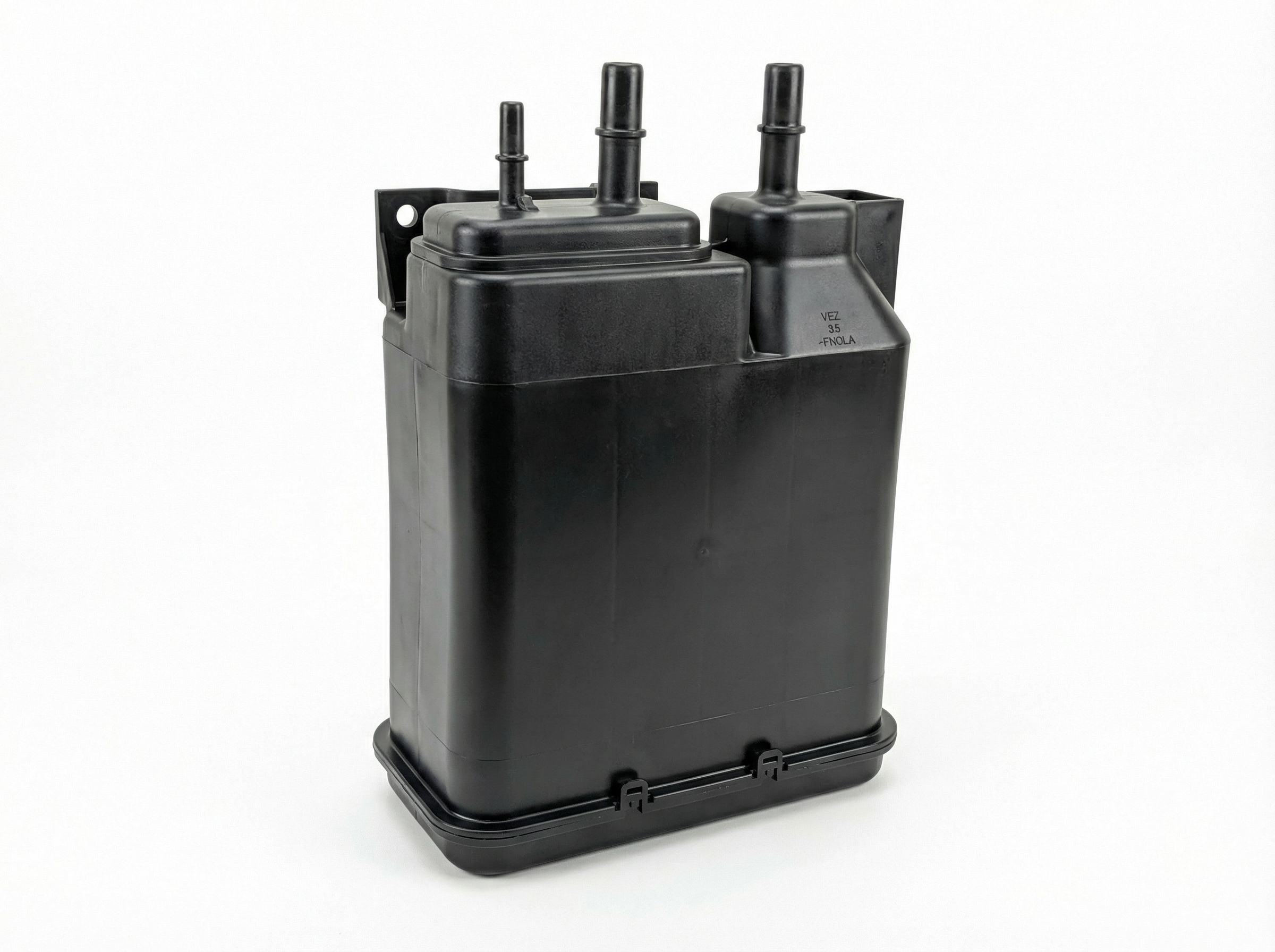
Est. part cost: $10-$50 - Clogged or Failed EVAP Charcoal Canister 🟡 Medium Probability → Shop Vapor Canister Dust and dirt can be drawn into the EVAP system, clogging the canister and restricting airflow, which triggers the P0446 code. This was a primary reason for GM's TSB. Over-filling the fuel tank can also saturate the canister with raw fuel, causing the charcoal pellets inside to break down and create a blockage.
How to confirm: Disconnect the hoses from the canister and try to blow through it. If there is significant resistance, it is likely clogged. A visual inspection may also show cracks or damage. Shaking the canister may reveal a rattling sound, indicating broken internal components.
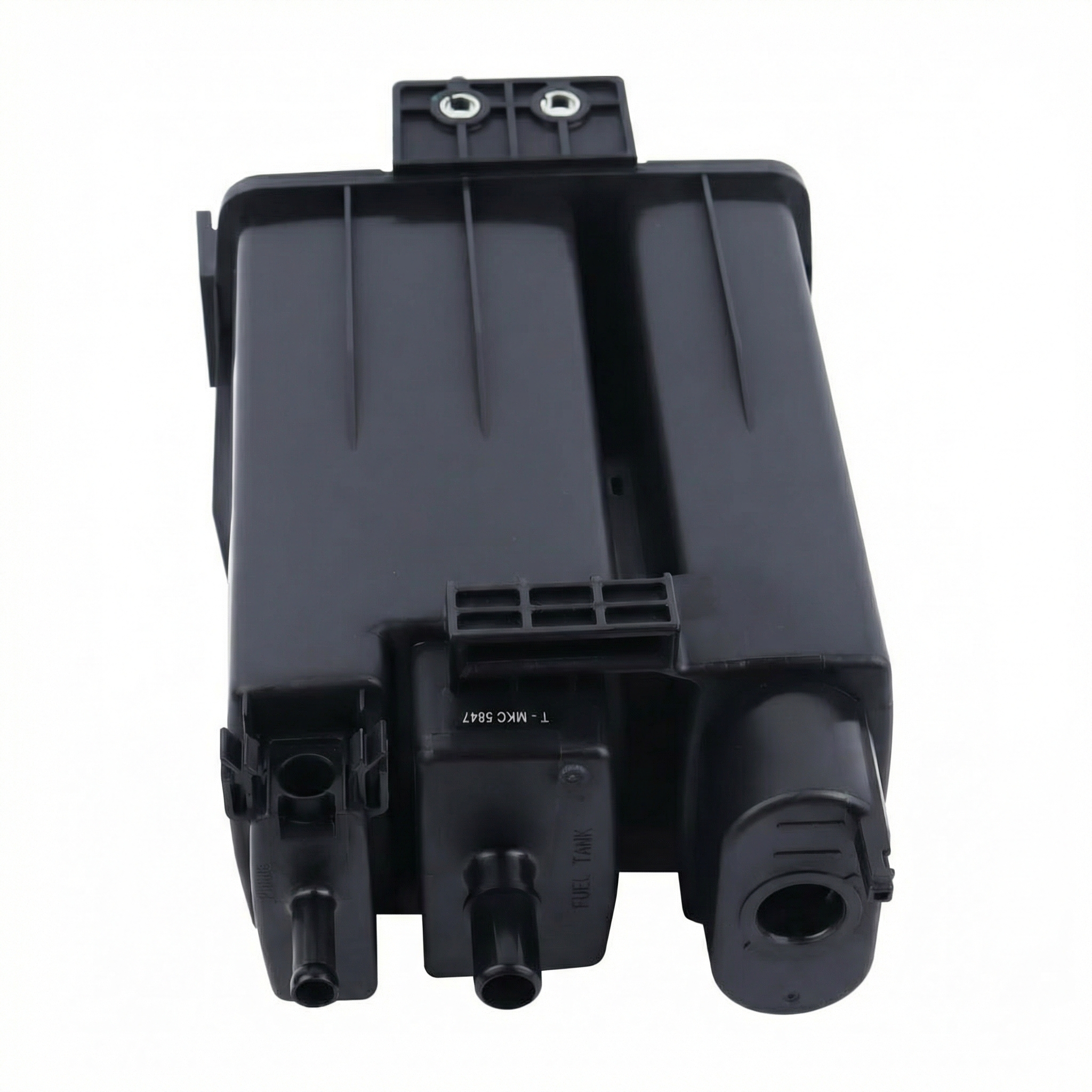
Typical fix: Replace the charcoal canister. The vent solenoid is often replaced at the same time as it may be attached to the canister or sold as a kit.
Est. part cost: $100-$250 - Damaged Wiring or Poor Connection ⚪ Low Probability The wiring harness to the vent solenoid is under the vehicle and exposed to the elements, which can lead to corrosion at the connector plug, or chafing against the frame or other components. Wires can also break internally inside the insulation right at the connector, appearing fine visually but creating an open circuit.
How to confirm: Inspect the wiring and connector for the vent solenoid for any visible damage or corrosion. Tug gently on each wire at the connector to check for internal breaks. Use a multimeter to check for 12V power on the power wire (often red) and check the control wire for ground switching from the ECM when commanded by a scan tool.
Typical fix: Repair the damaged section of the wiring harness or clean/replace the connector and pigtail.
Est. part cost: $5-$30
Rare But Worth Checking
- Faulty Fuel Tank Pressure (FTP) Sensor: → Shop Fuel Tank While less common for this specific code, a faulty FTP sensor can provide incorrect data to the ECM, leading it to misdiagnose a vent problem. If the sensor is stuck reading a pressure or vacuum value (e.g., 0.2V or 4.8V) instead of the normal ~1.5V at atmospheric pressure, the ECM will assume the vent is blocked and set a P0446 🎬 See how to replace a faulty fuel tank pressure sensor., even if the vent solenoid is working perfectly. This often requires dropping the fuel tank to replace, though some technicians can access it without fully dropping the tank.
Diagnosis Steps
- Scan for Codes: Use an OBD-II scanner to confirm P0446 and check for any other related codes.
- Inspect Gas Cap: Although not a likely cause, ensure the gas cap is tight and the seal is intact.
- Visual Inspection: Inspect the EVAP canister, vent solenoid, and all visible hoses underneath the truck for cracks, damage, or loose connections. Pay close attention to the vent hose running up the frame rail.
- Check for Blockages First: A common real-world fix is to disconnect the vent hose from the canister and the remote filter box. Blow compressed air through the lines and the filter box to clear potential blockages from dust or debris.
- Test the Vent Solenoid: Using a capable scanner, command the vent solenoid on and off. Listen for a distinct click. If no scanner is available, disconnect the solenoid and apply 12V and ground to its terminals to see if it actuates.
- Check FTP Sensor Reading: With the gas cap off (to ensure atmospheric pressure), use a scanner to view the Fuel Tank Pressure (FTP) sensor data. The voltage should be around 1.4V-1.7V. If it's stuck high (e.g., over 4V) or low (e.g., under 0.5V), the FTP sensor is likely faulty, not the vent circuit.
- Check Wiring: If the solenoid doesn't click, check for 12V power at the connector with the key on. Check the ground side for continuity back to the ECM. Gently pull on the wires at the connector to check for internal breaks.
- Perform Smoke Test: If the cause is still not found, a smoke test is the most effective way to find restrictions or hard-to-see leaks in the EVAP system.
Parts You'll Likely Need
- Vapor Canister Vent Valve Solenoid
(OEM #23481275)— This is the most frequent failure point for the P0446 code. It is an electromechanical part that wears out or gets clogged with dust and debris over time, a known issue addressed by a GM TSB.
Trusted brands: ACDelco, Dorman
OEM price range: $75-$115
Aftermarket price range: $40-$80 - Vapor Canister — The canister can become saturated with fuel from overfilling or clogged with dirt drawn in through the faulty vent system, restricting airflow and causing the vent system to fail its diagnostic test.
Trusted brands: ACDelco, Dorman
OEM price range: $150-$250
Aftermarket price range: $100-$180
Related Codes That Often Appear With This One
- P0449 — This code is very similar and also points to an EVAP Vent Solenoid Control Circuit Malfunction. On GM vehicles, P0446 and P0449 are often used interchangeably depending on the specific test that failed, and both are addressed in TSB 15-06-04-002.
- P0442 — Indicates a small EVAP system leak. A faulty or stuck vent solenoid can sometimes lead to the system failing a small leak test. This code is also mentioned in the same TSB.
- P0455 — Indicates a large EVAP system leak. If the vent solenoid is stuck open, the system cannot seal to perform a pressure test, which can be interpreted as a large leak. This code is also mentioned in TSB 15-06-04-002.
Technical Service Bulletins (TSBs) & Recalls
- 15-06-04-002: Addresses customer concern of Malfunction Indicator Lamp (MIL) illuminated, fuel tank hard to fill, and DTCs P0442, P0446, P0455 or P0449 set. Cause is dust/water intrusion into the vent solenoid.
- 23-NA-073: While for newer models, it details a procedure to add an external filter to the EVAP vent line for trucks in dusty environments, which is the root cause of the P0446 issue on many 2011-2015 models.
Platform-Specific Known Issues
- A GM Technical Service Bulletin (TSB #15-06-04-002) for 2011-2015 models addresses customer complaints of the Check Engine Light with P0446 (and other EVAP codes) and difficulty filling the fuel tank. The cause is identified as dust and water intrusion into the EVAP canister and vent solenoid, especially on vehicles operated in dusty environments.
Mechanic-Grade Diagnostic Values
- Fuel Tank Pressure (FTP) Sensor Voltage — expected: ~1.4V to 1.7V (with key on, engine off, and gas cap removed to ensure atmospheric pressure). Failure: Voltage is stuck high (e.g., > 4.0V) or low (e.g., < 0.5V) and does not change when the gas cap is removed.
- EVAP Vent Solenoid Coil Resistance — expected: 10 to 50 Ohms. Failure: Reading is 0 Ohms (shorted) or infinite/OL (open circuit).
- EVAP Vent Solenoid Connector Voltage — expected: 12V on the power wire (often red/white) with key on; the other wire is the control wire, which the ECM grounds to activate the solenoid.. Failure: No voltage on the power wire indicates a fuse or wiring issue upstream. If power is present but the solenoid doesn't activate when commanded, the control wire or ECM driver may be at fault.
Scan Tool Commands That Help
- Tech 2 / GDS2: EVAP Purge/Seal — This bidirectional command allows the technician to manually close the vent solenoid and open the purge solenoid to create a vacuum in the tank, verifying the mechanical function of both components and checking the system's ability to seal.
- Tech 2 / GDS2: EVAP Vent Solenoid ON/OFF — This is a simple bidirectional test to command the vent solenoid to close and open. The technician should listen for an audible 'click' from the solenoid each time it is commanded, confirming the wiring and the solenoid itself are functional.
- Tech 2 / GDS2: Service Bay Test — Located under 'Special Functions,' this test forces the EVAP monitor to run its self-diagnostic sequence in the shop, allowing a technician to confirm a repair has fixed the issue without having to perform a full drive cycle.
Wiring & Ground Locations
- Vent Solenoid Connector — Under the vehicle, plugged into the EVAP vent solenoid, which is typically attached to or near the charcoal canister by the fuel tank.. This connector is a common failure point. Wires, particularly the ground control wire, can break internally inside the insulation right at the connector due to stress and exposure to the elements. A visual inspection may not be sufficient; a 'tug test' on the wires is recommended.
- FTP Sensor Connector — On top of the fuel pump module, which is on top of the fuel tank. It is accessible, with difficulty, by reaching over the frame rail without dropping the tank.. Knowing the pinout (Gray: 5V Reference, Dark Green: Signal, Black: Ground) allows for direct testing of the sensor and its circuit to rule out a faulty FTP sensor, a common misdiagnosis for P0446.
- EVAP System Fuse — In the underhood fuse block. In one documented example, it was Fuse 34, a 10A fuse labeled 'CANISTER VENT'.. A blown fuse will cut power to the vent solenoid, causing an open circuit condition and setting code P0446 or P0449. This should be checked before replacing parts.
Real Owner Repair Stories
- GoTech YouTube Channel (GMC Sierra (year not specified, but GMT900/K2XX body style)) — Check Engine Light with code P0446. First shop quoted a vent solenoid replacement.
❌ Tried (didn't work) The first shop's diagnosis of a bad vent solenoid was incorrect.
✅ What actually fixed it The FTP sensor was faulty. Live data showed the FTP voltage was stuck at 0.22V and did not change when the gas cap was removed. The technician replaced the FTP sensor by reaching over the frame rail without dropping the tank, which resolved the code. - YouTube user 's distilo' (2007+ Chevy Silverado/GMC Sierra) — Check Engine Light with P0446.
❌ Tried (didn't work) Replacing parts without checking for simple blockages.
✅ What actually fixed it The remote vent filter box, located high on the frame rail by the transmission, was completely clogged with dust. The owner removed the filter, cleaned it with compressed air, and reinstalled it. This free repair fixed the code.
"I Checked Everything" — The Actual Cause
- A very common scenario for P0446 is when a smoke test shows no leaks, and the vent and purge solenoids click when tested, yet the code persists. The root cause is often a faulty Fuel Tank Pressure (FTP) sensor. The ECM sets P0446 because it expects to see a rapid change in tank pressure when it commands the vent valve to open during a self-test. If the FTP sensor is stuck and not reporting this pressure change, the ECM incorrectly assumes the vent path is restricted, even though the vent solenoid is working and there are no leaks. A technician can confirm this by watching the FTP sensor voltage on a scan tool; if it doesn't read ~1.5V with the gas cap off, the sensor is the likely culprit, not the vent circuit.
When the Usual Fixes Don't Work
- While replacing the EVAP vent solenoid is the most common fix listed in many guides, numerous owner and technician reports for the 2011-2015 Sierra 2500 show that this often does not solve the problem. The actual fix is frequently the Fuel Tank Pressure (FTP) sensor. In one documented case, a technician found a P0446 code and live data showing the FTP sensor voltage was stuck low and unresponsive. Instead of replacing the vent solenoid as a previous shop had recommended, he replaced the FTP sensor, which immediately corrected the voltage reading and cleared the code. This highlights the importance of diagnosing the live sensor data before replacing the most 'common' part.
OEM Part Supersession History
10382080, 15893884, 20995471, 25932566, and others→23481275— Part consolidation and design updates over the years.
Model Year Variations Within This Range
- 2011-2014 vs 2015: This range crosses the generation change from the GMT900 (ending in 2014 for HD models) to the K2XX platform (starting in 2015 for HD models). While the EVAP system's function and failure modes (clogged vents/filters, bad solenoids) are nearly identical, the physical shape and mounting location of the charcoal canister and vent solenoid may differ. For example, on some K2XX trucks, the vent solenoid is located directly under the driver's side door area. Always confirm parts using the vehicle's VIN.
Helpful Videos
Used OEM Parts in Stock

New Aftermarket Parts Available


The information in this article is provided for general reference and educational purposes only. Vehicle specifications, procedures, and part compatibility can vary by production date, trim level, and region. Always consult your vehicle's factory service manual and verify part numbers before purchasing or performing repairs. Safety-critical components such as airbags, seat belts, and braking systems should be installed by a qualified professional.
- Gmc SIERRA 2500:
- 🧭 Diagnostic Flowchart
- 🎬 Helpful Videos
- 🛍️ Shop This Part
- What's Unique About the 2011-2015 Gmc SIERRA 2500
- Symptoms You May Notice
- Most Likely Causes
- Rare But Worth Checking
- Diagnosis Steps
- Parts You'll Likely Need
- Related Codes That Often Appear With This One
- Technical Service Bulletins (TSBs) & Recalls
- Platform-Specific Known Issues
- Mechanic-Grade Diagnostic Values
- Scan Tool Commands That Help
- Wiring & Ground Locations
- Real Owner Repair Stories
- "I Checked Everything" — The Actual Cause
- When the Usual Fixes Don't Work
- OEM Part Supersession History
- Model Year Variations Within This Range
- 🎟️ Get 5% Off