

P0446 on 2000-2006 GMC Yukon: EVAP Vent Control Causes and Fixes
On a 2000-2006 GMC Yukon, code P0446 is almost always caused by a faulty or clogged EVAP vent valve solenoid located near the spare tire. This part is highly susceptible to dirt and debris. Replacing this part, often with an updated kit that relocates the filter, is a common, DIY-friendly fix costing around $30-$75 for the part. The most telling symptom, besides the Check Engine Light, is the gas pump nozzle repeatedly clicking off during refueling.
- P0446 on your Yukon almost certainly means the EVAP vent valve solenoid is clogged or has failed.
- The most obvious symptom, besides the check engine light, is the gas pump repeatedly shutting off when you try to refuel.
- The fix is relatively easy and inexpensive. Buy the updated vent valve kit that includes a relocatable filter to prevent the problem from happening again.
- Do not waste money replacing the gas cap or the purge valve in the engine bay for this specific code.
What's Unique About the 2000-2006 GMC Yukon
The GMT800 platform, which includes the 2000-2006 Yukon, is notorious for this specific code. The original EVAP vent solenoid's location above the rear axle and spare tire makes it a magnet for road dust, dirt, and moisture, leading to frequent clogs. GM acknowledged this design flaw and issued Technical Service Bulletins (TSBs) with an updated part that includes a longer hose and a serviceable filter box, designed to be relocated to a cleaner, more protected area like higher in the frame rail or near the fuel filler neck.
Generation note: The 2000-2006 year range covers the second generation (GMT800) of the GMC Yukon. The 2000 model year was a transition year from the first generation (GMT400), but the EVAP system design and the P0446 fault are primarily associated with the GMT800 platform, which is the focus of this guide.
Symptoms You May Notice
- Check Engine Light is on
- Difficulty fueling the vehicle (gas pump nozzle shuts off repeatedly).
- Slight fuel odor near the rear of the vehicle (less common)
- A "whoosh" sound of pressure releasing when opening the gas cap.
- Replacing the gas cap. While a loose or faulty gas cap can cause other EVAP codes (like P0455 or P0457 for large leaks), it is not a typical cause for P0446, which indicates a vent *blockage*, not a leak.
- Replacing the EVAP Purge Valve. The purge valve is located in the engine bay and controls the flow of vapors *to* the engine. P0446 is specifically related to the vent side of the system near the tank. A faulty purge valve can cause other issues, but not typically a P0446 code by itself.
Most Likely Causes
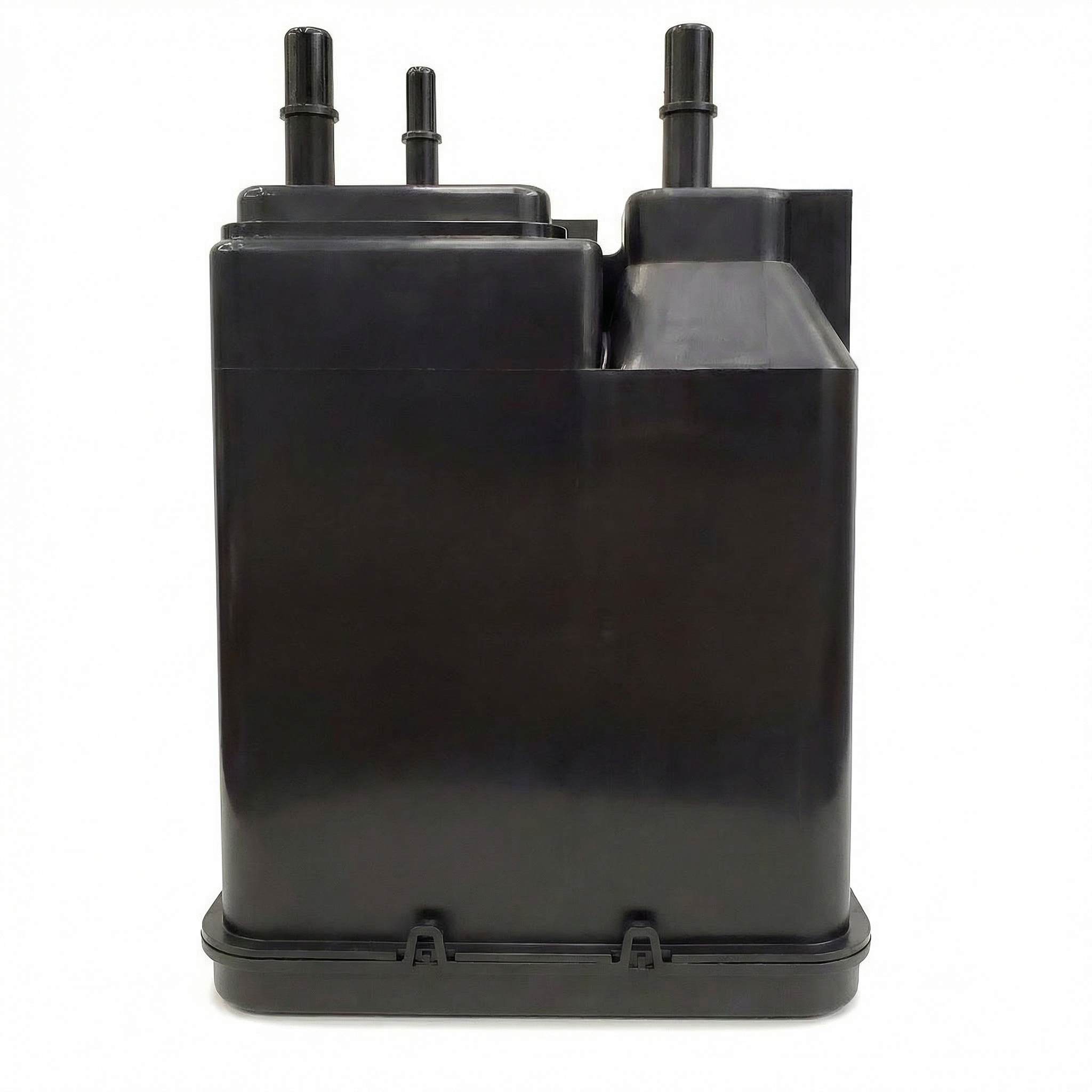
- Clogged or Failed EVAP Vent Valve Solenoid 🔴 High Probability → Shop Vapor Canister The original vent valve is poorly located above the spare tire, making it extremely vulnerable to dirt, dust, and road debris kicked up by the wheels. This is a well-documented issue on GM trucks and SUVs of this era, addressed by multiple TSBs.
How to confirm: Locate the vent valve above the spare tire. Disconnect the hoses and attempt to blow through the valve; it is normally open, so air should pass freely. If it's restricted, it's bad. You can also apply 12V power to the solenoid terminals; a healthy valve will produce an audible click as it closes. A failed valve will be silent or stuck.
Typical fix: Replace the EVAP vent valve solenoid. It is highly recommended to use the updated GM service kit (part number 19207762 for 1999-2003 models) which includes a new valve, a longer hose, and a filter box that can be relocated to a cleaner location, like higher in the frame rail or near the fuel filler neck. The bolt torque for the new bracket is 12 N·m (106 lb in).
Est. part cost: $30-$75 - Blocked EVAP Vent Hose or Filter 🟡 Medium Probability The same conditions that clog the valve can also block the vent hoses with dirt, debris, or even insect nests (particularly from spiders). This is a known issue across many vehicle platforms.
How to confirm: Visually inspect the entire length of the vent hose from the charcoal canister to the vent valve. Remove the hose and try to blow compressed air through it to check for blockages. If using the relocation kit, ensure the new filter box is placed with the opening facing downward to prevent water ingress.
Typical fix: Clean the hose with compressed air or replace the blocked section of hose. If replacing the vent valve with the updated kit, a new hose and filter are included.
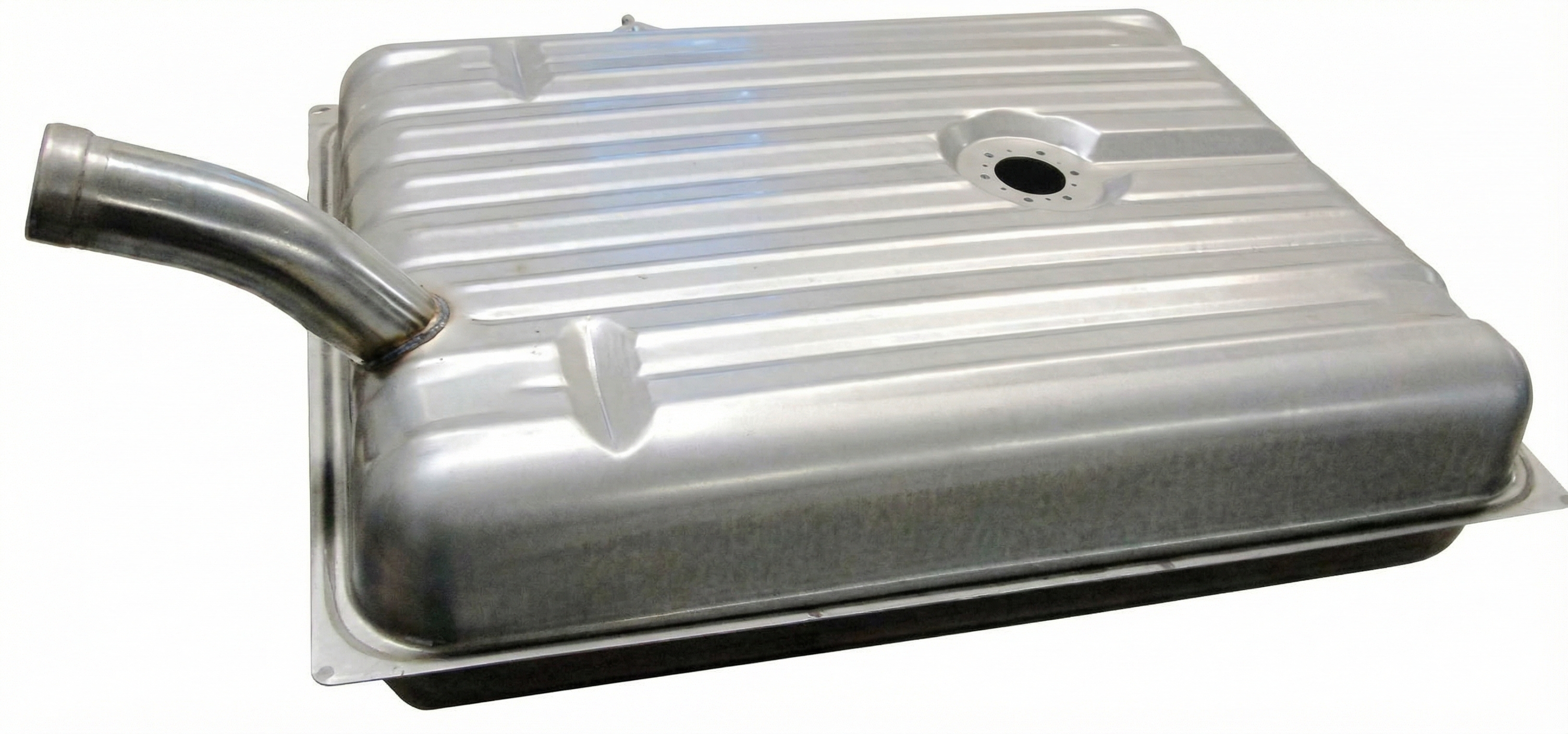
Est. part cost: $10-$30 - Faulty Fuel Tank Pressure (FTP) Sensor ⚪ Low Probability → Shop Fuel Tank
How to confirm: This requires a scan tool that can read live data. With the gas cap removed (allowing the tank to be at atmospheric pressure), the FTP sensor should read approximately 1.5 volts. If the reading is stuck high or low, or doesn't change when pressure is applied/released, the sensor is likely faulty. A faulty sensor can incorrectly report a blockage, triggering P0446.
Typical fix: Replace the fuel tank pressure sensor, which is located on top of the fuel pump module. This is a more involved repair as it requires dropping the fuel tank or lifting the vehicle body to access it.
Est. part cost: $25-$50
Rare But Worth Checking
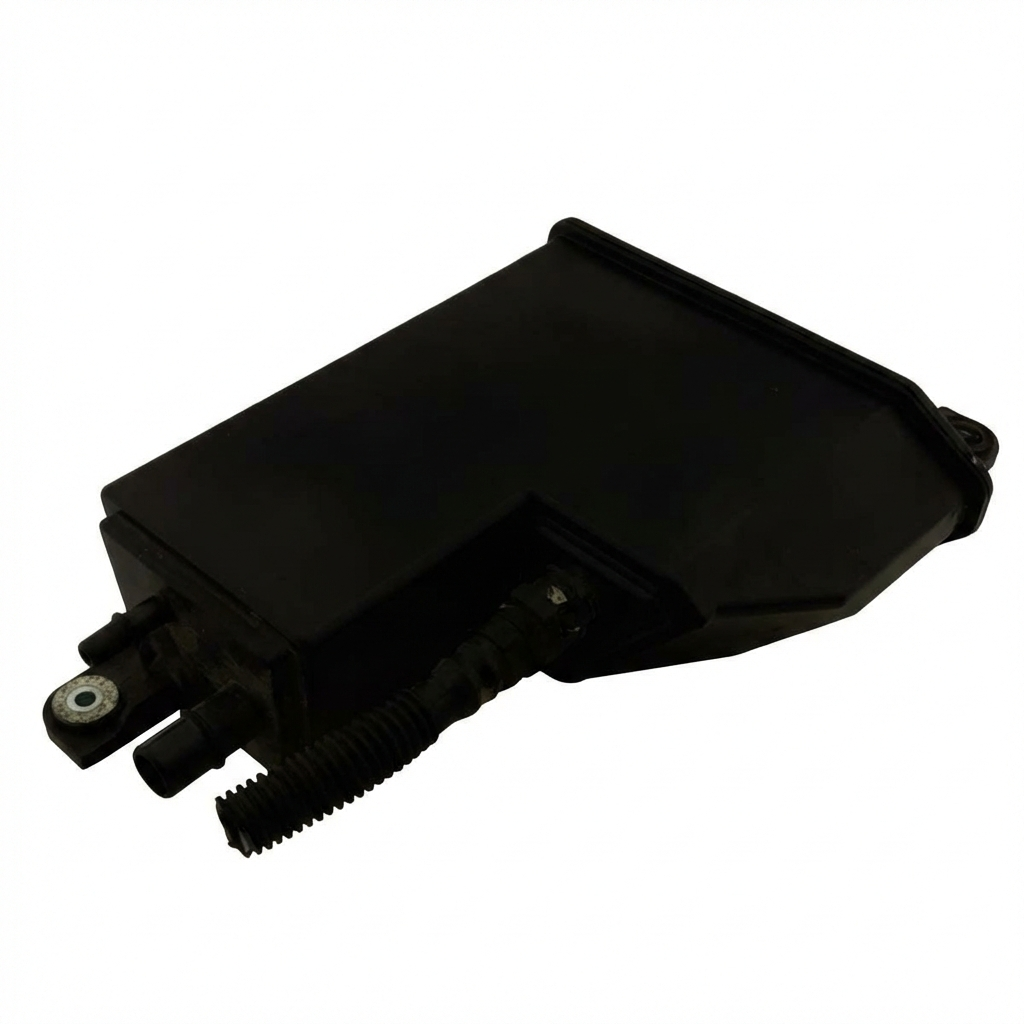
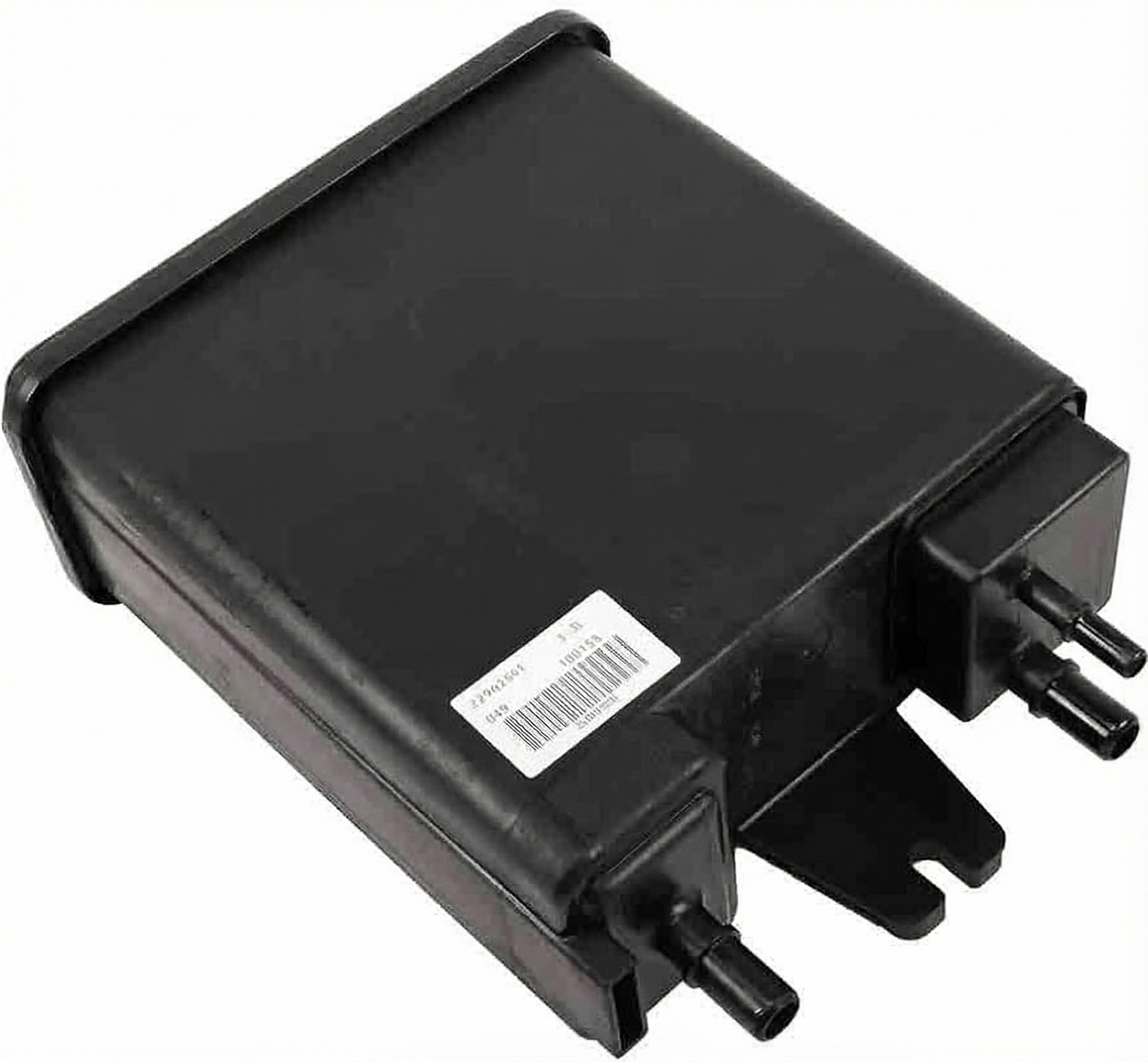
- Clogged Charcoal Canister: → Shop Vapor Canister This is uncommon, but if the vehicle has been operated extensively in very dusty conditions, or if the tank has been habitually overfilled, the canister itself can become saturated with dirt or raw fuel and restrict airflow. This is usually a last resort after the vent valve and hoses have been checked. GM TSBs specifically advise NOT to replace the canister unless it fails a leak test.
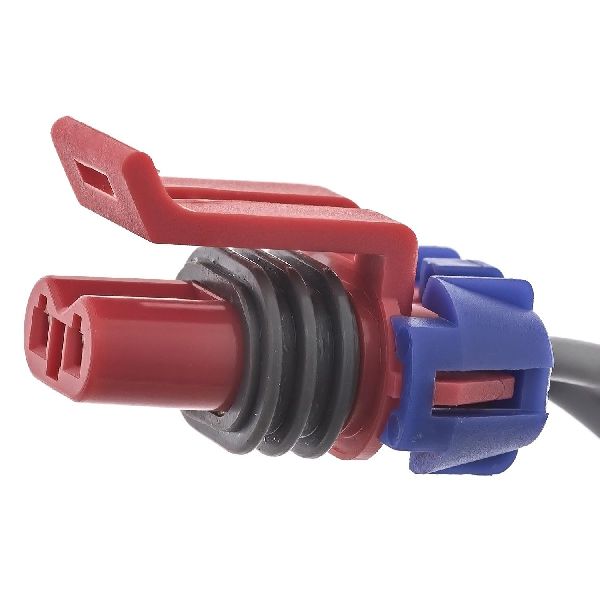
- Damaged Wiring to Vent Valve Solenoid: The wiring harness leading to the vent valve is also exposed to the elements and can be damaged by road debris or corrosion, leading to an open or shorted circuit. Inspect the connector and wiring for any visible damage, especially if code P0449 is also present.
Diagnosis Steps
- Verify the code with an OBD-II scanner. Note any other pending or active codes, especially P0449.
- Perform a visual inspection of the EVAP system under the rear of the vehicle, above the spare tire. Look for the vent solenoid, charcoal canister, and associated hoses. Check for obvious damage, cracks, or blockages.
- If you have difficulty fueling the vehicle, this is a strong indicator that the vent path is blocked. Proceed to inspect the vent solenoid.
- Lower the spare tire for better access to the components. This is often the most difficult part of the job if the mechanism is rusted.
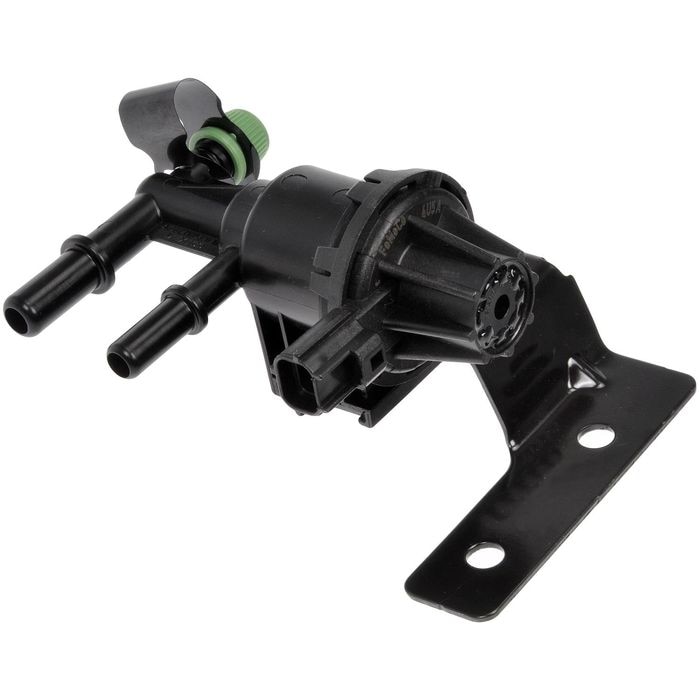
- Locate the EVAP vent solenoid. It's a small black plastic valve with an electrical connector and two hose ports, mounted on a bracket.
- Disconnect the electrical connector and the hoses from the vent solenoid.
- Attempt to blow through the solenoid. It is normally open, so air should pass through freely. If it is restricted or blocked, it has failed.
- If you have a power probe or jumper wires, apply 12V and ground to the two pins on the solenoid. You should hear a distinct 'click' as it closes. If there is no click, the solenoid is electrically dead.
- If the solenoid seems to work, inspect the hoses for blockages. Pay special attention to the fresh air inlet hose and filter box for dirt or insect nests. Blow compressed air through the vent hose to ensure it's clear.
- If the solenoid and hoses are clear, the next suspect is the Fuel Tank Pressure (FTP) sensor, which requires a scan tool with live data capabilities for diagnosis.
Parts You'll Likely Need
- EVAP Vapor Canister Vent Valve Solenoid Kit
(OEM #ACDelco 23481275 (supercedes many older numbers), Service Kit P/N 19207762 (for 1999-2003 models))— This is the most common failure point for P0446. The updated kit (ACDelco 23481275 or equivalent) includes the valve, a new bracket, and a relocatable filter box to prevent future clogging from dirt and debris.
Trusted brands: ACDelco (OEM), Dorman (e.g., 911-032), Delphi, Standard Motor Products (SMP)
OEM price range: $50-$75
Aftermarket price range: $30-$60
Related Codes That Often Appear With This One
- P0449 — P0449 is 'EVAP Vent Valve/Solenoid Circuit Malfunction'. While P0446 indicates a performance/blockage issue, P0449 points more specifically to an electrical fault in the same component's circuit (the vent solenoid). They often appear together and almost always point to a failed vent solenoid or its connector.
Technical Service Bulletins (TSBs) & Recalls
- 04-06-04-055A: Addresses DTC P0446 caused by dirt/dust intrusion into the EVAP canister vent solenoid and recommends replacing the solenoid with an updated part with an enhanced, cleanable filter for 2000-2003 models.
- 02-06-04-037H: Provides detailed instructions for replacing the vent valve and adding/relocating a filter box using a service kit (P/N 19207762) to prevent future contamination.
- 00-02-35-003N: While not directly for P0446, this TSB addresses the common intermediate steering shaft clunk, another frequent GMT800 issue.
- Bulletin #23-NA-073: This technical bulletin provides repair information for P0446 and other EVAP codes caused by dust intrusion into the evaporative canister, a persistent issue across similar GM truck platforms.
Platform-Specific Known Issues
- A GM Technical Service Bulletin (TSB #04-06-04-055A, later revised) was issued for this exact problem on 2000-2003 models, recommending the replacement of the original vent solenoid with an updated, more robust part with enhanced filtering. This bulletin applies to the entire 2000-2006 generation due to the shared design.
- Another related TSB, #02-06-04-037H, provides detailed instructions for installing a service kit that relocates the filter box to a cleaner area, often above the transmission, to prevent repeat failures in dusty environments.
Mechanic-Grade Diagnostic Values
- EVAP Vent Valve Solenoid Coil Resistance — expected: 20-30 Ohms. Failure: Infinite resistance (open circuit) or near zero Ohms (short circuit).
- Fuel Tank Pressure (FTP) Sensor Voltage (Key On, Engine Off, Gas Cap Removed) — expected: 1.3 - 1.7 Volts. Failure: A reading significantly outside this range (e.g., 0.2V or 2.2V) indicates a faulty sensor or wiring issue. The voltage should be stable at atmospheric pressure.
- Voltage at EVAP Vent Solenoid Connector (Key On, Solenoid Plugged In) — expected: ~12V (Battery Voltage) on BOTH the power wire and the control wire.. Failure: If you have ~12V on the power wire but 0V on the control wire, the solenoid's internal coil is open. This is a key test because the PCM supplies a ground to activate the solenoid, so with the switch open, voltage passes through the coil to the control wire.
Scan Tool Commands That Help
- GM Tech2 (or equivalent high-end bidirectional scanner): EVAP Purge/Seal — This command allows a technician to manually close the vent solenoid and open the purge solenoid to create a vacuum in the tank. It's used to verify that both solenoids are responding to commands and to check if the system can hold a vacuum, which is part of the P0446 diagnostic logic.
- GM Tech2 (or equivalent high-end bidirectional scanner): EVAP Vent Solenoid Test — This is a simple on/off command for the vent solenoid. It's used to audibly verify the solenoid is clicking (actuating) without having to apply external power. If no click is heard, it confirms a dead solenoid or a circuit issue.
- GM Tech2 (or equivalent high-end bidirectional scanner): EVAP Service Bay Test — This is a comprehensive, automated test that runs the vehicle's entire internal EVAP monitor procedure while in the service bay. It's used to confirm a fix is complete and to get the EVAP monitor to a 'Ready' state for emissions testing without having to perform a lengthy drive cycle.
Wiring & Ground Locations
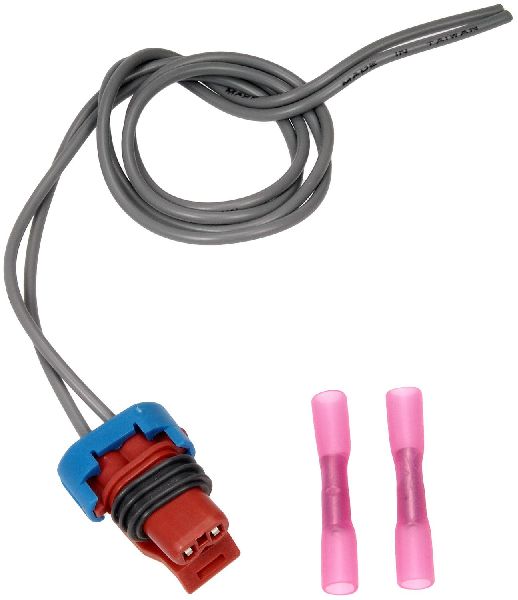
- EVAP Vent Solenoid Connector — At the EVAP vent solenoid, located above the spare tire near the charcoal canister.. This is the primary connection point to test for power, ground, and solenoid function. The power wire is typically Pink, and the control wire (grounded by the PCM) is White. The connector and its pigtail are highly susceptible to corrosion and damage.
- G401 — On the outer side of the left (driver's side) frame rail, in the rear of the vehicle.. This is a major rear chassis ground point for multiple components, including the fuel pump module and potentially other rear lighting and systems. A corroded or loose G401 can cause erratic behavior in the fuel tank pressure sensor and other rear-mounted electronics, leading to misdiagnosis.
- Underhood Fuse Block — On the left (driver's) side of the engine compartment, near the battery.. The power for the EVAP vent solenoid circuit originates here. On many GMT800 trucks, this is the 'ECM B' fuse (typically 15A or 20A) which powers multiple emission control components.
Real Owner Repair Stories
- Forum user on The Hull Truth (2004 GMC Yukon XL 5.3L) — P0446 code present. Vehicle had been sitting for several years. New fuel pump (with new FTP sensor) was recently installed.
❌ Tried (didn't work) Initial diagnosis focused on the new parts. The user noted the new FTP sensor was reading 0.2V at atmospheric pressure (cap off), which is far below the expected ~1.5V.
✅ What actually fixed it The user correctly suspected the brand new, aftermarket Fuel Tank Pressure (FTP) sensor that came with the fuel pump assembly was inaccurate out of the box. After running some bidirectional tests with a Tech 2 scanner, the resting voltage changed to 1.0V but was still incorrect, confirming the FTP sensor was faulty and the root cause of the P0446, not the more common vent valve. - YouTube Channel 'South Main Auto LLC' (Chevy Silverado (GMT800 Platform)) — P0446 code, difficulty fueling.
❌ Tried (didn't work) The vehicle had its vent solenoid replaced previously with the updated filter relocation kit.
✅ What actually fixed it The technician diagnosed a faulty Fuel Tank Pressure (FTP) sensor that was stuck at a high voltage, falsely telling the computer the tank was under pressure even with the gas cap off. The key diagnostic clue was that the FTP sensor voltage on the scan tool did not change to ~1.5V when the gas cap was removed. Replacing the FTP sensor, which required lowering the fuel tank, resolved the code.
"I Checked Everything" — The Actual Cause
- For a P0446 (blockage) code, a smoke test is not the primary diagnostic step as it is for a leak code (like P0455). However, if a technician performs one and finds no leaks, the fault is almost certainly one of three things: 1) The EVAP vent solenoid itself is physically clogged with dirt/debris but not electrically failed. 2) The vent hose or filter box is clogged. 3) The Fuel Tank Pressure (FTP) sensor is providing a false reading, making the PCM believe there is a blockage when there isn't one.
OEM Part Supersession History
Multiple older numbers, including 19207762 (as a kit)→ACDelco 23481275 (current common replacement valve)— The original parts were highly prone to contamination. The superseding parts often include an updated design and a filter relocation kit to move the air intake to a cleaner location.
Heads up: Some newer part numbers may require an adapter harness (jumper wire) if the connector style has changed. For example, ACDelco notes that part 23481275 may require jumper harness 19257603 on some applications.
Model Year Variations Within This Range
- 2000-2003: These earlier models were most directly targeted by TSB 04-06-04-055A, which introduced the first majorly revised vent solenoid and bracket to combat dirt intrusion. While the problem exists for all 2000-2006 models, the specific part numbers in the earliest TSBs apply here.
- 2003-2006: Connectors and harness designs can have minor variations. While the core component is the same, later models may have slightly different harness routing or connector keys. It is always wise to visually match the new part's connector to the old one before installation.
Diagnostic Flowchart
Other Known Issues on This Vehicle
Issues unrelated to this code that are worth knowing about as an owner of this generation:
- Faulty Instrument Cluster Stepper Motors 🟠 Medium — Extremely common, typically appearing after 80,000 miles. Gauges (speedometer, tachometer, fuel, etc.) will stick, read incorrectly, or fail completely. (Ref: A special coverage program existed but has long since expired for most vehicles. Repair involves replacing the individual stepper motors on the cluster's circuit board.)
- Intermediate Steering Shaft Clunk 🟡 Low — Very common. A clunking or popping noise is felt through the steering wheel, especially at low speeds. Caused by a poor design of the collapsible intermediate shaft. (Ref: TSB #00-02-35-003N. GM released an updated, greaseless shaft design (P/N 19153614) to fix the issue.)
- Cracked Dashboard 🟡 Low — Common, especially in vehicles exposed to significant sun and heat. Cracks typically form around the passenger airbag and on the top of the dash.
- Rusted Brake and Fuel Lines 🔴 High — Very common in regions that use road salt. The steel lines corrode and can leak, leading to brake failure or fuel leaks.
- 4L60-E Automatic Transmission Failure 🟠 Medium — Common on 1500-series models, particularly the 3-4 clutch pack. Failure can occur anywhere from 100,000 to 150,000 miles, but longevity varies greatly with maintenance and use.
- Castech Head Cracking (5.3L LM7) 🟠 Medium — Affects a specific subset of 5.3L V8 engines from 2001-2006 with cylinder heads from a supplier named Castech (identified by a battery symbol casting mark). Can lead to unexplained coolant loss.
Used vs. New Parts: Buying Guide for This Vehicle
When a used part is the smart pick: For this specific P0446 repair, obtaining a used EVAP vent solenoid from a junkyard is NOT recommended. The part has a known design flaw and is a high-failure item due to environmental exposure. A used part is highly likely to be clogged or near the end of its service life.
What to inspect on the donor part:
- Not applicable. Do not buy this part used.
OEM-only on this vehicle (don't cheap out):
- While not strictly 'OEM-only', using a high-quality replacement is critical. The ACDelco (GM's OEM brand) updated kit is the safest bet. If considering aftermarket, stick to reputable brands.
Aftermarket brands forum-validated for this vehicle:
- ACDelco (OEM)
- Delphi
- Standard Motor Products (SMP)
Brands owners have reported issues with on this vehicle:
- Unbranded, 'white-box' parts from online marketplaces. While Dorman is a common aftermarket brand, some professional technicians report higher failure rates with their electronic components compared to OEM or brands like Delphi and SMP. For a part that is labor-intensive to access (dropping spare tire), it is often worth spending slightly more on a higher-quality part to avoid repeat repairs.
Real Owner Stories
Aggregated from forums and TSBs cited above. Mileages and costs reflect what owners reported in those sources.
2014 GMC Yukon (referenced in forum context)
Symptoms: Difficulty fueling the vehicle where the gas pump nozzle shuts off repeatedly; Check Engine Light on for P0446.
What fixed it: Replaced a dirt-clogged vent solenoid.
Source hint: TahoeYukonForum.com: A thread titled 'P0446 Can't Fill Up Tank' from 2014
2000-2006 GMC Yukon
Symptoms: P0446 code with no other symptoms; confirmed as a physical blockage rather than an electrical failure.
What fixed it: Inspection and replacement of the vent valve or its filter.
Source hint: GMTNation.com: In a 2017 thread titled 'P0446, with no symptoms'
Related OBD-II Codes
Frequently Asked Questions
Does TSB #04-06-04-055A apply to my 2003 GMC Yukon?
Why does the gas pump nozzle keep shutting off when I try to fill my Yukon?
Is there a specific part number recommended to fix the vent valve issue on my 2002 Yukon?
Where is the vent valve located on the 2000-2006 GMC Yukon?
What is the correct torque for the new bracket bolt when installing the EVAP service kit?
Can a faulty Fuel Tank Pressure sensor cause a P0446 on my Yukon?
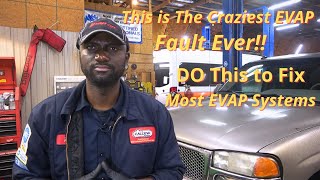
Helpful Videos

Used OEM Parts in Stock
New Aftermarket Parts Available


The information in this article is provided for general reference and educational purposes only. Vehicle specifications, procedures, and part compatibility can vary by production date, trim level, and region. Always consult your vehicle's factory service manual and verify part numbers before purchasing or performing repairs. Safety-critical components such as airbags, seat belts, and braking systems should be installed by a qualified professional.
- GMC Yukon:
- 🧭 Diagnostic Flowchart
- 🎬 Helpful Videos
- 🛍️ Shop This Part
- What's Unique About the 2000-2006 GMC Yukon
- Symptoms You May Notice
- Most Likely Causes
- Rare But Worth Checking
- Diagnosis Steps
- Parts You'll Likely Need
- Related Codes That Often Appear With This One
- Technical Service Bulletins (TSBs) & Recalls
- Platform-Specific Known Issues
- Mechanic-Grade Diagnostic Values
- Scan Tool Commands That Help
- Wiring & Ground Locations
- Real Owner Repair Stories
- "I Checked Everything" — The Actual Cause
- OEM Part Supersession History
- Model Year Variations Within This Range
- Other Known Issues on This Vehicle
- Used vs. New Parts: Buying Guide for This Vehicle
- Real Owner Stories
- 2014 GMC Yukon (referenced in forum context)
- 2000-2006 GMC Yukon
- Related OBD-II Codes
- Frequently Asked Questions
- 🎟️ Get 5% Off