

P0446 on 2003-2007 Honda Accord: EVAP Vent Circuit Causes and Fixes
This code usually points to a faulty EVAP canister vent solenoid located at the rear of the car by the fuel tank. Replacing the solenoid is the most common fix. Expect to pay $40-$90 for an aftermarket part or $100-$150 for an OEM part. It's a straightforward DIY job for many.
- P0446 on a 2003-2007 Accord almost always points to the EVAP vent solenoid.
- The faulty part is located at the rear of the car, attached to the charcoal canister, not in the engine bay.
- Check for power at the connector and test the solenoid with a 12V source before buying parts.
- This is a DIY-friendly repair that does not affect vehicle safety or drivability in the short term, but will cause an emissions test failure.
What's Unique About the 2003-2007 Honda Accord
On the 7th generation Honda Accord, the P0446 code is overwhelmingly caused by a failure of the EVAP canister vent solenoid itself, which is mounted directly to the charcoal canister at the rear of the vehicle. Unlike some other makes where this code is frequently triggered by dust blockages or complex circuit faults, the Accord's issue is typically the component itself failing over time. Owners should be careful not to confuse the vent solenoid (at the rear) with the purge valve, which is located in the engine bay and typically triggers different codes.
🎬 Watch: Overview of P0446 causes and common fixesGeneration note: The 2003-2007 Honda Accord models all belong to the 7th generation, so the causes and fixes are consistent across this year range for both 4-cylinder and V6 engines. The EVAP components are largely shared across these models.
Symptoms You May Notice
- Check Engine Light is on.
- Difficulty filling the fuel tank (the gas pump nozzle shuts off before the tank is full).
- A faint smell of gasoline near the rear of the car.
- A 'whoosh' sound of escaping pressure when opening the gas cap.
- Replacing the gas cap. A bad gas cap typically causes a large leak code like P0455 or a small leak code like P0457, not a vent circuit code like P0446.
- Replacing the EVAP Purge Valve. The purge valve is located in the engine bay and is responsible for a different function. A faulty purge valve usually sets codes like P0443 (Purge Control Circuit) or P0497 (Low Purge Flow).
Most Likely Causes
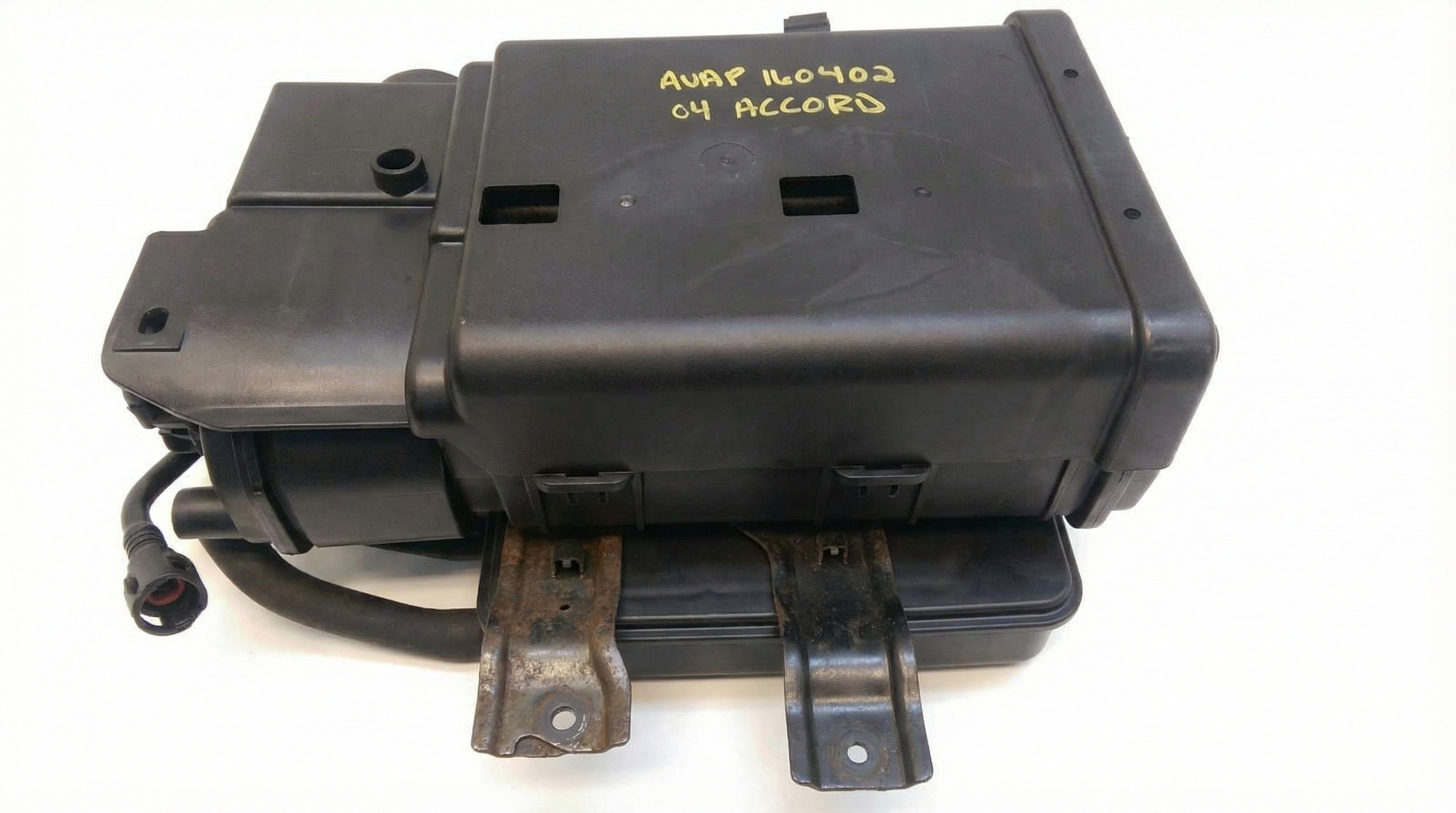
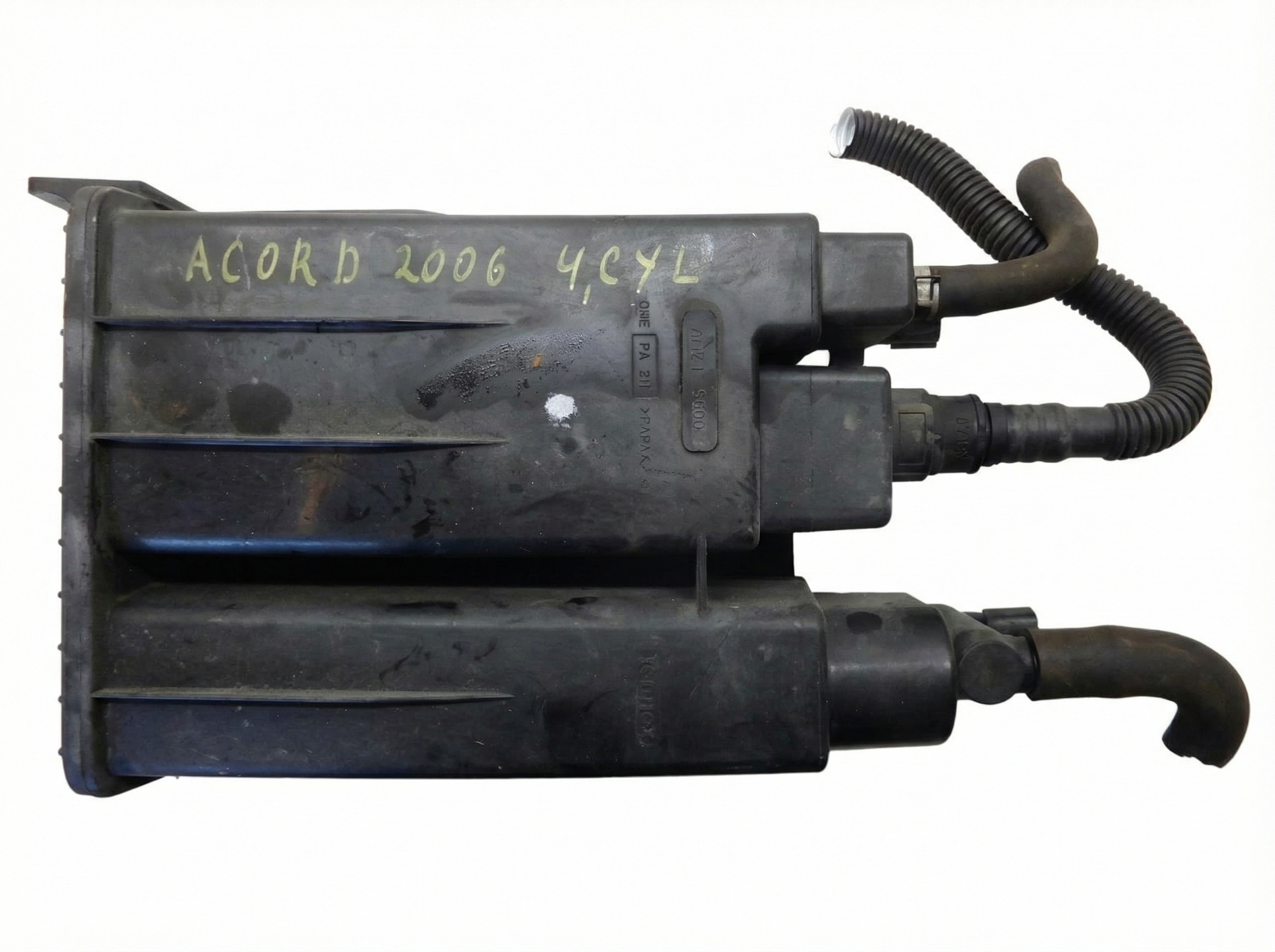
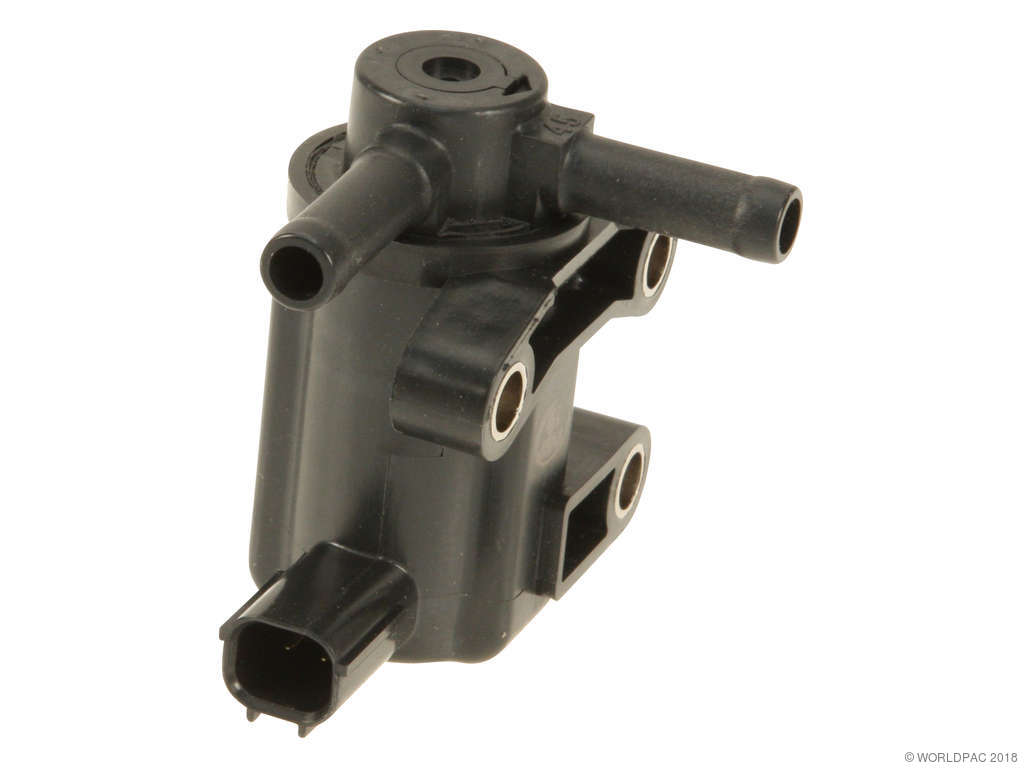
- Faulty EVAP Canister Vent Solenoid (Shut Valve) 🔴 High Probability → Shop Vapor Canister This solenoid is located under the vehicle near the driver's side rear wheel, where it is exposed to road grime, moisture, and corrosion, leading to electrical failure or the valve mechanism sticking over time. It is the most common point of failure for this code on this platform.
How to confirm: Locate the solenoid on the charcoal canister at the rear of the car. With the key on, check for 12V power at the electrical connector's power pin (often a Black/Yellow wire on pin #1 for 2006 models). You can also apply 12V and ground directly to the solenoid's terminals using a power probe or jumper wires; a healthy solenoid will make an audible 'click'. Failure to click indicates a bad solenoid. A resistance check across the solenoid's two pins should read between 20-40 ohms; infinite resistance indicates an open coil.
Typical fix: Replace the EVAP canister vent solenoid. It is often secured by a few bolts to the canister assembly. Due to exposure, these bolts can be rusted and may require penetrating oil or careful extraction.
Est. part cost: $40 - $150 - Blocked EVAP Canister or Vent Hose 🟡 Medium Probability → Shop Vapor Canister The vent hose is open to the atmosphere and can become a home for insects, particularly spiders building webs and egg sacs, or get clogged with mud and debris. This is a well-documented issue across many makes and models, including Hondas.
How to confirm: Visually inspect the vent hose connected to the vent solenoid for any obvious blockages. Remove the hose and attempt to blow compressed air through it to check for restrictions.
Typical fix: Clear the blockage from the hose or replace the hose if it is cracked or damaged.
Est. part cost: $0 - $30 - Damaged Wiring or Corroded Connector ⚪ Low Probability
How to confirm: Visually inspect the wiring harness and connector leading to the vent solenoid. Look for any breaks, chafing, or green/white corrosion on the connector pins. Use a multimeter to check for continuity between the PCM and the solenoid connector if a visual inspection is inconclusive.
Typical fix: Repair the broken wire or clean/replace the corroded connector.
Est. part cost: $5 - $50
Rare But Worth Checking
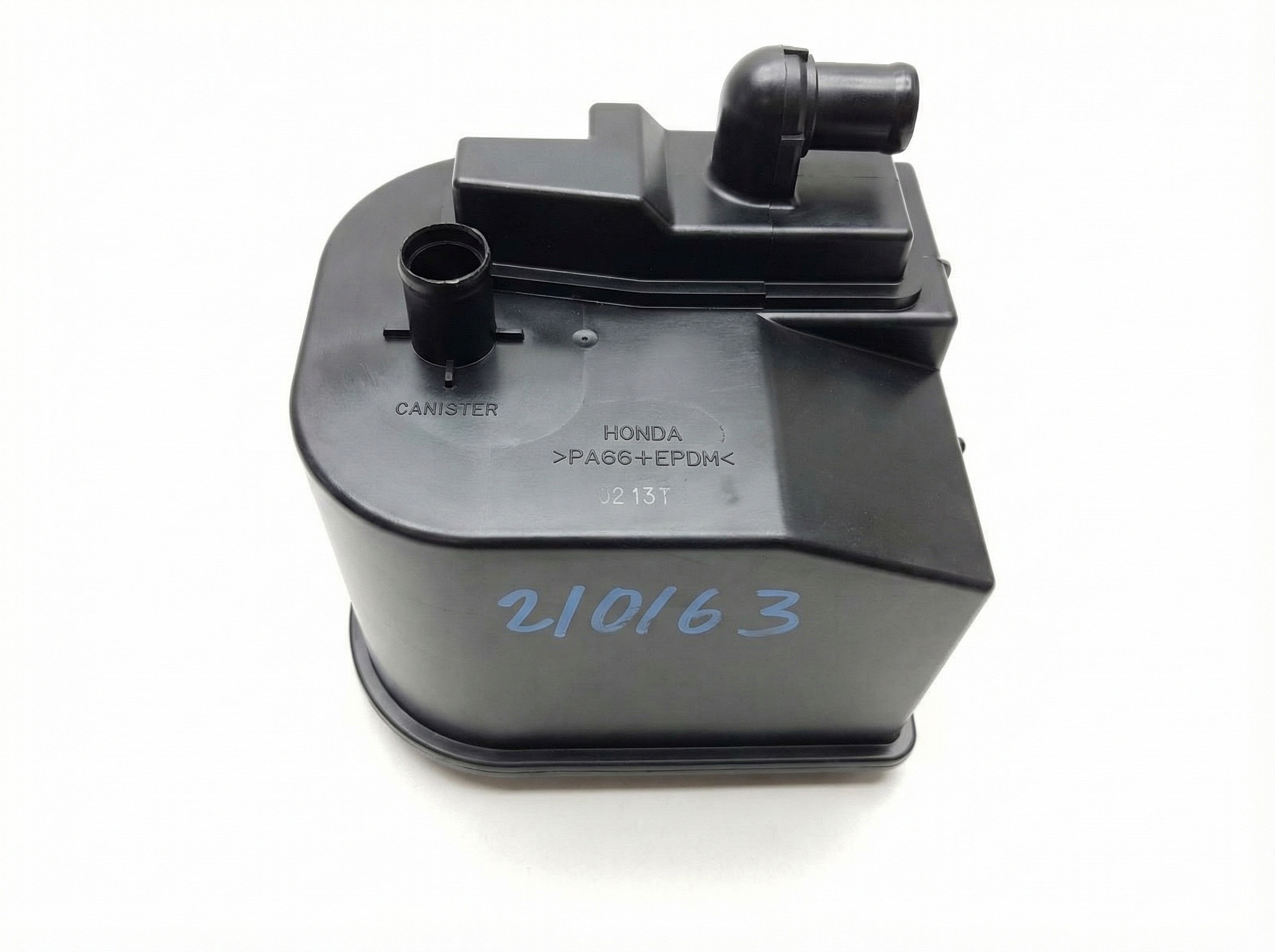
- Failed Charcoal Canister: → Shop Vapor Canister While not common for this specific code, the canister itself can become internally clogged with charcoal pellets, preventing airflow and triggering a P0446. This usually happens if the fuel tank is habitually overfilled, which forces liquid fuel into the canister, degrading the charcoal.
- Faulty Powertrain Control Module (PCM): This is extremely rare. The PCM is the last thing to suspect after all other possibilities, including wiring, have been exhaustively checked.
Diagnosis Steps
- Retrieve the P0446 code using an OBD-II scanner.
- Visually inspect the EVAP canister and vent solenoid at the rear of the vehicle, typically behind the driver's side rear wheel, for any obvious damage or corrosion.
- Inspect the rubber vent hose for cracks, kinks, or blockages from debris or insects like spiders.
- Disconnect the electrical connector from the vent solenoid. With the ignition in the 'ON' position, use a multimeter to verify that one pin has battery voltage (approximately 12V). For 2006 models, this is the Black/Yellow wire.
- If power is present, use a power probe or jumper wires to apply 12V and ground directly to the solenoid's terminals. Listen for a distinct 'click'. If it doesn't click, the solenoid is faulty and needs replacement. The valve is normally open, so when energized, it should close.
- If the solenoid clicks, the issue may be in the ground control wire (Light Green/Red for 2006 models) leading back to the PCM or an internal blockage in the canister or vent path.
- If no power is found at the connector, inspect the wiring for breaks and check the corresponding fuse (Fuse #4 in the under-dash fuse box for 2006 models).
Parts You'll Likely Need
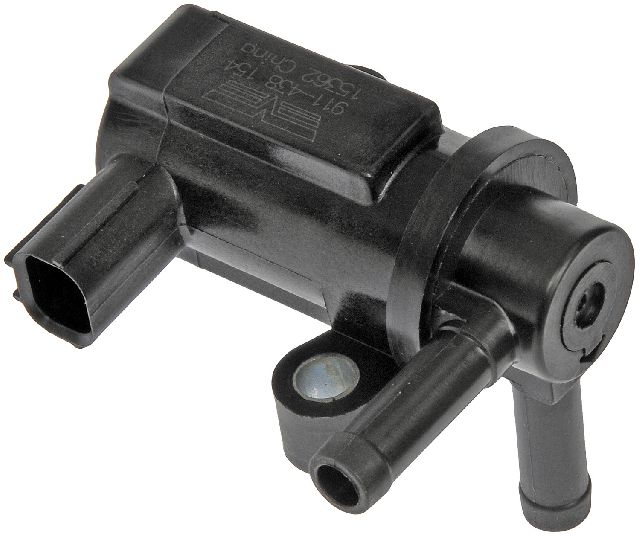
- Vapor Canister Vent Solenoid / Canister Shut Valve
(OEM #17310-S0X-A02 (supersedes multiple older numbers), 17311-SDC-L02 (check specific application))— This is the most frequent failure point for code P0446 on this generation of Accord due to its location and function.
Trusted brands: Honda (OEM), Standard Motor Products (SMP) - Part# CVS156, Dorman - Part# 911-717
OEM price range: $100-$250
Aftermarket price range: $40-$130
Technical Service Bulletins (TSBs) & Recalls
- While no specific TSB for the 2003-2007 Accord and P0446 was found, GM issued TSB #02-06-04-037H for a similar issue on their trucks, which details dust and dirt intrusion into the vent hose causing P0446 and provides a fix by relocating the vent filter. This corroborates the cause of environmental contamination.
Platform-Specific Known Issues
- Rusted Mounting Bolts: Owners on forums frequently report that the bolts holding the vent solenoid to the canister are heavily rusted, making removal difficult. It is advisable to spray them with penetrating oil beforehand and have replacement bolts on hand.
- Spider Nests: A common cause for the vent being blocked is spiders creating nests inside the vent hose or the valve's outlet port. This is not unique to Honda but is a frequent finding when diagnosing P0446.
Mechanic-Grade Diagnostic Values
- EVAP Canister Vent Solenoid Coil Resistance — expected: 20 - 40 Ohms. Failure: Infinite resistance (open circuit) or near 0 ohms (short circuit).
- EVAP Canister Vent Solenoid Connector Voltage (Key On) — expected: ~12V (Battery Voltage). Failure: Significantly lower or no voltage indicates a wiring or fuse issue.
Scan Tool Commands That Help
- Honda HDS (Honda Diagnostic System) or equivalent professional scanner (Autel, Foxwell): EVAP System Functional Test / EVAP Canister Vent Shut Valve ON/OFF — This bidirectional command allows the technician to manually command the vent valve to open and close. This is used to verify if the solenoid clicks when commanded and to seal the system for a smoke or pressure decay test, confirming the valve's mechanical operation and the integrity of the control circuit.
Wiring & Ground Locations
- EVAP Canister Vent Shut Valve Connector — At the EVAP canister vent shut valve, located under the rear of the vehicle, near the driver's side.. This is the primary connection point for testing. For 2006 models, Pin 1 (BLK/YEL) is power from the under-dash Fuse 4, and Pin 2 (LT GRN/RED) is the control wire from the PCM.
- G101 — On the top middle of the engine for the 2.4L, and on the left side of the engine for the 3.0L.. This is a primary engine and chassis ground point. While not directly for the vent valve (which is grounded through the PCM driver), a poor main ground at G101 can cause widespread electrical issues and erratic behavior in various sensor and actuator circuits controlled by the PCM.
Real Owner Repair Stories
- ScannerDanner Forum (2003 Honda Accord 2.4L) — Check Engine Light with code P2422 (EVAP Canister Vent Shut Valve Stuck Closed), which is functionally similar to P0446.
❌ Tried (didn't work) Replacing the EVAP vent valve solenoid without diagnosis.
✅ What actually fixed it The technician found that the control wire (Light Green/Red) was shorted to ground somewhere in the harness between the PCM and the vent valve. The valve itself was functional when tested directly. The fix was to repair the grounded wire.
OEM Part Supersession History
17310-S01-A01, 17310-S04-A01, 17310-S0X-A01, 17310-S84-A01, 17310-S84-A02→17310-S0X-A02— Part consolidation and design updates over many model years.
Heads up: While 17310-S0X-A02 is the widely accepted replacement, always verify fitment with the vehicle's VIN. Some aftermarket versions have been reported by owners to have a tighter fit than the OEM part, requiring more effort to install.
Model Year Variations Within This Range
- 2006-2007: For the 2006 model year, the EVAP Canister Vent Shut Valve connector is black. The power wire is Black/Yellow on Pin 1, and the control wire is Light Green/Red on Pin 2.
- 2003-2005: For pre-2006 models, the EVAP Canister Vent Shut Valve connector is brown. While the function is identical, wire colors may vary slightly from the 2006+ models.
Diagnostic Flowchart
Related OBD-II Codes
Frequently Asked Questions
Is there a specific Honda TSB for the P0446 code on my 2003-2007 Accord?
Why does the gas pump keep shutting off when I try to fill my 2006 Accord?
Where is the EVAP canister vent solenoid located on the 7th generation Accord?
I'm testing the vent solenoid connector on my 2006 Accord. Which wire should have power?
What should I watch out for when replacing the vent solenoid on my Accord?
Does the Acura TL share this same EVAP issue?
Helpful Videos

Used OEM Parts in Stock
New Aftermarket Parts Available


The information in this article is provided for general reference and educational purposes only. Vehicle specifications, procedures, and part compatibility can vary by production date, trim level, and region. Always consult your vehicle's factory service manual and verify part numbers before purchasing or performing repairs. Safety-critical components such as airbags, seat belts, and braking systems should be installed by a qualified professional.
- Honda Accord:
- 🧭 Diagnostic Flowchart
- 🎬 Helpful Videos
- 🛍️ Shop This Part
- What's Unique About the 2003-2007 Honda Accord
- Symptoms You May Notice
- Most Likely Causes
- Rare But Worth Checking
- Diagnosis Steps
- Parts You'll Likely Need
- Technical Service Bulletins (TSBs) & Recalls
- Platform-Specific Known Issues
- Mechanic-Grade Diagnostic Values
- Scan Tool Commands That Help
- Wiring & Ground Locations
- Real Owner Repair Stories
- OEM Part Supersession History
- Model Year Variations Within This Range
- Related OBD-II Codes
- Frequently Asked Questions
- 🎟️ Get 5% Off