

P0446 on 2006-2010 Hummer H3: EVAP Vent System Causes and Fixes
On a 2006-2010 Hummer H3, code P0446 is almost always caused by a faulty EVAP vent valve solenoid or a clogged vent system from dust and mud. The most common fix is replacing the vent valve solenoid located above the rear axle, which costs about $30-$60 for the part. This issue is shared with its platform mates, the Chevy Colorado and GMC Canyon.
- P0446 on an H3 points to a restriction or electrical fault in the EVAP vent system, not a leak.
- The most likely cause is a faulty/clogged vent valve solenoid or its associated hoses, located above the rear axle.
- Difficulty filling the gas tank is the most telling symptom of this specific code on this vehicle.
- The issue is common to its platform-mates, the Chevy Colorado and GMC Canyon.
- For a permanent fix, especially for off-road use, installing a vent filter relocation kit is highly recommended.
What's Unique About the 2006-2010 Hummer H3

The Hummer H3's off-road capability is its greatest weakness regarding code P0446. The EVAP canister and vent solenoid are located above the rear axle, making them highly susceptible to contamination from mud, dust, and water. This is a well-documented issue also affecting its platform-mates, the Chevrolet Colorado and GMC Canyon. GM issued Technical Service Bulletins (like TSB 23-NA-073 and the earlier 09-06-04-028D for similar trucks) acknowledging that operating these vehicles in dusty environments can clog the EVAP system, leading to this specific code. Therefore, unlike many other vehicles where P0446 is purely an electrical or component failure, on the H3 it is frequently caused by external contamination that requires cleaning or component relocation.
Symptoms You May Notice

- Check Engine Light illuminated
- Difficulty filling the fuel tank (gas pump nozzle clicks off repeatedly). This happens because the blocked vent path prevents air from escaping the tank as fuel enters, creating back pressure.
- Audible 'whoosh' sound when opening the gas cap due to built-up vacuum in the fuel tank.
- In some related cases (often with additional codes), a hard start after refueling may occur.
- Replacing the gas cap. A bad gas cap typically causes a large leak code (P0455) or a small leak code (P0456/P0457), not a vent restriction code like P0446.
- Replacing the EVAP Purge Solenoid/Valve. The purge valve is located in the engine bay and controls vapor flow to the engine. Its failure typically sets other codes like P0443 or P0496. P0446 specifically points to the vent circuit at the rear of the vehicle near the tank.
Most Likely Causes

- Faulty or Sticking EVAP Vent Valve Solenoid 🔴 High Probability → Shop Vapor Canister The solenoid is located in a vulnerable area above the rear axle, exposed to road grime, water, and off-road debris which can cause it to fail electrically or stick closed mechanically.
How to confirm: Locate the solenoid on the EVAP canister above the rear axle. With a bidirectional scan tool, command the vent valve open and closed; you should hear an audible click. Alternatively, remove the valve and apply 12V power to its terminals 🎬 See how to test and replace the vent control valve. to see if it actuates. The valve is normally open; when 12V is applied, it should close. If it's stuck closed, it won't allow air to pass through.
Typical fix: Replace the EVAP vent valve solenoid. 🎬 Watch: Step-by-step guide to replacing the H3 vent solenoid. Many aftermarket kits include a new wiring pigtail.
Est. part cost: $30-$60 - Clogged EVAP Vent Hose or Filter 🔴 High Probability The H3's use in off-road and dusty conditions is a direct cause noted in GM service bulletins. Mud, dust, and even spider webs can be drawn into the vent hose's inlet, creating a blockage that triggers P0446.
How to confirm: Disconnect the vent hose from the canister and the vent inlet. Visually inspect for mud, dirt, or other blockages. Attempt to blow low-pressure compressed air through the hose to check for restrictions.
Typical fix: Clean or replace the vent hose. For vehicles frequently in dusty areas, installing the filter relocation kit (ACDelco 214-2324) mentioned in GM TSBs is the permanent solution. This moves the air inlet to a cleaner, higher location.
Est. part cost: $10-$70 - Clogged or Failed Charcoal Canister 🟡 Medium Probability → Shop Vapor Canister Over-filling the fuel tank by continuing to pump after the nozzle clicks off can force liquid gasoline into the charcoal canister, saturating the charcoal pellets and causing a blockage. Extreme dust intrusion can also clog the canister itself, a common issue discussed on forums.
How to confirm: After confirming the vent solenoid and hoses are clear, the canister is the next likely point of restriction. If the canister feels heavy, rattles as if pellets are loose, or smells strongly of raw fuel, it is likely saturated or damaged. Disconnect its hoses and check if air can pass through.
Typical fix: Replace the charcoal canister.
Est. part cost: $150-$250 - Damaged Wiring or Connector ⚪ Low Probability The wiring to the vent solenoid is exposed under the vehicle and can be damaged by debris, corrosion, or chafing against the frame or other components over time.
How to confirm: Visually inspect the electrical connector and wiring harness leading to the vent valve solenoid for any breaks, corrosion, or loose pins. Use a multimeter to check for 12V power at the connector with the key on. If power is present, check the ground control circuit for continuity back to the ECM.
Typical fix: Repair the damaged section of the wiring harness or replace the connector pigtail. In some persistent cases, owners have had to run a new wire from the solenoid back to the computer.
Est. part cost: $15-$40
Diagnosis Steps
- Verify the code with an OBD-II scanner. Note any other EVAP codes.
- Check for the primary symptoms: difficulty filling the fuel tank 🎬 Watch this simple explanation of the P0446 code and fix. and/or a 'whoosh' of air when opening the gas cap. If present, a vent blockage is highly likely.
- Visually inspect the EVAP canister, vent solenoid, and hoses located above the rear axle. Look for obvious signs of mud/dirt clogging, physical damage, or cracked hoses.
- Inspect the electrical connector on the vent solenoid for corrosion, damage, or loose pins. Use a multimeter to verify 12V at the power wire (usually pink) with the key in the 'ON' position.
- If you have a bidirectional scan tool, command the EVAP vent solenoid to close (it is normally open). You should hear an audible click. Attempt to blow through the vent hose; it should now be blocked. Command it open and it should flow freely.
- If no scan tool is available, remove the vent solenoid. It should be open by default (air passes through). Apply 12V and ground to its pins; it should click and close, blocking airflow. If it's stuck in either position, it has failed.
- If the solenoid works correctly, disconnect the vent hoses and blow low-pressure compressed air through them to ensure they are not clogged with debris.
- If the solenoid and hoses are good, the charcoal canister itself may be clogged (from fuel saturation or dust) and require replacement.
- If all components test good, carefully inspect the ground control wire from the solenoid back to the ECM for breaks or shorts, as this is a known, though less common, failure point.
Parts You'll Likely Need
- Vapor Canister Vent Valve Solenoid
(OEM #25932571 (Note: This number is often superseded but still widely referenced and sold))— This solenoid is the most common failure point for code P0446. It either fails electrically or gets stuck due to dirt and corrosion.
Trusted brands: ACDelco (GM Genuine Part #214-2149), Standard Motor Products (CVS89), Dorman (911-070)
OEM price range: $40-$60
Aftermarket price range: $25-$45 - Vapor Canister
(OEM #19209329 (Supersedes 22963841))— If the vent solenoid and hoses are clear, the canister itself is likely clogged with dust or saturated with fuel from overfilling.
Trusted brands: ACDelco (GM Genuine), Dorman (911-301)
OEM price range: $200-$250
Aftermarket price range: $150-$200 - EVAP Vent Solenoid Filter Kit (TSB Fix)
(OEM #ACDelco 214-2324 (GM 19258957))— This is the official GM fix for vehicles operated in dusty conditions. It relocates the vent hose inlet to a higher, cleaner location (e.g., inside the fuel filler neck area) to prevent future clogging.
Trusted brands: ACDelco
OEM price range: $50-$70
Aftermarket price range: $40-$60
Technical Service Bulletins (TSBs) & Recalls

- TSB 23-NA-073: Addresses DTCs P0442, P0446, P0455, or P0449 in vehicles operated in extremely dusty environments. It recommends a customer-pay alteration to install an external filter assembly on the EVAP vent hose to prevent dust intrusion.
- TSB 09-06-04-028D: While for other GM trucks, it describes the identical issue of moisture and debris causing vent valve failure and recommends a similar filter relocation kit, confirming this is a widespread GM truck issue.
Platform-Specific Known Issues
- Due to the vehicle's intended off-road use, the EVAP vent system is prone to clogging from dust and mud, a condition specifically addressed by GM in TSBs like 23-NA-073 and 09-06-04-028D (for similar trucks).
- The placement of the vent solenoid and canister directly above the rear axle makes them susceptible to damage from rocks and debris during off-roading, in addition to contamination.
Mechanic-Grade Diagnostic Values
- EVAP Vent Valve Solenoid Resistance — expected: 48 to 65 ohms. Failure: A reading outside this range indicates a faulty solenoid coil.
- Fuel Tank Pressure (FTP) Sensor Voltage (Key On, Engine Off, Gas Cap Off) — expected: Approximately 1.3V to 1.7V. Failure: A reading stuck high (e.g., 5V) or low (e.g., 0.2V) with the gas cap removed points to a faulty FTP sensor or wiring issue.
- EVAP Vent Valve Solenoid Power Supply — expected: Battery Voltage (approx. 12V) at the power wire (often pink) with key on.. Failure: No voltage indicates an open in the power feed circuit or a blown fuse (Fuse 31 in the underhood block is often cited for related codes).
Scan Tool Commands That Help
- GM Tech2 / Bidirectional Scanner: EVAP Vent Solenoid ON/OFF Command — This is a primary step to functionally test the solenoid. With the engine off, you can command the normally open valve to close and listen for an audible click. You can also check if the vent path becomes blocked as commanded, confirming mechanical operation.
- GM Tech2 / Bidirectional Scanner: EVAP Purge/Seal Test — This function commands the entire system through a test cycle. It closes the vent valve, opens the purge valve to create a vacuum, and then seals the system to monitor vacuum decay. For P0446, the key part is when it commands the vent valve to open to release the vacuum; if the pressure (monitored by the FTP sensor) does not return to atmospheric levels quickly, it confirms a restriction.
Wiring & Ground Locations
- Vent Solenoid Power Feed — Underhood Fuse Block, often cited as Fuse 31 for related EVAP codes on this platform.. A blown fuse will result in no power to the vent solenoid, causing a circuit code. While P0446 is primarily a restriction code, an electrical fault can be the root cause.
- Vent Solenoid Connector — At the EVAP vent solenoid, located above the rear axle on the charcoal canister assembly.. This connector is highly exposed to mud, water, and debris. Corrosion on the pins or damage to the connector is a common point of failure for the vent solenoid circuit.
- G100 / G103 / G106 — G100 is on the left front fender/wheel well. G103 is on the lower left side of the engine block. G106 is on the right inner front wheel well.. While not directly for the vent solenoid (which is ground-controlled by the ECM), these are major engine and chassis grounds. A poor ground at these locations can cause a variety of electrical issues and unpredictable behavior from the ECM, which could indirectly affect EVAP system diagnostics.
- ECM/BCM Connectors — The Engine Control Module (ECM) is in the right rear corner of the engine compartment. The Body Control Module (BCM) is behind the right front kick panel.. The ground signal for the vent solenoid is controlled by the ECM. In rare cases of persistent electrical faults, the issue can be a broken wire in the harness between this connector and the solenoid, or a fault within the ECM itself.
Real Owner Repair Stories
- HummerForums.com user 'tainter' (2007 Hummer H3) — Persistent P0446 code for over 3 years.
❌ Tried (didn't work) Blowing out the vent solenoid, Replacing the vent solenoid with a new wiring harness, Blowing out the charcoal canister, Replacing the gas cap with an OEM part, Dealership replaced multiple parts under warranty
✅ What actually fixed it A broken wire in the harness between the computer (BCM/ECM) and the vent solenoid was found. The final repair was running a completely new wire from the computer to the solenoid at the rear of the vehicle.
"I Checked Everything" — The Actual Cause
- A user on HummerForums reported passing a smoke test, which correctly indicated no system leaks. The mechanic also tested circuits and found nothing obviously wrong. The problem persisted because P0446 on this platform is a restriction/blockage or electrical circuit code, not a leak code. A smoke test is designed to find leaks (like P0455 or P0442) and will typically be clean for a P0446 unless there's a coincidental leak. The actual cause is usually the vent valve being stuck closed, a clogged hose, or a circuit fault, none of which a smoke test is designed to identify.
When the Usual Fixes Don't Work
- While the vast majority of P0446 cases on the H3 are caused by a clogged or faulty vent solenoid, there are well-documented instances where the issue is purely electrical and much harder to trace. In one forum case, a multi-year battle with the code that survived replacing every common EVAP component was only resolved by running a new control wire from the ECM all the way to the vent solenoid at the back of the truck. This highlights that if the common, high-probability parts don't fix the issue, a wiring integrity test (checking for continuity and shorts to ground/power) on the control circuit is essential before replacing the expensive ECM.
OEM Part Supersession History
10382105, 15750484, 22728634→25932571— Standard part evolution and consolidation across multiple GM platforms.
Heads up: Part number 25932571 is widely cited for this vehicle range. However, some GM parts vendors note that this part has been redesigned and may not be correct for all vehicles, advising VIN verification. Many aftermarket replacements come with a pigtail adapter harness to fit the updated component connector.
Diagnostic Flowchart
Real Owner Stories
Aggregated from forums and TSBs cited above. Mileages and costs reflect what owners reported in those sources.
2007 Hummer H3
Symptoms: Fought the code for over 3 years. Replaced the vent solenoid, wiring harness, and gas cap, and blew out the charcoal canister, but the code persisted.
What fixed it: Found and repaired a broken wire between the Body Control Module (BCM) and the vent solenoid.
Source hint: HummerForums.com - 'Code P0446'
Hummer H3
Symptoms: Experienced extreme difficulty filling the gas tank, with the gas pump nozzle clicking off repeatedly due to back pressure.
What fixed it: Clearing the blocked EVAP vent path to allow air to escape the tank during refueling.
Source hint: HummerForums.com - 'Trouble filling H3 gas tank.'
Hummer H3
Symptoms: Triggered EVAP codes after operating the vehicle in extremely dusty off-road environments, causing dust intrusion into the vent hose.
What fixed it: Installed an external filter assembly (filter relocation kit) on the EVAP vent hose to prevent further dust intrusion.
Source hint: TSB 23-NA-073
Related OBD-II Codes
Frequently Asked Questions
Why does the gas pump keep clicking off when I try to fill my Hummer H3?
Is there a GM Technical Service Bulletin (TSB) for the P0446 code on the Hummer H3?
Where is the EVAP vent valve solenoid located on the 2006-2010 Hummer H3?
I replaced the vent solenoid and charcoal canister on my H3 but P0446 came back. What else could it be?
Can off-roading my Hummer H3 cause the P0446 code?
Are the EVAP parts for my H3 the same as the Chevy Colorado?
Helpful Videos
![FREE fix for p0446/p0449 [Chevy Colorado/ GMC Canyon Fuel System Issues]](https://img.youtube.com/vi/czvj2fkFzYQ/mqdefault.jpg)

Used OEM Parts in Stock
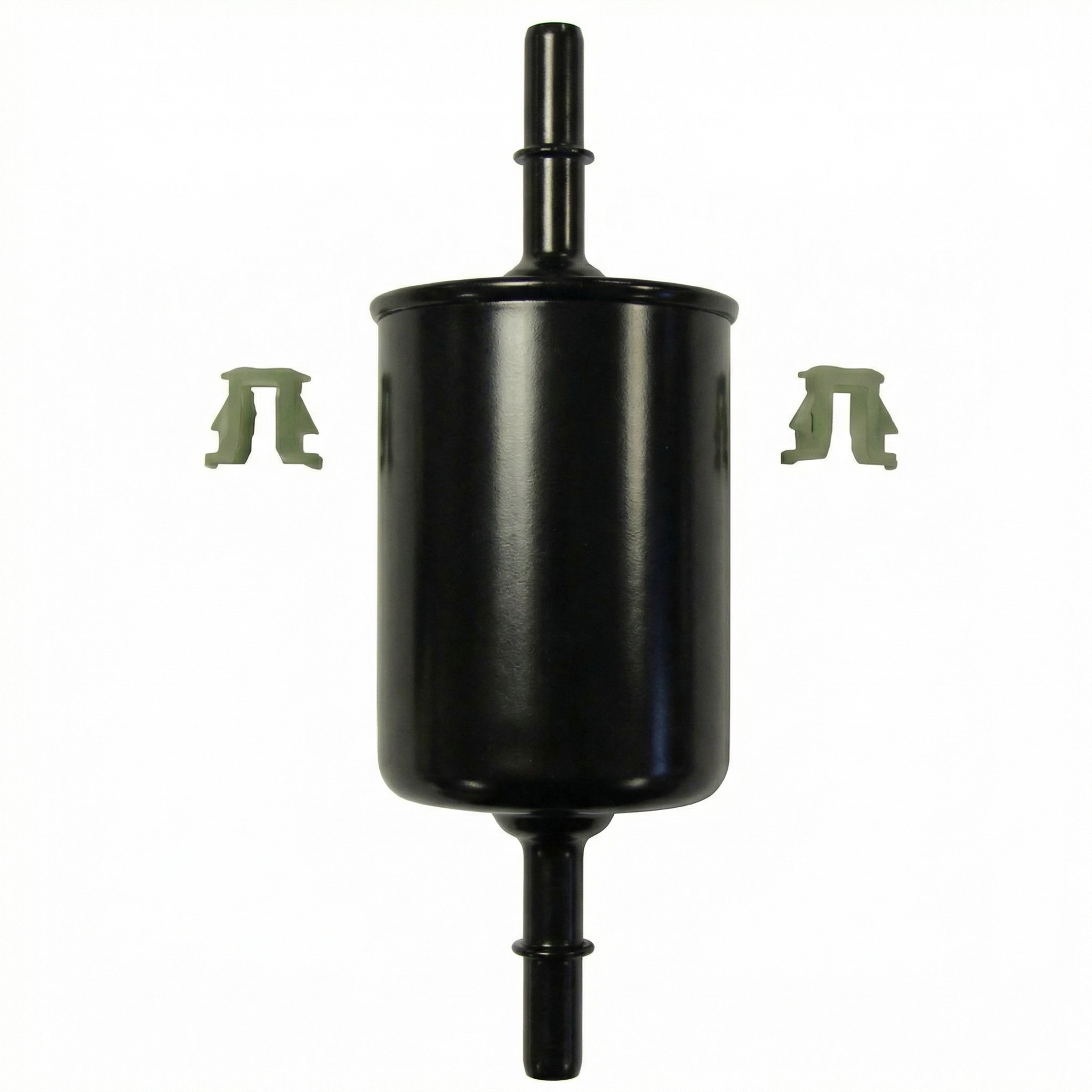

New Aftermarket Parts Available

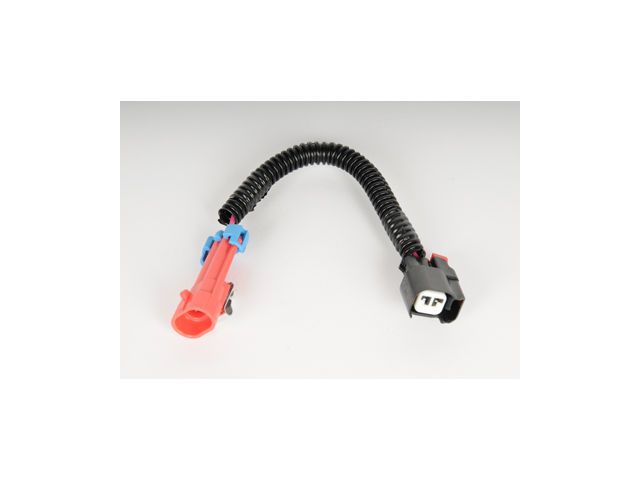
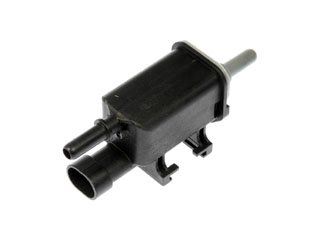

The information in this article is provided for general reference and educational purposes only. Vehicle specifications, procedures, and part compatibility can vary by production date, trim level, and region. Always consult your vehicle's factory service manual and verify part numbers before purchasing or performing repairs. Safety-critical components such as airbags, seat belts, and braking systems should be installed by a qualified professional.
- Hummer H3:
- 🧭 Diagnostic Flowchart
- 🎬 Helpful Videos
- 🛍️ Shop This Part
- What's Unique About the 2006-2010 Hummer H3
- Symptoms You May Notice
- Most Likely Causes
- Diagnosis Steps
- Parts You'll Likely Need
- Technical Service Bulletins (TSBs) & Recalls
- Platform-Specific Known Issues
- Mechanic-Grade Diagnostic Values
- Scan Tool Commands That Help
- Wiring & Ground Locations
- Real Owner Repair Stories
- "I Checked Everything" — The Actual Cause
- When the Usual Fixes Don't Work
- OEM Part Supersession History
- Real Owner Stories
- 2007 Hummer H3
- Hummer H3
- Hummer H3
- Related OBD-II Codes
- Frequently Asked Questions
- 🎟️ Get 5% Off