

P0446 on 2007-2012 Hyundai Santa Fe: EVAP Vent Valve Causes and Fixes
On a 2007-2012 Hyundai Santa Fe, code P0446 is almost always caused by a failed Canister Close Valve (CCV) located near the rear driver's side wheel. A top symptom is the gas pump clicking off when refueling. Expect to pay $40-$80 for an aftermarket valve, with DIY difficulty rated at 3/5.
- P0446 on your Santa Fe almost certainly means the Canister Close Valve (CCV) has failed or its vent path is blocked.
- The most obvious symptom you'll notice is the gas pump repeatedly clicking off when you try to refuel.
- The repair is straightforward for a DIYer with basic tools. The part is located behind the driver's side rear wheel.
- Don't waste money on a new gas cap or a purge valve in the engine bay; they are not the cause of this specific code.
- Consider replacing the small, inexpensive fuel tank air filter at the same time as the valve, as it can also get clogged.
- Before installing a new valve, check the EVAP lines for black charcoal dust, which indicates a failed charcoal canister that must also be replaced.
What's Unique About the 2007-2012 Hyundai Santa Fe
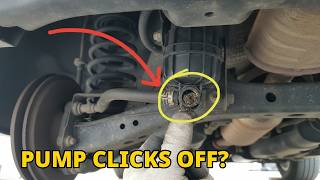
The 2007-2012 Santa Fe (CM generation) has a common and well-documented issue with this code. Unlike some vehicles where this code can be ambiguous, on this platform it very reliably points to a problem at the rear of the car with the canister close valve assembly. The most telling symptom, which is frequently reported by owners in forums, is the inability to refuel the vehicle without the pump repeatedly shutting off. 🎬 Watch: How to fix the gas pump clicking off issue. This is a direct result of the vent path being blocked, preventing air from escaping the tank as fuel enters.
🎬 See this breakdown of P0446 causes and common fixes.Symptoms You May Notice
- Check Engine Light is on
- Difficulty filling the fuel tank (gas pump nozzle clicks off repeatedly)
- Slight fuel odor near the rear of the vehicle (less common)
- Slight decrease in fuel economy (uncommon)
- Replacing the gas cap. A bad gas cap typically causes large leak codes like P0455, not a vent circuit code like P0446.
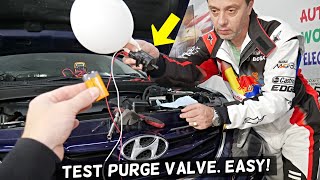
- Replacing the Purge Control Solenoid Valve. This valve is located in the engine bay and controls vapor flow to the engine, typically causing different codes (like P0441) when it fails. 🎬 Watch: How to test the purge control valve on a Hyundai.
Most Likely Causes
- Failed Canister Close Valve (CCV) 🔴 High Probability → Shop Vapor Canister The valve is exposed to the elements under the vehicle and can fail electrically (internal solenoid burnout) or mechanically (get stuck closed from rust or debris). Its location behind the rear wheel makes it susceptible to road grime and moisture.
How to confirm: Locate the valve behind the driver's side rear wheel. Disconnect the electrical connector and apply 12V power to its two pins using jumper wires. A healthy valve will make an audible 'click'. If it doesn't click, its internal solenoid has failed. Even if it clicks, it may be mechanically stuck; try blowing through it—it should be normally open.
Typical fix: Replace the Canister Close Valve. It is often sold as an assembly with the fuel tank air filter.
Est. part cost: $40-$80 - Clogged Fuel Tank Air Filter or Vent Hose 🟡 Medium Probability → Shop Air Cleaner Assembly The air filter and vent hose inlet are located under the car and can become clogged with road debris, dust, or insect nests (like mud daubers), restricting airflow and causing the system to believe the vent is closed.
How to confirm: Visually inspect the vent hose and the air filter box connected to the Canister Close Valve. Remove the hose and attempt to blow through it. If it's blocked, it needs to be cleaned or replaced.
Typical fix: Clean the blockage from the hose or replace the fuel tank air filter. It is highly recommended to replace this filter when replacing the CCV.
Est. part cost: $20-$40 - Damaged Wiring or Connector ⚪ Low Probability The wiring harness for the CCV is located under the vehicle and can be damaged by road debris or corrosion, leading to an open or short circuit.
How to confirm: Visually inspect the wires leading to the CCV connector for breaks, chafing, or green/white corrosion on the pins. With the key on, use a multimeter to check for 12V power at the connector.
Typical fix: Repair the damaged section of wire or replace the connector pigtail.
Est. part cost: $5-$25
Rare But Worth Checking
- Failed Charcoal Canister: → Shop Vapor Canister This is uncommon for a P0446-only code, but if the canister breaks down internally, charcoal pellets can travel into and clog the Canister Close Valve and vent lines. If you find black, coffee-ground-like pellets in the lines when replacing the valve, the canister itself is bad and must also be replaced to prevent repeat failure of the new valve.
Diagnosis Steps
- Confirm the primary symptom: Ask yourself if you've had trouble filling the gas tank. If yes, this strongly points to a P0446 fault.
- Scan for other codes. If P0446 is the only code present, proceed with EVAP vent diagnosis.
- Safely lift and support the rear of the vehicle and remove the driver's side rear wheel.
- Remove the plastic fender liner to gain access to the charcoal canister and the attached Canister Close Valve (CCV).
- Inspect the vent hoses connected to the CCV for any obvious cracks, blockages, or disconnections. Pay close attention to the vent inlet for insect nests or mud.
- Inspect the electrical connector and wiring going to the CCV for corrosion or damage.
- Disconnect the CCV electrical connector. With the ignition key in the 'ON' position, use a multimeter to verify that one of the pins in the connector has 12V power.
- If power is present, test the valve itself. Use jumper wires to apply 12V and ground directly to the two pins on the CCV. Listen for a distinct 'click'. No click means the valve's internal solenoid is dead.
- If the valve clicks, the issue may be a mechanical blockage. Disconnect the hoses from the valve and try to blow through it. It should be normally open, allowing air to pass. If it's blocked, it needs replacement.
- If the valve works and is not blocked, the problem is likely a clogged fuel tank air filter or a blockage further up the vent hose. Remove the filter and hose and check for blockages.
- Crucial Step: Before installing a new valve, tap the old hoses over a clean surface and check for black charcoal pellets. If any are present, the charcoal canister has failed and must be replaced to avoid clogging the new valve.
Parts You'll Likely Need
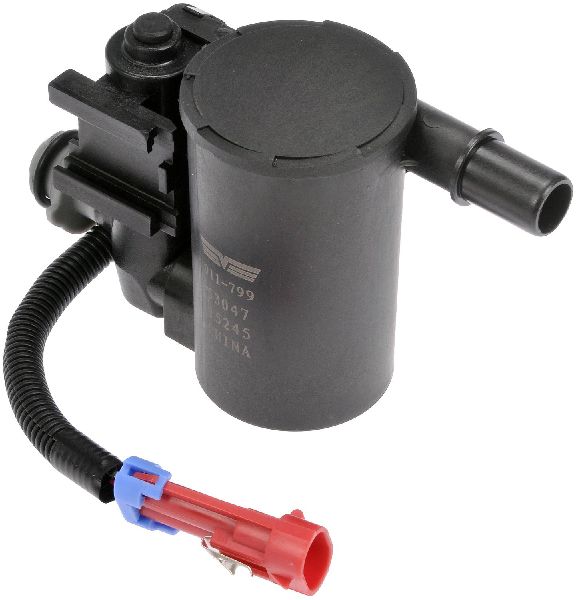
- Canister Close Valve (Vent Valve)
(OEM #31430-0W000)— This is the most common failure point for code P0446. The internal solenoid fails or the valve gets stuck closed.
Trusted brands: Hyundai (OEM), Dorman, Standard Motor Products (SMP), WVE
OEM price range: $80-$120
Aftermarket price range: $40-$80 - Fuel Tank Air Filter
(OEM #31453-2H500)— This filter can become clogged with dust and debris, causing the same symptoms as a failed valve. It's often replaced preventatively with the valve.
Trusted brands: Hyundai (OEM)
OEM price range: $25-$40
Aftermarket price range: $15-$30
Technical Service Bulletins (TSBs) & Recalls
- While no TSB was found specifically for P0446 on the 2007-2012 Santa Fe, Hyundai did issue TSBs for other models like the XG350 and Sonata (TSB 05-30-011) for P0446, confirming the cause is excessive vacuum due to a blocked vent path, not a leak.
- General Motors issued a well-known TSB (02-06-04-037H) for P0446 on their trucks caused by dust intrusion, which required relocating the vent filter—highlighting how common environmental factors are in this code.
Platform-Specific Known Issues
- Real-world owner experience from a Hyundai Forum thread titled 'Santa Fe won't fill with gas' confirms the symptoms and cause. A user describes the gas pump stopping every two dollars and another user correctly diagnoses it as a blocked vent path via the CCV, canister, or hoses.
Mechanic-Grade Diagnostic Values
- Canister Close Valve (CCV) Solenoid Resistance — expected: 14 - 18 Ohms. Failure: A reading of infinity (OL) indicates an open coil (failed solenoid). A reading of zero indicates a short.
- CCV Connector Voltage (Key On, Engine Off) — expected: Pin 1: Battery Voltage (approx. 12V). Pin 2: Ground (controlled by ECM).. Failure: No voltage on Pin 1 indicates a power supply issue (fuse, relay, or wiring). Inability of the ECM to ground Pin 2 during actuation tests points to a wiring or ECM driver fault.
Scan Tool Commands That Help
- Hyundai GDS (Global Diagnostic System): Actuation Test > EVAP System > Canister Close Valve (CCV) — This bidirectional command allows a technician to force the CCV solenoid to open and close. It is the definitive way to test the entire control circuit, from the ECM to the valve itself. While commanding the valve, you should listen for an audible click from the valve and can verify airflow changes, confirming if the valve is responding electrically and moving mechanically.
Wiring & Ground Locations
- Canister Close Valve Connector — At the Canister Close Valve, located behind the driver's side rear wheel well liner.. This 2-pin connector is the interface between the vehicle's wiring and the valve solenoid. Pin 1 (often a Green wire) receives 12V power from the main relay. Pin 2 (often Green/Orange) is the control wire that the Engine Control Module (ECM) grounds to energize the solenoid and close the valve. Corrosion or damage here is a common cause of failure.
- ECM Ground — The CCV is ground-side switched by the ECM. The ECM itself has several main ground points on the chassis, typically in the engine bay near the battery or on the inner fender.. While a poor main ECM ground is unlikely to cause only a P0446, it's a possibility. The primary ground path for the CCV circuit is through the ECM driver, not a direct chassis ground at the rear of the vehicle.
Real Owner Repair Stories
- Hyundai-Forums user (2007 Hyundai Santa Fe) — Check Engine Light with code P0446 and gas pump nozzle clicking off constantly during refueling.
❌ Tried (didn't work) Replacing the gas cap.
✅ What actually fixed it The user replaced the Canister Close Valve (also called vent valve) located near the charcoal canister. After replacement, the code was cleared and did not return, and the refueling issue was resolved. - YouTube Mechanic Repair Video (Similar model year Hyundai/Kia) — P0446 code and slow/difficult refueling.
❌ Tried (didn't work) Initially suspecting the valve itself was bad.
✅ What actually fixed it Upon removing the Canister Close Valve, the mechanic found the attached vent filter box was completely impacted with fine dust and dirt. The valve itself tested good (it clicked with 12V applied). The fix was to thoroughly clean out the filter box and vent hose, restoring airflow. The original valve was reinstalled and the code was resolved.
"I Checked Everything" — The Actual Cause
- A smoke test is not the primary diagnostic for P0446, as this code indicates a vent restriction or circuit fault, not a leak (like P0442 or P0455). A technician may perform a smoke test and find no leaks, which is expected. The actual cause is almost always a blockage in the vent path (clogged filter, stuck-shut valve) or an electrical failure of the valve's solenoid, neither of which a smoke test would identify.
OEM Part Supersession History
31430-0W000→31430-2B500 (for later models)— Model year refresh and engine changes.
Heads up: Part 31430-0W000 is correct for the 2007-2009 Santa Fe with the 2.7L and 3.3L engines. The 2010-2012 models, which received a facelift and new 2.4L and 3.5L engines, use different part numbers such as 31430-2B500 or 31430-2B600. The mounting brackets and connectors may differ, making them not interchangeable. Always verify the part number with the vehicle's VIN.
Model Year Variations Within This Range
- 2007-2009: These pre-facelift models with the 2.7L or 3.3L V6 engines typically use Canister Close Valve P/N 31430-0W000.
- 2010-2012: These post-facelift models with the 2.4L I4 or 3.5L V6 engines use a different Canister Close Valve, typically P/N 31430-2B500 or 31430-2B600. The part from the earlier generation will likely not fit correctly.
Diagnostic Flowchart
Other Known Issues on This Vehicle
Issues unrelated to this code that are worth knowing about as an owner of this generation:
- Faulty Fuel Level Sending Units 🟠 Medium — Very common on 2007-2009 models, typically appearing around 80,000-100,000 miles. Causes erratic fuel gauge readings (e.g., full to empty suddenly) and can trigger codes like P0463.
- Valve Cover Gasket Oil Leaks 🟠 Medium — Common on V6 engines (2.7L & 3.3L). The front (bank 2) gasket is prone to leaking oil directly onto the alternator, causing premature alternator failure. (Ref: A service campaign was launched for some 2007-2009 3.3L models to inspect and replace the front valve cover gasket and alternator if needed.)
- Premature Alternator Failure 🔴 High — Often a direct consequence of the valve cover gasket leak on V6 models. Can cause stalling and a no-start condition. (Ref: Included in the service campaign for the valve cover gasket leak on certain models.)
- Failing Crankshaft Position Sensor 🔴 High — Can cause intermittent stalling while driving or a no-start condition. A well-documented failure item on this platform.
- Harsh or Erratic Automatic Transmission Shifting 🟠 Medium — Reported by owners of earlier models in this generation (2007-2009), involving hard shifts or hesitation between gears.
Used vs. New Parts: Buying Guide for This Vehicle
When a used part is the smart pick: For this specific repair, buying a used part is NOT recommended. The Canister Close Valve is a relatively inexpensive electronic solenoid that is a known high-failure item due to its exposure to road grime and moisture. The risk of getting a used part that is already near the end of its life is high.
What to inspect on the donor part:
- Not applicable as used parts are not advised.
OEM-only on this vehicle (don't cheap out):
- While not strictly OEM-only, it is critical to get the correct part number for your model year (pre vs. post-facelift). OEM is the safest bet for guaranteed fitment.
Aftermarket brands forum-validated for this vehicle:
- Dorman
- Standard Motor Products (SMP)
- WVE (Wells Vehicle Electronics)
Brands owners have reported issues with on this vehicle:
- No-name, unbranded parts from online marketplaces should be avoided due to inconsistent quality control for electronic components.
Real Owner Stories
Aggregated from forums and TSBs cited above. Mileages and costs reflect what owners reported in those sources.
2007 Santa Fe Limited 3.3L
Symptoms: Loud ticking sound from the engine, like a sewing machine or an electrical tap; engine light on for P0446.
What fixed it: Replaced the purge control valve with an OEM Hyundai part.
Source hint: owner_reports source Carsntoys
2010 Santa Fe
Symptoms: The gas pump stops every two dollars while trying to fill the tank.
What fixed it: Clearing a blocked vent path involving the CCV, canister, or hoses.
Source hint: hyundai-forums.com: Thread 'Santa Fe won't fill with gas'
2007 Santa Fe
Symptoms: P0446 code triggered after running the fuel tank extremely low.
What fixed it: Diagnosis of a vent path issue/fuel system disturbance.
Source hint: reddit.com/r/MechanicAdvice
Related OBD-II Codes
Frequently Asked Questions
Why does the gas pump nozzle keep clicking off when I try to fill my 2007-2012 Santa Fe?
Where is the Canister Close Valve (CCV) located on my Santa Fe?
Is there a TSB for P0446 that applies to my Santa Fe?
Should I replace the charcoal canister if I have a P0446 code?
Can I test the Canister Close Valve myself?
Does the 2007-2012 Santa Fe have a specific filter that causes this code?
Helpful Videos

We Have This Part in Stock



The information in this article is provided for general reference and educational purposes only. Vehicle specifications, procedures, and part compatibility can vary by production date, trim level, and region. Always consult your vehicle's factory service manual and verify part numbers before purchasing or performing repairs. Safety-critical components such as airbags, seat belts, and braking systems should be installed by a qualified professional.
- Hyundai Santa Fe:
- 🧭 Diagnostic Flowchart
- 🎬 Helpful Videos
- 🛍️ Shop This Part
- What's Unique About the 2007-2012 Hyundai Santa Fe
- Symptoms You May Notice
- Most Likely Causes
- Rare But Worth Checking
- Diagnosis Steps
- Parts You'll Likely Need
- Technical Service Bulletins (TSBs) & Recalls
- Platform-Specific Known Issues
- Mechanic-Grade Diagnostic Values
- Scan Tool Commands That Help
- Wiring & Ground Locations
- Real Owner Repair Stories
- "I Checked Everything" — The Actual Cause
- OEM Part Supersession History
- Model Year Variations Within This Range
- Other Known Issues on This Vehicle
- Used vs. New Parts: Buying Guide for This Vehicle
- Real Owner Stories
- 2007 Santa Fe Limited 3.3L
- 2010 Santa Fe
- 2007 Santa Fe
- Related OBD-II Codes
- Frequently Asked Questions
- 🎟️ Get 5% Off