

P0446 on 2005-2010 Jeep Grand Cherokee: EVAP Vent Circuit Causes and Fixes
P0446 on a 2005-2010 Jeep Grand Cherokee most often indicates a problem with the EVAP system's vent valve, which is located with the charcoal canister at the rear of the vehicle. The cause is typically a clogged or failed valve, a blocked canister, or a wiring issue. Replacing the entire vapor canister assembly is a common fix, but it is critical to get the correct part for your model year (2005-2006 vs. 2007-2010).
- P0446 on a WK Grand Cherokee points to a problem with the EVAP vent system at the rear of the vehicle, not the purge valve in the engine bay.
- There are two different, non-interchangeable vapor canister assemblies for the 2005-2010 generation; 2005-2006 models use a different part than 2007-2010 models.
- Common causes are a failed vent solenoid, a clogged canister from overfilling the tank, or corroded wiring due to its exposed location under the vehicle.
- Before replacing expensive parts, check for simple issues like a loose gas cap, corroded electrical connectors, and insect nests or mud clogging the vent hose.
What's Unique About the 2005-2010 Jeep Grand Cherokee
The 2005-2010 Jeep Grand Cherokee (WK generation) uses two different EVAP system designs, which is a critical detail for repairs. The 2005-2006 models have a different vapor canister and associated parts than the 2007-2010 models. Because the vent valve is often integrated with or mounted directly to the vapor canister, you must get the correct canister assembly for your specific model year. Mistaking the engine bay's 'purge valve' for the canister-mounted 'vent valve' is a common diagnostic error for this code.
Generation note: While the 2005-2010 Grand Cherokee is all part of the 'WK' generation, it spans two different EVAP system designs. The vapor canister for 2005-2006 models is different from the one used on 2007-2010 models. The parts are not interchangeable, so verifying the vehicle's model year is essential before ordering parts. The platform-mate Jeep Commander (XK) shares the same parts and issues for the 2007-2010 model years.
Symptoms You May Notice
- Check Engine Light is on
- Difficulty refueling (fuel pump nozzle clicks off prematurely)
- A faint fuel smell near the rear of the vehicle, especially after refueling
- A whooshing sound of pressure releasing when opening the gas cap
- Replacing the EVAP Purge Solenoid/Valve in the engine bay. The P0446 code refers to the vent circuit, which is located at the rear of the vehicle with the charcoal canister, not the purge valve under the hood.
- Replacing the vent valve without checking the wiring. If the new valve doesn't fix the code, the problem is often a corroded connector or broken wire preventing the valve from getting power.
Most Likely Causes
- Faulty or Clogged EVAP Vent Valve/Solenoid 🔴 High Probability → Shop Vapor Canister The vent valve is located under the vehicle near the rear wheel, making it susceptible to dirt, dust, road salt, and moisture. This can cause the internal solenoid to fail or the valve to become physically stuck. For vehicles used in dusty or off-road conditions, the vent hose can become clogged with debris or even spider webs, which restricts airflow and triggers the code.
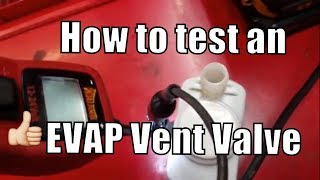
How to confirm: Locate the valve on the vapor canister. Use a capable OBD-II scanner to command the valve to open and close; you should hear an audible click. 🎬 Watch: How to test the vent valve solenoid You can also check for battery voltage (~12V) at the electrical connector with the key on. If you have power, you can apply 12V and a ground directly to the valve's pins to see if it actuates.
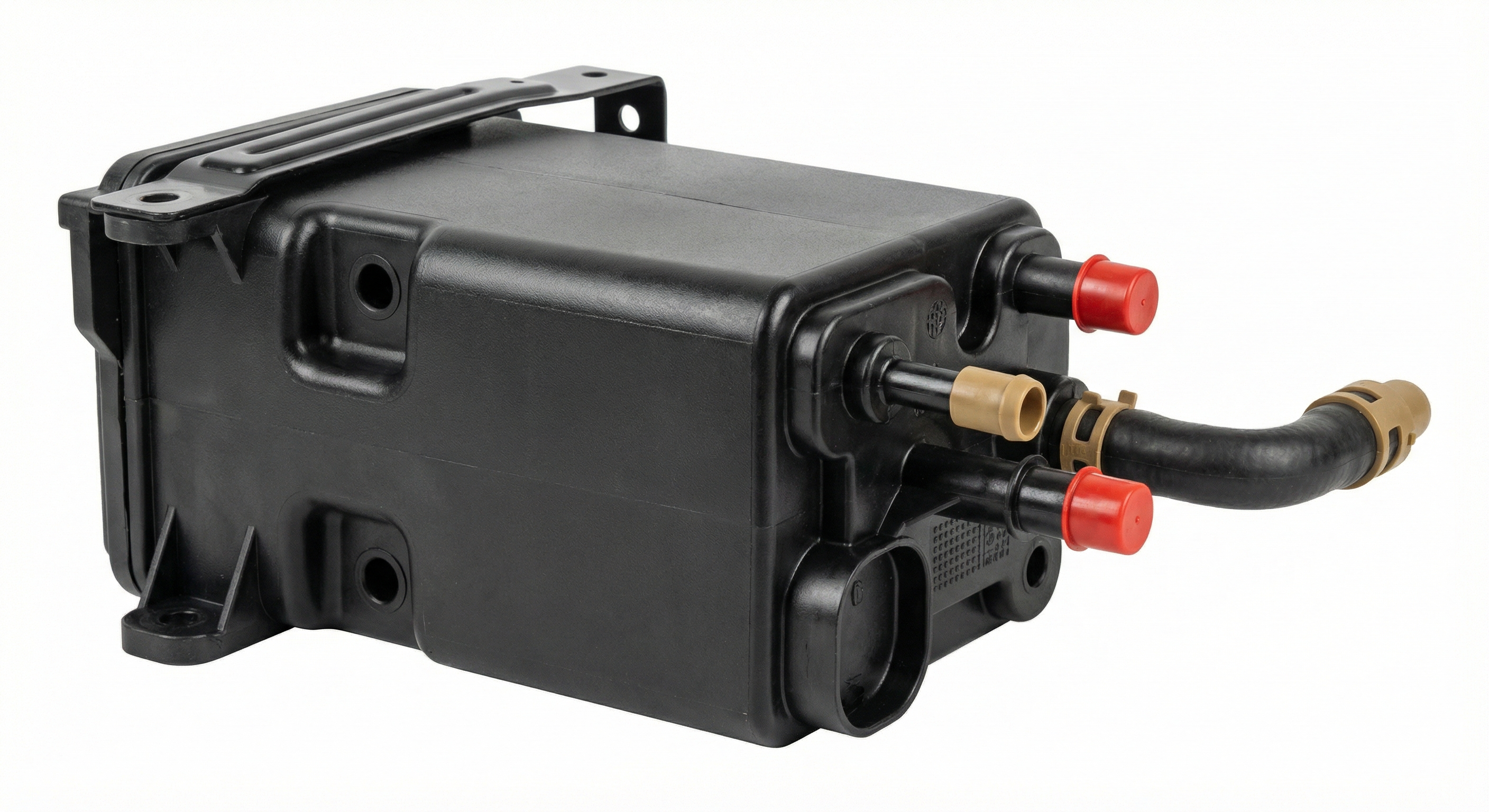
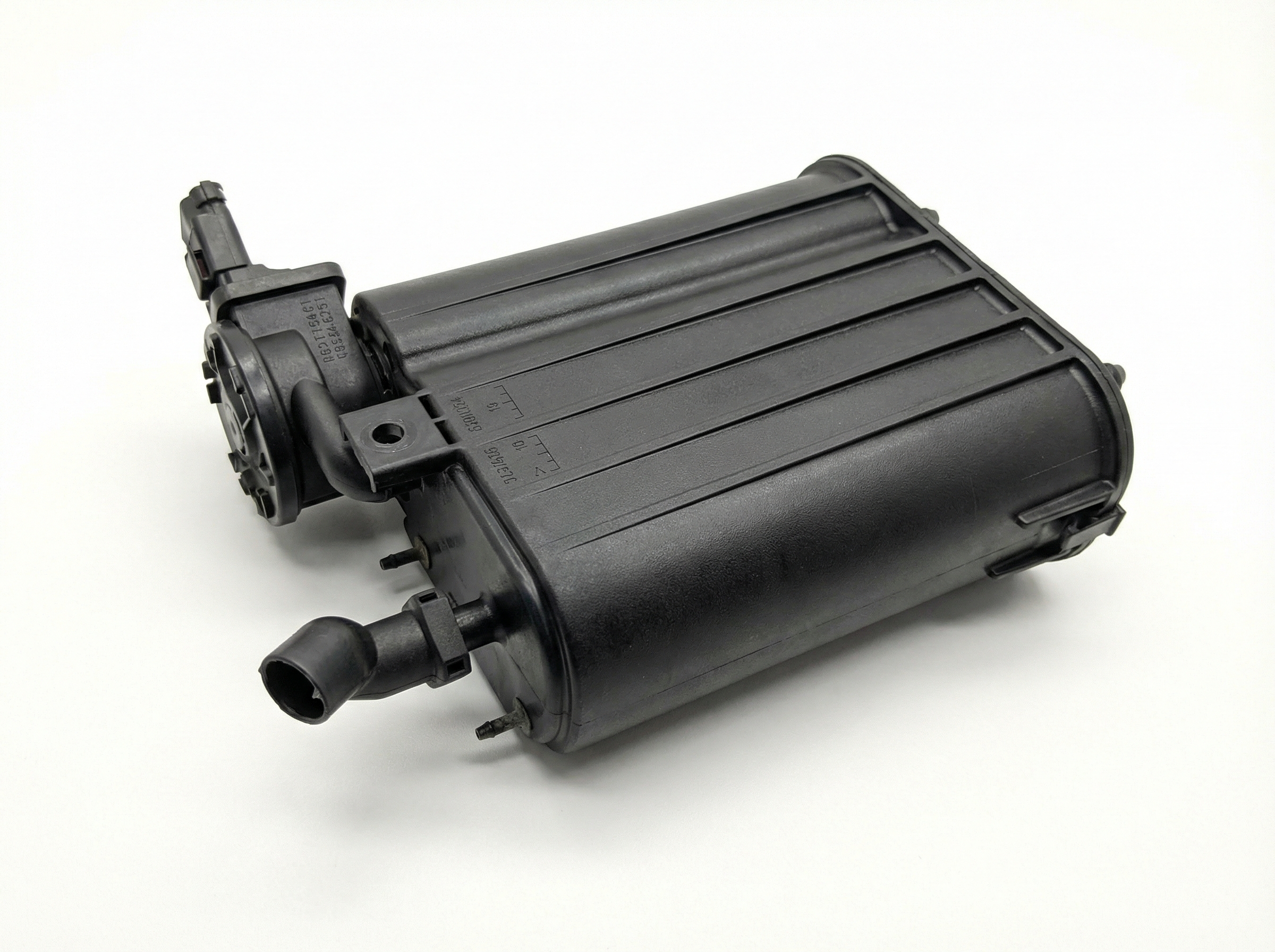
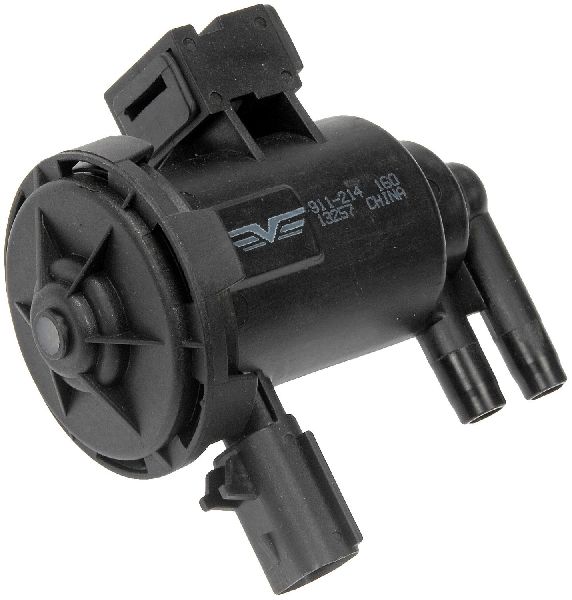
Typical fix: In many cases, the vent valve is integral to the vapor canister. The most straightforward repair is to replace the entire vapor canister assembly. Ensure you buy the correct part for your model year (2005-2006 vs. 2007-2010). If the valve is separate, it can be replaced individually.
Est. part cost: $150-$350 - Clogged Vapor Canister 🟡 Medium Probability → Shop Vapor Canister Consistently overfilling the fuel tank can force liquid gasoline into the charcoal canister, saturating the charcoal pellets and causing a blockage. Extreme dusty or off-road driving can also clog the canister's filter element over time.
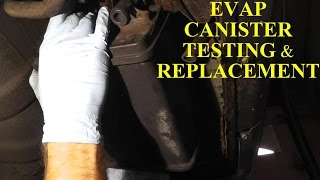
How to confirm: If the vent valve and its wiring test good, the canister itself is likely blocked. A smoke test is the most definitive way to find a blockage; smoke will not be able to pass through the canister to the vent. You can also try disconnecting the hoses and gently blowing low-pressure compressed air 🎬 See this walkthrough for testing and replacing the canister through to check for flow.
Typical fix: Replace the vapor canister. Part number 4891762AA is for 2005-2006 models, and 4891725AG is for 2007-2010 models.
Est. part cost: $250-$400 - Damaged or Corroded Vent Valve Wiring 🟡 Medium Probability The wiring harness for the vent valve runs underneath the vehicle and is exposed to moisture, road salt, and physical damage from road debris. This can lead to corrosion on the connector pins, or an open or short circuit in the wires. A common failure point is a broken wire inside the insulation right at the connector.
How to confirm: Visually inspect the wiring harness leading to the vent valve connector for any breaks, chafing, or green/white corrosion on the pins. Use a multimeter to check for continuity between the PCM and the connector and for shorts to ground. A 'wiggle test' on the harness while monitoring voltage can help identify intermittent faults.
Typical fix: Repair the damaged section of the wire or replace the connector pigtail. Clean corroded terminals and apply dielectric grease to prevent future issues.
Est. part cost: $10-$100
Rare But Worth Checking
- Loose or Faulty Gas Cap: → Shop Fuel Tank Cap While a bad gas cap typically causes large leak codes like P0455, it's a very simple and inexpensive item to check first. Ensure it clicks several times when tightened and that the seal is not cracked or worn. Cleaning the seal and filler neck can sometimes resolve the issue.
- Insect Nests in Vent Hose: Spiders and other insects are known to build nests inside the EVAP vent hoses, creating a blockage that perfectly mimics a failed vent valve. This is especially common in vehicles that are parked for extended periods. The hose should be disconnected and inspected visually and with compressed air.
- Faulty Powertrain Control Module (PCM): This is extremely rare. The PCM is the last thing to suspect after all other components in the EVAP vent circuit (valve, canister, wiring) have been thoroughly tested and proven to be good. A failure of the internal driver circuit that controls the vent valve would necessitate PCM replacement.
Diagnosis Steps
- Check the gas cap to ensure it is tight and the seal is intact. Clean the seal and filler neck.
- Using an OBD-II scanner, confirm P0446 is the primary code. Note any other codes like P0441, P0455, or P0456, as they can provide additional clues.
- Visually inspect all accessible EVAP hoses between the fuel tank, vapor canister, and vent valve for cracks, kinks, or disconnections. Pay special attention to the vent hose outlet for blockages from mud or insect nests.
- Locate the vapor canister and vent valve assembly, mounted near the fuel tank, just behind the driver's side rear wheel.
- Inspect the electrical connector and wiring going to the vent valve for corrosion, damage, or loose connections.
- With the ignition key in the 'ON' position, use a multimeter to verify that the vent valve connector is receiving battery voltage (approx. 12V).
- Use a bidirectional scanner to command the vent valve solenoid to open and close. Listen for a distinct clicking sound, which indicates the solenoid is trying to actuate.
- If the valve does not click and wiring has power, the vent valve/solenoid has likely failed. If it does click, the valve may be mechanically stuck or there's a blockage downstream.
- Disconnect the vent hose from the canister and check for blockages. A smoke machine is the best tool to identify restrictions or leaks in the canister and lines.
- Given the high likelihood of an integrated valve and the potential for a clogged canister, replacing the entire vapor canister assembly is often the most effective and lasting repair.
Parts You'll Likely Need
- Vapor Canister Assembly (2007-2010)
(OEM #4891725AG)— For 2007-2010 models, this assembly contains the charcoal canister and integrated vent valve. Replacing the whole unit is the most common fix. This part number supersedes several previous versions including 4891725AB, 4891725AC, 4891725AD, 4891725AE, and 4891725AF.
Trusted brands: Mopar, Dorman
OEM price range: $280-$400
Aftermarket price range: $120-$200 - Vapor Canister Assembly (2005-2006)
(OEM #4891762AA)— For 2005-2006 models, this is the correct canister assembly. It is not interchangeable with the 2007-2010 part. This part also fits the 2006 Jeep Commander.
Trusted brands: Mopar, Dorman
OEM price range: $300-$450
Aftermarket price range: $150-$250
Related Codes That Often Appear With This One
- P0440 (EVAP System Malfunction)
- P0441 (EVAP System Incorrect Purge Flow)
- P0455 (EVAP System Leak Detected - Large Leak)
- P0456 (EVAP System Leak Detected - Small Leak)
Technical Service Bulletins (TSBs) & Recalls
- While no specific TSB for P0446 on the 2005-2010 Grand Cherokee was found, TSB 18-076-23 for a later model WK2 Grand Ch
Platform-Specific Known Issues
- Dusty Environment Failures: A General Motors TSB for P0446 notes that vehicles operated in extremely dusty environments (like farms or mining roads) are prone to dust intrusion that clogs the canister and vent solenoid. Given the Grand Cherokee's off-road capabilities, this is a highly relevant potential cause.
- Spider Nests Clogging Vent Lines: A surprisingly common cause for a P0446 code across many makes and models is a spider building a web or egg sac inside the EVAP vent hose. This creates a physical blockage that the PCM interprets as a faulty vent valve. Before replacing parts, it is worth disconnecting the vent outlet hose and blowing compressed air through it.
Mechanic-Grade Diagnostic Values
- EVAP Vent Valve/Solenoid Coil Resistance — expected: 10 - 50 Ohms. Failure: A reading of near-zero Ohms indicates an internal short. A reading of infinite Ohms (OL) indicates an open circuit.
- Voltage at EVAP Vent Valve Connector (Power Pin) — expected: ~12V (Battery Voltage) with Key On, Engine Off. Failure: No voltage indicates a problem with the power supply circuit, such as a blown fuse or broken wire.
- Voltage at EVAP Vent Valve Connector (Control Pin) — expected: Near battery voltage when the valve is commanded OFF (open). Under 1V when the valve is commanded ON (closed/grounded by PCM).. Failure: Voltage that does not change when commanded by a scan tool points to a wiring issue or a faulty PCM driver.
- Fuel Tank Pressure (FTP) Sensor Voltage (at atmospheric pressure) — expected: Approximately 1.4V - 1.5V with the gas cap off.. Failure: A reading near 0V or 5V with the gas cap off suggests a faulty FTP sensor, which can sometimes contribute to or be mistaken for a P0446 fault.
Scan Tool Commands That Help
- Professional Scan Tool (e.g., WiTech, Snap-on, Autel): EVAP System Test / Vent Solenoid ON/OFF Command — This bidirectional command is critical for diagnosis. It allows the technician to manually command the vent solenoid to close and open. While monitoring the circuit voltage or listening for an audible click from the valve, this test directly confirms if the solenoid is receiving the command and is mechanically capable of actuating. It separates electrical faults from mechanical (stuck valve) or blockage issues.
Wiring & Ground Locations
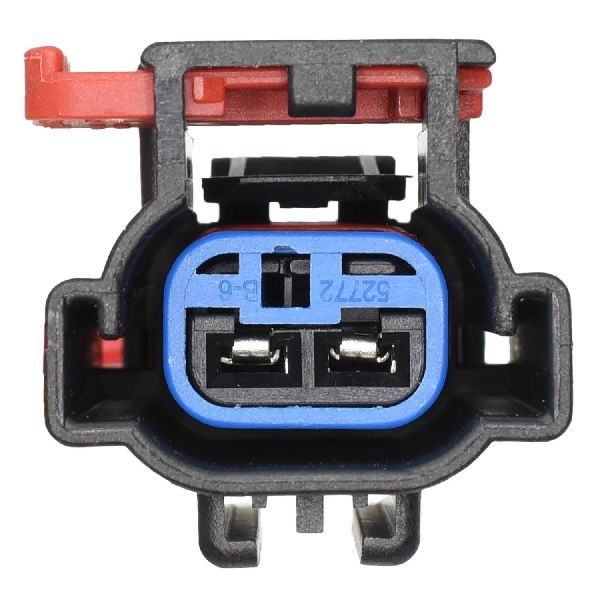
- EVAP Vent Valve Connector — On the EVAP canister assembly, located behind the driver's side rear wheel, near the fuel tank.. This 2-pin connector is the primary test point. One pin should have ~12V power with the key on, and the other is the control wire that the PCM grounds to close the valve. Corrosion on these pins or broken wires right at the back of the connector are very common failures due to exposure to road salt and moisture.
- EVAP Purge Solenoid Connector (for differentiation) — On the front right side of the engine (for the 3.7L V6).. This is NOT the component related to P0446. Technicians must not confuse this under-hood purge solenoid with the rear-mounted vent solenoid. Testing or replacing this part will not fix a P0446 code.
Real Owner Repair Stories
- YouTube channel 'ScannerDanner' (General Motors vehicle (demonstrates a universally applicable principle)) — Check Engine Light with EVAP code P0449 (functionally similar to P0446, indicating a vent circuit issue).
❌ Tried (didn't work) Initial visual inspection showed intact wiring.
✅ What actually fixed it The wire for the vent solenoid control was broken *inside* the insulation, right at the connector. The wire looked perfect from the outside, but a 'pull test' revealed the break. The fix was to replace the connector pigtail.
"I Checked Everything" — The Actual Cause
- If a smoke test passes (showing no leaks), a P0446 code is almost certainly caused by either an electrical circuit fault or a physical blockage. A smoke test can't detect a bad solenoid coil, a broken wire, or a clogged vent path (like an insect nest or saturated charcoal). In these cases, the next step is to test the electrical circuit by commanding the valve with a scan tool and checking for voltage changes and resistance of the solenoid coil.
OEM Part Supersession History
4891725AB, 4891725AC, 4891725AD, 4891725AE, 4891725AF→4891725AG— Standard part revision and improvement by the manufacturer.
Heads up: These part numbers apply to the 2007-2010 models. The final version, 4891725AG, is the correct service replacement for all previous versions.
Model Year Variations Within This Range
- 2005-2006: Uses a distinct vapor canister assembly (Part No. 4891762AA). The design and mounting are different from the later models, and the parts are not interchangeable.
- 2007-2010: Uses vapor canister assembly Part No. 4891725AG (and its predecessors). This part is shared with the Jeep Commander (XK) for the same years.
Diagnostic Flowchart
Real Owner Stories
Aggregated from forums and TSBs cited above. Mileages and costs reflect what owners reported in those sources.
Jeep Grand Cherokee (WK)
Symptoms: Triggered EVAP codes. The owner initially tried replacing the gas cap and the engine-bay purge valve, but the issue persisted.
What fixed it: Replacing the entire rear vapor canister assembly.
Source hint: JeepForum.com & JeepGarage.org
Jeep Grand Cherokee (Newer Model)
Symptoms: Triggered a related P0456 EVAP code.
What fixed it: Replacing the ESIM (a component related to the vent valve located behind the rear wheel) and repairing cracked EVAP hoses in the engine bay.
Source hint: Reddit r/GrandCherokee
Related OBD-II Codes
Frequently Asked Questions
Where is the EVAP vent valve located on my 2005-2010 Jeep Grand Cherokee?
I need to replace the vapor canister on my 2008 Grand Cherokee. What is the correct part number?
Can overfilling my gas tank cause the P0446 code on this Jeep?
Why does the gas pump nozzle keep clicking off prematurely when I try to refuel my Grand Cherokee?
Is there a specific Technical Service Bulletin (TSB) for the P0446 code on the 2005-2010 Grand Cherokee?
My 2007 Jeep Commander has the same P0446 code. Are the fixes the same as the Grand Cherokee?
Helpful Videos

Used OEM Parts in Stock
New Aftermarket Parts Available



The information in this article is provided for general reference and educational purposes only. Vehicle specifications, procedures, and part compatibility can vary by production date, trim level, and region. Always consult your vehicle's factory service manual and verify part numbers before purchasing or performing repairs. Safety-critical components such as airbags, seat belts, and braking systems should be installed by a qualified professional.
- Jeep Grand Cherokee:
- 🧭 Diagnostic Flowchart
- 🎬 Helpful Videos
- 🛍️ Shop This Part
- What's Unique About the 2005-2010 Jeep Grand Cherokee
- Symptoms You May Notice
- Most Likely Causes
- Rare But Worth Checking
- Diagnosis Steps
- Parts You'll Likely Need
- Related Codes That Often Appear With This One
- Technical Service Bulletins (TSBs) & Recalls
- Platform-Specific Known Issues
- Mechanic-Grade Diagnostic Values
- Scan Tool Commands That Help
- Wiring & Ground Locations
- Real Owner Repair Stories
- "I Checked Everything" — The Actual Cause
- OEM Part Supersession History
- Model Year Variations Within This Range
- Real Owner Stories
- Jeep Grand Cherokee (WK)
- Jeep Grand Cherokee (Newer Model)
- Related OBD-II Codes
- Frequently Asked Questions
- 🎟️ Get 5% Off