

P0446 on 2007-2018 Jeep Wrangler: EVAP Vent Circuit Causes and Fixes
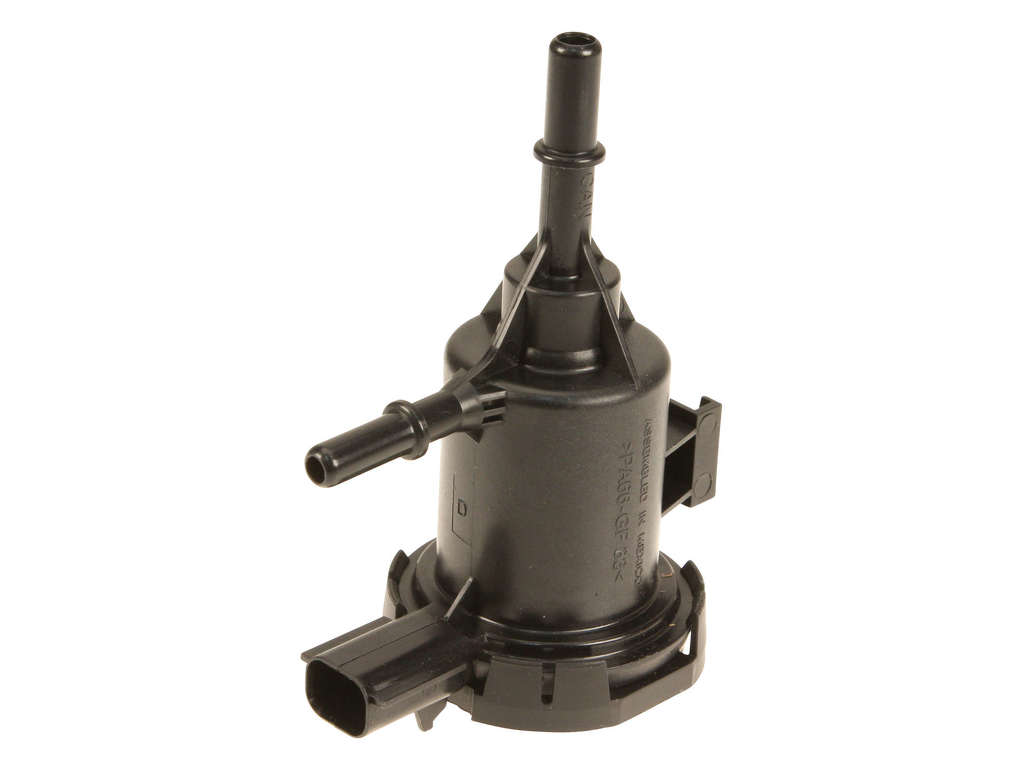
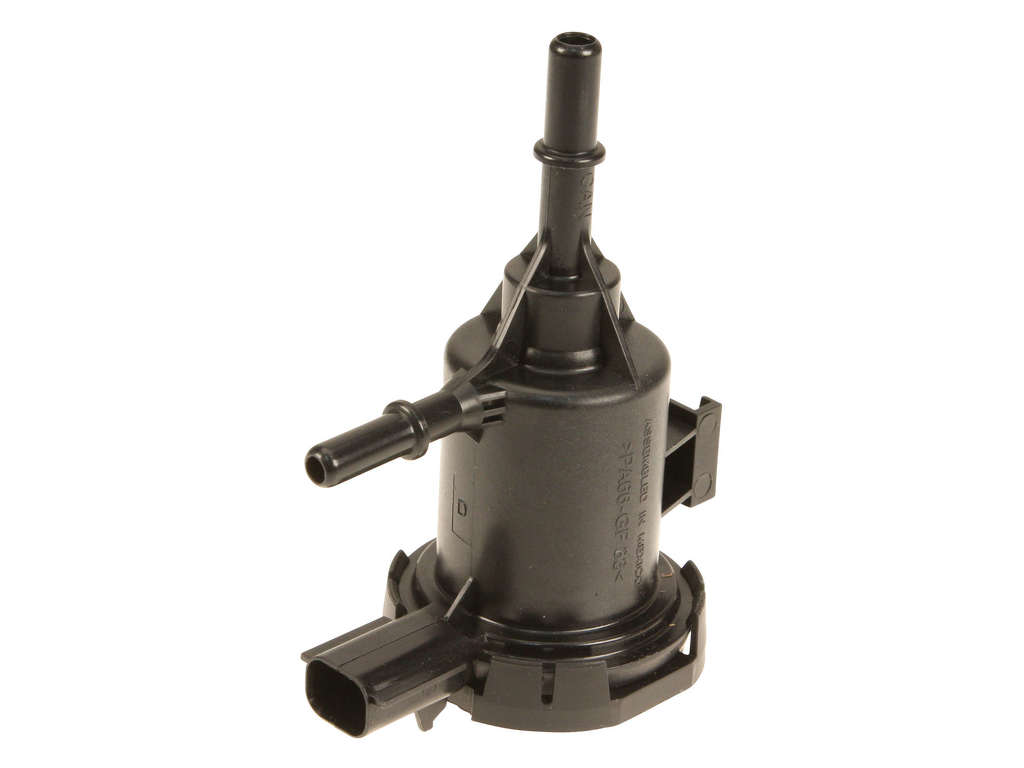
On a 2007-2018 Jeep Wrangler, code P0446 is almost always caused by a faulty Evaporative System Integrity Module (ESIM) located on the charcoal canister. Replacing the ESIM and its seal is a common, DIY-friendly fix costing around $50-$90 for the parts. Its location under the vehicle makes it highly susceptible to damage from off-roading and road debris.
- P0446 on a JK Wrangler points directly to a problem with the vent circuit, which is almost always the Evaporative System Integrity Module (ESIM).
- Do not waste money on a new gas cap or purge valve for this specific code; the problem is located at the rear of the vehicle on the charcoal canister.
- Replacing the ESIM and its seal is a very easy and inexpensive DIY repair that can be done in under 30 minutes with no special tools.
- Always replace the small rubber seal (Part # 52129436AB) when you replace the ESIM to prevent future leaks.
- If replacing the ESIM doesn't fix the code, carefully inspect the wiring and connector for damage before replacing more expensive parts like the charcoal canister.
What's Unique About the 2007-2018 Jeep Wrangler
The 2007-2018 Jeep Wrangler (JK) uses an Evaporative System Integrity Module (ESIM) instead of a traditional separate vent solenoid and pressure sensor. This module is a known high-failure item and is the most common cause for a variety of EVAP codes, including P0446. 🎬 Watch: Understanding the P0446 code and common fixes Because the ESIM is located underneath the vehicle on the charcoal canister, it is highly susceptible to damage from off-roading, water, and road debris, leading to corrosion and premature failure. A General Motors TSB for P0446 specifically notes that vehicles operated in dusty environments are prone to this type of failure. The fix is consistent across both the 3.8L (2007-2011) and 3.6L (2012-2018) engines.
Generation note: This guide covers the entire 2007-2018 Jeep Wrangler JK generation, which includes models with the 3.8L V6 (2007-2011) and the 3.6L Pentastar V6 (2012-2018). The EVAP system design and the primary cause of this code (the ESIM module) are the same across both engine types. The subsequent JL generation relocated the EVAP canister to a more protected location, acknowledging the vulnerability on the JK.
Symptoms You May Notice
- Check Engine Light is on
- Difficulty filling the fuel tank (gas pump nozzle clicks off repeatedly)
- A faint fuel smell near the rear of the vehicle (less common)
- Rough idling or stalling, especially after refueling (rare)
- Replacing the gas cap. While a bad gas cap can cause other EVAP codes like P0456 (small leak) or P0457 (cap loose), it does not typically cause a P0446 vent circuit code.
- Replacing the EVAP purge valve/solenoid. The purge valve is located in the engine bay and has its own set of diagnostic codes (e.g., P0443). P0446 specifically points to the vent circuit at the rear of the vehicle.
Most Likely Causes
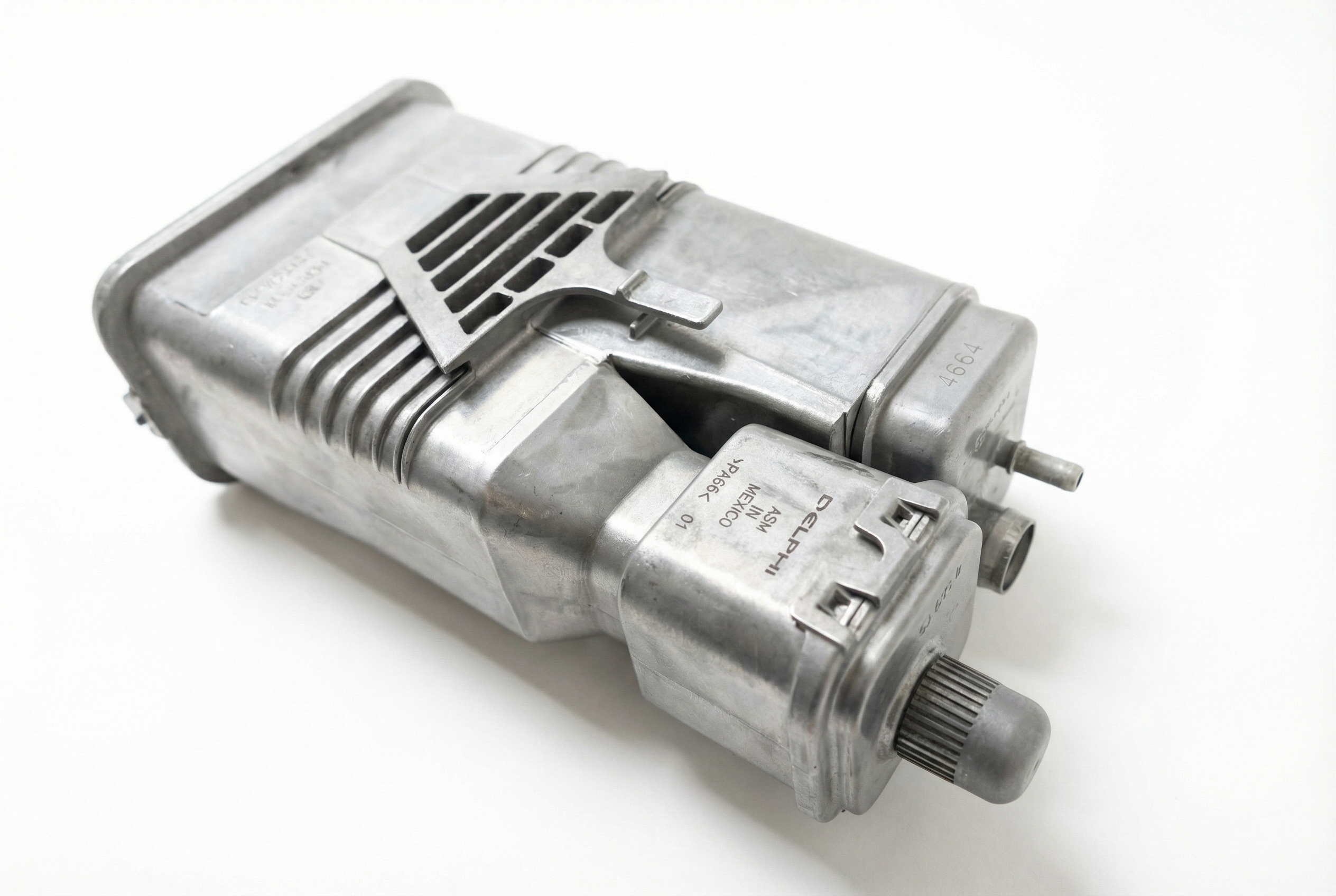
- Faulty EVAP System Integrity Module (ESIM) 🔴 High Probability → Shop Vapor Canister The ESIM is a known failure point on Chrysler/Jeep products of this era. Its location under the vehicle makes it vulnerable to water, mud, and physical damage, causing the internal diaphragm or switch to fail. Off-roading significantly increases the risk of clogging the vent with mud or debris.
How to confirm: Use a capable OBD-II scanner to run the EVAP system test. The test will fail, and the scanner may show the ESIM switch as 'open' when it should be 'closed'. You can also remove the module and gently shake it; if it doesn't rattle, the internal weights may be stuck. A lack of rattle is a strong indicator of failure.
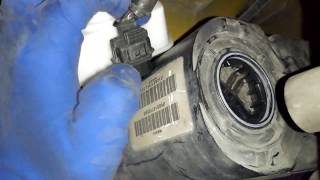
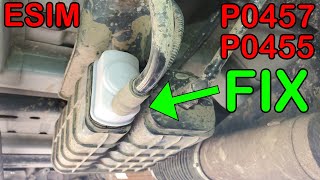
Typical fix: Replace the ESIM and its rubber seal. 🎬 See this walkthrough on replacing the ESIM detector pump The module is located on the charcoal canister, accessible from under the driver's side, just in front of the rear axle. It is removed with a simple quarter-turn twist-and-pull motion.
Est. part cost: $40-$80 - Clogged EVAP Canister or Vent Path 🟡 Medium Probability → Shop Vapor Canister As an off-road vehicle, the Wrangler's EVAP canister vent filter is prone to getting clogged with mud, dust, or insect nests, which restricts airflow and triggers a vent circuit fault. This is a common issue for vehicles used in dusty or farm environments.
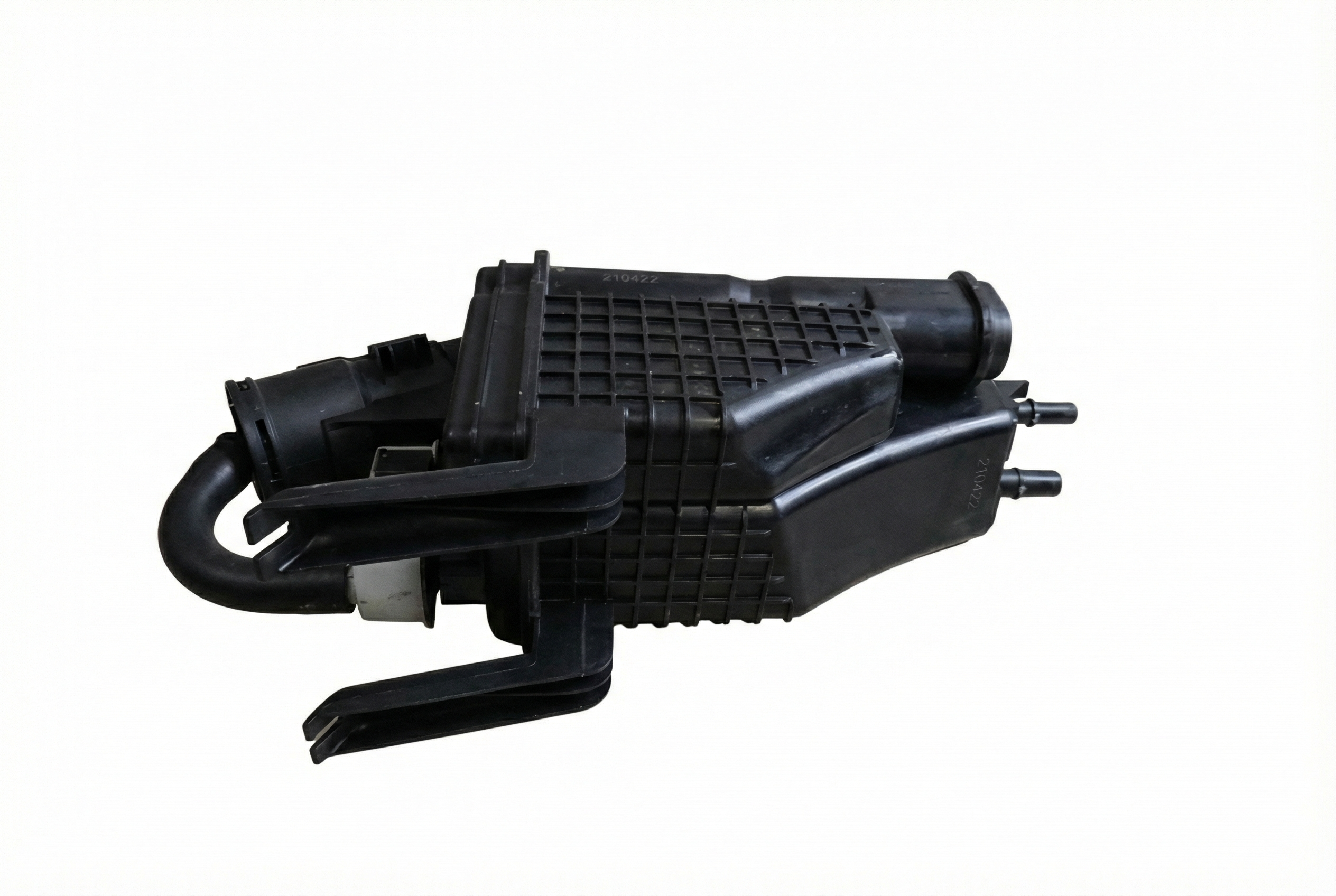
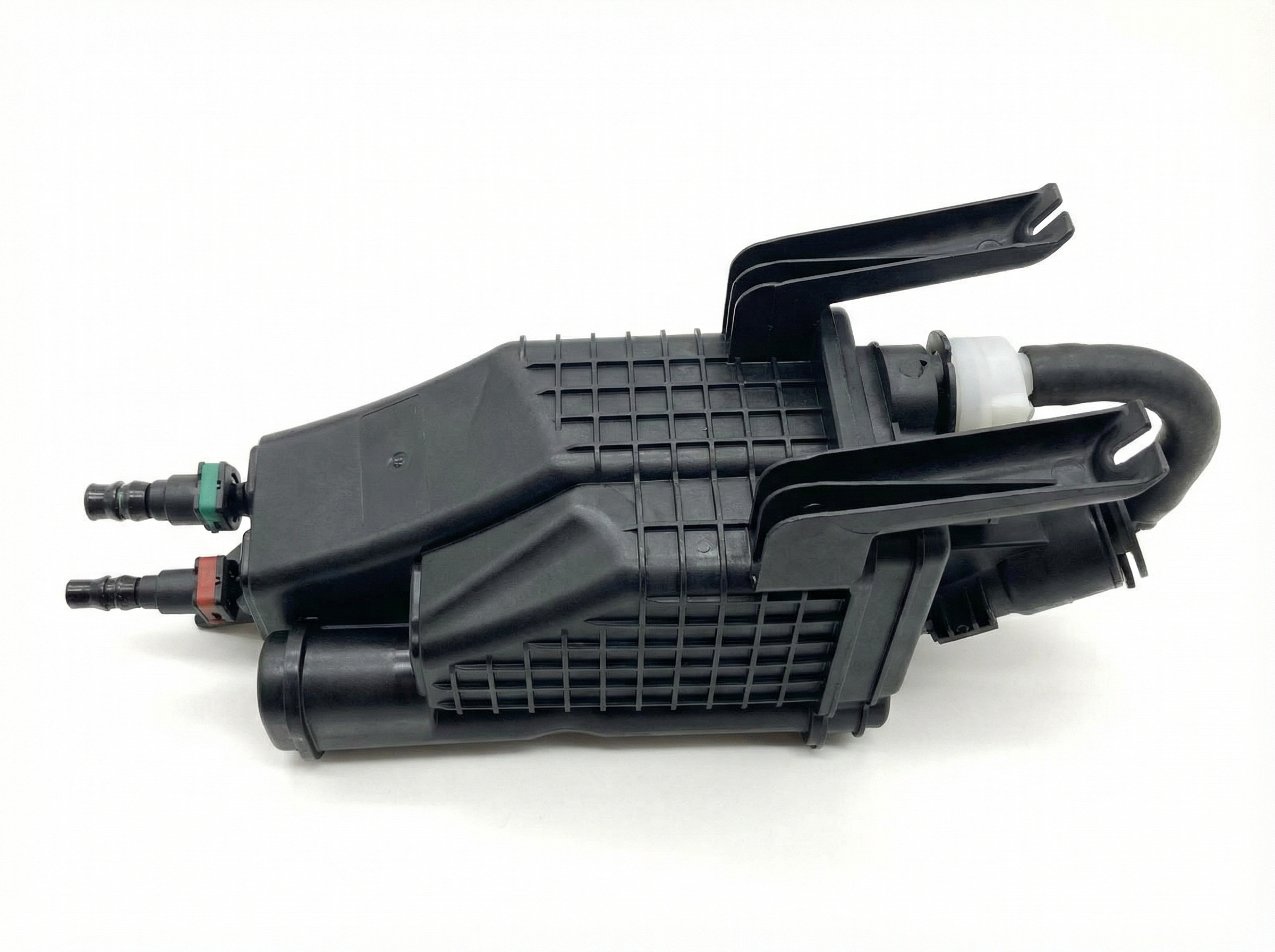
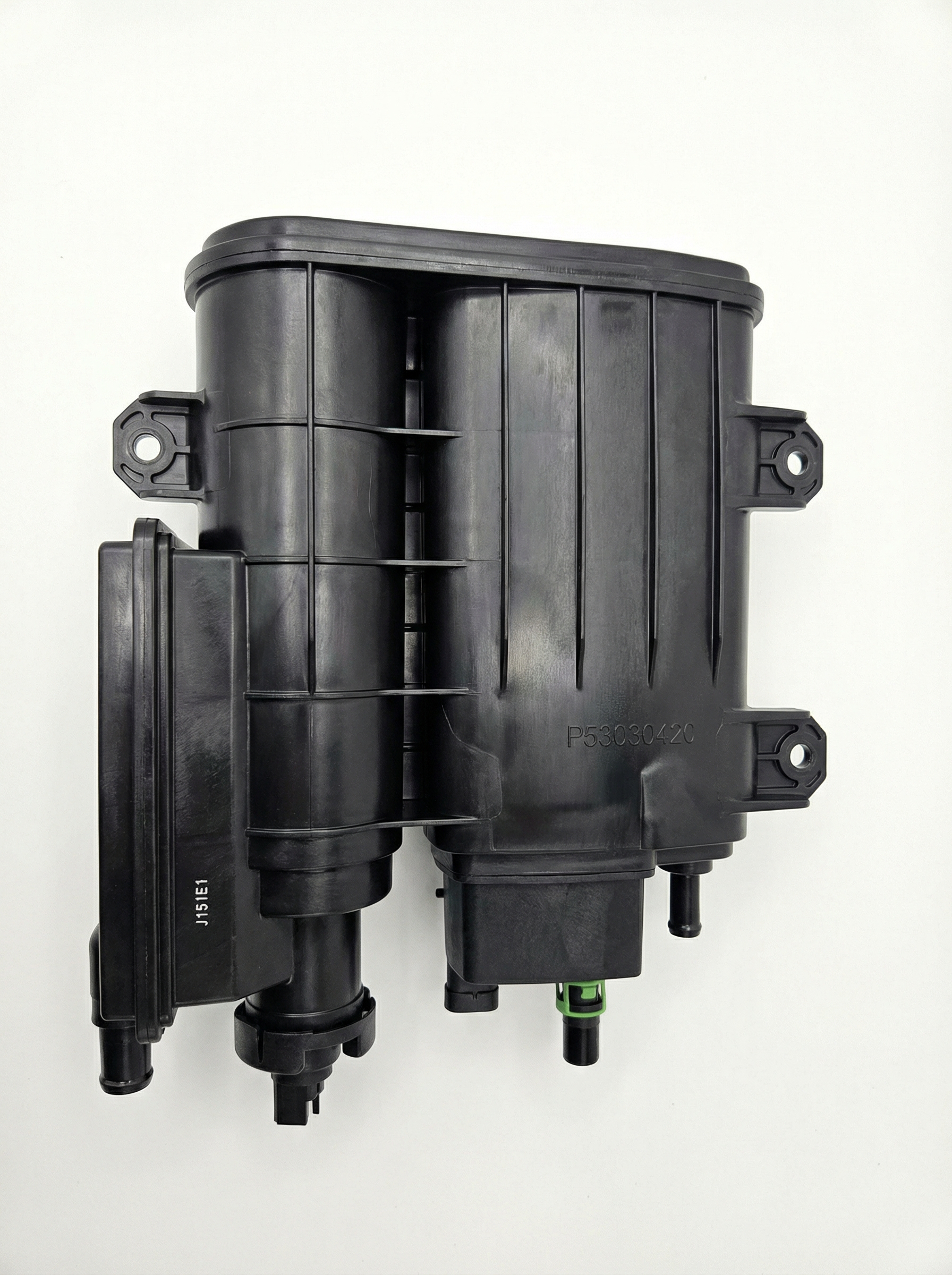
How to confirm: Visually inspect the charcoal canister and its associated hoses for any obvious blockages like mud packs or debris. Disconnect the vent hose and check for clear airflow. In some cases, the canister itself can be cracked from impacts during off-roading.
Typical fix: Clean the mud or debris from the canister and vent lines. If the canister is internally saturated with fuel (often from over-filling the tank) or physically cracked, it will need to be replaced.
Est. part cost: $0-$400 - Damaged Wiring or Corroded Connector ⚪ Low Probability The wiring harness for the ESIM is in an exposed location under the vehicle and can be damaged by rocks or trail obstacles, or the connector pins can corrode from water and salt.
How to confirm: Visually inspect the electrical connector and wiring going to the ESIM for any breaks, chafing, or green/white corrosion on the pins. Use a multimeter to check for 12V power at the connector with the key on.
Typical fix: Clean the connector pins with an electrical contact cleaner and apply dielectric grease. If the wire is broken, it will need to be spliced and repaired.
Est. part cost: $5-$25
Diagnosis Steps
- Read the code with an OBD-II scanner to confirm P0446 is the primary code.
- Inspect the gas cap to ensure it is tight and the seal is not cracked. While unlikely to be the cause, it is a simple first step.
- Visually inspect the charcoal canister, ESIM, and all attached hoses underneath the vehicle (driver's side, near the rear axle). Look for obvious damage, corrosion, or blockages from mud or debris.
- Inspect the electrical connector on the ESIM. Unplug it and check for corrosion or bent pins. Ensure it is seated securely.
- If you have a capable bidirectional scanner, command the EVAP system leak test. Monitor the status of the ESIM switch; if it fails to change state (e.g., remains 'open'), the ESIM is likely faulty.
- If no scanner is available, the most probable cause is the ESIM itself. Proceed with replacing the ESIM and its seal. This is the fix in the vast majority of cases reported by owners.
- To replace, disconnect the electrical connector and the attached hose. Push the locking tab and twist the ESIM counter-clockwise about a quarter turn to remove it from the canister.
- Install the new seal and ESIM, ensuring it locks into place. Reconnect the hose and electrical connector.
- Clear the trouble code with the scanner and drive the vehicle through several drive cycles to ensure the code does not return.
Parts You'll Likely Need
- Evaporative System Integrity Module (ESIM)
(OEM #04861962AD)— This is the most common failure point for the P0446 code on the JK Wrangler. The internal mechanism fails, preventing the EVAP system from venting and sealing correctly. This part number supersedes previous versions 4861962AA, 4861962AB, and 4861962AC.
Trusted brands: Mopar, Dorman, Standard Motor Products (SMP)
OEM price range: $45-$80
Aftermarket price range: $35-$60 - Vapor Canister Seal (ESIM Gasket)
(OEM #52129436AB)— This rubber seal is critical for ensuring a proper seal between the ESIM and the charcoal canister. It often becomes brittle and should always be replaced with the ESIM. Many aftermarket ESIM kits include this seal.
Trusted brands: Mopar
OEM price range: $5-$15
Aftermarket price range: $5-$10
Related Codes That Often Appear With This One
- P0440 — P0440 is a general EVAP system malfunction code. 🎬 Watch: Troubleshooting P0440 and P0446 codes on a Wrangler A failing ESIM can trigger P0440 before it sets the more specific P0446.
- P0456 — This code indicates a small EVAP leak. Sometimes a failing ESIM can cause intermittent sealing issues that the PCM interprets as a small leak.
- P0442 — Indicates a small EVAP system leak, which can be triggered by a faulty ESIM seal or the module itself not closing properly.
Platform-Specific Known Issues
- Off-Road Damage: A user on JK-Forum.com reported getting a P0446 code immediately after a day of heavy off-roading in deep mud. The cause was a completely mud-packed charcoal canister and ESIM vent. Cleaning was not enough; the ESIM had ingested debris and required replacement.
- Cracked Canister Housing: On WranglerForum.com, an owner chased a recurring P0446 code. After replacing the ESIM twice, they discovered a hairline crack in the charcoal canister itself, near the ESIM mounting point, likely from a rock strike. This prevented a proper seal regardless of the ESIM's condition. Replacing the entire canister assembly (P/N 4861950AD) finally resolved the issue.
Mechanic-Grade Diagnostic Values
- ESIM Connector Voltage — expected: ~12V at the power pin with Key On, Engine Off (KOEO).. Failure: No voltage suggests a wiring issue, fuse, or PCM problem.
- Scan Tool Live Data: ESIM Switch Status — expected: The switch status should change from 'Open' to 'Closed' (or vice-versa) when the PCM commands the EVAP system test.. Failure: If the switch status is stuck in one position (e.g., 'Open') during the test, the ESIM has failed internally.
Scan Tool Commands That Help
- Professional Scan Tool (e.g., Autel, wiTECH): EVAP System Leak Test / Actuator Test — This command forces the EVAP system to run its self-test, allowing the technician to monitor the ESIM switch status in real-time to confirm if it is functioning electrically and mechanically. It's the definitive way to test the ESIM without replacing it.
Wiring & Ground Locations
- G104 — On the engine block, relevant for 2007-2011 3.8L models.. A poor engine ground can cause erratic behavior and fault codes from various sensors that use the engine block as a ground reference path back to the battery. While not a direct cause, checking this ground is good practice when multiple electrical codes are present.
- G102 — Main body ground location for 2012+ 3.6L models.. Similar to G104, this is a critical ground point for the body and various electrical systems. A corroded or loose G102 can cause widespread, difficult-to-diagnose electrical issues.
- ESIM Connector — On the ESIM module itself, attached to the charcoal canister under the driver's side of the vehicle.. This is the direct electrical connection for the component that triggers P0446. It is highly exposed to water, salt, and physical damage, making corrosion or wire damage a potential cause of the circuit fault.
Real Owner Repair Stories
- YouTube channel 'Jabo the Mechanic' (Jeep Wrangler JK (year not specified, but in the 2007-2018 range)) — Check Engine Light with codes P0440 and P0446, and a 'gascap' message.
❌ Tried (didn't work) Initial diagnosis pointed towards a leak, but the mechanic suspected the ESIM.
✅ What actually fixed it Using a scan tool, the mechanic observed the 'ESIM switch' was stuck 'open'. Replacing the ESIM and the seal caused the scan tool test to pass, with the switch correctly showing 'closed'. This confirmed the ESIM was the point of failure. - Forum post on a GM truck forum (Chevrolet Truck (not a Wrangler, but an identical P0446 cause)) — Check Engine Light with code P0446.
❌ Tried (didn't work) Initial checks of the vent solenoid itself.
✅ What actually fixed it The cause was a completely clogged breather line filter box, located up near the gas filler neck. It was packed solid with dirt and dust from driving on rural roads. Cleaning the filter box and its two internal sponge filters, and replacing the vent solenoid (ESIM equivalent) resolved the code.
"I Checked Everything" — The Actual Cause
- A common scenario for P0446 on a JK Wrangler is that a smoke test will pass with no leaks found. This is because the code often indicates a 'circuit malfunction,' not a physical leak. The failure occurs when the PCM commands the ESIM to close during a self-test, but the internal switch fails to actuate. The system remains physically sealed (so no smoke escapes), but the PCM detects the electrical failure of the switch not changing state from 'open' to 'closed', triggering the P0446 code.
OEM Part Supersession History
4861962AA, 4861962AB, 4861962AC→04861962AD— Component revisions to improve reliability and address failure modes.
Heads up: All previous versions are replaced by 04861962AD. When purchasing, ensure you are getting the latest revision.
Model Year Variations Within This Range
- 2007-2011 vs 2012-2018: While the cause and fix for P0446 (the ESIM) are the same, the primary engine ground locations differ. 3.8L engines (07-11) use ground G104 on the engine block, while 3.6L engines (12-18) use G102. A poor ground at these locations can cause various electrical faults.
Diagnostic Flowchart
Other Known Issues on This Vehicle
Issues unrelated to this code that are worth knowing about as an owner of this generation:
- Front Axle "Death Wobble" 🔴 High — Common across all years, especially on lifted vehicles or after hitting a bump at speed (45+ mph). Caused by worn or loose front suspension components, most commonly the track bar.
- TIPM (Totally Integrated Power Module) Failure 🔴 High — Widespread on 2007-2013 models. Causes a wide range of bizarre electrical issues, including fuel pump failure (crank-no-start), horn/wipers activating randomly, and battery drain. (Ref: A class-action lawsuit was filed, but no official recall was issued for all vehicles.)
- 3.8L V6 (2007-2011) Excessive Oil Consumption 🟠 Medium — Very common for the 3.8L EGH engine. Many engines consume a quart of oil every 1000-2000 miles. Chrysler considered 1 quart per 750-1000 miles to be 'acceptable'.
- 3.6L V6 (2012-2013) Left Cylinder Head Failure 🔴 High — Affects early 3.6L Pentastar engines (pre-July 2012 build dates). Causes misfires on cylinders 2, 4, 6 (P0302, P0304, P0306) due to premature valve seat wear. (Ref: TSB 09-002-14 Rev. B; Chrysler issued an extended warranty (X56) for 10 years/150,000 miles, which is now expired for most vehicles.)
- Cracked Exhaust Manifolds 🟠 Medium — Common on both 3.8L and 3.6L engines. The thin factory manifolds are prone to cracking from heat cycles, causing an exhaust leak and a ticking noise, especially when cold.
- Water Leaks (Hard Top and Soft Top) 🟡 Low — Extremely common across all years. Leaks often occur at the A-pillar, door surrounds, and top seals, leading to wet carpets and potential mold. (Ref: Numerous TSBs exist for specific leak points and updated seal designs.)
- 3.6L V6 Oil Filter Housing/Cooler Leaks 🟠 Medium — Very common on the 3.6L Pentastar. The plastic housing, located in the engine valley, cracks or the seals fail, causing significant oil and/or coolant leaks.
Used vs. New Parts: Buying Guide for This Vehicle
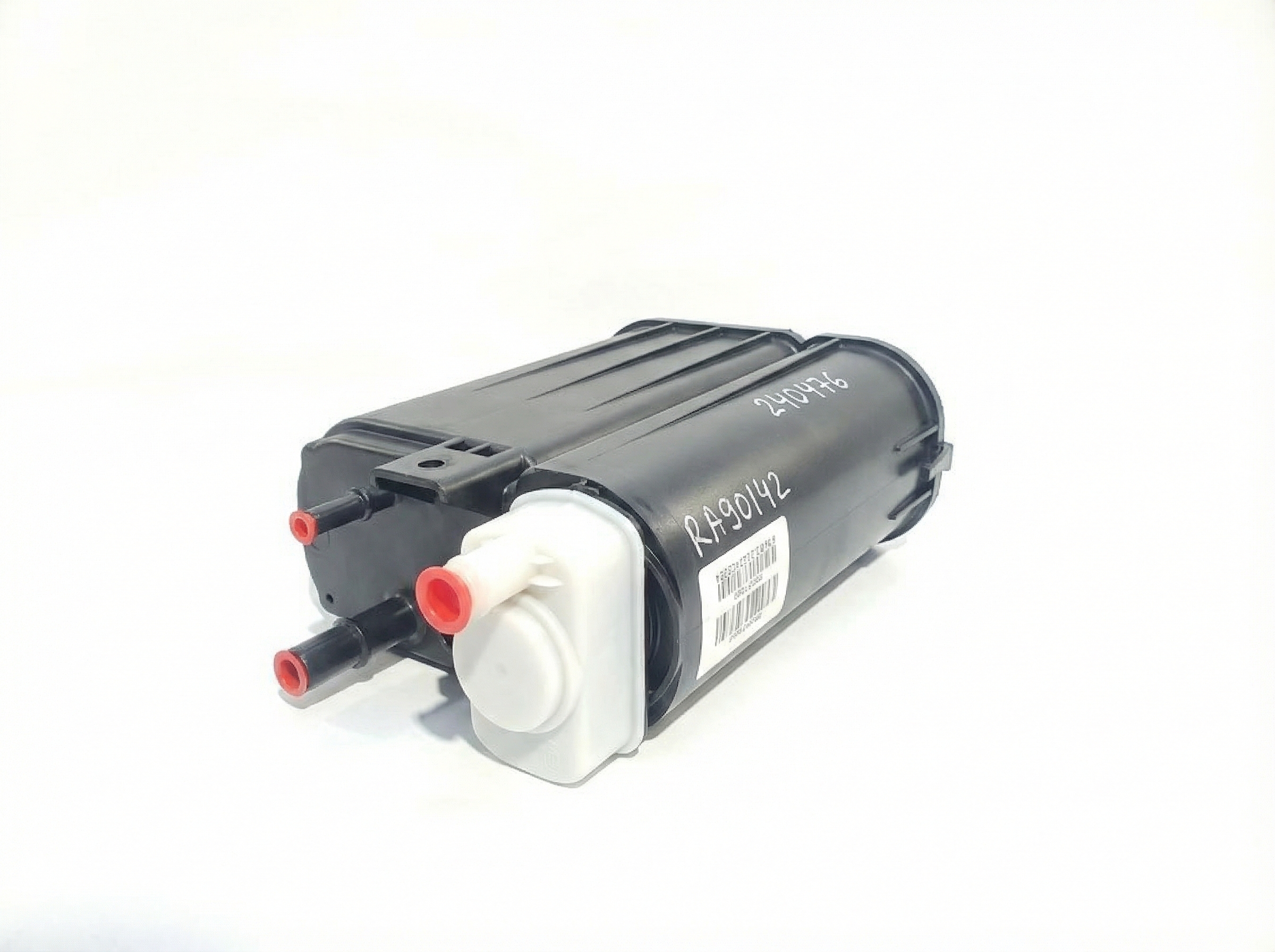
When a used part is the smart pick: For this specific repair, buying a used part is strongly discouraged. The ESIM is a known high-failure component, and a used part from a junkyard has an unknown history and a high likelihood of premature failure. The only part where 'used' might be considered is the plastic charcoal canister body if it is physically damaged and a new one is unavailable or too costly, but it must be inspected carefully.
Donor-vehicle mileage cap: roughly under 10000 miles for the part to have meaningful remaining life.
What to inspect on the donor part:
- For a used canister body: check for zero cracks, especially around the ESIM mounting port.
- Ensure all hose connection nipples are intact and not brittle.
- Avoid any canister that smells strongly of raw fuel, as it may be saturated and internally blocked.
OEM-only on this vehicle (don't cheap out):
- Evaporative System Integrity Module (ESIM): Forum consensus strongly recommends using the OEM Mopar part (04861962AD) for this repair. Some owners report premature failures or incompatibility with aftermarket alternatives.
- Vapor Canister Seal (Gasket): This is a low-cost rubber part that is critical for a proper seal. It should always be purchased new, preferably from Mopar, to avoid immediate leaks.
Aftermarket brands forum-validated for this vehicle:
- While OEM is preferred, Dorman is a widely available aftermarket alternative that some users have had success with.
Brands owners have reported issues with on this vehicle:
- Unbranded, no-name parts from online marketplaces are a significant gamble and often fail quickly.
Real Owner Stories
Aggregated from forums and TSBs cited above. Mileages and costs reflect what owners reported in those sources.
2014 Jeep Wrangler JKU
Symptoms: Check engine light with code P0446.
What fixed it: Replacing the ESIM module with the Mopar part and a new gasket.
Source hint: Reddit.com/r/Jeep - Post: 'P0446 on my '14 JKU'
Jeep Wrangler JK
Symptoms: P0446 code immediately after a day of heavy off-roading in deep mud.
What fixed it: The ESIM had ingested debris and required replacement because cleaning the mud-packed charcoal canister and vent was not enough.
Source hint: JK-Forum.com - Thread: 'P0446 and ESIM replacement questions'
Jeep Wrangler
Symptoms: Recurring P0446 code that persisted even after replacing the ESIM twice.
What fixed it: Replacing the entire charcoal canister assembly (P/N 4861950AD) after discovering a hairline crack in the housing near the ESIM mounting point.
Source hint: WranglerForum.com - Thread: 'Finally beat my P0446, P0456 combo'
Related OBD-II Codes
Frequently Asked Questions
I have a 2012 Jeep Wrangler with misfires on cylinders 2, 4, and 6. Is this related to my P0446 code?
Can off-roading in my Wrangler cause the P0446 code?
What specific part number do I need to fix the ESIM on my JK Wrangler?
My gas pump nozzle keeps clicking off when I try to fill up my Jeep. Is this a symptom of P0446?
Is there a simple way to check if my ESIM is bad without a scanner?
Could my Wrangler's electrical issues, like the horn honking randomly, be causing the P0446 code?
Helpful Videos

Used OEM Parts in Stock
New Aftermarket Parts Available

The information in this article is provided for general reference and educational purposes only. Vehicle specifications, procedures, and part compatibility can vary by production date, trim level, and region. Always consult your vehicle's factory service manual and verify part numbers before purchasing or performing repairs. Safety-critical components such as airbags, seat belts, and braking systems should be installed by a qualified professional.
- Jeep Wrangler:
- 🧭 Diagnostic Flowchart
- 🎬 Helpful Videos
- 🛍️ Shop This Part
- What's Unique About the 2007-2018 Jeep Wrangler
- Symptoms You May Notice
- Most Likely Causes
- Diagnosis Steps
- Parts You'll Likely Need
- Related Codes That Often Appear With This One
- Platform-Specific Known Issues
- Mechanic-Grade Diagnostic Values
- Scan Tool Commands That Help
- Wiring & Ground Locations
- Real Owner Repair Stories
- "I Checked Everything" — The Actual Cause
- OEM Part Supersession History
- Model Year Variations Within This Range
- Other Known Issues on This Vehicle
- Used vs. New Parts: Buying Guide for This Vehicle
- Real Owner Stories
- 2014 Jeep Wrangler JKU
- Jeep Wrangler JK
- Jeep Wrangler
- Related OBD-II Codes
- Frequently Asked Questions
- 🎟️ Get 5% Off