

P0446 on 2001-2005 Kia Optima: EVAP Vent Control Circuit Causes and Fixes
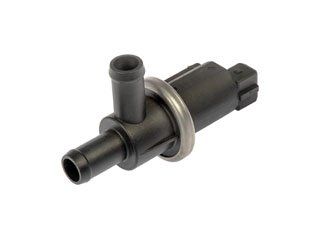
On a 2001-2005 Kia Optima, code P0446 is almost always caused by a failed EVAP canister vent valve (also called a canister close valve or CCV) located near the fuel tank. The valve gets stuck or fails electrically due to its exposed location under the car. Replacing this valve, OEM part number 31453-3K500 (which supersedes 31453-3K700), is the most common fix, with aftermarket parts costing around $20-$50.
- P0446 on your Optima points to an electrical issue or blockage in the EVAP vent valve circuit, not a system leak.
- The most likely fix is replacing the canister vent valve (OEM #31453-3K500), which is located at the rear of the car near the charcoal canister.
- A key symptom confirming this diagnosis is the gas pump nozzle shutting off repeatedly when you try to refuel.
- Before replacing parts, check the EVAP fuse and inspect the valve's wiring connector for corrosion or damage, as this is a common failure point due to its exposed location.
What's Unique About the 2001-2005 Kia Optima
The first-generation Kia Optima (2001-2005) was a sibling to the Hyundai Sonata of the same era, sharing many of its components, including the EVAP system. For this P0446 code, the issue is straightforward and not unique to the platform. The primary failure point is the canister vent valve (Canister Close Valve), which is exposed to the elements at the rear of the car. Its location near the rear driver's side wheel makes the valve and its electrical connector highly susceptible to corrosion and damage from road debris, salt, and moisture over time, leading to either a stuck valve or an electrical fault.
Symptoms You May Notice
- Check Engine Light is on.
- Difficulty filling the fuel tank (the gas pump nozzle clicks off repeatedly).
- A faint fuel smell (less common than with EVAP leak codes).
- In some cases, no noticeable symptoms other than the Check Engine Light.
- Replacing the gas cap. A bad gas cap typically causes a leak-related code (like P0455 or P0457), not a circuit/blockage code like P0446.
- Replacing the purge valve. The purge valve (or purge solenoid) is located in the engine bay and has its own set of diagnostic codes (e.g., P0441). While part of the EVAP system, it is not the component indicated by P0446.
Most Likely Causes
- Faulty EVAP Canister Vent Valve (Canister Close Valve) 🔴 High Probability → Shop Vapor Canister The valve is a solenoid located under the vehicle, where it is exposed to road salt, water, and debris, leading to internal corrosion that causes it to fail electrically or become mechanically stuck.
How to confirm: Use a capable scan tool to command the vent valve to open and close. Listen for an audible click from the valve, which is located near the charcoal canister at the rear of the vehicle. If there is no click, test for 12-volt power at the electrical connector with the key on. If power is present, the valve has likely failed. You can also remove the valve and apply 12V and ground directly to its pins to see if it actuates.
Typical fix: Replace the canister vent valve. 🎬 Watch: How to fix a P0446 evap vent control circuit It is typically mounted directly to the charcoal canister or nearby with hoses connecting it.
Est. part cost: $20 - $50 - Corroded or Damaged Wiring/Connector 🟡 Medium Probability Due to the valve's location under the car, the wiring harness and connector are prone to corrosion and physical damage from road debris and moisture, which can cause an open or short in the circuit.
How to confirm: Visually inspect the entire length of the wiring leading to the vent valve for cracks, breaks, or green/white corrosion on the connector pins. Perform a continuity test on the wires from the PCM to the connector if no visible damage is found.
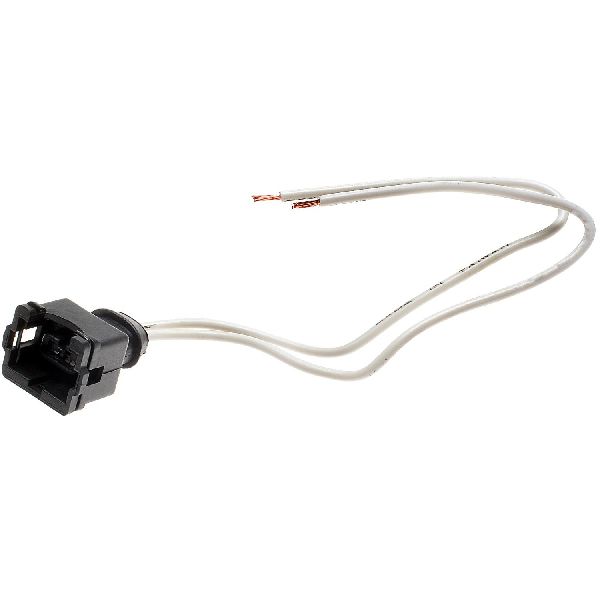
Typical fix: Repair the broken wire or replace the corroded connector pigtail.
Est. part cost: $5 - $25 - Clogged Charcoal Canister or Vent Hose ⚪ Low Probability → Shop Vapor Canister Dust, dirt, or even insects (like mud daubers) can build nests in the vent hose opening, blocking airflow. In rare cases, the charcoal canister itself can become saturated with fuel from overfilling the gas tank or break down internally, sending charcoal pellets into the lines.
How to confirm: Disconnect the hoses from the canister and vent valve and check for blockages. Try to blow air through the vent hose. If the canister is suspected, it may rattle when shaken or feel unusually heavy.
Typical fix: Clean out the blocked hoses or replace the charcoal canister if it is clogged or has failed internally.
Est. part cost: $95 - $185 - Blown Fuse ⚪ Low Probability
How to confirm: Locate the fuse for the emissions or EVAP system in the vehicle's fuse box (check both the interior and under-hood fuse boxes) and visually inspect it to see if it has blown. A shorted vent valve can sometimes cause the fuse to blow.
Typical fix: Replace the blown fuse. If the fuse blows again immediately, it indicates a short circuit in the system that must be diagnosed, likely in the vent valve or its wiring.
Est. part cost: $1 - $5
Rare But Worth Checking
- Faulty Powertrain Control Module (PCM): This is extremely rare. The PCM is the last item to suspect after all other possibilities (valve, wiring, fuses) have been exhaustively tested and ruled out.
- Faulty Fuel Tank Pressure Sensor (FTPS): → Shop Fuel Tank While less common for P0446, a faulty FTPS can sometimes lead to an incorrect diagnosis by the PCM, triggering this code. This is more likely if other EVAP codes are also present.
Diagnosis Steps
- Read the code with an OBD-II scanner to confirm P0446 is the only code present.
- Check the gas cap to ensure it is tight, although it is not a likely cause for this specific code.
- Locate and inspect the fuse for the EVAP system (often labeled 'EMISS' or similar). Replace if blown.
- Safely raise the vehicle and locate the charcoal canister and the attached vent valve (canister close valve) at the rear of the car, typically near the driver's side rear wheel, just forward of the bumper.
- Visually inspect the vent valve's electrical connector and wiring for any signs of corrosion, disconnection, or damage. Pay close attention to the pins inside the connector.
- If you have a bidirectional scan tool, command the vent valve solenoid ON and OFF. Listen for a distinct clicking sound. No click suggests a problem with the valve or its circuit.
- If the valve does not click, disconnect the electrical connector. Use a multimeter to check for 12V power on one of the pins with the ignition key in the 'ON' position. The other wire is the ground, controlled by the PCM.
- If power is present, the vent valve is most likely faulty and should be replaced.
- If power is not present, there is a break in the wiring between the fuse box and the valve that needs to be traced and repaired.
- Inspect the vent hoses connected to the valve and canister for any blockages from dirt, debris, or insect nests.
Parts You'll Likely Need
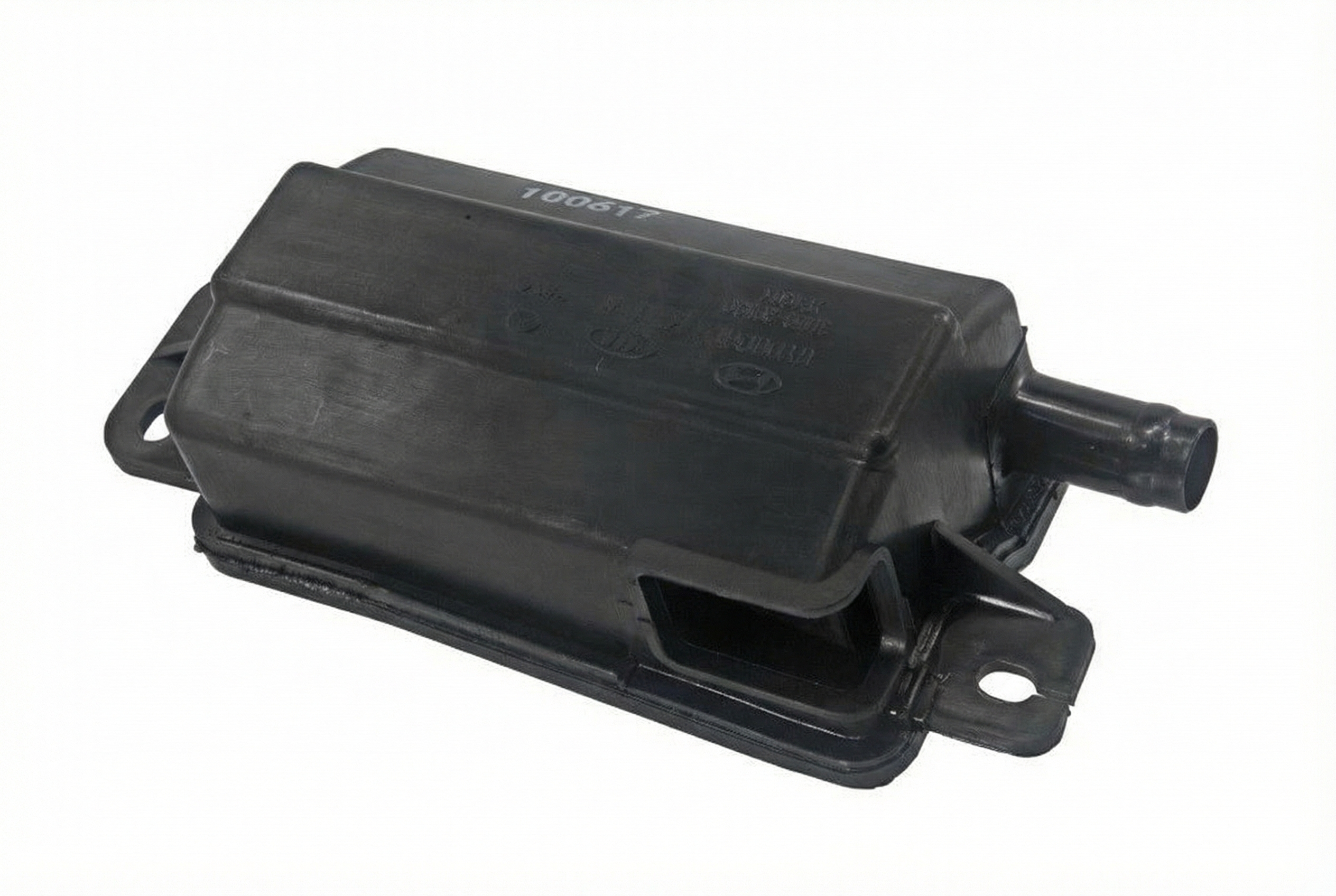
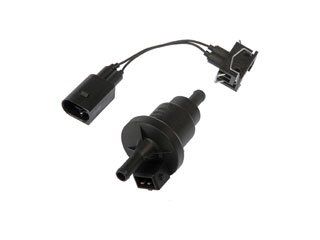
- Vapor Canister Vent Valve / Solenoid (Canister Close Valve)
(OEM #31453-3K500 (supersedes 31453-3K700))— This solenoid is the most common failure point for a P0446 code, either failing electrically or becoming stuck due to corrosion and exposure to the elements.
Trusted brands: Dorman (p/n 911-803), Standard Motor Products (p/n VS160), Wells (p/n 2M1393), DIY Solutions (p/n ESS00696)
OEM price range: $50-$80
Aftermarket price range: $20-$50 - Vapor Canister — Needed only if the original canister is clogged with debris, saturated with fuel from overfilling, or has failed internally, which can cause the new vent valve to fail prematurely.
Trusted brands: Dorman (p/n 911-812), Replacement (p/n 415-442), Wells (p/n 4B1387)
OEM price range: $250-$400
Aftermarket price range: $95-$185
Platform-Specific Known Issues
- Owner Experience with Fueling Issue: An owner on 2CarPros.com described the classic P0446 symptom combination: the check engine light was on and they could not add more than a gallon or two of gas at a time without the pump shutting off. This strongly points to a vent path restriction, most commonly the vent valve itself being stuck closed.
- Forum Diagnostic Walkthrough: A detailed post on a Pontiac Grand Prix forum (which shares a similar EVAP system design) outlines a user's journey fixing a P0446 code. The user confirms that difficulty fueling points directly to the vent valve or canister, and they walk through testing the valve with a 12V source and checking hoses, corroborating the diagnostic steps.
Mechanic-Grade Diagnostic Values
- Canister Close Valve (Vent Valve) Solenoid Coil Resistance — expected: 15 - 60 Ohms. Failure: A reading of 0 Ohms indicates a short circuit. An infinite reading (O.L.) indicates an open circuit. Either requires valve replacement.
- Voltage at Canister Close Valve Connector — expected: ~12 Volts (Battery Voltage) on one of the two pins with the ignition key in the ON position.. Failure: No voltage indicates a problem upstream in the circuit, such as a blown fuse or a broken power wire.
Scan Tool Commands That Help
- Kia GDS (Global Diagnostic System) or equivalent bidirectional scanner: Actuation Test for the Canister Close Valve (CCV) — This command allows the technician to manually open and close the vent valve from the scan tool. It is used to verify if the valve is responding to commands from the PCM. The technician should listen for an audible click from the valve each time it is commanded on or off. Lack of a click, when power is confirmed at the connector, points to a failed valve.
Wiring & Ground Locations
- Canister Close Valve Connector — On the Canister Close Valve (Vent Valve) itself, located near the charcoal canister at the rear of the vehicle, typically ahead of the rear bumper on the driver's side.. This 2-pin connector and its associated wiring are highly exposed to road debris and moisture, making them a common failure point. One pin receives ~12V power with the key on, and the other is a ground-side wire controlled by the PCM to actuate the valve. Corrosion on these pins or breaks in the nearby wires can directly cause a P0446 code.
Real Owner Repair Stories
- YouTube channel 'Absolute Automotive' (2003 Kia Optima with ~120,000 miles) — The primary symptom was the fuel pump nozzle shutting off rapidly during refueling, preventing the tank from being filled.
✅ What actually fixed it The final fix involved replacing a clogged EVAP canister and the attached vent valve (referred to as a 'vapor sensor' in the video). Critically, the technician also found that the hoses connecting to the canister were clogged with debris and cleaned them out with compressed air.
"I Checked Everything" — The Actual Cause
- For a P0446, a smoke test that comes back clean (no leaks) is not a dead end; it's a valuable diagnostic clue. This code specifically points to a 'Vent Control Circuit' or blockage issue, not necessarily a system leak (like P0455). A clean smoke test correctly rules out a gross leak and directs the technician's focus to the three most likely culprits for P0446: an electrically failed vent valve, a mechanically stuck/blocked vent valve, or a blockage in the vent hose/canister itself.
OEM Part Supersession History
31453-3K700→31453-3K500— Standard part revision and consolidation by the manufacturer.
Heads up: No known incompatibilities. The new part number is a direct replacement for the old one.
Model Year Variations Within This Range
- 2001-2005: While the Kia Optima received a facelift for the 2003 model year, no significant changes to the EVAP system components or the diagnostic procedure for code P0446 have been documented within this generation. The cause and fix remain consistent across the 2001-2005 range.
Diagnostic Flowchart
Other Known Issues on This Vehicle
Issues unrelated to this code that are worth knowing about as an owner of this generation:
- Automatic Transmission Problems 🟠 Medium — Common across this generation. May manifest as harsh shifting, delayed engagement, or slipping. Sometimes related to outdated TCM software that can be updated by a dealer.
- Crankshaft Position Sensor (CKP) Failure 🔴 High — A very common failure item on both the 2.4L and 2.7L engines. Symptoms include engine stalling unexpectedly (often when hot), difficulty starting, or a no-start condition. Usually triggers code P0335.
- Faulty Throttle Position Sensor (TPS) 🟠 Medium — Can cause hesitation, misfiring, power loss, and erratic acceleration. Often occurs around 100,000 miles.
- Malfunctioning Door Latch Assemblies 🟡 Low — A common annoyance where door latches fail, preventing the door from being opened from the inside or outside. Can occur around 100,000 miles.
- Weak Alternator 🟡 Low — Some 2001-2004 models may have alternators that fail prematurely, leading to insufficient battery charging and starting problems.
Used vs. New Parts: Buying Guide for This Vehicle
When a used part is the smart pick: A used canister close valve (vent solenoid) from a reputable auto recycler can be a cost-effective option. The charcoal canister itself is riskier to buy used, as it may be saturated with fuel or internally degraded, which is difficult to assess visually.
Donor-vehicle mileage cap: roughly under 100000 miles for the part to have meaningful remaining life.
What to inspect on the donor part:
- For a used vent valve, inspect the electrical connector pins for any green or white corrosion.
- Check the plastic housing for cracks or damage.
- If possible, bring a 12V power source (like a small battery pack) to test the valve before purchase; it should make an audible 'click' when power is applied.
- For a used canister, check that it doesn't rattle excessively (indicating broken charcoal) or feel unusually heavy (indicating fuel saturation).
Aftermarket brands forum-validated for this vehicle:
- Dorman: Widely available and frequently cited as a direct replacement.
- Standard Motor Products (SMP): Generally considered a high-quality aftermarket brand, sometimes reboxing OEM parts.
- Wells
Brands owners have reported issues with on this vehicle:
- No specific brands are consistently reported as problematic, but be cautious with unbranded, deeply discounted parts from online marketplaces as quality can be inconsistent.
Real Owner Stories
Aggregated from forums and TSBs cited above. Mileages and costs reflect what owners reported in those sources.
2004 Kia Optima 2.4L I4
Symptoms: Car started getting shakey mostly at stops or going up hill.
What fixed it: The owner was diagnosing the P0446 code in relation to these performance issues.
Source hint: r/AskMechanics
2005 Kia Optima
Symptoms: Check engine light on, poor acceleration, and gas guzzling.
What fixed it: The thread discusses these as part of multiple problems on the vehicle requiring diagnostic attention.
Source hint: Reddit r/MechanicAdvice thread titled '2005 Kia Optima w/ tons of problems'
2001-2005 Kia Optima
Symptoms: The check engine light was on and they could not add more than a gallon or two of gas at a time without the pump shutting off.
What fixed it: Replacing the vent valve (canister close valve) to clear the vent path restriction.
Source hint: 2CarPros.com
Manufacturer Service Bulletin Context
Symptoms: Intermittent check engine light displaying error code P0446.
What fixed it: NHTSA ODI #10664478 notes that while a TSB exists for this particular problem on similar Kia models, the light may come on and off intermittently as it pleases.
Source hint: NHTSA ODI #10664478
Related OBD-II Codes
Frequently Asked Questions
Why does the gas pump nozzle keep clicking off when I try to fill my 2001-2005 Kia Optima?
Where is the EVAP canister vent valve located on my 2005 Kia Optima?
Can a blown fuse cause a P0446 code on my Kia?
Is the P0446 issue on my Kia Optima the same as the one on the Hyundai Sonata?
My 2004 Optima is shaking at stops and going uphill; is this related to P0446?
How can I test if my Kia's vent valve is actually bad before buying a new one?
Helpful Videos
Used OEM Parts in Stock
New Aftermarket Parts Available


The information in this article is provided for general reference and educational purposes only. Vehicle specifications, procedures, and part compatibility can vary by production date, trim level, and region. Always consult your vehicle's factory service manual and verify part numbers before purchasing or performing repairs. Safety-critical components such as airbags, seat belts, and braking systems should be installed by a qualified professional.
- Kia Optima:
- 🧭 Diagnostic Flowchart
- 🎬 Helpful Videos
- 🛍️ Shop This Part
- What's Unique About the 2001-2005 Kia Optima
- Symptoms You May Notice
- Most Likely Causes
- Rare But Worth Checking
- Diagnosis Steps
- Parts You'll Likely Need
- Platform-Specific Known Issues
- Mechanic-Grade Diagnostic Values
- Scan Tool Commands That Help
- Wiring & Ground Locations
- Real Owner Repair Stories
- "I Checked Everything" — The Actual Cause
- OEM Part Supersession History
- Model Year Variations Within This Range
- Other Known Issues on This Vehicle
- Used vs. New Parts: Buying Guide for This Vehicle
- Real Owner Stories
- 2004 Kia Optima 2.4L I4
- 2005 Kia Optima
- 2001-2005 Kia Optima
- Manufacturer Service Bulletin Context
- Related OBD-II Codes
- Frequently Asked Questions
- 🎟️ Get 5% Off