

P0446 on 2010-2013 Kia Soul: EVAP Vent Control Circuit Causes and Fixes
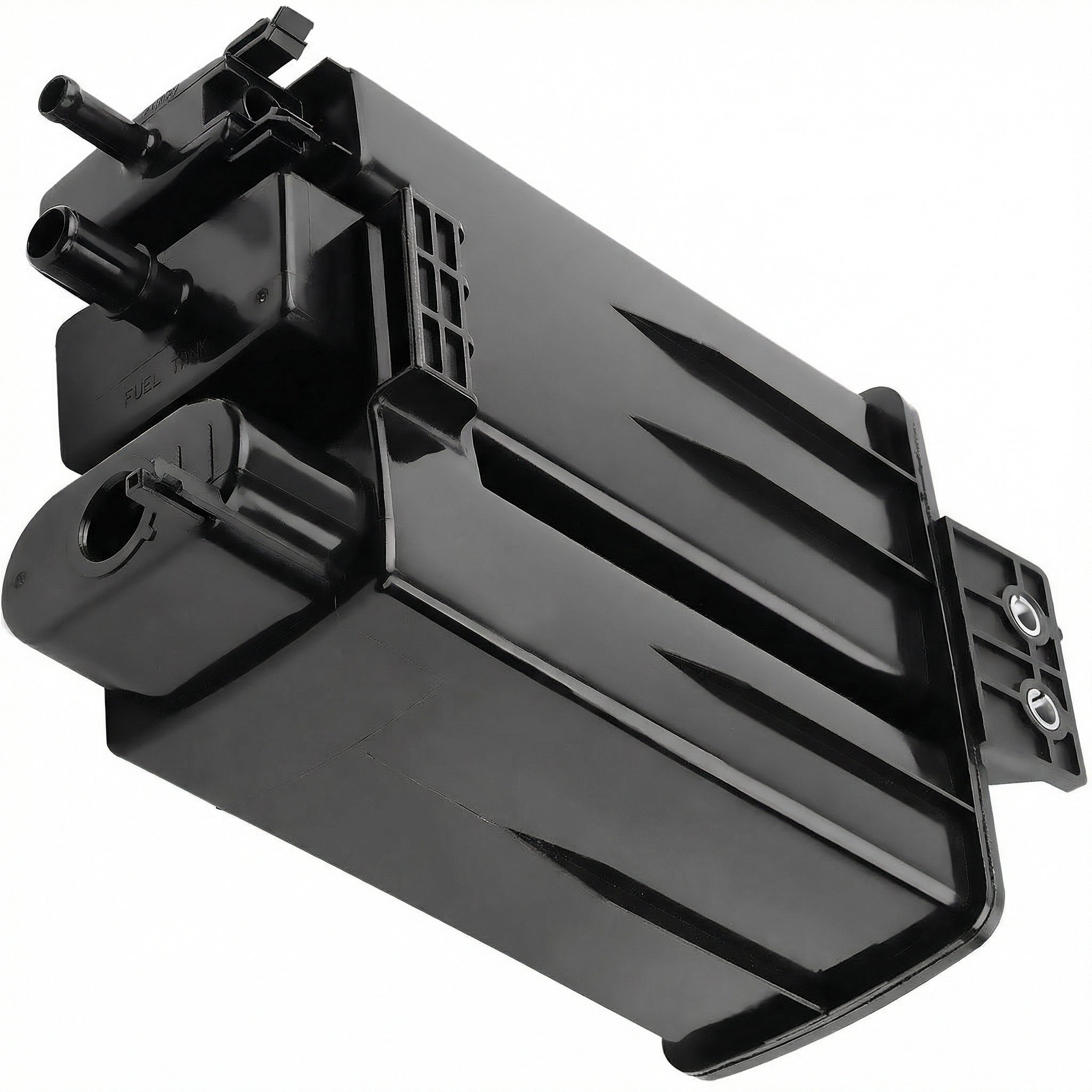
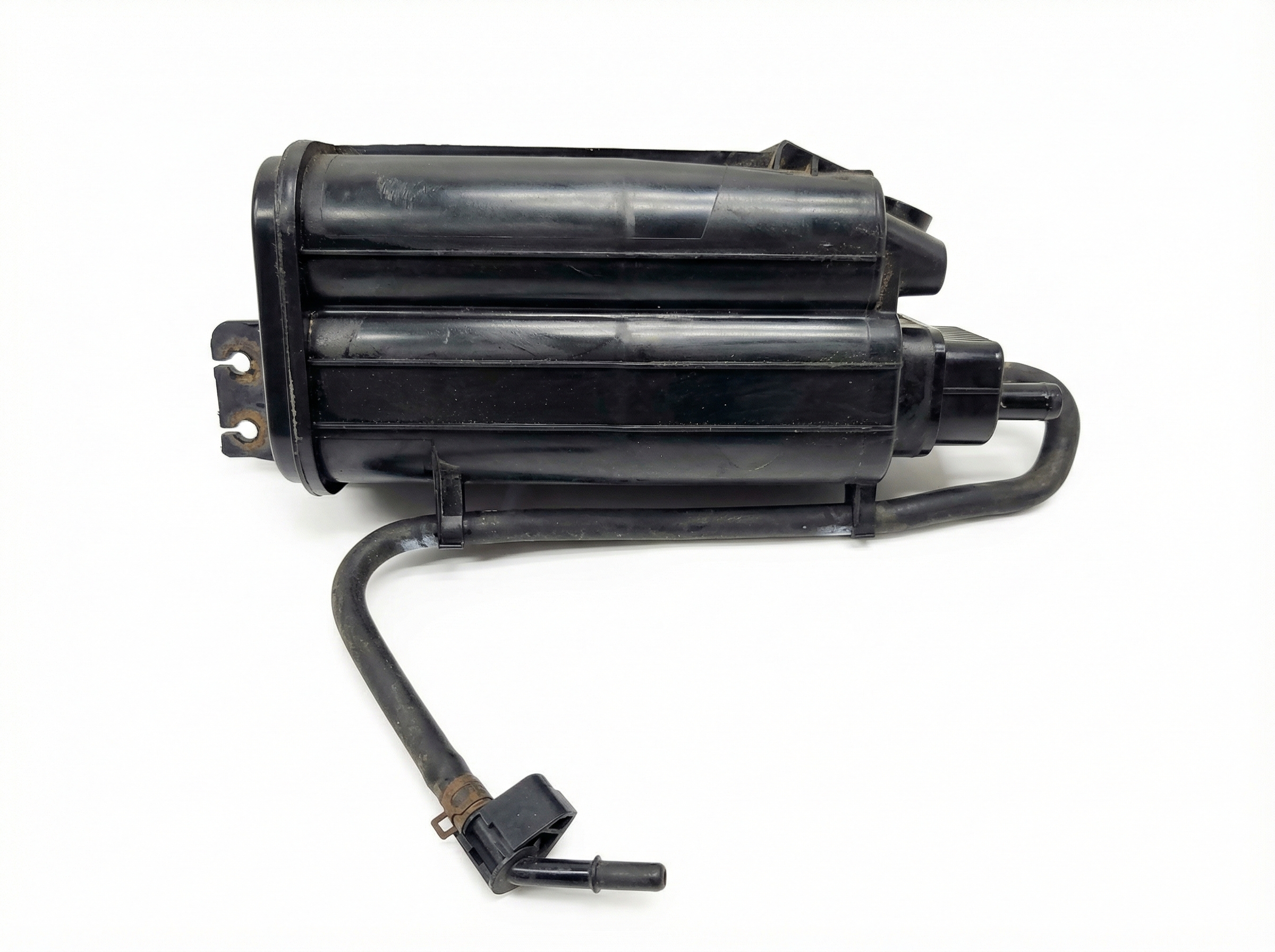
For a 2010-2013 Kia Soul, the P0446 code is most often caused by a faulty EVAP Canister Close Valve (CCV), also known as the vent valve. This part is relatively inexpensive (~$40-$80 aftermarket) and is a common DIY repair. Other possibilities include a clogged charcoal canister (often from overfilling the gas tank), blocked vent hoses, or corroded wiring under the vehicle.
- P0446 on a 2010-2013 Kia Soul points to a problem with the EVAP vent system, not a gas cap leak.
- The most likely cause is a bad Canister Close Valve, located under the car near the fuel tank.
- Symptoms like difficulty filling the gas tank or a rough start after refueling are strong indicators of a faulty vent path.
- Before replacing parts, check for simple issues like blocked vent hoses or corroded wiring.
- This is a manageable DIY repair for those comfortable working under their vehicle.
What's Unique About the 2010-2013 Kia Soul
The first-generation Kia Soul (2010-2013) has a fairly straightforward EVAP system. The most common failure point for the P0446 code is the canister close valve, which is mounted near the charcoal canister at the rear of the vehicle, exposed to the elements. While some owners replace just the valve, others find the charcoal canister itself is clogged with debris or saturated with fuel, requiring a replacement of the entire assembly for a permanent fix. The symptom of the gas pump nozzle clicking off repeatedly is a very strong indicator of this specific valve/venting issue on these cars.
Symptoms You May Notice
- Check Engine Light is on.
- Difficulty refueling (gas pump nozzle clicks off repeatedly).
- Hard starting immediately after filling the gas tank.
- A faint fuel odor near the rear of the vehicle.
- Gurgling or whooshing sounds from the gas tank area while idling.
- Replacing the gas cap. A bad gas cap typically causes a large leak code like P0455, not a vent circuit code like P0446.
- Replacing the purge valve/solenoid in the engine bay. 🎬 Watch: How to locate and replace the purge solenoid correctly. The purge valve is a different part of the EVAP system and usually triggers other codes like P0441 or P0496.
Most Likely Causes
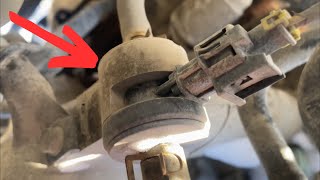
- Faulty Canister Close Valve (CCV) / Vent Valve 🔴 High Probability → Shop Vapor Canister The valve is exposed to the elements under the vehicle and can fail electrically or, more commonly, mechanically by sticking closed or becoming clogged with debris.
How to confirm: Locate the valve near the charcoal canister under the rear of the car. With a capable scan tool, command the valve to open and close; you should hear a click. Alternatively, apply 12V power and a ground to the valve's terminals to see if it actuates. When removed, the valve should be normally open, allowing you to blow through it. If you can't, it's stuck closed.
Typical fix: Replace the canister close valve. It is often sold as a standalone part 🎬 See this step-by-step guide for replacing the vent control valve. and is a common DIY fix.
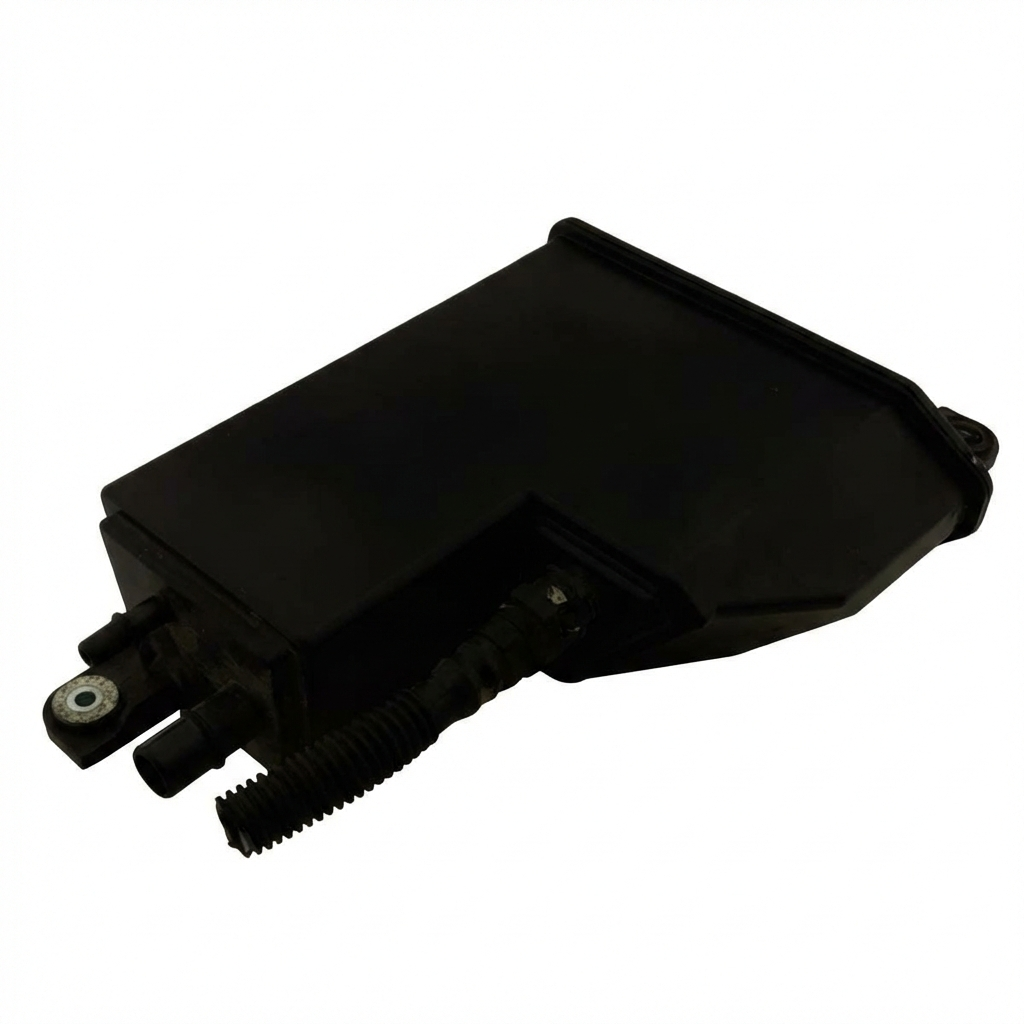
Est. part cost: $40-$85 - Clogged or Failed Charcoal Canister 🟡 Medium Probability → Shop Vapor Canister Consistently over-filling the fuel tank (topping off after the pump clicks) can saturate the charcoal canister with liquid fuel, causing it to clog. The charcoal pellets can also break down over time, creating blockages that prevent proper venting.
How to confirm: Disconnect the hoses from the canister. If you see black charcoal pellets in the lines or cannot blow a gentle stream of air through the canister, it is clogged and needs replacement. A fuel-saturated canister may also emit a strong gas odor.
Typical fix: Replace the entire charcoal canister assembly. On many Kia models, the canister close valve is serviced with the canister, though for this generation they are often separate.
Est. part cost: $150-$250 - Blocked EVAP Vent Hose ⚪ Low Probability The fresh air inlet hose for the EVAP system, which often has a filter box at its end, can be blocked by spider webs, mud dauber nests, or other debris. This prevents the system from drawing in fresh air to vent properly.
How to confirm: Locate the vent hose attached to the CCV and trace it to its inlet. Inspect the hose and its filter box for any visible blockages. Attempt to blow compressed air through it to ensure it is clear.
Typical fix: Clean the blockage from the hose and filter.
Est. part cost: $0 - Damaged or Corroded Wiring ⚪ Low Probability The wiring harness to the canister close valve is located under the car and is susceptible to damage from road debris, moisture, and corrosion, especially at the connector.
How to confirm: Visually inspect the wiring leading to the CCV for any breaks, chafing, or green/white corrosion on the connector pins. Use a multimeter to check for 12V power at the connector with the key on.
Typical fix: Repair the damaged section of the wiring harness or clean/replace the connector.
Est. part cost: $5-$50
Rare But Worth Checking
- Faulty Powertrain Control Module (PCM): This is extremely rare and should only be considered after all other possibilities (valve, canister, wiring) have been exhaustively ruled out. The PCM driver that controls the valve can fail, but this is highly unlikely.
Diagnosis Steps
- Read the code with an OBD-II scanner to confirm P0446 is the primary code.
- Attempt to refuel the vehicle. If the gas pump clicks off repeatedly, this strongly points to a vent path obstruction.
- Visually inspect the canister close valve (CCV), charcoal canister, and all attached hoses under the rear of the vehicle for obvious damage, cracks, or loose connections.
- Locate and inspect the vent hose and its inlet filter (often near the filler neck) for any blockages from insects or debris.
- Inspect the electrical connector and wiring going to the canister close valve for corrosion or damage.
- Using a multimeter, confirm that one pin of the valve's connector is receiving 12-volt power with the ignition on.
- If possible, use a bidirectional scan tool to command the canister close valve to cycle on and off. Listen for an audible click from the valve. If it doesn't click, the valve or its circuit is faulty.
- If no scan tool is available, remove the valve. It should be normally open. Try to blow through it. If air passes, apply 12V and ground to its pins; it should click shut and block airflow. If it fails either of these tests, replace the valve.
- If the valve and wiring are good, the canister may be clogged. Disconnect its hoses and check for charcoal particles or an inability to pass air through it. If clogged, replace the canister assembly.
Parts You'll Likely Need
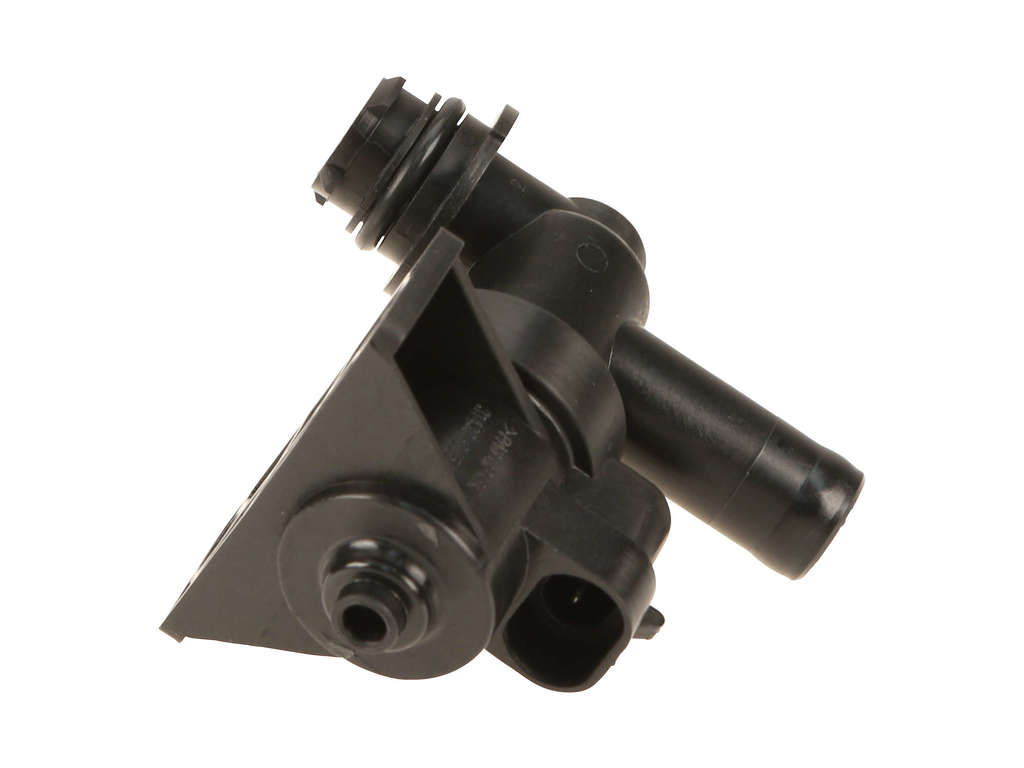
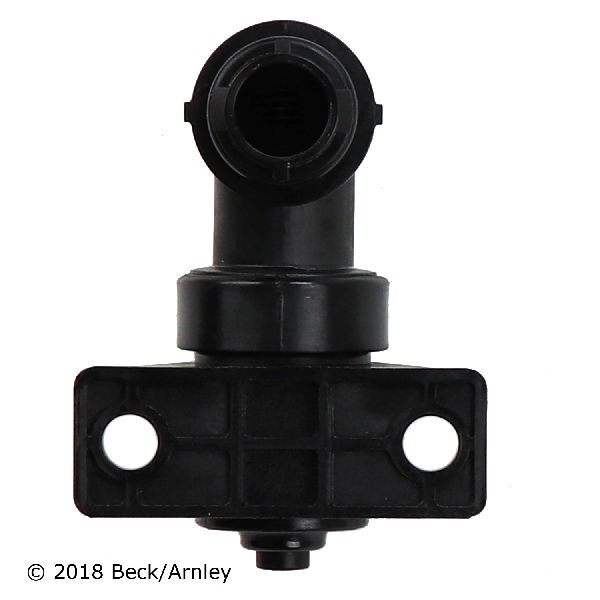
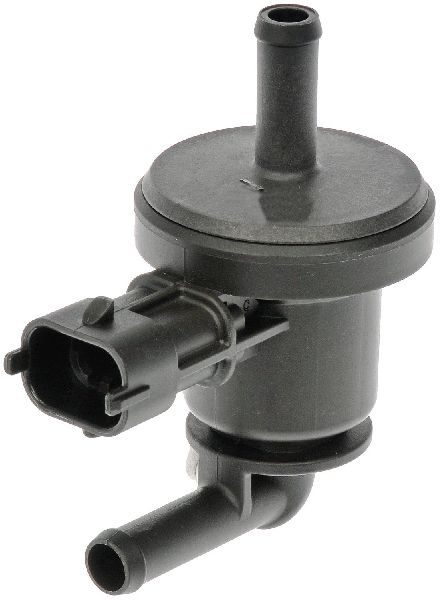
- Canister Close Valve / Vent Valve
(OEM #31430-2K500)— This valve is the most common failure point for the P0446 code on this vehicle. It can stick, clog, or fail electrically. The original part number may have been superseded.
Trusted brands: Kia (OEM), Dorman (p/n 911-822), Standard Motor Products (p/n CVS74), Wells (p/n 2M1426)
OEM price range: $75-$120
Aftermarket price range: $40-$85 - Charcoal Canister Assembly
(OEM #31410-2K500 or 31410-2K600)— Required if the original canister is saturated with fuel from overfilling the tank, or if internal charcoal media has broken down and clogged the system.
Trusted brands: Kia (OEM), Standard Motor Products (p/n CP3536), Wells (p/n 4B1791)
OEM price range: $180-$250
Aftermarket price range: $150-$200
Platform-Specific Known Issues
- Forum Confirmed Fix: Multiple owners on forums like 2CarPros confirm that symptoms of P0446 and inability to refuel were resolved by replacing the canister vent solenoid (close valve). One user noted they mistakenly replaced the purge valve first with no success, highlighting a common misdiagnosis.
- Water Intrusion in Vent System: A general GM TSB (09-06-04-028D) for P0446 notes that water can be ingested into the vent system, causing corrosion in the vent valve and restrictions. While not specific to Kia, the underlying principle of the valve's exposure under the car makes this a relevant possibility.
Mechanic-Grade Diagnostic Values
- Canister Close Valve (CCV) Coil Resistance — expected: 19.5 - 22.5 Ω at 20°C (68°F). Failure: A reading outside this range indicates a faulty valve coil.
- Fuel Tank Pressure Sensor (FTPS) Signal Voltage - Manual Test Step 3 — expected: Greater than 1.5V. Failure: If voltage drops below 1.5V while the Purge Control Solenoid Valve (PCSV) is manually grounded for 25 seconds, it indicates a restriction in the EVAP system (canister, rollover valve, CCV, etc.).
- Fuel Tank Pressure Sensor (FTPS) Signal Voltage - Manual Leak Test — expected: Voltage should not change more than 0.300V over one minute after inducing a partial vacuum.. Failure: A voltage change greater than 0.300V indicates a leak in the EVAP system.
Scan Tool Commands That Help
- Kia GDS (Global Diagnostic System) or equivalent advanced scanner: EVAP.LEAKAGE TEST — This is an automated test function that commands the various EVAP solenoids and monitors the fuel tank pressure sensor to check the entire system's integrity, helping to confirm if a fault condition is present.
- Bidirectional OBD-II Scanner: Canister Close Valve (CCV) Actuation / Vent Valve On/Off — Use this active test to directly command the CCV to open and close. Listen for an audible click from the valve under the rear of the vehicle. No click indicates a faulty valve or a problem in the electrical circuit (power, ground, or signal wire).
Wiring & Ground Locations
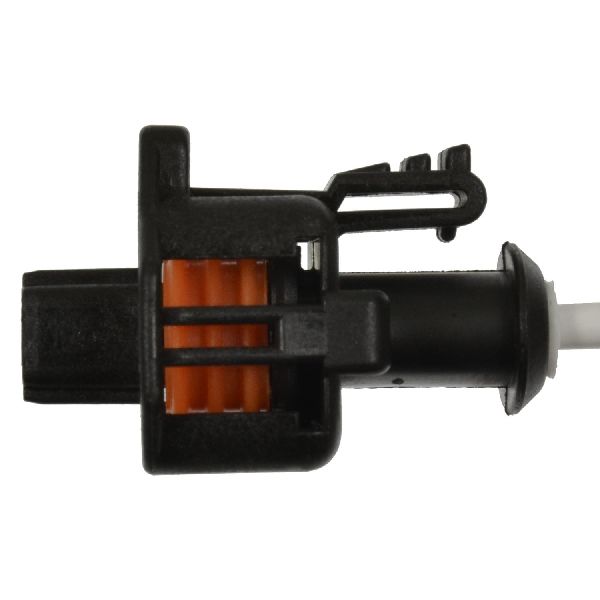
- Canister Close Valve (CCV) Connector — Under the rear of the vehicle, connected to the Canister Close Valve near the charcoal canister.. This 2-pin connector provides power and ground to the valve. One pin should have 12V+ with the key on. The other pin is a ground controlled by the ECM. Corrosion or damage to this connector or its wiring is a common cause of a P0446 circuit code.
- ECM/PCM Ground — Typically located on the chassis in the engine bay or sometimes under the dash. A common engine block ground point is also used.. The ECM provides the switched ground to activate the CCV. A poor main ground for the ECM can cause erratic behavior in multiple systems, including the EVAP vent circuit. While not a primary cause, it's a possibility if multiple unrelated codes are present.
Real Owner Repair Stories
- Reddit user u/merlin5798 in r/MechanicAdvice (2010 Kia Soul, 1.6L, 5-speed manual, 131k miles) — Intermittent P0446 Check Engine Light, hard to start for ~10 seconds immediately after refueling, gurgling/air moving sound from gas tank at idle.
❌ Tried (didn't work) Replaced the gas cap., Replaced the Vapor Canister Vent Solenoid Valve (CCV).
✅ What actually fixed it The user did not post a final resolution. The symptoms persisting after replacing the CCV strongly suggest the next likely culprits are a clogged charcoal canister or a blocked vent hose, which were not yet addressed. - NHTSA ODI #10664478 — An owner of a Kia Sorento (a related model from the same manufacturer) reported an intermittent check engine light displaying error code P0446 that would come on and off as it pleased.
Model Year Variations Within This Range
- 2012-2014: Kia issued a Technical Service Bulletin (TSB ENG135) for an Engine Control Module (ECM) software update to resolve false triggers of various EVAP codes. If other EVAP system components check out on these specific model years, inquiring about this TSB with a dealer is a valid diagnostic step.
Diagnostic Flowchart
Other Known Issues on This Vehicle
Issues unrelated to this code that are worth knowing about as an owner of this generation:
- Catalytic Converter Failure (1.6L GDI) 🔴 High — Common enough to trigger a recall (SC176) for 2012-2016 models. High exhaust temperatures can damage the converter and potentially lead to engine damage. (Ref: NHTSA Recall 18V907000 (SC176))
- Steering Coupler Wear 🟠 Medium — Very common across many Hyundai/Kia models of this era. A flexible rubber coupler in the steering column wears out, causing a distinct clicking or knocking sound when turning the wheel. (Ref: Kia Warranty Extension (TXXB) / TSB ENG133)
- Engine Failure / Seizure 🔴 High — Primarily affects 2012-2016 1.6L GDI engines. Related to the catalytic converter issue and other internal problems, can lead to connecting rod failure and engine seizure. (Ref: NHTSA Recall 18V907000 (SC176))
- Brake Stop Lamp Switch Failure 🟡 Low — Widespread issue leading to a recall. The switch can fail, causing brake lights to not illuminate or get stuck on, and can prevent shifting out of Park. (Ref: NHTSA Recall 13V114000)
- Engine Ticking / Knocking Noise 🟠 Medium — Often a precursor to more serious engine problems. Can be caused by various issues from low oil to internal wear. Reported by many owners around 70,000-100,000 miles.
Used vs. New Parts: Buying Guide for This Vehicle
When a used part is the smart pick: A used charcoal canister assembly from a low-mileage, accident-damaged donor vehicle can be a cost-effective option. Since it is primarily a passive filter, its function is not typically wear-related unless contaminated.
Donor-vehicle mileage cap: roughly under 75000 miles for the part to have meaningful remaining life.
What to inspect on the donor part:
- Ensure the donor vehicle was not in a rear-end collision that could have cracked the canister housing.
- Inspect all hose ports for cracks or brittleness.
- Shake the canister; there should be no sound of loose, rattling charcoal pellets inside.
- Check the canister and associated hoses for any signs of liquid fuel saturation or strong, raw fuel odor.
OEM-only on this vehicle (don't cheap out):
- Gas Cap: While not a primary cause for P0446, if a gas cap is needed for other EVAP codes, many owners report that aftermarket caps fail to seal properly on Kia vehicles. Using an OEM cap (e.g., Part No. 31010-3L600U) is highly recommended to avoid persistent small leak codes.
Aftermarket brands forum-validated for this vehicle:
- Dorman (p/n 911-822 for CCV)
- Standard Motor Products (p/n CVS74 for CCV, CP3536 for Canister)
- Wells (p/n 2M1426 for CCV)
Brands owners have reported issues with on this vehicle:
- No specific brands are consistently reported as problematic for this part, but ultra-low-cost, unbranded parts from online marketplaces may have higher failure rates.
Real Owner Stories
Aggregated from forums and TSBs cited above. Mileages and costs reflect what owners reported in those sources.
2010-2013 Kia Soul
Symptoms: The gas pump was repeatedly shutting off while trying to refuel, making it very slow to get fuel into the tank.
What fixed it: Replacing the canister vent solenoid (close valve) resolved the refueling issue and the P0446 code.
Source hint: 2CarPros - 'P0446 and Trouble Getting Fuel in Tank (slow)'
2006 Hyundai Accent (Platform Mate)
Symptoms: Hard starting immediately after refueling the vehicle and hesitation during acceleration.
What fixed it: The owner aimed to resolve these symptoms by replacing the purge control valve.
Source hint: YouTube - '2006 Hyundai accent P0446'
2008 Hyundai Accent (Platform Mate)
Symptoms: P0446 code present after a previous repair attempt.
What fixed it: The diagnosis revealed an incorrectly installed aftermarket purge valve was causing the issue.
Source hint: YouTube - 'P0446 Hyundai Accent 2008'
Related OBD-II Codes
Frequently Asked Questions
Why does the gas pump nozzle keep clicking off when I try to fill up my 2010-2013 Kia Soul?
Is there a recall for the engine issues mentioned in the context for my 1.6L GDI Soul?
My Soul makes a clicking sound when I turn the steering wheel; is this related to the EVAP system?
Can I just replace the purge valve to fix the P0446 code on my Kia?
What causes the charcoal canister to fail on the Kia Soul?
Helpful Videos

Used OEM Parts in Stock
New Aftermarket Parts Available


The information in this article is provided for general reference and educational purposes only. Vehicle specifications, procedures, and part compatibility can vary by production date, trim level, and region. Always consult your vehicle's factory service manual and verify part numbers before purchasing or performing repairs. Safety-critical components such as airbags, seat belts, and braking systems should be installed by a qualified professional.
- Kia Soul:
- 🧭 Diagnostic Flowchart
- 🎬 Helpful Videos
- 🛍️ Shop This Part
- What's Unique About the 2010-2013 Kia Soul
- Symptoms You May Notice
- Most Likely Causes
- Rare But Worth Checking
- Diagnosis Steps
- Parts You'll Likely Need
- Platform-Specific Known Issues
- Mechanic-Grade Diagnostic Values
- Scan Tool Commands That Help
- Wiring & Ground Locations
- Real Owner Repair Stories
- Model Year Variations Within This Range
- Other Known Issues on This Vehicle
- Used vs. New Parts: Buying Guide for This Vehicle
- Real Owner Stories
- 2010-2013 Kia Soul
- 2006 Hyundai Accent (Platform Mate)
- 2008 Hyundai Accent (Platform Mate)
- Related OBD-II Codes
- Frequently Asked Questions
- 🎟️ Get 5% Off