

P0446 on 1997-2001 Lexus ES300: EVAP Vent Control Causes and Fixes
On a 1997-2001 ES300, P0446 is almost always caused by a failed charcoal canister assembly located at the rear of the vehicle. This assembly contains multiple components, including the vent valve, that fail over time. Replacing the entire canister assembly is the most reliable fix. Expect to pay around $250-$400 for an OEM part and 2-3 hours for labor.
- Don't panic, the car is safe to drive, but you won't pass an emissions test.
- Before buying expensive parts, check that your gas cap is tight and inspect the vacuum hoses in the engine bay for obvious cracks or disconnections.
- The most likely cause of P0446 on a 1997-2001 ES300 is a failed charcoal canister assembly.
- Replacing the entire canister assembly is the most reliable fix, as it contains multiple potential failure points (vent valve, pressure sensor, charcoal bed).
- This repair can be done DIY if you are comfortable working under your car and can temporarily lower the exhaust, but a smoke test at a shop is the best way to be 100% certain of the fault before replacing parts.
What's Unique About the 1997-2001 Lexus ES300
For this generation of Lexus and Toyota vehicles (including the Camry, Avalon, and Sienna which share the 1MZ-FE engine and XV20 platform), the P0446 code is notoriously linked to the charcoal canister assembly. Over time, the internal components of the canister, including the integrated vacuum switching valves (VSVs) and the vent valve, fail or the charcoal pellets become loose and clog the system. While the code is technically for a "circuit malfunction," the most common real-world cause on the ES300 is a mechanical failure of one of the valves on the canister assembly itself, not just a simple wiring problem.
Symptoms You May Notice
- Check Engine Light is on.
- VSC and/or TRAC OFF lights may illuminate along with the Check Engine Light. This is a common behavior in Toyota/Lexus vehicles where the stability control system is disabled as a precaution when certain engine-related faults are detected.
- Slight fuel odor, especially around the rear of the car near the fuel tank and canister.
- Difficulty filling the fuel tank (gas pump nozzle clicks off prematurely). This happens because a stuck-closed vent valve prevents air from escaping the tank as fuel enters.
- No sound of pressure release when opening the gas cap after driving.
- Replacing the catalytic converter. A user on a Lexus forum reported a dealer incorrectly recommended this, but P0446 is strictly an EVAP system code and has no relation to the catalytic converter.
- Replacing only the engine-bay VSVs when the fault lies with the canister-mounted valve.
Most Likely Causes
- Failed Charcoal Canister Assembly 🔴 High Probability → Shop Vapor Canister The valves and sensors are integrated into the canister assembly, which is mounted under the car and exposed to the elements. Over time, the internal valves (especially the vent valve) stick or the charcoal pellets break down and cause blockages.
How to confirm: A key sign of failure is hearing a rattling sound when the old canister is removed and shaken, indicating loose charcoal, which is not present in a new unit. A smoke test performed by a mechanic can also confirm a leak or blockage in the canister assembly. Some owners with advanced scan tools can monitor the fuel tank pressure sensor readings to diagnose the fault.
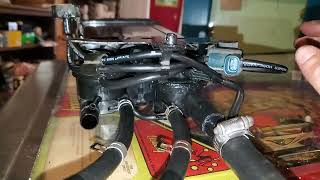
Typical fix: Replace the entire charcoal canister assembly. 🎬 Watch: Step-by-step guide to replacing the charcoal canister on an ES300. This is the most common and reliable repair. The job requires lifting the vehicle and may require temporarily lowering a section of the exhaust or rear subframe for access.
Est. part cost: $250-$400 - Failed Vacuum Switching Valve (VSV) 🟡 Medium Probability These small electro-mechanical valves can stick or fail electrically. There are multiple VSVs in the EVAP system, including one on the canister and others in the engine bay. The one on the canister is a frequent culprit but is often replaced with the entire canister assembly.
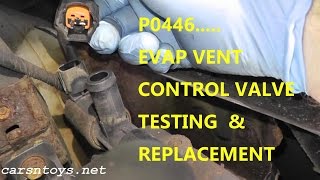
How to confirm: Test the valve by applying 12V power and listening for a click. 🎬 Watch: How to test and replace the canister vent control valve. You can also use a multimeter to check for resistance (typically 27-33 Ohms when cold for the engine-bay VSV) or a hand vacuum pump to see if it holds vacuum when closed. Accessing the VSV on the canister is difficult without removing the whole assembly.
Typical fix: Replace the specific faulty VSV. However, many owners opt to replace the entire canister assembly since the labor is similar and it addresses other potential failure points.
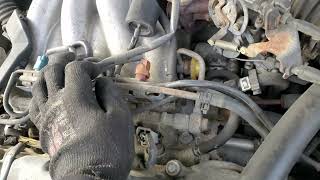
Est. part cost: $30-$70 - Cracked, Disconnected, or Blocked Vacuum Hoses ⚪ Low Probability → Shop Vacuum Hose Rubber hoses become brittle and crack over 20+ years. Hoses can also be knocked loose during other maintenance, particularly those in the engine bay near the air filter box. 🎬 See this video to locate all EVAP components on this platform.
How to confirm: Visually inspect all accessible EVAP vacuum lines in the engine bay and around the canister for cracks, loose connections, or blockages. A smoke test is the most effective way to find small, hard-to-see leaks.
Typical fix: Replace the damaged section of hose or reconnect it securely. Some owners proactively replace all accessible vacuum lines with silicone hoses.
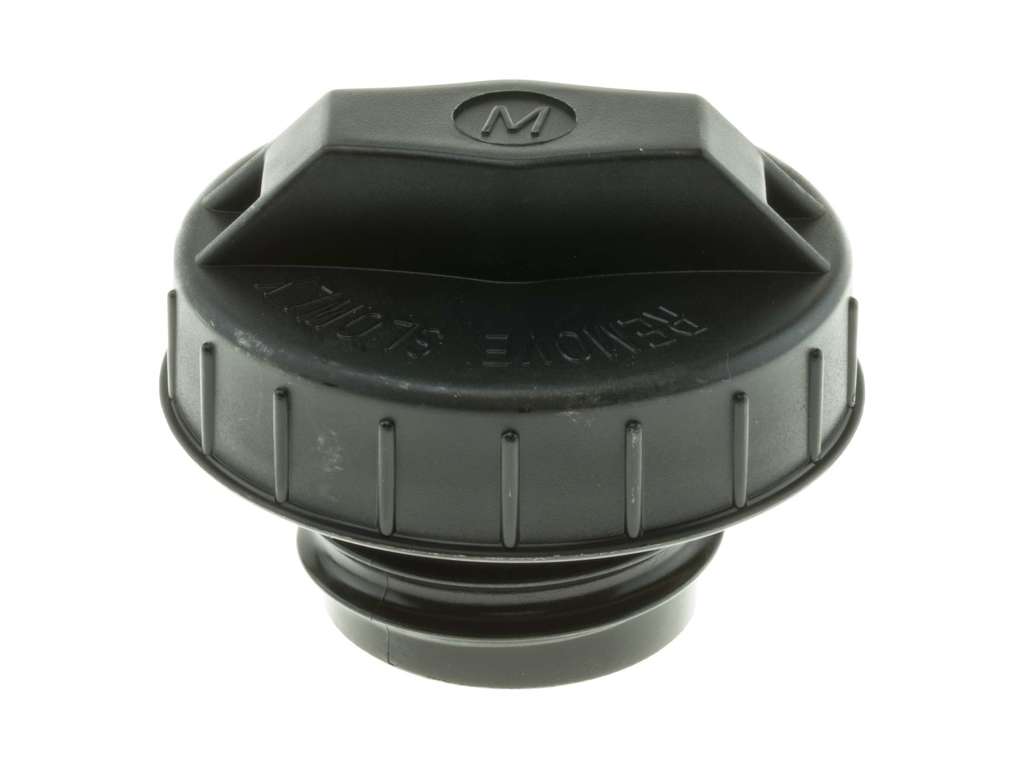
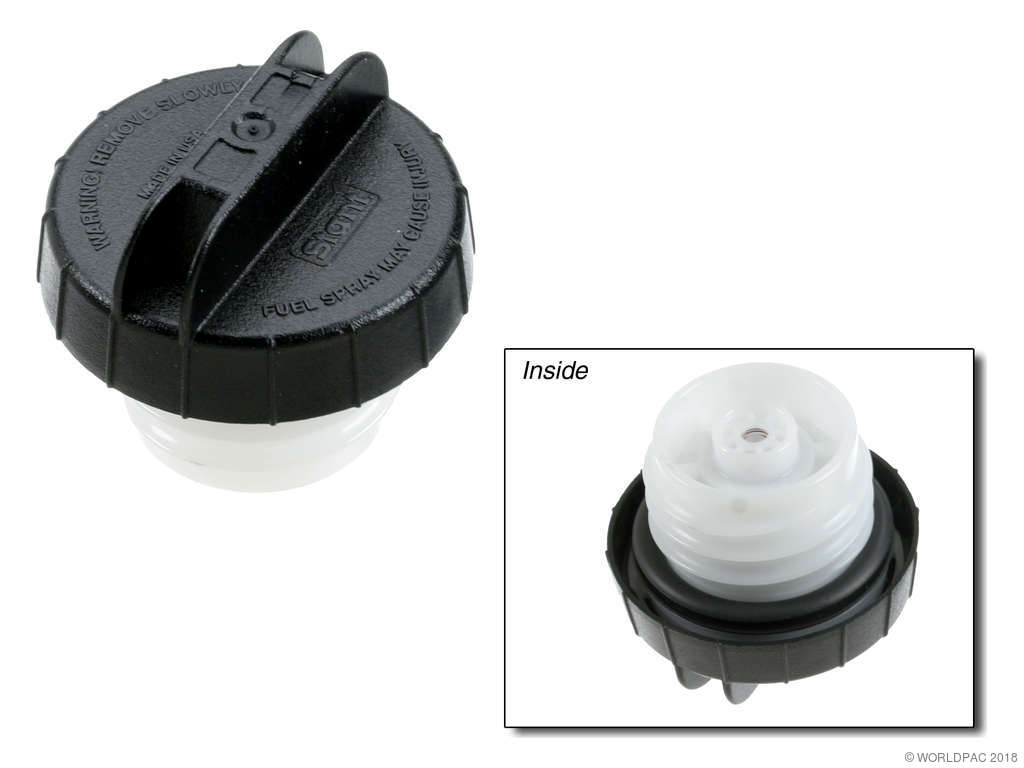
Est. part cost: $5-$20 - Loose or Faulty Gas Cap ⚪ Low Probability → Shop Fuel Tank Cap While a bad gas cap more commonly causes other EVAP codes like P0440 or P0441, it can occasionally contribute to P0446. The rubber seal wears out over time. It's an inexpensive first step.
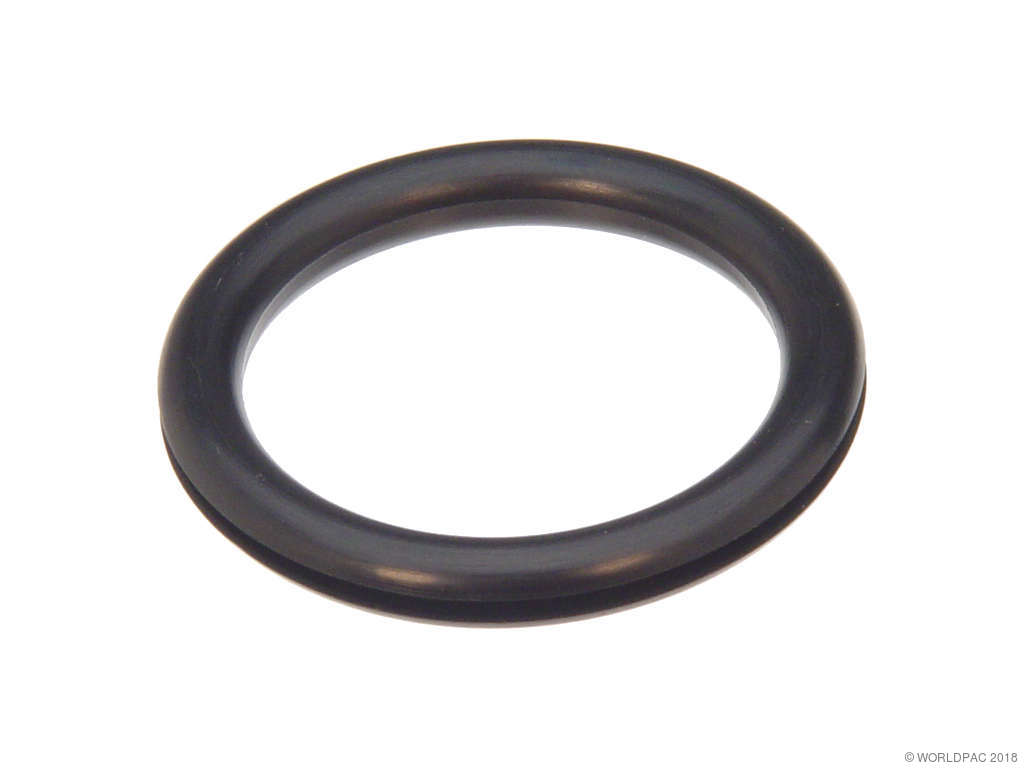
How to confirm: Ensure the cap is tightened until it clicks several times. Inspect the rubber O-ring for cracks or hardness. If it's suspect, a new OEM cap is an inexpensive test.
Typical fix: Replace the gas cap with an OEM or high-quality aftermarket part.
Est. part cost: $15-$30
Rare But Worth Checking
- Clogged EVAP vent tube from spiders or mud daubers building nests inside the vent lines.
- Faulty Fuel Tank Pressure Sensor (though this usually throws a P0450-P0454 code).
- Damaged wiring or corroded connector for the canister vent valve.
Diagnosis Steps
- Check the Gas Cap: Ensure it is an OEM cap, tightened until it clicks multiple times, and the seal is in good condition.
- Inspect Engine Bay Hoses: Carefully check the vacuum hoses around the air filter box and on top of the engine. A disconnected hose near the airbox is a very common and easy fix after an air filter change.
- Scan for Other Codes: Use an OBD-II scanner to see if P0441 or P0440 are present, which reinforces a systemic EVAP issue.
- Inspect Underbody Components: Safely raise and secure the vehicle. Visually inspect the charcoal canister (located near the rear subframe/fuel tank) and its connected hoses for any obvious cracks, damage, or blockages.
- Test the VSVs: If you have the tools, test the VSVs in the engine bay for functionality using a 12V source and check resistance (should be 27-33 Ohms). The VSV on the canister is harder to access but is the more likely culprit for P0446.
- Perform a Smoke Test: This is the most definitive diagnostic step. A mechanic can inject smoke into the EVAP system to quickly identify the exact location of any leaks from the canister, hoses, or valves.
- Replace the Charcoal Canister Assembly: Based on overwhelming owner experiences, if the simple checks don't solve the issue, the charcoal canister assembly is the most likely culprit and replacing it is the most common fix.
Parts You'll Likely Need
- Charcoal Canister Assembly
(OEM #77740-33121 (superseded by 77740-33122))— This is the most common failure point for P0446 on this vehicle. It contains the vent valve, pressure sensor, and charcoal that are prone to failure over time.
Trusted brands: Lexus/Toyota (OEM)
OEM price range: $250-$400
Aftermarket price range: Not commonly available or recommended. - Vacuum Switching Valve (VSV) - Canister Mounted
(OEM #90910-12109 (Note: Often part of the canister assembly))— This specific valve on the canister is a primary failure point for P0446. While sometimes available separately, it's often replaced with the whole canister.
Trusted brands: Dorman (911-602), Aisin, Standard Motor Products
OEM price range: $50-$90
Aftermarket price range: $30-$60 - Vacuum Switching Valve (VSV) - Engine Bay
(OEM #90910-12271)— These valves, particularly the one near the airbox, can stick or fail, causing various EVAP codes. It's an easier part to replace as a standalone item for troubleshooting.
Trusted brands: Aisin, Dorman (911-604), Standard Motor Products
OEM price range: $50-$90
Aftermarket price range: $30-$60 - Gas Cap
(OEM #77300-53010)— An easy and inexpensive first step in troubleshooting, a worn gas cap seal can cause various EVAP codes. Using an OEM cap is highly recommended as aftermarket versions can be problematic.
Trusted brands: Lexus (OEM), Toyota (OEM)
OEM price range: $20-$35
Aftermarket price range: $10-$20
Related Codes That Often Appear With This One
- P0441 — P0441 (Incorrect Purge Flow) is often seen with P0446 because a fault in the vent control system can directly affect the system's ability to purge vapors correctly.
- P0440 — P0440 (EVAP System Malfunction) is a general system failure code. If the vent control issue (P0446) is severe enough, it can trigger the more generic P0440 code as well.
Technical Service Bulletins (TSBs) & Recalls
- While no specific TSB is solely for P0446 on the ES300, Toyota has issued bulletins for similar models and codes. TSB EG004-02 addresses P0441 and P0446 on some models, often pointing towards canister assembly failure. A general TSB for many 90s Toyota/Lexus vehicles also notes that the canister assembly is the most frequent repair for this code.
Platform-Specific Known Issues
- VSC and TRAC OFF Lights with P0446: It is very common for the Vehicle Stability Control (VSC) and Traction Control (TRAC) warning lights to come on simultaneously with the Check Engine Light for a P0446 code. The vehicle's main computer disables these systems as a safety precaution whenever certain engine or emissions-related faults are detected. Resolving the P0446 code will typically clear the VSC and TRAC lights after a few drive cycles or by disconnecting the battery for 10 minutes. In some cases, a 'zero point calibration' may be needed.
- Canister Replacement Access: Replacing the charcoal canister can be challenging due to its location above the rear subframe and exhaust. DIY repair stories often mention needing to remove a rear suspension brace and temporarily unhooking the exhaust from its rubber hangers to gain enough clearance to remove the old canister and install the new one. Some have even partially lowered the rear subframe to create space.
Mechanic-Grade Diagnostic Values
- Fuel Tank Pressure (FTP) Sensor - Reference Voltage — expected: Approximately 5.0V. Failure: No voltage indicates a wiring or ECM issue.
- Fuel Tank Pressure (FTP) Sensor - Signal Voltage (Static) — expected: Approximately 2.5V. Failure: A significantly higher or lower voltage at atmospheric pressure (gas cap off) suggests a faulty sensor.
- Fuel Tank Pressure (FTP) Sensor - Signal Voltage (Under Vacuum) — expected: Voltage drops from 2.5V towards 1.5V. Failure: Voltage does not change or drops erratically when light vacuum is applied, indicating a failed sensor.
- Scan Tool Live Data - Fuel Tank Pressure — expected: Varies; one owner reported seeing ~14.0 PSI (atmospheric) and ~19.0 PSI under pressure before repair.. Failure: Pressure readings that are stuck high or do not change when the EVAP system test is active can indicate a blockage or stuck valve.
Scan Tool Commands That Help
- Toyota Techstream / Professional Scan Tool: EVAP System Test / Vent Valve Control — This bidirectional command allows a technician to manually command the vent valve (solenoid) to open and close. This is used to verify if the valve is physically working (an audible click should be heard) and to seal the system for a smoke or vacuum decay test.
Wiring & Ground Locations
- G407 — Center rear of trunk.. This is the primary ground point for components at the rear of the vehicle. A corroded or loose G407 could cause intermittent electrical issues for the canister-mounted vent valve and pressure sensor, triggering a P0446 circuit code.
- Canister Connectors — On the charcoal canister assembly, located above the rear subframe.. There are two electrical connectors on the canister: one for the vapor pressure sensor and one for the vent valve VSV. The vent valve connector is often blue. Corrosion or damage to these connectors or their wiring is a potential cause for the P0446 circuit code.
- G200 / G203 — G200 is in the driver's side kick panel; G203 is in the passenger's side kick panel.. These are major body and ECU ground points. While less likely to be the direct cause than G407, a problem at these locations can cause a wide range of electrical issues, including erratic behavior from the Engine Control Module that controls the EVAP system.
Real Owner Repair Stories
- YouTube user 'Rick Troutner' (1999 Lexus ES300) — Persistent P0446 Check Engine Light.
❌ Tried (didn't work) Replacing the gas cap with a new OEM part., Replacing the engine-bay VSV., Attempting to seal cracks on the old canister with FIPG (Form-In-Place Gasket).
✅ What actually fixed it Replacing the entire charcoal canister assembly with a new OEM part. The old canister rattled when shaken, indicating loose, broken-down charcoal inside, while the new one was silent. - ClubLexus forum member (2000 Lexus ES300) — Recurring EVAP codes, clicking/whining sound from the rear of the car.
❌ Tried (didn't work) Replacing various solenoids and vacuum lines over time.
✅ What actually fixed it The final cause was a damaged membrane valve located on the charcoal canister itself. This is not a separately serviced part, so the canister assembly needed replacement.
OEM Part Supersession History
77740-33120→77740-33121, then 77740-33122— Part has been updated/improved by the manufacturer over time.
Heads up: The latest part number, 77740-33122, is the correct replacement for all previous versions for the 2000-2001 ES300.
Model Year Variations Within This Range
- 1997-1998 vs 1999-2001: A forum member noted that on 1997-1998 models, the EVAP system components were much easier to access in the engine bay near the master brake cylinder. On 1999 and later models, the main canister and its valves were moved to the rear of the vehicle, under the car, making access significantly more difficult and labor-intensive.
Diagnostic Flowchart
Used vs. New Parts: Buying Guide for This Vehicle
When a used part is the smart pick: The entire charcoal canister assembly. This part is expensive new (OEM), so a used part from a reputable auto recycler can save significant money. It is a relatively robust component, aside from the internal valves and charcoal media.
Donor-vehicle mileage cap: roughly under 120000 miles for the part to have meaningful remaining life.
What to inspect on the donor part:
- Physically shake the canister. There should be NO rattling sound. Rattling indicates the internal charcoal pellets have broken down, and the part is bad.
- Inspect the plastic housing for cracks, especially around the hose ports.
- Check the electrical connectors to ensure they are not broken or heavily corroded.
- Prefer parts from vehicles in dry, non-rust-belt climates to avoid issues with rusted mounting hardware and valve components.
OEM-only on this vehicle (don't cheap out):
- Gas Cap: Aftermarket gas caps are a frequent cause of EVAP codes on Toyota/Lexus vehicles of this era; always use an OEM cap.
- Fuel Tank Pressure Sensor: As a critical sensor for the ECU, using an OEM or OEM-supplier (like Denso) part is strongly advised to ensure accurate readings.
Aftermarket brands forum-validated for this vehicle:
- Aisin: Aisin is a direct OEM supplier to Toyota and their parts are considered equivalent to genuine Toyota parts in quality.
- Standard Motor Products (SMP): Generally regarded as a reliable higher-tier aftermarket brand for sensors and valves.
Brands owners have reported issues with on this vehicle:
- Dorman: Quality is widely reported as 'hit or miss'. While some Dorman parts may work fine, others have been known to fail prematurely. Given the significant labor to replace the canister, using a Dorman assembly is a risk.
- No-Name/Generic Brands: Cheap, unbranded parts sold on marketplaces are a significant gamble and often have high failure rates.
Real Owner Stories
Aggregated from forums and TSBs cited above. Mileages and costs reflect what owners reported in those sources.
1999 Lexus ES300 — 146000 miles
Symptoms: VSC and VSC OFF lights illuminated along with the Check Engine light for code P0446.
What fixed it: The community discussion pointed to the canister VSV as the likely cause, with the common fix being the replacement of the entire canister assembly.
Source hint: ClubLexus.com: Thread '1999 Lexus Es300 146K Vsc And Vsc Off Check Engine P0446'
1999 Lexus ES300
Symptoms: The owner had a P0446 code and confirmed the old charcoal canister rattled loudly when shaken, while the new replacement part was silent.
What fixed it: Replaced the entire charcoal/vapor canister assembly.
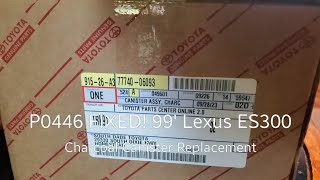
Source hint: YouTube.com: Video 'P0446 FIXED! Charcoal/Vapor Canister Replacement 1999 Lexus ES300' by user 'Rick Troutner'
1999 Lexus ES 300
Symptoms: Owner was troubleshooting a P0446 code after attempting other fixes like replacing VSVs and checking vacuum lines.
What fixed it: Another user confirmed that replacing just the membrane valve on the canister solved their issue, although this part is not sold separately from the assembly.
Source hint: ClubLexus.com: Thread 'P0446 EVAP Code Lexus ES 300 1999'
Related OBD-II Codes
Frequently Asked Questions
My Check Engine Light is on for P0446, but my VSC and TRAC OFF lights are on too. Is this normal for my ES300?
I'm having trouble filling my gas tank; the pump nozzle keeps clicking off early. Is this related to the P0446 code?
What is the most likely part I'll need to replace to fix P0446 on my 1997-2001 ES300?
Is there a specific TSB from Lexus for the P0446 code on this car?
I heard replacing the charcoal canister is a difficult DIY job. Why is that?
My mechanic wants to do a smoke test. Is that a necessary diagnostic step?
I hear a rattling sound from the back of my car when I go over bumps. Could this be related to the P0446 code?
Helpful Videos
We Have This Part in Stock


The information in this article is provided for general reference and educational purposes only. Vehicle specifications, procedures, and part compatibility can vary by production date, trim level, and region. Always consult your vehicle's factory service manual and verify part numbers before purchasing or performing repairs. Safety-critical components such as airbags, seat belts, and braking systems should be installed by a qualified professional.
- Lexus ES300:
- 🧭 Diagnostic Flowchart
- 🎬 Helpful Videos
- 🛍️ Shop This Part
- What's Unique About the 1997-2001 Lexus ES300
- Symptoms You May Notice
- Most Likely Causes
- Rare But Worth Checking
- Diagnosis Steps
- Parts You'll Likely Need
- Related Codes That Often Appear With This One
- Technical Service Bulletins (TSBs) & Recalls
- Platform-Specific Known Issues
- Mechanic-Grade Diagnostic Values
- Scan Tool Commands That Help
- Wiring & Ground Locations
- Real Owner Repair Stories
- OEM Part Supersession History
- Model Year Variations Within This Range
- Used vs. New Parts: Buying Guide for This Vehicle
- Real Owner Stories
- 1999 Lexus ES300 — 146000 miles
- 1999 Lexus ES300
- 1999 Lexus ES 300
- Related OBD-II Codes
- Frequently Asked Questions
- 🎟️ Get 5% Off