

P0446 on 1998-2005 Lexus GS300: EVAP Vent Circuit Malfunction Causes and Fixes
On a 1998-2005 GS300, code P0446 is most often caused by a faulty gas cap or a bad EVAP purge valve (VSV) in the engine bay. Start by checking the gas cap for a tight seal. If that's not the issue, the purge valve is the next most likely and accessible part to test and replace, especially if seen with code P0441. If P0446 appears alone, the issue is more likely the canister close valve (CCV) on the charcoal canister at the rear of the car.
- Always start with the simplest fix: check that your gas cap is tight and the seal is intact.
- Before suspecting the expensive and hard-to-reach charcoal canister, test the EVAP purge valve located in the engine bay; it's a common failure point and much easier to replace.
- If you frequently have trouble filling your gas tank (pump clicks off), the problem is very likely a clogged vent valve or charcoal canister at the rear of the car.
- When replacing the gas cap, an OEM part from the dealer is strongly recommended to ensure a perfect seal.
- If codes P0446 and P0441 appear together, the purge valve in the engine bay should be your primary suspect.
What's Unique About the 1998-2005 Lexus GS300
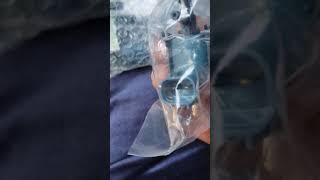
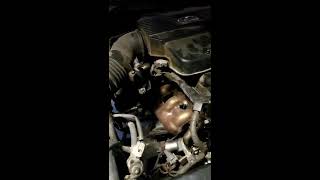
On the second-generation GS300, owners frequently trace the P0446 code to one of two main culprits: the easily accessible purge valve (a type of VSV) in the engine bay, or the harder-to-reach vent valve (also a VSV) on the charcoal canister at the rear of the car. While the code technically points to the vent circuit at the rear, many owners have fixed it by replacing the front purge valve, especially when it appears with code P0441. This suggests starting diagnostics in the engine bay is a practical, platform-specific strategy. 🎬 Watch: A mechanic explains how these codes often appear together. If P0446 is the only code present, the factory service manual suggests the issue is more likely a clogged Canister Close Valve (CCV) at the rear.
Symptoms You May Notice
- Check Engine Light is on.
- Difficulty refueling (the gas pump nozzle clicks off before the tank is full).
- A faint fuel smell is possible, but less common than other symptoms.
- No 'whoosh' sound of pressure releasing when opening the gas cap after driving.
- Immediately replacing the expensive charcoal canister without first checking the gas cap, vacuum hoses, and the more accessible purge valve in the engine bay.
Most Likely Causes
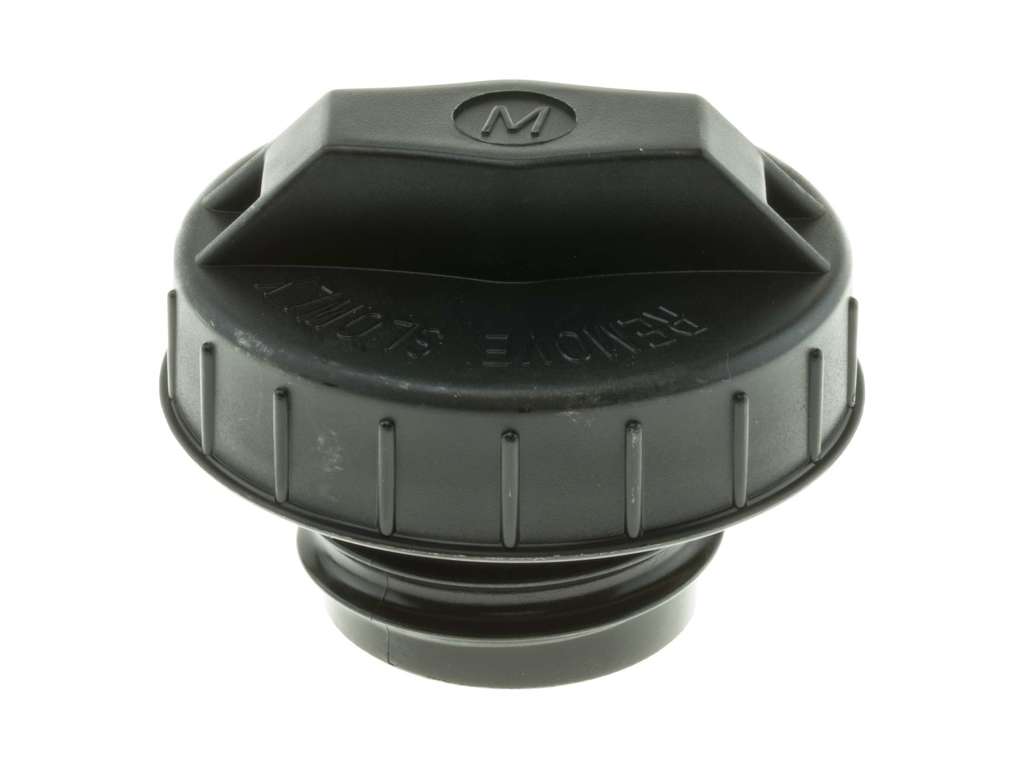
- Loose or Faulty Gas Cap 🔴 High Probability → Shop Fuel Tank Cap The rubber O-ring on the gas cap wears out over time, preventing a proper seal required by the EVAP system. This is a very common and simple fix.
How to confirm: Ensure the cap is tightened until it clicks at least once. Inspect the rubber gasket for cracks or damage. If in doubt, it's an inexpensive part to replace as a first step. The check engine light may take a few days of driving to turn off after replacement.
Typical fix: Replace the gas cap. Using an OEM cap is highly recommended as some aftermarket caps do not seal correctly.
Est. part cost: $20-$40 - Faulty EVAP Purge Valve (VSV in Engine Bay) 🟡 Medium Probability → Shop Vapor Canister This solenoid gets stuck open or closed due to age and heat cycles in the engine bay. It's a very common failure item reported by owners, often fixing P0446 and P0441 together.
How to confirm: Locate the valve in the engine bay. Disconnect it and apply 9V or 12V power to its terminals; a healthy valve will make an audible 'click'. A more thorough test involves repeatedly applying power to see if the valve becomes intermittent when warm. If it doesn't click, it has failed.
Typical fix: Replace the purge valve. It is typically held by one 10mm bolt and has two vacuum hoses and an electrical connector.
Est. part cost: $70-$130 - Faulty Canister Vent Valve / Canister Close Valve (CCV) 🟡 Medium Probability → Shop Vapor Canister
How to confirm: This valve is located on the charcoal canister assembly at the rear of the car, above the rear subframe. Access is difficult. A smoke test is the best method to confirm if the vent is blocked. The valve can also be tested for electrical function with a multimeter or power probe if removed, which often requires removing the entire canister assembly. A user confirmed their valve was dead with a power probe.
Typical fix: The valve can sometimes be replaced separately, but due to the difficult access, many owners and shops opt to replace the entire charcoal canister assembly. A DIY replacement often involves lowering the rear differential to gain clearance.
Est. part cost: $30-$60 for the valve, $400-$700+ for the canister assembly. - Cracked, Disconnected, or Clogged Vacuum Hoses ⚪ Low Probability → Shop Vacuum Hose After 15-20+ years, the rubber vacuum lines become brittle and can easily crack or break, creating a leak in the EVAP system. This is especially common on the small hoses near the canister and filler neck.
How to confirm: Visually inspect all EVAP hoses in the engine bay and around the charcoal canister for cracks or disconnection. A smoke test is the most effective way to find a small leak.
Typical fix: Replace the damaged section of vacuum hose.
Est. part cost: $5-$20 - Failed Charcoal Canister ⚪ Low Probability → Shop Vapor Canister Repeatedly overfilling the fuel tank past the first click can force liquid gasoline into the canister, saturating the charcoal and causing a permanent blockage.
How to confirm: This is usually diagnosed after all other components (valves, hoses, cap) have been checked and confirmed to be working. Difficulty fueling is a strong symptom. If removed, a saturated canister may feel heavy or slosh with fuel.
Typical fix: Replacement of the entire charcoal canister assembly. This is a labor-intensive job, with some owners reporting success by lowering the rear differential and axle to remove it.
Est. part cost: $400-$700+
Rare But Worth Checking
- Wiring Harness Damage: The 'Circuit Malfunction' definition means the wiring to the vent or purge valve could be shorted or broken. The ECM typically supplies battery voltage and controls the valve with a ground signal; a fault in this circuit can trigger the code. This is less common than part failure but should be checked with a multimeter for power and ground if a new valve doesn't solve the issue.
- Faulty PCM: A bad Powertrain Control Module (PCM) is a very rare cause but can trigger a P0446 code. This should only be considered after all other possibilities have been exhausted.
Diagnosis Steps
- Check the Gas Cap: Ensure it is tight and clicks. Inspect the rubber seal for cracks or wear. If it looks old or damaged, replace it with an OEM part and clear the code. Drive for a few days to see if the light returns.
- Inspect Engine Bay Hoses: Carefully check all vacuum lines around the intake manifold and connected to the EVAP purge valve for any visible cracks, brittleness, or disconnections.
- Test the Purge Valve (Engine Bay): This is a critical step if P0441 is also present. Locate the purge valve on the engine. Disconnect the electrical connector and apply 12V power directly to the two pins. A healthy valve will make a distinct 'click'. If there is no click, the valve has failed. Some owners report the valve may click when cold but fail when hot, so testing after the engine is warm is ideal.
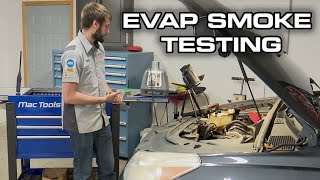
- Perform a Smoke Test: If the above steps do not reveal the issue, a smoke test is the most efficient next step. This involves injecting smoke into the EVAP system to quickly reveal the location 🎬 See how to perform a smoke test to find leaks. of any leaks from hoses, the canister, or valves.
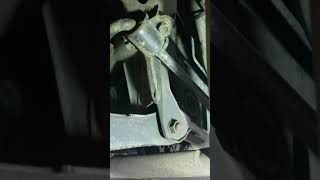
- Inspect Rear Components: If a smoke test is not possible, raise and safely support the rear of the vehicle. Visually inspect the charcoal canister, the vent valve (CCV) mounted on it, and all connected hoses for damage or blockage. This area is above the rear subframe and differential. 🎬 Watch: This video shows the exact location of the charcoal canister.
- Test the Vent Valve (CCV): If accessible, test the vent valve solenoid in the same manner as the purge valve. Check the wiring harness for power and ground. A Reddit user confirmed their vent valve was dead using a power probe, which required removing the canister to access.
- Replace the Faulty Component: Based on the test results, replace the specific component that has failed. If the canister is confirmed to be clogged or saturated with fuel, it must be replaced.
Parts You'll Likely Need
- Gas Cap
(OEM #77300-53010)— A worn seal is a very common cause for all EVAP codes and is the cheapest and easiest part to replace first.
Trusted brands: Lexus (OEM)
OEM price range: $25-$40
Aftermarket price range: $15-$25 - EVAP Canister Purge Valve / VSV (Engine Bay)
(OEM #90910-12188)— This solenoid is a frequent failure point on the GS300 and can solve both P0446 and P0441 codes. It is much easier to access than the rear components. It is also referred to as a Vacuum Switching Valve.
Trusted brands: Denso (OEM Manufacturer), Dorman, Standard Motor Products (Intermotor)
OEM price range: $100-$130
Aftermarket price range: $40-$80 - Charcoal Canister Assembly
(OEM #77740-30270)— This is the final and most expensive solution, typically needed only if the canister is fuel-saturated or if the integrated vent valve has failed and is not replaceable separately.
Trusted brands: Lexus (OEM), Dorman
OEM price range: $500-$750
Aftermarket price range: $250-$400
Related Codes That Often Appear With This One
- P0441 — P0441 (Evaporative Emission Control System Incorrect Purge Flow) often appears with P0446. When both are present, the purge valve (VSV) in the engine bay is a very likely culprit. Many owners have fixed both codes by replacing this single part.
- P0440 — P0440 (Evaporative Emission Control System Malfunction) is a general EVAP system failure code that can accompany P0446, indicating a problem detected by the system's self-test.
Technical Service Bulletins (TSBs) & Recalls
- Toyota TSB EG003-03 (for RX330): While for a different model, this TSB addresses P0441, P0442, and P0446 codes caused by a sticking EVAP Purge VSV. It notes that the part was improved to correct the issue, which supports the diagnosis that the VSV is a common failure point across Lexus models of the era.
Platform-Specific Known Issues
- source — A user with both P0441 and P0446 codes tried replacing the gas cap and rear VSV with no success. The final fix was replacing the front purge valve in the engine bay, which solved both codes. This is a classic example of the most common repair path.
- source — An owner details their experience confirming a bad vent valve on the canister. They note that the valve itself failed, not the canister, but the canister had to be removed to access it. They recommend sourcing a used canister from a junkyard and detail the difficult replacement process, which involves removing an axle and lowering the differential.
- source — A detailed DIY guide from a user who replaced their charcoal canister in about 2 hours. The user provides a step-by-step process that involves jacking the car, removing the rear wheel, and loosening the subframe bolts to gain clearance, avoiding the need to drop the entire fuel tank.
Mechanic-Grade Diagnostic Values
- EVAP VSV (Purge or Vent Valve) Coil Resistance — expected: 27-33 Ohms when cold.. Failure: A reading far outside this range, or infinite resistance (open circuit). However, a valve can pass the resistance test but still be mechanically stuck. A 1998 GS300 owner reported a bad valve at 34.7 Ohms, very close to the new part's 33.5 Ohms.
- Vent Valve (CCV) Connector Voltage — expected: Approximately 12V (battery voltage) with the key in the ON position.. Failure: No voltage suggests a wiring or fuse issue upstream. If voltage is present but the valve doesn't work, the valve itself or the ground signal from the ECM is suspect.
Hidden / Shadow Codes Worth Checking
- Test ID "TBP": In Toyota Techstream's Engine and ECT Live data, a failed test labeled "TBP" may appear. One user suggests this stands for "Tank Bypass," which is another name for the purge flow valve in the engine bay. (see via Toyota Techstream software)
Scan Tool Commands That Help
- Toyota Techstream: Active Test: "Control the CCV" (Canister Closed Valve) — This is a primary bidirectional test for a P0446 code. It directly commands the vent valve on the charcoal canister to close, allowing a technician to listen for an audible 'click' to confirm the solenoid is actuating.
- Toyota Techstream: Active Test: "Control the Purge VSV" — Use this command to manually open and close the purge valve in the engine bay. This is useful for verifying its mechanical and electrical operation, especially when P0441 is also present.
- Toyota Techstream: Utility: "EVAP System Check" — This function initiates an automated, ECU-led test of the entire EVAP system, which can help confirm a repair or narrow down a problem area without manual testing.
Wiring & Ground Locations
- EVAP System Wiring Diagrams — Contained within the factory service manual and specific wiring diagram documents for the 1998-2005 GS300.. The P0446 code specifically mentions a 'Circuit Malfunction,' making wiring diagrams essential for tracing the circuit from the ECM to the vent valve (CCV) and purge valve (VSV). These diagrams show connector pinouts, wire colors, and ground point locations needed to diagnose an open or shorted wire.
- Canister Close Valve (CCV) Connector — On the charcoal canister assembly, above the rear differential.. This is the primary connector to test for the P0446 fault. It is a two-prong connector where you can check for battery voltage (one pin) and the ground signal from the ECM (other pin) to determine if the valve or the wiring is at fault.
Real Owner Repair Stories
- ClubLexus Forum user 'Eric00GS3' (2000 Lexus GS300) — P0441 and P0446 codes that would return immediately after clearing.
❌ Tried (didn't work) Replacing the gas cap, Replacing the rear VSV near the fuel tank, Inspecting and replacing several vacuum lines, Performing a cigar smoke test (no leaks found)
✅ What actually fixed it Replacing the front purge valve (VSV) located in the engine bay. The old valve did not 'click' when tested with a 9V battery. - Reddit user 'run_uz' (2000 Lexus GS300) — P0446 code.
❌ Tried (didn't work) Initial diagnosis pointed towards the entire canister, but the user wanted to verify the specific component.
✅ What actually fixed it The vent valve on the canister was confirmed 'dead' with a power probe. Due to the difficulty of replacing just the valve, the user replaced the entire charcoal canister assembly with one from a junkyard, which resolved the code. They noted the canister itself was not saturated with fuel. - ClubLexus Forum user '98LexusGS' (1998 Lexus GS300 with 181,000 miles) — P0441 and P0446 codes, needed to pass California Smog.
❌ Tried (didn't work) A resistance test on the old canister VSV showed 34.7 ohms, which was nearly identical to the new part's 33.5 ohms, making the resistance test inconclusive.
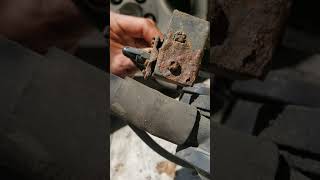
✅ What actually fixed it The old canister VSV (on the charcoal canister) did not click when energized directly with a battery. Replacing just this valve, after struggling with a rusted screw, fixed the codes and allowed the EVAP monitor to complete.
"I Checked Everything" — The Actual Cause
- In one documented case for a 2000 GS300 with P0441 and P0446, the owner performed a smoke test and found no leaks. The root cause was an electrically failed purge valve in the engine bay that would not actuate when voltage was applied. This highlights that a smoke test only finds physical leaks and can miss electrical failures within solenoids.
When the Usual Fixes Don't Work
- While the pass 2 data correctly identifies the common causes, a key counterpoint from owner experiences is the unreliability of resistance (ohm) testing for the VSV solenoids. Multiple owners have found a valve to be bad only after performing an actuation test (applying 12V power), even when the resistance value was within or very close to specification.
OEM Part Supersession History
77740-30270→77740-30311— Part revision or update by the manufacturer.77740-30260→77740-30261— Part revision for early production models (approx. 08/1997-08/1998).
Model Year Variations Within This Range
- 1998-2000: The charcoal canister assembly has different part numbers depending on the production date. For example, 77740-30260 was used up to 08/1998, 77740-30270 was used from 08/1998-07/1999, and 77740-30271 was used from 07/1999-07/2000. All appear to be superseded by 77740-30311, but verifying the correct initial part number is crucial when ordering.
Diagnostic Flowchart
Other Known Issues on This Vehicle
Issues unrelated to this code that are worth knowing about as an owner of this generation:
- Lower Ball Joint Failure 🔴 High — A well-documented and critical failure point. Failure can happen at any mileage, often with little warning (though sometimes preceded by creaking noises). It is considered preventative maintenance to replace them on a newly-purchased vehicle.
- Door Lock Actuator Failure 🟡 Low — Extremely common. One or more doors will fail to lock or unlock with the remote or central lock button. The driver's door is often the first to fail.
- HVAC Servo Motor Failure 🟠 Medium — Common issue where one or more servo motors controlling air blend doors fail, resulting in a clicking sound from the dash and inability to control air temperature or direction on one side.
- Sticky / Melting Dashboard 🟡 Low — While more famous on other Lexus models, the 2nd Gen GS can also suffer from the dashboard material degrading under heat and humidity, becoming shiny and sticky to the touch. (Ref: Lexus issued a Warranty Enhancement Program (ZE6) for this issue on some models, but it has since expired.)
- VVT-i Solenoid / Oil Control Valve (OCV) Failure 🟠 Medium — The OCV for the variable valve timing system can fail or become clogged, leading to rough idle, stalling, and trouble code P1349.
Used vs. New Parts: Buying Guide for This Vehicle
When a used part is the smart pick: For the charcoal canister assembly, a used part from a junkyard can be a smart choice. The part is very expensive new ($500+), and a Reddit user confirmed a successful repair using a used assembly which included the necessary vent valve and pressure sensor.
Donor-vehicle mileage cap: roughly under 150000 miles for the part to have meaningful remaining life.
What to inspect on the donor part:
- When buying a used charcoal canister, physically shake it to ensure it is not saturated with fuel (no 'sloshing' sound).
- If possible, test any included valves (VSVs) with a 9V or 12V power source to confirm they make an audible 'click' before purchase.
- Visually inspect all plastic housings and hose nipples for cracks or brittleness.
OEM-only on this vehicle (don't cheap out):
- Gas Cap - Aftermarket caps are frequently reported to have sealing issues, making an OEM cap a strong recommendation.
Aftermarket brands forum-validated for this vehicle:
- Denso (OEM manufacturer for many Toyota/Lexus electronics)
- Standard Motor Products (Intermotor) - A user reported success with their CP419 purge valve.
Brands owners have reported issues with on this vehicle:
- No specific brands were consistently reported as problematic in search results, but for critical emissions components, unbranded parts from online marketplaces carry a higher risk of premature failure.
Real Owner Stories
Aggregated from forums and TSBs cited above. Mileages and costs reflect what owners reported in those sources.
2000 Lexus GS300
Symptoms: Owner confirmed a dead vent valve on the canister using a power probe. Noted the difficulty of access due to the valve's location on the canister assembly.
What fixed it: Removed the charcoal canister to access the failed vent valve; recommended sourcing a used canister from a junkyard due to the difficult replacement process involving removing an axle and lowering the differential.
Source hint: Reddit: "P0446 code on 2000 Lexus GS300"
2001 Lexus GS300
Symptoms: Needed to replace the charcoal canister assembly.
What fixed it: Replaced the charcoal canister in about 2 hours by jacking the car, removing the rear wheel, and loosening the subframe bolts to gain clearance without dropping the fuel tank.
Source hint: ClubLexus Forum: "how to replace charcoal canister on 01 GS300"
Lexus GS300 (2nd Gen)
Symptoms: Vehicle had both P0441 and P0446 codes. Owner tried replacing the gas cap and the rear VSV with no success.
What fixed it: Replacing the front purge valve in the engine bay solved both codes.
Source hint: ClubLexus Forum: "GS300 - P0441 and P0446, Front Purge Valve Testing"
Related OBD-II Codes
Frequently Asked Questions
Does Toyota TSB EG003-03 apply to my Lexus GS300?
Why is it so difficult to fill up my GS300 at the gas station?
Can I just replace the gas cap to fix P0446 on my GS300?
Where is the EVAP Purge Valve located on the 1998-2005 GS300?
Is it true I have to remove the axle to replace the charcoal canister?
Why don't I hear a 'whoosh' sound anymore when I open my gas cap?
Helpful Videos
We Have This Part in Stock


The information in this article is provided for general reference and educational purposes only. Vehicle specifications, procedures, and part compatibility can vary by production date, trim level, and region. Always consult your vehicle's factory service manual and verify part numbers before purchasing or performing repairs. Safety-critical components such as airbags, seat belts, and braking systems should be installed by a qualified professional.
- Lexus GS300:
- 🧭 Diagnostic Flowchart
- 🎬 Helpful Videos
- 🛍️ Shop This Part
- What's Unique About the 1998-2005 Lexus GS300
- Symptoms You May Notice
- Most Likely Causes
- Rare But Worth Checking
- Diagnosis Steps
- Parts You'll Likely Need
- Related Codes That Often Appear With This One
- Technical Service Bulletins (TSBs) & Recalls
- Platform-Specific Known Issues
- Mechanic-Grade Diagnostic Values
- Hidden / Shadow Codes Worth Checking
- Scan Tool Commands That Help
- Wiring & Ground Locations
- Real Owner Repair Stories
- "I Checked Everything" — The Actual Cause
- When the Usual Fixes Don't Work
- OEM Part Supersession History
- Model Year Variations Within This Range
- Other Known Issues on This Vehicle
- Used vs. New Parts: Buying Guide for This Vehicle
- Real Owner Stories
- 2000 Lexus GS300
- 2001 Lexus GS300
- Lexus GS300 (2nd Gen)
- Related OBD-II Codes
- Frequently Asked Questions
- 🎟️ Get 5% Off