

P0446 on 2004-2006 Lexus RX330: EVAP Vent Control Fault Causes and Fixes
On a 2004-2006 Lexus RX330, code P0446 almost always points to a failed charcoal canister assembly at the rear of the vehicle. The vent valve, which causes the code, is integrated into this unit. Expect to pay $350-$500 for an OEM part and 1-2 hours of labor. Overfilling the gas tank is a known contributor to premature failure.
- P0446 on your RX330 almost always means there is a problem with the EVAP vent system at the rear of the car, not in the engine bay.
- The most likely culprit is the entire charcoal canister assembly, which contains the non-serviceable vent valve.
- Before spending hundreds on a new canister, check the gas cap seal and ensure the wiring to the canister hasn't been damaged or corroded.
- Avoid topping off your fuel tank; this is a known way to damage the charcoal canister and cause this code.
- The Toyota Highlander and Sienna from the same era often experience the exact same failure, making their repair guides useful for RX330 owners.
What's Unique About the 2004-2006 Lexus RX330

On this generation of Lexus RX330 and its Toyota Highlander platform-mate, the component that triggers the P0446 code—the vent valve solenoid—is integrated into the large charcoal canister assembly located at the rear of the vehicle. Unlike some vehicles where the valve is a small, cheap, separate part, fixing this code on the RX330 often requires replacing the entire, more expensive canister unit. Owners should be careful not to confuse this with the purge valve (a separate part in the engine bay), which is a common misdiagnosis.
Symptoms You May Notice

- Check Engine Light is on.
- Difficulty refueling (the fuel pump nozzle clicks off frequently).
- A faint fuel odor may be present in rare cases, sometimes noticed briefly inside the cabin.
- A 'whoosh' sound of escaping pressure when opening the gas cap may be more pronounced.
- Replacing the Purge Valve/Solenoid (VSV) in the engine bay. TSB EG003-03 does mention a purge VSV for codes including P0446, but this TSB was for early production 2004 models and P0446 specifically refers to the vent circuit at the canister. The purge valve is more commonly associated with code P0441.
Most Likely Causes

- Failed Charcoal Canister Assembly 🔴 High Probability → Shop Vapor Canister On the RX330, the vent valve, vapor pressure sensor, and charcoal canister are serviced as a single unit. The internal vent valve solenoid is the common failure point, requiring replacement of the whole assembly. Repeatedly 'topping off' the fuel tank can saturate the charcoal with liquid fuel, leading to premature failure.
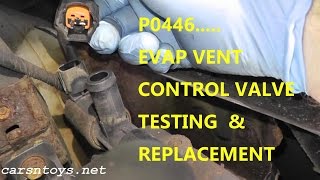
How to confirm: Use a capable scan tool to command the vent valve to close; 🎬 Watch: How to test and replace the vent control valve. if it doesn't click or the system fails to hold a vacuum during an EVAP test, the valve is likely faulty. The part is located under the rear of the vehicle, near the spare tire. A smoke test can also confirm a cracked canister housing.
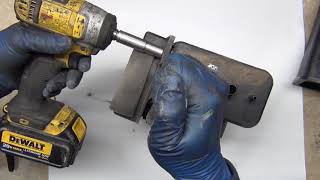
Typical fix: Replace the entire charcoal canister assembly. 🎬 See this step-by-step guide for replacing the charcoal canister.
Est. part cost: $350-$500 - Damaged Wiring or Connector 🟡 Medium Probability The canister and its wiring are located under the vehicle, exposed to moisture, road salt, and debris, which can lead to corrosion or physical damage over time. The wires can become brittle and break at the connector.
How to confirm: Visually inspect the wiring harness and connector leading to the vent valve on the charcoal canister. Check for green crusty corrosion or broken wires. Use a multimeter to check for 12V power at pin #2 of the connector with the key on and a good ground.
Typical fix: Repair the broken or corroded section of the wiring harness or replace the connector pigtail.
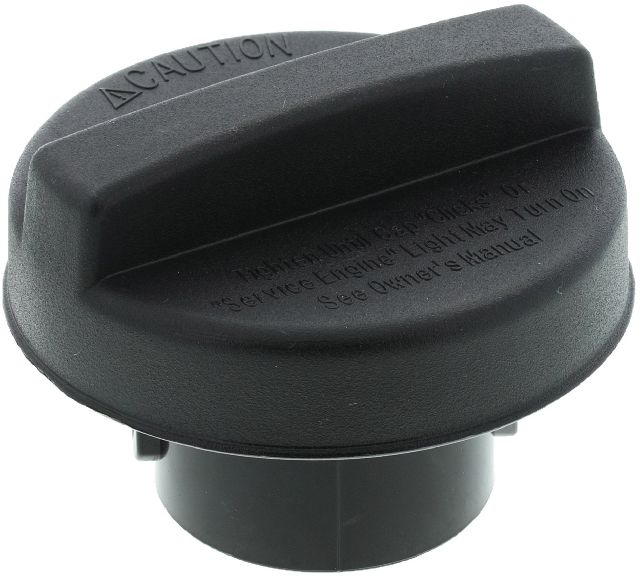
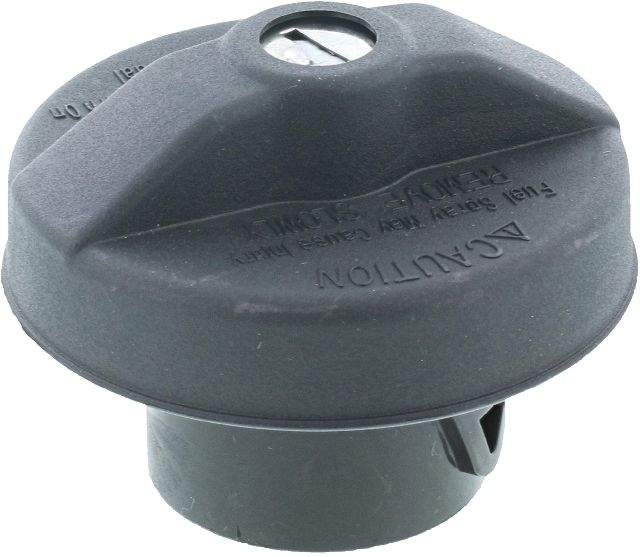
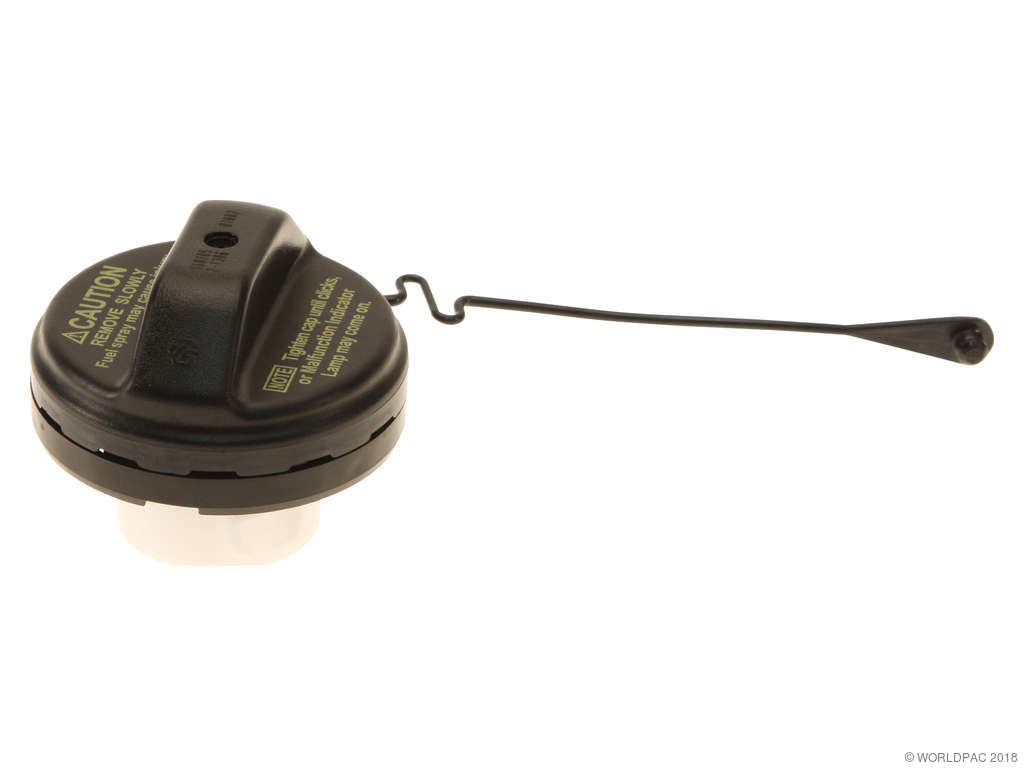
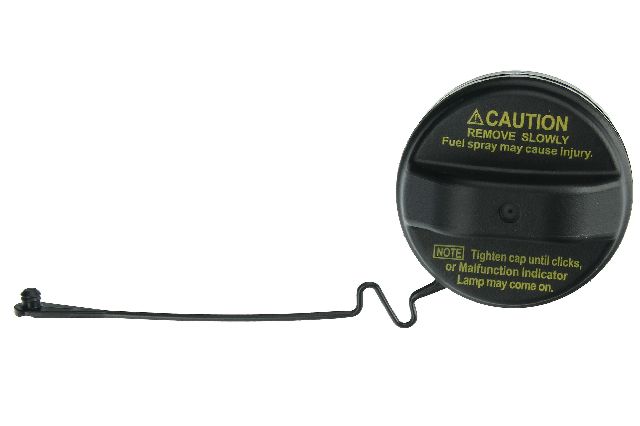
Est. part cost: $10-$50 - Loose or Faulty Gas Cap ⚪ Low Probability → Shop Fuel Tank Cap While more common for leak codes (P0455/P0456), a gas cap that doesn't seal properly can sometimes contribute to EVAP system faults. The system relies on being perfectly sealed to run its tests. The rubber gasket can crack and dry out over time.
How to confirm: Ensure the gas cap is tightened until it clicks at least three times. 🎬 Watch: A simple trick to fix common EVAP warning lights. Inspect the cap's O-ring seal for cracks or damage. If it looks worn, replacement is a cheap and easy first step. Some inspection stations can test the cap's integrity.
Typical fix: Tighten or replace the gas cap. Always opt for an OEM cap, as aftermarket ones can be unreliable.
Est. part cost: $15-$40
Rare But Worth Checking
- Clogged EVAP Vent Hose: Insects (especially spiders) or road debris can build a nest or clog the fresh air inlet hose for the EVAP system, causing a restriction that triggers P0446. The blockage prevents fresh air from entering when the vent valve opens.
Diagnosis Steps

- Read the code with an OBD-II scanner. Confirm P0446 is present and note any other codes like P0441 or P0442.
- Inspect the gas cap. Ensure it is an OEM cap, tightened until it clicks multiple times, and the seal is not cracked or worn. Tighten or replace if necessary, clear the codes, and drive to see if the light returns.
- Visually inspect the charcoal canister, vent valve, and all associated hoses under the rear of the vehicle. Look for obvious cracks, corrosion, or disconnected hoses.
- Inspect the electrical connector at the vent valve on the canister. Check for corrosion in the pins or damage to the wires. Unplug it and check for 12V power on the correct pin with the ignition on.
- If possible, use a bi-directional scan tool to command the vent valve solenoid to open and close. Listen for an audible click from the valve. The system should be able to build and hold vacuum during this test.
- If the valve does not click, and power/ground are confirmed at the connector, the vent valve/canister assembly is faulty.
- If the valve clicks but the code persists, check the vent hose for blockages from spiders or debris. If the hose is clear, the valve may be mechanically stuck despite electrical function, meaning the canister assembly is still the likely failure point.
- If no issues are found, a professional smoke test is the next step to check for blockages or hairline cracks in the canister or lines that are not visually apparent.
Parts You'll Likely Need
- Charcoal Canister Assembly
(OEM #77740-0E010)— This assembly contains the vent valve that most commonly fails and triggers the P0446 code on this vehicle. Part number 77740-0E010 is specified for 'Canada built' 2004-2006 RX330 models.
Trusted brands: Lexus (OEM), Toyota (OEM), Denso, Dorman
OEM price range: $400-$575
Aftermarket price range: $200-$350 - Gas Cap
(OEM #77300-53010)— An inexpensive first step in diagnosis. A worn seal can cause various EVAP codes. It is highly recommended to use an OEM cap as aftermarket versions are known to cause issues.
Trusted brands: Lexus (OEM), Stant
OEM price range: $25-$40
Aftermarket price range: $15-$25
Related Codes That Often Appear With This One
- P0441 — Indicates incorrect purge flow. A problem in one part of the EVAP system can sometimes cause the computer to flag issues in another. Often seen together when a valve is stuck.
- P0442 — Indicates a small EVAP leak. A vent valve stuck open can be interpreted by the system as a small leak.
Technical Service Bulletins (TSBs) & Recalls
- EG003-03 - M.I.L. 'ON' DTC P0441, P0442 AND/OR P0446: Affects early 2004 RX330s made in Japan with serial numbers below 5367 (2WD) or 10665 (AWD). It addresses a sticking EVAP Purge VSV (in the engine bay) that could cause P0446, though the canister vent valve is a more common cause for this specific code.
- EG008-04R - REPAIR MANUAL SUPPLEMENT... DTC P0446: This bulletin doesn't offer a specific fix but instead provides updated diagnostic procedures for service manuals regarding this code, indicating it was a common issue requiring clarified testing steps.
Platform-Specific Known Issues
- The integration of the vent valve into the charcoal canister is the most significant issue for this platform, turning a potentially small repair into a costly part replacement.
- Overfilling the fuel tank past the first click is frequently cited by owners as a habit that leads to saturating the canister with liquid fuel, causing this code to appear.
Mechanic-Grade Diagnostic Values
- Vent Valve Solenoid Coil Resistance — expected: 20 - 50 Ohms. Failure: A reading of 0 Ohms (short circuit) or infinite/OL (open circuit) indicates a failed solenoid coil.
- Voltage at Vent Valve Connector (Key On, Engine Off) — expected: ~12V (Battery Voltage). Failure: No voltage indicates a wiring issue, blown fuse, or problem with the power supply circuit from the ECM.
Hidden / Shadow Codes Worth Checking
- Mode $06, Test ID $39: This test monitors the EVAP system pressure during the leak check phase. A failure here can point toward the vent valve not sealing correctly, which is the root cause of P0446. (see via A professional scan tool capable of reading Mode $06 data. The results will show a test value and a pass/fail limit.)
Scan Tool Commands That Help
- Toyota Techstream: Active Test: "EVAP System Check (Manual)" — This function allows a technician to manually command the purge valve and vent valve (CCV) to open and close. You can command the vent valve closed and watch the fuel tank pressure sensor data to see if the system holds vacuum, directly testing the valve's sealing ability. A failure in the 'TBP' (Tank Bypass) portion of the test can point to a P0446-related fault.
- Toyota Techstream: Utility: "EVAP System Check" — This is an automated test sequence that runs the vehicle's onboard EVAP monitor. The technician can observe the steps (e.g., 'CCV Close', 'Pressure Drop') and see exactly at which stage the test fails, providing a more precise diagnosis than just the DTC alone.
Wiring & Ground Locations
- Ground Point 'BR' — Located in the left rear cargo area.. This is a potential ground point for components in the rear of the vehicle. While not directly tied to the canister in all diagrams, a poor ground in this area can cause erratic behavior for any nearby electronics, including the EVAP canister assembly.
- Engine Room J/B 2 — Located in the engine compartment.. This junction block contains fuses and relays that supply power to various engine and emissions components. The EFI and A/F fuses, which are critical for the ECM and related sensors, are located here. A problem in this block could interrupt power to the EVAP system controls.
- Vent Valve Connector — On the charcoal canister assembly at the rear of the vehicle.. This is the direct electrical connection to the component that fails. Technicians test for 12V power at this connector to differentiate between a wiring/fuse problem and a failed valve itself. Corrosion or broken wires right at the connector are common due to its exposed location.
Real Owner Repair Stories
- ClubLexus Forum User (1999 Lexus RX300 (Platform predecessor with similar EVAP design)) — Check Engine Light with code P0446.
❌ Tried (didn't work) Mechanic stated the problem was elsewhere in the fuel tank system., Dealer attempted a fix, but the light returned after 5 days., Replacing the gas cap did not resolve the issue.
✅ What actually fixed it The ultimate resolution for this user and others in the thread was the replacement of the entire charcoal canister assembly, which includes the problematic vent valve.
OEM Part Supersession History
77740-48030→77740-48031— Part update/revision by the manufacturer. This part is for Japan-built RX330 models.
Heads up: Part 77740-48030 is listed for Japan-built vehicles. It is physically different and not interchangeable with 77740-0E010, which is for Canada-built vehicles. Using the wrong part will result in fitment issues.
Model Year Variations Within This Range
- 2004 (Early Production, Japan-Built): Early 2004 models manufactured in Japan may experience P0446 due to a sticking EVAP Purge VSV located in the engine bay, as detailed in TSB EG003-03. This is a distinct and separate component from the more common failure of the vent valve on the rear charcoal canister.
- 2004-2006: There is a critical parts difference based on the vehicle's manufacturing plant. Canada-built RX330s use charcoal canister part number 77740-0E010. Japan-built RX330s use part number 77740-48030 (superseded by 77740-48031). The VIN can be used to determine the build location ('J' for Japan, '2' for Canada).
Diagnostic Flowchart
Real Owner Stories
Aggregated from forums and TSBs cited above. Mileages and costs reflect what owners reported in those sources.
2005 Lexus RX330 — 31000 miles
Symptoms: CEL and VSC light came on. Car runs fine. Codes P0441, P0446, P0455.
What fixed it: Replaced the gas cap due to a bad rubber gasket, which resolved the EVAP leaks.
Source hint: ClubLexus - RX330 error p0441 p0556 p0455
2004-2009 Lexus RX-series
Symptoms: VSC, Trac off, and check engine lights illuminated. Received codes P0440, P0441, and P0446.
What fixed it: Reconnected the evap hose behind the air filter box.
Source hint: ClubLexus forum thread
Lexus RX
Symptoms: Received engine light code P0446. Initially tried replacing the gas cap, but the code returned.
What fixed it: Replaced the charcoal canister assembly after the gas cap replacement failed.
Source hint: ClubLexus.com: Thread 'Engine light CODE P0446'
Related OBD-II Codes
Frequently Asked Questions
Does TSB EG003-03 apply to my 2004 Lexus RX330?
Why is the charcoal canister replacement so expensive on the 2004-2006 RX330?
Can 'topping off' my gas tank cause the P0446 code on my RX330?
My VSC and Trac Off lights came on with the Check Engine Light. Is this normal for P0446?
What should I check under the hood before replacing the expensive charcoal canister?
Helpful Videos
Used OEM Parts in Stock
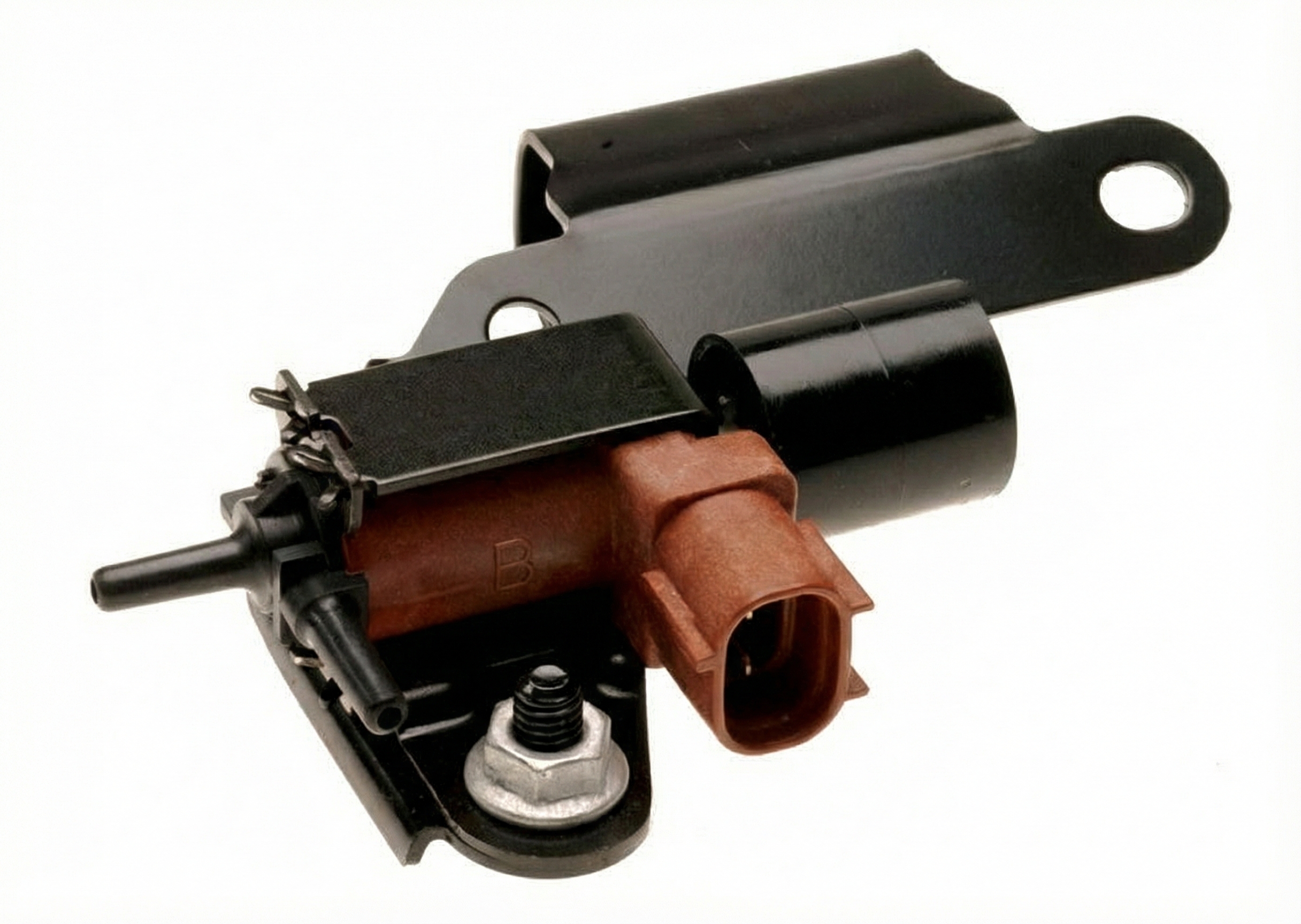
New Aftermarket Parts Available


The information in this article is provided for general reference and educational purposes only. Vehicle specifications, procedures, and part compatibility can vary by production date, trim level, and region. Always consult your vehicle's factory service manual and verify part numbers before purchasing or performing repairs. Safety-critical components such as airbags, seat belts, and braking systems should be installed by a qualified professional.
- Lexus RX330:
- 🧭 Diagnostic Flowchart
- 🎬 Helpful Videos
- 🛍️ Shop This Part
- What's Unique About the 2004-2006 Lexus RX330
- Symptoms You May Notice
- Most Likely Causes
- Rare But Worth Checking
- Diagnosis Steps
- Parts You'll Likely Need
- Related Codes That Often Appear With This One
- Technical Service Bulletins (TSBs) & Recalls
- Platform-Specific Known Issues
- Mechanic-Grade Diagnostic Values
- Hidden / Shadow Codes Worth Checking
- Scan Tool Commands That Help
- Wiring & Ground Locations
- Real Owner Repair Stories
- OEM Part Supersession History
- Model Year Variations Within This Range
- Real Owner Stories
- 2005 Lexus RX330 — 31000 miles
- 2004-2009 Lexus RX-series
- Lexus RX
- Related OBD-II Codes
- Frequently Asked Questions
- 🎟️ Get 5% Off