

P0446 on 2014-2021 Mazda 6: EVAP Vent Circuit Causes and Fixes
For a 2014-2021 Mazda 6, code P0446 is most often caused by damaged wiring near the rear EVAP canister vent solenoid or a faulty solenoid itself (Standard Motor Products CVS160 is a common replacement). Inspect the wiring harness, particularly the purple and blue wires near the rear driver's side wheel, for rodent damage or corrosion before replacing parts. A faulty purge valve (OEM PE01-18-751) is another possibility.
- P0446 on a 2014-2021 Mazda 6 points to a problem with the EVAP vent control circuit, not necessarily a system leak.
- Before buying any parts, thoroughly inspect the wiring harness near the rear EVAP canister for damage, as this is a known failure point.
- The two most likely parts to fail are the canister vent solenoid (at the rear of the car) and the purge valve (in the engine bay).
- This issue will not stop you from driving the car, but it will cause an automatic failure on an emissions test.
- Difficulty filling the gas tank is a strong secondary symptom that points directly to a problem with the vent valve or its hose.
What's Unique About the 2014-2021 Mazda 6
The 2014-2021 Mazda 6 belongs to the third generation (GJ/GL), which is known for having sensitive and complex emissions systems. While many cars can get this code, this specific Mazda platform has documented cases of wiring harnesses near the rear of the car being susceptible to damage from rodents or corrosion, leading directly to a P0446 code. A YouTube video on a 2015 model specifically shows chewed purple and blue wires at a junction connector as the culprit. Additionally, while a 🎬 Watch: Real-world example of rodent damage on a 2015 model. famous recall for spiders blocking the vent hose affected the previous generation (2010-2012 models), it highlights the system's vulnerability to physical blockages from insects or debris.
Generation note: The 2014-2021 model years all fall within the third generation of the Mazda 6. However, there was a significant refresh in 2018 that introduced an optional 2.5L turbocharged engine and updated styling, but the underlying EVAP system architecture and common failure points for code P0446 remained consistent.
Symptoms You May Notice
- Check Engine Light is on
- Difficulty refueling (the fuel pump nozzle clicks off before the tank is full)
- A faint smell of fuel near the car, especially after refueling or when parked.
- Slightly rough idle, particularly after filling the gas tank.
- Replacing the gas cap immediately. While easy to check, it's rarely the cause of a P0446 circuit code.
- Replacing the charcoal canister when only the vent solenoid has failed. The solenoid is often replaceable separately and is much cheaper.
Most Likely Causes
- Damaged Wiring or Connector for Vent Solenoid 🔴 High Probability The wiring harness is routed near the rear suspension and is a common target for rodents. A specific case on a 2015 model showed chewed purple and blue wires right at the connector and a nearby junction, causing an open circuit. Forum posts on the platform-mate CX-5 also confirm a wiring repair fixed the issue.
How to confirm: Visually inspect the wiring harness leading to the EVAP canister vent solenoid at the rear of the car, behind the driver's side rear wheel. Look for any signs of chewing, breaks, or green/white corrosion on the connector pins. Pay close attention to the purple and tan wires at the solenoid connector.
Typical fix: Repair the damaged section of the wire. This usually involves splicing in a new piece of wire with weatherproof connectors. If the connector itself is damaged, it will need to be replaced.
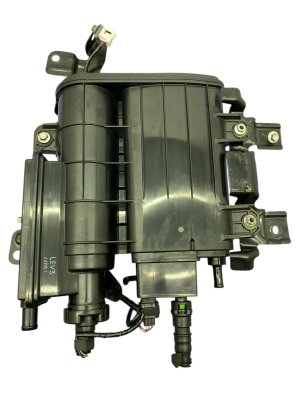
Est. part cost: $5-$25 for wiring repair supplies - Faulty EVAP Canister Vent Solenoid 🔴 High Probability → Shop Vapor Canister The vent solenoid is located under the car near the rear wheel, where it is exposed to road salt, water, and debris, which can lead to electrical failure or cause the valve's internal plunger to stick closed.
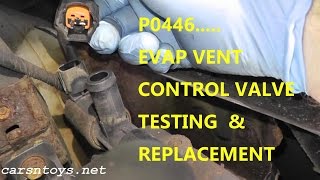
How to confirm: With the ignition on, use a scan tool with bidirectional controls to command the vent solenoid to close. You should hear an audible click from the valve. 🎬 Watch: How to test and replace the vent control valve. If there is no click, test for 12V power at the connector (usually on one wire, with the other being a ground controlled by the PCM). If power is present but the valve doesn't activate, the solenoid has failed.
Typical fix: Replace the canister vent solenoid. It is typically mounted directly on the charcoal canister with two bolts.
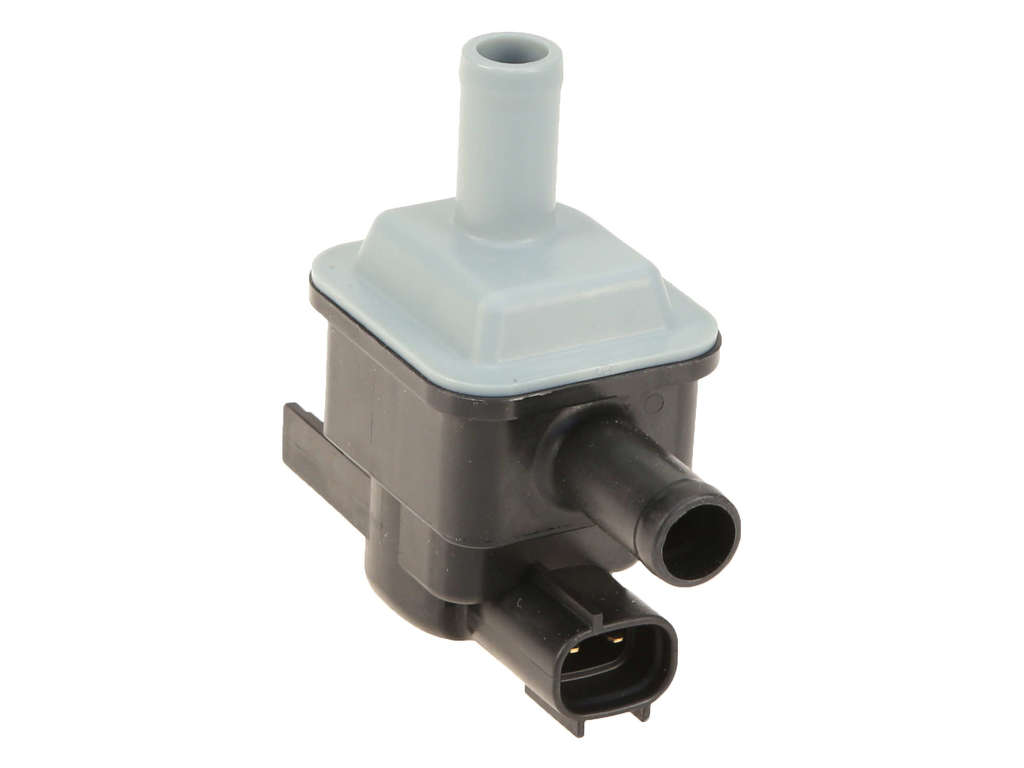
Est. part cost: $40-$120 - Faulty EVAP Purge Valve/Solenoid 🟡 Medium Probability → Shop Vapor Canister While P0446 is a vent circuit code, multiple sources specifically note that a stuck-open purge valve can trigger it on a Mazda 6. This part is located in the engine bay and is subjected to constant heat cycles, which can lead to failure.
How to confirm: The purge valve is normally closed. Disconnect the valve (located in the engine bay, often on or near the intake manifold) and try to blow through it. If air passes through, it is stuck open and needs to be replaced.
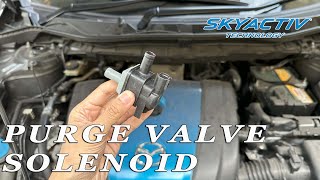
Typical fix: Replace the purge valve. This is a simple repair involving disconnecting two hoses and an electrical connector. 🎬 See this walkthrough for replacing the purge valve solenoid.
Est. part cost: $50-$100 - Clogged Vent Hose or Charcoal Canister ⚪ Low Probability → Shop Vapor Canister Older Mazda 6 models (2010-2012) had a well-publicized recall for Yellow Sac spiders creating blockages in the vent hose. While not recalled for the 2014+ generation, blockages from insects (like mud daubers), mud, or road debris can still occur and restrict airflow, triggering the code.
How to confirm: Disconnect the vent hose from the canister and attempt to blow through it. If it is blocked, it needs to be cleared or replaced. Inspect the charcoal canister for cracks or signs of saturation (heavy fuel smell or visible fuel). Overfilling the fuel tank can sometimes lead to canister saturation.
Typical fix: Clear the blockage from the hose with compressed air. If the charcoal canister is saturated or internally blocked, it must be replaced.
Est. part cost: $0 for clearing a hose, $150-$300 for a new canister
Rare But Worth Checking
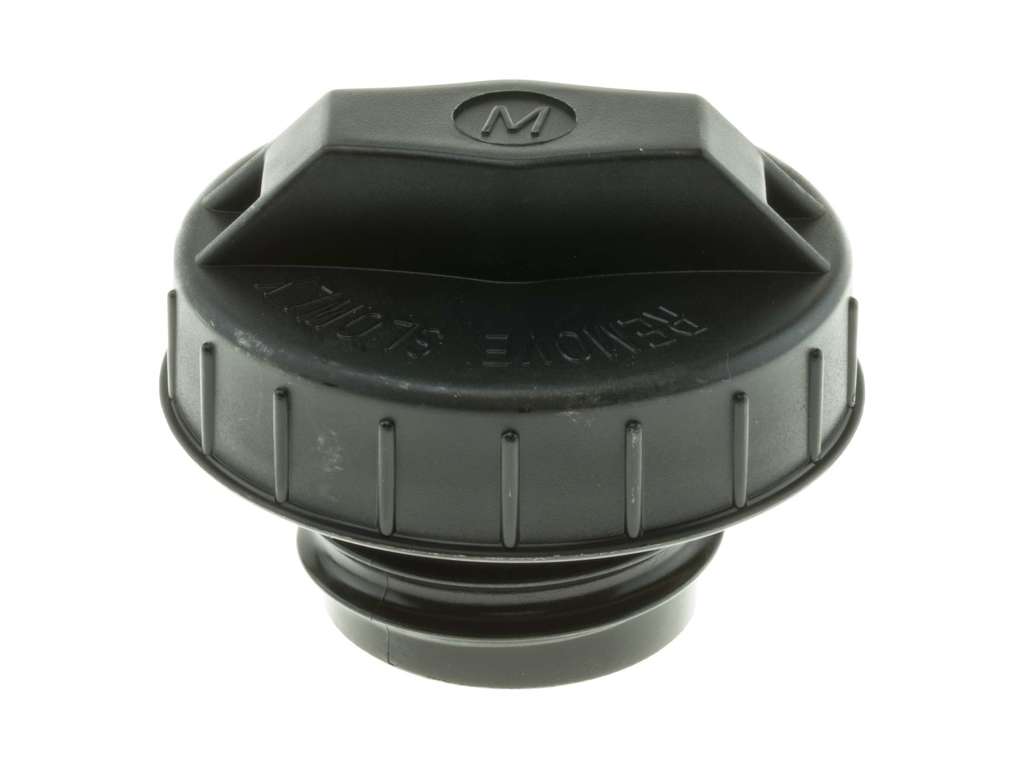
- Loose or Faulty Gas Cap: → Shop Fuel Tank Cap This is a very rare cause for P0446, as a bad gas cap typically causes a leak-related code like P0455 or P0457. However, it's simple and free to check. The correct OEM part number for the 2014+ Mazda 6 is KD35-42-250A.
- Faulty Powertrain Control Module (PCM): This is extremely rare. The PCM should only be considered after all other possibilities, including the entire wiring circuit from the PCM to the solenoid, have been thoroughly tested and proven to be good.
Diagnosis Steps
- Check the gas cap. Ensure it is tight and the seal is not cracked or worn. The correct OEM cap is part number KD35-42-250A. Clear the code and see if it returns.
- Visually inspect the wiring harness leading to the EVAP canister vent solenoid, located at the rear of the car near the fuel tank, behind the driver's side rear wheel. Look closely for any signs of rodent damage (chewed wires), corrosion, or loose connections. Pay special attention to the purple and tan wires.
- If the wiring looks good, use a capable OBD-II scanner to command the vent solenoid to close. Listen for a distinct 'click' from the solenoid.
- If no click is heard, disconnect the electrical connector from the vent solenoid. Use a multimeter to verify that one pin has 12V power with the key in the 'ON' position.
- If power is present, the solenoid is likely faulty. If no power is present, the problem is in the wiring between the PCM and the solenoid, or a blown fuse.
- Inspect the purge valve in the engine bay. Disconnect it and ensure it is closed at rest (you should not be able to blow through it).
- If all electrical components and wiring check out, inspect the vent hose for blockages from debris or insects.
- If no other cause is found, a smoke test may be required to check the function of the valves and look for unexpected blockages, though P0446 is primarily a circuit or component fault.
Parts You'll Likely Need
- EVAP Canister Vent Solenoid
(OEM #GJR9-42-950)— This valve is the most common component to fail, either electrically or by getting stuck, directly causing the P0446 circuit code.
Trusted brands: Mazda (OEM), Standard Motor Products (CVS160), Dorman
OEM price range: $80-$150
Aftermarket price range: $40-$100 - Vapor Canister Purge Valve
(OEM #PE01-18-751)— A known, though less common, cause for this code on a Mazda 6. It can get stuck open, disrupting the system's ability to seal.
Trusted brands: Mazda (OEM), Standard Motor Products (CP737), Duralast
OEM price range: $80-$140
Aftermarket price range: $50-$90 - Gas Cap
(OEM #KD35-42-250A)— A rare cause for P0446, but a common maintenance item that can cause other EVAP codes if the seal fails. Always check first due to its simplicity.
Trusted brands: Mazda (OEM)
OEM price range: $60-$85
Aftermarket price range: $15-$30
Related Codes That Often Appear With This One
- P0442 — If the vent valve is stuck partially open or there's a related small leak, you may also get a 'Small EVAP Leak' code.
- P0455 — If the vent valve is stuck wide open, the system will fail its pressure test and log a 'Large EVAP Leak' code. This is less common with P0446, which often points to a stuck-closed or circuit issue.
Technical Service Bulletins (TSBs) & Recalls
- NHTSA Recall 14V-183 (Mazda Recall 7214C): Affects 2010-2012 Mazda 6 with 2.5L engines for spiders weaving webs in the EVAP canister vent hose, causing a blockage. While this recall does not apply to the 2014+ models, it establishes a known history of vent line blockages on the Mazda 6 platform.
Platform-Specific Known Issues
- Rodent Damage to Rear Wiring Harness: There are multiple owner accounts and videos showing that rodents chew the wires for the vent solenoid located near the rear driver's side wheel well. A 2015 Mazda 3 (platform-mate) specifically had its purple and blue wires severed at a junction connector, causing an immediate P0446 code. A similar repair on a Mazda CX-5 involved running a new control wire to fix the code.
Mechanic-Grade Diagnostic Values
- EVAP Canister Vent Solenoid Resistance — expected: 15 to 65 ohms. More specifically, some sources cite 20-50 ohms, while a Mazda-specific document suggests 48-65 ohms.. Failure: An infinite (OL) reading indicates a burned-out coil; a reading of zero indicates a short circuit.
- EVAP Purge Valve Resistance — expected: Approximately 30-38 ohms at room temperature (around 68°F/20°C).. Failure: A reading significantly outside this range, or an OL/zero reading, indicates a faulty valve coil.
- Vent Solenoid Connector Voltage — expected: 12V on one of the two pins with the key in the 'ON' position.. Failure: No voltage indicates a problem with the power supply circuit, such as a blown fuse or a break in the wire from the power source.
Scan Tool Commands That Help
- Professional OBD-II Scanner (e.g., FORScan, Autel): EVAP System Test / Vent Solenoid ON/OFF Command — This is a primary diagnostic step. Use this command to attempt to close the normally-open vent valve. You should hear an audible 'click' from the solenoid, located near the charcoal canister at the rear of the vehicle. If no click is heard, it strongly suggests either a failed solenoid or a fault in its electrical circuit (power or ground).
Wiring & Ground Locations
- Vent Solenoid Connector Wires — At the EVAP canister vent solenoid, located behind the driver's side rear wheel.. These specific wires are the direct power and control lines for the component identified by the P0446 code. On a 2015 model, the purple and tan wires at the solenoid connector were key. Rodent damage is common in this exposed area.
- Junction Connector C-33 (example) — Near the vent solenoid harness, in the rear driver's side wheel well area.. A documented failure showed chewed purple and blue wires at a junction connector near the vent solenoid, causing an open circuit and a P0446 code. This shows the fault may not be at the solenoid connector itself, but further up the harness.
Real Owner Repair Stories
- YouTube video by 'diagnostic guy' (2015 Mazda 3 (platform-mate to the Mazda 6)) — Check Engine Light with code P0446. No click was heard when activating the vent solenoid with a scan tool.
❌ Tried (didn't work) A smoke test was deemed unnecessary because the lack of a 'click' pointed directly to an electrical or component failure.
✅ What actually fixed it Repairing chewed wires. The technician found that a rodent had chewed through the purple and blue wires at a junction connector near the EVAP canister, as well as the purple and tan wires leading to the solenoid itself. - Reddit user on r/CX5 (Mazda CX-5 (platform-mate)) — P0446 code appeared immediately after jump-starting another car. The code kept returning after being cleared.
❌ Tried (didn't work) Checking the gas cap., Clearing the code with a reader.
✅ What actually fixed it A mechanic diagnosed a bad 'control wire' and ran a new wire to resolve the issue, suggesting a break or high resistance in the original harness between the PCM and the vent solenoid. - NHTSA ODI #11010363 (Mazda 3 platform-mate) — An owner reported that their car continually showed EVAP DTCs including P0443 and P0446, along with fuel mixture and O2 sensor issues, even after replacing both O2 sensors.
"I Checked Everything" — The Actual Cause
- In cases of a P0446, a smoke test may be misleading. If the vent solenoid's electrical circuit has failed (e.g., due to chewed wires), the valve will not get the command to close. A smoke test will then show smoke exiting the normally-open vent, appearing as a 'leak' at the valve. The true failure, however, is not the valve's sealing ability but the electrical circuit controlling it. A technician who hears no 'click' when commanding the valve may correctly skip the smoke test and proceed directly to electrical diagnosis.
Model Year Variations Within This Range
- 2018-2021 (with 2.5T engine): Models with the optional 2.5L Skyactiv-G Turbo engine have a different turbocharger and intake configuration. The compressor housing for the turbo integrates an EVAP/breather port, which may alter the routing and connection points for some EVAP system hoses compared to the naturally aspirated 2.5L engine.
Diagnostic Flowchart
Real Owner Stories
Aggregated from forums and TSBs cited above. Mileages and costs reflect what owners reported in those sources.
2015 Mazda 3
Symptoms: Check Engine Light with code P0446. Technician could not hear the vent solenoid activating when commanded by a scan tool.
What fixed it: Repaired chewed wires leading to the EVAP canister vent solenoid. A purple wire and a blue wire at a junction connector were damaged, apparently by a rodent.
Source hint: YouTube - 'Julio Auto MekaniKo' / '2015 Mazda 6 P0446 Evap vent solenoid'
2023 Mazda CX-5
Symptoms: Check Engine Light P0446.
What fixed it: A mechanic ran a new control wire to bypass the damaged wiring to the rear EVAP components.
Source hint: Reddit r/CX5 - 'Check Engine Light P0446' (2023)
Related OBD-II Codes
Frequently Asked Questions
Does the Yellow Sac spider recall (14V-183) apply to my 2014-2021 Mazda 6?
Can a loose gas cap cause the P0446 code on this vehicle?
Why is rodent damage a common cause for P0446 on the Mazda 6?
Can a faulty purge valve cause a vent circuit code like P0446?
Are the diagnostic steps for P0446 the same for the Mazda CX-5?
Helpful Videos


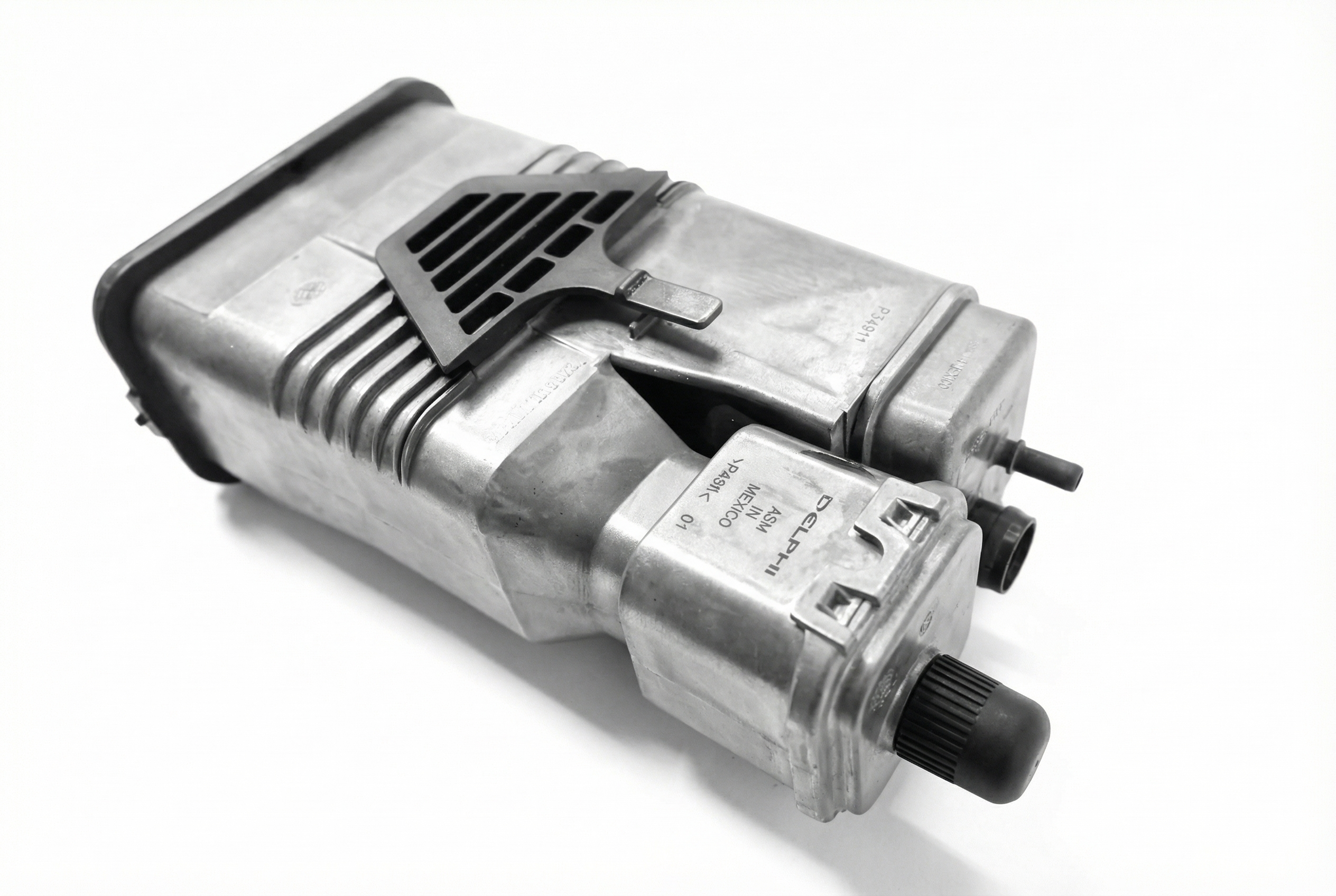
Used OEM Parts in Stock
New Aftermarket Parts Available


The information in this article is provided for general reference and educational purposes only. Vehicle specifications, procedures, and part compatibility can vary by production date, trim level, and region. Always consult your vehicle's factory service manual and verify part numbers before purchasing or performing repairs. Safety-critical components such as airbags, seat belts, and braking systems should be installed by a qualified professional.
- Mazda 6:
- 🧭 Diagnostic Flowchart
- 🎬 Helpful Videos
- 🛍️ Shop This Part
- What's Unique About the 2014-2021 Mazda 6
- Symptoms You May Notice
- Most Likely Causes
- Rare But Worth Checking
- Diagnosis Steps
- Parts You'll Likely Need
- Related Codes That Often Appear With This One
- Technical Service Bulletins (TSBs) & Recalls
- Platform-Specific Known Issues
- Mechanic-Grade Diagnostic Values
- Scan Tool Commands That Help
- Wiring & Ground Locations
- Real Owner Repair Stories
- "I Checked Everything" — The Actual Cause
- Model Year Variations Within This Range
- Real Owner Stories
- 2015 Mazda 3
- 2023 Mazda CX-5
- Related OBD-II Codes
- Frequently Asked Questions
- 🎟️ Get 5% Off