

P0446 on 2001-2006 Mazda Tribute: EVAP Vent Circuit Causes and Fixes
On a 2001-2006 Mazda Tribute, code P0446 is most often caused by a faulty EVAP canister vent solenoid or its wiring. This part is located under the vehicle near the fuel tank and is prone to corrosion. Expect to pay $30-$75 for a replacement solenoid.
- P0446 on your Tribute points to an issue with the EVAP vent solenoid or its circuit, located under the rear of the vehicle.
- The most common cause is a failed vent solenoid due to corrosion from its exposed location.
- Before replacing parts, always inspect the wiring and connector for visible damage, as this is a common and cheaper fix.
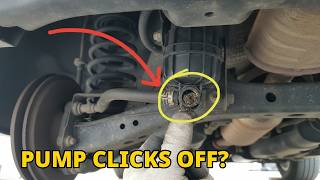
- A key symptom of this specific problem is the gas pump nozzle shutting off frequently when you try to refuel.
- This is a DIY-friendly repair for those comfortable working under their vehicle.
What's Unique About the 2001-2006 Mazda Tribute
The 2001-2006 Mazda Tribute is a mechanical twin to the Ford Escape and the 2005-2006 Mercury Mariner. Therefore, issues, parts, and diagnostic procedures are identical between these vehicles. For this generation, P0446 is commonly triggered by a failure of the canister vent solenoid located under the rear of the vehicle, which is highly exposed to road salt, moisture, and debris, leading to corrosion of the solenoid and its electrical connector.
Symptoms You May Notice
- Check Engine Light is on
- Difficulty filling the gas tank 🎬 Watch: How a stuck vent valve causes gas pump clicking. (fuel pump nozzle clicks off repeatedly)
- Slight fuel odor near the rear of the vehicle
- A 'whoosh' sound of air when opening the gas cap, indicating pressure or vacuum buildup.
- Replacing the gas cap. A bad gas cap typically causes a leak code (like P0455 or P0457), not a vent circuit malfunction code. 🎬 See why the vent valve, not the purge valve, causes P0446.
- Replacing the purge valve. The purge valve is in the engine bay, while P0446 almost always relates to the vent valve circuit at the rear of the vehicle.
Most Likely Causes
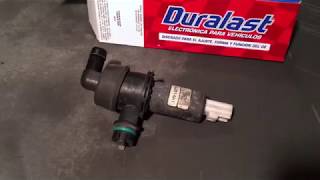
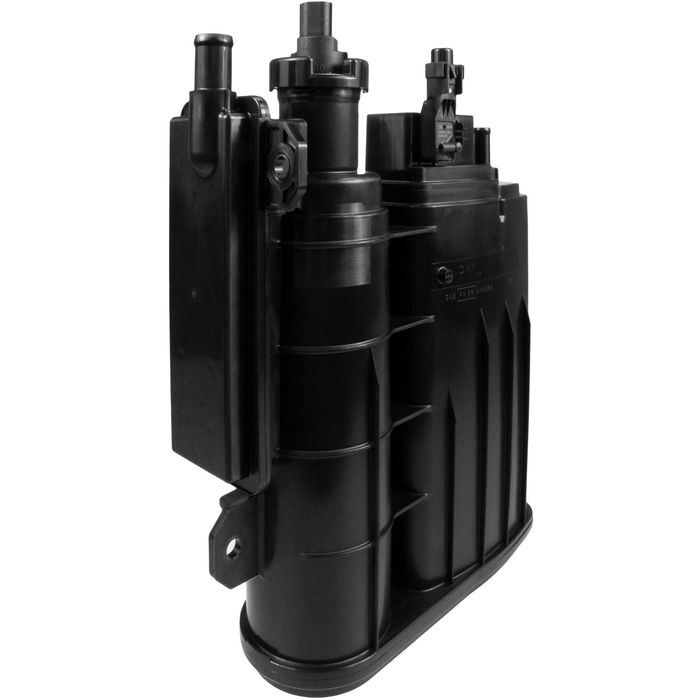
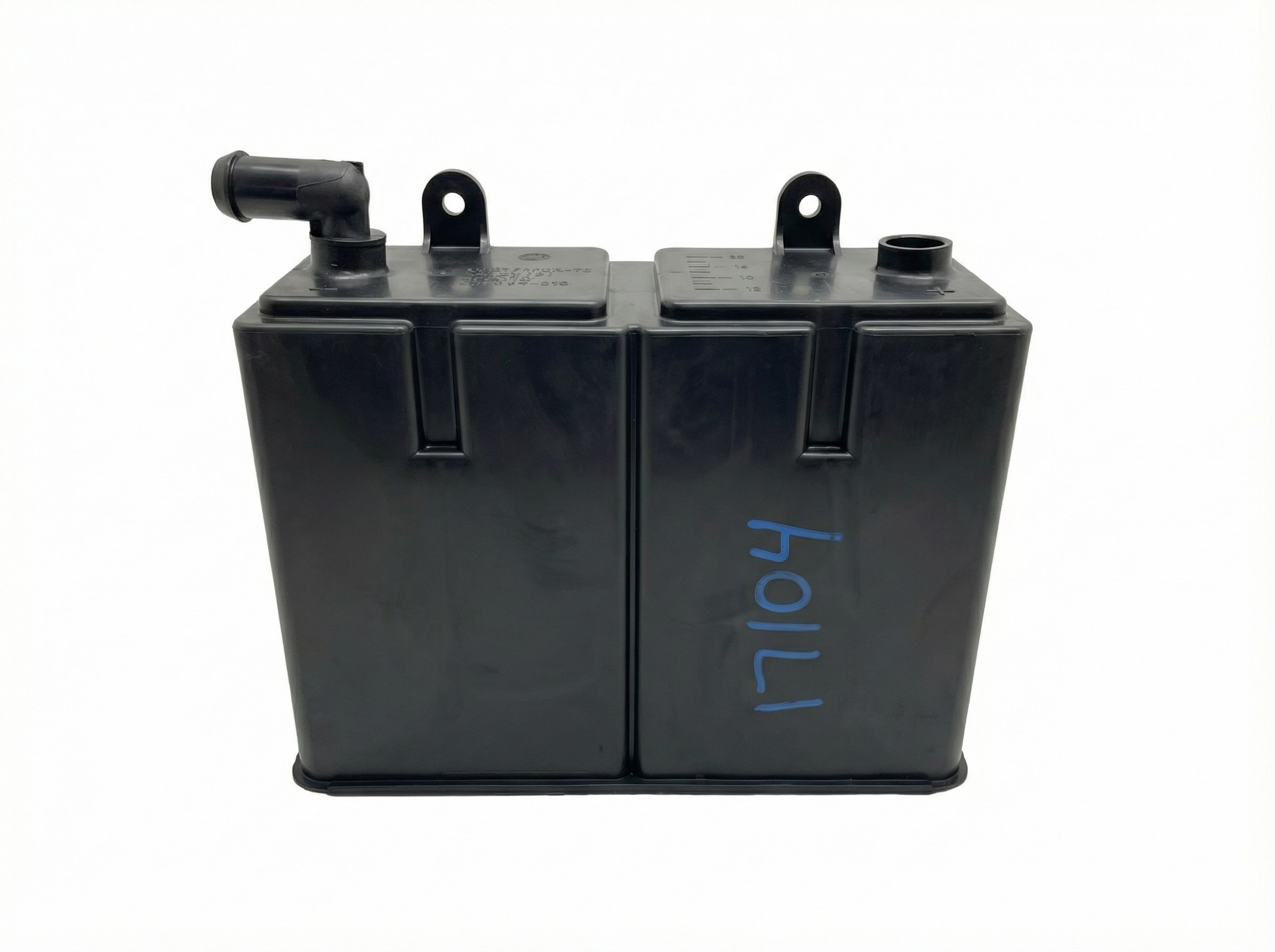
- Faulty Canister Vent Solenoid/Valve 🔴 High Probability → Shop Vapor Canister The vent solenoid is located under the rear of the vehicle, mounted to or near the charcoal canister. This exposed location makes it highly susceptible to rust, corrosion, and damage from road debris, causing it to stick closed or fail electrically.
How to confirm: Locate the solenoid under the vehicle near the fuel tank. Use a scan tool to command the valve to close; you should hear an audible click. If it doesn't click, test for 12V power at the connector with the key on. If power is present, apply 12V and ground directly to the solenoid's pins. If it still doesn't click, the solenoid has failed. You can also remove the solenoid and try to blow through it; it is a normally open valve, so air should pass freely.
Typical fix: Replace the canister vent solenoid. It is often mounted directly to the charcoal canister and held on by a couple of bolts or clips. 🎬 Watch this step-by-step guide to replacing the vent solenoid.
Est. part cost: $30-$75 - Damaged Wiring or Corroded Connector 🟡 Medium Probability The wiring harness leading to the vent solenoid is in the same exposed underbody location and is prone to corrosion, chafing, or being damaged by road debris. A user on a Mazda forum reported a P0446 code after driving through a deep puddle, which resulted in hanging hoses and a disconnected electrical connector. A Ford Escape owner reported similar issues after driving through heavy rain.
How to confirm: Visually inspect the entire length of the wiring harness from the vent solenoid as far as you can trace it. Check the electrical connector for green or white corrosion on the pins, or for broken/frayed wires. Use a multimeter to check for 12V power on one wire and check for continuity on the ground/control wire back to the PCM.
Typical fix: Repair the broken or corroded section of wire. Clean the connector pins with an electrical contact cleaner or replace the connector pigtail if it's severely damaged.
Est. part cost: $5-$30 - Clogged Vent Hose or Filter ⚪ Low Probability The vent hose often has a small filter box at its end to prevent debris from entering. Spiders and insects are known to build nests inside these hoses, and driving in dusty conditions can clog the filter, creating a blockage that can trigger a P0446 code.
How to confirm: Disconnect the vent hose from the solenoid and attempt to blow air through it. If it is restricted, inspect for blockages. The blockage is often at the very end of the hose where it vents to the atmosphere.
Typical fix: Clear the obstruction from the hose using compressed air or a flexible wire. Replace the hose if it is cracked or damaged.
Est. part cost: $0-$20
Rare But Worth Checking
- Faulty Charcoal Canister: → Shop Vapor Canister The canister itself can become saturated with fuel over time or crack, causing issues. The vent solenoid is often replaced with the canister as an assembly. A failure is more likely if you frequently 'top off' your fuel tank after the pump clicks off.
- Stuck-Open Purge Valve: → Shop Vapor Canister While less common for a P0446 code, some sources indicate a stuck-open purge valve (located in the engine bay) can sometimes trigger this code on Mazda vehicles. This would typically be accompanied by other codes like P0443. As a cross-manufacturer reference, NHTSA ODI #11010363 describes a Mazda vehicle that continually showed EVAP DTCs including P0443 and P0446, alongside fuel mixture and O2 sensor issues.
Diagnosis Steps
- Read the code with an OBD-II scanner to confirm P0446 is the primary code.
- Visually inspect the underside of the vehicle near the rear driver's side wheel. Look for the charcoal canister (a black plastic box) and the attached vent solenoid. Check for any obviously broken wires, disconnected hoses, or signs of impact damage.
- Inspect the electrical connector at the vent solenoid for corrosion, moisture, or damage.
- With the ignition on (engine off), use a multimeter to verify that one of the pins in the connector has 12V power.
- If power is present, use a scan tool with bidirectional controls to command the vent solenoid to close. Listen for an audible click from the solenoid.
- If the solenoid does not click, remove it from the vehicle. Apply 12V and ground directly to the solenoid's terminals. If it fails to actuate, the solenoid is defective and needs to be replaced.
- If the solenoid clicks with direct power but not with the scan tool, the problem lies in the control (ground) wire between the solenoid and the PCM, or a faulty PCM (which is rare).
- Inspect the vent hose connected to the solenoid for any blockages, especially from insect nests or debris.
Parts You'll Likely Need
- EVAP Canister Vent Solenoid
(OEM #1L8Z-9F945-AA (Ford), Motorcraft CXS19)— This solenoid is the most common failure point for code P0446 on this vehicle due to its exposed location under the car, leading to electrical failure or sticking.
Trusted brands: Motorcraft, Dorman, Standard Motor Products (SMP)
OEM price range: $50-$90
Aftermarket price range: $30-$75
Platform-Specific Known Issues
- Component Exposure to Elements: The location of the EVAP canister and vent solenoid is low and exposed on the driver's side, near the rear wheel. This makes it extremely vulnerable to physical damage from road debris or water intrusion from driving through deep puddles, which can rip connectors off or damage hoses.
Mechanic-Grade Diagnostic Values
- EVAP Canister Vent Solenoid Coil Resistance — expected: 20-40 Ohms. Failure: A reading of infinite ohms indicates an open circuit (failed solenoid). A reading near zero ohms indicates a short circuit.
- Voltage at Vent Solenoid Connector (Power Wire) — expected: ~12V (Battery Voltage) with Key On, Engine Off. Failure: 0V indicates a break in the power supply wire or a blown fuse (specifically Fuse 27 in the passenger compartment fuse box).
- Voltage at Vent Solenoid Connector (Control Wire) — expected: Should show ~12V when solenoid is commanded OFF (open circuit) and drop to near 0V when commanded ON (grounded by PCM).. Failure: A constant partial voltage (e.g., a dim test light) that does not change when the solenoid is commanded indicates a failed PCM driver.
Hidden / Shadow Codes Worth Checking
- Mode $06, Monitor ID $3C: This is the monitor for the Engine-Off Natural Vacuum (EONV) EVAP test. Component IDs under this monitor show the results of the pressure and vacuum build tests. (see via A professional scan tool capable of displaying Mode $06 data. Look for TID $81 (Positive Pressure Test) and TID $82 (Negative Pressure/Vacuum Test) to see the raw test values in Pascals.)
Scan Tool Commands That Help
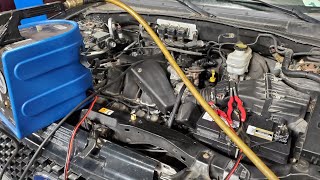
- Ford IDS / ForScan: EVAP Canister Vent Valve (On/Off) — This is a critical bidirectional control used to manually command the vent solenoid to close. While commanding it closed, a technician can listen for a click, check if the valve actually seals using a smoke machine, and verify the PCM is sending the ground signal.
- Ford IDS / ForScan: Powertrain -> EVAP System Test — This is an automated, on-demand test that runs the entire EVAP monitor sequence. It's used to verify the system is functioning correctly after a repair, without having to perform a full drive cycle. It will command the vent and purge valves and monitor the fuel tank pressure sensor to confirm the system can seal and hold a vacuum.
Wiring & Ground Locations
- Fuse 27 (Smart Junction Box) — In the passenger compartment fuse panel (Smart Junction Box), located behind the kick panel on the passenger side.. This fuse provides the 12V power to the EVAP canister vent solenoid. If this fuse is missing or blown, the solenoid will have no power and cannot close, directly causing a P0446 code.
- Vent Solenoid Connector — Directly on the EVAP canister vent solenoid, under the vehicle near the charcoal canister (rear driver's side).. This 2-wire connector is highly exposed to road salt and moisture, making it a common point of failure due to corrosion on the pins. One wire is power (from Fuse 27), the other is the control ground from the PCM.
- G301 / G402 — These are common chassis ground points located in the rear of the vehicle. G402 is often found on the left rear of the vehicle body structure.. While the vent solenoid is controlled directly by the PCM, other related EVAP sensors (like the Fuel Tank Pressure sensor) rely on clean chassis grounds. A corroded ground in this area can cause erratic sensor readings that may complicate diagnosis.
Real Owner Repair Stories
- Ford Boss Me (YouTube) (2005 Ford Escape) — P0446 code, failed emissions test.
❌ Tried (didn't work) The new technician initially misdiagnosed it as a purge valve issue., The vent solenoid had already been replaced by a previous mechanic, but the code remained.
✅ What actually fixed it The technician found that Fuse 27 in the passenger-side Smart Junction Box was missing. This fuse supplies power to the vent solenoid. After installing the correct fuse, the solenoid could be commanded closed, and the vehicle passed the EVAP system self-test. - South Main Auto Repair LLC (YouTube) (2008 Ford Escape 3.0L AWD (same platform, slightly newer but identical EVAP system)) — P0446 code, difficulty filling with gas.
❌ Tried (didn't work) Replacing the EVAP vent solenoid. While the original solenoid was indeed seized and rusty, replacing it did not clear the code.
✅ What actually fixed it The technician discovered the PCM driver for the vent solenoid circuit was faulty. It was providing a constant partial ground, preventing the circuit from operating correctly. The final fix required replacing the Powertrain Control Module (PCM) in addition to the vent solenoid that had failed initially.
"I Checked Everything" — The Actual Cause
- In one documented case on a 2005 Ford Escape, a smoke test would have appeared to show a massive leak at the vent solenoid. Smoke would pour out of the vent hose because the normally-open valve would not close when commanded by a scan tool. The root cause was not a leak or a faulty valve, but rather a missing fuse (Fuse 27) in the interior fuse panel, which prevented power from ever reaching the solenoid to close it.
Diagnostic Flowchart
Other Known Issues on This Vehicle
Issues unrelated to this code that are worth knowing about as an owner of this generation:
- Subframe Corrosion 🔴 High — Common on 2001-2004 models, especially in salt-belt states. Can lead to lower control arm separation and loss of steering. (Ref: Mazda Safety Recall 7514D was issued for 2001-2004 Tributes.)
- Automatic Transmission (CD4E) Failure 🔴 High — The CD4E transmission, particularly in 2001-2004 models with the V6 engine, is known for premature failure, including hard shifting, slipping, or complete loss of drive. Failures can occur under 100,000 miles.
- Premature Alternator Failure 🟠 Medium — The alternator, especially on the V6 engine, is difficult to access and prone to failure. Owners report replacing multiple alternators, sometimes due to poor quality of remanufactured units.
Used vs. New Parts: Buying Guide for This Vehicle
When a used part is the smart pick: For this specific repair, using a used part is generally not recommended. The vent solenoid is an electro-mechanical part that is inexpensive new and is located in a harsh environment under the car, making it prone to failure from rust and debris. A used part from a junkyard carries a high risk of being near the end of its service life or already faulty.
Donor-vehicle mileage cap: roughly under 80000 miles for the part to have meaningful remaining life.
What to inspect on the donor part:
- Visually inspect for heavy rust or corrosion on the solenoid body and electrical pins.
- If possible, test the solenoid with a 12V source to ensure it makes a sharp, audible click.
- Check that the plastic housing is not cracked or damaged.
- Avoid parts from vehicles in the rust belt if possible.
OEM-only on this vehicle (don't cheap out):
- While not strictly OEM-only, the Powertrain Control Module (PCM) should be sourced with extreme caution. A used PCM must be an exact part number match and will require reprogramming by a dealer or a specialized shop with Ford IDS software.
Aftermarket brands forum-validated for this vehicle:
- Motorcraft (OEM)
- Standard Motor Products (SMP)
Brands owners have reported issues with on this vehicle:
- Some users on forums have reported fitment issues with the electrical connectors on certain Dorman replacement solenoids for Ford platforms, though many use them without issue. It is a brand to inspect carefully before installation.
Real Owner Stories
Aggregated from forums and TSBs cited above. Mileages and costs reflect what owners reported in those sources.
2003 Mazda Tribute
Symptoms: After driving into a deep puddle during a torrential downpour, the check engine light came on with code P0446 and two hoses were found hanging underneath the vehicle on the driver's side near the fuel tank.
What fixed it: Reconnecting the disconnected electrical connector and securing the hanging hoses.
Source hint: Mazdas247 - '2003 Mazda Tribute, hanging hoses, P0446'
2003 Mazda Tribute
Symptoms: Check engine light P0446 appeared after a stick hit the canister while driving a mail route.
What fixed it: Repairing physical damage to the canister/solenoid area caused by road debris impact.
Source hint: Mazdas247 owner reply cited in owner_reports
2008 Ford Escape (Platform Mate)
Symptoms: Check engine light P0446 and difficulty fueling (slow gas filling) after driving through a heavy rainstorm.
What fixed it: Addressing water intrusion found in the EVAP system components.
Source hint: Ford Truck Enthusiasts Forums - 'Code P0446 and slow gas filling 08 Escape XLT'
Documented NHTSA Reports
Mazda EVAP System Issues
Symptoms: An owner reported that their vehicle continually shows EVAP DTCs including P0443 and P0446, as well as fuel mixture (too rich or too lean) and O2 sensor issues despite previous sensor replacements.
Report Details: NHTSA ODI #11010363
Related OBD-II Codes
Frequently Asked Questions
Where is the vent solenoid located on my 2001-2006 Mazda Tribute?
Why does the gas pump nozzle keep clicking off when I try to fill my Tribute?
Is there a recall for the P0446 code or EVAP system on the 2001-2004 models?
Can driving through deep water trigger the P0446 code on my Tribute?
How can I test if my Tribute's vent solenoid has failed electrically?
Are the EVAP parts for a Ford Escape compatible with my Mazda Tribute?
Helpful Videos
Used OEM Parts in Stock
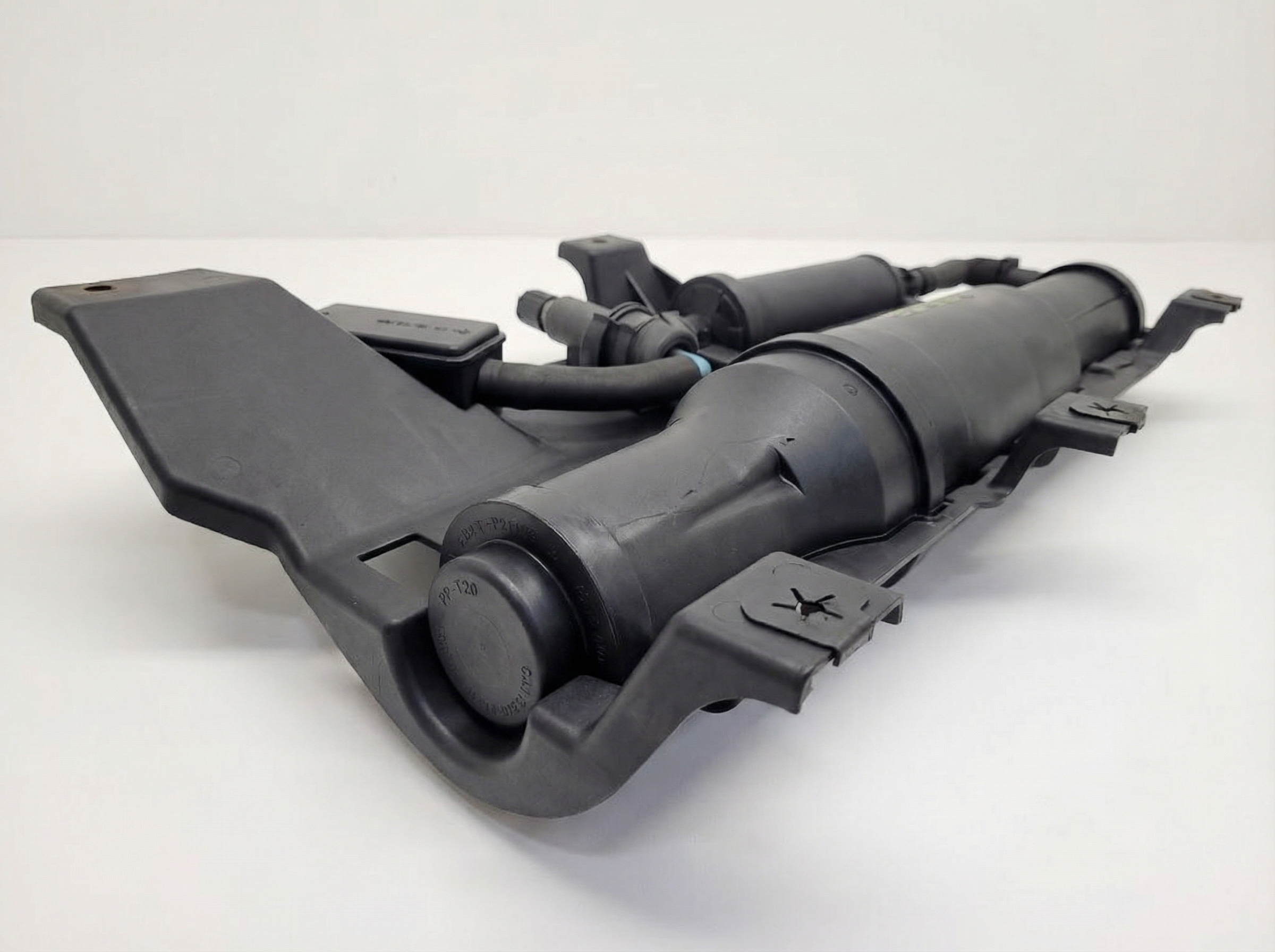
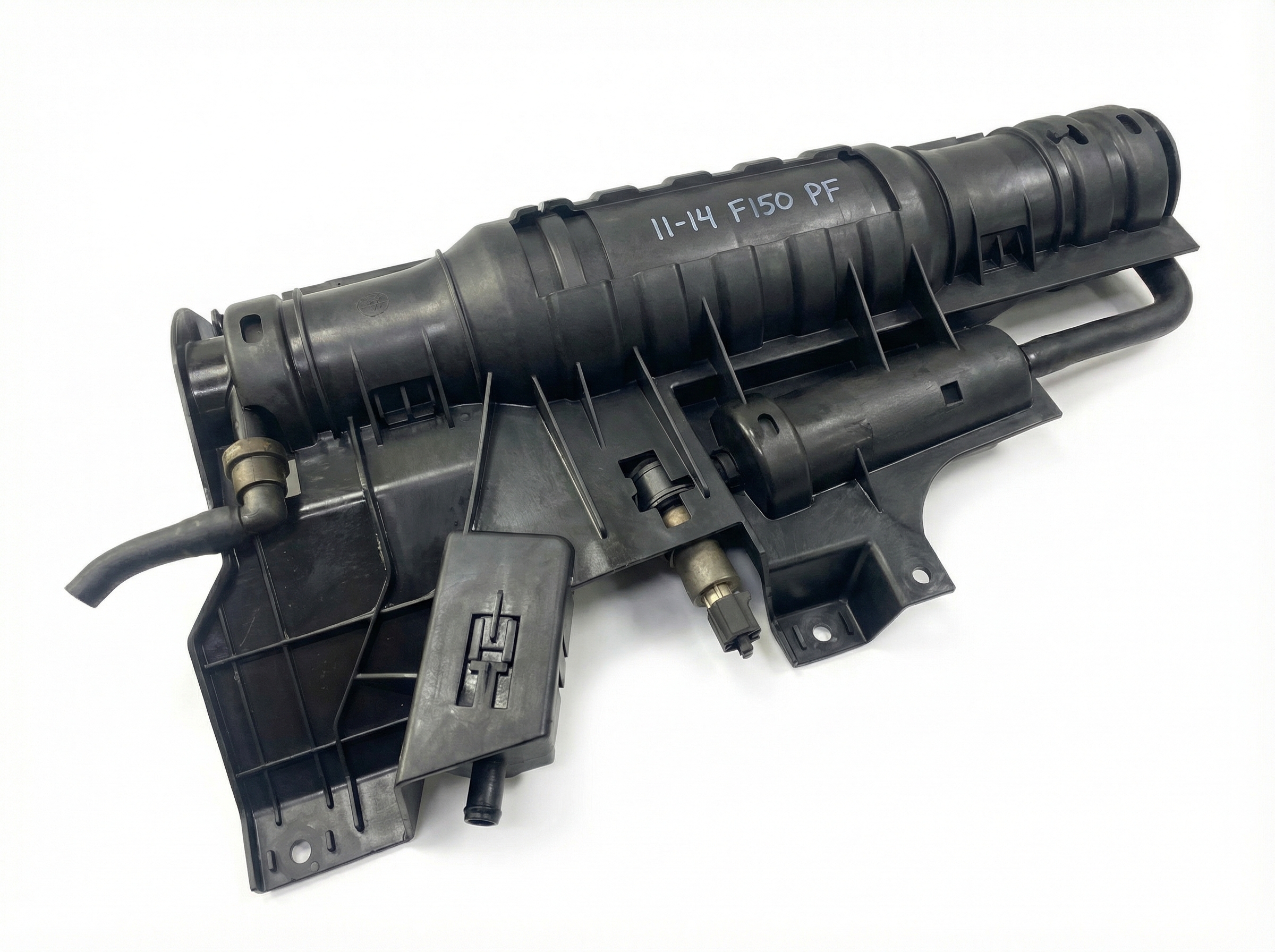
New Aftermarket Parts Available

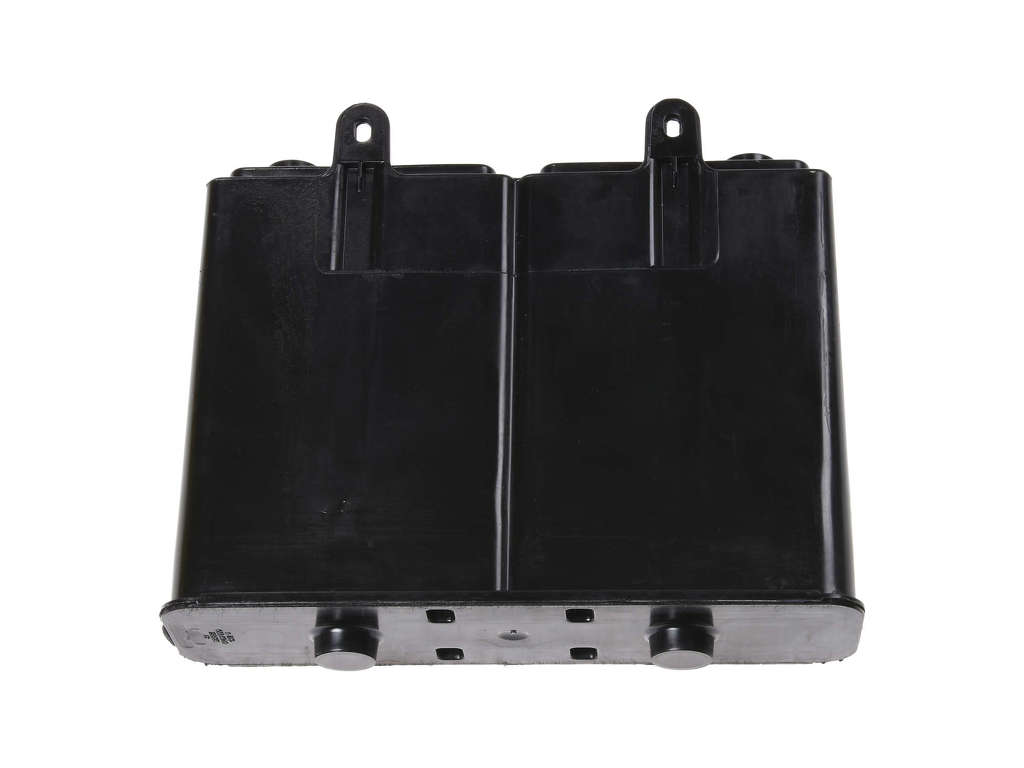
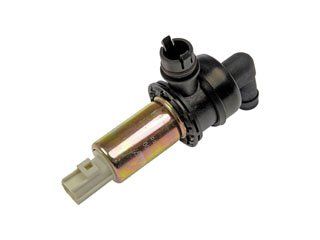

The information in this article is provided for general reference and educational purposes only. Vehicle specifications, procedures, and part compatibility can vary by production date, trim level, and region. Always consult your vehicle's factory service manual and verify part numbers before purchasing or performing repairs. Safety-critical components such as airbags, seat belts, and braking systems should be installed by a qualified professional.
- Mazda Tribute:
- 🧭 Diagnostic Flowchart
- 🎬 Helpful Videos
- 🛍️ Shop This Part
- What's Unique About the 2001-2006 Mazda Tribute
- Symptoms You May Notice
- Most Likely Causes
- Rare But Worth Checking
- Diagnosis Steps
- Parts You'll Likely Need
- Platform-Specific Known Issues
- Mechanic-Grade Diagnostic Values
- Hidden / Shadow Codes Worth Checking
- Scan Tool Commands That Help
- Wiring & Ground Locations
- Real Owner Repair Stories
- "I Checked Everything" — The Actual Cause
- Other Known Issues on This Vehicle
- Used vs. New Parts: Buying Guide for This Vehicle
- Real Owner Stories
- 2003 Mazda Tribute
- 2003 Mazda Tribute
- 2008 Ford Escape (Platform Mate)
- Documented NHTSA Reports
- Mazda EVAP System Issues
- Related OBD-II Codes
- Frequently Asked Questions
- 🎟️ Get 5% Off