

P0446 on 2006-2010 Mercury Mountaineer: EVAP Vent Circuit Causes and Fixes
On a 2006-2010 Mountaineer, P0446 almost always points to a failed EVAP canister vent solenoid or its wiring. This part is located on the frame near the rear passenger wheel and is a common failure item due to its exposure to the elements. Expect to pay $50-$100 for a new solenoid, and it's a very DIY-friendly fix that can be done in under an hour.
- P0446 on your Mountaineer is almost certainly a problem with the EVAP vent solenoid or its wiring, located near the spare tire.
- The most common symptom, besides the Check Engine Light, is the gas pump nozzle shutting off repeatedly during refueling.
- This is a very common, DIY-friendly repair that usually costs under $100 and takes less than an hour.
- Before buying parts, check for blockages (spider webs) in the vent hose and inspect the wiring for corrosion.
What's Unique About the 2006-2010 Mercury Mountaineer
The 2006-2010 Mercury Mountaineer is mechanically identical to the fourth-generation Ford Explorer, so repair information for one directly applies to the other. On this platform, the P0446 code is very common. The canister vent solenoid is mounted on the frame rail in a location that exposes it to road salt, water, and debris, leading to corrosion of the solenoid itself and its electrical connector. This frequent failure of the vent solenoid is the most platform-specific issue related to this code. On Ford platforms, P0446 specifically points to an electrical circuit fault, whereas on other makes it can be triggered by a mechanical blockage.
Symptoms You May Notice
- Check Engine Light is on.
- Difficulty filling the gas tank (the pump nozzle clicks off repeatedly 🎬 See how a blocked vent causes gas refueling issues).
- A faint smell of fuel, particularly around the rear of the vehicle.
- No noticeable change in engine performance or drivability.
- In some cases on Ford vehicles, a "Check Gas Cap" light may flicker or illuminate on the dashboard.
- Replacing the gas cap. A bad gas cap will typically cause a leak code like P0455 or P0457, not a circuit code like P0446.
- Replacing the purge valve/solenoid. The purge valve is located in the engine bay and has its own specific trouble codes (e.g., P0496). P0446 points specifically to the vent circuit at the rear of the vehicle.
Most Likely Causes
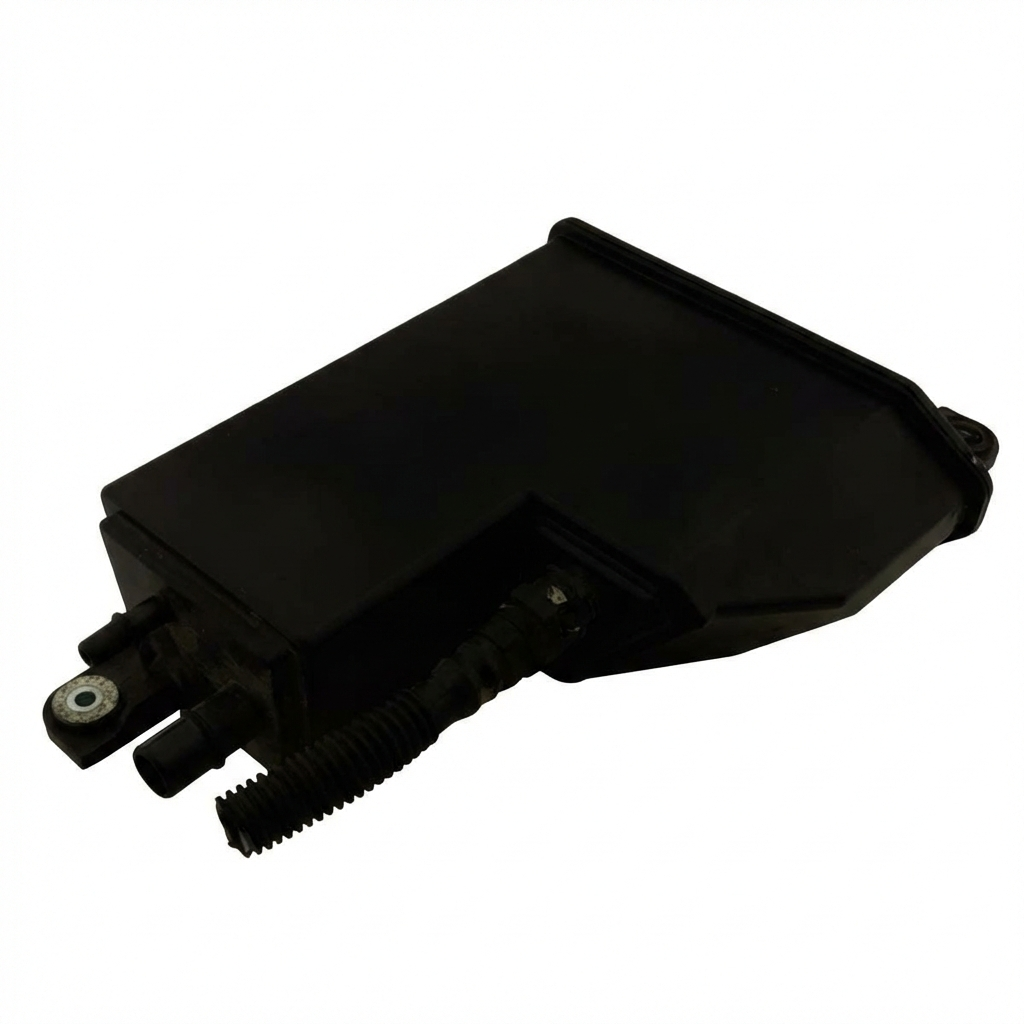
- Defective EVAP Canister Vent Valve/Solenoid 🔴 High Probability → Shop Vapor Canister The solenoid is located on the frame rail, exposed to road spray and debris, which leads to corrosion and premature failure of the valve's internal coil or mechanical parts.
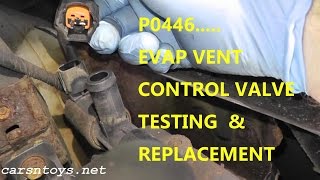
How to confirm: With the key on, use a scan tool to command the solenoid on and off; listen for a click. If no click, check for 12V power at the connector. You can also test the solenoid's internal resistance with a multimeter; a good solenoid should read between 48 and 65 ohms. If power is present but it doesn't click, or the resistance is infinite (open circuit), the solenoid is bad.
Typical fix: Replace the canister vent valve solenoid.
Est. part cost: $50 - $100 - Damaged Wiring or Electrical Connector 🟡 Medium Probability The wiring to the vent solenoid is also exposed and can become corroded, brittle, or damaged by road debris. Internal corrosion inside the wire's insulation is a known issue, even if the exterior looks fine.
How to confirm: Visually inspect the wiring harness and connector for any breaks, corrosion in the pins, or loose connections. Check for 12V power on the supply wire (often Yellow/Red on Fords) with the key on. If power is good, check the ground-side control wire for continuity back to the PCM. A common failure is an open circuit within the wire itself near the connector.
Typical fix: Repair the damaged section of wire or replace the connector pigtail.
Est. part cost: $10 - $30 - Clogged Vent Hose or Filter Box ⚪ Low Probability The vent hose outlet can be blocked by mud, debris, or insects (like spiders or mud daubers), preventing the system from venting properly.
How to confirm: Disconnect the hose from the vent solenoid and attempt to blow through it. If it is blocked, inspect the entire length of the hose and the filter box at the end for obstructions. This is a known issue on many Ford vehicles.
Typical fix: Clear the obstruction from the hose or filter box.
Est. part cost: $0 - $20
Rare But Worth Checking
- Failed Charcoal Canister: → Shop Vapor Canister While not common for P0446, if the canister's internal structure fails, charcoal pellets can break loose and clog the vent solenoid and its lines, causing a vent circuit fault. This is usually accompanied by other EVAP codes and may cause black dust to be visible in the EVAP lines.
- Faulty Powertrain Control Module (PCM): This is extremely rare. The PCM's internal driver for the vent solenoid circuit can fail. This should only be considered after all other possibilities (solenoid, wiring, connections) have been exhaustively tested and ruled out. One diagnostic case on a 2013 Explorer required a PCM replacement to fix the P0446 code.
Diagnosis Steps
- Confirm the Code: Use an OBD-II scanner to confirm P0446 is the active code.
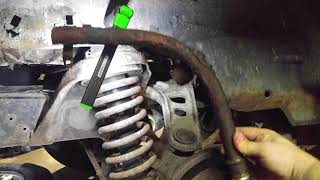
- Visual Inspection: Raise and safely support the rear of the vehicle. Locate the EVAP vent solenoid on the passenger-side frame rail, in front of the rear axle. Visually inspect the solenoid, its electrical connector, and the wiring harness for any obvious signs of damage, corrosion, or loose connections.
- Inspect Hoses: Check the rubber hoses connected to the solenoid for cracks, and inspect the vent outlet for any blockages like mud, debris, or spider webs.
- Test Solenoid Function (Scan Tool): If you have a bidirectional scan tool, command the vent valve to close. You should hear an audible click from the solenoid. Command it to open, and you should hear another click. If there is no click, proceed to electrical checks.
- Electrical Check (Power): Disconnect the electrical connector. Turn the ignition to the 'On' position (engine off). Use a multimeter to check for battery voltage (approx. 12V) at the power supply pin on the connector harness (often a Yellow/Red wire).
- Electrical Check (Solenoid Resistance): With the solenoid disconnected, use a multimeter set to Ohms (Ω) to measure the resistance between the two pins on the solenoid itself. A good solenoid should read between 48 and 65 ohms. An infinite reading means an open circuit (bad solenoid), and a near-zero reading means a short circuit (bad solenoid).
- Electrical Check (Control Circuit): If the solenoid and power supply are good, the problem may be in the ground-side control wire running to the PCM. A common failure is an open circuit from corrosion inside the wire's insulation, close to the connector. Check this wire for continuity between the solenoid connector and the PCM connector. This step is more advanced and requires a wiring diagram.
- Replace the Faulty Component: Based on your findings, replace the faulty vent solenoid, repair the wiring, or clear the blocked hose.
Parts You'll Likely Need
- Vapor Canister Vent Solenoid
(OEM #6L2Z-9F945-AA)— This is the most common failure point for code P0446 on this vehicle due to its exposed location, leading to electrical or mechanical failure.
Trusted brands: Motorcraft, Dorman, Standard Motor Products
OEM price range: $85 - $140
Aftermarket price range: $45 - $95
Platform-Specific Known Issues
- Spider/Insect Nests in Vent Hose: A well-documented issue on many Ford platforms is for spiders or other insects to build nests inside the EVAP vent hose/filter box. This creates a blockage that can trigger a P0446 code. Before replacing parts, it is wise to disconnect the vent hose and ensure it is clear by blowing compressed air through it.
- Internal Wire Corrosion Near Connector: Due to the exposed location, moisture can get into the wiring harness for the vent solenoid and cause corrosion inside the wire's insulation, leading to an open circuit. The wire may look fine externally. A user on YouTube documented this failure on an F-150, which uses a similar setup. Gently tugging on the wires at the connector may reveal a break.
Mechanic-Grade Diagnostic Values
- EVAP Canister Vent Solenoid Coil Resistance — expected: 48 to 65 ohms. Failure: A reading outside this range, infinite (open), or near-zero (shorted) indicates a failed solenoid.
- Fuel Tank Pressure (FTP) Sensor Voltage (Key On, Engine Off) — expected: ~2.6 Volts. Failure: A significantly different static voltage may indicate a biased or failed FTP sensor, which can complicate EVAP diagnostics.
- Voltage at Vent Solenoid Connector (Power Wire) — expected: 12V (Battery Voltage) with Key On, Engine Off. Failure: No voltage indicates a problem with the power supply from the fuse box (Power Distribution Box).
- Voltage at Vent Solenoid Connector (Control Wire, Backprobed, Plugged In) — expected: 12V when inactive (venting); drops to ~0V when commanded closed by PCM.. Failure: Voltage that does not change when commanded indicates a wiring fault or a failed PCM driver.
Scan Tool Commands That Help
- Ford IDS (Integrated Diagnostic System): Output State Control (OSC) for Canister Vent Valve (CVS) — This bidirectional command allows a technician to manually command the vent solenoid open and closed to listen for an audible click and verify its mechanical operation without having to remove it. It's a primary step after visual inspection.
- Ford IDS (Integrated Diagnostic System): EVAP System Test (Gross Leak Test) — This is a comprehensive, automated test that the PCM runs to check the entire system's integrity. It will command the vent and purge valves as needed and monitor the FTP sensor. Running this test after a repair can confirm the fix.
Wiring & Ground Locations
- Vent Solenoid Power Wire — At the vent solenoid connector, near the rear passenger-side frame rail.. This wire, often Red/Yellow (RD/YE), provides the 12V supply to the solenoid. A lack of power here points to a fuse or a break in the harness upstream.
- Vent Solenoid Control Wire — Runs from the vent solenoid connector to the PCM.. This wire, which can be Violet/White (VT/WH), is what the PCM grounds to close the valve. P0446 is often caused by an open or short in this specific wire due to its exposed routing.
- Power Distribution Box — Located in the engine compartment.. This fuse box contains the fuse that supplies power to the EVAP vent solenoid. A blown fuse (check owner's manual for specific fuse number) will cause a P0446.
Real Owner Repair Stories
- YouTube video by 'KIT'S Auto and Truck Repair' (2014 Ford F-150 (similar EVAP control logic)) — Check Engine Light with code P0446.
❌ Tried (didn't work) Initial diagnosis pointed to the vent solenoid itself.
✅ What actually fixed it The problem was a broken wire in the harness leading to the vent solenoid. The wire was corroded internally and broke, causing an open circuit. Repairing the wire resolved the code. - YouTube video by 'Rainman Ray's Repairs' (2013 Ford Explorer (newer generation, but relevant PCM failure mode)) — Check Engine Light with P0446, difficulty fueling.
❌ Tried (didn't work) Replacing the vent valve with an OEM part did not fix the issue.
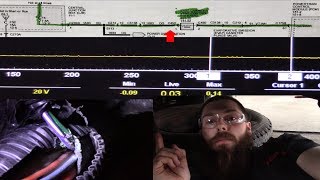
✅ What actually fixed it The PCM driver for the vent valve circuit had failed. The control wire was showing a constant 1.46V instead of switching between 12V and ground. The final fix was replacing and programming a used PCM.
OEM Part Supersession History
YL2Z-9F945-BA→5U5Z-9F945-GA, which was then superseded by 6L2Z-9F945-AA.— Typically for improvements in material, weather sealing, or internal coil design to increase longevity, though Ford does not publicly state the exact reason for each supersession.
Diagnostic Flowchart
Real Owner Stories
Aggregated from forums and TSBs cited above. Mileages and costs reflect what owners reported in those sources.
2006 Mercury Mountaineer, 4.0L V6 — 180000 miles
Symptoms: Multiple codes including P0443 (related to EVAP Purge Control Circuit) and P0446.
What fixed it: The user was asking for diagnostic advice and did not report a final fix.
Source hint: Reddit r/MechanicAdvice
2006-2010 Ford Explorer / Mercury Mountaineer
Symptoms: Refueling issues and an active P0446 code.
What fixed it: Replaced the vent solenoid with part number 6L2Z-9F945-AA.
Source hint: explorerforum.com
2002 Ford Explorer
Symptoms: Hard to fill the gas tank with the pump shutting off repeatedly.
What fixed it: Identified a stuck-closed vent valve as the root cause of the refueling issue.
Source hint: fordforum.com - Thread 'Hard to fill gas tank'
2006 Ford Ranger
Symptoms: EVAP Vent Valve Solenoid Trouble P0446.
What fixed it: Tested the solenoid and found a resistance of 56.4 ohms, confirming a real-world value for a good part before proceeding with further electrical diagnosis.
Source hint: ranger-forums.com - Thread 'EVAP Vent Valve Solenoid Trouble P0446'
1997 Ford Explorer XLT
Symptoms: Check engine code P0446 EVAP SYS.
What fixed it: The user was asking for advice on whether the vapor management valve had gone bad and did not report a final fix.
Source hint: ford-trucks.com - check engine code P0446 EVAP SYS
Related OBD-II Codes
Frequently Asked Questions
Why does the gas pump keep clicking off when I try to refuel my 2006-2010 Mercury Mountaineer?
Where is the EVAP vent solenoid located on the 2006-2010 Mountaineer?
What is the correct resistance for a good vent solenoid on this vehicle?
I replaced the vent solenoid on my Mountaineer, but the P0446 code came back. What else could it be?
Can spiders really cause a P0446 code on my Mountaineer?
What is the exact part number for the replacement vent solenoid?
Helpful Videos

Used OEM Parts in Stock
New Aftermarket Parts Available


The information in this article is provided for general reference and educational purposes only. Vehicle specifications, procedures, and part compatibility can vary by production date, trim level, and region. Always consult your vehicle's factory service manual and verify part numbers before purchasing or performing repairs. Safety-critical components such as airbags, seat belts, and braking systems should be installed by a qualified professional.
- Mercury Mountaineer:
- 🧭 Diagnostic Flowchart
- 🎬 Helpful Videos
- 🛍️ Shop This Part
- What's Unique About the 2006-2010 Mercury Mountaineer
- Symptoms You May Notice
- Most Likely Causes
- Rare But Worth Checking
- Diagnosis Steps
- Parts You'll Likely Need
- Platform-Specific Known Issues
- Mechanic-Grade Diagnostic Values
- Scan Tool Commands That Help
- Wiring & Ground Locations
- Real Owner Repair Stories
- OEM Part Supersession History
- Real Owner Stories
- 2006 Mercury Mountaineer, 4.0L V6 — 180000 miles
- 2006-2010 Ford Explorer / Mercury Mountaineer
- 2002 Ford Explorer
- 2006 Ford Ranger
- 1997 Ford Explorer XLT
- Related OBD-II Codes
- Frequently Asked Questions
- 🎟️ Get 5% Off