

P0446 on 2000-2005 Mitsubishi Eclipse: EVAP Vent Circuit Causes and Fixes
On a 2000-2005 Mitsubishi Eclipse, code P0446 is almost always caused by a failed EVAP vent solenoid or its wiring. This is an electrical fault, not a gas cap issue. The solenoid (OEM part MR404963) is located under the car near the fuel tank. Expect to pay $40-$90 for a replacement part and spend about an hour on the repair if doing it yourself.
- P0446 on your Eclipse is an electrical circuit code for the EVAP vent solenoid, not a leak code.
- Do not replace the gas cap; it will not fix this problem.
- The most likely fix is replacing the EVAP vent solenoid (OEM# MR404963), located near the fuel tank.
- Before replacing the solenoid, test its resistance (should be 17-21 ohms) and check its connector/wiring for 12V power and for breaks.
- The repair is straightforward for DIYers with basic tools and a multimeter.
What's Unique About the 2000-2005 Mitsubishi Eclipse
For this generation of Mitsubishi and its platform mates (Galant, Stratus/Sebring coupes), the P0446 code points specifically to an electrical circuit fault, not a physical blockage or leak in the EVAP system. While other manufacturers might use this code for a stuck valve or clogged hose, Mitsubishi's diagnostic strategy for this era is to monitor the electrical feedback from the vent solenoid coil. This means common fixes for other cars, like replacing the gas cap, will not resolve a P0446 on your Eclipse.
Symptoms You May Notice
- Check Engine Light is on.
- Possible difficulty refueling (gas pump nozzle clicks off before the tank is full).
- A faint fuel odor may be noticeable due to vapors not being properly contained.
- Replacing the gas cap. A bad gas cap causes EVAP leak codes (like P0455), not this specific circuit code on a Mitsubishi.
- Replacing the EVAP purge solenoid. The purge solenoid is located in the engine bay and has its own diagnostic code (P0443).
Most Likely Causes
- Failed EVAP Vent Solenoid 🔴 High Probability → Shop Vapor Canister The solenoid is located under the rear of the car near the fuel tank, exposing it to moisture and road debris which can lead to internal coil failure or corrosion over time.
How to confirm: Locate the solenoid near the charcoal canister. Apply 12V power and a ground to its terminals; a healthy solenoid will make an audible click. Alternatively, check the resistance across the two pins with a multimeter; an open circuit (infinite resistance) or a reading outside the expected 17-21 ohm range indicates failure.
Typical fix: Replace the EVAP vent solenoid. The OEM part number is MR404963.
Est. part cost: $40-$90 - Damaged Wiring or Connector 🟡 Medium Probability The wiring harness to the vent solenoid runs underneath the vehicle and is known to fatigue, corrode, or break, particularly where it passes into the frame rail.
How to confirm: Visually inspect the wiring harness leading to the vent solenoid for any breaks, chafing, or corrosion. Use a multimeter to check for 12V power at the connector with the key on and for continuity on the ground wire back to the ECM.
Typical fix: Repair the broken or shorted section of the wire harness and clean or replace the connector.
Est. part cost: $5-$25
Rare But Worth Checking
- Failed Engine Control Module (ECM): This is very uncommon. The ECM should only be considered after the vent solenoid and its entire circuit have been thoroughly tested and confirmed to be in good working order.
Diagnosis Steps
- Retrieve the P0446 code using an OBD-II scanner.
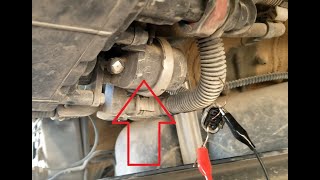
- Locate the EVAP charcoal canister and the attached vent solenoid at the rear of the vehicle, near the fuel tank.
- Inspect the wiring harness and connector going to the vent solenoid for any visible damage, corrosion, or loose connections.
- With the ignition on, use a multimeter to verify that one pin on the connector has battery voltage (approx. 12V). Specifically, test for power at Pin 2 of connector F-19.
- If power is present, test the solenoid itself. Disconnect it and measure the resistance between its two pins. A healthy solenoid should read between 17-21 ohms. An open circuit or significantly different reading means the solenoid has failed.
- As a secondary test, apply 12V directly to the solenoid's pins to see if it clicks. If it doesn't click, the solenoid has failed and needs replacement.
- If the solenoid tests good but the code persists, the issue is likely in the ground control wire running back to the ECM or the ECM itself. Check the ground wire (Pin 1 of connector F-19) for continuity back to the ECM connector B-109, terminal 117.
- After replacing the part or repairing the wire, clear the code with the scanner and perform a drive cycle to ensure the fix was successful.
Parts You'll Likely Need
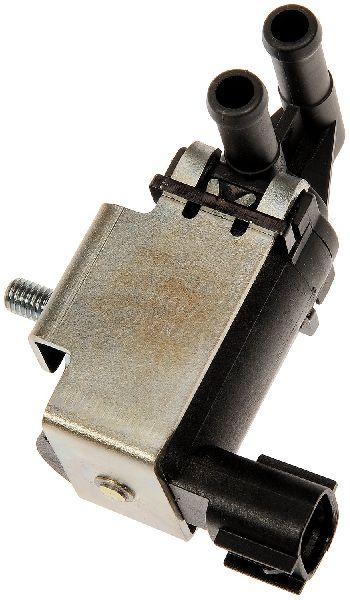
- EVAP Vent Solenoid / Canister Close Valve
(OEM #MR404963)— This is the most common failure point for a P0446 code on this vehicle, as the internal coil fails and no longer produces the electrical signal the ECU expects to see.
Trusted brands: Standard Motor Products (CP683), Dorman, A-Premium
OEM price range: $70-$120
Aftermarket price range: $40-$90
Technical Service Bulletins (TSBs) & Recalls
- TSB-00-17-003: Mentioned for the related Mitsubishi Galant platform, this TSB reportedly contains updated diagrams for EVAP component locations to address technician confusion. Full text is not publicly available but its existence is noted in repair databases.
Platform-Specific Known Issues
- Owner Experience: Wire Break Inside Harness: A user on the Club3G.com forum with a 2000 Eclipse GT reported chasing a P0446 code. After replacing the vent solenoid did not fix the issue, they tested the wiring. They found 12V at the plug but discovered the ground wire was broken somewhere inside the harness between the solenoid and the front of the car. Repairing the broken wire resolved the code. This highlights the importance of checking wiring continuity even if there is no visible damage. (Source: Club3G Forum, thread title 'P0446 Evap Vent Solenoid Circuit Malfunction', user 'my2kGTeclipse')
Mechanic-Grade Diagnostic Values
- EVAP Vent Solenoid Coil Resistance — expected: 17 - 21 Ohms. Failure: An open circuit (infinite resistance) or a reading outside the specified range indicates a failed solenoid.
- Voltage at Vent Solenoid Connector F-19, Pin 2 to Ground — expected: Battery Voltage (approx. 12V) with ignition switch ON. Failure: 0V indicates an open circuit or short to ground in the power supply wire from the MFI relay.
- ECM Surge Voltage Detection — expected: Battery Positive Voltage + 2 Volts (for 1 second after solenoid is commanded OFF). Failure: The absence of this specific voltage surge is what causes the ECM to set the P0446 code.
Scan Tool Commands That Help
- Mitsubishi M.U.T.-III: Actuator Test Item 15: Evaporative Emission Ventilation Solenoid — This command allows a technician to manually cycle the vent solenoid on and off. A healthy solenoid will produce an audible click, confirming it is mechanically functional and receiving the command. This is used to quickly determine if the solenoid itself is dead without needing a multimeter.
Wiring & Ground Locations
- F-19 — The 2-pin electrical connector at the EVAP vent solenoid, located near the charcoal canister at the rear of the vehicle.. This is the primary point for testing the solenoid and its circuit. Pin 2 is power from the MFI relay; Pin 1 is the ground control wire to the ECM.
- B-109 (Pin 117) — The main engine control module (ECM) connector, located in the passenger footwell area.. Pin 117 is the specific terminal for the EVAP vent solenoid ground control circuit. Testing continuity between F-19 (Pin 1) and this pin is critical for diagnosing a broken wire.
- A-30X (Pin 2) — The connector for the MFI (Multi-port Fuel Injection) relay, located in the under-hood fuse and relay box.. This is the source of battery power for the vent solenoid. A problem here would cut power to the entire circuit.
- C-39, D-15 — Intermediate harness connectors located between the ECM/MFI Relay and the vent solenoid.. These connectors are potential failure points for corrosion or loose pins, causing an open circuit that can be difficult to find visually.
Diagnostic Flowchart
Other Known Issues on This Vehicle
Issues unrelated to this code that are worth knowing about as an owner of this generation:
- Automatic Transmission Failure 🔴 High — Common, especially in higher mileage (150k+) vehicles. Shift solenoids are a frequent point of failure, leading to erratic shifting or loss of power.
- Cracked Dashboard 🟡 Low — Extremely common across all 3G Eclipse models. The dashboard plastic is prone to cracking from sun exposure and vehicle vibration.
- Manual Transmission Shifting Difficulty 🟠 Medium — Reported in 1990-2009 models, caused by burrs developing on the synchronizer assembly splines.
- Oil Leaks (V6 Engine) 🟠 Medium — The V6 engine is known for developing oil leaks, often from the valve cover gaskets or oil pan seals.
- Sun Visor Detachment During Airbag Deployment 🔴 High — Affects all 2000-2005 Eclipse models. The passenger sun visor can detach if in the down position during an airbag deployment. (Ref: NHTSA Recall No. 08V454000)
Used vs. New Parts: Buying Guide for This Vehicle
When a used part is the smart pick: A used OEM vent solenoid is a risky choice. The part fails due to internal coil burnout and corrosion from its exposed location under the car. A used part should only be considered if it comes from a very low-mileage donor vehicle from a dry, salt-free climate, and even then, it carries a high risk of premature failure.
Donor-vehicle mileage cap: roughly under 50000 miles for the part to have meaningful remaining life.
What to inspect on the donor part:
- Visually inspect the plastic housing for cracks or heat stress.
- Check the electrical connector pins for any signs of corrosion (green or white powder).
- If possible, test the resistance with a multimeter before purchase; it must be within the 17-21 ohm range.
- Ask for the donor vehicle's history to confirm mileage and geographic location (avoid rust-belt cars).
OEM-only on this vehicle (don't cheap out):
- For this repair, the OEM part is reliable but expensive. High-quality aftermarket alternatives are a viable option.
Aftermarket brands forum-validated for this vehicle:
- Standard Motor Products (SMP): Part number CP683. Often considered a high-quality replacement, with some forum users suggesting they are sometimes rebranded OEM parts.
- Dorman: A commonly available and generally reliable aftermarket option that is reported by owners to solve the code.
Brands owners have reported issues with on this vehicle:
- Unnamed, low-cost online marketplace brands. While they may work initially, their long-term durability is questionable given the electrical and environmental stress the part endures.
Real Owner Stories
Aggregated from forums and TSBs cited above. Mileages and costs reflect what owners reported in those sources.
2000 Eclipse GT
Symptoms: Check Engine Light for code P0446. The owner replaced the vent solenoid, but the code persisted despite having 12V at the plug.
What fixed it: Repairing a ground wire that was broken inside the harness between the solenoid and the front of the car.
Source hint: Club3G Forum, thread title 'P0446 Evap Vent Solenoid Circuit Malfunction', user 'my2kGTeclipse'
1997 Eclipse GSX
Symptoms: Check Engine Light with code P0446. Noticing no pressure release when opening the gas cap anymore.
What fixed it: The user had not found a solution at the time of posting.
Source hint: DSMtuners.com - P0446 CEL and emission problems
1999 Eclipse GS-T
Symptoms: Check Engine light came on, code P0446. The code returned after being cleared once or twice.
What fixed it: The original poster did not report a fix.
Source hint: Mitsubishi Forum
Documented NHTSA Reports
Mitsubishi Outlander Sport (Cross-Model Reference)
Symptoms: A dealership service department verified diagnostic codes indicating internal transmission failure, including P0776 and P0868, alongside the EVAP code P0446.
Source hint: NHTSA ODI #11636737
Related OBD-II Codes
Frequently Asked Questions
Is there a specific Mitsubishi part number I should use to replace the vent solenoid on my 2000-2005 Eclipse?
Could a bad gas cap be causing the P0446 code on my 3G Eclipse?
Where is the vent solenoid located on the 2000-2005 Eclipse?
Does TSB-00-17-003 apply to the Eclipse platform?
What electrical readings should I see when testing the vent solenoid on my Eclipse?
Are there any known safety recalls for the 2000-2005 Eclipse I should be aware of while fixing my car?
Helpful Videos


We Have This Part in Stock


The information in this article is provided for general reference and educational purposes only. Vehicle specifications, procedures, and part compatibility can vary by production date, trim level, and region. Always consult your vehicle's factory service manual and verify part numbers before purchasing or performing repairs. Safety-critical components such as airbags, seat belts, and braking systems should be installed by a qualified professional.
- Mitsubishi Eclipse:
- 🧭 Diagnostic Flowchart
- 🎬 Helpful Videos
- 🛍️ Shop This Part
- What's Unique About the 2000-2005 Mitsubishi Eclipse
- Symptoms You May Notice
- Most Likely Causes
- Rare But Worth Checking
- Diagnosis Steps
- Parts You'll Likely Need
- Technical Service Bulletins (TSBs) & Recalls
- Platform-Specific Known Issues
- Mechanic-Grade Diagnostic Values
- Scan Tool Commands That Help
- Wiring & Ground Locations
- Other Known Issues on This Vehicle
- Used vs. New Parts: Buying Guide for This Vehicle
- Real Owner Stories
- 2000 Eclipse GT
- 1997 Eclipse GSX
- 1999 Eclipse GS-T
- Documented NHTSA Reports
- Mitsubishi Outlander Sport (Cross-Model Reference)
- Related OBD-II Codes
- Frequently Asked Questions
- 🎟️ Get 5% Off