

P0446 on 2007-2010 Pontiac G5: EVAP Vent Circuit Causes and Fixes
On a 2007-2010 Pontiac G5, code P0446 is almost always caused by a faulty EVAP vent solenoid or a clogged vent hose near the charcoal canister. A common symptom is the gas pump repeatedly shutting off when refueling. Expect to pay $30-$70 for a new vent solenoid. Spiders or other insects building nests in the vent hose is a very common cause on this platform.
- P0446 on your Pontiac G5 almost always points to a problem at the rear of the car with the EVAP vent system.
- The most likely symptom, besides the Check Engine Light, is your gas pump nozzle shutting off constantly while refueling.
- Before replacing any parts, disconnect the vent hose from the charcoal canister and blow it out with compressed air to clear common blockages like spider webs.
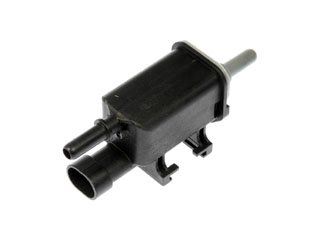
- The most common failed part is the EVAP vent solenoid (ACDelco 214-2149), which gets stuck or clogged.
- Don't immediately replace the purge valve in the engine bay; it is rarely the cause of a P0446 code.
What's Unique About the 2007-2010 Pontiac G5
The Pontiac G5 and its twin, the Chevrolet Cobalt, are known for this specific issue. A General Motors technical bulletin (PIP3627) directly addresses P0446 and difficulty fueling. The cause is often a simple mechanical blockage, such as an insect nest (spiders are commonly cited) or debris clogging the EVAP canister vent pipe. Because the system's pressure monitoring is very sensitive, the pipe does not need to be fully restricted for the code to be set. This makes diagnosis relatively straightforward, often starting at the rear of the car near the charcoal canister.
Symptoms You May Notice
- Check Engine Light is on
- Difficulty filling the gas tank (fuel nozzle shuts off repeatedly).
- A faint fuel odor near the rear of the vehicle
- Release of vapor pressure (a 'whoosh' sound) when opening the gas cap.
- Replacing the gas cap. While a faulty gas cap can cause other EVAP codes (like P0455 or P0457 for leaks), it is not a typical cause for a P0446 vent restriction code.
- Replacing the EVAP purge valve/solenoid. The purge valve is located in the engine bay and typically sets different codes (like P0443 or P0496) when it fails. Owners often replace this part in frustration, but it rarely fixes a P0446.
Most Likely Causes
- Faulty or Clogged EVAP Vent Solenoid 🔴 High Probability → Shop Vapor Canister The vent solenoid is located under the car near the rear wheel, making it susceptible to road debris, moisture, and dirt, which can cause it to stick closed or fail internally. Corrosion of the electrical connector is also common.
How to confirm: Locate the vent solenoid on the charcoal canister (black box near the driver's side rear wheel). With a capable scan tool, command the valve to open and close; you should hear a click. Alternatively, remove the valve and apply 12V power to its terminals to see if the internal plunger moves. The valve is normally open, so you should be able to blow through it when no power is applied. Check for 12V at the pink wire in the connector with the key on. The other wire (often white) is the ground controlled by the PCM.
Typical fix: Replace the EVAP vent solenoid. It is often attached directly to the charcoal canister and can be replaced separately.
Est. part cost: $30-$70 - Blocked EVAP Canister Vent Hose/Pipe 🟡 Medium Probability → Shop Vapor Canister A GM service bulletin (PIP3627) notes that the vent pipe is prone to being blocked by insect nests (like spiders or mud daubers) or other debris. The opening is an inviting place for spiders to build webs and egg sacs, causing a partial restriction.
How to confirm: Locate the vent hose that runs from the charcoal canister towards the fuel filler neck area. Disconnect the hose from the canister and inspect it for blockages. Use compressed air to blow through the hose and check for debris. Even a small amount of debris can cause this code.
Typical fix: Clear the obstruction from the hose using compressed air or a flexible brush. If the hose is damaged or brittle, it should be replaced.
Est. part cost: $0-$30 - Failed Charcoal Canister ⚪ Low Probability → Shop Vapor Canister Over-filling the fuel tank can force liquid gasoline into the charcoal canister, saturating the carbon pellets and causing an internal blockage that restricts airflow. The canister can also become clogged with dust if operated in very dusty environments, as noted in TSB 23-NA-073.
How to confirm: After removing the canister, check if it feels unusually heavy or if charcoal pellets are coming out of the ports. If the vent solenoid and hoses are confirmed to be good but the restriction persists, the canister is the likely cause.
Typical fix: Replace the entire charcoal canister assembly. The OEM part number is 19259321.
Est. part cost: $150-$260
Rare But Worth Checking
- Failed Fuel Tank Pressure (FTP) Sensor: → Shop Fuel Tank While less common for this specific code, a faulty FTP sensor can send incorrect data to the computer, leading it to believe there is a vent problem. A technician video on a Cobalt showed an FTP sensor stuck reading positive pressure, which can mislead the PCM into setting a P0446 code even if the vent path is clear. A P0452 (FTP low voltage) code may also be present. In a cross-manufacturer reference, NHTSA ODI #743096 describes a case where a technician found the pressure sensor out of specs at 1.12 and replaced it to resolve a recurring P0446.
- Damaged Wiring or Connector: The wiring to the vent solenoid is under the vehicle and can be damaged by road debris or corrosion. One Cobalt owner reported that after replacing both solenoids, the actual problem was the white control wire for the vent solenoid had corroded and broken near the connector. Always inspect the harness for breaks, corrosion, or loose pins before replacing parts.
Diagnosis Steps
- Verify the code with an OBD-II scanner.
- Check for the most common symptom: Does the fuel pump nozzle click off when you try to fill the tank? If yes, a restriction is highly likely.
- Visually inspect the EVAP system components at the rear of the vehicle, near the driver's side rear wheel. Look for the charcoal canister (a black plastic box), the attached vent solenoid, and associated hoses.
- Inspect the vent hose running from the canister for any obvious blockages, kinks, or damage. Disconnect it and attempt to blow air through it to confirm it's clear. Pay close attention to the opening for spider webs.
- Test the vent solenoid electrical circuit. Turn the ignition to 'ON' (engine off). Disconnect the solenoid and use a multimeter to check for battery voltage (~12V) at the pink wire in the harness connector.
- Test the vent solenoid function. Use a scan tool to command it on/off and listen for a click. If you don't have a scan tool, remove the solenoid and apply 12V power to its terminals to test its function. The valve should click closed (it is normally open).
- If the solenoid and hoses are good, inspect the charcoal canister for signs of fuel saturation (feeling heavy) or blockage by shaking it to see if loose carbon pellets are inside.
- If all other components check out, the issue may be with the Fuel Tank Pressure (FTP) sensor. Use a scan tool to monitor the FTP sensor data; a sensor that is stuck reading pressure or vacuum when the system should be at atmospheric pressure is faulty.
Parts You'll Likely Need
- EVAP Vent Solenoid / Valve
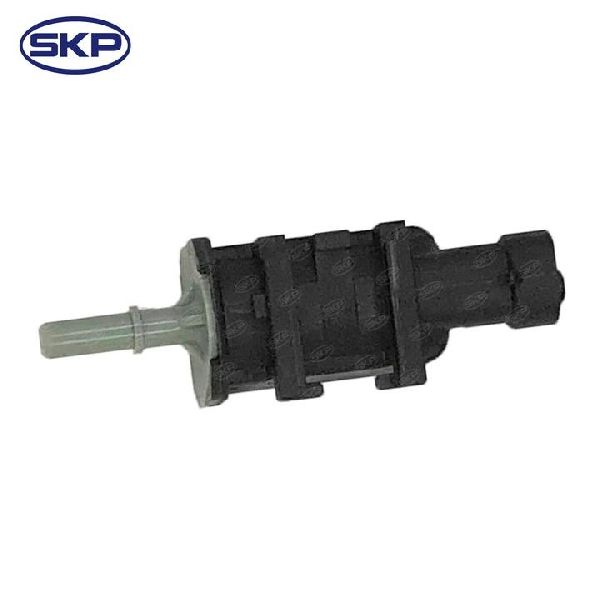
(OEM #ACDelco 214-2149)— This is the most common failure point for code P0446. It gets stuck closed or clogged, preventing the EVAP system from venting properly.
Trusted brands: ACDelco, Dorman, Standard Motor Products (SMP)
OEM price range: $50-$90
Aftermarket price range: $30-$70 - EVAP Charcoal Canister
(OEM #19259321)— This part is replaced if it becomes saturated with fuel from overfilling the tank or if it is internally blocked and restricting airflow.
Trusted brands: ACDelco, Dorman
OEM price range: $200-$300
Aftermarket price range: $150-$260
Related Codes That Often Appear With This One
- P0449 — P0449 is an almost identical code for the EVAP Vent Solenoid Control Circuit, often pointing to an electrical fault rather than a restriction, but the components involved are the same. The diagnostic and repair steps are very similar.
- P0455 — This code indicates a large EVAP leak. It can sometimes appear with P0446 if the vent valve is stuck open, but P0446 on its own usually implies a restriction (stuck closed). TSBs mention them occurring together if the system is compromised by debris.
- P0442 — This code for a small EVAP leak can also be triggered by issues in the vent system, as noted in GM TSB 09-06-04-028D.
Technical Service Bulletins (TSBs) & Recalls
- PIP3627: Addresses P0446 and slow fuel fill due to restricted EVAP canister vent pipe, often from insect nests.
- 09-06-04-028D: Discusses P0446, P0442, P0455, and P0449 caused by dirt, dust, or water intrusion into the vent system.
- 23-NA-073: For vehicles in dusty environments, suggests a filter retrofit to prevent dust from clogging the EVAP canister and vent solenoid.
Platform-Specific Known Issues
- A GM Preliminary Information bulletin (PIP3627) was issued for the 2007 Pontiac G5 (and related Chevy Cobalt) for P0446 accompanied by a slow/difficult fuel fill condition, identifying the cause as a restricted EVAP canister vent pipe, often due to insect nests.
- TSB 09-06-04-028D notes that dirt, dust, or water intrusion can cause corrosion on the vent valve or clog the system, leading to codes P0446, P0449, and others.
- For vehicles operated in extremely dusty environments, TSB 23-NA-073 suggests that dust can clog the canister and vent solenoid, and provides a procedure for retrofitting an external filter to the vent hose as a customer-pay alteration. A user on a GM truck forum confirmed this exact scenario, finding the breather line and filter box packed solid with dirt.
Mechanic-Grade Diagnostic Values
- Fuel Tank Pressure (FTP) Sensor Voltage — expected: Approximately 1.5V with the gas cap off (atmospheric pressure). The acceptable range is generally 1.3V to 1.7V.. Failure: A reading stuck near 0V or 5V indicates a sensor or circuit fault. A reading that doesn't change when pulling a vacuum on the system also indicates a fault.
- EVAP Vent Solenoid Connector Voltage — expected: Approximately 12V (battery voltage) on the Pink wire with the ignition key in the 'ON' position.. Failure: No voltage suggests a wiring issue or a blown fuse (check the ECM/TRANS fuse).
Scan Tool Commands That Help
- Tech 2 / GDS2 / Capable Aftermarket Scanner: EVAP Service Bay Test (or EVAP Purge/Seal) — This is a guided diagnostic test to verify a repair or test the entire system's integrity. The tool commands the vent solenoid closed and the purge solenoid open to create a vacuum, then seals the system to see if the vacuum holds. This can confirm if a restriction (P0446) or a leak (other codes) is present without a smoke machine.
- Tech 2 / GDS2 / Capable Aftermarket Scanner: Vent Valve Solenoid Control — This is a simple bidirectional command to manually open and close the vent solenoid. It's used to listen for an audible 'click' from the solenoid to confirm it is mechanically responding to the ECM's command. This is the first step before performing more complex tests.
Wiring & Ground Locations
- EVAP Canister Vent Solenoid Connector — On the EVAP vent solenoid, attached to the charcoal canister, located under the rear of the vehicle near the driver's side wheel.. This 2-pin connector provides power and ground to the solenoid. The Pink wire should have ~12V with key-on, and the White wire is the ground control from the ECM. Corrosion or damage here will cause a P0446 or P0449.
- G402 — Center of the rear shelf, near the speaker.. This is a major ground point for several rear body components. While not directly tied to the EVAP solenoid circuit in most diagrams, a poor ground here can cause erratic behavior in nearby systems and is worth checking if electrical issues are suspected in the rear of the vehicle.
- G101 — On the left side of the engine compartment, under the coolant reservoir.. This is a primary engine ground. While the P0446 components are in the rear, the ECM that controls them is in the engine bay and relies on clean grounds like G101 to function correctly. An intermittent ground here could cause a variety of seemingly unrelated codes.
Real Owner Repair Stories
- YouTube channel 'Pine Hollow Auto Diagnostics' (2010 Chevrolet Cobalt 2.2L Manual) — Check Engine Light with codes P0446 (EVAP Vent System Performance) and P0452 (FTP Sensor Circuit Low Voltage).
❌ Tried (didn't work) Initial diagnosis focused on the vent valve and FTP sensor as separate issues.
✅ What actually fixed it A visual inspection revealed that the wiring harness going to the EVAP canister area had been rubbing against a sharp piece of the subframe. Multiple wires, including those for the FTP sensor and the vent solenoid, were chafed and shorting to ground. Repairing the damaged wires and securing the harness away from the sharp edge resolved both codes.
Documented NHTSA Reports
- NHTSA ODI #11182132 describes an owner reporting fuel leaking from the gas tank area accompanied by a P0446 code.
- An owner reported a distinct gas smell and a leak in the fuel line above the fuel pump on top of the gas tank, which triggered a P0446 code, as documented in NHTSA ODI #11124447.
OEM Part Supersession History
19177701→19259321— Standard part update/revision by GM.
Heads up: This part number is for vehicles with California Emissions (NE1). It is not compatible with Federal Emissions (FE1) vehicles, which use a different canister (PN 19259320).
Model Year Variations Within This Range
- 2007-2010: The most significant variation is not by year, but by the vehicle's original emissions certification. Vehicles with Federal Emissions (RPO code FE1) use a different charcoal canister and potentially different vent hose routing than vehicles with California Emissions (RPO code NE1). The parts are not interchangeable. Using the wrong canister will result in persistent EVAP codes.
Diagnostic Flowchart
Real Owner Stories
Aggregated from forums and TSBs cited above. Mileages and costs reflect what owners reported in those sources.
Pontiac G5 / Chevy Cobalt
Symptoms: Engine light came on for P0446. The owner couldn't pump more than about $0.35 worth of fuel at a time before the gas pump nozzle would shut off.
What fixed it: Diagnosed at the dealer for a restricted EVAP vent system.
Source hint: Chevy Cobalt Forum thread 'Error code P0446 Evap emission control'
2006 Chevrolet Cobalt
Symptoms: Fuel pump kept shutting off prematurely while trying to fill the gas tank, accompanied by an EVAP code.
What fixed it: Cleared insect nests from the EVAP vent pipe, as identified in TSB PIP3627.
Source hint: Cobalt SS Network thread 'Pumping Fuel.. Problems!!'
Chevrolet Cobalt SS
Symptoms: Frustrating recurring P0446 code that returned immediately after clearing.
What fixed it: Replaced the vent valve and purge valve, but the code returned, illustrating a common misdiagnosis path where the actual restriction or wiring issue is missed.
Source hint: The Chevrolet Cobalt SS Forum thread 'p0446 is evil!'
2006 Chevrolet Cobalt
Symptoms: Classic symptoms of P0446 along with very slow fueling at the gas station.
What fixed it: Repaired a corroded white control wire for the vent solenoid. The owner noted this fixed the issue after they had already unnecessarily replaced parts.
Source hint: Chevrolet Forum thread 'P0446 code on a 2006 cobalt'
GM Vehicle (Platform Mate)
Symptoms: EVAP system failure in a dusty environment; the breather line and filter box were found packed solid with dirt.
What fixed it: Retrofitted an external filter to the vent hose as a customer-pay alteration per TSB 23-NA-073.
Source hint: GM truck forum user cited in context for TSB 23-NA-073
Related OBD-II Codes
Frequently Asked Questions
Why does the gas pump keep shutting off when I try to fill my Pontiac G5?
Does TSB PIP3627 apply to my 2007 Pontiac G5?
I live on a dirt road and keep getting P0446 on my G5. Is there a permanent fix?
I replaced the EVAP vent solenoid on my G5 but P0446 came right back. What else could it be?
Where is the EVAP vent solenoid located on the Pontiac G5?
Can overfilling my gas tank cause P0446?
Used OEM Parts in Stock
New Aftermarket Parts Available


The information in this article is provided for general reference and educational purposes only. Vehicle specifications, procedures, and part compatibility can vary by production date, trim level, and region. Always consult your vehicle's factory service manual and verify part numbers before purchasing or performing repairs. Safety-critical components such as airbags, seat belts, and braking systems should be installed by a qualified professional.
- Pontiac G5:
- 🧭 Diagnostic Flowchart
- 🛍️ Shop This Part
- What's Unique About the 2007-2010 Pontiac G5
- Symptoms You May Notice
- Most Likely Causes
- Rare But Worth Checking
- Diagnosis Steps
- Parts You'll Likely Need
- Related Codes That Often Appear With This One
- Technical Service Bulletins (TSBs) & Recalls
- Platform-Specific Known Issues
- Mechanic-Grade Diagnostic Values
- Scan Tool Commands That Help
- Wiring & Ground Locations
- Real Owner Repair Stories
- Documented NHTSA Reports
- OEM Part Supersession History
- Model Year Variations Within This Range
- Real Owner Stories
- Pontiac G5 / Chevy Cobalt
- 2006 Chevrolet Cobalt
- Chevrolet Cobalt SS
- 2006 Chevrolet Cobalt
- GM Vehicle (Platform Mate)
- Related OBD-II Codes
- Frequently Asked Questions
- 🎟️ Get 5% Off