

P0446 on 2000-2002 Saturn SL1: EVAP Vent Blockage Causes and Fixes
For a 2000-2002 Saturn SL1, code P0446 is almost always a blocked EVAP vent system, not a leak. The most common cause is a faulty EVAP vent solenoid located in the driver's side rear wheel well. Other causes include clogged hoses (often by spider webs), or a failed charcoal canister. Expect to pay $30-$60 for a new solenoid, which is a 2/5 difficulty DIY job.
- P0446 on your Saturn SL1 means the EVAP system vent is blocked, not leaking.
- Do not start by replacing the gas cap; the problem is almost always the vent solenoid or its hoses in the driver's side rear wheel well.
- A key symptom, besides the light, is the gas pump shutting off frequently when you try to refuel.
- The most likely fix is replacing the EVAP vent solenoid, a relatively inexpensive part that is accessible for a DIY repair.
- If you find black plastic pellets in the EVAP hoses, you must replace the charcoal canister in addition to the vent solenoid.
What's Unique About the 2000-2002 Saturn SL1
Unlike many other vehicles where EVAP codes often point to a loose gas cap or a system leak, the P0446 code on the Saturn S-Series is specifically triggered by a functional test that fails due to a blocked vent path. Owners frequently misdiagnose this by replacing the gas cap or purge valve, but the problem is almost always located at the rear of the car with the vent solenoid, charcoal canister, or their associated hoses.
Symptoms You May Notice
- Check Engine Light is on.
- Difficulty filling the fuel tank (the gas pump nozzle clicks off repeatedly before the tank is full).
- A faint fuel odor is possible, but less common than with leak-related codes.
- No noticeable drivability problems. 🎬 Watch: A breakdown of P0446 causes and common fixes.
- A loud hissing sound when removing the gas cap or a "popping" noise from the tank area, as noted in some Saturn EVAP failure reports.
- Replacing the gas cap. A bad gas cap typically causes a leak code (like P0442 or P0455), not a vent blockage code like P0446.
- Replacing the EVAP purge solenoid. The purge solenoid is located in the engine bay and is tested separately by the PCM. P0446 specifically points to a fault in the vent circuit at the rear of the vehicle.
Most Likely Causes
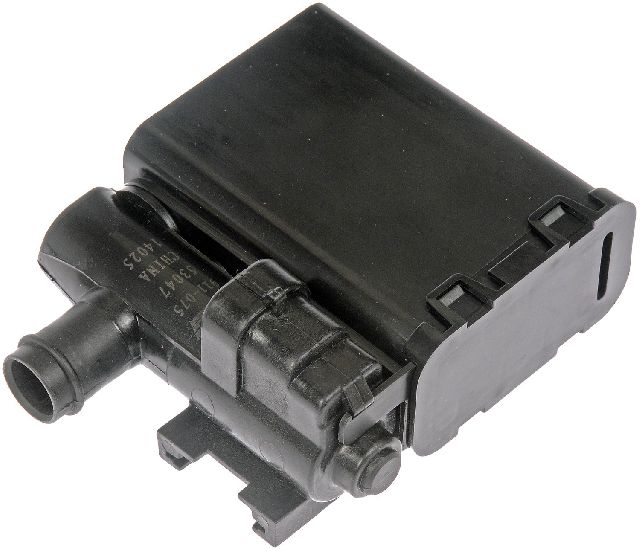
- Faulty EVAP Vent Solenoid 🔴 High Probability → Shop Vapor Canister The solenoid is exposed to the elements in the rear wheel well, making it susceptible to corrosion, dirt, and internal failure over time. It can get stuck closed, causing the blockage that triggers the P0446 code.
How to confirm: Locate the vent solenoid on the charcoal canister in the driver's side rear wheel well. Disconnect it and apply 12V power to its terminals; you should hear a distinct click. The valve is normally open, so when unpowered, you should be able to blow air through it. If it doesn't click or if it's stuck closed, it has failed. A multimeter test of the solenoid's coil should show a resistance between 20 and 30 ohms; a reading far outside this range indicates failure.
Typical fix: Replace the EVAP vent solenoid. This part is often mounted directly to the charcoal canister.
Est. part cost: $30-$60 - Clogged or Pinched EVAP Vent Hose 🟡 Medium Probability The rubber and plastic hoses can become blocked by insect nests (spiders and mud daubers are common culprits), ice in cold climates, or get pinched or kinked due to age or improper routing after a repair. Spiders are known to build webs and egg sacs inside the vent lines, causing a restriction.
How to confirm: Visually inspect all hoses connected to the charcoal canister and vent solenoid. Remove them and attempt to blow compressed air through them to check for restrictions. Pay close attention to the vent outlet hose that leads to open air.
Typical fix: Clear the blockage from the hose or replace the damaged/kinked section of the hose. A GM TSB for other models with this issue recommends installing a remote filter box to prevent re-contamination.
Est. part cost: $5-$20 - Clogged EVAP Charcoal Canister ⚪ Low Probability → Shop Vapor Canister Consistently overfilling the fuel tank can force liquid gasoline into the canister, saturating the charcoal pellets and causing them to break apart. This debris can then clog the canister's internal passages or the vent solenoid itself.
How to confirm: After removing the vent solenoid, inspect its inlet port for black charcoal pellets. If pellets are present, the canister has failed and is contaminating the system. A canister that feels excessively heavy or rattles when shaken may also be faulty.
Typical fix: Replace the charcoal canister. It is critical to also replace the vent solenoid and blow out all lines to ensure no debris is left to damage the new parts.
Est. part cost: $150-$250 - Damaged Vent Solenoid Wiring ⚪ Low Probability Wiring in the wheel well is exposed to moisture, road salt, and debris. Rodent damage is also a possibility, as noted by owners who found chewed wires on other nearby components like O2 sensors.
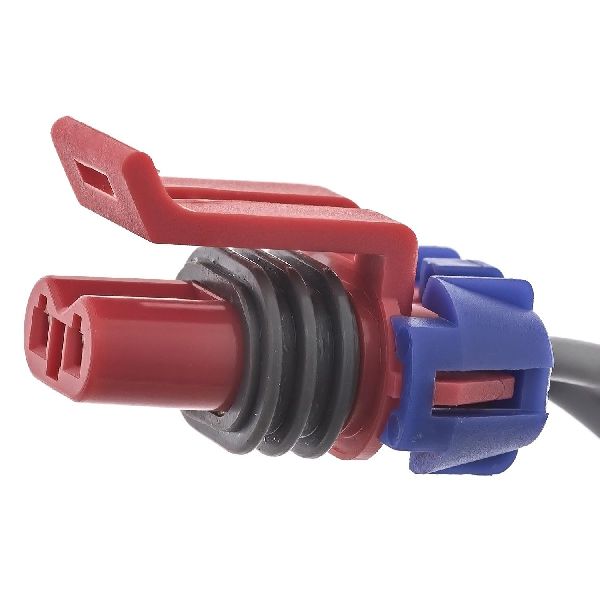
How to confirm: Visually inspect the wiring harness and connector for the vent solenoid. Check for green corrosion, chafed wires, or obvious breaks. Use a multimeter to check for 12V power at the connector with the key on. If there is no power, check the associated fuse before tracing the wiring for a break. The ground for the rear components is likely G314, located on the left side of the rear shelf.
Typical fix: Repair the damaged section of wiring or replace the connector pigtail.
Est. part cost: $10-$25
Rare But Worth Checking
- Faulty Fuel Tank Pressure (FTP) Sensor: → Shop Fuel Tank
Diagnosis Steps
- Confirm the primary symptom: Is the Check Engine Light on? Do you have trouble filling the gas tank?
- Visually inspect the area around the driver's side rear wheel well. Look for the black EVAP canister, the vent solenoid mounted to it, and associated hoses. Check for any obvious damage, disconnected hoses, or pinched lines.
- Test the EVAP Vent Solenoid: Disconnect the electrical connector and hoses. The solenoid is normally open. Try to blow through it; if air passes, it is mechanically open. Next, apply 12V from the battery to the electrical pins. You should hear it click closed, and you should no longer be able to blow through it. If it fails either of these tests, it needs replacement. Check the coil resistance with a multimeter; it should be between 20-30 ohms. 🎬 Watch: How to bench test an EVAP vent valve.
- Check for Blockages: If the solenoid tests good, remove the vent hose that runs from the canister to the solenoid and the hose that vents to atmosphere. Blow through them with low-pressure compressed air to ensure they are clear. Be particularly suspicious of spider webs or nests in the vent outlet.
- Inspect for Charcoal Pellets: Check the port of the old solenoid and the inside of the hoses for small black charcoal pellets. If found, the charcoal canister is failing and must be replaced along with the solenoid.
- Check Wiring: If the solenoid seems to work but the code persists, use a multimeter to check for 12V at the solenoid's electrical connector with the ignition on. If there is no power, trace the wiring back to find the break or check the associated fuse (often a 15A fuse). Check for continuity on the control wire back to the PCM.
Parts You'll Likely Need
- EVAP Canister Vent Solenoid
(OEM #ACDelco 214-2308 (Superseded by 214-2320))— This is the most common failure point for a P0446 code on this vehicle due to its location and function. It gets stuck closed, causing the blockage.
Trusted brands: ACDelco, Dorman (911-075), Standard Motor Products (CVS92)
OEM price range: $50-$80
Aftermarket price range: $30-$60 - EVAP Charcoal Canister — This is the second most likely part to fail, usually due to contamination from over-filling the fuel tank. It becomes internally clogged, restricting airflow.
Trusted brands: Dorman (911-265)
OEM price range: $250-$300
Aftermarket price range: $160-$200
Related Codes That Often Appear With This One
- P0447 — Indicates an open circuit for the vent solenoid. A broken wire or failed solenoid could cause both.
- P0448 — Indicates a shorted circuit for the vent solenoid. A short to ground could force the solenoid closed, causing the P0446 blockage code.
Technical Service Bulletins (TSBs) & Recalls
- GM TSB #02-06-04-037H: While not specifically for the Saturn S-Series, this bulletin addresses P0446 on other GM vehicles caused by dirt and dust intrusion. It recommends replacing the vent valve with an updated part that includes a remote filter box to be mounted higher and in a cleaner location. This strategy could be adapted by a DIYer to prevent repeat failures from road debris or insects.
Platform-Specific Known Issues
- Spider Nests in Vent Hose: A surprisingly common cause for a P0446 on many vehicles, including Saturns, is a spider building a web and egg sac inside the EVAP vent hose. This creates a perfect obstruction that prevents the system from venting when commanded, triggering the code. When inspecting hoses, this possibility should be taken seriously.
Mechanic-Grade Diagnostic Values
- EVAP Vent Solenoid Coil Resistance — expected: 20 - 30 Ohms. Failure: A reading significantly outside this range (open circuit/infinity or a dead short) indicates a failed solenoid coil.
- Fuel Tank Pressure (FTP) Sensor Voltage — expected: 1.3 - 1.7 Volts (Key On, Engine Off, gas cap installed and system at atmospheric pressure). Failure: A voltage reading significantly higher (e.g., >2.2V) or lower suggests a skewed or failed sensor.
- P0446 Fault Trigger Condition — expected: Vacuum should decay rapidly when vent solenoid is commanded open.. Failure: The PCM sets code P0446 if it detects a vacuum of 12 inches of H2O or greater for more than 1.6 seconds after commanding the vent open.
Scan Tool Commands That Help
- Tech 2 or equivalent professional scanner: EVAP Service Bay Test — This is a comprehensive, automated test that runs the PCM through the entire EVAP monitor sequence, including the vent restriction check. It's used to confirm a repair without having to perform a lengthy drive cycle.
- Tech 2 or equivalent professional scanner: EVAP Vent Solenoid ON/OFF Command — This bidirectional control allows the technician to manually command the vent solenoid to open and close. It is used to listen for the solenoid's 'click' to confirm mechanical operation and to test the wiring and PCM driver circuit with a test light or multimeter.
Wiring & Ground Locations
- EVAP Vent Solenoid Connector — On the vent solenoid itself, located behind the driver's side rear wheel well liner, near the fuel filler neck.. This is the primary point for testing voltage, ground signal, and solenoid resistance. Corrosion on the connector pins is a common point of failure.
- G314 — Located on the left side of the rear shelf area.. This is the most likely chassis ground point for the rear body harness, which includes the EVAP vent solenoid. A corroded or loose G314 could cause an intermittent or permanent open in the solenoid's control circuit.
Real Owner Repair Stories
- Reddit user on r/Saturn_Cars (2002 Saturn SL1, 174k miles) — P0446 code, also had a P0133 from a chewed O2 sensor wire.
❌ Tried (didn't work) The owner considered replacing the gas cap first, a common misdiagnosis.
✅ What actually fixed it The final fix was not posted, but another user correctly advised inspecting the vent solenoid wiring for rodent damage, similar to what was found on the O2 sensor circuit, before replacing any parts. This highlights wiring damage as a plausible cause. - Bleeping Car YouTube Channel (2004 Saturn Ion (similar GM platform and EVAP logic)) — P0446 code (EVAP Vent System Performance).
❌ Tried (didn't work) Checked EVAP purge solenoid - passed., Checked EVAP vent solenoid - passed., Blew through all EVAP lines to check for blockage - passed.
✅ What actually fixed it Diagnosis pointed to a faulty Fuel Tank Pressure (FTP) sensor. With the gas cap off (at atmospheric pressure), the sensor was reading 2.2 volts instead of the expected ~1.5 volts. This incorrect reading tricked the PCM into thinking a vacuum was present when it wasn't, leading it to misdiagnose a vent blockage. The final fix required dropping the fuel tank to replace the FTP sensor. - NHTSA ODI #10303292 (Saturn Owner Report) — An owner reported the "Check Engine" light coming on with fault code P0446. They noted that the gas tank hissed loudly when undoing the gas cap and described a loud popping sound, similar to pressure releasing from a plastic bottle.
- NHTSA ODI #10263762 (Saturn Owner Report) — A report describes a situation where the fuel nozzle shut off intermittently or prematurely while filling the vehicle, accompanied by the SES lamp and DTC P0446.
"I Checked Everything" — The Actual Cause
- A common diagnostic dead-end for P0446 is performing a smoke test, which will almost always come back 'clean' or show no leaks. This is because P0446 is a 'blockage' code, not a 'leak' code. The PCM sets this code when it creates a vacuum in the tank and then commands the vent open, but the vacuum fails to dissipate. A smoke test, which pressurizes the system to find leaks, will not identify a vent path that is stuck closed or clogged. The actual cause is the restriction itself, such as a stuck-closed vent solenoid or a hose clogged with spider webs, both of which will not be found with a smoke machine.
OEM Part Supersession History
ACDelco 214-2308→ACDelco 214-2320— Standard part lifecycle update, likely for minor improvements in materials or design.
Diagnostic Flowchart
Used vs. New Parts: Buying Guide for This Vehicle
When a used part is the smart pick: For this repair, using used parts is generally not recommended. The primary failure points are an electro-mechanical solenoid exposed to the elements and a charcoal canister that acts as a filter. Both have a finite lifespan and failure modes that are not always visible.
Donor-vehicle mileage cap: roughly under 80000 miles for the part to have meaningful remaining life.
What to inspect on the donor part:
- For a vent solenoid, visually inspect the plastic housing for cracks and the electrical connector for corrosion. However, internal failure (stuck valve) cannot be seen.
- For a charcoal canister, avoid any unit that rattles (indicating broken internal pellets) or feels unusually heavy (indicating fuel saturation).
- Prioritize donors from dry, salt-free climates to minimize corrosion risk on electrical parts.
OEM-only on this vehicle (don't cheap out):
- No parts for this specific repair are strictly 'OEM-only'. Quality aftermarket replacements are widely available and perform well.
Aftermarket brands forum-validated for this vehicle:
- ACDelco (OEM supplier)
- Dorman
- Standard Motor Products (SMP)
Brands owners have reported issues with on this vehicle:
- No specific brands are consistently reported as problematic for this part on this vehicle, but ultra-low-cost, unbranded parts from online marketplaces carry a higher risk of premature failure.
Real Owner Stories
Aggregated from forums and TSBs cited above. Mileages and costs reflect what owners reported in those sources.
2001 Saturn SL1 SOHC
Symptoms: Check Engine Light on for code P0446.
What fixed it: After replacing both the purge and vent solenoids with no success, a commenter suggested the cause was more likely a clogged canister or a problem with the vent solenoid, not the loose clip on the purge solenoid the owner was investigating. The final fix was not confirmed by the original poster.
Source hint: Reddit r/MechanicAdvice
2001 SL1
Symptoms: P0446 code present.
What fixed it: The owner first replaced the purge solenoid and gas cap, which did not fix the issue. They were correctly advised by another user that P0446 is a vent circuit code and the problem was likely the vent solenoid itself or its wiring.
Source hint: Reddit r/Saturn_Cars: In a thread titled 'P0446 code?'
Saturn SC2
Symptoms: The gas pump nozzle was shutting off prematurely when trying to fill the fuel tank.
What fixed it: The cause was identified as a restriction in the EVAP vent system, which is the typical failure mode for a P0446 code.
Source hint: GM-Forum.com: A 2012 thread about a Saturn SC2 (a platform mate)
Related OBD-II Codes
Frequently Asked Questions
Where is the EVAP vent solenoid located on my 2000-2002 Saturn SL1?
I'm having trouble filling my gas tank; the pump keeps clicking off. Is this related to the P0446 code?
I replaced the gas cap and the purge valve, but the P0446 code is still on. What did I miss?
Could spiders or insects really be the cause of my Check Engine Light?
What resistance reading should I get when testing the vent solenoid with a multimeter?
I found small black pellets in the EVAP hoses. What does this mean?
Is there a GM Technical Service Bulletin (TSB) that applies to this P0446 problem?
Helpful Videos

We Have This Part in Stock


The information in this article is provided for general reference and educational purposes only. Vehicle specifications, procedures, and part compatibility can vary by production date, trim level, and region. Always consult your vehicle's factory service manual and verify part numbers before purchasing or performing repairs. Safety-critical components such as airbags, seat belts, and braking systems should be installed by a qualified professional.
- Saturn SL1:
- 🧭 Diagnostic Flowchart
- 🎬 Helpful Videos
- 🛍️ Shop This Part
- What's Unique About the 2000-2002 Saturn SL1
- Symptoms You May Notice
- Most Likely Causes
- Rare But Worth Checking
- Diagnosis Steps
- Parts You'll Likely Need
- Related Codes That Often Appear With This One
- Technical Service Bulletins (TSBs) & Recalls
- Platform-Specific Known Issues
- Mechanic-Grade Diagnostic Values
- Scan Tool Commands That Help
- Wiring & Ground Locations
- Real Owner Repair Stories
- "I Checked Everything" — The Actual Cause
- OEM Part Supersession History
- Used vs. New Parts: Buying Guide for This Vehicle
- Real Owner Stories
- 2001 Saturn SL1 SOHC
- 2001 SL1
- Saturn SC2
- Related OBD-II Codes
- Frequently Asked Questions
- 🎟️ Get 5% Off