

P0446 on 2005-2010 Scion tC: EVAP Vent Control Circuit Causes and Fixes
On a 2005-2010 Scion tC, code P0446 is most often caused by a failed charcoal canister assembly (Part No. 77740-21011), which includes the integrated vent valve. This is a well-documented failure point. Replacing the entire canister assembly is the most common and reliable fix. Expect to pay around $250-$360 for an OEM part.
- P0446 on a 2005-2010 Scion tC almost always points to a problem at the rear of the car, not in the engine bay.
- The most likely culprit is the entire charcoal canister assembly (OEM P/N 77740-21011), which includes the non-serviceable vent valve.
- Before buying parts, always check the gas cap for tightness and inspect the canister and its hoses for obvious cracks or blockages.
- A primary symptom of this failure is the gas pump shutting off repeatedly when you try to fill the tank.
- Aftermarket canisters (like Dorman 911-641) are cheaper but may require minor modification to fit correctly.
What's Unique About the 2005-2010 Scion tC
On the first-generation Scion tC, like many Toyota vehicles of this era, the vent valve (often called a Vacuum Switching Valve or VSV) is integrated directly into the charcoal canister assembly. This means that if the valve itself fails—the most common reason for P0446—the entire canister unit must be replaced as a single part. It is not sold separately by Toyota, a point of frustration for many owners.
Symptoms You May Notice
- Check Engine Light is on
- Difficulty refueling (the gas pump nozzle clicks off repeatedly before the tank is full)
- A faint fuel smell near the rear of the vehicle
- Slightly reduced fuel efficiency in some cases
- Replacing the purge valve (VSV) in the engine bay first, when the issue is almost always with the vent valve/canister assembly at the rear of the vehicle.
- Replacing the gas cap without checking the canister and vent hoses first.
- Replacing just the vent valve solenoid, which is not possible as it is integrated into the canister assembly on this model.
Most Likely Causes
- Failed Charcoal Canister Assembly 🔴 High Probability → Shop Vapor Canister The vent valve solenoid is integrated into the canister assembly and is a very common failure point. The plastic canister housing can also develop cracks over time, or the internal charcoal can become saturated or break down, causing a blockage.
How to confirm: Perform a visual inspection for cracks on the black plastic box located under the car, just ahead of the driver's side rear tire. A professional can use a bidirectional scanner to command the vent valve to close; if it doesn't click or the system doesn't hold pressure, the assembly is faulty. Many owners confirm the failure simply by replacing it after ruling out simpler causes.
Typical fix: Replace the entire charcoal canister assembly. This is the most frequently reported successful fix in owner forums.
Est. part cost: $250-$360 - Clogged EVAP Vent Hose or Filter 🟡 Medium Probability The vent hose inlet is located under the vehicle and is susceptible to blockage from spider webs, mud dauber nests, or road debris, especially on vehicles driven on gravel or dirt roads. This prevents the system from venting properly, mimicking a valve failure.
How to confirm: Locate the vent hose attached to the charcoal canister. Disconnect it and inspect the hose and its inlet port for any blockages. Attempt to blow compressed air through it to clear any debris.
Typical fix: Clear the blockage from the hose and port. If the hose is brittle or cracked, replace it.
Est. part cost: $0-$20 - Damaged Vent Valve Wiring or Connector ⚪ Low Probability
How to confirm: Visually inspect the wiring harness and connector going to the charcoal canister assembly for corrosion, breaks, or loose pins. Use a multimeter to check for 12V power at the connector with the key in the 'ON' position. The ECU provides the ground signal to activate the valve.
Typical fix: Repair the damaged section of the wiring harness or clean/replace the connector.
Est. part cost: $5-$50
Rare But Worth Checking
- Faulty Gas Cap: → Shop Fuel Tank Cap While more commonly associated with gross leak codes like P0455, a worn-out or incorrect gas cap can cause various EVAP issues. It's an inexpensive and easy first check. One owner on Reddit noted that buying a cheap aftermarket cap failed to solve the issue, but a proper OEM-spec cap did.
- Faulty Purge Valve: → Shop Vapor Canister The purge valve is in the engine bay and is more likely to cause code P0441. However, a stuck-open purge valve can sometimes contribute to other EVAP system faults. It's generally not the primary cause for P0446 on this car.
- Faulty Fuel Tank Pressure Sensor: → Shop Fuel Tank A failing fuel tank pressure sensor can send incorrect readings to the ECU, making it believe there is a vent circuit issue when there isn't. This is less common and would typically be accompanied by other pressure-sensor-specific codes.
Diagnosis Steps
- Check the Gas Cap: Ensure it is an OEM-spec cap, is tightened until it clicks, and the seal is not cracked or missing.
- Inspect the Charcoal Canister: Locate the black plastic box under the vehicle, on the driver's side, just in front of the rear wheel. Visually inspect it for any obvious cracks, especially around the mounting tabs and hose connections.
- Inspect Hoses: Check all rubber hoses connected to the canister for cracks, brittleness, or loose connections. Disconnect the fresh air vent hose and blow through it to check for blockages from spiders or debris.
- Test the Vent Valve Circuit: Disconnect the electrical connector at the canister. With the ignition key on (engine off), use a multimeter to verify ~12-volt power on one pin. The other pin is the ground, which is controlled by the ECU.
- Test the Vent Valve Function: If the circuit is good, the valve itself is the likely suspect. A bidirectional scan tool can command the valve to close; listen for an audible click. Since the valve is integrated, a failure here condemns the whole canister assembly. 🎬 Watch: How to test and replace the vent valve
- Perform a Smoke Test: This is the definitive test. A mechanic can introduce smoke into the EVAP system. Smoke will pour out of any cracks in the canister, leaking hoses, or a stuck-open vent valve, pinpointing the failure.
Parts You'll Likely Need
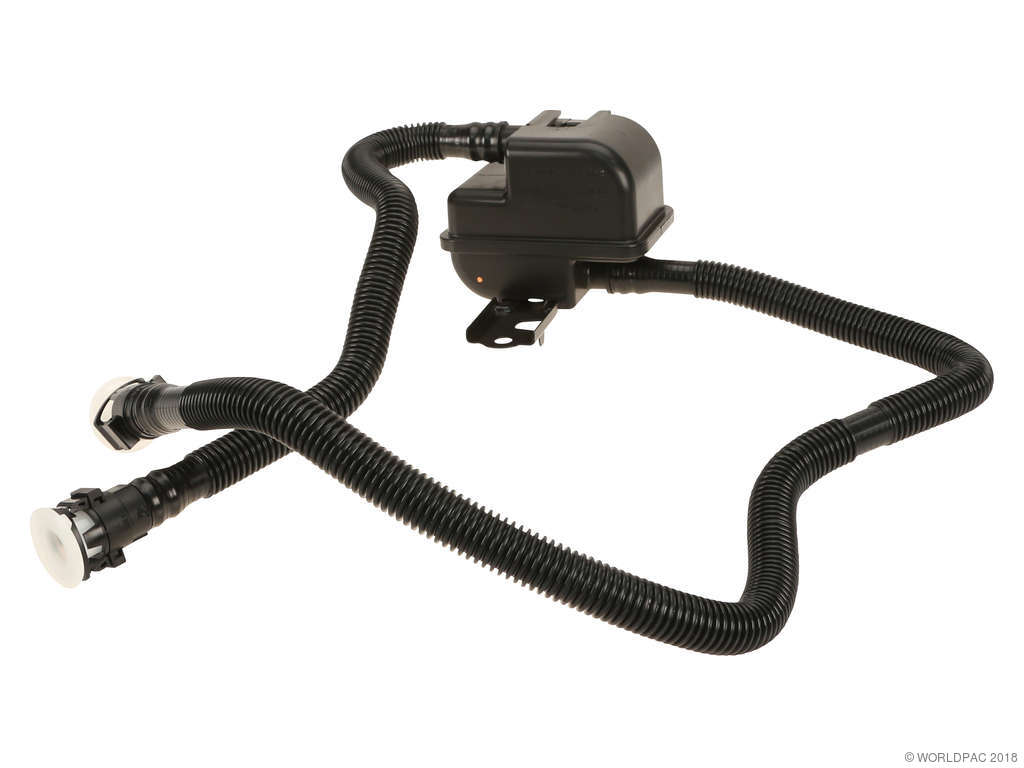
- Charcoal Canister Assembly
(OEM #77740-21011)— This is the most common failure for code P0446 on this vehicle, as it contains the integrated vent valve solenoid that fails, as well as being prone to cracking.
Trusted brands: Toyota (Genuine OEM), Aisan (Often the original manufacturer for Toyota), Dorman (911-641), Standard Motor Products (CP650)
OEM price range: $250-$360
Aftermarket price range: $130-$220
Related Codes That Often Appear With This One
- P0441 — Indicates incorrect purge flow. A problem with the vent valve (P0446) can disrupt the entire system's flow dynamics, triggering a P0441 code as well.
- P0442 — Indicates a small EVAP leak. If the vent valve is stuck open or the canister is cracked, it will be detected as a small leak during the system's self-test.
- P0455 — Indicates a large EVAP leak. A severely cracked canister or a vent valve stuck wide open can be interpreted by the ECU as a large leak.
Technical Service Bulletins (TSBs) & Recalls
- While no specific TSB for the Scion tC is widely cited, GM TSB #02-06-04-037H describes an identical issue on their vehicles: 'Dirt and dust intrusion into the EVAP canister vent hose assembly, resulting in restricted air flow, may cause this condition [P0446].' This highlights that environmental factors are a known cause for this code across manufacturers.
Platform-Specific Known Issues
- Difficulty Refueling is a Primary Symptom: A very common complaint from tC owners with P0446 is the gas pump nozzle constantly clicking off during refueling. This happens because the blocked or failed vent valve prevents displaced air and fuel vapors in the tank from escaping through the canister. The pressure backs up the filler neck, triggering the pump's auto-shutoff.
- Water Intrusion on Similar Scion Models: On the related Scion xA, xB, and xD, TSBs were issued for water intrusion into the charcoal canister, causing similar EVAP codes. While no specific TSB exists for the tC, the systems are similar, and canister failure due to moisture saturation is a possibility, especially if the canister appears heavy when removed.
Mechanic-Grade Diagnostic Values
- Vent Valve Connector Voltage — expected: ~12V (Battery Voltage) on one of the two pins.. Failure: No voltage indicates a wiring or fuse issue upstream of the connector.
Scan Tool Commands That Help
- Toyota Techstream: Evaporative System Check (Utility) — This is a guided diagnostic test to professionally diagnose the EVAP system. It allows the technician to command the various valves (purge, vent) to close and monitor the system's ability to hold a vacuum, pinpointing whether the leak is in the tank or canister side of the system.
- Bidirectional Scan Tool: Vent Valve / Canister Close Valve (CCV) ON/OFF Command — Used as a quick functional check. By commanding the valve on and off, a technician can listen for an audible 'click' from the solenoid. A lack of a click strongly suggests the solenoid inside the canister assembly has failed.
Wiring & Ground Locations
- EVAP Canister Connector — On the charcoal canister assembly, located under the car just ahead of the driver's side rear tire.. This 2-pin female connector provides power and the ECU ground signal to the vent valve solenoid. Checking for ~12V here is the first step in diagnosing a circuit fault.
- Rear Ground Point — General location is "at rear of vehicle" on the chassis. A specific designator (e.g., GXXX) is not readily available, but a common ground point is used for several rear components.. A corroded or loose ground connection in this area could affect the vent valve circuit, though a dedicated circuit fault is more likely.
Real Owner Repair Stories
- Reddit r/SciontC (First Generation Scion tC (2005-2010)) — Check Engine Light with P0446.
❌ Tried (didn't work) Not specified, but the user opted for an aftermarket canister instead of OEM.
✅ What actually fixed it Replacing the charcoal canister with a Dorman 911-641 aftermarket part resolved the code, but it was not a direct fit. The user reported needing to use a Dremel to sand the plastic housing and widen the bolt holes to make it fit into the vehicle's mounting bracket.
"I Checked Everything" — The Actual Cause
- A common diagnostic trap for P0446 is performing a smoke test and finding no leaks. This code can be set if the vent valve is stuck *closed*, not just stuck open or leaking. When the ECU commands the vent to open to allow fresh air into the canister, it detects no change in pressure because of the blockage. A technician performing a smoke test is looking for leaks (smoke escaping), but a stuck-closed valve will perfectly seal the system, showing no smoke and leading to a misdiagnosis. The actual failure is a blockage, not a leak.
OEM Part Supersession History
77740-21010→77740-21011— Standard part revision by the manufacturer. The new part is the current replacement.
Model Year Variations Within This Range
- 2005-2010: No significant variations related to the P0446 code and its common causes have been documented within the first generation (ANT10). The same charcoal canister assembly (77740-21011) is used for all model years in this range.
Diagnostic Flowchart
Used vs. New Parts: Buying Guide for This Vehicle
When a used part is the smart pick: A used charcoal canister is a high-risk purchase for this vehicle. Given that the internal solenoid is the primary failure point and the plastic housing is prone to cracking with age, a used part may have a very short remaining life. It should only be considered if the price is exceptionally low and the buyer accepts the risk of having to do the job again soon.
Donor-vehicle mileage cap: roughly under 100000 miles for the part to have meaningful remaining life.
What to inspect on the donor part:
- Visually inspect the entire plastic housing for hairline cracks, especially around mounting tabs and hose connections.
- Check the electrical connector pins for any signs of corrosion (green or white powder).
- Ensure none of the plastic hose nipples are broken or brittle.
- If possible, briefly apply 12V power to the two pins on the electrical connector and listen for a distinct 'click' from the internal solenoid.
OEM-only on this vehicle (don't cheap out):
- While not strictly 'OEM-only', using a new Genuine Toyota canister (77740-21011) is the most reliable, albeit most expensive, option to guarantee correct fitment and function.
Aftermarket brands forum-validated for this vehicle:
- Aisan (often the OEM supplier)
- Dorman (911-641)
- Standard Motor Products (CP650)
Brands owners have reported issues with on this vehicle:
- No specific brands are consistently reported as 'bad,' but be aware that some aftermarket parts like the Dorman 911-641 may require minor physical modification (e.g., widening bolt holes) to fit correctly into the factory mounting bracket.
Real Owner Stories
Aggregated from forums and TSBs cited above. Mileages and costs reflect what owners reported in those sources.
Scion tC
Symptoms: Check engine light with EVAP codes (P0441 and P0455).
What fixed it: Replaced a 5-inch elbow hose that had dry rot.
Source hint: ScionLife.com - Scion xA check engine light codes P0441 P0442 P0446
2009 Scion tC
Symptoms: Check engine light with an EVAP code.
What fixed it: Replacing the gas cap.
Source hint: Reddit r/cars
Scion tC
Symptoms: P0446 code.
What fixed it: Dealer diagnosed the issue and recommended replacing the entire canister assembly.
Cost: $903-$903
Source hint: ScionLife.com: In a 2010 thread titled 'charcoal/vapor canister'
Gen1 Scion tC
Symptoms: EVAP code requiring canister replacement.
What fixed it: Replaced the canister with a Dorman aftermarket part, which required modification (sanding and drilling) to fit.
Source hint: Reddit r/SciontC: A user in a thread titled 'Vapor Canister Replacement - Gen1'
Scion xA (similar system)
Symptoms: Check Engine Light with codes P0441, P0442, and P0446.
What fixed it: Found and reconnected a vacuum hose near the air filter that was likely left off during an oil change.
Source hint: ScionLife.com: A 2009 thread about P0441, P0442, and P0446 on a Scion xA
Related OBD-II Codes
Frequently Asked Questions
My 2007 Scion tC is hard to refuel; the gas pump keeps clicking off. Is this related to the P0446 code?
Can I just replace the vent valve solenoid on my tC, or do I have to buy the whole charcoal canister?
Is there a specific Technical Service Bulletin (TSB) from Toyota/Scion for the P0446 code on the tC?
I'm thinking of buying an aftermarket Dorman canister. Will it fit my first-generation tC?
Before I spend $300 on a new canister, what are the simplest things I should check first?
Where is the charcoal canister located on a 2005-2010 Scion tC?
Helpful Videos


We Have This Part in Stock


The information in this article is provided for general reference and educational purposes only. Vehicle specifications, procedures, and part compatibility can vary by production date, trim level, and region. Always consult your vehicle's factory service manual and verify part numbers before purchasing or performing repairs. Safety-critical components such as airbags, seat belts, and braking systems should be installed by a qualified professional.
- Scion tC:
- 🧭 Diagnostic Flowchart
- 🎬 Helpful Videos
- 🛍️ Shop This Part
- What's Unique About the 2005-2010 Scion tC
- Symptoms You May Notice
- Most Likely Causes
- Rare But Worth Checking
- Diagnosis Steps
- Parts You'll Likely Need
- Related Codes That Often Appear With This One
- Technical Service Bulletins (TSBs) & Recalls
- Platform-Specific Known Issues
- Mechanic-Grade Diagnostic Values
- Scan Tool Commands That Help
- Wiring & Ground Locations
- Real Owner Repair Stories
- "I Checked Everything" — The Actual Cause
- OEM Part Supersession History
- Model Year Variations Within This Range
- Used vs. New Parts: Buying Guide for This Vehicle
- Real Owner Stories
- Scion tC
- 2009 Scion tC
- Scion tC
- Gen1 Scion tC
- Scion xA (similar system)
- Related OBD-II Codes
- Frequently Asked Questions
- 🎟️ Get 5% Off