

P0446 on 2003-2008 Subaru Forester: EVAP Vent Control Circuit Causes and Fixes
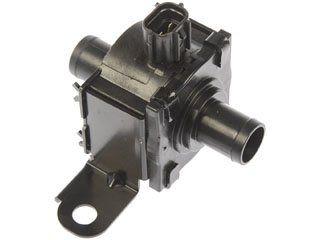
On a 2003-2008 Subaru Forester, code P0446 is almost always caused by a rusted and failed EVAP vent control valve (solenoid) located near the charcoal canister at the rear of the vehicle. The valve gets stuck or its electrical circuit fails due to corrosion. Expect to pay $40-$80 for an aftermarket valve (Dorman 911-650) and spend about an hour replacing it, often dealing with broken bolts.
- P0446 on your Forester is most likely a problem with the EVAP vent valve at the back of the car, not the gas cap or a component under the hood.
- The primary cause is rust due to the valve's exposed location. Inspect it for heavy corrosion before buying any parts.
- Replacing the vent valve is a DIY-friendly job, but be prepared for rusted bolts that may break during removal.
- If you also have trouble filling your gas tank, it's a strong indicator the vent valve is stuck closed.
What's Unique About the 2003-2008 Subaru Forester
For the second-generation (SG) Subaru Forester, the P0446 code is overwhelmingly linked to a single, common failure point: rust. The EVAP vent valve is located under the rear of the car, mounted to or near the charcoal canister, where it is exposed to road salt and moisture. This leads to severe corrosion that seizes the valve mechanism, damages its internal solenoid, and rots the electrical connector and wiring, making it the primary suspect for this code on Foresters from this era.
Generation note: This guide covers the second generation (SG) of the Subaru Forester, which includes model years 2003, 2004, 2005, 2006, 2007, and 2008. The causes and repair procedures are generally consistent across this generation for the 2.5L non-turbo and turbo engines, as they share the same EVAP system components.
Symptoms You May Notice
- Check Engine Light is on.
- Difficulty filling the fuel tank (the gas pump nozzle shuts off prematurely). This happens because the vent valve is stuck closed or the vent path is blocked, preventing air from escaping the tank as fuel enters, which builds up pressure and triggers the pump's auto-shutoff.
- A faint smell of fuel near the rear of the vehicle, especially if the valve is stuck open.
- Replacing the gas cap. While a loose gas cap can cause other EVAP codes (like P0457), it is not a direct cause for the P0446 circuit malfunction code.
- Replacing the purge valve under the hood. The P0446 code specifically points to the vent control circuit at the rear of the vehicle, not the purge valve in the engine bay.
Most Likely Causes
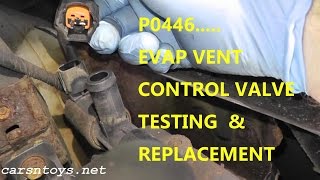
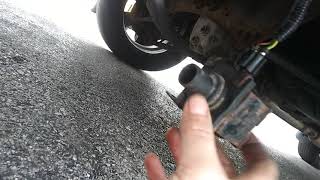
- Failed or Rusted EVAP Vent Valve (Canister Close Valve) 🔴 High Probability → Shop Vapor Canister Vent Valve The valve is located in a vulnerable position under the rear of the vehicle, making it highly susceptible to corrosion from road salt and moisture, which causes it to stick or fail electrically.
How to confirm: Visually inspect the valve for heavy rust. Test the solenoid by applying 12V power and listening for a click. The valve should be open by default and close when power is applied. With the valve unplugged, check the resistance between the two pins; it should be between 10-100 Ohms.
Typical fix: Replace the vent valve. Due to rust, the bolts may break, requiring extraction. The OEM part is 42084FA120; a common aftermarket replacement is Dorman 911-650.
Est. part cost: $40 - $150 - Corroded or Damaged Wiring/Connector 🟡 Medium Probability The same environmental factors that destroy the valve also damage its electrical connector and nearby wiring, leading to an open or short circuit.
How to confirm: Unplug the connector and inspect the terminals for green or white corrosion or broken pins. Use a multimeter to check for constant 12V at the power wire with the key on. The other wire is the ground, which is switched by the ECU. Check for continuity on the ground wire back to the ECU.
Typical fix: Clean the connector terminals. If damage is severe, splice in a new pigtail connector 🎬 See this walkthrough for fixing a rusted vent solenoid. (sold separately).
Est. part cost: $15 - $40 - Clogged EVAP Vent Hose or Filter ⚪ Low Probability The fresh air intake hose for the EVAP system can become clogged with dirt, mud, or famously, spider webs and mud dauber nests, restricting airflow and causing the system to fail its self-test.
How to confirm: Disconnect the vent hose from the valve and attempt to blow compressed air through it. Follow the hose to its end point (often a small filter box) and ensure it is clear of debris.
Typical fix: Clear the blockage from the hose or replace the hose if it is brittle or damaged.
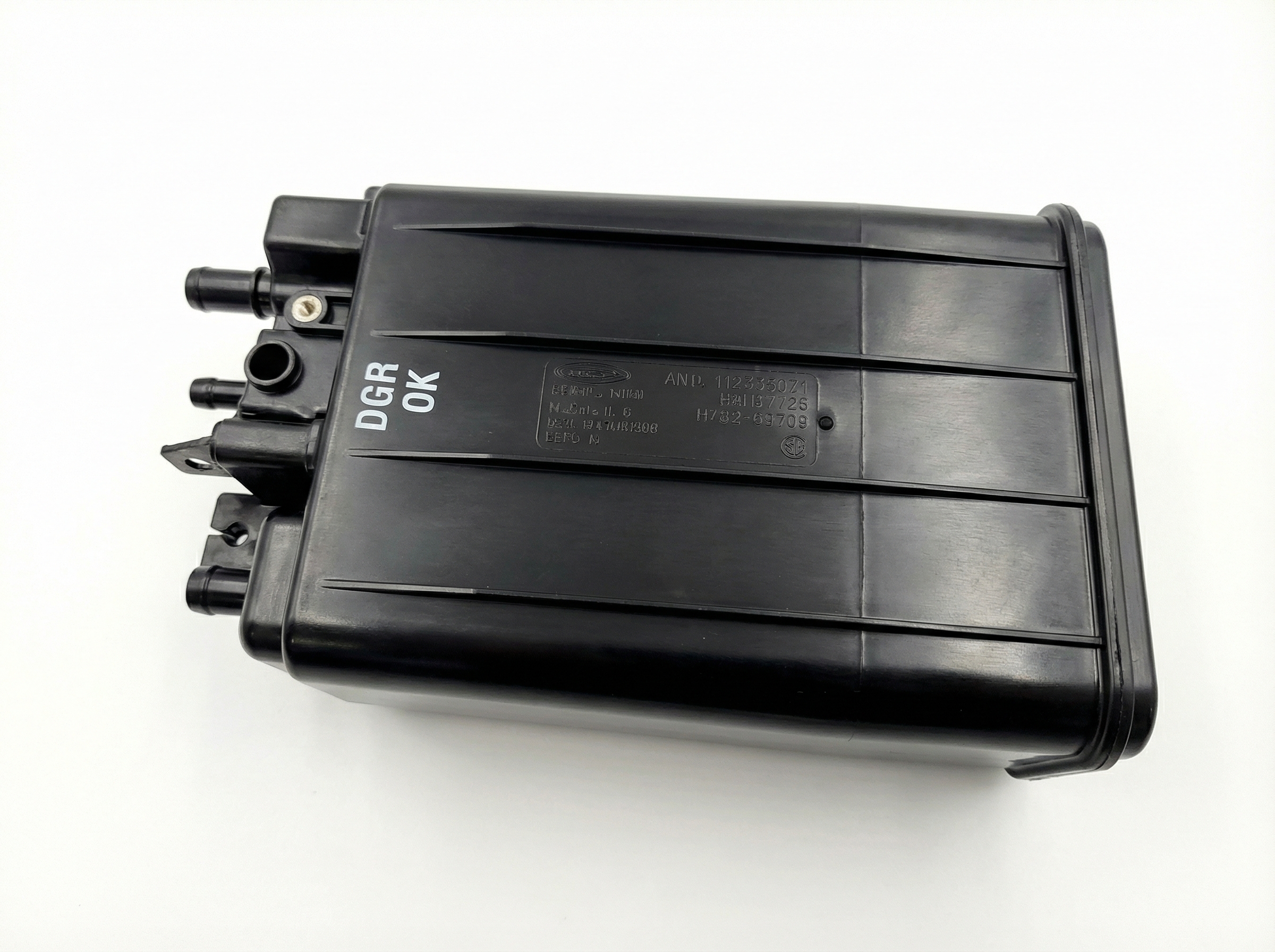
Est. part cost: $0 - $30 - Failed Charcoal Canister ⚪ Low Probability → Shop Vapor Canister Over-filling the fuel tank can saturate the canister with liquid fuel, causing it to become permanently clogged. Additionally, the valve is often rusted so solidly to the canister that they must be replaced as a single assembly.
How to confirm: If the vent valve and wiring are good, the canister is a likely culprit. A professional smoke test can confirm 🎬 Watch: How to perform an EVAP smoke test on this Forester. a blockage. Some mechanics will weigh the canister; if it is significantly heavier than a new one, it is likely saturated with fuel.
Typical fix: Replace the entire charcoal canister assembly. The OEM part number is around 42035SA000.
Est. part cost: $200 - $400
Rare But Worth Checking
- Faulty Engine Control Module (ECM): Extremely rare, but if the valve, wiring, and canister are all confirmed to be good, the driver circuit within the ECM that provides the ground signal to the valve may have failed. This should be the last consideration after all other possibilities are exhausted.
Diagnosis Steps
- Scan the vehicle for any other trouble codes to ensure P0446 is the only issue.
- Raise and safely support the rear of the vehicle.
- Locate the EVAP charcoal canister and the attached vent control valve. It is typically behind the rear driver's side wheel, above the canister.
- Visually inspect the valve, its connector, and surrounding hoses for obvious signs of heavy rust, corrosion, or physical damage.
- Disconnect the electrical connector. With the ignition key in the 'ON' position, use a multimeter to confirm 12-volt power at one of the pins in the harness. The other pin is a switched ground from the ECU.
- With the valve unplugged, measure the resistance across the two terminals on the valve itself. A normal reading is typically between 10 and 100 ohms. An open circuit (infinite resistance) or short (zero resistance) indicates a failed solenoid.
- If power and resistance are good, use a power probe or jumper wires to apply 12 volts and a ground directly to the terminals on the vent valve. Listen for an audible 'click'. No click indicates a mechanically seized valve.
- With the valve removed, check if you can blow through it. It should be normally open. When 12V is applied, it should close and block airflow.
- Inspect the rubber hoses connected to the valve and canister for cracks, brittleness, or blockages from dirt or spider webs.
- If the valve and wiring test good, the charcoal canister may be clogged or the ECU driver may be at fault, though this is rare.
Parts You'll Likely Need
- Vapor Canister Vent Valve / Solenoid
(OEM #42084FA120)— This is the most frequent failure point due to rust and corrosion causing the solenoid to stick or fail electrically.
Trusted brands: Subaru (OEM), Dorman (911-650)
OEM price range: $65-$95
Aftermarket price range: $40-$80 - Vent Valve Connector Pigtail — The original connector is often too corroded to be salvaged. A new pigtail allows you to cut off the old connector and splice in a new one.
Trusted brands: Dorman, Standard Motor Products
OEM price range: N/A
Aftermarket price range: $15-$40 - Vapor Canister Assembly
(OEM #42035SA000)— Required if the old vent valve is rusted solidly to the canister and cannot be removed, or if the canister itself is cracked or internally blocked by fuel saturation.
Trusted brands: Subaru (OEM)
OEM price range: $250-$400
Aftermarket price range: $150-$250
Related Codes That Often Appear With This One
- P0457 — This code indicates a large EVAP leak, often described as 'fuel cap loose/off'. On these Subarus, a vent valve that is rusted and stuck open is a very common cause for P0457, so the two codes can appear together.
- P0442 — This code for a 'small leak' can also be triggered by a faulty or partially sealing vent valve, or by rusted lines in the same area as the vent valve.
Technical Service Bulletins (TSBs) & Recalls
- No specific Subaru TSB for P0446 on this platform was found. However, GM TSB 02-06-04-037H addresses a similar P0446 code caused by dust and debris clogging the vent hose/filter assembly in trucks. It details a fix involving a redesigned, relocated filter box, illustrating how susceptible these vent systems are to environmental contamination.
Platform-Specific Known Issues
- Bolts holding the vent valve and canister bracket are notorious for rusting and shearing off during removal. It is wise to have replacement M6 bolts on hand and to use penetrating oil generously before attempting the repair.
- In one documented case, a mounting bolt for the valve snapped off. The owner successfully sealed the new valve to the canister using high-temp gasket maker as a workaround to avoid replacing the entire canister assembly.
Mechanic-Grade Diagnostic Values
- EVAP Vent Valve (Solenoid) Coil Resistance — expected: 10 - 100 Ohms. Failure: Infinite resistance (open circuit) or near-zero resistance (short circuit).
- Voltage at Vent Valve Connector (Key On, Engine Off) — expected: ~12V (Battery Voltage) on the power supply wire.. Failure: No voltage indicates a problem with the power supply circuit, fuse, or relay.
- Continuity on Ground Wire to ECU — expected: < 1.0 Ohm. Failure: High resistance or an open circuit (OL) indicates a break in the ground wire between the vent valve connector and the ECU.
Scan Tool Commands That Help
- Subaru Select Monitor (SSM): Evaporative System Leak Test — This function is the dealer-level procedure to command the EVAP system components, including the vent valve, to close and initiate a system self-test. It can be used to verify if the ECU can communicate with and command the valve, and to check the overall system integrity after a repair.
- Advanced OBD-II Scan Tool: EVAP System Test / Vent Solenoid Command — Many professional-grade scan tools have a bidirectional function to manually command the vent solenoid on and off. This is invaluable for diagnosis, as you can listen for the valve to click or check for airflow changes in real-time while activating the command, confirming if the valve is responding.
Wiring & Ground Locations
- Vent Valve Connector Power Wire — At the two-pin connector for the EVAP vent valve, located near the charcoal canister at the rear of the vehicle.. This wire must supply battery voltage (~12V) with the ignition ON. A lack of power here points to a wiring break, blown fuse, or faulty relay upstream, not a bad valve.
- Vent Valve Connector Ground Wire — At the two-pin connector for the EVAP vent valve. This wire runs directly to a driver circuit inside the Engine Control Module (ECM).. The ECM provides a path to ground to close the normally-open vent valve. A P0446 circuit code can be set if the ECM detects an open or short on this line. A user on Reddit suggested checking this wire for continuity back to the ECU if the valve itself tests good.
Real Owner Repair Stories
- coloradofans.com forum user 'POE' (Vehicle driven on many dirt roads (similar environmental exposure to salt/grime).) — Check Engine Light with code P0446.
❌ Tried (didn't work) Initial diagnosis focused only on the vent solenoid itself.
✅ What actually fixed it The root cause was a fresh air filter box for the EVAP system that was completely packed with dirt and dust, effectively becoming a hard-packed clay blockage. The fix involved locating the breather line from the vent solenoid, finding the small filter box near the gas filler neck, scraping out the packed dirt, cleaning the internal sponge filters, and replacing the vent solenoid which had also failed.
OEM Part Supersession History
42084FA120→No direct supersession found, this part number appears to be consistent for the specified model years.— N/A
Heads up: This part number (42084FA120) is listed for 2.5L SOHC and 2.5L Turbo models up to 2004, and is generally applicable through 2006-2008. Always verify with VIN, but it is the correct service part for this generation.42035SA000→No direct supersession found for this specific part.— N/A
Heads up: This canister is listed for the 2003-2008 Forester and also some Impreza/WRX models of the era. Later generations of Forester (2014+) use different part numbers like 42035FJ010.
Model Year Variations Within This Range
- 2006-2008: The SG Forester received a facelift for the 2006 model year. While the fundamental EVAP system design and P0446 cause remained the same, the non-turbo engine received an Active Valve Lift System (AVLS) to improve power and efficiency. This does not directly affect the P0446 diagnosis but is a key differentiator for later years in this generation.
Diagnostic Flowchart
Real Owner Stories
Aggregated from forums and TSBs cited above. Mileages and costs reflect what owners reported in those sources.
2003-2008 Subaru Forester
Symptoms: A mounting bolt for the vent valve snapped off during removal due to heavy rust.
What fixed it: Sealed the new vent valve to the canister using high-temp gasket maker as a workaround to avoid replacing the entire canister assembly.
Source hint: Vehicle-specific issues section
Similar-era Subaru
Symptoms: Triggered a P0446 code requiring a step-by-step process of elimination to diagnose the EVAP emissions control system.
What fixed it: Confirmed ECU-switched ground operation and expected solenoid resistance to isolate the fault.
Source hint: ultimatesubaru.org: Thread 'P0446-Evap Emmis Control System'
Related OBD-II Codes
Frequently Asked Questions
Why does the gas pump keep shutting off when I try to fill my 2003-2008 Forester?
Where is the EVAP vent valve located on my Forester?
What is the OEM part number for the replacement vent valve?
I broke a bolt trying to remove the rusted vent valve. Do I have to replace the whole charcoal canister?
How can I test the vent valve solenoid on my Forester?
Are there any TSBs for the P0446 code on the 2003-2008 Forester?
Helpful Videos
Used OEM Parts in Stock
New Aftermarket Parts Available


The information in this article is provided for general reference and educational purposes only. Vehicle specifications, procedures, and part compatibility can vary by production date, trim level, and region. Always consult your vehicle's factory service manual and verify part numbers before purchasing or performing repairs. Safety-critical components such as airbags, seat belts, and braking systems should be installed by a qualified professional.
- Subaru Forester:
- 🧭 Diagnostic Flowchart
- 🎬 Helpful Videos
- 🛍️ Shop This Part
- What's Unique About the 2003-2008 Subaru Forester
- Symptoms You May Notice
- Most Likely Causes
- Rare But Worth Checking
- Diagnosis Steps
- Parts You'll Likely Need
- Related Codes That Often Appear With This One
- Technical Service Bulletins (TSBs) & Recalls
- Platform-Specific Known Issues
- Mechanic-Grade Diagnostic Values
- Scan Tool Commands That Help
- Wiring & Ground Locations
- Real Owner Repair Stories
- OEM Part Supersession History
- Model Year Variations Within This Range
- Real Owner Stories
- 2003-2008 Subaru Forester
- Similar-era Subaru
- Related OBD-II Codes
- Frequently Asked Questions
- 🎟️ Get 5% Off