

P0446 on 2003-2009 Toyota 4Runner: EVAP Vent Control Circuit Causes and Fixes
On a 2003-2009 4Runner, code P0446 is most often caused by a faulty charcoal canister assembly, which includes the integrated vent valve. This is a common failure point due to its location under the vehicle. A critical part number change occurred in April 2006, so verify your existing part number before ordering. Expect to pay between $250 and $450 for a new OEM canister assembly, which is a moderately easy DIY replacement.
- P0446 on a 2003-2009 4Runner almost always points to a problem with the charcoal canister assembly located at the rear of the vehicle.
- The most common failure is the integrated vent valve solenoid, which requires replacing the entire canister unit.
- Before buying an expensive new canister, perform a quick visual inspection of all EVAP hoses for cracks and check the gas cap.
- This code will not leave you stranded, but you must fix it to pass an emissions test.
- Replacing the canister is a manageable DIY job for those comfortable working under their vehicle, potentially saving hundreds in labor costs.
What's Unique About the 2003-2009 Toyota 4Runner
On the 4th generation Toyota 4Runner (and its platform mates, the Lexus GX 470 and FJ Cruiser), the EVAP system's vent valve, pressure sensor, and related vacuum switching valves (VSVs) are integrated into the charcoal canister assembly. This entire unit is mounted above the spare tire, exposing it to road debris, salt, and moisture. If the vent valve fails, which is the most common cause for P0446 on these Toyotas, the entire canister assembly must be replaced as a single unit. This differs from vehicles where the vent solenoid can be replaced as a separate, less expensive component.
Symptoms You May Notice
- Check Engine Light is on
- VSC and TRAC OFF lights may also illuminate (a standard Toyota response to many Check Engine codes).
- Difficulty filling the gas tank (pump clicks off repeatedly before full 🎬 Watch: Why you can't fill your tank and how to fix it).
- Slight fuel odor (less common)
- Audible pressure release ('whoosh') when opening the gas cap after driving
- Replacing only the purge valve (located in the engine bay) when the issue is with the vent valve circuit at the rear of the vehicle.
- Replacing the gas cap when the code specifically points to a vent control *circuit* fault, which is more often related to the canister assembly's electrical components or a blockage.
- Assuming a canister from any 4th Gen 4Runner will fit. There was a significant design change and part number update in April 2006.
Most Likely Causes
- Faulty Charcoal Canister Assembly 🔴 High Probability → Shop Vapor Canister The vent valve solenoid, a common failure point, is integrated into the canister assembly. The entire unit is located under the vehicle above the spare tire, where it is exposed to road salt, water, and debris, leading to corrosion of the solenoid's electrical components or cracks in the plastic housing. Overfilling the fuel tank can also saturate the charcoal and damage the internal valves.
How to confirm: After removing the spare tire for access, visually inspect the canister for cracks. One owner found a leak by spraying soapy water on the canister and blowing into a disconnected vent hose, watching for bubbles. You can also test the vent valve solenoid directly by applying 12V power to its pins; a healthy valve will make an audible 'click' 🎬 See how to test a vent valve solenoid for clicks. No click means the solenoid has failed.
Typical fix: Replace the entire charcoal canister assembly. This is the most common and direct fix for a failed internal component. Ensure you buy the correct part number for your vehicle's year.
Est. part cost: $250-$450 - Cracked or Disconnected EVAP Hoses 🟡 Medium Probability The numerous rubber hoses connected to the canister and fuel tank can become brittle and crack due to age, heat cycles, and under-vehicle exposure.
How to confirm: Visually inspect all accessible EVAP hoses running from the fuel tank to the charcoal canister and to the engine bay. Look for obvious cracks, loose connections, or disconnections. A professional smoke test is the most effective way to find small, hard-to-see leaks.
Typical fix: Replace the damaged section of hose and secure with clamps.
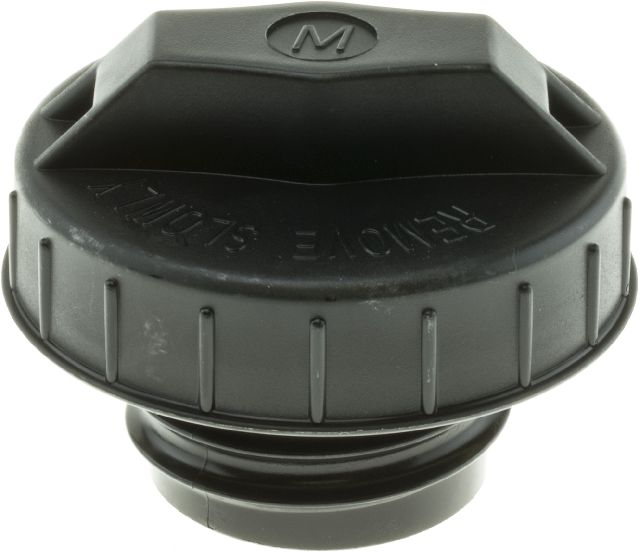
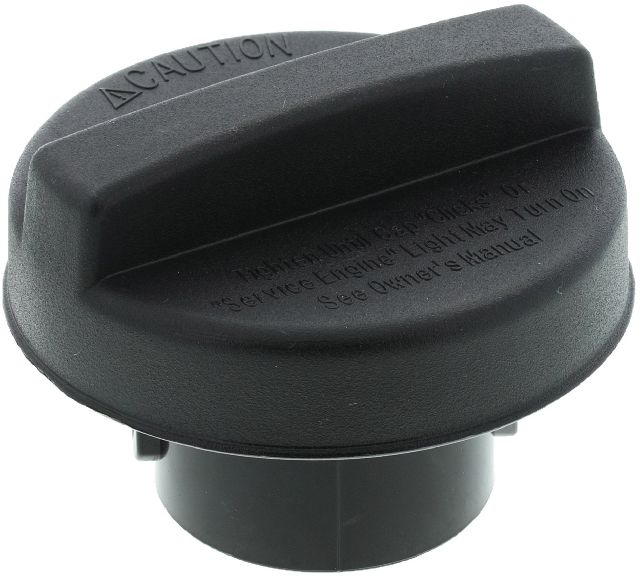
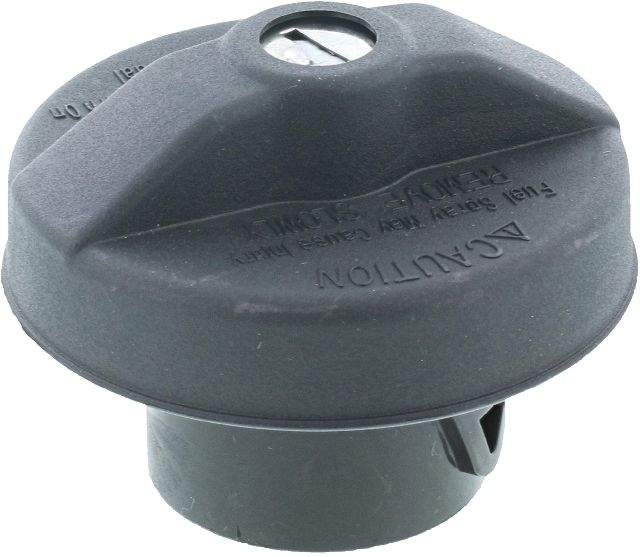
Est. part cost: $10-$50 - Faulty Gas Cap ⚪ Low Probability → Shop Fuel Tank Cap While a bad gas cap typically triggers other EVAP codes like P0455 (large leak), a failing seal can sometimes contribute to system issues. Many owners report replacing the cap as a first step. It is highly recommended to use an OEM cap, as aftermarket caps are known to cause issues.
How to confirm: Inspect the gas cap's rubber O-ring for cracks, stiffness, or damage. Ensure it clicks multiple times when tightened. Even if it looks okay, it can still be faulty.
Typical fix: Replace the gas cap with a new OEM part to ensure a proper seal.
Est. part cost: $20-$40 - Wiring Harness Damage ⚪ Low Probability The wiring and connector for the charcoal canister are located under the vehicle and can be damaged by road debris, corrosion (especially in the rust belt), or rodents.
How to confirm: With the key on, use a multimeter to check for ~12V power at the vent valve connector. Check the ground circuit for continuity. Visually inspect the harness for any breaks, corrosion, or chafing leading from the canister.
Typical fix: Repair the broken or shorted wire in the harness.
Est. part cost: $5-$25
Rare But Worth Checking
- Spider webs or debris in vent line: Spiders have been known to build webs and lay egg sacs inside the EVAP vent lines, causing a blockage that mimics a failed vent valve and triggers a P0446 code 🎬 Watch: A deep dive into P0446 causes and common fixes. This can be cleared by blowing compressed air through the lines.
- Faulty Engine Control Module (ECM): This is extremely rare. The ECM should only be considered after all other possibilities, including the canister, hoses, and wiring, have been thoroughly tested and ruled out.
Diagnosis Steps
- Read the Code: Confirm P0446 is the primary code. Note any other EVAP codes like P0441, P0440, or P0455.
- Inspect the Gas Cap: Check the gas cap for a tight seal and look for any damage to the O-ring. Tighten it until it clicks several times. Consider replacing with an OEM cap as an inexpensive first step.
- Visually Inspect Hoses & Canister: Lower the spare tire to get a clear view of the charcoal canister. Inspect the canister body for any cracks. A simple test is to spray the canister with soapy water and blow low-pressure air into the vent hose; bubbles will reveal a crack. Check all connected rubber hoses for brittleness or disconnection.
- Check for Blockages: Disconnect the fresh air inlet hose from the canister and check the line and port for obstructions like mud, debris, or even spider webs.
- Test the Vent Valve Circuit: Disconnect the electrical connector at the charcoal canister. With the ignition on, use a multimeter to verify there is ~12V at the power pin. If no power, check the fuse and wiring harness for damage.
- Test the Vent Valve Solenoid: If power is present, apply 12V and a ground directly to the valve's pins using jumper wires. A healthy solenoid will make an audible 'click'. No click indicates a failed solenoid, requiring canister replacement.
- Professional Smoke Test: If the valve tests okay and no cracks are visible, a professional smoke test can definitively identify leaks in the canister, hoses, or even the gas tank itself that may not be visible.
- Replace the Charcoal Canister Assembly: If the vent valve is bad or the canister is cracked, replace the entire assembly with the correct OEM part number for your vehicle's year.
Parts You'll Likely Need
- Charcoal Canister Assembly
(OEM #77740-35520 (Post-04/2006) / 77740-35482 (Pre-04/2006, check VIN))— This assembly contains the vent valve, which is the most frequent point of failure for code P0446. A part number change occurred in April 2006, so verifying the number on the original part is critical.
Trusted brands: Toyota (OEM), Denso, Dorman (911-659), Standard Motor Products (CP585)
OEM price range: $350-$520
Aftermarket price range: $200-$350 - Gas Cap
(OEM #77300-47010)— Though less likely to be the sole cause of P0446, it's an inexpensive and easy part to replace as part of initial troubleshooting. An OEM cap is strongly recommended for a reliable seal, as aftermarket caps are a known source of EVAP issues.
Trusted brands: Toyota (OEM)
OEM price range: $25-$40
Aftermarket price range: $15-$30
Related Codes That Often Appear With This One
- P0441 — Incorrect Purge Flow. This code often appears with P0446 because a faulty vent valve can disrupt the entire system's ability to manage and purge fuel vapors correctly.
- P0440 — EVAP System Malfunction. This is a general EVAP system failure code that can be triggered alongside the more specific P0446.
- P0455 — EVAP System Leak Detected (Gross Leak). Can appear if the canister body is cracked or a major hose is disconnected.
Technical Service Bulletins (TSBs) & Recalls
- EG002-05 (January 6, 2005) & SS002-05 (September 14, 2005): These bulletins do not describe a fix for a known P0446 defect. Instead, they detail
Platform-Specific Known Issues
- Canister Cracking: The plastic housing of the charcoal canister can become brittle and crack over time, causing a leak that triggers this code. Some owners have successfully found these cracks using a soap and water solution while blowing air into the system, and some have attempted temporary repairs with epoxy.
- Rust Belt Failures: Vehicles operated in regions that use road salt are more prone to P0446, as the wiring connector and solenoid on the canister are susceptible to corrosion from moisture and salt spray, leading to an open or shorted circuit.
- Topping Off Fuel Tank: → Shop Fuel Tank Repeatedly 'topping off' the fuel tank after the pump automatically shuts off can force liquid gasoline into the charcoal canister. This saturates the charcoal media and can permanently damage the internal valves, leading to EVAP codes like P0446.
Mechanic-Grade Diagnostic Values
- EVAP Canister Vent Solenoid (VSV) Resistance — expected: 48 to 65 ohms. Failure: A reading outside this range, or an open/short circuit, indicates a failed solenoid coil.
- Fuel Tank Pressure (FTP) Sensor Voltage (Key On, Engine Off) — expected: 1.3 to 1.7 Volts. Failure: A voltage significantly outside this range with the gas cap on and system at atmospheric pressure points to a faulty FTP sensor.
- Vapor Pressure Sensor (VPS) Signal at Atmospheric Pressure — expected: Approximately 3.33 Volts. Failure: If the sensor does not read approximately 3.33V when vented to the atmosphere (e.g., gas cap off), the sensor may be faulty.
Hidden / Shadow Codes Worth Checking
- Failed "TBP" Test: In Toyota's Techstream software, a failed test labeled "TBP" (thought to stand for Tank Bypass) under the Engine and ECT Live data can be an indicator of the fault causing P0446. (see via This is viewed using the Toyota Techstream diagnostic software, typically in the live data or utility section for the EVAP system.)
Scan Tool Commands That Help
- Toyota Techstream: Active Test: Control the CCV (Canister Close Valve) ON/OFF — Use this bidirectional command to manually operate the vent valve. A technician can listen or feel for an audible 'click' from the valve on the canister assembly to confirm electrical and basic mechanical function.
- Toyota Techstream: Utility: EVAP System Check (Manual) — This automated test runs the EVAP system through a leak check cycle and produces a graph of the fuel tank pressure. An incorrect graph shape can help pinpoint whether the system is failing to seal or vent properly, which is key for diagnosing P0446.
Wiring & Ground Locations
- ECM (Engine Control Module) — Behind the right end of the dashboard.. The ECM provides the ground signal that activates the vent valve solenoid. Tracing the circuit often starts or ends at the ECM connectors.
- Driver Side J/B (Junction Block) — Behind the lower left end of the dashboard.. This junction block contains fuses and relays, including potentially the fuse that supplies power to the EVAP vent valve circuit.
- Ground Points (E01, E02, E03, etc.) — Various locations in the engine bay and on the chassis. For example, 'E01' and 'E02' are often located on the engine block or cylinder head.. The vent valve circuit requires a solid ground to function. While the ECM provides the switched ground, the main body grounds are critical for the entire electrical system. A corroded or loose ground point can cause intermittent and hard-to-diagnose electrical faults.
Real Owner Repair Stories
- Reddit user in r/3rdGen4Runner (1999 Toyota 4Runner) — P0446 code
❌ Tried (didn't work) Replacing the gas cap
✅ What actually fixed it The charcoal canister was faulty despite having no visible cracks or damage. The user confirmed the diagnosis by temporarily swapping canisters with a friend's vehicle, which made the code go away. They then purchased and installed a new OEM canister, which permanently resolved the issue. - GM Forum user (2000 Pontiac Bonneville SSEI (functionally similar EVAP system)) — P0446 code
❌ Tried (didn't work) Replaced gas cap, Replaced EVAP vent valve, Inspected canister (held pressure, no obstructions), Checked hoses, Replaced purge valve
✅ What actually fixed it Replacing the Fuel Tank Pressure (FTP) sensor finally resolved the P0446 code after all other common components failed to fix it. - Toyota Owner Report (NHTSA ODI #10735783) — P0446 code
❌ Symptoms Check engine light with clogged canister and leaking VSV and purge valves.
✅ What actually fixed it Replacing the charcoal canister at high mileage (244,309 miles) resolved the fault. - Toyota Owner Report (NHTSA ODI #10086188) — P0446 code
❌ Symptoms Check engine light for EVAP system trace to vent control malfunction.
✅ What actually fixed it A special order VSV control was required to resolve the malfunction.
"I Checked Everything" — The Actual Cause
- In some cases, the EVAP system can pass a smoke test (indicating no physical leaks) but still set a P0446. A prime example is a faulty Fuel Tank Pressure (FTP) sensor. The ECM interprets the incorrect pressure readings from the bad sensor as a failure of the vent valve to operate correctly, triggering the P0446 code even though there are no leaks and the valve itself may be functional.
Documented NHTSA Reports
- An owner reported in NHTSA ODI #11190106 that they were driving normally when they noticed the check engine light for P0446 - Evaporative System Vent Control Circuit.
- According to NHTSA ODI #10125378, a Toyota owner experienced a persistent P0446/P0441 code that would disappear during the winter and reappear in the summer, first noticed around 36,000 miles.
- NHTSA ODI #11133326 documents an owner's research into the recurring check engine light for P0446, citing widespread reports of the same problem across various Toyota platforms.
OEM Part Supersession History
77740-35481→77740-35482— Standard part revision by the manufacturer.
Heads up: These parts are for vehicles manufactured before April 2006. They are not compatible with later models.
Model Year Variations Within This Range
- 2003 - 04/2006 vs. 04/2006 - 2009: A significant design change occurred in the charcoal canister assembly in April 2006. The part numbers are different and the units are not interchangeable. Pre-04/2006 vehicles use part number 77740-35482, while post-04/2006 vehicles use 77740-35520. It is critical to verify the vehicle's production date or the part number on the existing canister before ordering a replacement.
Diagnostic Flowchart
Real Owner Stories
Aggregated from forums and TSBs cited above. Mileages and costs reflect what owners reported in those sources.
Toyota 4Runner
Symptoms: Frustration chasing the P0446 code and testing Vacuum Switching Valves (VSVs) without success.
What fixed it: Replacing the charcoal canister with a used one from a lower-mileage vehicle.
Source hint: YotaTech Forums thread titled 'P0446 code - what have you replaced to fix?'
Toyota 4Runner
Symptoms: VSC and TRAC lights illuminated on the dashboard at the same time as the P0446 code.
What fixed it: Replacing the OEM gas cap and/or the charcoal canister.
Source hint: Reddit r/3rdGen4Runner thread titled 'VSC and P0446'
Toyota 4Runner
Symptoms: Persistent P0446 code that remained after trying less expensive fixes.
What fixed it: Replacing the entire charcoal canister assembly, which was identified as the ultimate culprit.
Source hint: Toyota 4Runner Forum thread titled 'Good ol' P0446'
1999 Toyota 4Runner 4cyl
Symptoms: Check Engine Light on with an EVAP leak.
What fixed it: Sprayed soapy water on the canister and blew into a hose to find a crack in the canister body, confirming it needed replacement.
Source hint: YouTube video titled '1999 Toyota 4cyl 4runner EVAP Canister fix P0446'
Related OBD-II Codes
Frequently Asked Questions
Why are my VSC and TRAC OFF lights on along with the P0446 code on my 4Runner?
Do TSBs EG002-05 or SS002-05 provide a fix for the P0446 code on my 2003-2009 4Runner?
I live in the rust belt; does that make my 4Runner more likely to get a P0446 code?
Can 'topping off' my gas tank cause the P0446 code?
Where is the charcoal canister located on the 4Runner, and how do I test it for cracks?
Should I buy an aftermarket gas cap to try and fix this code?
Helpful Videos

Used OEM Parts in Stock
New Aftermarket Parts Available


The information in this article is provided for general reference and educational purposes only. Vehicle specifications, procedures, and part compatibility can vary by production date, trim level, and region. Always consult your vehicle's factory service manual and verify part numbers before purchasing or performing repairs. Safety-critical components such as airbags, seat belts, and braking systems should be installed by a qualified professional.
- Toyota 4Runner:
- 🧭 Diagnostic Flowchart
- 🎬 Helpful Videos
- 🛍️ Shop This Part
- What's Unique About the 2003-2009 Toyota 4Runner
- Symptoms You May Notice
- Most Likely Causes
- Rare But Worth Checking
- Diagnosis Steps
- Parts You'll Likely Need
- Related Codes That Often Appear With This One
- Technical Service Bulletins (TSBs) & Recalls
- Platform-Specific Known Issues
- Mechanic-Grade Diagnostic Values
- Hidden / Shadow Codes Worth Checking
- Scan Tool Commands That Help
- Wiring & Ground Locations
- Real Owner Repair Stories
- "I Checked Everything" — The Actual Cause
- Documented NHTSA Reports
- OEM Part Supersession History
- Model Year Variations Within This Range
- Real Owner Stories
- Toyota 4Runner
- Toyota 4Runner
- Toyota 4Runner
- 1999 Toyota 4Runner 4cyl
- Related OBD-II Codes
- Frequently Asked Questions
- 🎟️ Get 5% Off