

P0446 on 1998-2002 Toyota Corolla: EVAP Vent Malfunction Causes and Fixes
On a 1998-2002 Toyota Corolla, code P0446 is almost always caused by a faulty charcoal canister assembly at the rear of the car. The entire assembly, which includes integrated valves that fail internally, typically needs to be replaced. There is a known part split during the 1999 model year. Expect to pay $250-$400 for an OEM part or $120-$200 for an aftermarket alternative.
- P0446 on your 1998-2002 Corolla almost certainly means the charcoal canister assembly at the rear of the car has failed.
- Don't waste money replacing the purge valve in the engine bay first; this code points to the vent circuit at the back.
- Replacing the entire canister assembly is the most reliable fix, as the problematic valves are built into it.
- Be careful when ordering: 1998-1999 models use a different part (77740-02071) than 2000-2002 models (77740-02102). Verify which one you need.
- This is a manageable DIY job for those comfortable working under their car, but access can be tight.
What's Unique About the 1998-2002 Toyota Corolla
On the 8th generation Corolla, Toyota integrated the critical vacuum switching valves (VSVs), vent valve, and sometimes the vapor pressure sensor directly onto the charcoal canister assembly. Unlike other vehicles where these valves can be replaced individually, on this Corolla, a failure of an internal valve often requires replacing the entire canister assembly. This design makes it a common, albeit more expensive, failure point for this specific code. Owners frequently find that replacing the whole unit is the only permanent solution after trying less effective fixes, with some mechanics quoting nearly $1000 for the repair due to confusion over individual parts vs the whole assembly.
Symptoms You May Notice
- Check Engine Light is on.
- Difficulty filling the fuel tank (the pump nozzle clicks off repeatedly).
- A faint fuel odor is possible, but less common than with leak-specific codes.
- Audible 'whoosh' of pressure when opening the gas cap after driving (if vent is stuck closed).
- Replacing the purge valve (VSV) in the engine bay. The P0446 code specifically points to the vent control circuit, which is located at the rear of the car with the charcoal canister. A bad purge valve in the engine bay will typically set other codes like P0441.
Most Likely Causes
- Faulty Charcoal Canister Assembly 🔴 High Probability → Shop Vapor Canister The vacuum switching valves (VSVs) and other non-serviceable valves are integrated into the canister. These valves can fail or get stuck, and since they often cannot be purchased separately, the entire assembly must be replaced. The plastic canister body can also develop cracks over time. One owner reported fixing the code by swapping a large, non-VSV valve from a junkyard canister onto his original one, indicating failures can occur in multiple integrated components. This is reinforced by NHTSA ODI #10207423 and #10173378, where mechanics specifically determined the charcoal canister was the source of the P0446 vent control circuit malfunction.
How to confirm: Visually inspect the canister (located at the rear of the vehicle, in front of the spare tire well) for cracks. Test the main vent solenoid/VSV by applying 12V power and listening for a click. Check for 12V at the connector with the key on. A professional smoke test can confirm a cracked canister body or stuck-open valve.
Typical fix: Replace the entire charcoal canister assembly.
Est. part cost: $250-$400 (OEM), $120-$200 (Aftermarket) - Blocked or Clogged EVAP Hoses/Vent 🟡 Medium Probability Spiders, insects (like mud daubers), or road debris can build nests or block the fresh air vent hose that attaches to the canister, causing a restriction that triggers P0446. This is a common finding by owners on forums.
How to confirm: Disconnect the hoses from the canister and attempt to blow low-pressure compressed air through them. Visually inspect the vent port on the canister for spider webs or other blockages.
Typical fix: Clear the blockage from the hose or port. Replace any cracked or brittle hoses.
Est. part cost: $5-$20 - Faulty Wiring or Connector ⚪ Low Probability The canister's location under the car exposes its electrical connector and wiring to moisture, road salt, and corrosion, which can lead to a poor connection or a break in the circuit.
How to confirm: Inspect the electrical connector at the canister for corrosion, bent pins, or broken wires. Use a multimeter to check for 12V at the connector with the ignition on. The vent valve circuit is typically ground-side controlled by the ECM, so you should find a constant 12V power source with the key on.
Typical fix: Clean the connector terminals with electrical contact cleaner or repair the damaged section of wiring.
Est. part cost: $10-$30
Rare But Worth Checking
- Faulty Gas Cap: → Shop Fuel Tank Cap While a bad gas cap typically causes a leak code (like P0455), it's an inexpensive and simple part to check or replace first. Ensure you use an OEM cap, as aftermarket ones can cause issues. A video on a 2001 Corolla specifically notes that an aftermarket cap was part of the problem, and only an OEM cap resolved it.
Diagnosis Steps
- Read the code with an OBD-II scanner to confirm P0446 is present.
- Inspect the gas cap for a tight seal and a healthy O-ring. Ensure it clicks multiple times when tightened. Consider replacing with an OEM cap if in doubt.
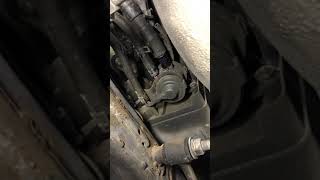
- Safely raise the rear of the vehicle and locate the charcoal canister in front of the spare tire well, near the muffler. 🎬 Watch: How to remove the charcoal canister on this Corolla.
- Visually inspect the canister body for any obvious cracks or damage.
- Inspect all rubber hoses connected to the canister for cracks, brittleness, or loose connections. Pay special attention to the fresh air inlet hose for blockages like spider webs.
- Disconnect the electrical connector from the canister. Check for corrosion on the pins.
- With the ignition key in the 'ON' position (engine off), use a multimeter to verify that one of the pins in the connector has 12 volts. This circuit is usually powered when the key is on.
- If power is present, you can test the vent solenoid. Apply 12V directly from a battery to the corresponding pins on the canister's solenoid. You should hear an audible 'click'. No click indicates a failed solenoid. 🎬 See this guide on how to test an EVAP vent valve.
- For advanced diagnosis, a bi-directional scan tool can be used to command the vent valve to close, allowing you to monitor the fuel tank pressure sensor and confirm the valve is sealing. 🎬 Watch: Professional diagnostic tips for testing Toyota EVAP systems.
- If the solenoid clicks and wiring is good, but the code persists, the issue is likely an internal blockage, a failure of another integrated valve on the canister, or a crack in the canister itself. At this point, replacement of the entire assembly is the most likely solution.
Parts You'll Likely Need
- Charcoal Canister Assembly (1998-1999)
(OEM #77740-02071)— This is the most common failure point. For 1998 and 1999 models, this assembly contains the integrated valves that fail and cause the P0446 code. The original part 77740-02070 is superseded by this one.
Trusted brands: Toyota (OEM), Dorman (911-615), Standard Motor Products (CP3182)
OEM price range: $250-$350
Aftermarket price range: $120-$180 - Charcoal Canister Assembly (2000-2002)
(OEM #77740-02102)— For 2000-2002 models, this is the correct canister assembly. It also contains the integrated valves that are the primary cause of P0446. This part supersedes 77740-02100 and 77740-02101.
Trusted brands: Toyota (OEM), Dorman (911-606)
OEM price range: $250-$400
Aftermarket price range: $120-$180
Related Codes That Often Appear With This One
- P0441 — Incorrect Purge Flow. This code often appears with P0446 because a stuck or malfunctioning vent valve on the canister can disrupt the system's ability to properly purge stored fuel vapors. NHTSA ODI #10125378 documents an instance where P0446 and P0441 appeared together starting around 36,000 miles.
- P0440 — Evaporative Emission System Malfunction. This is a more general EVAP system code that can be triggered alongside the more specific P0446 when the computer detects a fault.
- P0442 — Small EVAP Leak. If the vent valve is stuck partially open or the canister body is cracked, the system may interpret this as a small leak, triggering P0442 in addition to P0446.
Technical Service Bulletins (TSBs) & Recalls
- While no TSB specifically for P0446 on the 1998-2002 Corolla was found, TSB EG048-03 (for other Toyota models like Camry/Sienna 2000-2003) discusses P0446 being caused by an inoperative Canister Closed Valve VSV. This demonstrates that the failure of the canister-mounted valve assembly is a known issue across other Toyota platforms from the same era.
Platform-Specific Known Issues
- There is a known part number split for the 1999 model year. Owners of a 1999 Corolla should visually inspect their existing canister or verify the correct part number with a dealership using their VIN before ordering a replacement. A forum user noted a mechanic ordered the wrong part for a '99, discovering it had a different number of hose connections (two vs. three).
Mechanic-Grade Diagnostic Values
- EVAP Canister Vent Valve / VSV Solenoid Resistance — expected: 20 to 50 Ohms at room temperature.. Failure: A reading of infinity (open circuit) or zero (short circuit) indicates a failed solenoid coil.
- Voltage at Canister Vent Valve Connector — expected: Approximately 12V (battery voltage) on one of the two pins with the ignition key ON and the engine OFF.. Failure: No voltage indicates a problem in the power supply circuit, such as a blown fuse (e.g., EFI No. 2) or a broken wire. The other pin is the ground, which is controlled by the ECM.
Hidden / Shadow Codes Worth Checking
- Mode 06 Data: Mode 06 is a diagnostic mode that provides raw test results from the vehicle's onboard monitors before a code is set. For P0446, a technician would look at the test results for the EVAP monitor (often Test ID $39 or $3A on Toyotas) to see if the canister vent valve or system pressure tests are passing or failing. A failing value here can confirm a problem even if the CEL has been recently cleared. (see via A professional scan tool capable of reading Mode 06 data is required. Some advanced consumer-grade scanners also have this capability.)
Scan Tool Commands That Help
- Toyota Techstream: Active Test: 'Activate the VSV for Evap Control' — This command allows a technician to manually open and close the vent valve (and other VSVs) while observing system pressure or listening for the valve to click. This directly tests the functionality of the valve and its circuit, confirming if the ECM can control it.
- Professional Scan Tool (e.g., Snap-on, Autel): EVAP System Test (Cold Soak Bypass) — The full EVAP monitor typically only runs after the vehicle has sat for 5-8 hours (a 'cold soak'). This function forces the monitor to run on demand, allowing a technician to verify a repair is successful without waiting overnight. The test takes 8-15 minutes and will set a code if a fault is detected.
Wiring & Ground Locations
- Canister Vent Valve Connector — At the charcoal canister assembly, located under the rear of the vehicle, in front of the spare tire well.. This 2-pin connector is the direct electrical interface for the vent valve. It is exposed to road salt and moisture, making it a common point for corrosion, which causes an open or short in the circuit and triggers P0446. One pin should have ~12V with key-on, the other is the control ground from the ECM.
- ECM (Engine Control Module) — Located behind the passenger side glove box.. The ECM provides the switched ground signal that commands the vent valve to close. A break in the wire between the ECM and the canister connector, or a rare failure of the driver circuit within the ECM itself, can cause P0446.
Real Owner Repair Stories
- BobIsTheOilGuy.com forum user 'KB1' (1999 Toyota (model implied as Corolla/Camry family)) — P0446 code present for 2 years, needed to pass smog.
❌ Tried (didn't work) Replacing the VSV solenoid with an aftermarket (NAPA) part., Attempting to fit a canister from a 2001 Camry (hoses and VSV were different).
✅ What actually fixed it The owner discovered that a large, mechanical, non-electrical valve on the original canister was leaking slightly. He swapped this specific mechanical valve from the junkyard 2001 Camry canister onto his original 1999 canister. This resolved the P0446 code and allowed the car to pass smog, proving that components other than the main VSV on the assembly can be the point of failure. - NHTSA ODI #10125378 — An owner reported that their check engine light remained on for two years with codes P0446 and P0441. Interestingly, the owner noted that the codes would disappear during the winter and reappear in the summer.
"I Checked Everything" — The Actual Cause
- P0446 is a 'vent control circuit malfunction' code, not a leak code like P0442 or P0455. A smoke test is designed to find physical leaks in the system. It is very common for a vehicle with P0446 to pass a smoke test perfectly. The actual cause is typically a functional failure, such as a vent valve solenoid that is electrically sound but mechanically stuck, a vent hose blocked by debris (like a spider nest), or a fault in the control circuit wiring. The smoke test cannot detect these issues, which often leads to misdiagnosis if it's the only test performed.
When the Usual Fixes Don't Work
- While replacing the entire charcoal canister assembly is the most common fix, it is not always successful. One owner of a 2002 Camry (with a similar system) replaced the gas cap with OEM, the VSV, and finally the entire canister with new OEM parts, yet the P0446 code returned along with P0440 and P0441. This suggests that in some cases, the fault may lie further upstream in the wiring harness or, in very rare instances, the ECM itself, even after all common components are replaced.
Documented NHTSA Reports
- NHTSA ODI #11133326 & #10311542: Multiple owners have filed formal complaints regarding the persistent P0446 check engine light on this vehicle platform, often citing technical forum discussions as evidence of a widespread and recurring issue with the vent control circuit.
OEM Part Supersession History
77740-02070→77740-02071— Standard part revision by manufacturer.77740-02100 / 77740-02101→77740-02102— Standard part revision by manufacturer.
Model Year Variations Within This Range
- 1998-1999 vs 2000-2002: Toyota TSB EG005-01 identifies two different EVAP system architectures. 1998-1999 models use the 'Early Type' (Non-Intrusive) system. 2000-2002 models use the 'Late Type' (Intrusive) system, which incorporates a Canister Closed Valve (CCV) and a bypass VSV. This results in physically different charcoal canister assemblies. The most obvious difference is the number of hose connections; one version has two ports while the other has three. Ordering the wrong part for a 1999 or 2000 model is a very common mistake.
Diagnostic Flowchart
Real Owner Stories
Aggregated from forums and TSBs cited above. Mileages and costs reflect what owners reported in those sources.
1999 Toyota Corolla
Symptoms: Check engine light on, but car seems to be running just fine.
What fixed it: The owner did not report a final fix, but another user suggested the 'Tank bypass vacuum switching valve is most common' and that it does NOT mean the canister needs replacement.
Cost: Up to $450
Source hint: Reddit r/Cartalk thread '1999 Toyota Corolla P0446 Code'
1999 Toyota Corolla
Symptoms: Stalling on startup (starts for 3 seconds, shakes, then turns off). Stalled while refueling. P0446 code present for 3 years, more recently accompanied by P0420.
What fixed it: The owner did not report a fix. Another user suggested the P0446 was not the cause of stalling and could be a bad gas cap, purge valve, or vapor canister, but that the P0420 (catalytic converter) was the more important code to address for the stalling issue.
Source hint: Toyota Corolla Forum thread '1999 corolla p0420 p0446'
1998-2002 Toyota Corolla
Symptoms: P0446 code triggered by a failure in the complex canister assembly.
What fixed it: Fixed the code by swapping a large, non-VSV valve from a junkyard canister onto the original canister.
Source hint: BobIsTheOilGuy.com thread 'Anybody with dreaded P0446 on a Toyota?'
Related OBD-II Codes
Frequently Asked Questions
Is there a specific part number I need for the charcoal canister on my 1999 Corolla?
Can I just replace the vacuum switching valve (VSV) on my Corolla's canister instead of the whole unit?
Does TSB EG048-03 apply to my 1998-2002 Corolla?
Why is my Corolla so hard to fill with gas since the P0446 code appeared?
My 1998-2002 Chevy Prizm has a P0446 code. Is the diagnosis the same as the Corolla?
Where is the charcoal canister located on the 1998-2002 Corolla?
Helpful Videos
We Have This Part in Stock


The information in this article is provided for general reference and educational purposes only. Vehicle specifications, procedures, and part compatibility can vary by production date, trim level, and region. Always consult your vehicle's factory service manual and verify part numbers before purchasing or performing repairs. Safety-critical components such as airbags, seat belts, and braking systems should be installed by a qualified professional.
- Toyota Corolla:
- 🧭 Diagnostic Flowchart
- 🎬 Helpful Videos
- 🛍️ Shop This Part
- What's Unique About the 1998-2002 Toyota Corolla
- Symptoms You May Notice
- Most Likely Causes
- Rare But Worth Checking
- Diagnosis Steps
- Parts You'll Likely Need
- Related Codes That Often Appear With This One
- Technical Service Bulletins (TSBs) & Recalls
- Platform-Specific Known Issues
- Mechanic-Grade Diagnostic Values
- Hidden / Shadow Codes Worth Checking
- Scan Tool Commands That Help
- Wiring & Ground Locations
- Real Owner Repair Stories
- "I Checked Everything" — The Actual Cause
- When the Usual Fixes Don't Work
- Documented NHTSA Reports
- OEM Part Supersession History
- Model Year Variations Within This Range
- Real Owner Stories
- 1999 Toyota Corolla
- 1999 Toyota Corolla
- 1998-2002 Toyota Corolla
- Related OBD-II Codes
- Frequently Asked Questions
- 🎟️ Get 5% Off