

P0446 on 2008-2013 Toyota Highlander: EVAP Vent Control Causes and Fixes
On a 2008-2013 Highlander, P0446 is almost always caused by a failed vent valve, which is part of the charcoal canister assembly located near the gas tank. Replacing the entire canister assembly is the most common and reliable fix. Expect to pay ~$300-$450 for an OEM part.
- For a 2008-2013 Highlander, P0446 almost always points to the charcoal canister assembly (OEM Part #77740-0E020).
- Before buying parts, always check for simple issues like a loose gas cap or a disconnected vacuum hose near the air filter box.
- A key symptom of this specific failure is the gas pump nozzle repeatedly shutting off during refueling.
- The correct OEM part number for the canister assembly is 77740-0E020, which replaces the older part 77740-48121.
- This repair is manageable for a DIYer with basic tools, but be prepared for potentially rusty bolts due to the part's location under the car.
- The Lexus RX350 and Toyota Venza share this platform and exhibit the exact same P0446 failure pattern.
What's Unique About the 2008-2013 Toyota Highlander
On this generation of Toyota Highlander, the vent valve (also called a Canister Close Valve or CCV) is not sold as a separate component. Instead, it is integrated into the complete charcoal canister assembly. Because this assembly is mounted under the car, just forward of the rear subframe, and exposed to road salt and moisture, the valve is prone to corrosion and mechanical failure, making replacement of the entire unit the standard repair.
Symptoms You May Notice
- Check Engine Light is on
- VSC OFF and Trac OFF lights may also illuminate
- Difficulty refueling (gas pump nozzle clicks off repeatedly).
- Possible faint fuel odor, though less common with this specific code.
- Replacing the purge valve (solenoid) in the engine bay. This part is different from the vent valve and will typically set its own distinct trouble codes (e.g., P0441).
- Replacing the gas cap without confirming it's the issue. While a cheap first step, it's less likely to be the cause of P0446 specifically compared to other EVAP codes.
Most Likely Causes
- Failed Charcoal Canister Assembly (with integrated Vent Valve) 🔴 High Probability → Shop Vapor Canister The vent valve is integrated into the canister assembly, which is located under the rear of the vehicle and exposed to the elements, leading to corrosion and mechanical failure of the valve. This is the most documented failure for P0446 on this platform.
How to confirm: Use a capable scan tool to command the vent valve to open and close; listen for a click from the canister area. If there is no click, check for 12V at the valve's electrical connector with the key on. If power is present but the valve doesn't actuate, the assembly has failed. A smoke test can also confirm a blockage or a valve stuck open/closed.
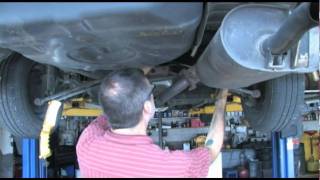
Typical fix: Replace the entire charcoal canister assembly. The OEM part number is 77740-0E020, 🎬 See this walkthrough on how to replace the charcoal canister assembly. which supersedes the older part number 77740-48121.
Est. part cost: $300-$450 - Disconnected or Cracked Vacuum Hose 🟡 Medium Probability → Shop Vacuum Hose Vacuum hoses, particularly the one on the back of the air filter housing connected to a VSV, can be accidentally disconnected during routine maintenance like an air filter change. This is a very common and simple-to-fix cause for multiple EVAP codes.
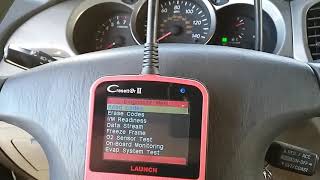
How to confirm: Perform a thorough visual inspection of all vacuum lines connected to the EVAP system, especially the hoses running from the engine bay to the charcoal canister. Pay close attention to the area around the air filter box, as this is a frequent trouble spot. 🎬 Watch: Why a visual inspection is your first step for these codes.
Typical fix: Reconnect the disconnected hose or replace the cracked hose section.
Est. part cost: $0-$20 - Faulty or Loose Gas Cap ⚪ Low Probability → Shop Fuel Tank Cap
How to confirm: Ensure the gas cap is tight (clicks several times). Check the rubber seal on the cap for cracks or damage. A different code, like P0455 (gross leak) or P0456 (small leak), is more common for a bad gas cap, but it's an easy first check.
Typical fix: Tighten or replace the gas cap with an OEM part for best results.
Est. part cost: $20-$40
Rare But Worth Checking
- Wiring Harness Damage: The wiring leading to the charcoal canister assembly can become corroded or damaged by road debris due to its location under the vehicle. Check for 12V power at the connector with the key on before condemning the canister.
- Clogged Vent Hose or Filter: Insects, particularly spiders, are known to build nests inside the fresh air vent hose for the EVAP system, causing a blockage that triggers P0446. This can sometimes be cleared with compressed air.
- Cracked Charcoal Canister Body: → Shop Vapor Canister Less common than the internal valve failing, the plastic body of the canister itself can develop cracks over time, creating a leak. A DIY repair with 5-minute epoxy has been documented by some owners on other Toyota models to seal small cracks and pass emissions.
Diagnosis Steps
- Check the gas cap to ensure it is tight and the seal is intact. An OEM cap is recommended if replacement is needed.
- Perform a thorough visual inspection of all EVAP hoses, especially around the air filter housing in the engine bay, for any cracks or disconnections.
- If you have a capable scan tool, command the vent valve (Canister Close Valve) to close. Listen for an audible click from the canister area under the rear of the vehicle, just ahead of the spare tire.
- If no click is heard, inspect the wiring and connector at the charcoal canister for damage or corrosion. Use a multimeter to verify that battery voltage (approx. 12V) is present at the connector with the ignition on.
- If power is present but the valve does not operate, the charcoal canister assembly is almost certainly faulty and needs to be replaced.
- If the valve seems to operate but the code returns, perform a smoke test on the EVAP system. Introduce smoke into the system and watch for it to exit the vent; if it doesn't, there is a blockage. If it exits when the valve is commanded closed, the valve is not sealing.
- Inspect the vent hose for blockages from debris or insect nests.
Parts You'll Likely Need
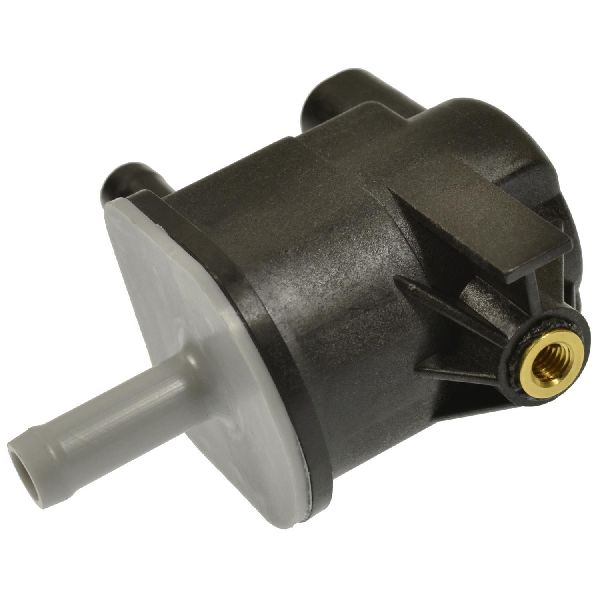
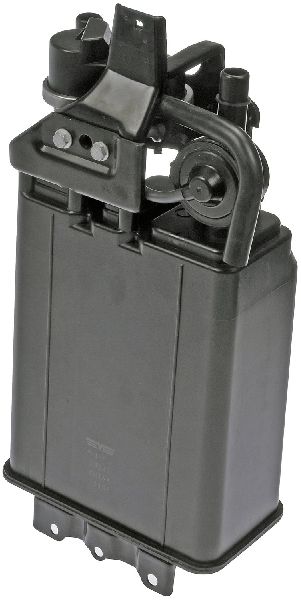
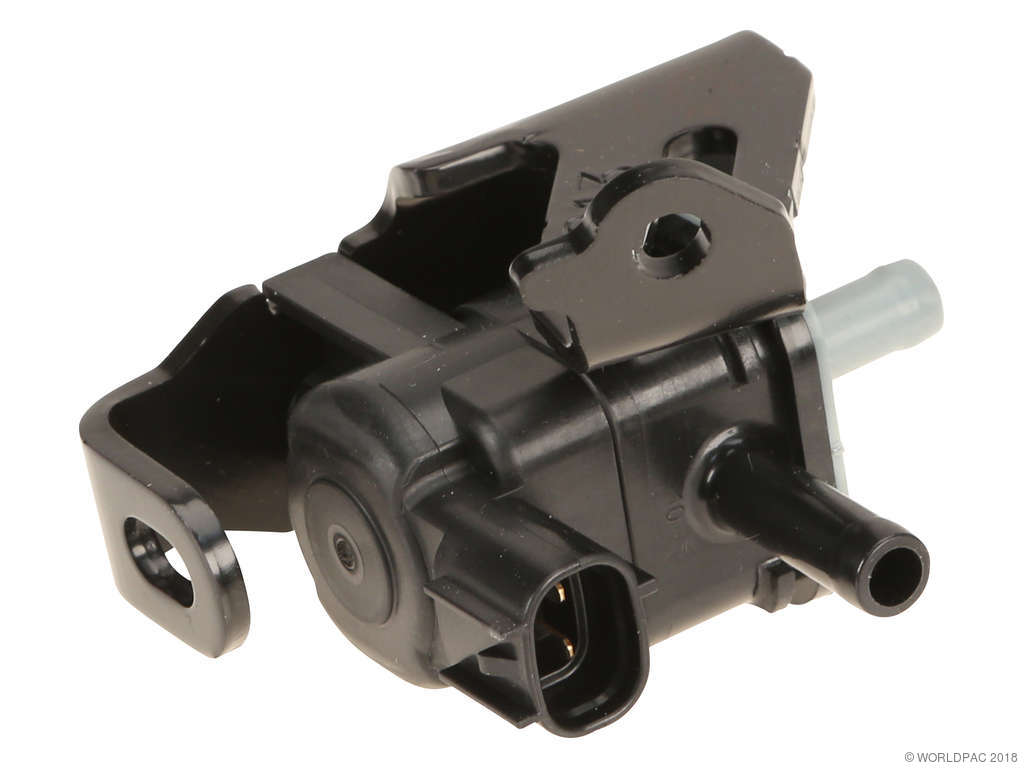
- Vapor Canister Assembly
(OEM #77740-0E020)— This is the most common failure point for code P0446 on this vehicle, as it contains the integrated vent valve which fails over time due to its location and exposure to the elements. This part number supersedes 77740-48121.
Trusted brands: Toyota (Genuine OEM), Dorman, Standard Motor Products (SMP)
OEM price range: $300-$450
Aftermarket price range: $150-$250
Related Codes That Often Appear With This One
- P0441 — Indicates incorrect purge flow, which can be caused by the same underlying vent valve or blockage issue.
- P0442 — Indicates a small EVAP leak. A faulty vent valve that isn't sealing properly can be interpreted by the system as a small leak.
- P0455 — Indicates a large EVAP leak. If the vent valve is stuck wide open, the system may interpret this as a large leak.
Technical Service Bulletins (TSBs) & Recalls
- T-SB-0034-13: While not related to P0446, this TSB addresses a common clunking noise from the steering intermediate shaft on 2008-2013 Highlanders, demonstrating a known platform issue with a documented fix.
Platform-Specific Known Issues
- Owner Experience: The Gas Cap Distraction: → Shop Fuel Tank Cap A 2010 RX350 owner on ClubLexus reported getting a P0446 code. They first replaced the gas cap as advised, but the light returned. After a dealer visit, the issue was correctly identified as a failed charcoal canister assembly. This highlights that while the gas cap is a possible cause, the canister is the more probable culprit on these vehicles.
- DIY Repair Story: Successful Canister Replacement: On the BobIsTheOilGuy forums, a user with a Toyota experiencing P0446 detailed the common failure points: cracks in the canister body, clogged hoses, a bad rear VSV (vent valve), or a bad pressure sensor. This reinforces that the entire assembly under the car is the primary area to inspect and test.
Mechanic-Grade Diagnostic Values
- Canister Close Valve (Vent Valve) Circuit Voltage — expected: Approximately 12V (Battery Voltage) at the connector with the key on, engine off.. Failure: No voltage indicates a wiring issue, a blown fuse (EFI No. 3), or a problem with the EFI relay.
- ECM Logic for 'Stuck Closed' Fault — expected: When the ECM commands the Canister Close Valve (CCV) to open while the purge VSV is also open, pressure in the tank should normalize.. Failure: If high negative pressure (vacuum) develops in the fuel tank and remains for more than 4 seconds, the ECM determines the CCV is stuck closed and sets P0446.
- ECM Logic for 'Stuck Open' Fault — expected: When the ECM commands the Canister Close Valve (CCV) to close to seal the system for a leak test, negative pressure should build in the tank.. Failure: If a sufficient amount of negative pressure does not develop, the ECM determines the CCV has failed to close (is stuck open) and sets a DTC.
Scan Tool Commands That Help
- Toyota Techstream: Active Test: 'Activate the VSV for Evap Control' — This command allows a technician to manually open and close the purge valve (VSV) and the canister close valve (vent valve) to audibly and physically confirm their operation. You should be able to hear and feel the valves click when commanded.
- Toyota Techstream: Utility: 'EVAP System Check' — This is an automated test that runs the entire EVAP monitor sequence. It will command the valves, pressurize the system, and report back on whether the system can hold pressure, helping to confirm if a repair was successful without waiting for the monitor to run naturally.
Wiring & Ground Locations
- Charcoal Canister Connector — Under the rear of the vehicle, connected directly to the charcoal canister assembly near the fuel tank.. This 2-pin connector provides power and ground control to the integrated vent valve. Damage or corrosion here is a primary cause of the P0446 circuit code. Pin 2 should have battery voltage with the key on.
- Ground Point D4 — Behind the driver's side kick panel.. This is a major body ground point for various components controlled by the instrument panel junction box. While not a direct ground for the canister, a poor connection here can cause a variety of difficult-to-diagnose electrical issues.
- Ground Point E1 — Behind the left side of the dashboard.. This is a key ground location for dash-related components and the ECM. A fault here could potentially affect the ECM's ability to correctly control and monitor the EVAP system.
Real Owner Repair Stories
- YouTube Channel 'Innova Auto' (2003 Toyota Highlander (similar EVAP system design)) — Check Engine Light with codes P0441, P0442, and P0446.
❌ Tried (didn't work) The previous mechanic told the owner that EVAP codes are difficult to diagnose and did not attempt a repair.
✅ What actually fixed it A visual inspection revealed a vacuum hose was disconnected from the Canister Close Valve (CCV) located near the air cleaner housing. The technician suspected it was knocked off during a recent oil change where the air filter was inspected. Reconnecting the hose and clearing the codes resolved the issue. - NHTSA ODI #11190106: An owner reported noticing the check engine light while driving normally, which was later identified as a P0446 EVAP system vent control circuit fault.
- NHTSA ODI #10735783: In a high-mileage Toyota, a technician found the canister clogged and the VSV and purge valves leaking, necessitating a full charcoal canister replacement to resolve the P0446 code.
- NHTSA ODI #10086188: A service invoice for a Toyota vehicle noted that P0446 was present for an EVAP system vent control malfunction, requiring a special order VSV control for installation.
- NHTSA ODI #10125378: An owner experienced recurring P0446 and P0441 codes that would disappear in winter and reappear in summer, first noticed at approximately 36,000 miles.
OEM Part Supersession History
77740-48121→77740-0E020— Standard part revision and update by the manufacturer. Reasons are not publicly specified but are typically for improved durability, material changes, or minor design tweaks.
Model Year Variations Within This Range
- 2011-2013: The fuse box layout in the engine and passenger compartments was revised for the 2011 model year facelift. While the EVAP system components remained largely the same, the specific fuse locations (such as EFI No. 3) may differ from 2008-2010 models.
Diagnostic Flowchart
Other Known Issues on This Vehicle
Issues unrelated to this code that are worth knowing about as an owner of this generation:
- VVT-i Oil Line Rupture (2GR-FE Engine) 🔴 High — Common on early models (2008-2010). A rubber section of the high-pressure oil line degrades and can burst, leading to catastrophic oil loss and potential engine seizure. (Ref: Toyota issued a TSB to replace the rubber/metal line with an all-metal line (Part No. 15772-31030).)
- Oil Cooler Line Leak (Tow Package Models) 🔴 High — Affects 2GR-FE engines with the factory tow package. Rubber hoses leading to the external oil cooler become brittle and can leak or burst, causing rapid oil loss. (Ref: T-SB-0201-11 Rev1 addresses this by replacing the rubber hoses with an updated metal pipe assembly (Part No. 15767-31020).)
- Melting / Sticky Dashboard 🟠 Medium — Widespread in vehicles exposed to high heat and humidity. The dashboard material degrades, becoming shiny, sticky, and creating a dangerous glare on the windshield. (Ref: Toyota initiated a Warranty Enhancement Program (ZLD) to replace affected dashboards, though this program has now expired.)
- Intermediate Steering Shaft Clunk 🟡 Low — Commonly reported as a clunking or popping noise from the steering column when turning at low speeds. Caused by a faulty U-joint in the intermediate shaft. (Ref: T-SB-0034-13 was issued to address this with an improved intermediate shaft (Part No. 45220-48170).)
- Water Pump Failure (2GR-FE Engine) 🟠 Medium — The water pump is a known failure point, often presenting as a coolant leak from the sweep hole or a grinding/rattling noise that changes with engine RPM.
Used vs. New Parts: Buying Guide for This Vehicle
When a used part is the smart pick: A used charcoal canister assembly is a risky choice for this repair. The primary failure mode is an internal, electrically-controlled valve that is exposed to the elements and has a finite lifespan. A used part from a junkyard carries a high risk of having the same failure or failing shortly after installation.
Donor-vehicle mileage cap: roughly under 60000 miles for the part to have meaningful remaining life.
What to inspect on the donor part:
- Inspect the plastic housing for any cracks or signs of physical damage.
- Check the electrical connector pins for corrosion or breakage.
- If possible, source from a vehicle in a dry, salt-free climate to minimize corrosion risk.
- Ask for the donor vehicle's mileage; lower is always better for this component.
OEM-only on this vehicle (don't cheap out):
- Gas Cap - Aftermarket gas caps are a frequent source of EVAP codes due to improper sealing. It is strongly recommended to use a genuine Toyota gas cap if replacement is needed.
Aftermarket brands forum-validated for this vehicle:
- Standard Motor Products (SMP)
- Dorman
Brands owners have reported issues with on this vehicle:
- No specific brands are consistently reported as problematic, but forum discussions often show a preference for OEM or established brands like Dorman over unbranded, low-cost online options due to the critical function of the internal valve.
Real Owner Stories
Aggregated from forums and TSBs cited above. Mileages and costs reflect what owners reported in those sources.
2010 Lexus RX350 (2GR-FE)
Symptoms: Check engine light with code P0446. The owner was advised to replace the gas cap first.
What fixed it: A dealer visit confirmed a failed charcoal canister assembly after the gas cap replacement failed to clear the code.
Source hint: ClubLexus - 'P0446 EVAP Control System Vent Control Circuit Malfunction'
2008-2013 Toyota Highlander (2GR-FE)
Symptoms: Codes P0441, P0442, and P0446 were present.
What fixed it: A visual inspection revealed a disconnected hose near the air filter housing; reconnecting it resolved the codes.
Source hint: Eli TheOBDTech on YouTube - '(Toyota Highlander) Importance of Visual Inspection - Codes P0441, P0442 and P0446'
Toyota Highlander (2GR-FE)
Symptoms: P0446 code; owner noted potential failure points including cracks in the canister body, clogged hoses, or a bad pressure sensor.
What fixed it: Replacement of the charcoal canister assembly, which houses the vent valve (VSV) and pressure sensor.
Source hint: BobIsTheOilGuy - 'Anybody with dreaded P0446 on a Toyota?'
Toyota Corolla (Similar Make)
Symptoms: Check engine light on for two years with codes P0446 and P0441. The issue was seasonal, disappearing in winter and reappearing in summer.
What fixed it: The owner first noticed the issue at 36,000 miles and sought dealer assistance for the recurring EVAP circuit fault.
Source hint: NHTSA ODI #10125378
Documented NHTSA Reports
- NHTSA ODI #11133326: An owner documented a persistent check engine light for P0446, citing multiple technical forums where other Toyota owners reported the same vent control malfunction.
Related OBD-II Codes
Frequently Asked Questions
Why is my gas pump nozzle clicking off repeatedly when I try to fill up my Highlander?
Can I just replace the vent valve on my 2008-2013 Highlander to fix P0446?
I just changed my air filter and now the Check Engine and VSC OFF lights are on. Could they be related?
Does TSB-0034-13 address the P0446 code on my Highlander?
Is there a specific part number I should look for when replacing the charcoal canister?
Why did my VSC OFF and Trac OFF lights come on at the same time as the P0446 code?
Helpful Videos

Used OEM Parts in Stock

New Aftermarket Parts Available


The information in this article is provided for general reference and educational purposes only. Vehicle specifications, procedures, and part compatibility can vary by production date, trim level, and region. Always consult your vehicle's factory service manual and verify part numbers before purchasing or performing repairs. Safety-critical components such as airbags, seat belts, and braking systems should be installed by a qualified professional.
- Toyota Highlander:
- 🧭 Diagnostic Flowchart
- 🎬 Helpful Videos
- 🛍️ Shop This Part
- What's Unique About the 2008-2013 Toyota Highlander
- Symptoms You May Notice
- Most Likely Causes
- Rare But Worth Checking
- Diagnosis Steps
- Parts You'll Likely Need
- Related Codes That Often Appear With This One
- Technical Service Bulletins (TSBs) & Recalls
- Platform-Specific Known Issues
- Mechanic-Grade Diagnostic Values
- Scan Tool Commands That Help
- Wiring & Ground Locations
- Real Owner Repair Stories
- OEM Part Supersession History
- Model Year Variations Within This Range
- Other Known Issues on This Vehicle
- Used vs. New Parts: Buying Guide for This Vehicle
- Real Owner Stories
- 2010 Lexus RX350 (2GR-FE)
- 2008-2013 Toyota Highlander (2GR-FE)
- Toyota Highlander (2GR-FE)
- Toyota Corolla (Similar Make)
- Documented NHTSA Reports
- Related OBD-II Codes
- Frequently Asked Questions
- 🎟️ Get 5% Off