

P0446 on 2004-2009 Toyota Prius: EVAP Vent Control Causes and Fixes
On a 2004-2009 Prius, code P0446 is most often caused by a failed vacuum switching valve (VSV) near the fuel tank. If the gas pump also clicks off when you refuel, the canister vent valve is likely stuck. Replacing the faulty valve is the typical fix, costing around $50-$100 for the part.
- P0446 on a Gen 2 Prius is usually a faulty valve near the fuel tank, not just a loose gas cap.
- If the check engine light comes back on within a day of clearing it, the Vacuum Switching Valve (P/N 90910-12274) is the most likely culprit.
- If you can't easily fill your gas tank without the pump shutting off, the Canister Close Valve is almost certainly stuck closed.
- This is a DIY-friendly repair for those comfortable working under their car, but accessing the components can be tight.
- Ignoring this code won't harm your car, but it will cause an automatic failure on an emissions test.
What's Unique About the 2004-2009 Toyota Prius
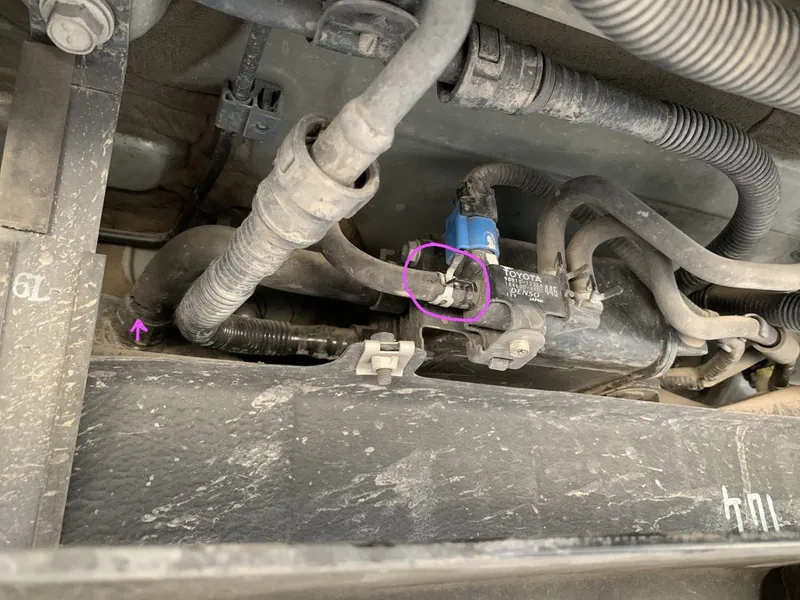
On the second-generation Prius, P0446 is less often a simple loose gas cap and more frequently a failure of one of the specific valves located near the fuel tank. Due to their location under the car, these components are prone to rust and debris, especially in regions that use road salt. Owners and mechanics have found that if the code reappears very quickly (e.g., within 50-100 miles or a single drive cycle) after being cleared, it strongly points to an electrical failure within the vacuum switching valve (VSV) rather than a physical leak. NHTSA ODI #11190106 confirms this experience, where an owner reported the check engine light appearing during normal driving specifically for an EVAP system vent control circuit malfunction.
Symptoms You May Notice
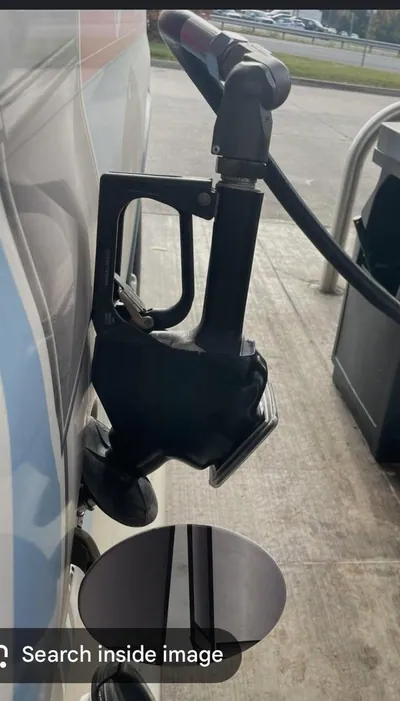
- Check Engine Light is on.
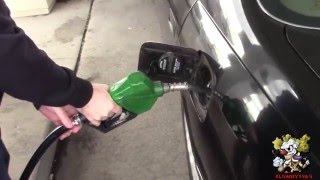
- Difficulty refueling (the gas pump nozzle clicks off repeatedly before the tank is full). This symptom strongly points to a stuck-closed canister close valve (CCV). 🎬 Watch: Why the gas pump keeps clicking off during refueling.
- In some cases, the gasoline engine may seem to run more often than usual as the car's computer tries to complete the EVAP system self-test.
- A faint smell of gasoline is possible, but less common than with other EVAP codes.
- Seasonal behavior: NHTSA ODI #10125378 describes a case where the P0446/P0441 codes would disappear during the winter and reappear in the summer.
- Replacing the gas cap when the true fault is a sticking valve. If the code returns quickly or you have trouble refueling, the problem is almost certainly not the cap.
- Replacing the purge valve in the engine bay. The P0446 code specifically relates to the vent side of the system, which is located at the rear of the car near the fuel tank, not the purge side in the engine bay.
Most Likely Causes
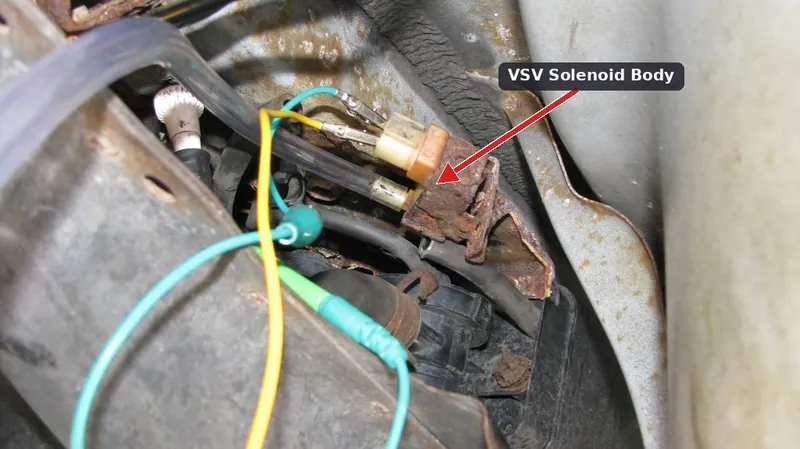
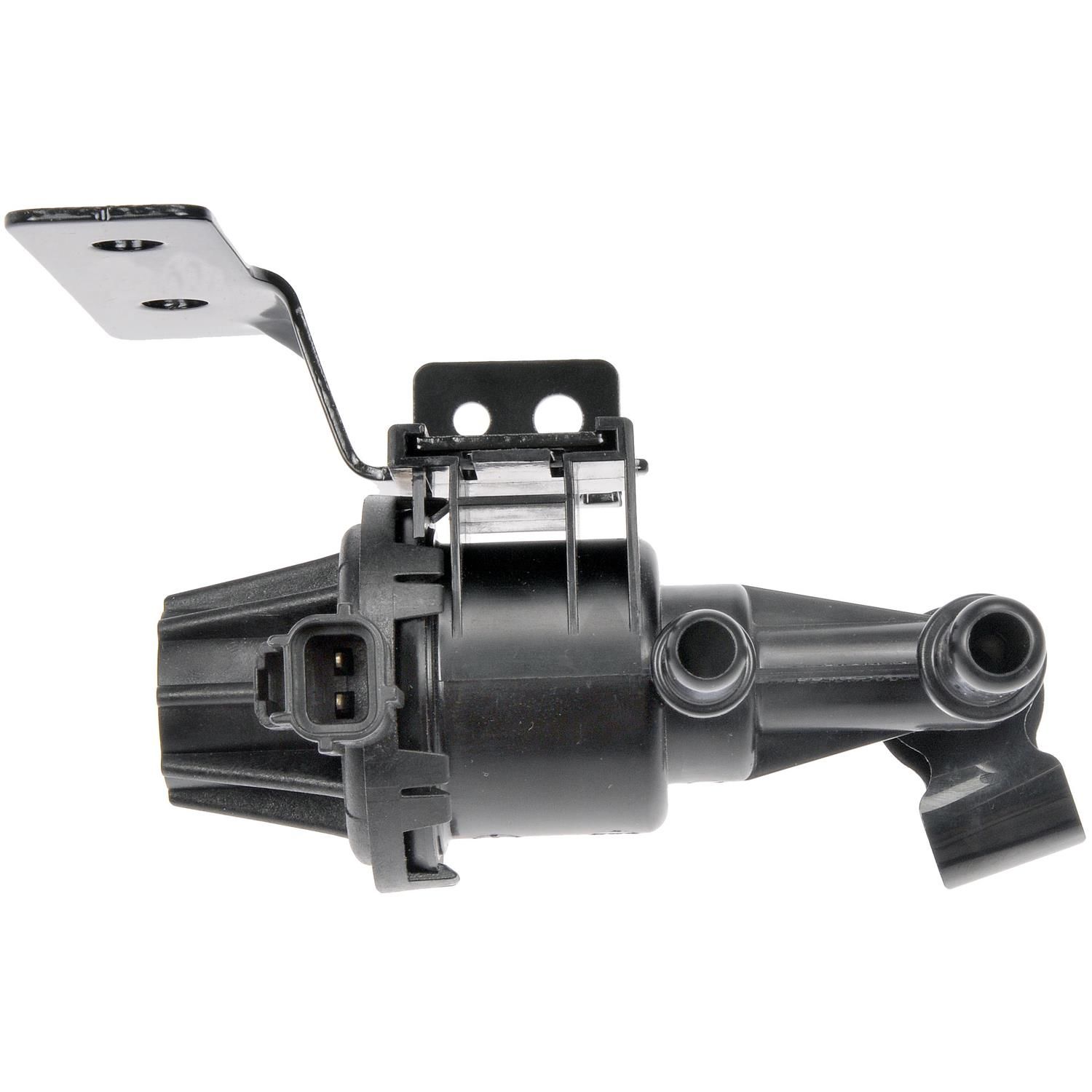
- Faulty Vacuum Switching Valve (VSV) 🔴 High Probability This solenoid valve is a very common failure point. If the P0446 code returns almost immediately (within 50-100 miles) after being cleared, this valve is the most likely cause due to an internal electrical fault rather than a leak. NHTSA ODI #10086188 notes an instance where a technician traced the fault specifically to a vent control malfunction requiring a VSV control replacement.
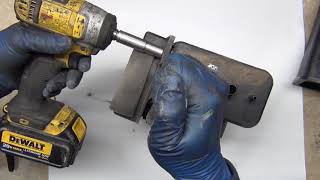
How to confirm: Use a bidirectional scan tool to command the valve on and off while listening for a click. Alternatively, remove the valve, apply 12V power to its terminals, and check if it switches airflow between its ports. 🎬 See how to test the VSV and replace the canister. A failed valve will often not click or pass air/vacuum correctly.
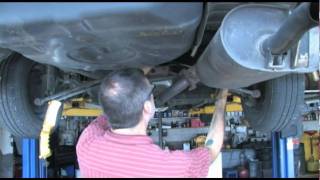
Typical fix: Replace the vacuum switching valve. It is located near the charcoal canister under the rear of the vehicle, held by a single bolt.
Est. part cost: $40-$90 - Stuck or Failed Canister Close Valve (CCV) / Vent Valve 🟡 Medium Probability → Shop Vapor Canister This valve is mounted on the charcoal canister and can seize due to rust, debris, or internal failure, particularly in snowy climates. Its failure is the primary cause of refueling difficulty.
How to confirm: The primary symptom is the gas pump repeatedly shutting off during refueling. A bidirectional scanner can also be used to command the valve closed; if refueling issues persist, the valve is likely stuck open or the vent path is blocked.
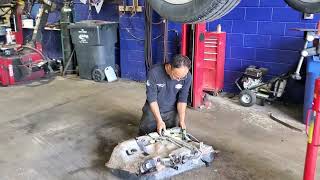
Typical fix: The CCV is integrated into the charcoal canister assembly on the Gen 2 Prius. Therefore, the entire charcoal canister assembly must be replaced.
Est. part cost: $250-$400 - Cracked or Saturated Charcoal Canister ⚪ Low Probability → Shop Vapor Canister The plastic canister housing can become brittle and crack over time. It can also be ruined by consistently overfilling the fuel tank, which forces raw gasoline into it, clogging the charcoal pellets. NHTSA ODI #10735783 documents a case where a clogged canister and leaking VSV/purge valves necessitated a full charcoal canister replacement.
How to confirm: Perform a smoke test on the EVAP system to see if smoke leaks from the canister body. Visually inspect for cracks or physical damage. A dealer quoted one owner over $800 for this repair.
Typical fix: Replace the entire charcoal canister assembly.
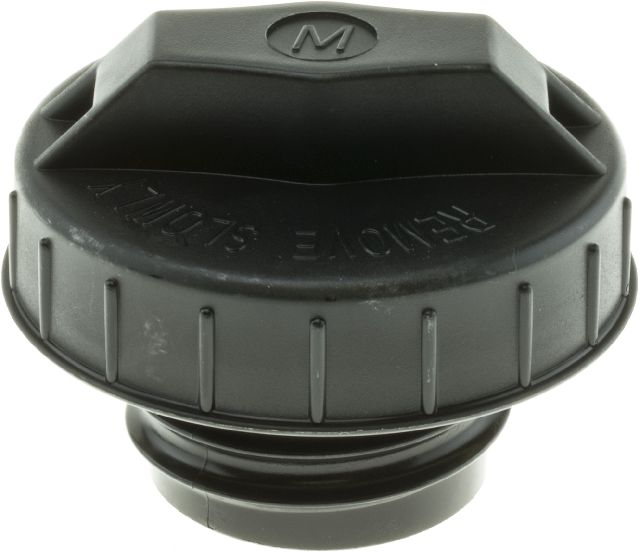
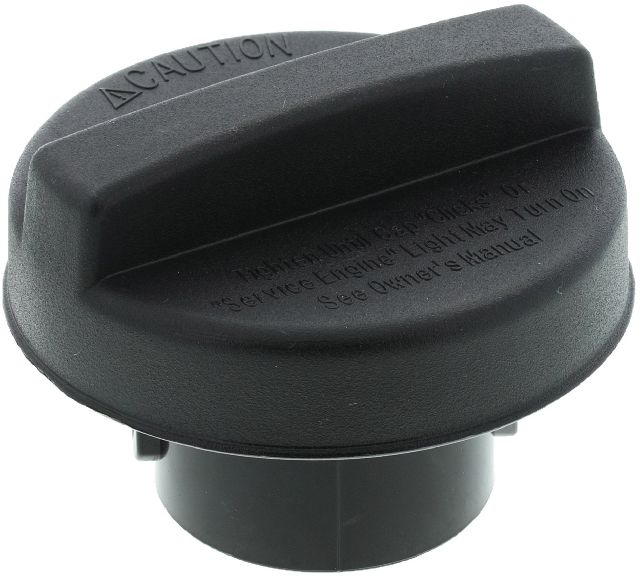
Est. part cost: $290-$420 - Loose or Faulty Gas Cap ⚪ Low Probability → Shop Fuel Tank Cap While a possible cause for any EVAP code, it's less common for P0446 on this model compared to valve failures. A bad gas cap typically throws a leak code like P0455 or P0457, not a circuit malfunction code.
How to confirm: Ensure the gas cap is tightened until it clicks at least once. Inspect the cap's seal for cracks or damage. If the seal is worn, replace the cap with a genuine OEM part, as aftermarket caps can cause issues.
Typical fix: Replace the gas cap with a new OEM part.
Est. part cost: $20-$35
Rare But Worth Checking
- Clogged or Cracked EVAP Hoses: The rubber hoses connected to the canister and valves can become brittle and crack, or get clogged with debris, spider webs, or charcoal pellets from a failing canister. A smoke test is the best way to find these leaks.
- Damaged Wiring or Connectors: The wiring to the VSV or CCV can be damaged due to its exposed location under the car. Inspect the harness for corrosion, breaks, or loose pins at the connector. In some cases, a new wire may need to be run from the control module. NHTSA ODI #11133326 highlights that owners frequently research forum discussions regarding these persistent wiring and circuit issues for the P0446 code.
- Faulty VSV for Canister Close Valve (on fuel tank): → Shop Vapor Canister There is another valve, sometimes called the tank bypass valve (Part No. 77730-47030), located on top of the fuel tank. It is extremely difficult to access, requiring the fuel tank to be lowered. A PriusChat user documented replacing this part to finally resolve a persistent P0446 after replacing all other common components. This is a last resort repair.
Diagnosis Steps

- Check the gas cap. Ensure it is tight and the seal is in good condition.
- Scan for any other accompanying EVAP codes. Note the freeze frame data if available. This can tell you the conditions under which the code was set.
- Visually inspect the charcoal canister, valves, and all connected hoses under the rear of the vehicle (in front of the fuel tank). Look for obvious cracks, rust, or loose connections.
- If you have difficulty refueling, focus your diagnosis on the charcoal canister assembly, as the integrated canister close valve (CCV) is the likely culprit.
- If the code returns very quickly after clearing (within one drive cycle), focus your diagnosis on the Vacuum Switching Valve (VSV), part number 90910-12274. 🎬 Watch this guide on testing and replacing the switching valve.
- If you have a bidirectional scanner, command the VSV and CCV on and off. You should hear or feel a distinct click from each valve as it actuates.
- If a valve does not click, test its circuit. Check for 12V at the connector with the key on. If power is present, the valve itself has failed. If power is not present, check the fuse and wiring back to the ECM.
- If you suspect a leak but cannot see it, perform a smoke test to check for leaks in the canister body and all connected hoses.
Parts You'll Likely Need
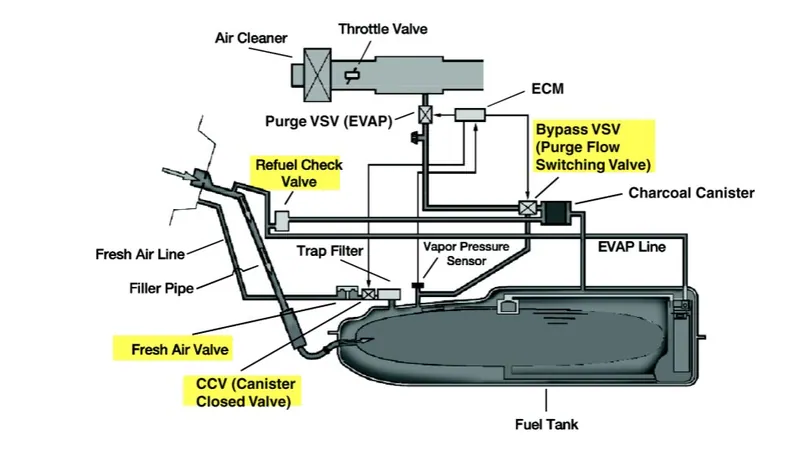
- Vacuum Switching Valve (VSV)
(OEM #90910-12274)— This is the most frequent failure point for a P0446 code that reappears quickly after being reset. It's also referred to as a 'Vapor Canister Purge Solenoid' in some parts catalogs.
Trusted brands: Denso (OEM), Standard Motor Products (CP724)
OEM price range: $70-$100
Aftermarket price range: $40-$60 - Charcoal Canister Assembly
(OEM #77740-47050)— Required if the canister body is cracked, saturated with fuel, or if the integrated canister close valve (CCV) has failed, which is the common cause for refueling issues.
Trusted brands: Toyota (OEM), Dorman
OEM price range: $290-$420
Aftermarket price range: $200-$300 - Fuel Tank Cap
(OEM #77300-52030)— A simple and inexpensive first step if the cap's seal is visibly worn or cracked, though it's a less likely fix for this specific code. It's critical to use an OEM cap.
Trusted brands: Toyota (OEM)
OEM price range: $20-$35
Aftermarket price range: $15-$25
Related Codes That Often Appear With This One
- P0441 — Incorrect Purge Flow. This code can appear with P0446 if the system detects improper vapor flow during a test, which can be caused by the same faulty valves or a saturated canister.
- P0455 — EVAP System Gross Leak Detected. If a hose is disconnected or the canister is severely cracked, the system may detect a large leak in addition to the vent circuit fault.
- P0440 — EVAP System Malfunction. This is a more general EVAP system code that can accompany P0446, indicating a general failure in the system's ability to hold pressure.
Technical Service Bulletins (TSBs) & Recalls
- TSB EG013-03: M.I.L. ON DTC P0440, P0441 OR P0446: While this TSB is for 2000-2003 Avalon, Camry, Solara, and 2001-2003 Sienna, it describes the exact failure mode relevant to the Prius: an inoperative Canister Closed Valve Vacuum Switching Valve (CCV VSV) causing P0446. It provides a diagnostic procedure to test the valve's operation.
Platform-Specific Known Issues
- Instant CEL Return Points to VSV: Multiple owners and technicians confirm that if the P0446 Check Engine Light returns within a few hours or less than 100 miles of being cleared, the cause is almost certainly an electrical failure inside the small Vacuum Switching Valve (90910-12274), not a physical leak.
- Refueling Issue Points to Canister: The symptom of the gas pump nozzle clicking off prematurely is a hallmark sign that the Canister Close Valve (CCV) is stuck. Since this valve is integrated into the charcoal canister on the Gen 2 Prius, the entire canister assembly (77740-47050) must be replaced to fix the issue.
- The 'Last Resort' Valve: There is another valve, sometimes called the tank bypass valve (Part No. 77730-47030), located on top of the fuel tank. It is extremely difficult to access, requiring the fuel tank to be lowered. A PriusChat user documented replacing this part to finally resolve a persistent P0446 after replacing all other common components. This is a last resort repair.
Mechanic-Grade Diagnostic Values
- Vacuum Switching Valve (VSV) Coil Resistance — expected: Approximately 38 ohms. Failure: A significantly higher (open circuit) or lower (shorted) resistance reading indicates a faulty valve coil.
- Vapor Pressure Sensor Voltage at Atmospheric Pressure — expected: 2.9 to 3.7 Volts. Failure: Voltage outside this range with the system unsealed suggests a faulty sensor.
- Voltage at VSV Connector — expected: Battery voltage (approx. 12V) with key on, engine off.. Failure: No voltage indicates a problem with the power supply circuit, fuse, or wiring from the ECM.
Hidden / Shadow Codes Worth Checking
- Mode 6 Data: Mode 6 provides results from non-continuous monitor tests run by the ECU. For the EVAP system, this can show test values for pressure decay, which can indicate a problem before it's bad enough to set a standard DTC. A technician can compare the raw test values against the manufacturer's specified minimum and maximum thresholds. (see via A professional scan tool with Mode 6 capabilities, such as Toyota's Techstream software.)
Scan Tool Commands That Help
- Toyota Techstream / Professional Bidirectional Scanner: EVAP System Active Test — This function allows a technician to command individual EVAP components, such as the VSV and Canister Close Valve (CCV), to open or close. This is used to verify the mechanical function of a valve; you should hear an audible click. If a valve is commanded to change state and doesn't, it confirms the valve is stuck or has failed electrically.
Wiring & Ground Locations
- ECM Connector E7 — The Engine Control Module (ECM) is located behind the right side of the dashboard.. Connector E7 on the ECM contains the control circuits for the Canister Closed Valve (CCV) and the VSV for the Purge Flow Switching Valve. A wiring issue at this connector could cause the P0446 code.
- ECM Connector E5 — The Engine Control Module (ECM) is located behind the right side of the dashboard.. Connector E5 on the ECM contains the control circuit for the main EVAP VSV (purge valve). While less likely for P0446, a fault here could contribute to system-wide EVAP issues.
- Ground Points — General ground points for the rear of the vehicle are located behind trim panels and near the taillight assemblies. Specific ground points for the EVAP system are typically on the frame rail near the canister assembly.. A corroded or loose ground connection for the EVAP valve circuits can cause intermittent or complete failure of the valves, leading to a circuit malfunction code like P0446.
Real Owner Repair Stories
- PriusChat user 'JeffAnd' (2004 Toyota Prius) — Check Engine Light with code P0446, gas pump nozzle clicks off repeatedly when refueling.
❌ Tried (didn't work) Performed a smoke test, which only showed a minor leak near the gas cap filler neck, which was deemed normal venting., Considered replacing the charcoal canister.
✅ What actually fixed it Using a bidirectional scan tool (Xtool D8), the user manually tested the EVAP valves. The purge valve worked, but the vent valve would not change state (was stuck closed). This confirmed the vent valve itself was the failure. The user ordered a new vent valve to replace it, avoiding the cost of replacing the entire canister.
"I Checked Everything" — The Actual Cause
- In one documented case, a smoke test revealed no significant leaks, but the P0446 code and refueling issues persisted. The actual cause was a mechanically stuck vent valve, which was not a leak but a component failure. This was confirmed using a bidirectional scan tool to command the valve open and closed, which it failed to do.
Diagnostic Flowchart
Real Owner Stories
Aggregated from forums and TSBs cited above. Mileages and costs reflect what owners reported in those sources.
2005 Toyota Prius — 146000 miles
Symptoms: Owner experienced a recurring P0446 code and went through a long battle, including multiple dealer visits and replacing the gas cap, before suspecting a sticking valve.
What fixed it: Diagnosing and replacing a sticking EVAP valve after basic fixes failed.
Source hint: PriusChat.com: 'Recurring P0446 code' / Owner Reports
2007 Toyota Prius
Symptoms: Experienced the P0446 code alongside the hallmark symptom of the gas pump shutting off too early while trying to refuel.
What fixed it: Replacing the charcoal canister assembly due to a stuck Canister Close Valve (CCV).
Source hint: PriusChat.com: '2007 P0446 and gas pump shuts off too early'
2004-2009 Toyota Prius
Symptoms: Dealt with a persistent P0446 code that would not clear even after replacing the standard EVAP components.
What fixed it: Lowered the fuel tank and replaced the hard-to-reach tank bypass valve (Part No. 77730-47030) on top of the tank.
Source hint: PriusChat.com: 'P0446, Techstream TBP Fail, and CCV Replacement'
2007 Toyota Prius
Symptoms: Owner experienced a P0446 code and was told by the dealership that the charcoal canister was not holding pressure.
What fixed it: Dealer recommended a full charcoal canister replacement.
Cost: $812
Source hint: Reddit (r/prius): '07 Prius - P0446 code and charcoal canister not holding pressure'
Related OBD-II Codes
Frequently Asked Questions
Why does the gas pump keep clicking off when I try to fill my 2004-2009 Prius with a P0446 code?
I cleared the P0446 code on my Prius, but it came back almost instantly. What does this mean?
Can I just replace the Canister Close Valve (CCV) on my Gen 2 Prius?
Does TSB EG013-03 apply to my Prius?
I've replaced the VSV and the charcoal canister, but P0446 is still there. What else could it be?
Could a loose gas cap cause the P0446 code on my Prius?
Helpful Videos

Used OEM Parts in Stock

New Aftermarket Parts Available


The information in this article is provided for general reference and educational purposes only. Vehicle specifications, procedures, and part compatibility can vary by production date, trim level, and region. Always consult your vehicle's factory service manual and verify part numbers before purchasing or performing repairs. Safety-critical components such as airbags, seat belts, and braking systems should be installed by a qualified professional.
- Toyota Prius:
- 🧭 Diagnostic Flowchart
- 🎬 Helpful Videos
- 🛍️ Shop This Part
- What's Unique About the 2004-2009 Toyota Prius
- Symptoms You May Notice
- Most Likely Causes
- Rare But Worth Checking
- Diagnosis Steps
- Parts You'll Likely Need
- Related Codes That Often Appear With This One
- Technical Service Bulletins (TSBs) & Recalls
- Platform-Specific Known Issues
- Mechanic-Grade Diagnostic Values
- Hidden / Shadow Codes Worth Checking
- Scan Tool Commands That Help
- Wiring & Ground Locations
- Real Owner Repair Stories
- "I Checked Everything" — The Actual Cause
- Real Owner Stories
- 2005 Toyota Prius — 146000 miles
- 2007 Toyota Prius
- 2004-2009 Toyota Prius
- 2007 Toyota Prius
- Related OBD-II Codes
- Frequently Asked Questions
- 🎟️ Get 5% Off