

P0446 on 2013-2018 Toyota RAV4: EVAP Vent Control Circuit Causes and Fixes
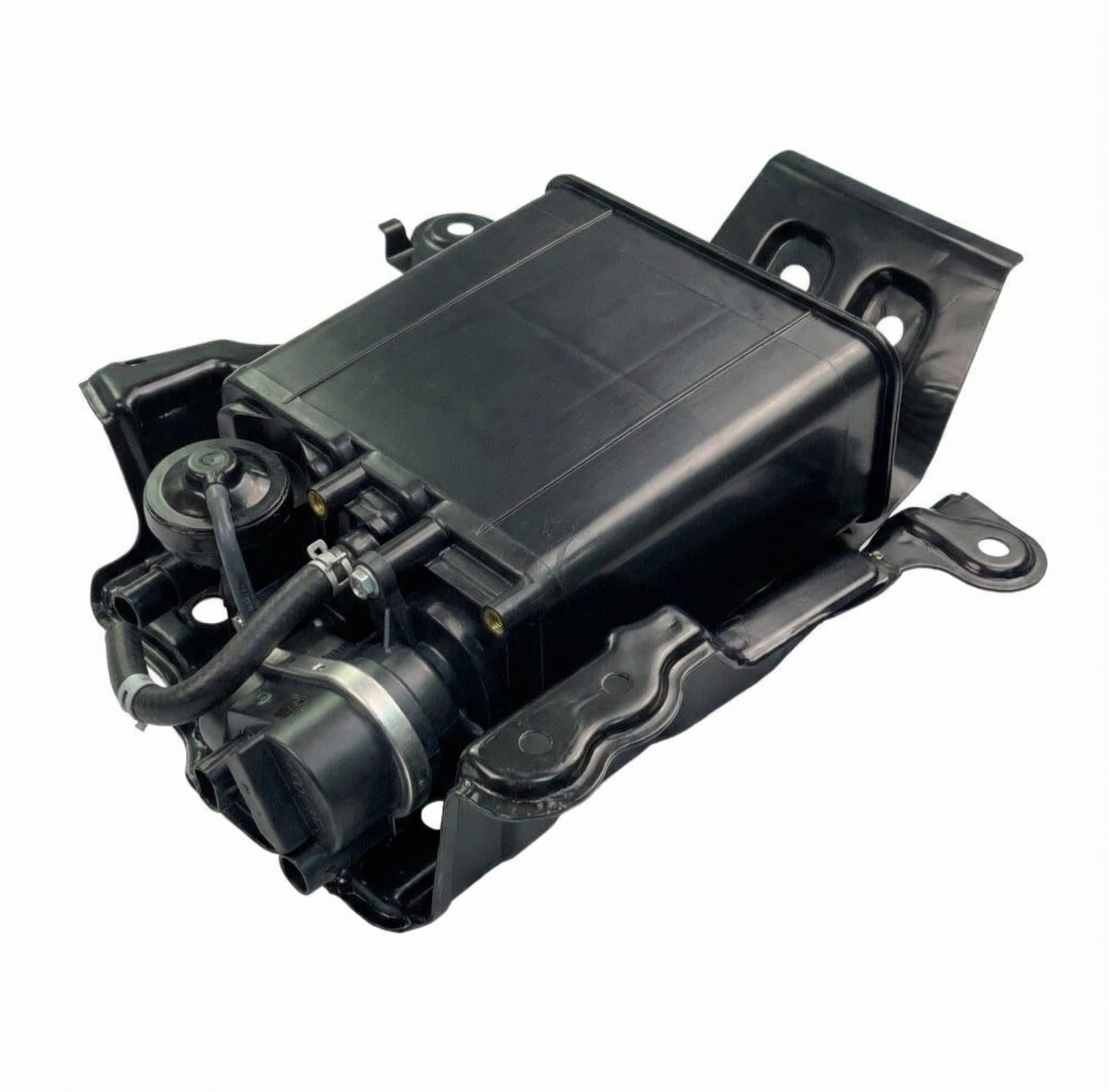
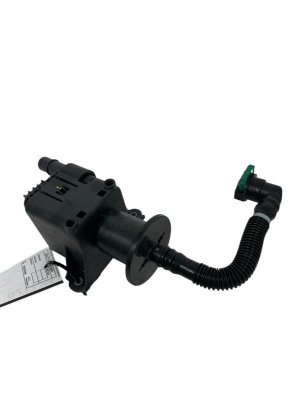
On a 2013-2018 Toyota RAV4 with the 2.5L engine, code P0446 is overwhelmingly caused by a failed charcoal canister assembly, which contains the integrated vent valve. The common failure involves the canister's charcoal breaking down and clogging the valve. The standard, effective repair is to replace the entire canister assembly (OEM Part #77740-0R020). Expect to pay $380-$570 for the OEM part.
- P0446 on a 2013-2018 RAV4 almost always points to a problem with the vent valve, which is part of the charcoal canister assembly located under the rear of the car.
- The most likely fix is replacing the entire charcoal canister assembly (OEM Part #77740-0R020), not just a single valve.
- Before buying parts, inspect the EVAP hoses for black charcoal pellets. If you see them, the canister has failed and must be replaced.
- Don't waste money on a new gas cap or purge valve for this specific code, as they are not the typical cause.
- A key symptom of this issue can be the fuel nozzle clicking off constantly when you try to fill the gas tank.
What's Unique About the 2013-2018 Toyota RAV4
On this generation of Toyota RAV4 (XA40), as with many other Toyotas, the vent valve (often called a Vacuum Switching Valve or VSV) is integrated into the charcoal canister assembly. A widely documented failure mode is the canister itself breaking down internally, releasing activated charcoal pellets that clog the vent valve and associated lines. This means that simply replacing an individual valve is often not possible or effective; the entire canister assembly usually needs to be replaced to resolve the issue permanently and prevent a recurrence.
Symptoms You May Notice
- Check Engine Light is on.
- Difficulty filling the fuel tank (the gas pump nozzle shuts off prematurely).
- A faint fuel odor may be present near the rear of the vehicle, especially after refueling.
- Slightly reduced fuel efficiency as the system may not be operating correctly.
- Replacing the gas cap. A faulty gas cap typically causes a leak-related code (like P0442, P0455, or P0456), not a vent control circuit code like P0446. However, some owners have reported fixing a P0446 with a new OEM gas cap, so it remains a simple, though unlikely, first step.
- Replacing the purge valve/solenoid. The purge valve is located in the engine bay and controls vapor flow to the engine. It usually triggers different codes, such as P0441, though it can sometimes appear with P0446 if the entire system is compromised by charcoal debris.
Most Likely Causes
- Failed Charcoal Canister Assembly 🔴 High Probability → Shop Vapor Canister The vent valve is integrated with the canister. A known failure pattern on Toyotas is the internal breakdown of the charcoal, which then clogs the vent valve, causing the P0446 code along with others like P0441. This is the most common cause reported by owners and mechanics for this specific vehicle generation.
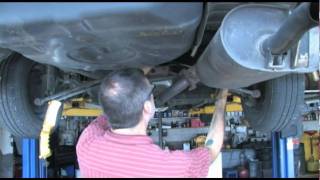
How to confirm: Inspect the EVAP lines connected to the canister for black charcoal pellets. If pellets are present, the canister has failed and must be replaced. A bi-directional scan tool can command the vent valve to close; if the system fails to hold vacuum during a subsequent test, the valve/canister assembly is likely faulty. A clicking sound should be heard when the valve is commanded on/off. 🎬 Watch: How to test the VSV and replace the canister.
Typical fix: Replace the entire charcoal canister assembly, which includes the new vent valve. It is critical to blow out all connected EVAP lines with compressed air to remove any charcoal debris before installing the new part to prevent immediate contamination of the new valve.
Est. part cost: $380-$570 for OEM, $200-$350 for aftermarket - Clogged or Blocked EVAP Vent Hose 🟡 Medium Probability The vent hose's fresh air inlet is open to the atmosphere (usually through a filter box) and can become clogged with dust, dirt, or spider webs/nests, preventing the system from venting properly. This is a common issue across many makes and models, including Toyota.
How to confirm: Locate the vent hose inlet, which is typically routed high up in the vehicle's frame near the filler neck. Visually inspect the hose opening for blockages. Disconnect the hose from the canister and attempt to blow through it to check for restrictions.
Typical fix: Clean or replace the blocked vent hose. If a spider nest is found, clearing it out and adding a small screen to the inlet box can prevent recurrence.
Est. part cost: $20-$50 for a hose - Faulty Vent Valve Wiring or Connector ⚪ Low Probability
How to confirm: Visually inspect the wiring harness and connector at the charcoal canister for any signs of damage, corrosion, or loose pins. Use a multimeter to test for 12V power and a ground signal from the ECM at the connector when commanded by a scan tool. Check for continuity on the ground wire back to the ECM.
Typical fix: Repair the damaged section of wiring or clean/replace the corroded electrical connector. Apply dielectric grease to the connector pins upon reassembly to prevent future corrosion.
Est. part cost: $10-$30 for connector repair supplies
Rare But Worth Checking
- Cracked Fuel Pump Assembly Flange: → Shop Fuel Pump A documented case on a 2014 RAV4 showed that a crack in the plastic flange of the fuel pump module, located on top of the gas tank, caused a vapor leak that triggered a P0446 code. This is an unusual failure that would typically be found with a smoke test after other more common causes are ruled out. The repair involves dropping the fuel tank and replacing the fuel pump assembly.
- Faulty Fuel Tank Pressure Sensor: → Shop Fuel Tank While less common for P0446 specifically, a faulty fuel tank pressure sensor can provide incorrect readings to the ECM, leading it to misdiagnose the vent valve's operation. This would typically be accompanied by other pressure-related codes like P0451, P0452, or P0453.
Diagnosis Steps
- Read the trouble codes with an OBD-II scanner and note any other codes present. Freeze frame data can provide clues about the conditions when the fault was detected.
- Inspect the gas cap to ensure it is tight and the seal is intact, though this is an unlikely cause for P0446.
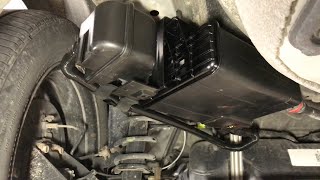
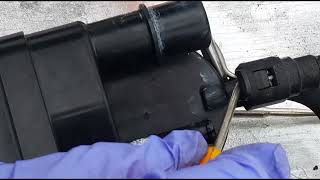
- Safely raise and support the rear of the vehicle to access the EVAP system. The charcoal canister is a black box located underneath the vehicle, near the fuel tank, 🎬 See how to safely unplug those tricky vapor hose connections. often shielded by a plastic cover.
- Visually inspect the canister, vent valve connector, and all associated hoses for obvious cracks, damage, or loose connections.
- Disconnect the vent hose and inspect it for blockages from dirt, debris, or insects (spider nests are common). Check for the presence of black charcoal pellets in the hose. If pellets are found, the canister assembly must be replaced.
- Inspect the electrical connector for the vent valve for corrosion or backed-out pins. With the key on, use a multimeter to verify 12V power at the connector.
- Use a bi-directional scan tool to command the vent valve solenoid ON and OFF. You should hear a faint click from the valve. If not, the valve is likely seized or has an electrical failure.
- If no charcoal pellets are found and the valve seems to function, perform a smoke test. Introduce smoke into the EVAP service port and look for leaks. This can reveal hard-to-find cracks in hoses or components like the fuel pump flange.
- If all else fails, and wiring is confirmed to be good, the ECM itself could be faulty, but this is extremely rare.
Parts You'll Likely Need
- Vapor Canister Assembly
(OEM #77740-0R020)— This is the most common failure for code P0446 on this vehicle. The assembly includes the integrated vent valve (VSV) which is the source of the circuit fault, and replacing the whole unit prevents recurring issues from internal charcoal breakdown. This part fits non-hybrid, Canada-built RAV4s up to 01/2016. Always verify fitment with VIN.
Trusted brands: Toyota (OEM), Denso, Dorman
OEM price range: $380-$570
Aftermarket price range: $200-$350
Related Codes That Often Appear With This One
- P0441 — Incorrect Purge Flow. This code often appears with P0446 when the canister is failing and releasing charcoal pellets, affecting the entire system's flow.
- P0442 — Small EVAP Leak Detected. Can be triggered alongside P0446 if the vent valve is stuck or the canister is clogged, affecting the system's ability to seal for a leak test.
- P0455 — Large EVAP Leak Detected. Can occur if the vent valve is stuck open or a major component like the fuel pump flange has cracked.
Technical Service Bulletins (TSBs) & Recalls
- While no specific TSB for P0446 on this RAV4 was found, Toyota TSB EG048-07 addresses P0440, P0441, and P0446 on other models (2000-2003 Avalon, Camry, Solara, and 2001-2003 Sienna), often pointing to an inoperative Canister Closed Valve VSV, indicating a known pattern of failure for this component type across the brand.
Documented NHTSA Reports
Manufacturer records and owner reports filed with the NHTSA highlight the persistent nature of this code across the Toyota lineup. For instance, NHTSA ODI #10086188 describes a vent control malfunction where a technician traced the P0446 code to a faulty VSV control valve. In another instance, NHTSA ODI #10735783 notes a case where the charcoal canister was found to be clogged and both the VSV and purge valves were leaking, requiring a full canister replacement. Additionally, NHTSA ODI #10125378 reports a recurring P0446/P0441 condition that would disappear in winter and reappear in summer, suggesting temperature-sensitive behavior in the EVAP components.
Mechanic-Grade Diagnostic Values
- EVAP Canister Vent Valve (VSV) Solenoid Resistance — expected: 48 to 65 ohms (value from similar Toyota model, use as a general guide). Failure: A reading significantly outside this range, or an open/short (OL/zero ohms), indicates a failed solenoid coil.
- Vent Valve Connector Voltage — expected: 12V (battery voltage) with Key On, Engine Off. Failure: No voltage indicates a problem with the power supply circuit, fuse, or relay.
- Fuel Tank Pressure (FTP) Sensor Voltage (KOEO, gas cap off) — expected: ~2.5V to ~3.3V (at atmospheric pressure). Failure: Voltage stuck at 0V, 5V, or a value that doesn't correspond to atmospheric pressure suggests a faulty sensor or wiring issue.
Hidden / Shadow Codes Worth Checking
- Mode $06 Data: Mode 6 provides results from non-continuous monitor tests run by the ECM. For the EVAP system, it will show the raw test values for leak checks, comparing them against the manufacturer's minimum and maximum thresholds. A test that is failing but has not yet run twice to set a Check Engine Light will be visible here. This allows a technician to see a marginal failure before it becomes a persistent P-code. (see via A professional scan tool with Mode 6 capability is required. The data is presented as Test IDs (TID) or Monitor IDs (MID) and Component IDs (CID).)
Scan Tool Commands That Help
- Toyota Techstream: Evaporative System Check Utility — This is the primary diagnostic function for the EVAP system. It allows the technician to manually command the vent valve (CCV) and purge valve to seal the system, apply vacuum, and monitor the Fuel Tank Pressure sensor reading (in mm/Hg) to check for leaks or blockages. This test can definitively confirm if the vent valve is failing to close or if the system cannot hold a vacuum.
- Toyota Techstream: Active Test: 'CAN CTRL VSV' — This command specifically toggles the Canister Close Valve (vent valve) on and off. It should produce an audible click from the valve. A lack of a click points directly to a failed solenoid or an issue in its control circuit. This is a quick way to isolate the electrical function of the valve.
Wiring & Ground Locations
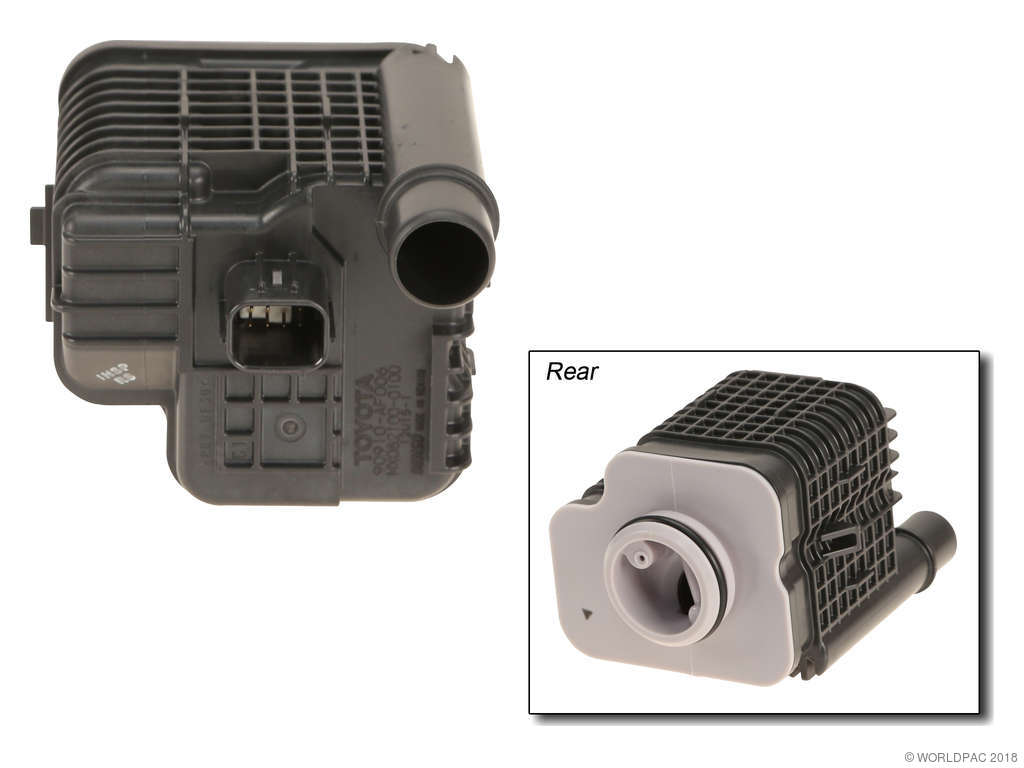
- Vent Valve Connector (on Canister) — On the vapor canister assembly, which is located under the rear of the vehicle, near the center, and often shielded by a plastic cover.. This is the primary connection to test. It has two main pins: one receives 12V power with the key on, and the other is the control wire that the ECM grounds to close the valve. Testing for power and ground signal here is a critical diagnostic step.
- ECM (Engine Control Module) — Typically located in the engine bay or behind the glove box.. The ECM provides the switched ground signal that activates the vent valve. If power is present at the valve but it doesn't activate when commanded, a continuity test of the ground wire back to the correct ECM pin is necessary to rule out a broken wire.
Real Owner Repair Stories
- Reddit user on r/MechanicAdvice (2015 Toyota RAV4) — P0171 (System Too Lean), with pending codes P0441 (Incorrect Purge Flow) and P0455 (Large Leak).
❌ Tried (didn't work) Replaced the purge valve/solenoid twice by two different mechanics.
✅ What actually fixed it The user was still diagnosing, but the story is valuable as it shows a common misdiagnosis path. The combination of codes, especially after multiple failed purge valve replacements, strongly points toward a saturated or failed charcoal canister assembly causing system-wide flow issues. - Tacoma World forum user (Toyota Tacoma (similar EVAP system design)) — P0446
❌ Tried (didn't work) Cleaning the gas cap O-ring and filler surface.
✅ What actually fixed it Replacing the gas cap with a new OEM part resolved the code. While P0446 is a circuit code, this story shows that in some fringe cases, a sealing issue can contribute to or trigger it, making the cheap replacement of an OEM gas cap a worthwhile, low-risk diagnostic step. - NHTSA ODI #11190106 — An owner reported noticing the check engine light while driving normally, which was later identified as P0446, the EVAP system vent control circuit.
- NHTSA ODI #11133326 — A report highlights the recurring nature of the P0446 check engine light, referencing community discussions where multiple owners faced the same vent control circuit issues.
OEM Part Supersession History
77740-0R020→77740-0R020 (current for its application)— This part number is specific to Canada-built, non-hybrid models.
Heads up: This part may not fit Japan-built models or models built after January 2016. A different part number, 77740-42110, is listed for Japan-built models from 01/2016 onward. Always verify the correct part number with the vehicle's VIN.
Model Year Variations Within This Range
- 2013-01/2016 vs 01/2016-2018: The charcoal canister assembly part number changed around January 2016, coinciding with the model year facelift. Pre-facelift models (and early 2016 Canada-built) typically use part number 77740-0R020. Later models, particularly those built in Japan, may use part number 77740-42110. The physical fitment and electrical connections may differ, making it critical to verify the part number with the VIN before ordering.
Diagnostic Flowchart
Other Known Issues on This Vehicle
Issues unrelated to this code that are worth knowing about as an owner of this generation:
- Torque Converter Shudder 🔴 High — Common on 2013-2015 models, typically between 25-50 mph under light throttle. Can occur at various mileages. (Ref: Toyota issued TSB-0023-15 and a warranty extension program (POL17-06) to address this by replacing the torque converter and updating software.)
- Infotainment System Glitches 🟡 Low — Common across the 2013-2018 generation. Owners report frozen/unresponsive touchscreens, random reboots, and screens that are unreadable in daylight. (Ref: No specific recall, but dealers sometimes performed software updates. Repair often involves replacing the screen or the entire head unit.)
- Oil Leaks 🟠 Medium — Can occur at higher mileages (75,000+ miles). Common sources include the timing cover, oil pan, and oil pressure sensor.
- Noisy Rear Brakes 🟡 Low — Some owners report a grinding noise caused by rust build-up on rear brake rotors.
- Starter/Starting System Issues 🟠 Medium — A 1A Auto video notes that starter problems are a common complaint for this generation, though it may be linked to other system issues rather than just the starter motor itself.
Used vs. New Parts: Buying Guide for This Vehicle
When a used part is the smart pick: For this specific repair, a used vapor canister is NOT recommended. The primary failure mode is the internal degradation of the charcoal media, which is an age and use-related failure. A used part from a junkyard has an unknown remaining lifespan and may have already failed in the same manner.
What to inspect on the donor part:
- Not applicable, as a used part is not advised.
OEM-only on this vehicle (don't cheap out):
- Vapor Canister Assembly: While aftermarket options exist, many technicians and owners prefer the OEM Toyota part to ensure longevity and avoid repeat labor, as the part is somewhat difficult to access.
Aftermarket brands forum-validated for this vehicle:
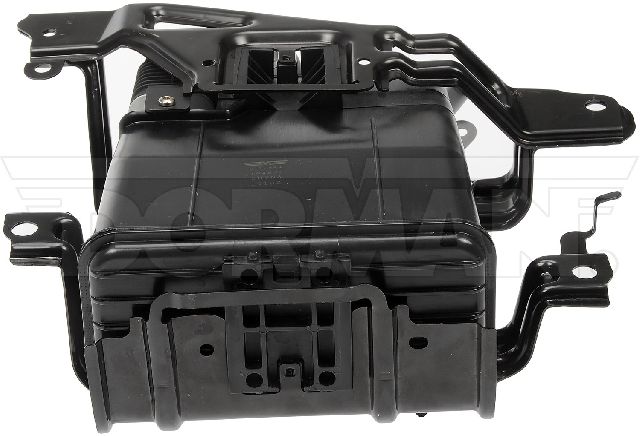
- Dorman (Part #911-444) is a widely available direct replacement for OEM #77740-0R020.
- Standard Motor Products (SMP) / Standard Ignition (Part #CP3467) is another known aftermarket alternative.
Brands owners have reported issues with on this vehicle:
- No specific brands are consistently reported as problematic, but general sentiment on forums often favors OEM for complex emissions components to guarantee compatibility and avoid premature failure.
Real Owner Stories
Aggregated from forums and TSBs cited above. Mileages and costs reflect what owners reported in those sources.
2013-2018 Toyota RAV4
Symptoms: Check Engine Light on and difficulty filling the fuel tank with the gas pump nozzle shutting off prematurely.
What fixed it: Replacing the entire charcoal canister assembly (part # 77740-0R020).
Source hint: RAV4World Forums
2013-2018 Toyota RAV4
Symptoms: P0446 code present; found charcoal pellets in the vent line during inspection.
What fixed it: Replacing the charcoal canister and blowing out the connected EVAP lines with compressed air to remove debris.
Source hint: ToyotaNation Forums
Related OBD-II Codes
Frequently Asked Questions
Does Toyota TSB EG048-07 apply to my 2013-2018 RAV4?
What is the specific part number for the charcoal canister on my RAV4?
Why is it hard to pump gas into my 2013-2018 RAV4?
Can I just replace the vent valve instead of the whole canister?
Is there a way to confirm the canister has failed before I spend $380-$570 on an OEM part?
Could my P0446 code be caused by a spider nest?
Helpful Videos

Used OEM Parts in Stock
New Aftermarket Parts Available


The information in this article is provided for general reference and educational purposes only. Vehicle specifications, procedures, and part compatibility can vary by production date, trim level, and region. Always consult your vehicle's factory service manual and verify part numbers before purchasing or performing repairs. Safety-critical components such as airbags, seat belts, and braking systems should be installed by a qualified professional.
- Toyota RAV4:
- 🧭 Diagnostic Flowchart
- 🎬 Helpful Videos
- 🛍️ Shop This Part
- What's Unique About the 2013-2018 Toyota RAV4
- Symptoms You May Notice
- Most Likely Causes
- Rare But Worth Checking
- Diagnosis Steps
- Parts You'll Likely Need
- Related Codes That Often Appear With This One
- Technical Service Bulletins (TSBs) & Recalls
- Documented NHTSA Reports
- Mechanic-Grade Diagnostic Values
- Hidden / Shadow Codes Worth Checking
- Scan Tool Commands That Help
- Wiring & Ground Locations
- Real Owner Repair Stories
- OEM Part Supersession History
- Model Year Variations Within This Range
- Other Known Issues on This Vehicle
- Used vs. New Parts: Buying Guide for This Vehicle
- Real Owner Stories
- 2013-2018 Toyota RAV4
- 2013-2018 Toyota RAV4
- Related OBD-II Codes
- Frequently Asked Questions
- 🎟️ Get 5% Off