

P0446 on 2000-2006 Toyota Tundra: EVAP Vent Control Causes and Fixes
On a first-generation Toyota Tundra, code P0446 is most often caused by a failed vapor canister vent solenoid (VSV) or old, cracked vacuum hoses. The solenoid is usually part of the charcoal canister assembly, which is located above the spare tire on V8 models and can cost between $400 and $850 to replace. Checking the gas cap and inspecting all small vacuum lines for cracks are critical first steps.
- P0446 on your Tundra points to a problem with the EVAP system's vent valve or its circuit.
- Before buying expensive parts, always check that the gas cap is tight and inspect all visible EVAP vacuum hoses for cracks, as these are common and cheap fixes.
- The most likely failed part is the vapor canister vent solenoid (valve), which is located near the gas tank.
- On this generation of Tundra, the vent solenoid is often sold as part of the complete charcoal canister assembly, making the repair more costly.
- You can continue to drive the truck with this code, but it will not pass an emissions inspection until it is fixed.
What's Unique About the 2000-2006 Toyota Tundra
For the first-generation Tundra, this code is a very common sign of aging components. After two decades, the rubber vacuum hoses become brittle and crack, and the vent solenoid (also called a Vacuum Switching Valve or VSV by Toyota) simply wears out. On these trucks, the vent solenoid is often integrated into the charcoal canister assembly, meaning you frequently have to replace the entire unit rather than just the small valve. The location of the canister varies: on V6 models, it is often in the engine bay near the battery, making access easier, while on V8 models, it is located under the truck bed above the spare tire, exposed to the elements.
🎬 Watch: See exactly where the V8 canister is located.Symptoms You May Notice
- Check Engine Light is on.
- A 'whoosh' sound when opening the gas cap, indicating pressure buildup from a stuck-closed vent.
- Difficulty filling the fuel tank (the pump may shut off repeatedly) if the canister or vent is clogged.
- Possible faint fuel smell, though this is more common with other EVAP leak codes.
- Slight decrease in fuel economy.
- Replacing the purge valve (solenoid) in the engine bay. While part of the EVAP system, the purge valve has its own specific trouble codes (like P0441) and is not the primary cause for a P0446 vent circuit code.
Most Likely Causes
- Faulty Vapor Canister Vent Solenoid / Valve (VSV) 🔴 High Probability → Shop Vapor Canister Vent Solenoid This is a common failure point on older Toyotas. The solenoid, which Toyota calls a Vacuum Switching Valve (VSV), can get stuck open or closed, or fail electrically after many years of service. A manufacturer service record, NHTSA ODI #10086188, describes a vent control malfunction where the diagnostic traced the fault specifically to the VSV control.
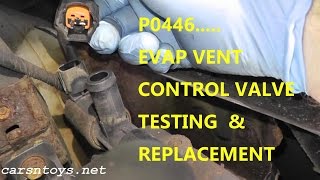
How to confirm: Locate the valve on or near the charcoal canister. With a scan tool, command the valve to close; you should hear a click. Alternatively, apply 12V power directly to the valve's terminals and listen for the click. You can also test the coil's resistance with a multimeter; it should be between 30-40 ohms. If it's silent or the resistance is out of spec, it has failed.
Typical fix: Replace the vent solenoid. On many 2000-2006 Tundras, this valve is part of the entire charcoal canister assembly and must be replaced as a unit.
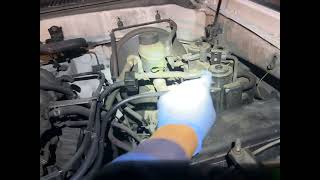
Est. part cost: $250-$850 - Cracked, Disconnected, or Clogged Vacuum Hoses 🔴 High Probability → Shop Vacuum Hose The rubber vacuum lines used in the EVAP system become dry, brittle, and crack over 20+ years, creating leaks that trigger EVAP codes. This is an extremely common issue on older vehicles. 🎬 See how a simple disconnected hose can trigger these codes. One Tundra owner found a small crack on the underside of a 3-inch hose on the EVAP assembly was the culprit.
How to confirm: Visually inspect all rubber hoses connected to the charcoal canister, purge valve (in the engine bay), and along the frame rails. Pay close attention to small, easily overlooked sections. A smoke test is the definitive method, where a mechanic pumps smoke into the EVAP system to reveal any leaks.
Typical fix: Replace the damaged section of vacuum hose. This is a very inexpensive and simple repair.
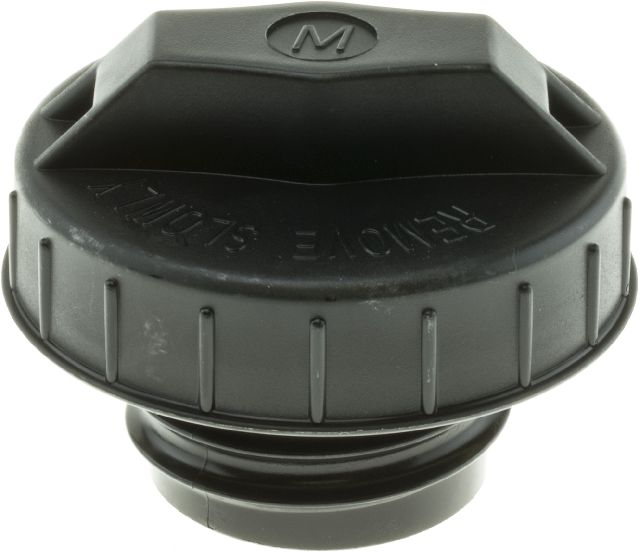
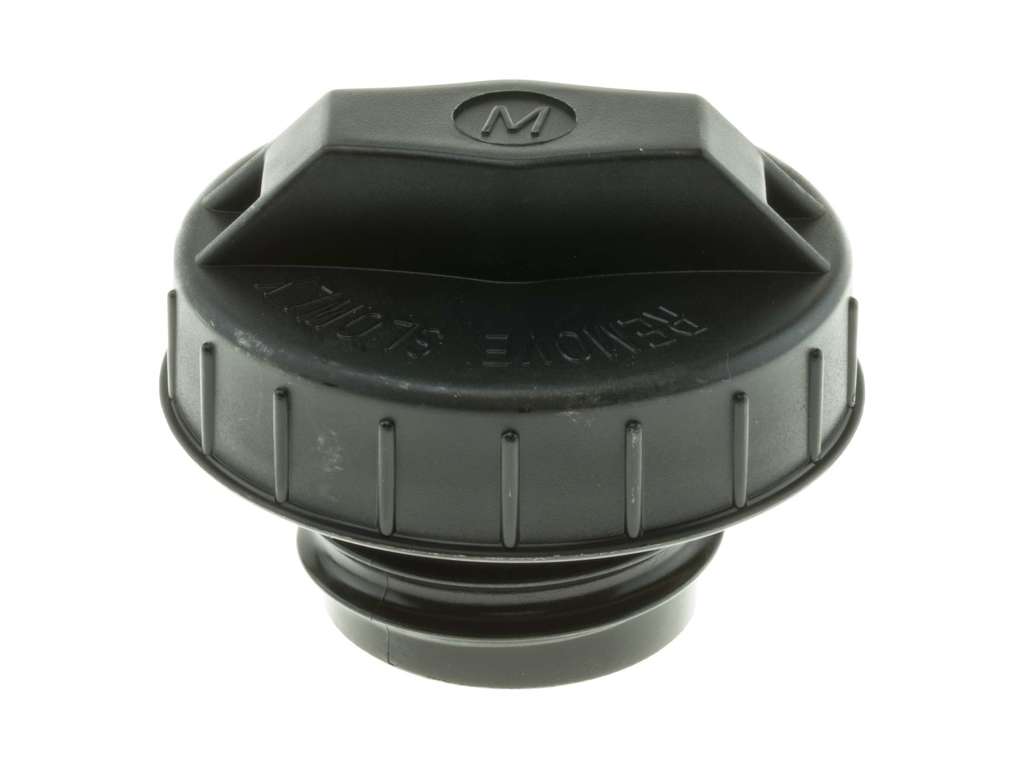
Est. part cost: $5-$20 - Loose or Faulty Gas Cap 🟡 Medium Probability → Shop Fuel Tank Cap The rubber O-ring seal on the gas cap degrades over time, preventing the EVAP system from holding a vacuum during its self-test. It's a frequent suggestion on forums to check this first.
How to confirm: First, ensure the cap is tightened until it clicks. Check the rubber seal for cracks or damage. If it looks worn, it's suspect. Replacing the cap is often a cheap and easy first step.
Typical fix: Replace the gas cap. It is highly recommended to use an OEM cap from Toyota, as some aftermarket caps do not seal correctly.
Est. part cost: $20-$45 - Clogged or Failed Charcoal Canister ⚪ Low Probability → Shop Vapor Canister The canister can become saturated with fuel (often from overfilling the gas tank) or the internal activated charcoal can break down and clog the passages. NHTSA ODI #10735783 notes a case where a clogged canister was found alongside leaking VSV and purge valves, requiring a full canister replacement at high mileage. Spiders and mud daubers are also known to build nests in the vent tube or on the vent valve filter, causing a blockage that triggers P0446.
How to confirm: If the vent valve and hoses are good, the canister is the next suspect. Shaking the canister may reveal loose charcoal pellets. A smoke test that shows no leaks but indicates a blockage points to a clogged canister.
Typical fix: Replace the entire charcoal canister assembly.
Est. part cost: $400-$850
Rare But Worth Checking
- Damaged wiring or connector: The wiring harness leading to the vent solenoid is located under the truck (on V8s) and can be damaged by road debris, corrosion, or flexing, causing an open or short in the circuit. NHTSA ODI #11190106 records an instance where the check engine light for P0446 appeared during normal driving, which can sometimes be linked to intermittent circuit faults. Check for 12V at the connector with the key on.
- Faulty Vapor Pressure Sensor: This sensor monitors pressure in the EVAP system. If it provides an incorrect reading (e.g., showing negative pressure when the gas cap is off), it can falsely trigger a vent valve code.
Diagnosis Steps
- Check the Gas Cap: Ensure it is tight and clicks. Inspect the seal for cracks or wear. If in doubt, replace it with an OEM part as aftermarket caps can be problematic.
- Visually Inspect Hoses: Carefully check all accessible EVAP vacuum hoses for cracks, brittleness, or loose connections. On V6 models, this is easier as the canister is in the engine bay. On V8s, you'll need to look under the truck above the spare tire. Pay special attention to small connector hoses.
- Test the Vent Valve (VSV): Locate the charcoal canister. Check for 12V power at the VSV's electrical connector with the ignition ON. Use a scan tool to command the valve ON/OFF and listen for a click. Alternatively, test the coil resistance with a multimeter (should be ~30-40 ohms).
- Check for Blockages: Disconnect the vent hose from the canister and check for obstructions. Spiders and mud daubers are known to build nests inside these tubes, causing a clog. Blowing low-pressure compressed air through the line can clear it.
- Inspect Wiring: Check the electrical connector and wiring going to the vent valve for any signs of corrosion, breaks, or damage, especially on V8 models where it's exposed under the truck.
- Perform a Smoke Test: If the simple checks don't reveal the issue, a smoke test is the most effective way to find the exact location of a leak in the canister or any of the hoses.
- Consider the Canister: If the vent valve is confirmed bad (and is integrated) or if the canister is found to be clogged with charcoal or debris, replacement of the entire assembly is the next step.
Parts You'll Likely Need
- Charcoal Canister Assembly
(OEM #77740-0C021 (for 2000-2002), 77740-0C050 (for 2003-2006))— On this Tundra generation, the high-failure vent solenoid (VSV) is often integrated into the canister. Replacing the entire assembly solves the most common cause and addresses potential canister clogs at the same time. Part numbers vary by year.
Trusted brands: Toyota (OEM), Standard Motor Products, Dorman
OEM price range: $700-$850
Aftermarket price range: $250-$500 - Gas Cap
(OEM #77300-47010)— A faulty gas cap seal is a common, inexpensive cause for EVAP codes. It's often replaced as a first step due to its low cost and ease of replacement.
Trusted brands: Toyota (OEM)
OEM price range: $20-$45
Aftermarket price range: $15-$30 - Vacuum Hose — Aged, cracked rubber hoses are a primary cause of EVAP leaks on older vehicles. Even a small, hidden crack can trigger the code.
OEM price range: $5-$20
Aftermarket price range: $5-$15
Related Codes That Often Appear With This One
- P0441 — P0441 (Incorrect Purge Flow) is often seen with P0446 because a malfunctioning vent valve can disrupt the proper flow of vapors during the purge cycle. They frequently appear together on this platform. NHTSA ODI #10125378 notes that these two codes can sometimes be seasonal, appearing in summer and disappearing in winter.
- P0440 — P0440 is a general EVAP system malfunction code. It can appear alongside P0446 if the vent valve issue is part of a larger system problem or leak.
Technical Service Bulletins (TSBs) & Recalls
- EG046-03 (Revised Oct 2003) - While for Avalon, Camry, Solara, and Sienna, this TSB addresses P0440, P0441, and P0446 caused by an inoperative Canister Closed Valve VSV, showing a common failure pattern and diagnostic procedure for the era.
- EG015-04 (April 2004) - Addresses P0441, P0442, and P0446 on various Toyota models. It provides detailed flowcharts for diagnosing the EVAP system, focusing on testing the VSV for the canister closed valve, checking for vacuum leaks, and inspecting the canister for restrictions.
Platform-Specific Known Issues
- EVAP Canister Location Varies by Engine: → Shop Vapor Canister On 3.4L V6 models, the charcoal canister and associated valves are often located in the front of the engine bay, near the battery. This makes for much easier access to inspect hoses and test components. On 4.7L V8 models, the canister assembly is mounted under the truck bed, just above the spare tire, requiring you to work underneath the vehicle.
- Spiders and Mud Daubers Clogging Vent Lines: A well-documented cause for a P0446 code on many vehicles, including Toyotas, is insects building nests in the EVAP vent hose. This creates a physical blockage that prevents the system from venting, which the ECU interprets as a vent control malfunction. Clearing the hose with compressed air is a common diagnostic step.
Mechanic-Grade Diagnostic Values
- Vacuum Switching Valve (VSV) Coil Resistance — expected: 30 - 40 ohms. Failure: A reading outside this range, or an open circuit (infinite resistance), indicates a failed solenoid coil.
- Voltage at Vent Valve Connector — expected: 12V (Battery Voltage) with key on, engine off. Failure: No voltage indicates a problem in the power supply circuit, such as a broken wire or blown fuse.
Scan Tool Commands That Help
- Toyota Techstream: Active Test: Control the VSV for EVAP (ON/OFF) — This command allows a technician to manually operate the vent solenoid to listen for the characteristic 'click', confirming if the solenoid is mechanically responding to the ECU's command.
- Toyota Techstream: Active Test: Control the VSV for Pressure Switching Valve (ON/OFF) — On models equipped with it, this allows testing of the bypass valve that isolates the fuel tank side from the canister side of the EVAP system. This helps differentiate a canister-side fault from a tank-side fault.
Wiring & Ground Locations
- Vent Valve Connector — On the charcoal canister assembly. For V8 models, this is located above the spare tire. For V6 models, it is in the engine bay near the battery.. This is the primary electrical connection to test for power, ground, and resistance of the vent valve solenoid. The V8's under-vehicle location makes it prone to corrosion and wire damage from road debris.
Real Owner Repair Stories
- Tundras.com forum user (2000 Toyota Tundra) — P0441 and P0446 codes appeared after fixing a P0171 (System Too Lean) code caused by a different rotted vacuum line.
❌ Tried (didn't work) Replacing the gas cap was considered but dismissed due to pressure being present in the tank., Replacing the purge valve near the intake and the sensor valve on top of the EVAP assembly with aftermarket parts from eBay.
✅ What actually fixed it A closer inspection revealed a small, hidden crack on the underside of a 3-inch hose on the EVAP assembly. Replacing this specific short hose resolved the codes. - YouTube video by user 'Fix It Now' (2002 Toyota Tundra 4.7L 2WD) — Check Engine Light with codes P0441 and P0446.
❌ Tried (didn't work) Searching online for videos but being unable to pinpoint the exact location of the commonly mentioned 'loose hose'.
✅ What actually fixed it The user found a vacuum hose near the EVAP canister in the engine bay that was completely disconnected. The hose did not have a factory clamp, allowing it to come loose over time. Reconnecting the hose and adding a new clamp fixed the issue. - YouTube video by user 'Marc Klemp' (2003 Toyota Tundra) — Check Engine Light with codes P0440, P0441, P0442, and P0446.
❌ Tried (didn't work) A dealership performed a smoke test and incorrectly diagnosed a cracked canister, quoting a $1200 repair.
✅ What actually fixed it The owner performed his own vacuum test on the canister which passed, indicating no leaks. He identified that only the removable solenoid valve on the canister assembly had failed. Replacing just this individual solenoid, which was available as a separate part on his model year, resolved all the codes.
Documented NHTSA Reports
- An owner reported in NHTSA ODI #11133326 that the P0446 code is a persistent issue across multiple Toyota platforms of this era, often requiring extensive troubleshooting of the vent control system.
- NHTSA ODI #10735783 describes a case where a vehicle with over 244,000 miles required a full charcoal canister replacement after the unit became clogged and the associated VSV and purge valves began leaking.
- NHTSA ODI #10086188 notes a diagnostic finding where a P0446 code was present for an EVAP system trace to a vent control malfunction, specifically requiring the installation of a new VSV control.
"I Checked Everything" — The Actual Cause
- In one documented case on a 2003 Tundra, a dealership's smoke test led them to (incorrectly) diagnose a cracked canister. The owner later performed a vacuum test which held steady, proving the canister was not leaking. The actual cause was a failed, but separately replaceable, solenoid valve attached to the canister, which a smoke test would not identify as a component failure.
OEM Part Supersession History
77740-0C021→77740-0C050— Part update/revision by the manufacturer.
Heads up: While 77740-0C050 is listed for 2003-2006 Tundras, some parts vendors also list it as compatible with 2007-2013 models, indicating a design that spanned into the next generation. Always verify fitment with VIN.
Model Year Variations Within This Range
- 2002 and earlier: On some early models, particularly V6s, the EVAP canister was located under the hood in the engine bay.
- 2003 and later: The EVAP canister was moved to the rear of the vehicle, above the spare tire, for V8 models. Some sources suggest a design change around this time introduced a more complex system with a bypass valve.
Diagnostic Flowchart
Real Owner Stories
Aggregated from forums and TSBs cited above. Mileages and costs reflect what owners reported in those sources.
2000 Toyota Tundra
Symptoms: Started getting P0171 too lean codes, followed by a P0441 EVAP incorrect purge code a day later.
What fixed it: Replaced the vacuum line running from the EVAP valve to the VSV, which was completely dry rotted and essentially disconnected.
Source hint: Tundras.com forum owner report
Toyota Tundra
Symptoms: Chased P0441 and P0446 codes. Initially replaced EVAP valves with aftermarket parts, but the codes remained.
What fixed it: Found and replaced a small, cracked 3-inch vacuum hose located on the EVAP assembly.
Source hint: Tundras.com - P0441 and P0446 Codes (March 2024)
Toyota Tundra
Symptoms: Triggered a P0446 code and sought advice on the first diagnostic steps.
What fixed it: Replaced the gas cap, which is corroborated by multiple owners as the correct first step before moving to more complex diagnostics.
Source hint: Tundras.com - P0446 code (Aug 2019)
Related OBD-II Codes
Frequently Asked Questions
Where is the charcoal canister located on my 2000-2006 Tundra?
Should I replace the gas cap first for a P0446 code?
Are there any Technical Service Bulletins (TSBs) for the P0446 code on my Tundra?
Can insects really cause a P0446 code on my truck?
How do I test the Vapor Canister Vent Solenoid (VSV) on my Tundra?
Does the Toyota Sequoia have the same EVAP issues as the Tundra?
Helpful Videos
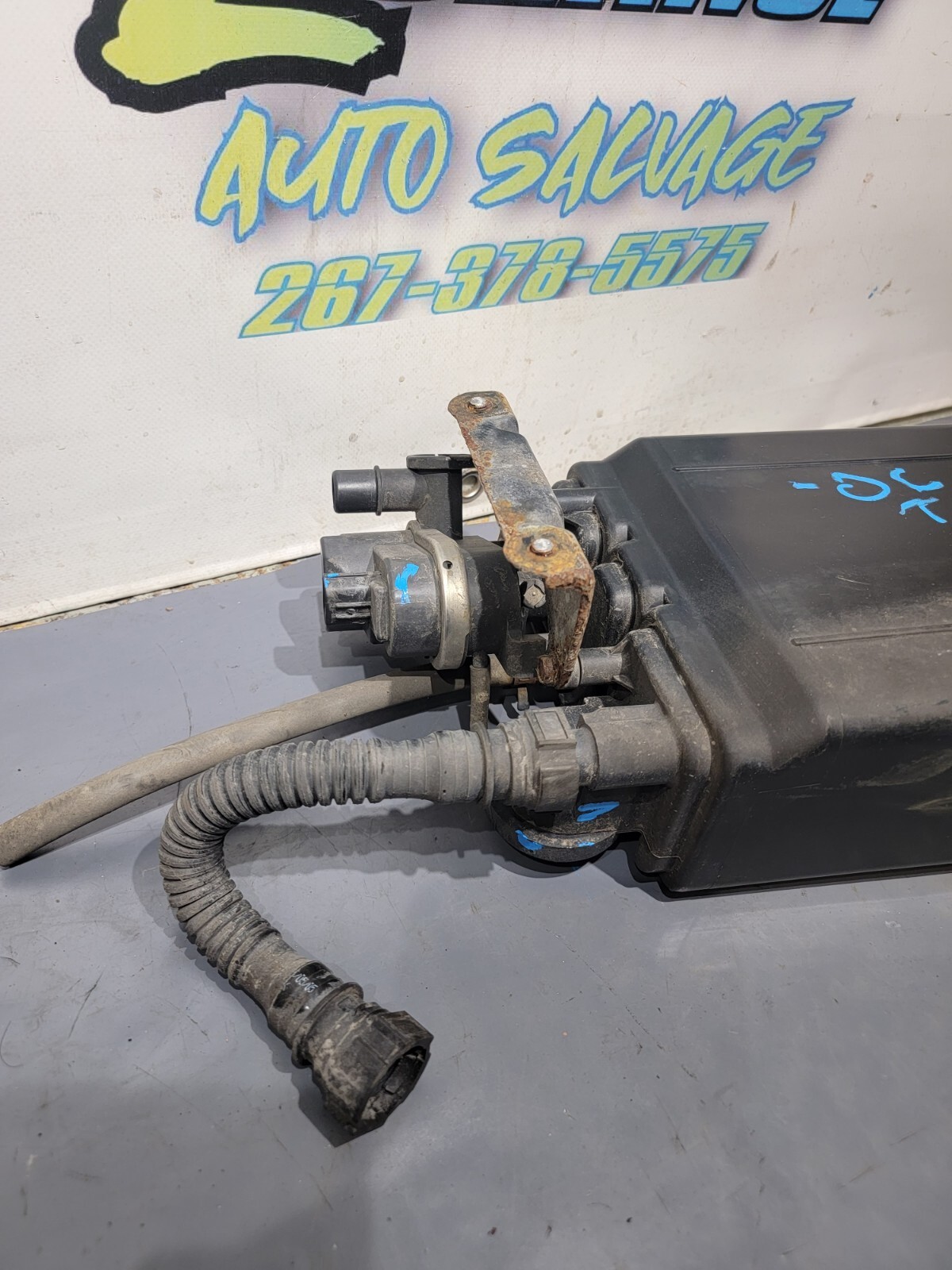
Used OEM Parts in Stock
New Aftermarket Parts Available


The information in this article is provided for general reference and educational purposes only. Vehicle specifications, procedures, and part compatibility can vary by production date, trim level, and region. Always consult your vehicle's factory service manual and verify part numbers before purchasing or performing repairs. Safety-critical components such as airbags, seat belts, and braking systems should be installed by a qualified professional.
- Toyota Tundra:
- 🧭 Diagnostic Flowchart
- 🎬 Helpful Videos
- 🛍️ Shop This Part
- What's Unique About the 2000-2006 Toyota Tundra
- Symptoms You May Notice
- Most Likely Causes
- Rare But Worth Checking
- Diagnosis Steps
- Parts You'll Likely Need
- Related Codes That Often Appear With This One
- Technical Service Bulletins (TSBs) & Recalls
- Platform-Specific Known Issues
- Mechanic-Grade Diagnostic Values
- Scan Tool Commands That Help
- Wiring & Ground Locations
- Real Owner Repair Stories
- Documented NHTSA Reports
- "I Checked Everything" — The Actual Cause
- OEM Part Supersession History
- Model Year Variations Within This Range
- Real Owner Stories
- 2000 Toyota Tundra
- Toyota Tundra
- Toyota Tundra
- Related OBD-II Codes
- Frequently Asked Questions
- 🎟️ Get 5% Off