

P0446 on 2007-2014 Volvo XC90: EVAP Vent Circuit Malfunction Causes and Fixes
P0446 on a 2007-2014 Volvo XC90 usually points to a problem with the EVAP system's vent valve, which is typically part of the charcoal canister assembly at the rear of the vehicle. The most common fix is replacing the entire charcoal canister. Expect to pay $180-$250 for the part. A less common but possible cause is a faulty purge valve in the engine bay.
- P0446 on your XC90 points to a problem with the EVAP vent circuit, located at the rear of the car.
- The most probable cause is a faulty vent valve, which is usually sold as part of the charcoal canister assembly.
- Before replacing the expensive canister, check the easier and cheaper possibilities first: the gas cap and the purge valve in the engine bay.
- A smoke test is the most reliable way to diagnose the exact location of a leak or blockage in the EVAP system.
- You can continue to drive with this code, but you won't pass an emissions test and might have trouble refueling.
What's Unique About the 2007-2014 Volvo XC90
On the first-generation Volvo XC90, which is built on the P2 platform, the EVAP system components are distributed between the engine bay and the rear of the vehicle. The code P0446 specifically relates to the vent circuit, and the vent valve itself is located at the rear, typically integrated with the charcoal canister. While many EVAP issues on Volvos are traced to the purge valve in the engine bay, P0446 more strongly suggests a problem with the rear components. Owners should be aware that on this platform, the vent valve is not commonly sold as a separate part, so the fix often involves replacing the entire charcoal canister assembly. A video showing the replacement of the canister on an XC90 demonstrates accessing it by removing the rear wheel and wheel-well liner.
Symptoms You May Notice
- Check Engine Light is on.
- A faint fuel smell, especially near the rear of the vehicle.
- Difficulty filling the fuel tank (the gas pump nozzle clicks off prematurely).
- Hard starting after refueling. This happens if a faulty purge valve allows fuel vapors to flood the intake manifold.
- Replacing only the gas cap without checking other components. While a bad cap can cause other EVAP codes, P0446 is more specific to the vent circuit.
- Replacing the purge valve in the engine bay when the fault is with the vent valve/canister at the rear of the vehicle. It's important to test the purge valve before replacing it.
Most Likely Causes
- Faulty or Clogged Charcoal Canister / Vent Valve Assembly 🔴 High Probability → Shop Vapor Canister The vent valve is integrated with the canister, making the entire unit the point of failure. Overfilling the fuel tank can saturate the charcoal with liquid fuel, causing it to fail and clog the system. The fresh air inlet for the system can also become clogged with dust or debris, particularly in dusty environments, which can trigger this code.
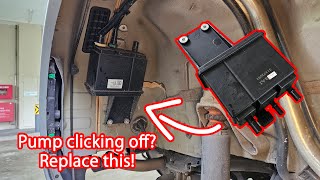
How to confirm: Locate the canister assembly behind the rear driver's side wheel well liner. Check for physical damage or cracks. A smoke test is the definitive way to confirm a crack or a stuck-open vent valve. A scan tool that can command the vent valve to open and close can test its electrical function. You can also test for 12V power at the valve's electrical connector with the ignition on.
Typical fix: Replace the entire charcoal canister assembly. The vent valve is not typically sold separately for this model.
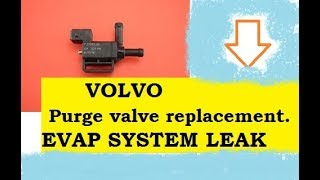
Est. part cost: $175-$250 - Faulty EVAP Purge Valve 🟡 Medium Probability → Shop Vapor Canister The purge valve (solenoid) in the engine bay is a known failure point on many P2 platform Volvo models and can cause a variety of EVAP codes, including P0442, P0443, and P0446. A failure of this part can cause hard starting after fueling.
How to confirm: Locate the valve in the engine bay. On the 4.4L V8, it's at the rear of the engine. On the 3.2L I6, it is clipped to the fan shroud. With the engine off, remove the valve and try to blow through it; it should be closed. You can also apply 12V power to its terminals to see if it clicks open and allows air to pass. A valve stuck open is a common failure mode.
Typical fix: Replace the purge valve solenoid and any cracked connected vacuum hoses.
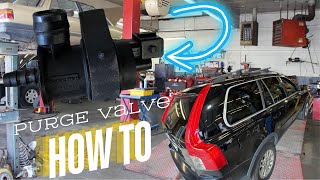
Est. part cost: $50-$80 - Cracked or Disconnected EVAP Hoses ⚪ Low Probability Over time, rubber hoses become brittle and can crack, especially the small vacuum lines in the engine bay or the larger hoses connected to the charcoal canister. A video on a V8 XC90 showed a severely kinked hose at the purge valve was the likely cause of the EVAP issue. 🎬 See this walkthrough for troubleshooting common Volvo EVAP codes
How to confirm: Visually inspect all accessible EVAP hoses for cracks, kinks, or loose connections. Pay close attention to the lines connected to the purge valve and the charcoal canister. A smoke test will quickly reveal any leaks.
Typical fix: Replace the damaged section of hose.
Est. part cost: $10-$30 - Damaged Vent Valve Wiring ⚪ Low Probability The wiring to the vent valve is located under the car near the rear wheel and is exposed to road debris and moisture, which can lead to corrosion or physical damage over time.
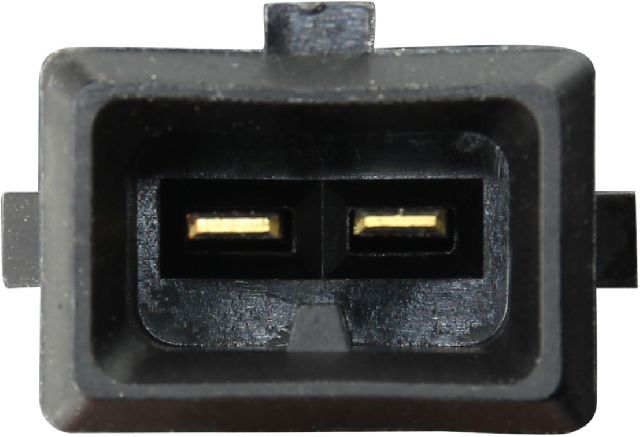
How to confirm: Inspect the electrical connector and wiring going to the charcoal canister/vent valve assembly for any breaks, corrosion, or loose pins. Use a multimeter to check for 12V power at the connector with the key on. If there is no power, trace the wiring for a break or check the relevant fuse.
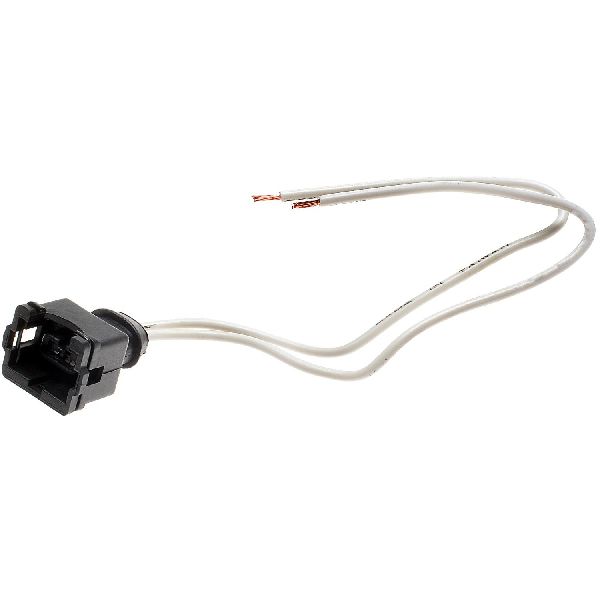
Typical fix: Repair the damaged section of the wiring harness or replace the connector.
Est. part cost: $5-$50
Rare But Worth Checking
- Loose or Faulty Gas Cap: → Shop Fuel Tank Cap While more likely to cause a P0455 (large leak) or P0442 (small leak) code, a faulty gas cap can sometimes contribute to general EVAP system pressure issues. It's the easiest and cheapest thing to check first. 🎬 Watch: Finding a small EVAP leak on an XC90
- Clogged EVAP Vent Hose from Dust/Debris: In vehicles operated in very dusty environments, the fresh air inlet for the EVAP system can become clogged with dirt, debris, or even insect nests, preventing the system from venting properly. A GM TSB addresses this exact issue by adding a filter, highlighting it as a known issue on other makes.
- Faulty Fuel Pump or Fuel Pressure Sensor: → Shop Fuel Pressure Sensor While less common for P0446 specifically, some owners have chased EVAP-like symptoms that were ultimately traced to a failing fuel pump module or fuel pressure sensor, which can cause similar issues like hard starting. A failing fuel pump was a noted issue on 2008 models with over 100,000 miles. The fuel pump module for the XC90 is part number E8846M or FG1275.
Diagnosis Steps
- Read the codes: Use an OBD-II scanner to confirm P0446 is the primary code. Note any other codes present, such as P0442, P0455, or P0443.
- Inspect the Gas Cap: Ensure the gas cap is tight and the seal is not cracked or worn. This is a simple, free check.
- Inspect the Purge Valve (Engine Bay): Locate the purge valve. On the V8, it's at the rear of the engine; on the 3.2L, it's on the fan shroud. Check its connected hoses for cracks or kinks. Test the valve itself by applying 12V power to see if it clicks and by attempting to blow through it when de-energized (it should be closed).
- Inspect the Charcoal Canister Area (Rear): Safely raise the vehicle. Remove the driver's side rear wheel and wheel well liner to access the EVAP canister.
- Check for Physical Damage: Visually inspect the canister, vent valve, and all connected hoses for obvious cracks, damage, or blockages.
- Test the Vent Valve Circuit: Disconnect the electrical connector at the vent valve/canister. Check for 12V power with the key on. If there is no power, trace the wiring for a break or check the fuse.
- Perform a Smoke Test: If no visual faults are found, a smoke test is the most effective next step. Introduce smoke into the EVAP system (often through the purge valve line) and look for leaks from the canister, hoses, or a stuck-open vent valve.
- Replace the Faulty Component: Based on the diagnosis, replace the identified faulty part. For P0446, this is most often the charcoal canister assembly or the purge valve.
Parts You'll Likely Need
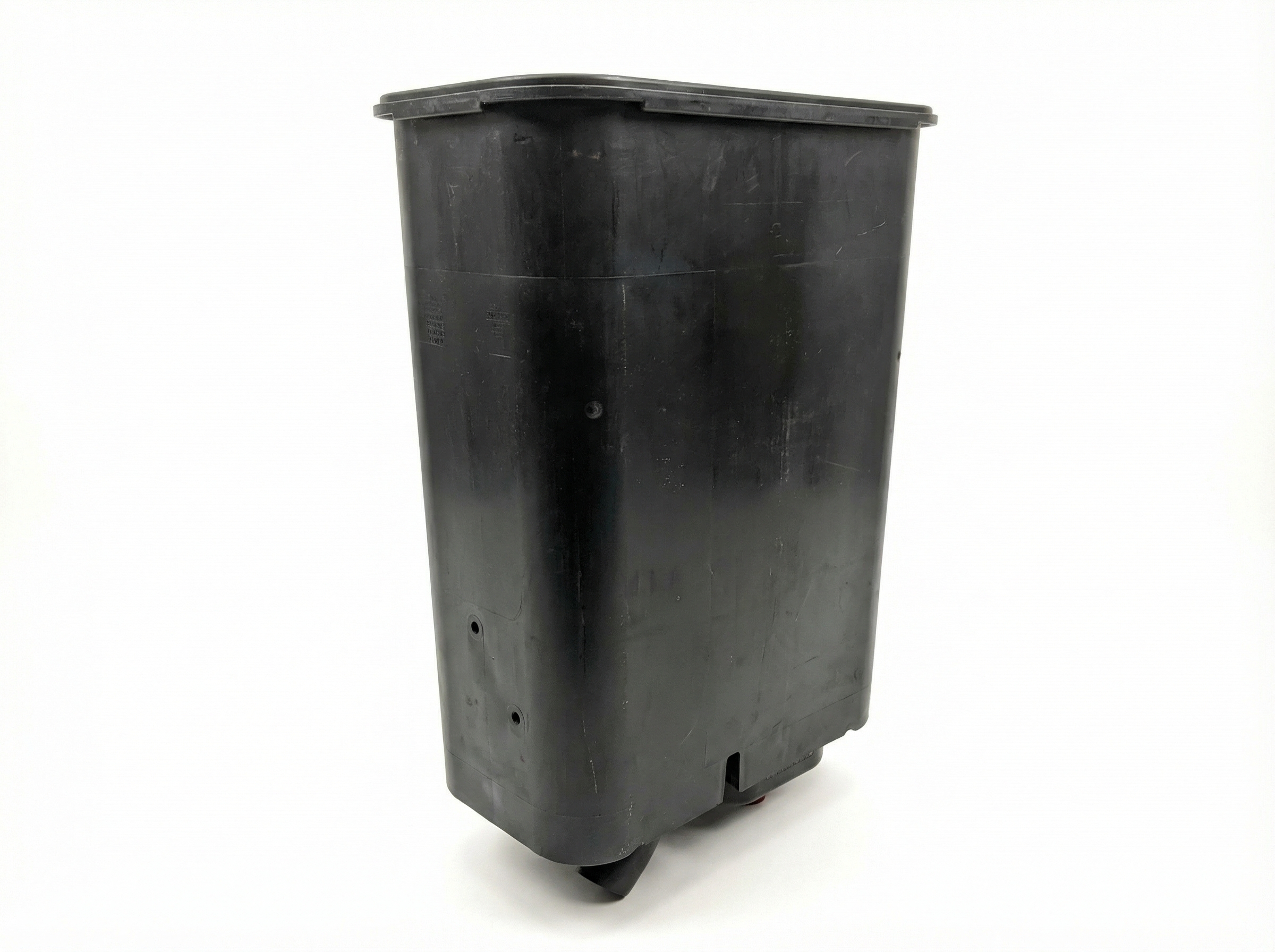
- Charcoal Canister Assembly
(OEM #30684417)— This assembly typically includes the vent valve, which is the most common point of failure for a P0446 code on this vehicle. The valve is often not sold separately. Note that other canister part numbers like 30650221 exist, and fitment may depend on the engine and specific emission codes for the vehicle.
Trusted brands: Genuine Volvo
OEM price range: $175-$250
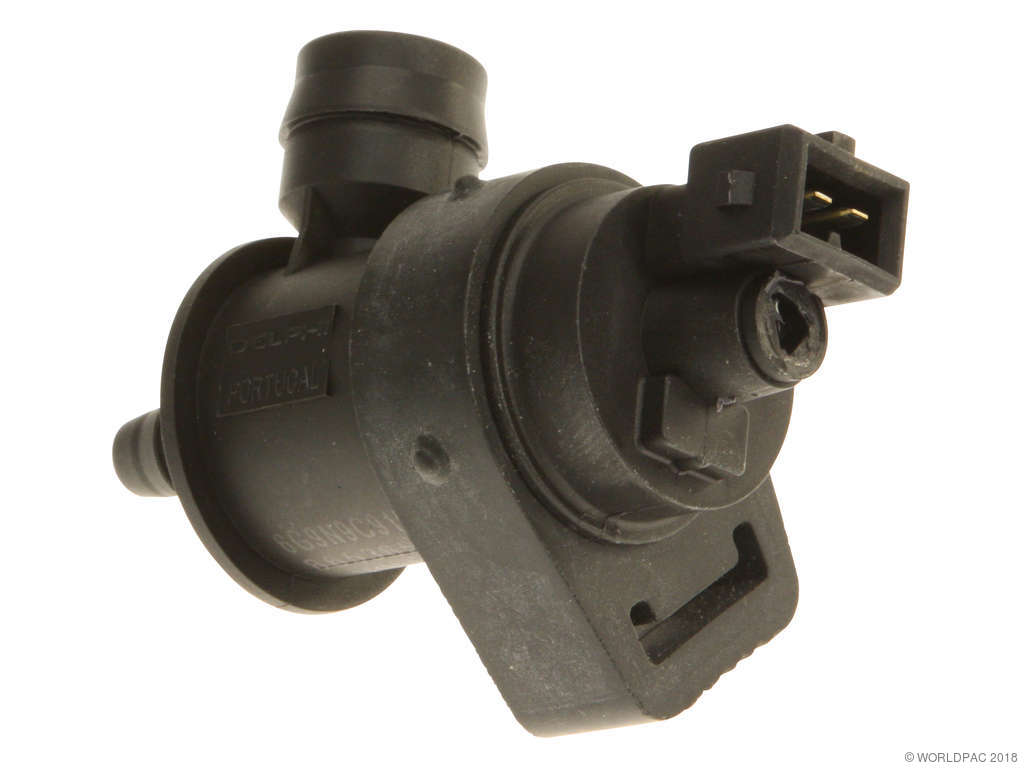
Aftermarket price range: $150-$220 - Vapor Canister Purge Valve
(OEM #8653908)— This valve, located in the engine bay, is a common failure item on Volvos and can cause various EVAP system codes. It's a likely secondary cause if the canister is not at fault. It can also be cross-referenced to part numbers 8653909, 8653642, and 6G9N9C915.
Trusted brands: Genuine Volvo, Bosch, Pierburg, ACDelco
OEM price range: $70-$90
Aftermarket price range: $40-$60
Related Codes That Often Appear With This One
- P0442 — Indicates a small leak in the EVAP system, which could be caused by the same faulty component (like a cracked canister or bad valve) that is triggering the P0446 circuit code.
- P0455 — Indicates a large leak in the EVAP system. If the vent valve is stuck open, it can be interpreted by the system as a large leak.
- P0443 — Indicates a fault in the EVAP Purge Control Valve Circuit. If both P0443 and P0446 are present, it could point to a shared wiring or power issue, or failures in both the purge and vent valves.
Technical Service Bulletins (TSBs) & Recalls
- While not for Volvo, GM Technical Service Bulletin 09-06-04-028D addresses a similar issue where dust and water intrusion into the EVAP system causes codes like P0446 and difficulty refueling. The fix involves replacing the vent solenoid and potentially adding a filter, which is relevant context for XC90 owners in dusty climates.
Mechanic-Grade Diagnostic Values
- EVAP Vent Valve / Purge Valve Solenoid Coil Resistance — expected: 14 - 30 Ohms (vehicle-specific data is best, but this is a common range). Failure: Near 0 Ohms indicates a shorted coil; infinite resistance (OL) indicates an open coil.
- Voltage at Vent Valve Connector — expected: ~12V (Battery Voltage) on one pin with ignition ON.. Failure: 0V suggests a blown fuse or a break in the power supply wire.
Scan Tool Commands That Help
- Volvo VIDA: Quick test of fuel tank / EVAP leakage test — This is a comprehensive, automated test to command the system to pressurize and check for major or minor leaks, confirming the overall integrity of the EVAP system after initial checks.
- Advanced OBD-II Scanner: EVAP Vent Valve/Solenoid ON/OFF — Use this bidirectional control to manually command the vent valve to open and close. You should hear an audible click from the valve. This directly tests the electrical circuit and the solenoid's mechanical function.
- Advanced OBD-II Scanner: EVAP Purge Valve/Solenoid ON/OFF — Use this to test the purge valve in the engine bay. While running a smoke test, commanding the valve open should allow smoke to pass through into the intake, confirming its operation.
Wiring & Ground Locations
- General Component Designations — Vehicle Wide. In Volvo wiring diagrams, components are given a designation like 'X/Y' where X is the component type and Y is a serial number. For example, 3/x is a switch, and 6/x is an electric motor. The EVAP vent valve is a solenoid, and its wiring can be traced from the Central Electronic Module (CEM) or Engine Control Module (ECM) in official diagrams.
Real Owner Repair Stories
- YouTube channel 'PistonShack' (Volvo P2 Chassis (platform for 2007-2014 XC90)) — Check Engine Light with codes P0442, P0443, and P0446.
❌ Tried (didn't work) The diagnosis pointed directly to the purge valve.
✅ What actually fixed it The purge solenoid valve was stuck in the open position and could not hold a vacuum. Replacing the valve and the connected, cracked vacuum hoses resolved the codes. - YouTube channel 'TIPS' by 'DIOSpeed' (Volvo XC90) — Check Engine Light with code P0456 (small EVAP leak).
❌ Tried (didn't work) Checking the gas cap, which was found to be good.
✅ What actually fixed it A small, 3-inch section of rubber hose connecting to the charcoal canister was old, brittle, and loose, causing a small leak. Replacing this small piece of hose with a new one provided a tight fit and fixed the leak.
OEM Part Supersession History
31104896→8653908— Standard part revision/update by Volvo.
Heads up: 8653908 is the correct current replacement for the purge valve.
Model Year Variations Within This Range
- 2007-2014: The location of the EVAP Purge Valve differs by engine. On the 3.2L I6, it is clipped to the fan shroud in the front of the engine bay. On the 4.4L V8, it is located at the rear of the engine.
- 2007-2014: The charcoal canister part number may vary. While 30684417 is common, 30650221 is also used. Part selection should be verified using the vehicle's VIN or by matching the number on the original part, as it can depend on the engine type and specific emissions configuration ('Order By Emission Code').
Diagnostic Flowchart
Other Known Issues on This Vehicle
Issues unrelated to this code that are worth knowing about as an owner of this generation:
- Premature Automatic Transmission Failure (GM/Aisin) 🔴 High — Common on early V8 and T6 models, particularly the Aisin TF-80SC and GM 4T65E. Can manifest as harsh shifting, slipping, or complete failure, often before 100,000 miles.
- Central Electronic Module (CEM) Failure 🔴 High — Can occur at any mileage, often caused by water intrusion from clogged sunroof drains. Leads to a wide range of bizarre, intermittent electrical problems, battery drain, or a no-start condition.
- 3.2L I6 Engine Oil Leaks 🟠 Medium — Commonly occurs as the vehicle ages. Leaks often originate from the timing cover gasket, valve cover gasket, or camshaft end plugs.
- Rear Wheel Bearing Failure 🟠 Medium — More common on vehicles driven in areas with poor road conditions or heavy salt use. Results in a humming or grinding noise from the rear of the vehicle that increases with speed.
- V8 Engine Alternator Failure 🟠 Medium — A known issue on the 4.4L V8 models where the alternator can fail. Replacement is labor-intensive due to its location.
- Fuel Pump Failure 🟠 Medium → Shop Fuel Pump — Reported as a common complaint on 2008 models with over 100,000 miles, leading to no-start conditions.
Used vs. New Parts: Buying Guide for This Vehicle
When a used part is the smart pick: A used charcoal canister assembly from a reputable salvage yard can be a good value, as it is not a high-wear item. It is a sealed plastic box with charcoal and an integrated valve, so failure is often due to physical damage or saturation, not mileage.
Donor-vehicle mileage cap: roughly under 100000 miles for the part to have meaningful remaining life.
What to inspect on the donor part:
- Visually inspect the plastic housing for any cracks, especially around the hose connections.
- Ensure none of the plastic hose nipples are broken or brittle.
- Ask for the donor vehicle's mileage and history if possible; prefer parts from non-accident vehicles.
- Avoid canisters that show signs of fuel saturation (dark wet stains or a very strong raw fuel smell).
OEM-only on this vehicle (don't cheap out):
- No parts for this specific repair are strictly OEM-only; however, using a Genuine Volvo or OEM-supplier (Bosch) purge valve is recommended for reliability.
Aftermarket brands forum-validated for this vehicle:
- Bosch (for the purge valve)
- Pierburg (for the purge valve)
Real Owner Stories
Aggregated from forums and TSBs cited above. Mileages and costs reflect what owners reported in those sources.
2005 Volvo XC90 V8
Symptoms: The owner dealt with EVAP system issues and identified a potential failure point in the engine bay.
What fixed it: Identified a severely kinked hose at the purge valve as the likely cause of the issue.
Source hint: YouTube (Big Girls Garage) video replacing the purge valve on a 2005 XC90 V8
P2 Chassis Volvo
Symptoms: The vehicle triggered multiple EVAP codes including P0442, P0443, and P0446.
What fixed it: Testing the purge solenoid valve by applying 12V and checking if it holds vacuum; a valve stuck open is a common failure.
Source hint: YouTube (PistonShack / VOLVO codes) video on P2 chassis Volvo
Related OBD-II Codes
Frequently Asked Questions
Where is the purge valve located on my XC90 with the 4.4L V8 engine?
I have a 3.2L I6 XC90; is the purge valve in the same place as the V8?
Can I just replace the vent valve on my charcoal canister to fix P0446?
Why does my XC90 have trouble starting only after I fill up the gas tank?
Does the dust in my area affect the EVAP system on my Volvo?
Where should I look for the charcoal canister on my XC90?
Helpful Videos
Used OEM Parts in Stock
New Aftermarket Parts Available


The information in this article is provided for general reference and educational purposes only. Vehicle specifications, procedures, and part compatibility can vary by production date, trim level, and region. Always consult your vehicle's factory service manual and verify part numbers before purchasing or performing repairs. Safety-critical components such as airbags, seat belts, and braking systems should be installed by a qualified professional.
- Volvo XC90:
- 🧭 Diagnostic Flowchart
- 🎬 Helpful Videos
- 🛍️ Shop This Part
- What's Unique About the 2007-2014 Volvo XC90
- Symptoms You May Notice
- Most Likely Causes
- Rare But Worth Checking
- Diagnosis Steps
- Parts You'll Likely Need
- Related Codes That Often Appear With This One
- Technical Service Bulletins (TSBs) & Recalls
- Mechanic-Grade Diagnostic Values
- Scan Tool Commands That Help
- Wiring & Ground Locations
- Real Owner Repair Stories
- OEM Part Supersession History
- Model Year Variations Within This Range
- Other Known Issues on This Vehicle
- Used vs. New Parts: Buying Guide for This Vehicle
- Real Owner Stories
- 2005 Volvo XC90 V8
- P2 Chassis Volvo
- Related OBD-II Codes
- Frequently Asked Questions
- 🎟️ Get 5% Off