

P0447 on 2010-2015 Jaguar XJ: EVAP Vent Circuit Fault Causes and Fixes
On a 2010-2015 Jaguar XJ, code P0447 is most often caused by water or ice getting into the Diagnostic Module Tank Leakage (DMTL) pump, which is part of the EVAP system. This is a known issue documented in Jaguar Technical Service Bulletin JTB00436NAS2. The fix typically involves replacing the DMTL pump, evaporative canister, and fuel tank filler pipe, then installing a protective foam piece (Part No. C2D49253) to prevent future water intrusion.
- P0447 on a 2010-2015 Jaguar XJ is very likely caused by a known water intrusion problem affecting the EVAP system's DMTL pump, as detailed in TSB JTB00436NAS2.
- Diagnosis should begin with a visual inspection of the DMTL pump and its connector for corrosion, located in the rear passenger-side wheel well.
- Do not mistake this for a simple EVAP leak or a bad gas cap; it is an electrical circuit fault.
- The official fix from Jaguar involves replacing the pump (which includes the vent valve), canister, filler pipe, and adding a specific protective foam shield (Part No. C2D49253) to prevent recurrence.
What's Unique About the 2010-2015 Jaguar XJ
For the 2010-2015 Jaguar XJ (X351 generation), the P0447 code is specifically called out in official manufacturer bulletins. Unlike a random electrical failure, Jaguar identified a specific design vulnerability where water and ice, kicked up by the tires, can get into the Diagnostic Module Tank Leakage (DMTL) pump's filter. [NHTSA Citation] This water ingress leads to corrosion and electrical faults within the pump assembly, triggering P0447 and other related EVAP codes. This makes it less of a random part failure and more of a known, platform-specific issue that requires a specific repair procedure including the addition of a protective foam shield.
Diagnostic Flowchart
Tap your situation to follow the diagnostic path that matches what you're seeing on this vehicle.
Symptoms You May Notice
- Check Engine Light is on.
- A faint fuel odor may be noticeable near the rear of the vehicle.
- Potential difficulty refueling, with the gas pump clicking off prematurely.
- Audible buzzing or humming from the rear passenger side wheel well area if the DMTL pump is struggling to operate.
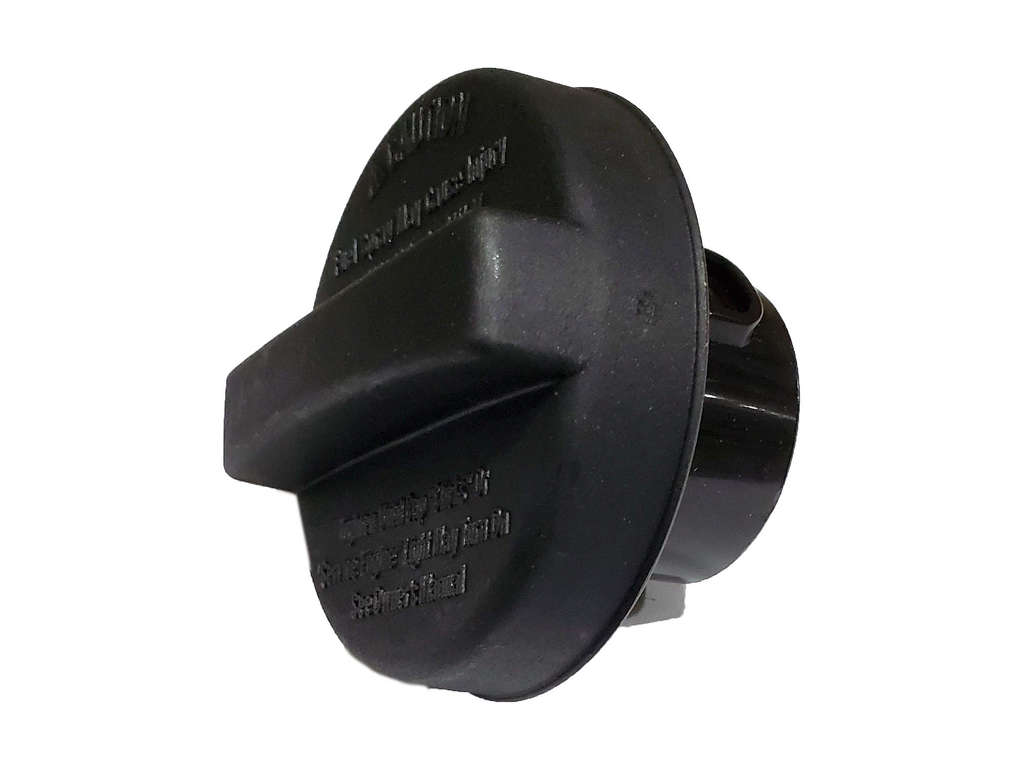
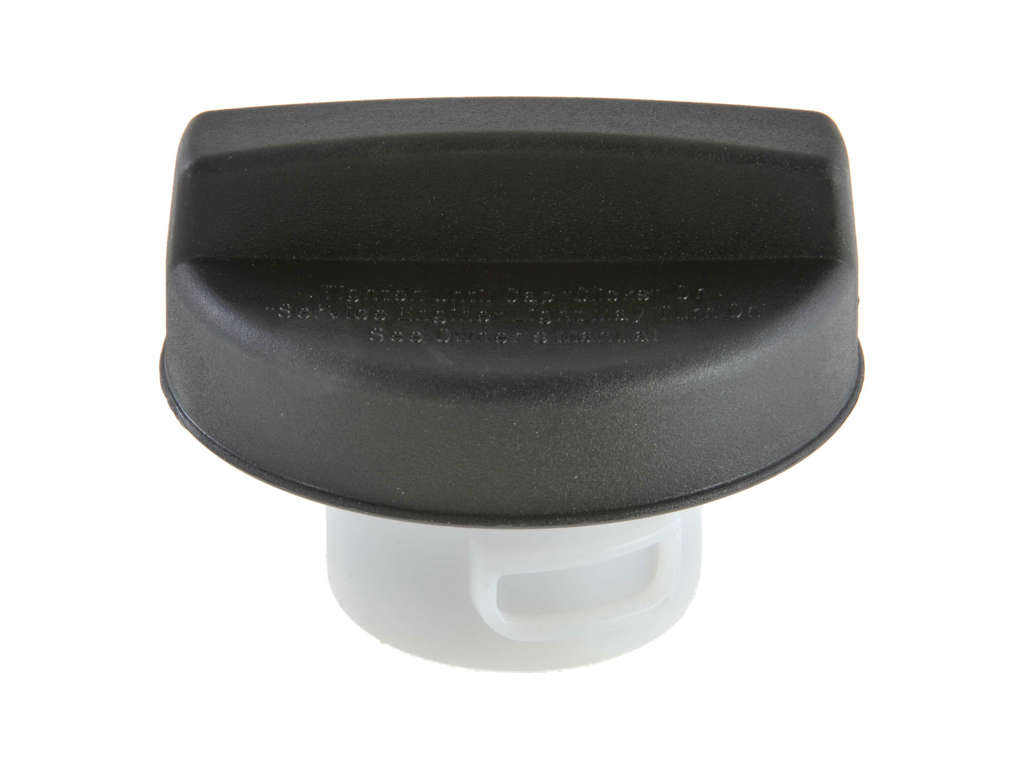
- Replacing the gas cap. While a loose or faulty gas cap can cause other EVAP codes (like P0455 for a large leak), it will not cause a P0447 'circuit open' code.
- Replacing only the charcoal canister without replacing the DMTL pump. The TSB calls for replacing both, and the electrical fault lies within the pump itself. [NHTSA Citation]
Most Likely Causes
- Water/Ice Intrusion in DMTL Pump 🔴 High Probability Jaguar issued Technical Service Bulletin #JTB00436NAS2, stating that spray from the road tires can become trapped in the Diagnostic Module Tank Leakage (DMTL) pump filter, causing water/ice damage. [NHTSA Citation] This is the most common cause for this specific vehicle range.
How to confirm: Visually inspect the DMTL pump (located near the charcoal canister in the rear driver-side wheel well area for US models) and its electrical connector for signs of water damage, rust, or corrosion. The pump is often mounted to the charcoal canister.
Typical fix: Replace the DMTL pump, the evaporative canister (Part No. C2D40532), and the fuel tank filler pipe (Part No. C2D30506). A protective foam piece (Part No. C2D49253) is then installed and secured with a cable tie to shield the new components from water spray, as per the TSB. [NHTSA Citation] Note that accessing the pump is a significant job that may require dropping the rear subframe. 🎬 See this walkthrough on how to replace an EVAP canister.
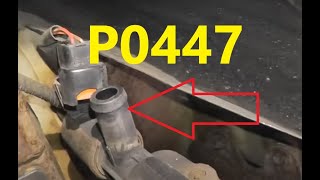
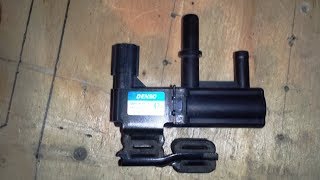
Est. part cost: $250-$500 for the pump, canister, and related TSB parts. - Failed EVAP Vent Valve / Solenoid 🟡 Medium Probability → Shop Vapor Canister This is the component directly monitored by the P0447 code. 🎬 Watch: Understanding the causes and fixes for the P0447 code. On this vehicle, the vent valve is integrated into the DMTL pump assembly. The internal coil can fail due to the aforementioned water intrusion, creating an open circuit.
How to confirm: After checking for power and ground at the connector, a multimeter can be used to check the resistance of the solenoid's coil. An infinite resistance reading (Open Line) indicates an open circuit and a failed part. A good valve should click when 12V is applied directly. A scan tool can command the vent open; the control line voltage should drop from ~5V to ~0V.
Typical fix: Replace the entire DMTL pump assembly, as the vent valve is not typically sold separately. The Bosch OEM replacement is a common choice.
Est. part cost: $150-$350 for the pump assembly. - Damaged Wiring or Corroded Connector ⚪ Low Probability The wiring harness to the EVAP components is located under the vehicle and is exposed to the elements, making it susceptible to damage or corrosion, especially if water intrusion is already an issue. Forum users on related JLR vehicles have found chafed wires near the wheel liner rubbing on the frame, causing an open circuit.
How to confirm: Visually inspect the wiring harness leading to the vent solenoid/DMTL pump for any breaks, chafing, or green/white corrosion on the connector pins. A multimeter can be used to check for continuity between the ECM and the component connector.
Typical fix: Repair the broken wire or replace the corroded connector pigtail. In one documented case on a Land Rover, the red ground wire in the harness behind the right front wheel liner was severed from rubbing the frame.
Est. part cost: $10-$50
Rare But Worth Checking
- Faulty Powertrain Control Module (PCM): This is extremely rare. The PCM is the last thing to suspect after all other possibilities, such as the component itself and the wiring, have been thoroughly tested and ruled out. A faulty PCM driver for the vent circuit would be the specific internal failure.
Diagnosis Steps
- Retrieve all stored fault codes with an OBD-II scanner to see if other EVAP codes are present, which can confirm the TSB-related issue. [NHTSA Citation]
- Use the Jaguar SDD (Symptom Driven Diagnostics) tool to run the 'Evaporative System Diagnostic Test'. The tool can differentiate between a leak failure and an electrical/hardware fault, which is key for P0447.
- Visually inspect the area around the charcoal canister and DMTL pump, located in the rear driver-side wheel well (US models), behind the liner. Look for any signs of water damage, corrosion, or physical damage to the components and wiring, as suggested by the Jaguar TSB. [21, NHTSA Citation]
- If no visible damage is found, disconnect the electrical connector from the DMTL pump.
- Check for 12-volt power and a good ground connection at the connector with the ignition on. A professional scan tool is needed to command the valve closed to send voltage.
- With a scan tool, command the vent valve/solenoid on and off. Monitor the control wire voltage; it should toggle between approximately 5 volts (inactive) and 0 volts (active/grounded).
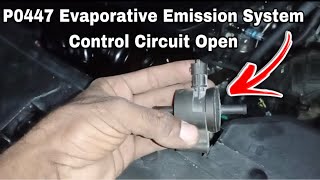
- If power and ground are present but the valve doesn't operate, use a multimeter to measure the resistance of the valve's coil. An infinite reading (OL) confirms the valve has an open circuit 🎬 Watch: How to diagnose and fix an open emission circuit. and has failed.
- If power or ground is missing, trace the wiring back towards the PCM to find the break in the circuit. Consult a wiring diagram for pinouts and wire colors. Pay close attention to areas where the harness may rub against the frame or other components.
- If the component and wiring test good, the issue may be with the PCM, but this is highly unlikely.
Parts You'll Likely Need
- Diagnostic Module Tank Leakage (DMTL) Pump / EVAP Vent Valve
(OEM #C2D2945 (superceded by other numbers, verify by VIN))— This is the component most likely to fail due to the known water intrusion issue documented in Jaguar TSB JTB00436NAS2. The vent valve is integrated into this pump. [NHTSA Citation]
Trusted brands: Bosch (OEM supplier), Genuine Jaguar
OEM price range: $250-$350
Aftermarket price range: $150-$250 - Evaporative Emissions Canister
(OEM #C2D40532)— The TSB service procedure recommends replacing the canister along with the DMTL pump, as it can also be compromised by water/ice and its filter is part of the failure point. [NHTSA Citation]
Trusted brands: Genuine Jaguar
OEM price range: $300-$500
Aftermarket price range: $200-$350 - Protective Foam Shield
(OEM #C2D49253)— This is a specific part called for in TSB JTB00436NAS2 to prevent a recurrence of the water intrusion problem. It is installed to shield the new pump. [NHTSA Citation]
Trusted brands: Genuine Jaguar
OEM price range: $20-$40 - Fuel Tank Filler Pipe
(OEM #C2D30506)— Also listed for replacement in TSB JTB00436NAS2 as part of the comprehensive fix. [NHTSA Citation]
Trusted brands: Genuine Jaguar
OEM price range: $100-$150
Related Codes That Often Appear With This One
- P0442 — This code for a small EVAP leak is often seen with P0447, as both are listed in TSB JTB00436NAS2 as being caused by water intrusion in the DMTL pump. [NHTSA Citation]
- P043E — This code relates to the EVAP leak detection reference orifice and is also mentioned in the same Jaguar TSB, pointing to the same root cause of water damage. [NHTSA Citation]
- P2402 — This code indicates a problem with the EVAP leak detection pump control circuit, which is directly related to the DMTL pump issue described in the TSB. [NHTSA Citation]
- P0456 — A code for a very small EVAP leak. On related JLR vehicles like the F-Type, this code can be triggered by a cracked hose between the DMTL pump and the canister, another potential failure point in the same area.
Technical Service Bulletins (TSBs) & Recalls
- JTB00436NAS2: Details the issue of water/ice ingress into the DMTL pump from road tire spray, causing P0447 and other EVAP codes. Lists specific part numbers for the fix, including C2D40532 (Canister), C2D30506 (Filler Pipe), and C2D49253 (Protective Foam). [NHTSA Citation]
- JTB00436NAS1: An earlier version of the same bulletin, identifying the same water-related cause for P0447. [NHTSA Citation]
Platform-Specific Known Issues
- Technical Service Bulletin JTB00436NAS2 explicitly states that for 2010-2015 XJ models, water/ice spray from the tires can enter the DMTL pump filter, causing a variety of EVAP codes, including P0447. The official fix includes replacing the pump, canister, filler pipe, and adding a protective foam shield (Part No. C2D49253). [NHTSA Citation]
Mechanic-Grade Diagnostic Values
- EVAP Vent Control Circuit Voltage — expected: Toggles between ~5V (inactive/open) and ~0V (active/grounded by PCM). Failure: Voltage does not change when commanded by a scan tool, or is absent entirely.
- DMTL Pump Motor Current — expected: The ECM monitors the amperage draw during a self-test to check for leaks against a stored reference value equivalent to a 0.5mm orifice. Specific values are not published.. Failure: An amperage reading that is too low or unstable during the test can indicate a large leak or system fault.
Scan Tool Commands That Help
- Jaguar SDD (Symptom Driven Diagnostics): Evaporative System Diagnostic Test — This is the manufacturer-specified procedure to test the entire EVAP system. It can differentiate between an electrical fault (like P0447) and a physical leak (like P0455), guiding the diagnosis.
- Professional OBD-II Scanner: EVAP Vent Valve/Solenoid Command — Used to manually activate the vent valve to check for an audible click and to test the circuit's voltage response and wiring integrity.
Wiring & Ground Locations
- DMTL Pump / Canister Assembly — Located in the rear of the vehicle, typically on the driver's side (US models) behind the wheel well liner. The pump is attached to the charcoal canister.. This is the physical location of the component and wiring that need to be inspected for the water damage described in the TSB.
- G3D181AL (Example) — Jaguar uses specific identifiers for ground points throughout the vehicle, which are detailed in the electrical wiring diagrams. For the X351, examples include G2D114BS and G3D181AL.. A corroded or loose ground point for the EVAP system circuit could cause an open circuit fault. The specific ground point for the DMTL pump must be identified using the correct wiring diagram for the vehicle's VIN.
Real Owner Repair Stories
- JaguarForums.com user discussion (2015 Jaguar XJL) — Check Engine Light with EVAP codes, including P2406 (related to P0447).
✅ What actually fixed it The user was preparing to replace the DMTL pump due to a known issue of water/ice intrusion. A key finding from their research and discussion with other owners was that accessing the pump is a 'big job' that requires the rear subframe to be dropped for access.
When the Usual Fixes Don't Work
- A related Jaguar technical document warns technicians against assuming a DMTL pump replacement has fixed an EVAP *leak* code. It notes that simply removing and reinstalling the hose connections to the pump may have inadvertently fixed a poor seal, while the pump itself was not the source of the leak. While P0447 is an electrical code, this highlights the importance of precise diagnosis, as multiple faults can exist in this water-damaged area.
OEM Part Supersession History
C2C26576, C2C35068, C2C39518→C2D40532— Part revision and consolidation by the manufacturer.
Heads up: C2D40532 is the current part number for the charcoal canister recommended in the TSB. Using older stock is not advised.
Model Year Variations Within This Range
- 2010-2015: While the TSB applies to the full model range, some part listings for the charcoal canister (C2D40532) specify 'From Chassis/VIN G49701' and/or '3.0l' engine. Owners should always verify part numbers against their vehicle's VIN to ensure compatibility, as minor variations may exist.
Helpful Videos
We Have This Part in Stock


The information in this article is provided for general reference and educational purposes only. Vehicle specifications, procedures, and part compatibility can vary by production date, trim level, and region. Always consult your vehicle's factory service manual and verify part numbers before purchasing or performing repairs. Safety-critical components such as airbags, seat belts, and braking systems should be installed by a qualified professional.
- Jaguar XJ:
- 🧭 Diagnostic Flowchart
- 🎬 Helpful Videos
- 🛍️ Shop This Part
- What's Unique About the 2010-2015 Jaguar XJ
- Symptoms You May Notice
- Most Likely Causes
- Rare But Worth Checking
- Diagnosis Steps
- Parts You'll Likely Need
- Related Codes That Often Appear With This One
- Technical Service Bulletins (TSBs) & Recalls
- Platform-Specific Known Issues
- Mechanic-Grade Diagnostic Values
- Scan Tool Commands That Help
- Wiring & Ground Locations
- Real Owner Repair Stories
- When the Usual Fixes Don't Work
- OEM Part Supersession History
- Model Year Variations Within This Range
- 🎟️ Get 5% Off