

P0448 on 2012-2018 Ford Focus 2.0L: EVAP Vent Circuit Short Causes and Fixes
This code indicates a short circuit in the EVAP canister vent valve, located at the rear of the car near the fuel tank. The most likely cause is a failed vent solenoid or damaged wiring. Expect to pay $40-$90 for a replacement solenoid.
- P0448 specifically points to an electrical short in the EVAP vent valve circuit, not a leak.
- The vent valve is at the REAR of the car, near the fuel tank. Do NOT confuse it with the recalled purge valve in the engine bay.
- The most likely causes are a failed vent solenoid or damaged wiring under the car.
- Diagnosis involves inspecting the wiring and testing the solenoid's resistance with a multimeter.
- This is a DIY-friendly repair for those comfortable working under their vehicle, but be aware the solenoid may be part of the entire charcoal canister assembly and you must verify your vehicle's emissions type (PZEV or Federal).
What's Unique About the 2012-2018 Ford Focus
The 2012-2018 Ford Focus is subject to a well-known and widespread recall (Ford 18S32) for a faulty EVAP *purge valve* located in the engine bay. It is critical to know that P0448 is for the *vent valve*, a completely different part located at the rear of the car on the charcoal canister. Owners and technicians frequently confuse these two parts. Replacing the purge valve will not fix a P0448 code.
Symptoms You May Notice
- Check Engine Light is on.
- Failing a state emissions inspection.
- A faint fuel smell may be noticeable near the rear of the vehicle.
- In some cases, difficulty refueling (the gas pump nozzle clicks off repeatedly), though this is more common with a mechanically stuck valve rather than a pure circuit fault.
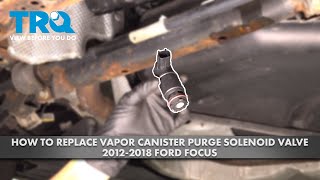
- Replacing the EVAP Purge Valve. 🎬 Watch: How to replace the engine bay purge valve The purge valve (located in the engine bay) is a very common failure on this car and subject to recall 18S32, but it causes different codes (like P1450 or P0456) and will not fix a P0448.
Most Likely Causes
- Failed EVAP Canister Vent Solenoid 🔴 High Probability → Shop Vapor Canister The solenoid is located under the vehicle, exposed to weather, road salt, and debris, which can lead to internal corrosion and electrical failure over time. In some cases, dirt and debris can enter the canister and solenoid, causing it to fail.
How to confirm: Access the solenoid on the charcoal canister at the rear of the vehicle. Disconnect it and measure the resistance across its two pins with a multimeter. A reading near zero ohms indicates an internal short circuit. A functional solenoid typically has a specific resistance value (e.g., 14-30 ohms, consult a service manual for exact spec). You can also test the solenoid by applying 12V power to its pins; a healthy solenoid will make an audible click.
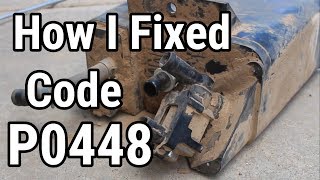
Typical fix: Replace the vent valve solenoid. 🎬 Watch: How to replace the vent valve to fix P0448 On many Ford Focus models, the solenoid is integrated into the charcoal canister, which requires replacing the entire canister assembly. It is crucial to verify if your vehicle is a PZEV (Partial Zero Emission Vehicle) or Federal emissions model by checking the underhood sticker, as the canisters are not interchangeable.
Est. part cost: $40-$90 for a standalone solenoid, $150-$250 for a canister assembly. - Shorted Wiring or Damaged Connector 🟡 Medium Probability The wiring harness to the vent solenoid runs underneath the car and is susceptible to damage from road debris, moisture intrusion, or chafing against the chassis or suspension components.
How to confirm: Visually inspect the entire length of the wiring harness leading to the vent solenoid for any signs of damage, melting, or corrosion. Check the connector for pushed-out pins, corrosion, or water damage. Use a multimeter to check for continuity to ground on the power and signal wires. The PCM typically supplies a ground signal to activate the solenoid, so the control wire should not be grounded when the valve is commanded off.
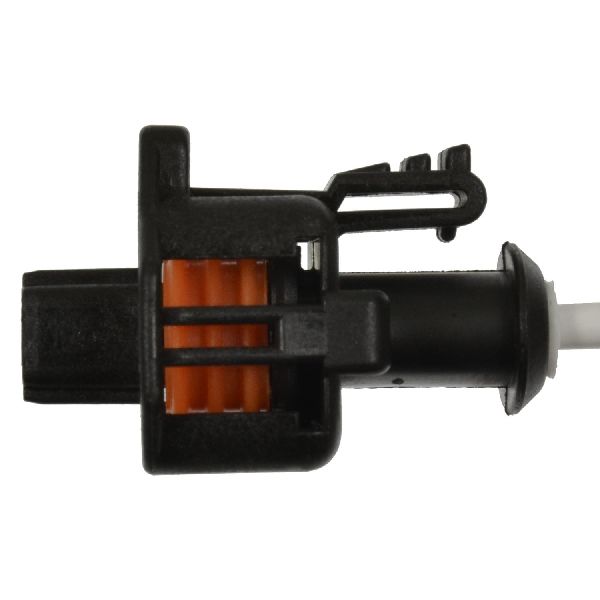
Typical fix: Repair the damaged section of the wire or replace the connector pigtail.
Est. part cost: $10-$30 for a connector pigtail and wiring repair supplies.
Rare But Worth Checking
- Faulty Powertrain Control Module (PCM): → Shop Engine Control Module (ECM) This is very rare. The internal driver circuit in the PCM that controls the vent solenoid can fail. This should only be considered after the vent solenoid and its entire wiring circuit have been thoroughly tested and confirmed to be good.
Diagnosis Steps
- Confirm P0448 is the only code present using an OBD-II scanner. If other codes exist, address them first.
- Safely raise the rear of the vehicle and locate the charcoal canister near the fuel tank. It is typically on the driver's side.
- Visually inspect the electrical connector and wiring going to the vent valve/solenoid on the canister. Look for any obvious signs of damage, corrosion, or loose connections.
- Disconnect the connector. Check for 12-volt power at one of the pins with the ignition on. The other pin is the control wire that the PCM grounds to close the valve.
- Using a multimeter, check the resistance of the vent solenoid itself. A very low reading (near 0 ohms) confirms the solenoid is internally shorted and needs replacement. A normal reading is typically in the 14-30 ohm range.
- If the solenoid resistance is within spec, check the control wire from the connector back to the PCM for a short to ground or a short to power.
- If using an advanced scan tool, you can command the vent valve to close and listen for an audible click from the solenoid, which would indicate it is mechanically functioning.
- If the solenoid and wiring are confirmed to be good, the fault may lie within the PCM, which is a rare but possible failure.
Parts You'll Likely Need
- Vapor Canister Vent Solenoid
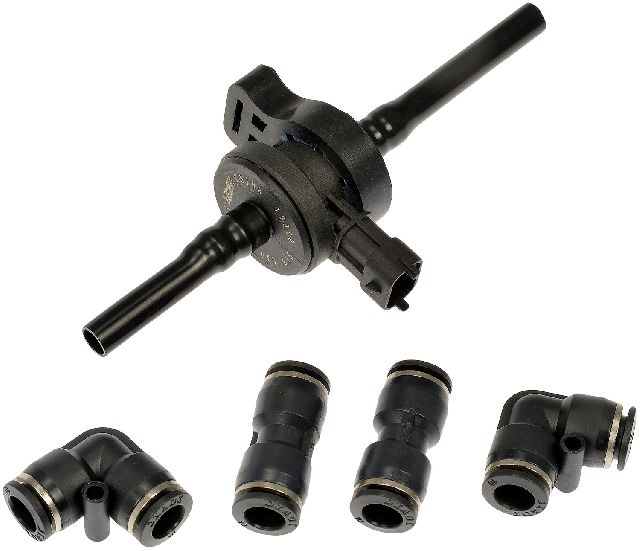
(OEM #9U5Z-9F945-C)— This solenoid is the most common part to fail electrically, causing a short circuit that triggers the P0448 code. Note that this part number is often listed as a 'purge solenoid' by vendors but is used as the vent solenoid in some applications. It is crucial to verify fitment.
Trusted brands: Motorcraft, Standard Motor Products (CVS20), Dorman (911-216)
OEM price range: $60-$100
Aftermarket price range: $40-$90 - Vapor Canister Assembly
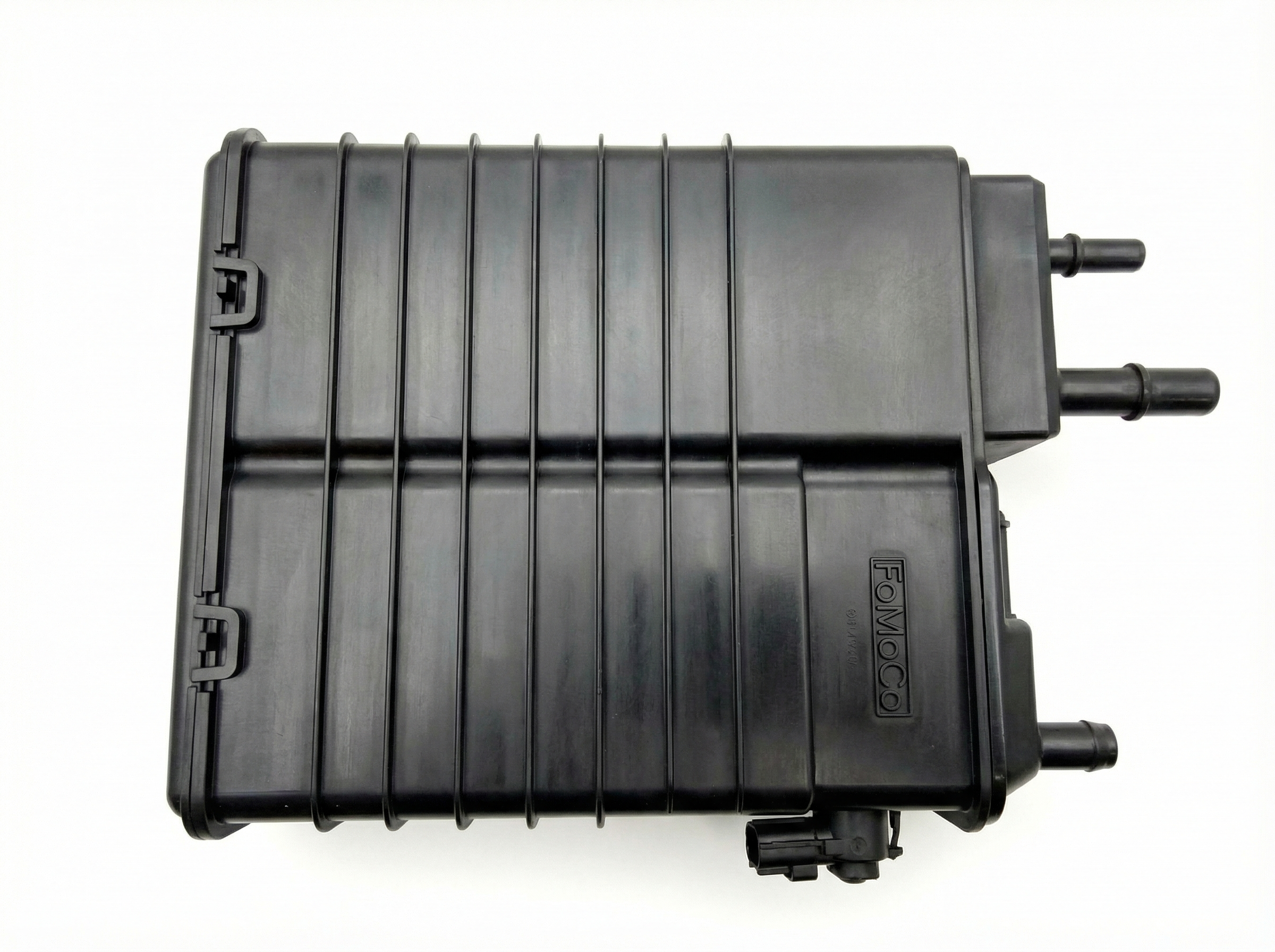
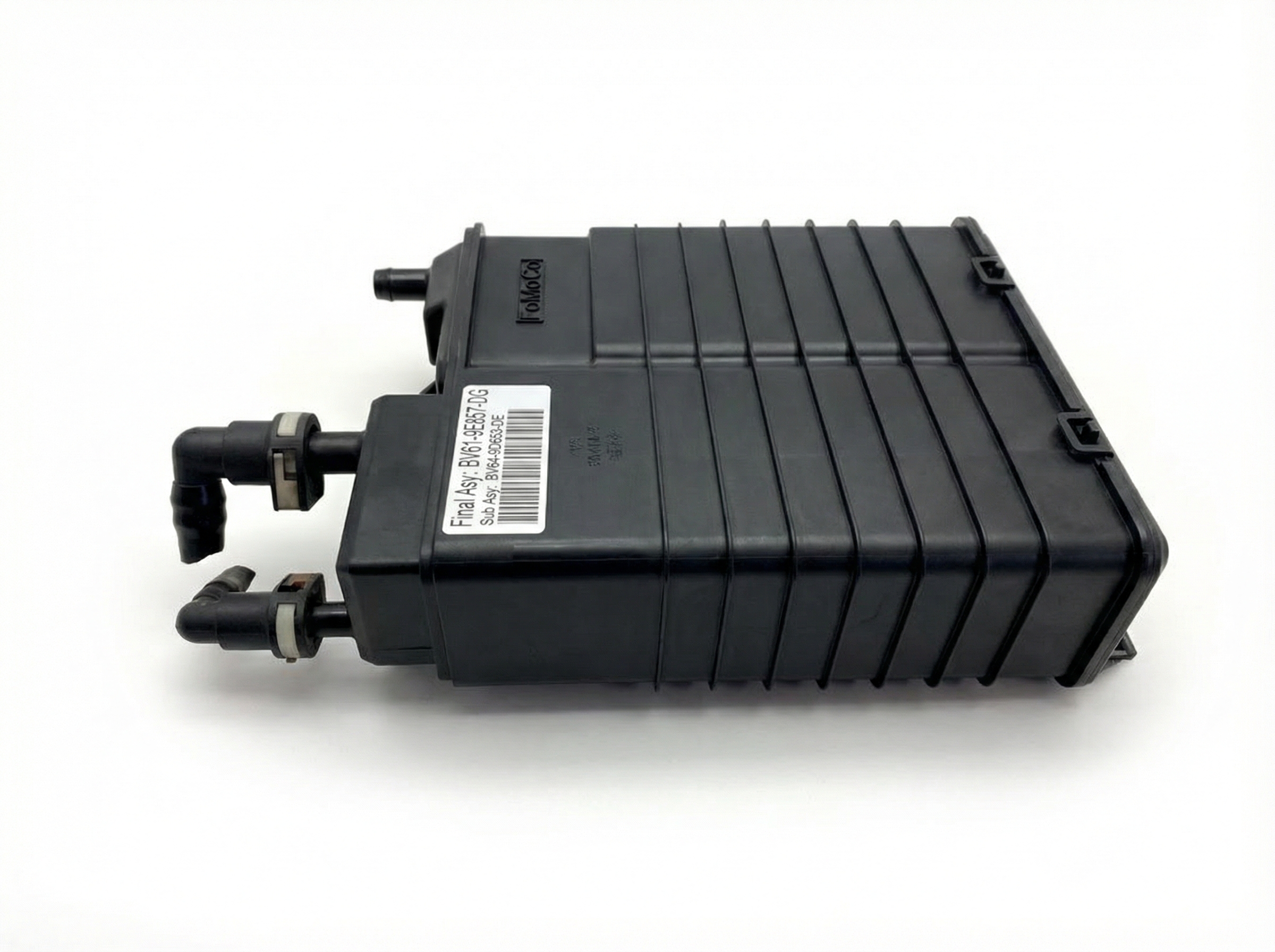
(OEM #BV6Z-9D653-D)— On many 2012-2018 Ford Focus models, the vent solenoid is integrated into the vapor canister and is not sold as a separate component. If the solenoid fails, the entire canister assembly must be replaced. You must verify if your car is a PZEV or Federal emissions model before ordering.
Trusted brands: Motorcraft
OEM price range: $150-$250
Aftermarket price range: $120-$200
Related Codes That Often Appear With This One
- P0447 — P0447 indicates an 'open' circuit for the same vent valve, while P0448 indicates a 'shorted' circuit. Depending on the exact nature of the electrical failure, such as an intermittent short or damaged connector, these codes can sometimes appear together or alternate.
Platform-Specific Known Issues
- There is a major Ford recall (18S32 / NHTSA 18V735) for the EVAP *purge valve* on 2012-2018 Focus models, which can cause stalling and fuel tank deformation. This is a separate issue from the P0448 code, which relates to the *vent valve*.
- It is critical to determine if the vehicle has Federal (non-PZEV) or PZEV emissions equipment by checking the Vehicle Emission Control Information (VECI) label under the hood. The vapor canisters are different and not interchangeable.
Mechanic-Grade Diagnostic Values
- EVAP Canister Vent Solenoid Resistance — expected: 14 - 30 Ohms (general specification). Failure: A reading near 0 Ohms indicates a direct internal short.
- Voltage at Vent Solenoid Connector (Key On, Engine Off) — expected: One pin should have 12V+ (battery voltage). The other is the control wire from the PCM.. Failure: No voltage suggests a wiring or fuse issue upstream. Voltage on both pins could indicate a short to power.
Scan Tool Commands That Help
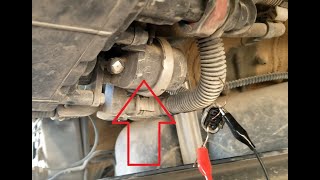
- Ford IDS, FORScan, high-end bidirectional scanner (Autel/Launch): EVAP Canister Vent Solenoid Command (On/Off or %) — Use this to functionally test the solenoid after confirming wiring integrity. Command the valve closed (energized) and listen for an audible click from the solenoid. 🎬 See: How to test the vent valve and wiring This confirms the PCM driver and the solenoid's mechanical function are working.
Wiring & Ground Locations
- G104 — Left front of motor compartment.. This is a primary chassis ground point. While the vent solenoid is controlled by the PCM, the PCM itself relies on clean, solid grounds. A corroded or loose G104 can cause a host of intermittent and difficult-to-diagnose electrical issues across the vehicle, potentially including faults in sensitive control circuits like the EVAP system.
- Main Transmission Ground — A ground strap connecting the chassis to a threaded bolt hole on the transmission bell housing.. This is a critical ground path for the entire powertrain. If it becomes loose or corroded (often after transmission work), it can cause no-start conditions or bizarre electrical behavior. Ensuring this ground is clean and tight is a fundamental step before diagnosing complex module faults.
Real Owner Repair Stories
- The Nissan Path forum (Nissan Pathfinder (not a Ford Focus)) — Intermittent, then continuous P0448 code.
❌ Tried (didn't work) Replacing the vent control valve ($40)
✅ What actually fixed it The root cause was fine dust and dirt clogging the charcoal canister. The owner removed the canister, blew compressed air through the ports until dust stopped coming out, and reinstalled it. This resolved the P0448 code without replacing the canister. This is a valuable lesson that a mechanical blockage can sometimes cause symptoms that lead to an electrical code, possibly by over-stressing the solenoid.
OEM Part Supersession History
BV6Z-9D653-A, BV6Z-9D653-B, BV6Z-9D653-C, CX2457, CX2474→BV6Z-9D653-D— Part revisions and consolidation by the manufacturer.
Heads up: These part numbers are for the PZEV (Partial Zero Emission Vehicle) canister assembly. They are not interchangeable with Federal emissions parts.
Model Year Variations Within This Range
- 2012-2015: The PZEV vapor canister part number
BV6Z-9D653-Dis listed with a cutoff date of 'To 01/21/2015' by some vendors, suggesting a potential part change coinciding with the mid-2015 model year facelift, even though the same part number is also listed for later years. This indicates a need for careful VIN verification when ordering.
Diagnostic Flowchart
Other Known Issues on This Vehicle
Issues unrelated to this code that are worth knowing about as an owner of this generation:
- DPS6 PowerShift Automatic Transmission Failure 🔴 High — Extremely common on 2012-2016 models. Issues include shuddering, hesitation, rough shifting, and complete failure of clutch packs or the Transmission Control Module (TCM). (Ref: Subject of multiple lawsuits and warranty extensions, but not a formal recall for all years.)
- Electric Power Steering Rack Failure 🔴 High — Common across the generation, can occur suddenly. Symptoms include intermittent or total loss of power assist, grinding noises, and a 'Steering Assist Fault' message. (Ref: No recall, but a very widely documented failure. Often requires full rack replacement.)
- Faulty Passenger Side Engine Mount 🟠 Medium — Very common. The hydraulic mount collapses, causing the engine to rest on the frame, leading to severe vibration in the cabin, especially at idle. (Ref: No recall, but a frequent repair item.)
- EVAP Purge Valve Failure (Recall 18S32) 🔴 High → Shop Vapor Canister — Widespread on 2012-2018 models. A stuck-open purge valve can cause rough idle, stalling, difficulty starting after refueling, and potential fuel tank deformation. (Ref: NHTSA Recall 18V-735 / Ford 18S32.)
Used vs. New Parts: Buying Guide for This Vehicle
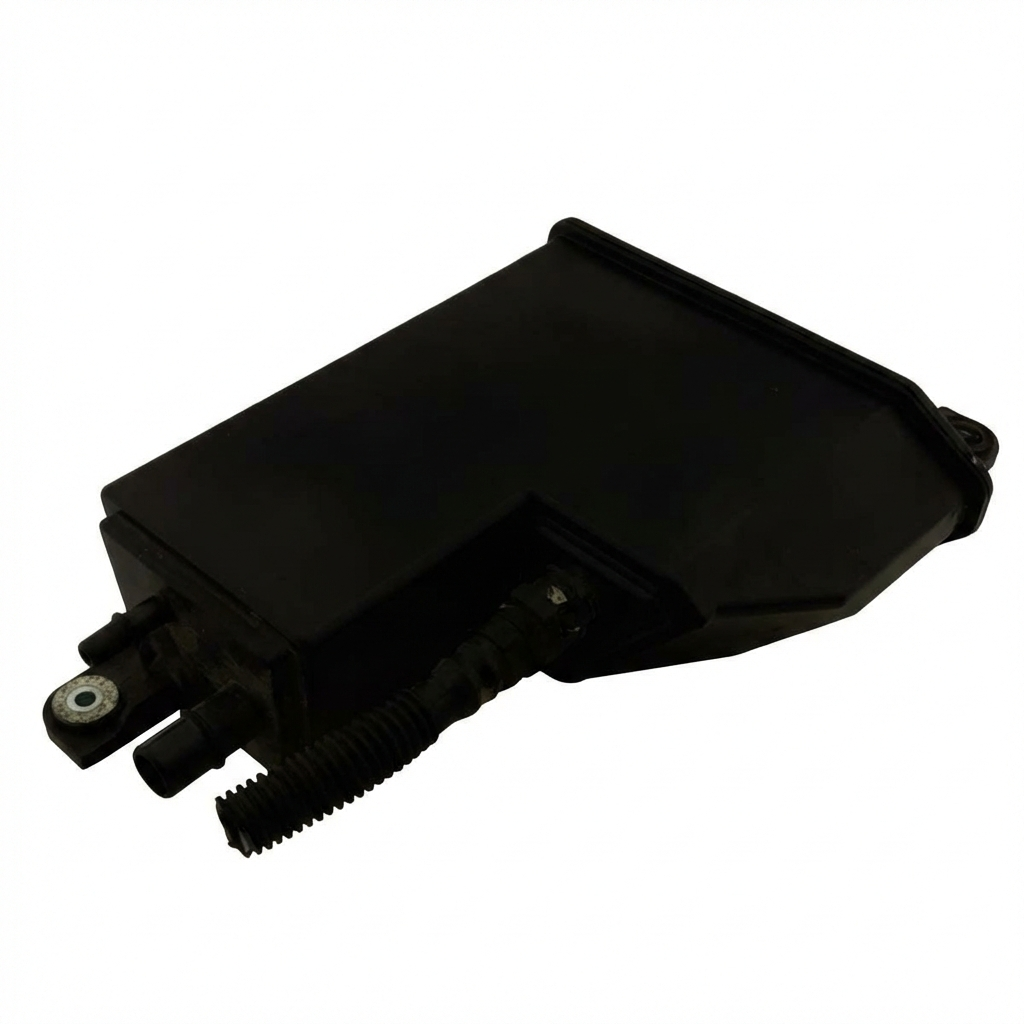
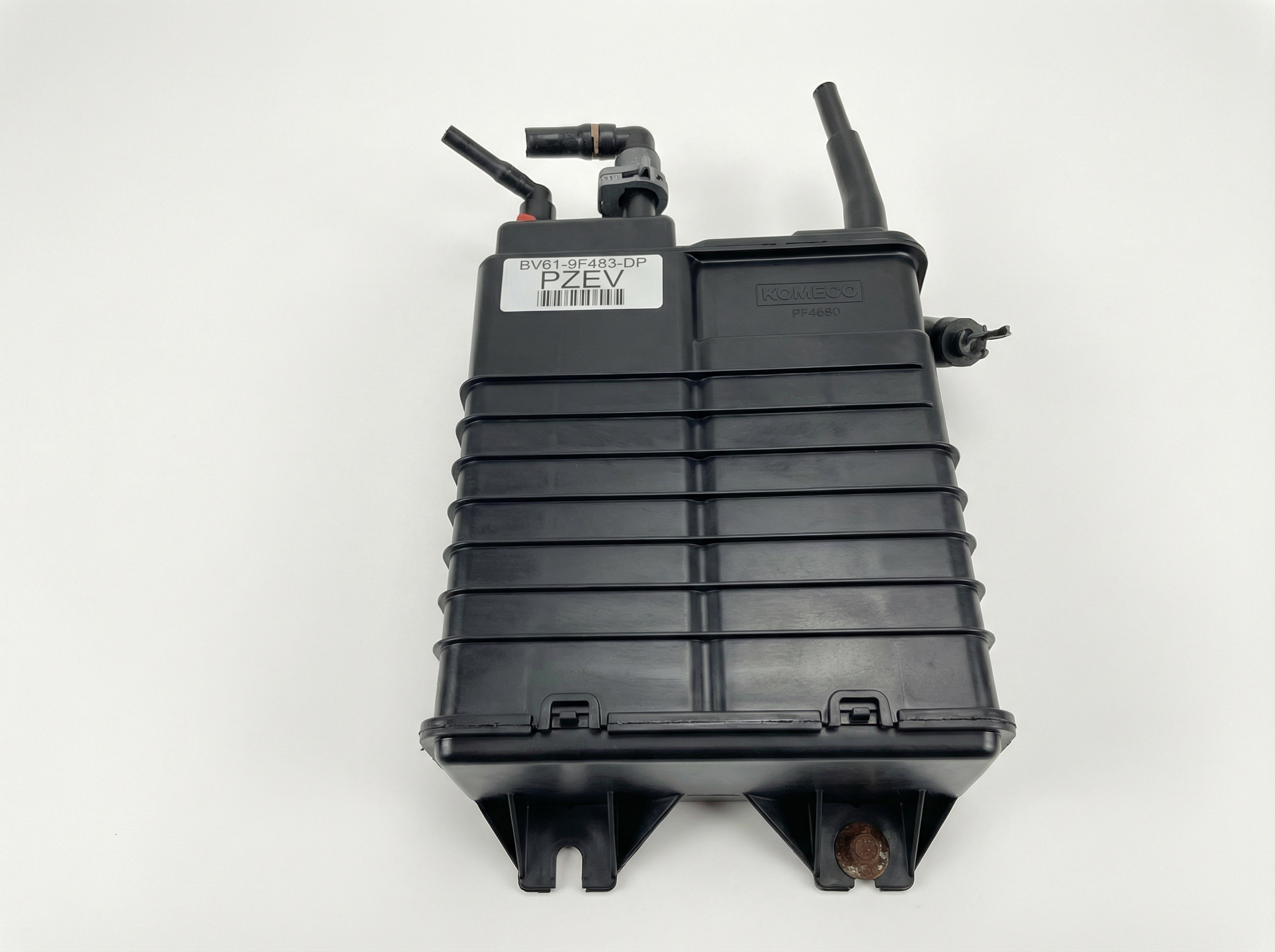
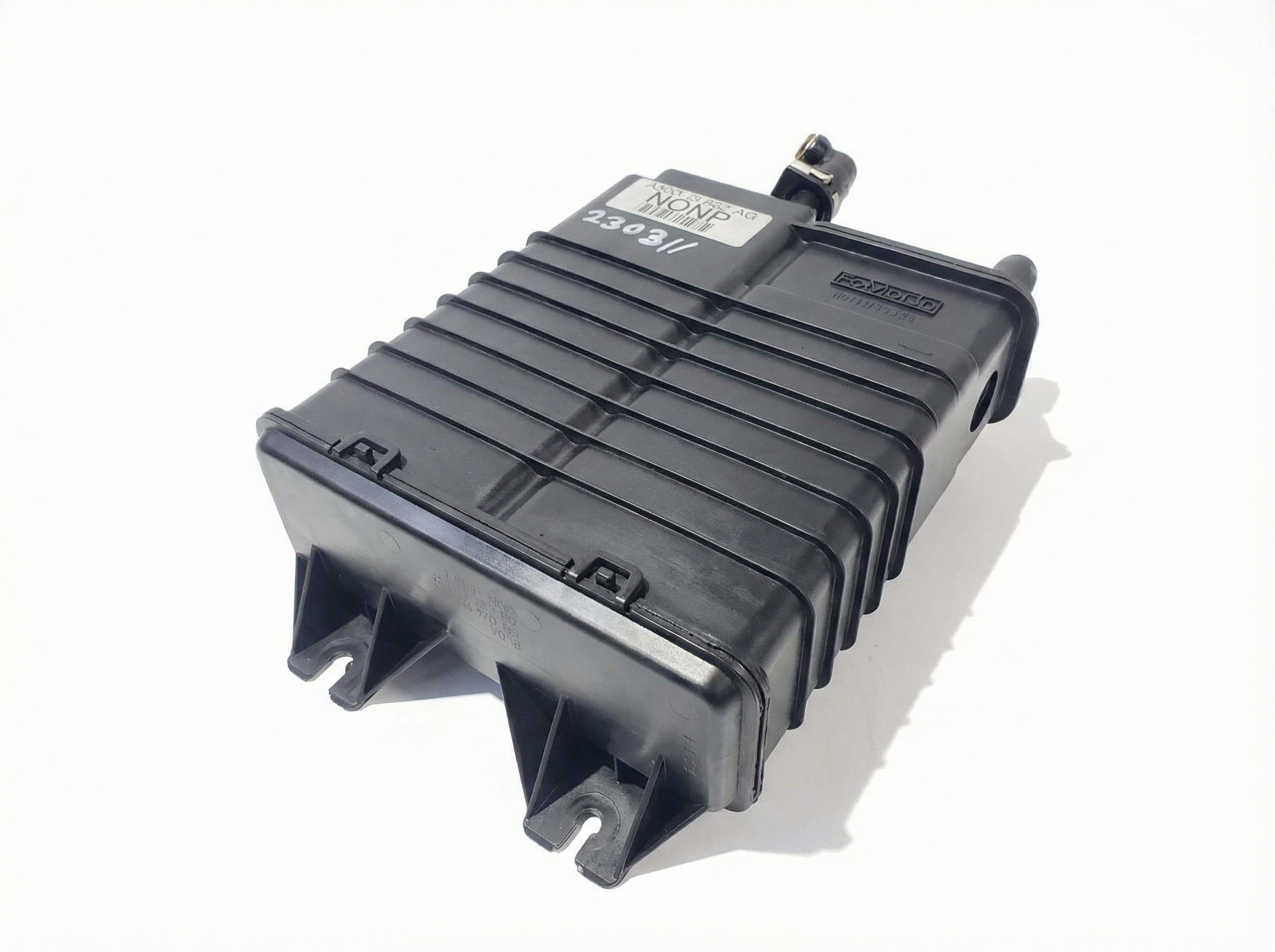
When a used part is the smart pick: A used OEM vapor canister assembly can be a cost-effective choice, especially if the failure is the integrated solenoid and the alternative is an expensive new OEM unit. It is often a better choice than a new, unproven aftermarket assembly.
Donor-vehicle mileage cap: roughly under 80000 miles for the part to have meaningful remaining life.
What to inspect on the donor part:
- Verify the part number on the donor part EXACTLY matches your original. PZEV and non-PZEV canisters look similar but are not interchangeable.
- Source the part from a vehicle in a dry, salt-free climate to minimize the risk of corrosion on electrical connectors and solenoid components.
- Inspect the plastic housing for any cracks, especially around the hose ports and mounting tabs.
- Ask the seller for the VIN of the donor car to verify its mileage and confirm it's not from a flood-damaged vehicle.
OEM-only on this vehicle (don't cheap out):
- Canister Purge Valve (Engine Bay): While not the part for P0448, it's a related EVAP component. Forum consensus strongly advises using only the OEM Motorcraft part for the purge valve, as aftermarket versions (e.g., Dorman) have been reported to fail prematurely and cause significant issues, including potential fuel tank damage.
Aftermarket brands forum-validated for this vehicle:
- Standard Motor Products (SMP): Often regarded as a premium aftermarket brand for electrical and emissions components, and generally considered a reliable choice.
Brands owners have reported issues with on this vehicle:
- Dorman: While widely available, some owners have reported premature failures of Dorman EVAP components on this platform, specifically the purge valve assembly, citing lower quality internal components compared to OEM.
Real Owner Stories
Aggregated from forums and TSBs cited above. Mileages and costs reflect what owners reported in those sources.
2012-2018 Ford Focus 2.0L
Symptoms: Owner expressed confusion over different EVAP system issues and recalls, specifically distinguishing between the purge valve recall and other EVAP codes appearing on the dashboard.
What fixed it: The context indicates owners must distinguish between the recalled purge valve and the vent solenoid/canister assembly to resolve specific codes like P0448.
Source hint: Reddit r/FordFocus - A thread titled 'Dealing with Dealership recalls'
2012-2018 Ford Focus 2.0L
Symptoms: General EVAP system failures and high failure rates of the purge valve, leading to potential misdiagnosis when other EVAP codes (like those for the vent valve) appear.
What fixed it: Verification of the specific EVAP component failure, often requiring replacement of the canister assembly or solenoid rather than the recalled purge valve.
Source hint: focusfanatics.com - General discussions
Related OBD-II Codes
Frequently Asked Questions
Does the Ford recall 18S32 for the EVAP purge valve cover my P0448 code?
Can I just replace the vent solenoid on my 2012-2018 Focus, or do I need the whole canister?
How do I know if I should buy a PZEV or Federal emissions canister for my Focus?
Why is the vent solenoid failing so frequently on the Focus?
Is it okay to use an aftermarket purge valve if I'm already fixing the vent system?
Will a P0448 code cause my Focus to fail a state emissions inspection?
Helpful Videos
Used OEM Parts in Stock
New Aftermarket Parts Available


The information in this article is provided for general reference and educational purposes only. Vehicle specifications, procedures, and part compatibility can vary by production date, trim level, and region. Always consult your vehicle's factory service manual and verify part numbers before purchasing or performing repairs. Safety-critical components such as airbags, seat belts, and braking systems should be installed by a qualified professional.
- Ford Focus:
- 🧭 Diagnostic Flowchart
- 🎬 Helpful Videos
- 🛍️ Shop This Part
- What's Unique About the 2012-2018 Ford Focus
- Symptoms You May Notice
- Most Likely Causes
- Rare But Worth Checking
- Diagnosis Steps
- Parts You'll Likely Need
- Related Codes That Often Appear With This One
- Platform-Specific Known Issues
- Mechanic-Grade Diagnostic Values
- Scan Tool Commands That Help
- Wiring & Ground Locations
- Real Owner Repair Stories
- OEM Part Supersession History
- Model Year Variations Within This Range
- Other Known Issues on This Vehicle
- Used vs. New Parts: Buying Guide for This Vehicle
- Real Owner Stories
- 2012-2018 Ford Focus 2.0L
- 2012-2018 Ford Focus 2.0L
- Related OBD-II Codes
- Frequently Asked Questions
- 🎟️ Get 5% Off