

P0448 on 2013-2019 Nissan Sentra: Causes and Fixes for EVAP Vent Valve Circuit Short
On 2013-2019 Sentras, P0448 is most often caused by water getting into the EVAP canister and shorting the vent control valve. This is a known issue addressed by Nissan TSB #NTB14-044b. The permanent fix involves drilling a new hole to reposition a drain hose and replacing the valve and/or filter if they have failed due to water damage.
- P0448 on a 2013-2019 Sentra is most likely caused by a design flaw allowing water into the EVAP canister, which shorts the vent valve.
- Before replacing parts, inspect the EVAP canister filter (behind the rear bumper) for moisture. This is the key diagnostic step.
- The official fix, per Nissan TSB #NTB14-044b, is to reposition a drain hose to prevent future water entry and replace any damaged components.
- Do not confuse the rear-mounted vent control valve with the purge valve located in the engine bay.
- This is a manageable DIY repair for those comfortable with removing the rear bumper cover, with a difficulty of 3 out of 5.
What's Unique About the 2013-2019 Nissan SENTRA

The 2013-2018 Nissan Sentra (B17 generation) is uniquely prone to this code due to a specific design issue. Nissan Technical Service Bulletin (TSB) NTB14-044b explicitly details how the EVAP canister's box-drain was positioned in a way that allows it to collect water, especially when driving in the rain. This water intrusion is a direct cause of the short circuit that triggers the P0448 code, making it a much more common problem on these cars compared to others where the cause is typically just a simple part failure or dust contamination.
Diagnostic Flowchart

Tap your situation to follow the diagnostic path that matches what you're seeing on this vehicle.
Symptoms You May Notice

- Check Engine Light is on
- Failure to pass an emissions inspection
- Remote start feature may not work
- Difficulty filling the fuel tank (gas pump nozzle clicks off repeatedly)
- A faint fuel odor may be noticeable near the rear of the vehicle
- Replacing the gas cap. While a loose gas cap can cause other EVAP codes (like P0455 or P0457), it is not a cause for P0448, which specifically indicates an electrical short circuit.
- Replacing the EVAP purge valve under the hood. The P0448 code refers to the vent control valve at the rear of the car on the canister, not the purge valve in the engine bay.
Most Likely Causes

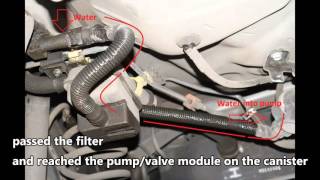
- Water Intrusion into EVAP Canister and Vent Valve 🔴 High Probability → Shop Vapor Canister As documented in Nissan TSB #NTB14-044b, the original upward-facing position of the EVAP canister box-drain hose allows it to collect water and debris, which then floods the EVAP canister filter and shorts out the vent control valve or its wiring.
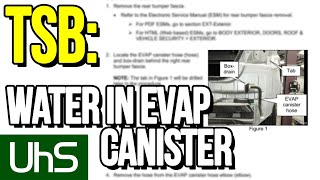
How to confirm: Inspect the EVAP canister filter for moisture or ice. If water is found, this is the likely cause. The canister is located at the rear of the vehicle, behind the passenger side rear bumper fascia. 🎬 See how to inspect and dry out a water-saturated filter.
Typical fix: Follow the procedure in TSB #NTB14-044b: Reposition the EVAP canister box-drain by drilling a new 9mm mounting hole lower on the mounting tab so the hose faces down, dry or replace the canister filter, and replace the EVAP canister vent control valve if it has been damaged by water.
Est. part cost: $60-$150 - Failed EVAP Vent Control Valve 🟡 Medium Probability → Shop Vapor Canister Vent Valve The valve itself can fail internally from age, corrosion (often due to the water intrusion issue), or getting clogged with dust and debris from roads.
How to confirm: After confirming the wiring is intact, use a scan tool to command the valve to open and close. If it doesn't respond with an audible click, or if it fails a resistance test with a multimeter (should be 15-30 Ohms), the valve is bad. You can also apply 12V directly to the valve's pins to listen for a click.
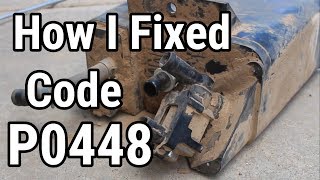
Typical fix: Replace the EVAP vent control valve. It is located on the EVAP canister assembly and typically twists to lock into place. 🎬 Watch this mechanic's walkthrough for fixing the P0448 code.
Est. part cost: $60-$120 - Damaged Wiring or Connector ⚪ Low Probability Wiring in the rear wheel well area is susceptible to damage from road debris and corrosion from water, which is exacerbated by the water-collection issue described in the TSB.
How to confirm: Visually inspect the wiring harness and connector for the vent control valve. Look for chafed wires, corrosion in the connector pins, or loose connections. Check for 12V power and a good ground at the connector with the key on.
Typical fix: Repair the damaged section of the wiring harness or replace the connector pigtail. Apply dielectric grease to the connector to prevent future moisture intrusion.
Est. part cost: $10-$30
Rare But Worth Checking
- Faulty Engine Control Module (ECM): → Shop Engine Control Module (ECM) Nissan issued TSB #P9328_P9343_P934 for some Sentras registered in California, noting that an ECM calibration error could improperly store a permanent P0448 code. If the code cannot be cleared after repairs, an ECM reprogram by a dealer may be necessary.
- Clogged Charcoal Canister: → Shop Vapor Canister While water saturation is the main issue for the Sentra, on other Nissan models, fine dust can be ingested into the EVAP system, clogging the charcoal canister itself. If the canister is full of water or dust, it can cause repeat failures of a new vent valve and must be replaced. TSB NTB14-044b advises replacing the canister if water is found inside it.
Diagnosis Steps
- Read the code with an OBD-II scanner to confirm P0448 is present.
- Remove the rear bumper fascia to access the EVAP system components behind the passenger-side rear wheel area, per Nissan TSB NTB14-044b.
- Locate the EVAP canister box-drain and inspect the EVAP canister filter for any signs of water, ice, or moisture.
- If water is present, the TSB procedure is the correct path. This involves drilling a new 9mm hole to relocate the drain hose, replacing the EVAP canister filter, and likely replacing the vent control valve. If the canister itself is saturated, the TSB advises replacing it along with the pressure sensor and vent valve.
- If no water is found, visually inspect the wiring and connector going to the vent control valve for damage, corrosion, or looseness.
- Use a multimeter to check for 12-volt power and ground at the valve's electrical connector with the key on. The ECM provides the ground signal to activate the valve.
- If power and ground are present, test the valve. Command it closed with a scan tool or apply 12V directly to its pins and listen for a click. Check the resistance across the pins; a reading between 15-30 Ohms is expected. If it fails these tests, replace the valve.
- If the valve and wiring test good, but the code persists (especially as a 'permanent' DTC that won't clear), the issue may be related to the ECM software, as mentioned in TSB #P9328_P9343_P934 and NTB19-045b. A dealer reprogram may be required.
Parts You'll Likely Need
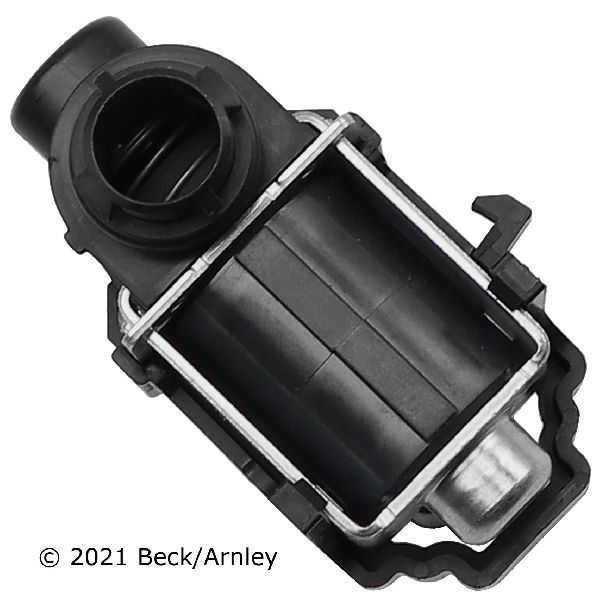
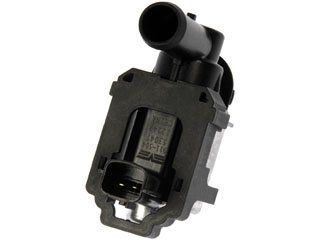
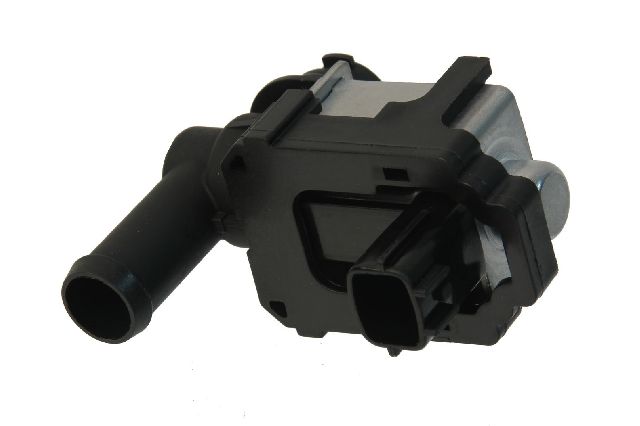
- EVAP Canister Vent Control Valve
(OEM #14935-JF00E (supersedes 14935-JF00A, 14935-JF00B, 14935-JF00C, 14935-JF00D, 14935-AM60B))— This is the component that the code directly points to. It often fails due to internal shorting, frequently caused by water intrusion on this specific vehicle.
Trusted brands: Nissan (OEM), Hitachi, Bosch, Dorman
OEM price range: $90-$120
Aftermarket price range: $50-$80 - EVAP Canister Filter
(OEM #14953-3RC0A)— This filter is the first part to become saturated with water due to the drain hose design flaw. The TSB advises inspecting it and replacing it if water is found.
Trusted brands: Nissan (OEM)
OEM price range: $30-$50
Aftermarket price range: $20-$40 - EVAP Canister Assembly
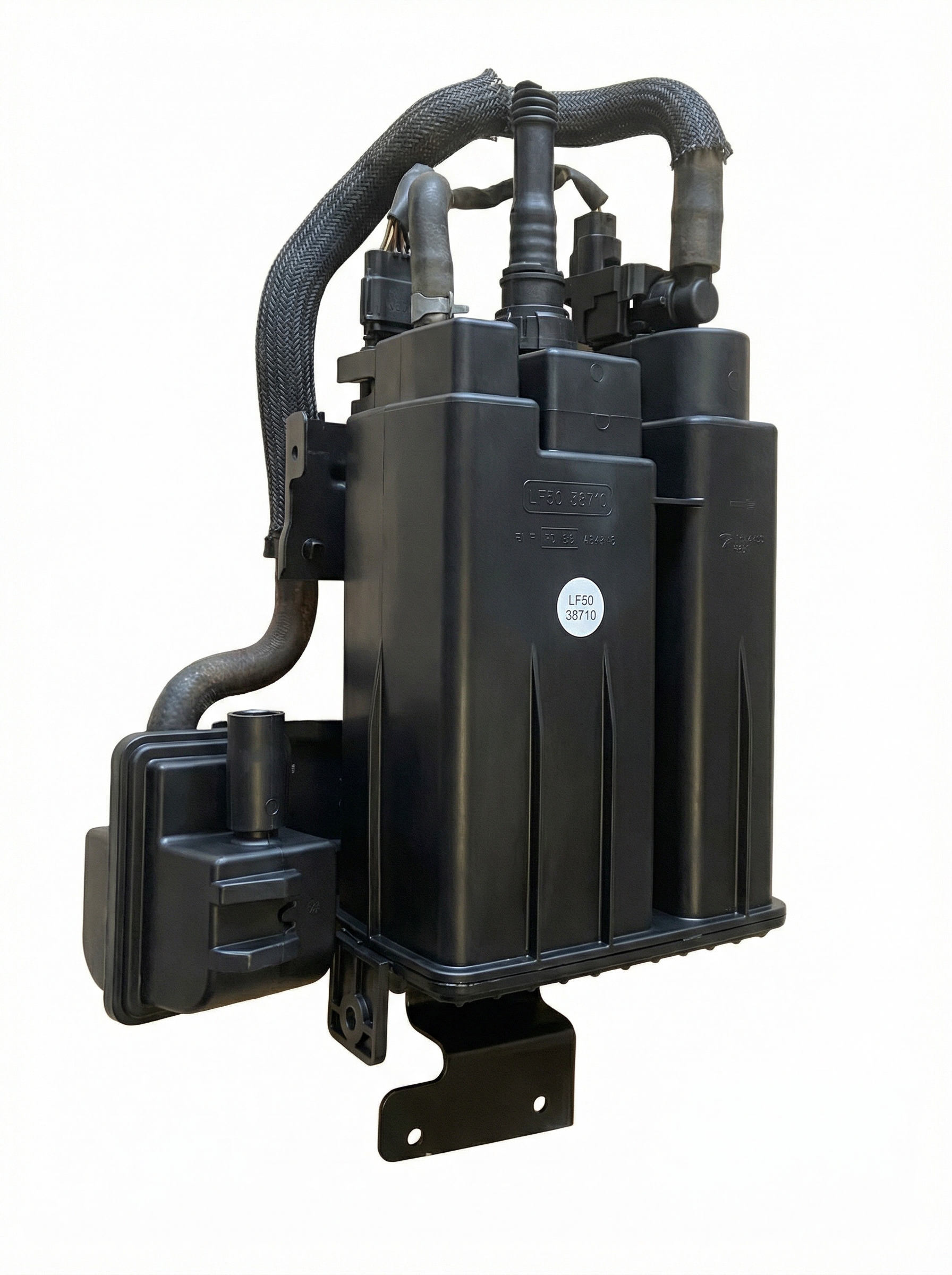
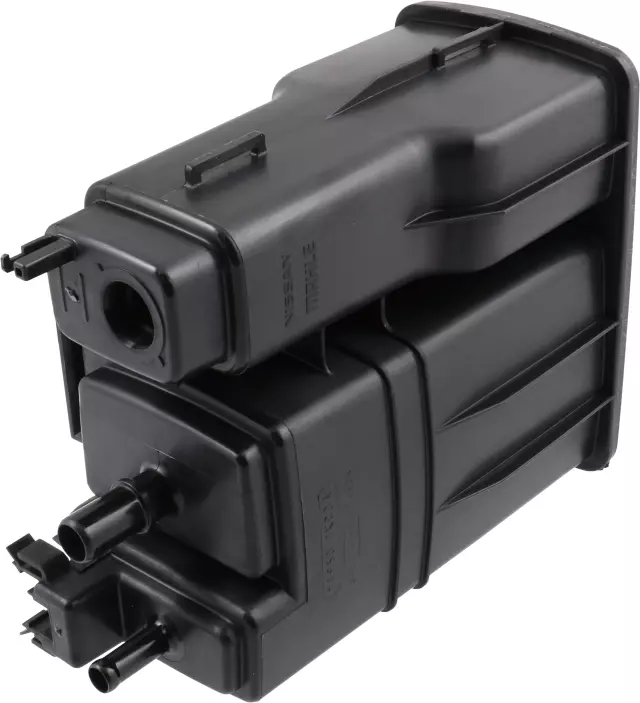
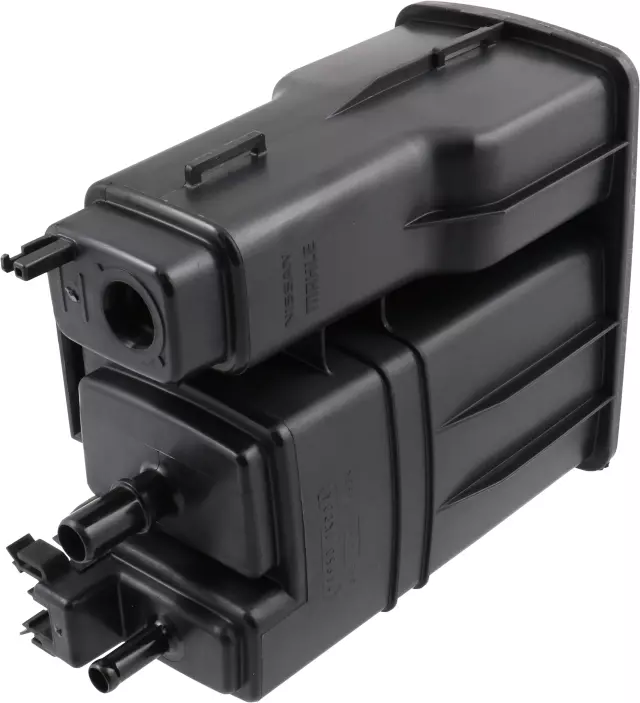
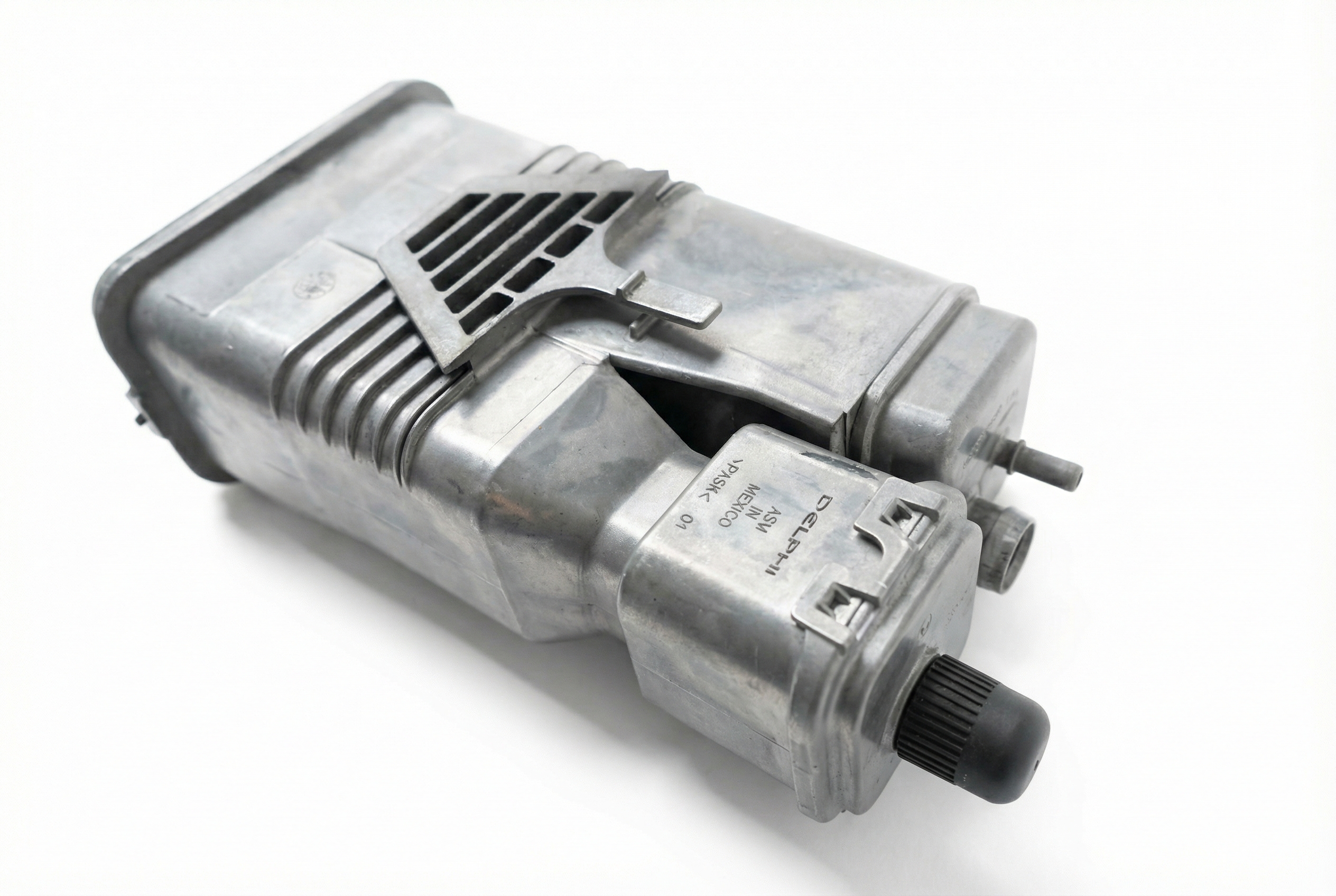
(OEM #14950-3RC0A)— If the canister is saturated with water and cannot be dried, or is clogged with debris, it may need to be replaced as an assembly, which includes the vent valve. TSB NTB14-044b advises replacing the canister if water is found inside it.
Trusted brands: Nissan (OEM)
OEM price range: $250-$400
Aftermarket price range: $150-$250
Related Codes That Often Appear With This One
- P0447 — This code indicates an 'open' circuit for the same vent control valve, whereas P0448 indicates a 'short'. They point to the same component and can appear depending on the specific electrical failure.
Technical Service Bulletins (TSBs) & Recalls
- NTB14-044b: '2013 – 2018 SENTRA; MIL ON WITH DTC P0448' - Details the primary cause of water intrusion and the fix involving repositioning the drain hose by drilling a new mounting hole.
- NTB19-045b / NTB19-045a: 'MIL ON WITH DTC P0087, P0101, P0448, OR P2008' - Mentions P0448 in a group of codes that may require an ECM reprogram to fully clear a permanent DTC after repairs are complete.
- P9328_P9343_P934: Notes an ECM calibration error on California vehicles that can cause a permanent P0448 to be stored incorrectly.
Platform-Specific Known Issues
- A primary documented issue is water intrusion into the EVAP system due to the design of the canister drain. Nissan TSB #NTB14-044b provides a specific fix: 'Reposition the EVAP canister box-drain. Empty water from the EVAP canister filter.' The bulletin's full procedure involves drilling a new 9mm hole to mount the drain hose lower. If water is found, the bulletin advises inspecting and replacing the canister, pressure sensor, and vent control valve as needed.
- A secondary issue documented in TSB #P9328_P9343_P934 affects some vehicles in California, where an ECM calibration error can cause a permanent P0448 code to be stored improperly. This requires an ECM reprogram at a dealership.
Mechanic-Grade Diagnostic Values
- EVAP Canister Vent Control Valve Solenoid Resistance — expected: 15 - 30 Ohms. Failure: A reading outside this range, or an open/infinite reading, indicates a faulty valve solenoid.
- Vent Control Valve Circuit Short-to-Ground Test — expected: Greater than 10 kΩ (when valve is commanded open or disconnected). Failure: A resistance reading near 0 Ω indicates a short circuit in the wiring between the ECM and the valve.
Hidden / Shadow Codes Worth Checking
- Permanent DTC (P-DTC) P0448: After a repair, the standard P0448 code may be cleared, but a Permanent DTC can remain stored in the ECM. This will still cause an emissions test failure. On some Nissan models, due to an ECM calibration error, this P-DTC cannot be cleared with a standard scan tool and requires a specific drive cycle or a dealer-level ECM reprogram. (see via Visible on most modern OBD-II scan tools after a standard 'Clear Codes' command is issued. The tool will show the code in a 'Permanent' or 'P-DTC' status section. TSBs NTB19-045b and P9328_P9343_P934 address this issue.)
Scan Tool Commands That Help
- Nissan CONSULT or advanced bidirectional scan tool: EVAP System Test / Vent Valve Control — This function allows the technician to manually command the EVAP vent control valve to close. While the command is active, the technician can listen for an audible 'click' from the valve to confirm mechanical operation. It is the primary method for testing the valve's functionality without having to remove it or apply external voltage.
Wiring & Ground Locations
- EVAP Canister Vent Control Valve Connector — On the EVAP canister, which is located under the left rear of the vehicle, near the bumper and spare tire area.. This is the connector where voltage and resistance tests are performed. Its location makes it highly susceptible to water and corrosion, which is a direct cause of the P0448 short circuit code.
- ECM (Engine Control Module) — Located forward of the battery in the engine compartment.. The ECM provides the switched ground signal that energizes the vent control valve solenoid. A fault in the ECM's internal driver circuit, though rare, can also cause a P0448 code.
- Ground Points B5, B34, B64 — Located in the left and right 'C' pillars (rear roof pillars) of the vehicle.. These are major chassis ground points in the rear of the vehicle. While not the specific ground for the valve's control circuit (which is grounded through the ECM), poor grounding in this area can lead to unstable voltages and electrical noise, potentially contributing to control module errors.
Real Owner Repair Stories
- NICOclub Forums (Nissan Pathfinder (similar EVAP design)) — Continuous P0448 code that would return within a day or two of being reset.
❌ Tried (didn't work) Replacing the EVAP vent control valve.
✅ What actually fixed it The owner removed the charcoal canister, noted it was clogged with a large amount of fine dust (from driving on dusty roads), and blew the dust out with compressed air. After cleaning and reinstalling the original parts, the P0448 code was fixed permanently. - Reddit r/MechanicAdvice (2022 Nissan Sentra (B18 generation, but relevant issue)) — P0448 code, remote start not working. Vehicle is driven on a dirt road.
❌ Tried (didn't work) Cleaning the exterior of the EVAP canister., Replacing the EVAP canister purge valve (under the hood).
✅ What actually fixed it A dealership diagnosis ($165) confirmed the EVAP canister itself was internally plugged with dust. The owner declined the $500 dealer repair and purchased the OEM canister online for $285 to replace it themselves, which resolved the issue.
"I Checked Everything" — The Actual Cause
- Since P0448 is a 'circuit shorted' code, not a leak code, a smoke test is generally not the correct diagnostic procedure. The more common scenario is when parts are replaced based on the code, but the problem persists. A user on NICOclub forums reported replacing the vent control valve, the part directly implicated by the code, but it did not fix the issue. The actual cause was a charcoal canister completely clogged with dust, which prevented airflow and mimicked a valve/circuit fault. Blowing out the canister with compressed air was the final fix.
When the Usual Fixes Don't Work
- While the Nissan TSB points overwhelmingly to water intrusion as the cause for P0448 on the Sentra, real-world owner reports show that on vehicles frequently exposed to dusty environments (like dirt or gravel roads), the canister can become completely clogged with dust. In these cases, simply following the TSB and checking for water will not solve the problem. Replacing the vent valve will also not work. The fix requires either cleaning the canister with compressed air or replacing the entire canister assembly.
OEM Part Supersession History
14935-AM60B, 14935-JF00A, 14935-JF00B, 14935-JF00C, 14935-JF00D→14935-JF00E— Likely minor revisions to improve durability or sealing against moisture and dust.
Heads up: These parts are generally interchangeable. The latest version, 14935-JF00E, is the recommended replacement. Some parts vendors show 14935-JF02C as the newest replacement for the entire family.
Model Year Variations Within This Range
- 2013-2018: The primary TSB for the water intrusion issue, NTB14-044b, explicitly covers the 2013-2018 model years.
- 2019: The 2019 model year is not listed on the primary water intrusion TSB (NTB14-044b). However, it is included in TSB NTB19-045b, which addresses issues with clearing permanent DTCs for P0448 after a repair has been performed. This indicates the underlying fault can still occur on the 2019 model.
Helpful Videos
Used OEM Parts in Stock
New Aftermarket Parts Available


The information in this article is provided for general reference and educational purposes only. Vehicle specifications, procedures, and part compatibility can vary by production date, trim level, and region. Always consult your vehicle's factory service manual and verify part numbers before purchasing or performing repairs. Safety-critical components such as airbags, seat belts, and braking systems should be installed by a qualified professional.
- Nissan SENTRA:
- 🧭 Diagnostic Flowchart
- 🎬 Helpful Videos
- 🛍️ Shop This Part
- What's Unique About the 2013-2019 Nissan SENTRA
- Symptoms You May Notice
- Most Likely Causes
- Rare But Worth Checking
- Diagnosis Steps
- Parts You'll Likely Need
- Related Codes That Often Appear With This One
- Technical Service Bulletins (TSBs) & Recalls
- Platform-Specific Known Issues
- Mechanic-Grade Diagnostic Values
- Hidden / Shadow Codes Worth Checking
- Scan Tool Commands That Help
- Wiring & Ground Locations
- Real Owner Repair Stories
- "I Checked Everything" — The Actual Cause
- When the Usual Fixes Don't Work
- OEM Part Supersession History
- Model Year Variations Within This Range
- 🎟️ Get 5% Off