

P0449 on 2014-2021 GMC Sierra 1500: EVAP Vent Solenoid Causes and Fixes
P0449 on a 2014-2021 GMC Sierra most often indicates a faulty EVAP vent solenoid or a problem in its wiring circuit. The parts are located near the fuel tank and are a common DIY replacement. For 2019+ models, a faulty Fuel Pump Power Control Module (FPCM) is also a very common cause. Check wiring for corrosion or breaks near the connector and along the frame rail before replacing parts.
- P0449 on a GMC Sierra specifically points to an electrical problem in the EVAP vent solenoid circuit, not a general system leak.
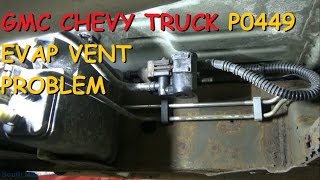
- The most common fixes are replacing the EVAP vent solenoid or repairing its wiring/connector, which are located under the truck near the spare tire.
- Before replacing any parts, always inspect the wiring and connector for corrosion or damage, as this is a frequent point of failure.
- For 2019 and newer trucks, especially those in dusty areas, a clogged EVAP canister due to dust is a known issue covered by a GM service bulletin.
- This is a manageable DIY repair for many owners and will resolve a check engine light and potential issues with refueling.
What's Unique About the 2014-2021 Gmc SIERRA 1500

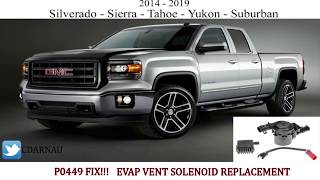
On these GMC Sierra and Chevy Silverado models, the P0449 code is frequently tied to the location of the EVAP components, which are exposed to road debris and moisture under the truck. A significant platform-specific issue is the wiring harness for the vent solenoid, which is known to rub against the frame rail under the driver's side, eventually causing a short or open circuit. Another common wiring failure is a break inside the wire's insulation, right at the connector, which is not visually apparent. For 2019 and newer models, dust intrusion into the EVAP canister can cause this code, as documented in GM TSB #23-NA-073. On these same 2019+ trucks, a failing Fuel Pump Power Control Module (FPCM) 🎬 Watch: Fixing P0449 and P0498 codes on 2019+ trucks. has been identified as a primary cause for P0449, often appearing with codes P0498 and P0499.
Diagnostic Flowchart

Tap your situation to follow the diagnostic path that matches what you're seeing on this vehicle.
Generation note: This range covers the end of the third generation (2014-2018, K2XX) and the beginning of the fourth generation (2019-2021, T1XX). While the meaning of P0449 is the same, the specific parts and common causes differ. For 2014-2018 models, the vent solenoid and its wiring are the most common culprits. For 2019+ T1XX models, a faulty Fuel Pump Power Control Module (FPCM) is a very frequent cause, especially when P0498/P0499 are also present. Always verify parts by VIN.
Symptoms You May Notice
- Check Engine Light is on
- Difficulty filling the fuel tank (gas pump clicks off repeatedly).
- A faint smell of fuel.
- Remote start feature is disabled.
- Replacing the gas cap. A loose or faulty gas cap will typically cause a large leak code (like P0455), not a circuit malfunction code like P0449. While a bad cap can cause other EVAP issues, it is not the root cause for a P0449.
Most Likely Causes

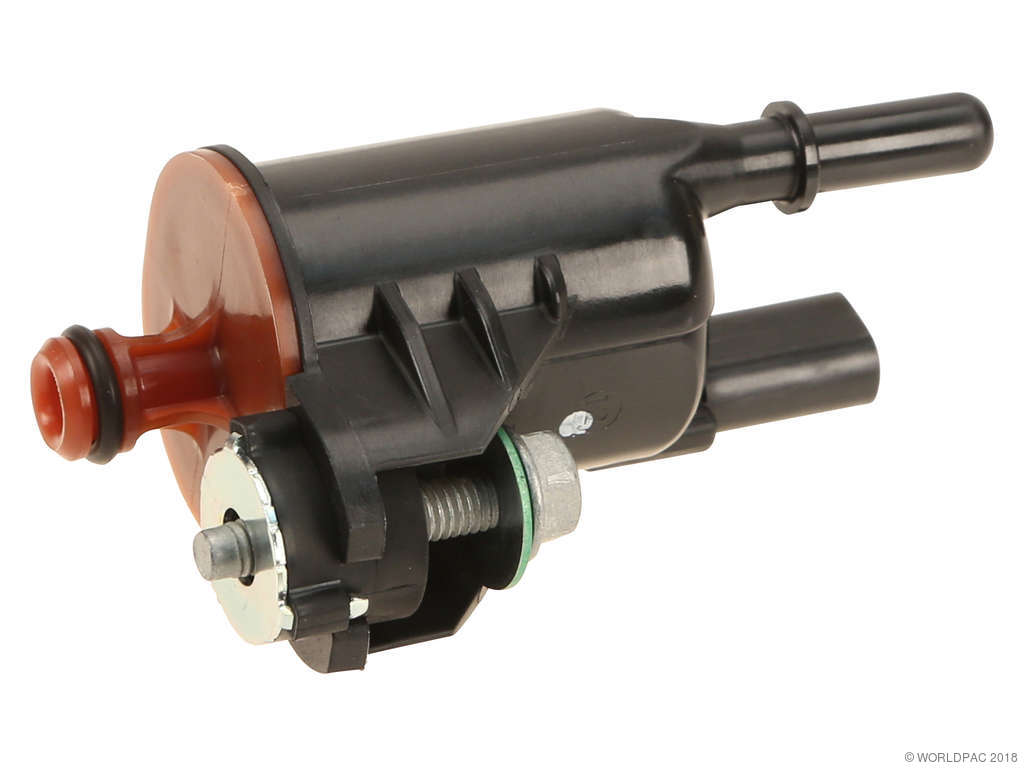
- Faulty EVAP Vent Solenoid 🔴 High Probability → Shop Vapor Canister The solenoid is located under the truck, making it highly susceptible to corrosion and damage from road salt, moisture, and debris. It is a well-documented high-failure item on GM trucks.
How to confirm: Use a scan tool to command the solenoid on and off; you should hear a clicking sound. If not, test for power and ground at the connector. If power and ground are present, the solenoid has likely failed internally. Resistance should be between 20-30 ohms.
Typical fix: Replace the EVAP vent solenoid. It is often sold as an assembly with a portion of the vent hose.
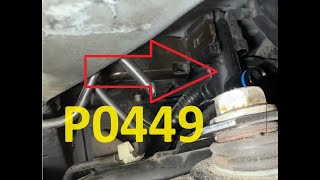
Est. part cost: $30-$100 - Damaged Wiring or Connector 🔴 High Probability The wiring harness is in an exposed location. A common failure point is the wire breaking *inside* the insulation right at the connector due to stress and corrosion. Another known issue is the harness rubbing through on the frame rail, often under the driver's seat area.
How to confirm: Visually inspect the harness for chafing, especially along the frame. Gently tug on each wire at the connector; a broken wire may stretch or pull out completely. Use a multimeter to check for 12V power and a proper ground signal from the FPCM/ECM at the connector.
Typical fix: If the break is at the connector, replace the connector pigtail. If the harness is chafed, repair the broken wires and re-route or protect the harness with loom and tape.
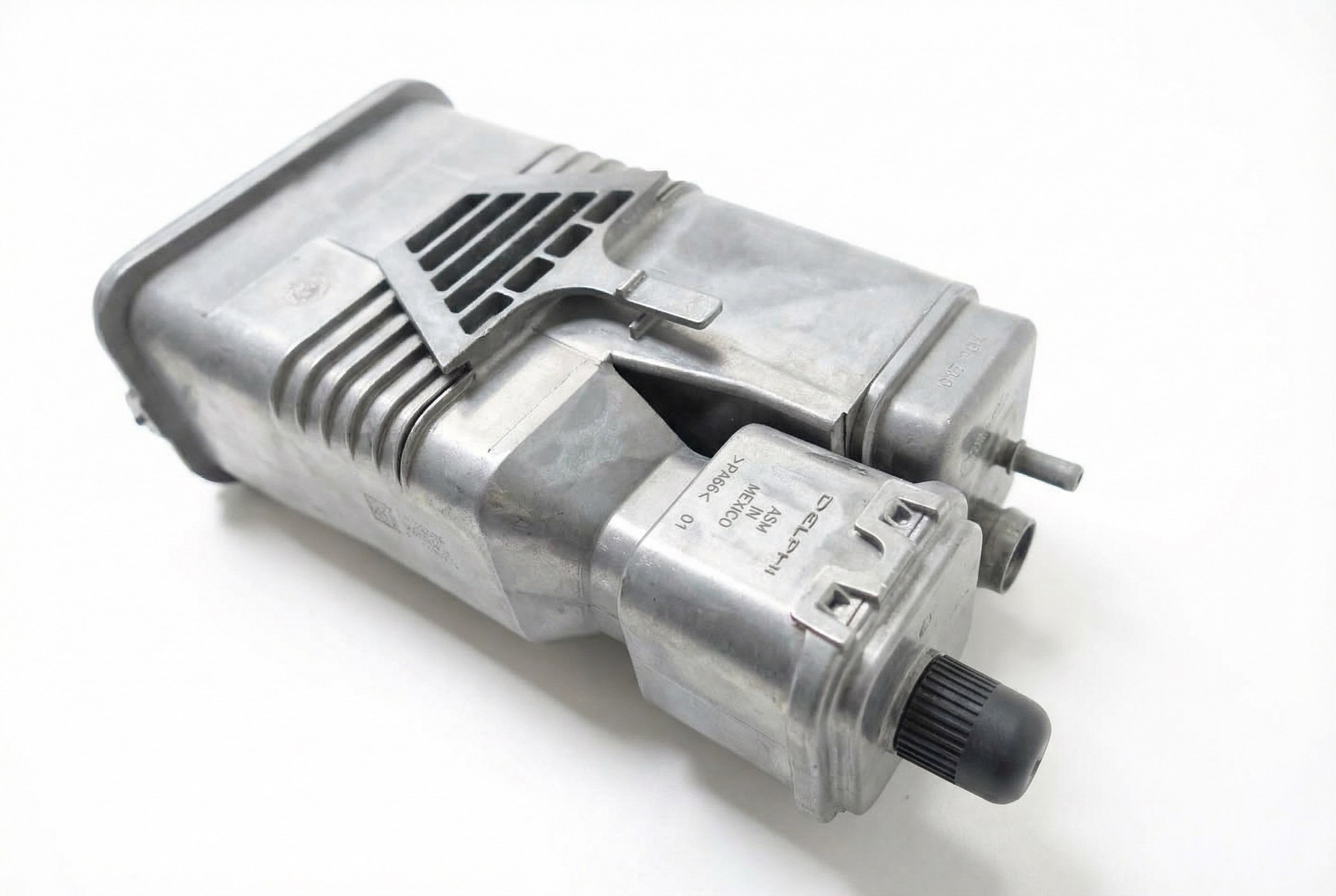
Est. part cost: $15-$30 for a connector pigtail - Clogged or Failed EVAP Canister 🟡 Medium Probability → Shop Vapor Canister GM issued TSB #23-NA-073 for 2019+ models due to issues with dust intrusion clogging the EVAP canister, especially on vehicles used in dusty environments.
How to confirm: Inspect the canister and its hoses for cracks or blockages. If the vent solenoid and wiring test good, the canister is the next likely suspect, particularly on 2019+ models driven in dusty conditions.
Typical fix: Replace the EVAP charcoal canister. Per TSB #23-NA-073, GM has a retro-fit kit with an additional filter to prevent future dust intrusion. This is a customer-pay alteration, not a standard warranty repair.
Est. part cost: $150-$400 - Faulty Fuel Pump Power Control Module (FPCM) (2019+) 🟡 Medium Probability → Shop Fuel Pump On 2019+ models, the FPCM, located near the spare tire/driveshaft, provides the ground control for the vent solenoid. This module is a common failure point and will set P0449, often along with P0498 and P0499.
How to confirm: After verifying the vent solenoid and wiring are good, the FPCM is the prime suspect. Diagnosis involves checking for a ground signal from the FPCM at the vent solenoid connector when commanded by a scan tool.
Typical fix: Replace the Fuel Pump Power Control Module.
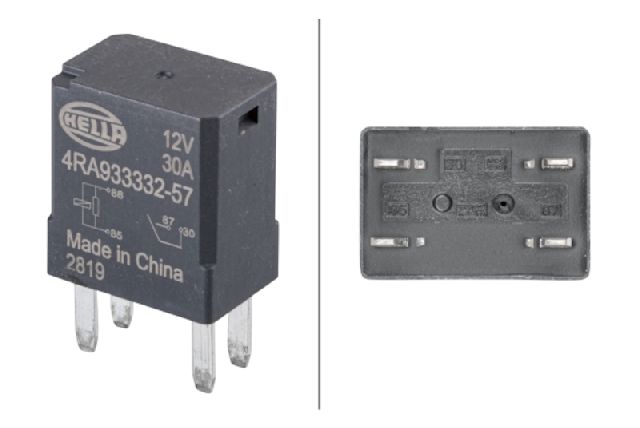
Est. part cost: $80-$150 - Blown Fuse ⚪ Low Probability
How to confirm: Check the vehicle's fuse box for any fuses related to the emissions or EVAP system (often labeled 'ECM' or 'FSCM') and verify they are intact.
Typical fix: Replace the blown fuse. If it blows again, this indicates a short circuit in the system that needs to be traced.
Est. part cost: $1-$5
Rare But Worth Checking
- Faulty Engine Control Module (ECM): → Shop Engine Control Module (ECM) This is extremely rare. The ECM should only be considered if all other possibilities, including wiring, fuses, the solenoid, canister, and FPCM (on newer models), have been thoroughly tested and ruled out.
Diagnosis Steps
- Read the trouble codes with an OBD-II scanner. Note if P0498/P0499 are also present on a 2019+ model.
- Visually inspect the EVAP vent solenoid, charcoal canister, and all associated wiring and hoses under the truck, typically located near the spare tire. Look for cracks, corrosion, or physical damage.
- Inspect the wiring harness closely for signs of rubbing against the frame rail.
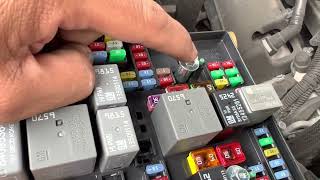
- Check the fuse for the EVAP system (may be labeled FSCM or EMISS) in the underhood fuse block.
- Using a capable scan tool, command the EVAP vent solenoid to close. Listen for an audible click from the solenoid.
- If no click is heard, disconnect the electrical connector. Gently tug on the wires at the back of the connector to check for an internal break.
- Use a multimeter to check for 12-volt power on one pin and a ground signal on the other when the solenoid is commanded by the scan tool.
- If power and ground are present but the solenoid doesn't click, the solenoid is faulty and needs replacement.
- If power or ground is missing, trace the wiring for a break. Pay close attention to the connector itself and the harness routing along the frame.
- On 2019+ models, if the solenoid and wiring test good, the Fuel Pump Power Control Module (FPCM) is the next most likely cause.
- If the solenoid and wiring test good on any model, inspect the EVAP canister for signs of blockage from dust or debris, as noted in TSB #23-NA-073.
Parts You'll Likely Need
- EVAP Vapor Canister Vent Solenoid (2014-2018)
(OEM #23481275)— This is the most common part to fail on the K2XX platform trucks, either electrically or by getting stuck, directly causing the P0449 circuit code.
Trusted brands: ACDelco, Dorman
OEM price range: $60-$110
Aftermarket price range: $30-$70 - EVAP Vapor Canister Vent Solenoid (2019-2021)
(OEM #84613138)— The equivalent part for the T1XX platform. While still a possible failure, it is often misdiagnosed when the FPCM is the real issue.
Trusted brands: ACDelco
OEM price range: $50-$90
Aftermarket price range: $30-$60 - Fuel Pump Power Control Module (2019-2021)
(OEM #13540028)— A very common failure on 2019+ models that controls the vent solenoid. When it fails, it sets P0449, P0498, and/or P0499.
Trusted brands: ACDelco
OEM price range: $80-$150
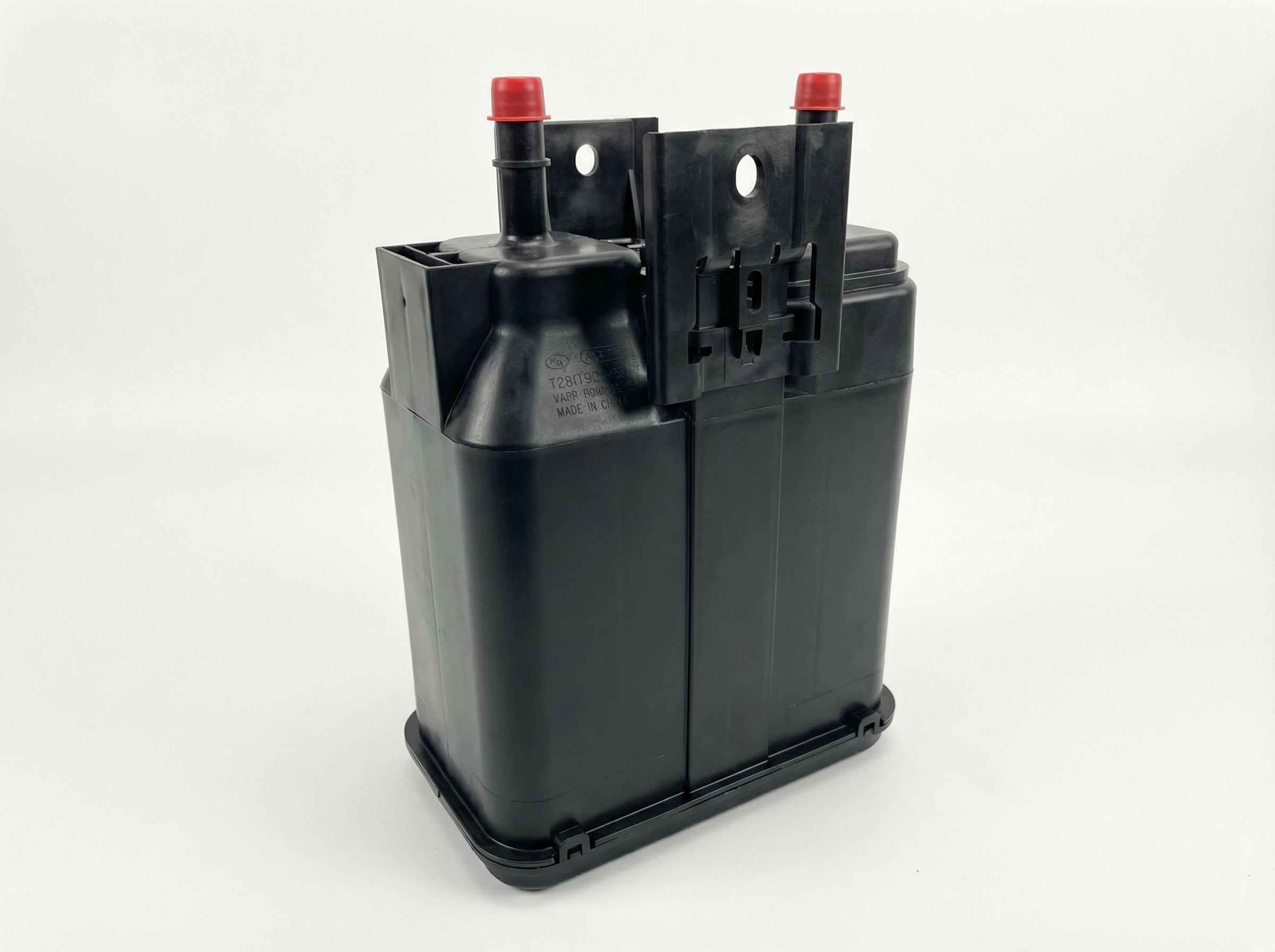
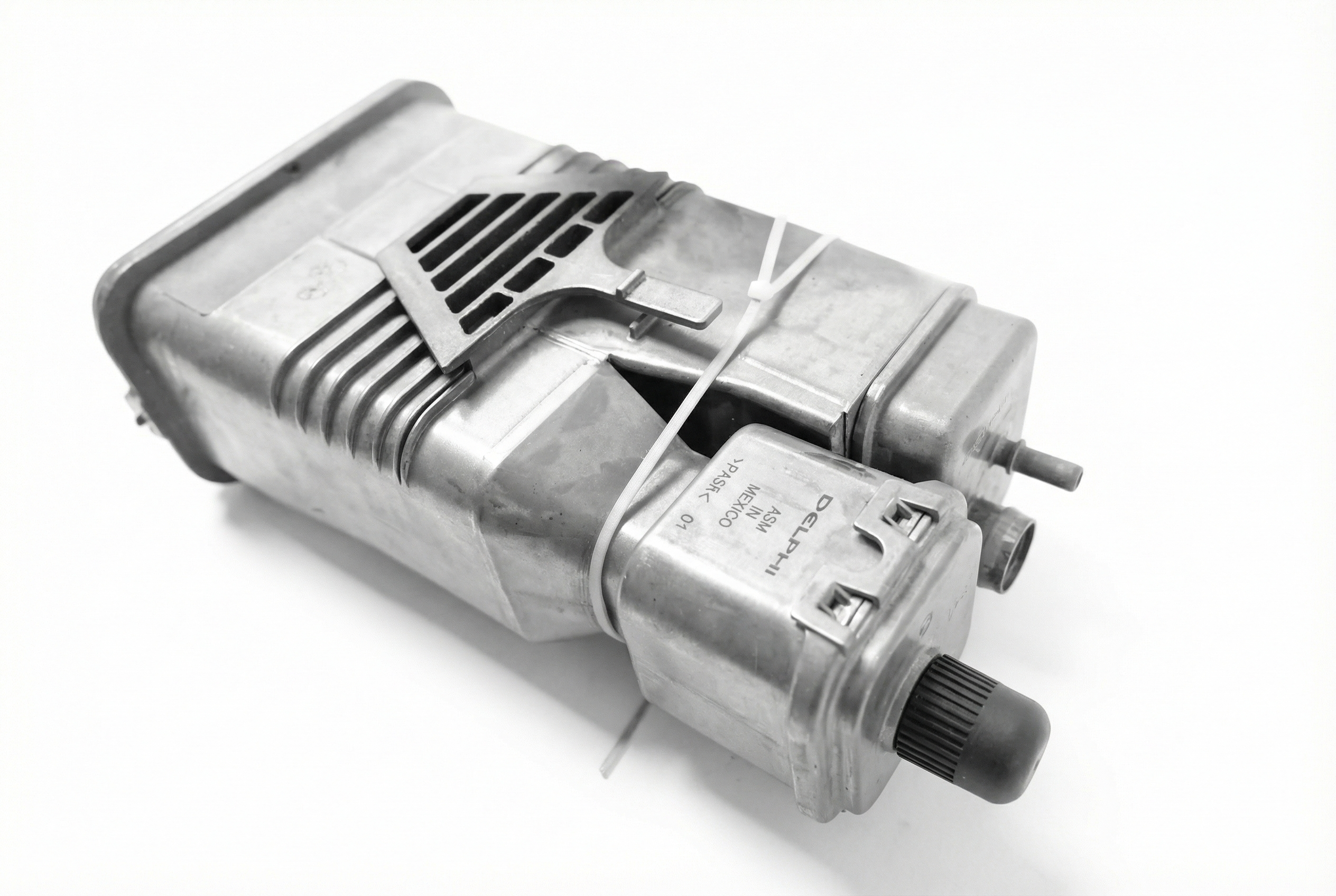
Aftermarket price range: $60-$120 - EVAP Vapor Canister
(OEM #84632285)— Often replaced with the solenoid, especially on 2019+ models affected by dust intrusion which can clog the canister internally, as per TSB #23-NA-073.
Trusted brands: ACDelco
Related Codes That Often Appear With This One
- P0498 / P0499 — On 2019+ models, these codes for 'EVAP Vent Solenoid Control Circuit Low/High' are frequently seen with P0449 and strongly point to a failing Fuel Pump Power Control Module (FPCM) which controls the solenoid.
- P0446 — Both codes are related to the EVAP vent control system. P0446 indicates a vent control performance issue, while P0449 points specifically to an electrical circuit fault. They are often cited together in TSBs.
- P0455 — This indicates a large leak in the EVAP system. It can appear with P0449 if the vent valve is stuck open, creating both a circuit fault and a large leak.
- P0442 — This indicates a small leak in the EVAP system. It can be triggered along with P0449 for similar reasons as P0455, often related to a malfunctioning vent system.
Technical Service Bulletins (TSBs) & Recalls
- 23-NA-073: Addresses EVAP DTCs P0442, P0446, P0455 or P0449 caused by dust intrusion into the evaporative canister on 2019+ models.
- 15-06-04-002: Notes customer concerns on 2014 models of MIL illumination for P0449 and other EVAP codes, sometimes along with the fuel tank being hard to fill.
Platform-Specific Known Issues
- A GM Technical Service Bulletin (TSB #23-NA-073) was issued for 2019-2024 models because operating in dusty environments can cause dust to enter and plug the EVAP canister. The official fix is a customer-pay retrofit of an auxiliary filter.
- On 2019+ models, the Fuel Pump Power Control Module (FPCM) is a frequent cause of P0449, often accompanied by P0498 and P0499. Owners often replace the vent solenoid first, only to find the FPCM was the true culprit.
- A common, hard-to-find issue is the wiring harness rubbing through on the frame rail underneath the driver's side of the truck, causing an intermittent short or open circuit.
- Another common wiring issue is the wire breaking inside the insulation right at the vent solenoid connector, which passes a visual inspection but fails an electrical test.
- An earlier TSB (#15-06-04-002) for 2014 models acknowledged that P0449 could be accompanied by the fuel tank being hard to fill.
Mechanic-Grade Diagnostic Values
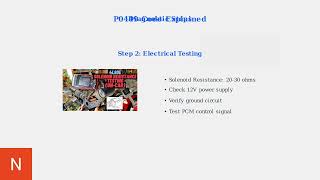
- EVAP Vent Solenoid Coil Resistance — expected: 20 to 30 Ohms. Failure: Infinite resistance (open circuit) or near-zero resistance (short circuit).
- Voltage at Vent Solenoid Connector (Key On, Solenoid Commanded OFF) — expected: 12V+ on both Pin 2 (power, typically Red/Green) and Pin 1 (control, typically White).. Failure: Seeing 12V on the power pin but 0V on the control pin suggests an open in the control wire back to the ECM/FPCM. Seeing 0V on the power pin indicates a blown fuse or open in the power feed wire.
- Voltage at Vent Solenoid Control Wire (Solenoid Commanded ON) — expected: Voltage should drop to near 0V as the ECM/FPCM provides ground.. Failure: Voltage stays at 12V, indicating the control module is not grounding the circuit or the command is not being received.
Hidden / Shadow Codes Worth Checking
- EVAP Vent Solenoid Circuit Status: 'Short to Ground or Open': → Shop Vapor Canister This is not a separate DTC but a live data parameter available in GM's GDS2 or similar high-end scan tools. It directly shows what the ECM/FPCM is seeing on the control circuit. (see via Access the EVAP data list within the Engine Control Module or Fuel Pump Control Module using a professional scan tool like GM GDS2 or Tech2Win.)
Scan Tool Commands That Help
- GM GDS2 / Tech2: Output Controls > EVAP Vent Solenoid — This bidirectional command allows the technician to manually turn the vent solenoid on and off to listen for a click, confirming mechanical operation, and to test for correct voltage changes at the connector.
- GM GDS2 / Tech2: Clear Codes — Used after a repair is completed. For a circuit code like P0449, the code may return immediately upon key-on if the fault is still present, providing instant verification of the repair.
Wiring & Ground Locations

- Vent Solenoid Connector — Under the truck, on the driver's side frame rail, connected to the EVAP vent solenoid near the charcoal canister.. This is the primary point for electrical testing. Pin 2 (often Red/Green wire) is the 12V+ supply, and Pin 1 (often White wire) is the control wire that is grounded by the ECM/FPCM. The NHTSA ODI #11533936 complaint specifically cites a loose terminal at Pin 1 as the cause of failure.
- G300 — On the back of the first frame outrigger behind the left front tire, directly below the driver's door hinge area.. This is a major engine control device ground location. While not the exclusive ground for the EVAP system, a poor connection here is known to cause various unpredictable electrical issues and codes due to rust and fraying wires.
- G401 — Mounted to the left rear body mount on the frame, behind the left rear tire.. This is a key ground point at the rear of the vehicle. A poor connection here could potentially affect the vent solenoid circuit, which is located nearby.
Real Owner Repair Stories
- NHTSA ODI #11533936 (2016 GMC Sierra 1500) — Check Engine Light with code P0449.
❌ Tried (didn't work) Initial diagnosis and testing took over a week.
✅ What actually fixed it The EVAP Vent Solenoid valve circuit was found to be open. A circuit test revealed a loose terminal pin in 'terminal 1' of the connector. The terminal was repaired, resolving the open circuit. - YouTube channel 'KIT'S Auto and Truck Repair' (GMC/Chevy Truck with 6.0L engine) — Check Engine Light with code P0449.
❌ Tried (didn't work) Commanding the solenoid with a scan tool produced no click.
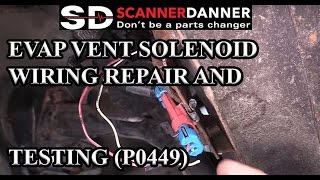
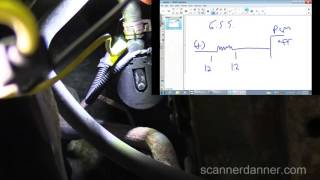
✅ What actually fixed it The ground wire for the vent solenoid had broken off completely from the pin, inside the connector housing. The wire was re-pinned and repaired, fixing the open circuit without replacing any parts. - YouTube channel 'ScannerDanner' (General Motors vehicle) — Check Engine Light with P0449.
❌ Tried (didn't work) Initial visual inspection showed no obvious damage.
✅ What actually fixed it While tugging on the harness at the connector, the wire broke completely. The wire had broken inside the insulation due to stress and corrosion, which was not visible externally. Repairing the wire at the connector fixed the issue.
"I Checked Everything" — The Actual Cause
- Because P0449 is a 'circuit malfunction' code, a smoke test will almost always come back clean. The code indicates an electrical problem (open, short, high resistance), not a physical leak in the system. Technicians may waste time performing a smoke test when the fault lies in the wiring, the solenoid's coil, or the control module (ECM/FPCM). The correct first step is always electrical testing of the circuit.
OEM Part Supersession History
Multiple (e.g., 10382080, 15893884, 20995471, 25932566)→23481275— Part consolidation and design updates over many model years.
Heads up: Part 23481275 is the common service part for the 2014-2018 K2XX platform but is not correct for 2019+ T1XX trucks. Always verify by VIN.
Model Year Variations Within This Range
- 2014-2018 (K2XX Platform): The vent solenoid control circuit is typically controlled directly by the ECM. The most common failures are the solenoid itself or the wiring/connector leading to it.
- 2019-2021 (T1XX Platform): The vent solenoid is controlled by the Fuel Pump Power Control Module (FPCM), not the ECM. This introduces the FPCM as a very common point of failure for the P0449 code, often accompanied by P0498/P0499. The connector style at the solenoid may also differ, featuring a red secondary locking tab.
Helpful Videos


Used OEM Parts in Stock
New Aftermarket Parts Available


The information in this article is provided for general reference and educational purposes only. Vehicle specifications, procedures, and part compatibility can vary by production date, trim level, and region. Always consult your vehicle's factory service manual and verify part numbers before purchasing or performing repairs. Safety-critical components such as airbags, seat belts, and braking systems should be installed by a qualified professional.
- Gmc SIERRA 1500:
- 🧭 Diagnostic Flowchart
- 🎬 Helpful Videos
- 🛍️ Shop This Part
- What's Unique About the 2014-2021 Gmc SIERRA 1500
- Symptoms You May Notice
- Most Likely Causes
- Rare But Worth Checking
- Diagnosis Steps
- Parts You'll Likely Need
- Related Codes That Often Appear With This One
- Technical Service Bulletins (TSBs) & Recalls
- Platform-Specific Known Issues
- Mechanic-Grade Diagnostic Values
- Hidden / Shadow Codes Worth Checking
- Scan Tool Commands That Help
- Wiring & Ground Locations
- Real Owner Repair Stories
- "I Checked Everything" — The Actual Cause
- OEM Part Supersession History
- Model Year Variations Within This Range
- 🎟️ Get 5% Off