

P0449 on 2001-2006 Hyundai Santa Fe: EVAP Vent Valve Circuit Malfunction Causes and Fixes
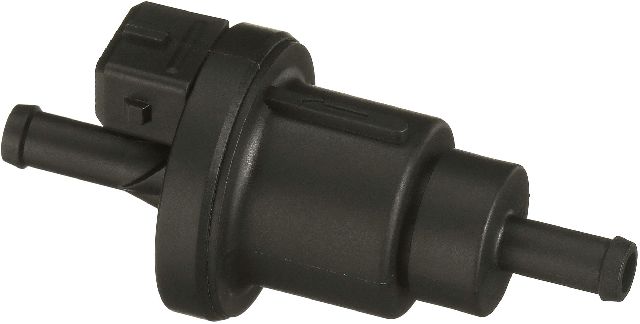
This code points to an electrical problem with the EVAP system's Canister Close Valve (CCV). The most likely fix is replacing the valve itself, located near the charcoal canister at the rear of the vehicle. Expect to pay $40-$80 for an aftermarket valve, with DIY difficulty rated at 2/5.
- P0449 is an electrical circuit code, not a leak code. Focus your diagnosis on the Canister Close Valve (CCV) and its wiring.
- The most likely part you'll need to buy is a new Canister Close Valve, located at the rear of the car near the charcoal canister.
- If you have trouble filling your gas tank, the EVAP air filter is likely clogged with dirt and should be inspected or replaced along with the valve.
What's Unique About the 2001-2006 Hyundai Santa Fe
For the first-generation (2001-2006) Santa Fe, the P0449 code is a straightforward and common issue. The Canister Close Valve (CCV) and its associated wiring are exposed to the elements under the rear of the vehicle, making them susceptible to corrosion and physical damage over time. A very frequent complaint from owners with this code is difficulty refueling—the gas pump nozzle clicks off constantly. This happens because a stuck-closed or blocked vent valve prevents air from escaping the fuel tank as liquid fuel enters, causing pressure to back up the filler neck and trip the pump's shutoff.
Symptoms You May Notice
- Check Engine Light is on.
- Difficulty filling the fuel tank (gas pump nozzle shuts off repeatedly).
- Possible faint fuel odor, though less common than with EVAP leak codes.
- In rare cases, hard starting after refueling if the EVAP system issue is complex.
- Replacing the gas cap. While a bad gas cap can cause other EVAP codes (like P0455, P0456, P0457 for leaks), it will not cause a P0449 electrical circuit code.
- Replacing the Purge Control Solenoid Valve. The purge valve is located in the engine bay and has its own set of diagnostic codes (e.g., P0441, P0443). P0449 specifically refers to the vent/close valve at the rear of the vehicle.
Most Likely Causes
- Failed Canister Close Valve (CCV) Solenoid 🔴 High Probability → Shop Vapor Canister The valve is located under the vehicle near the rear driver's side wheel, exposed to road salt, water, and debris. This leads to internal corrosion and failure of the solenoid coil, causing an open or short in the circuit.
How to confirm: Disconnect the electrical connector at the valve. Measure the resistance between the two pins on the valve. A typical reading should be between 15-30 ohms. An infinite reading (open circuit) or near-zero reading (short circuit) indicates a bad valve. You can also apply 12V and a ground directly to the pins; a healthy valve will make an audible 'click'.
Typical fix: Replace the Canister Close Valve assembly.
Est. part cost: $40 - $80 - Damaged Wiring or Corroded Connector 🟡 Medium Probability The wiring harness leading to the CCV is in a vulnerable location near the rear wheel. Wires can become chafed, broken, or the connector pins can corrode, leading to an open or short circuit.
How to confirm: Visually inspect the wiring harness for any breaks, chafing, or green/white corrosion at the connector pins. Use a multimeter to check for 12V power on one wire (with key on) and check for continuity on the ground control wire back to the ECM.
Typical fix: Repair the broken or corroded section of wire. Clean the connector with electrical contact cleaner or replace the pigtail if heavily damaged.
Est. part cost: $5 - $25 - Clogged EVAP Canister Air Filter ⚪ Low Probability → Shop Vapor Canister The air filter, which allows fresh air into the EVAP system, can become clogged with dust and dirt, especially if the vehicle is driven on unpaved roads. While this typically causes a different code for restricted flow, it is a primary cause of the refueling issue and is often replaced with the valve.
How to confirm: Remove the filter (it may be attached to the CCV or in-line) and attempt to blow air through it. If it is restricted, it needs replacement.
Typical fix: Replace the EVAP canister air filter.
Est. part cost: $20 - $40
Rare But Worth Checking
- Blown Fuse: A fuse that powers the EVAP system could be blown. Check the fuse box diagrams in your owner's manual for any fuses related to emissions or the ECM.
- Spider Webs in Vent Hose: While more documented on the sister platform Kia Sorento via TSB PS162R1, spiders building webs inside the EVAP vent hose can cause a blockage that may contribute to or be misdiagnosed as a P0449 fault. It's worth inspecting the hoses when replacing the valve.
- Faulty Powertrain Control Module (PCM): → Shop Engine Control Module (ECM) This is extremely rare. The PCM driver for the CCV circuit can fail, but this should only be considered after all other possibilities, including the valve and the entire wiring harness, have been exhaustively tested and ruled out.
Diagnosis Steps
- Read the code with an OBD-II scanner to confirm P0449 is the primary code. Note any other codes present.
- Locate the Canister Close Valve (CCV) and charcoal canister assembly. On the Santa Fe, it is mounted to the subframe at the rear of the vehicle, typically near the driver's side rear wheel.
- Visually inspect the electrical connector and wiring going to the CCV. Look for obvious signs of damage, corrosion, or loose connections. Pay close attention to where the harness might rub against the frame or suspension components.
- With the ignition on, use a multimeter to verify that one of the pins in the connector has 12V power. The other wire is the ground-side control from the ECM.
- Test the CCV solenoid. Disconnect the connector and measure the resistance across the two pins on the valve itself. A typical reading for a good valve should be between 15-30 ohms. If it's open (OL) or shorted (near 0 ohms), the valve is bad.
- (Optional) Bench test the valve. Use jumper wires to apply 12V and ground directly to the valve's pins. You should hear a distinct click as it actuates.
- If the valve and its power supply test good, the problem is in the ground control wire. Check this wire for continuity back to the PCM. A broken wire in the harness is the likely culprit.
- While inspecting, check the condition of the attached EVAP air filter and all associated rubber hoses for blockages, spider webs, or cracks, as this is a common source of refueling problems.
Parts You'll Likely Need
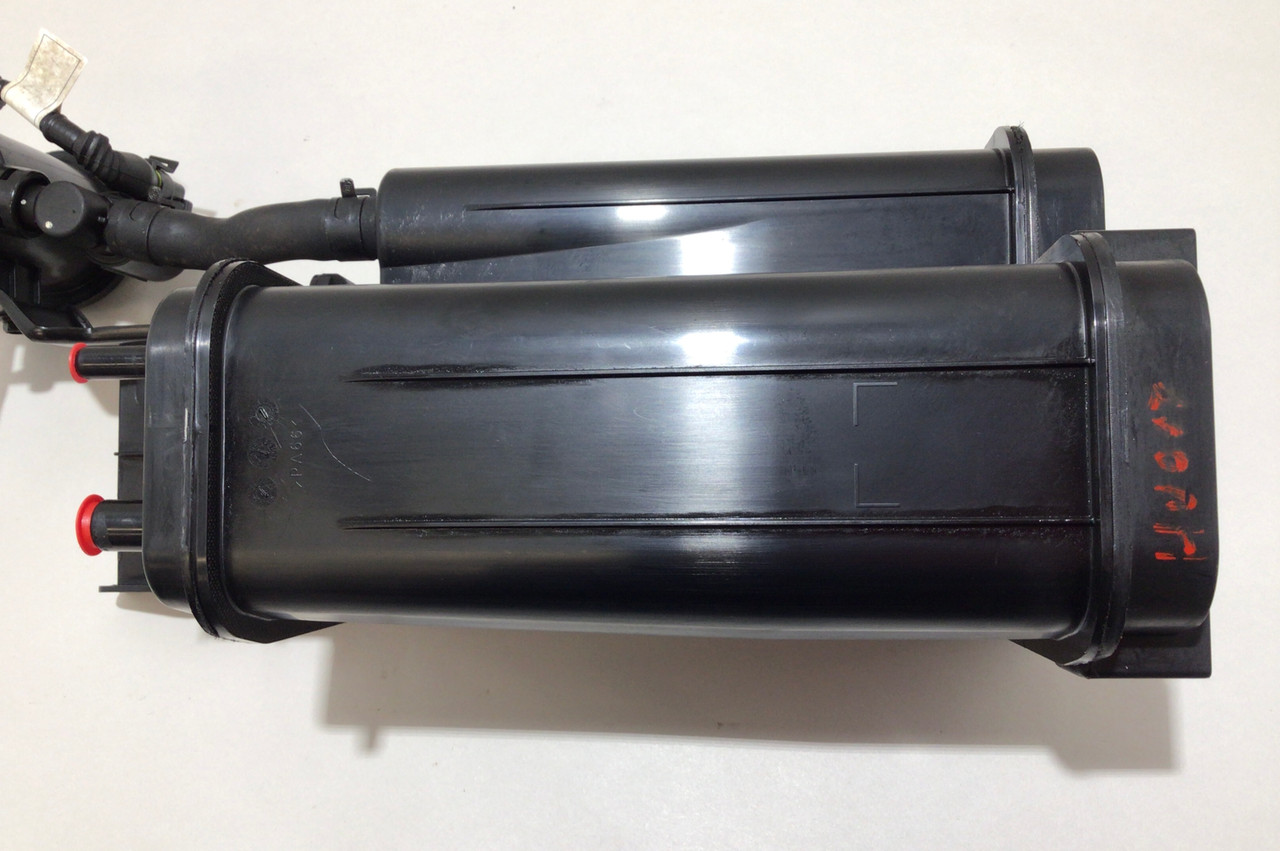
- Vapor Canister Vent Valve / Canister Close Valve
(OEM #31453-3K500)— This is the most common failure point for code P0449, as the internal solenoid coil burns out or fails due to corrosion, creating an electrical fault.
Trusted brands: Genuine Hyundai, Dorman (911-803), Standard Motor Products (VS160), Wells, Beck/Arnley (046-0103)
OEM price range: $70-$100
Aftermarket price range: $40-$80 - EVAP Canister Air Filter Assembly
(OEM #31453-2D530)— Often gets clogged with dirt, causing refueling issues that are commonly experienced alongside a P0449 code. It's often replaced at the same time as the valve for preventative maintenance.
Trusted brands: Genuine Hyundai
OEM price range: $20-$40
Aftermarket price range: $15-$30
Platform-Specific Known Issues
- Owner Experience: Successful DIY Replacement: A user on Hyundai-Forums.com with a 2004 Santa Fe reported the P0449 code and difficulty fueling. They confirmed the Canister Close Valve was the issue. The repair involved removing a 12mm bolt for the valve bracket and a 10mm bolt for a heat shield. After disconnecting two hoses and the electrical connector, the new valve was installed. The user noted the most difficult part was maneuvering around the tight space near the rear axle. The repair successfully cleared the code and resolved the fueling problem.
Technical Service Bulletins (TSBs) & Recalls
- TSB Bulletin #5NP-Q7J2C-07: While issued for other Hyundai models, this manufacturer bulletin explicitly defines DTC P0449 as "Canister Closed Valve (CCV) - Restricted Vent Circuit," reinforcing that this code specifically targets the rear vent assembly.
Mechanic-Grade Diagnostic Values
- Canister Close Valve (CCV) Solenoid Resistance — expected: 15 - 30 Ohms. Failure: Infinite resistance (OL) indicates an open coil; near-zero resistance indicates a shorted coil.
- Voltage at CCV Connector, Pin 1 (Power) — expected: 12 Volts (Battery Voltage) with Key On, Engine Off. Failure: No voltage indicates a blown fuse or a break in the power supply wire.
- Voltage at CCV Connector, Pin 2 (Control) — expected: Should show battery voltage with key on; should be pulled to ground by the ECM during actuation test.. Failure: No voltage, or voltage that does not change when commanded by a scan tool, points to a wiring or ECM driver issue.
Scan Tool Commands That Help
- Hyundai GDS (Global Diagnostic System): Actuation Test for EVAP Canister Close Valve — This command allows the technician to manually command the CCV to open and close. It is used to verify the integrity of the wiring and the ECM's ability to control the valve. If the valve clicks during the actuation test, the valve and wiring are likely good, pointing to a more intermittent issue or a problem only occurring under specific drive cycle conditions.
- Hyundai GDS (Global Diagnostic System): Resetting Adaptive Values — After replacing a major EVAP system component, resetting the ECM's adaptive values can sometimes be beneficial to force the system to relearn its operating parameters immediately, though it is not strictly required for this specific repair.
Wiring & Ground Locations
- G11 — Behind the left rear quarterpanel trim, near the speaker.. This is a primary body ground point in the rear of the vehicle. Since the Canister Close Valve is located at the rear, corrosion or a loose connection at G11 could cause an open in the valve's control circuit, mimicking a failed valve and triggering P0449.
- G13 — Under the tailgate trim, below the rear wiper control module.. Another rear body ground. While less likely to be the direct ground for the CCV harness than G11, it's a known ground point in the vicinity that should be checked for integrity if other tests are inconclusive.
Real Owner Repair Stories
- iATN (International Automotive Technicians Network) (2002 Hyundai Santa Fe GLS 2.7L) — Check Engine Light with code P0449.
❌ Tried (didn't work) Initial flowchart diagnostics seemed to point to a bad ECM because the solenoid was not being actuated.
✅ What actually fixed it The technician found a pierced wire for the solenoid control right at the ECM connector. They could manually actuate the solenoid by back-probing at the ECM, proving the valve and the majority of the wire were good. Replacing the damaged ECM terminal fixed the problem. - NHTSA ODI #11629373: An owner reported that while driving, the check engine light came on, and a diagnostic test revealed code P0449 for the evaporative emissions (EVAP) vent control valve.
- NHTSA ODI #11629374: One owner noted that after the P0449 code appeared, the vehicle would not allow them to pump gas into the car, highlighting the common mechanical blockage associated with this electrical fault.
- NHTSA ODI #11467031: A report indicates that a check engine light was resolved after a defective part was replaced specifically based on diagnostic code P0449.
"I Checked Everything" — The Actual Cause
- In cases where P0449 is caused by an electrical fault (as the code definition implies), a smoke test will often come back clean. This is because the test relies on the system being sealed, which requires the Canister Close Valve to be commanded shut. If the ECM cannot command it shut due to a wiring issue or a failed solenoid coil, the system will remain open to the atmosphere through the vent, and smoke will simply exit the vent filter as designed. A technician might see no leaks and assume the system is fine, when the actual root cause is the electrical inability to seal the system for the test in the first place. The fix in the iATN story (a pierced wire at the ECM) is a perfect example of this scenario.
OEM Part Supersession History
31453-3K700→31453-3K500— Standard part revision and consolidation by the manufacturer.
Heads up: The new part number (31453-3K500) is the correct replacement for the original and is fully compatible.
Model Year Variations Within This Range
- 2001-2004: Models from these years were available with a 2.4L 4-cylinder, a 2.7L V6, or a 3.5L V6 engine. EVAP system function is the same, but some related part numbers (like the purge valve) may differ by engine.
- 2005-2006: For the 2005 model year, the Santa Fe received a minor facelift, and the 2.4L 4-cylinder engine was discontinued. All models from this period are V6. The P0449 diagnosis and repair remain consistent with earlier V6 models.
Diagnostic Flowchart
Other Known Issues on This Vehicle
Issues unrelated to this code that are worth knowing about as an owner of this generation:
- Front and Rear Subframe/Control Arm Corrosion 🔴 High — Very common in 'Salt Belt' states, leading to multiple recalls and a class-action lawsuit. Can occur at any mileage. (Ref: NHTSA Recalls 14V435000, 09V123000; Hyundai Recall 090.)
- Crankshaft Position Sensor (CPS) Failure 🔴 High — Common on the 2.7L V6 engine, often causing intermittent stalling or a no-start condition. Failure can be sudden. (Ref: Hyundai Recall 049 (NHTSA ID 03V031000) was issued for improperly manufactured sensors on 2001-2003 models.)
- Front Coil Spring Fracture due to Corrosion 🔴 High — Affects vehicles in 'Salt Belt' states, where road salt can cause the spring to break and potentially puncture the tire. (Ref: NHTSA Recall 14V435000.)
- Hard Starting After Refueling 🟡 Low — Often reported alongside various EVAP codes, this is typically caused by a faulty purge control solenoid valve allowing fuel vapors to flood the engine intake.
Used vs. New Parts: Buying Guide for This Vehicle
When a used part is the smart pick: For the plastic charcoal canister housing itself, a used part can be a cost-effective choice if it is not cracked and passes a simple test. For the electronic Canister Close Valve, a new part is strongly recommended due to its high failure rate.
Donor-vehicle mileage cap: roughly under 100000 miles for the part to have meaningful remaining life.
What to inspect on the donor part:
- For a used Vapor Canister: Shake it vigorously. If you hear a loud rattling sound like loose rocks, the internal charcoal has broken apart, and the part is unusable. It should be relatively quiet.
- Inspect all plastic hose nipples for cracks or brittleness.
- Check the electrical connector on the Canister Close Valve (if included) for corrosion or damage.
Aftermarket brands forum-validated for this vehicle:
- Dorman (911-803) for the Canister Close Valve is a widely available and commonly used replacement.
- Standard Motor Products (VS160) is another reputable aftermarket option.
Brands owners have reported issues with on this vehicle:
- No-name, unbranded valves sold on marketplace sites may have lower quality control and are best avoided for an electrical component that requires precise operation to clear the check engine light.
Real Owner Stories
Aggregated from forums and TSBs cited above. Mileages and costs reflect what owners reported in those sources.
2004 Hyundai Santa Fe
Symptoms: Check engine light (P0449) and difficulty fueling where the gas pump nozzle would shut off repeatedly.
What fixed it: Replacement of the Canister Close Valve. The repair involved removing a 12mm bracket bolt and a 10mm heat shield bolt to swap the valve.
Source hint: Hyundai-Forums.com thread titled 'P0449 code on my 04 Santa fe'
2002 Hyundai Santa Fe
Symptoms: P0449 code present.
What fixed it: The issue was identified as either a faulty valve or wiring issues specifically located near the ECM.
Source hint: iATN (International Automotive Technicians Network)
2006 Hyundai Santa Fe
Symptoms: P0449 code triggered.
What fixed it: Technician recommended checking the valve, the wiring harness, and inspecting the charcoal canister for the presence of liquid fuel.
Source hint: Hyundai-Forums.com - 'Code P0449 question'
Related OBD-II Codes
Frequently Asked Questions
Where is the Canister Close Valve (CCV) located on my 2001-2006 Santa Fe?
Why does the gas pump nozzle keep shutting off when I try to fill my tank?
Can I use a used charcoal canister from a donor vehicle?
Is there a specific part number or brand recommended for the CCV replacement?
Are there any major safety recalls I should be aware of while fixing my EVAP system?
My Santa Fe is hard to start only after I put gas in it. Is this related to P0449?
Helpful Videos
Used OEM Parts in Stock

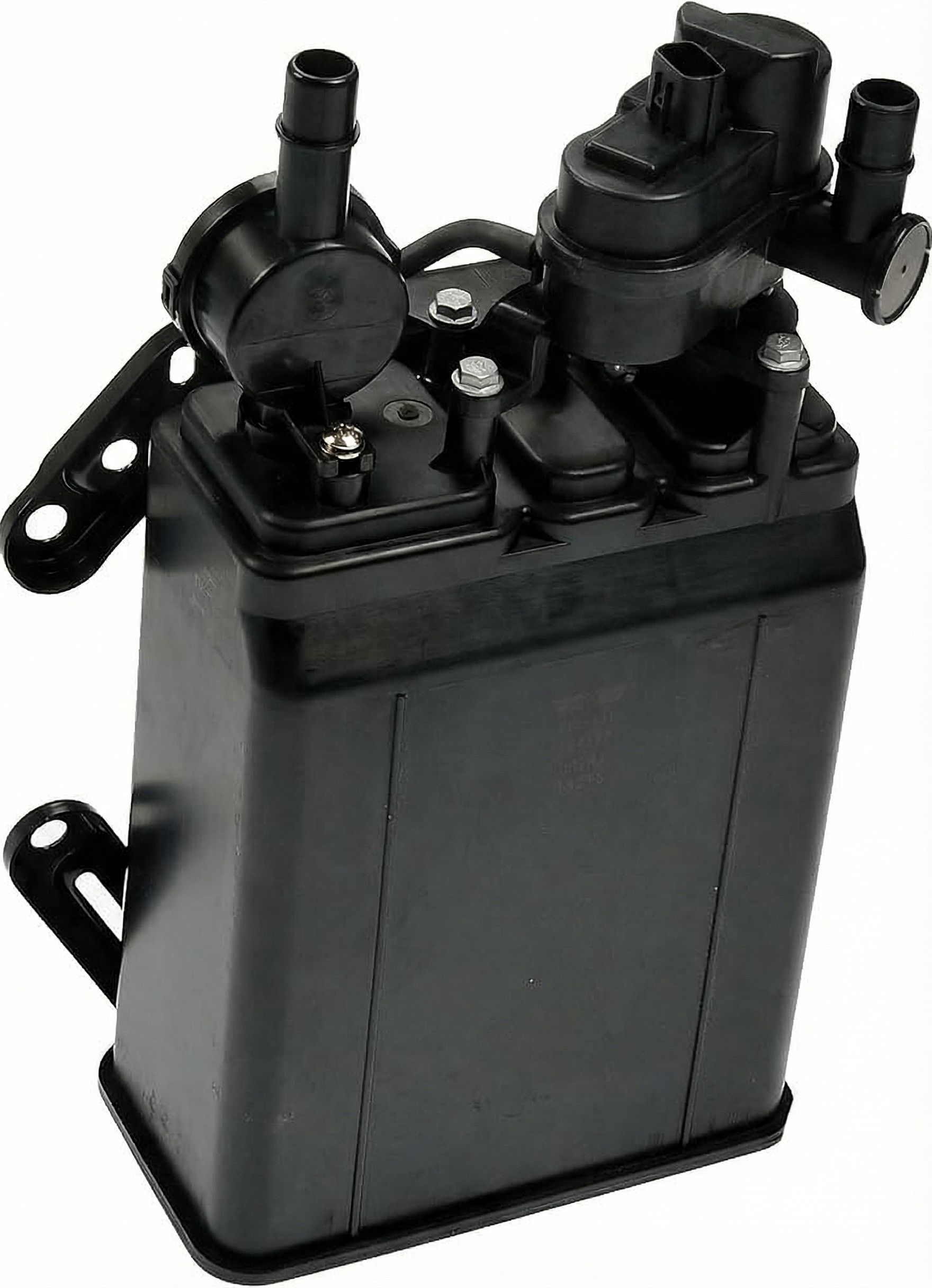
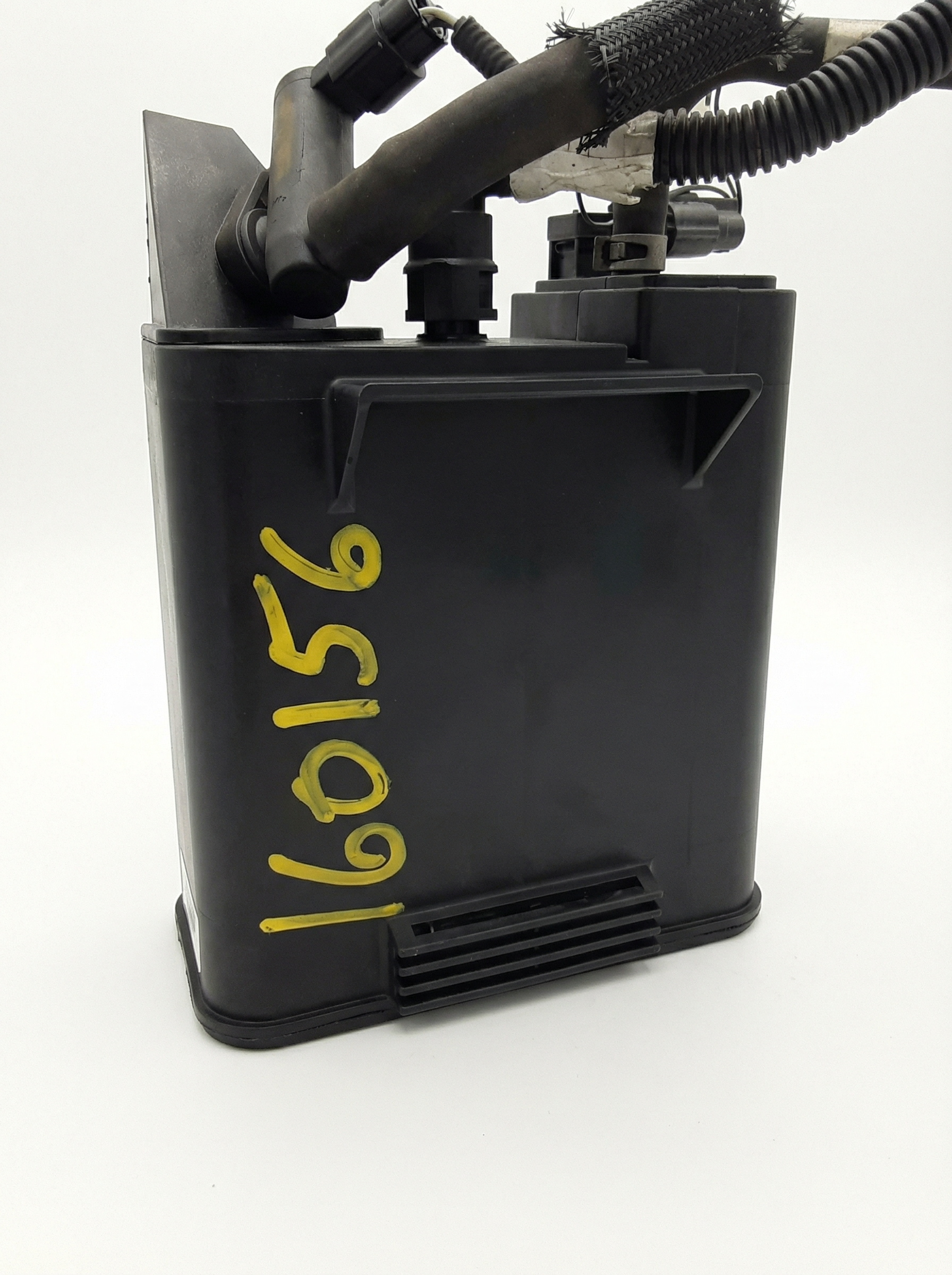
New Aftermarket Parts Available



The information in this article is provided for general reference and educational purposes only. Vehicle specifications, procedures, and part compatibility can vary by production date, trim level, and region. Always consult your vehicle's factory service manual and verify part numbers before purchasing or performing repairs. Safety-critical components such as airbags, seat belts, and braking systems should be installed by a qualified professional.
- Hyundai Santa Fe:
- 🧭 Diagnostic Flowchart
- 🎬 Helpful Videos
- 🛍️ Shop This Part
- What's Unique About the 2001-2006 Hyundai Santa Fe
- Symptoms You May Notice
- Most Likely Causes
- Rare But Worth Checking
- Diagnosis Steps
- Parts You'll Likely Need
- Platform-Specific Known Issues
- Technical Service Bulletins (TSBs) & Recalls
- Mechanic-Grade Diagnostic Values
- Scan Tool Commands That Help
- Wiring & Ground Locations
- Real Owner Repair Stories
- "I Checked Everything" — The Actual Cause
- OEM Part Supersession History
- Model Year Variations Within This Range
- Other Known Issues on This Vehicle
- Used vs. New Parts: Buying Guide for This Vehicle
- Real Owner Stories
- 2004 Hyundai Santa Fe
- 2002 Hyundai Santa Fe
- 2006 Hyundai Santa Fe
- Related OBD-II Codes
- Frequently Asked Questions
- 🎟️ Get 5% Off