

P0449 on 2006-2010 Hyundai Sonata: EVAP Vent Valve Circuit Fixes and Causes
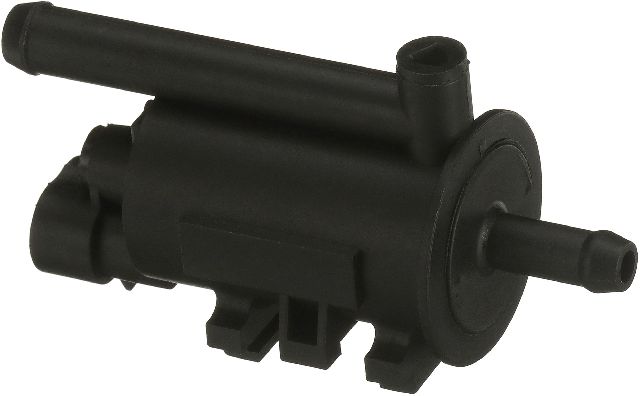
This code almost always points to a failed EVAP Canister Close Valve (also called a vent solenoid) located at the rear of the car. Symptoms often include a Check Engine Light and difficulty refueling. Replacing the valve is the most common fix, costing around $30-$70 for the part. The circuit integrity should be verified before replacing parts.
- P0449 on a 2006-2010 Sonata almost always means the canister close valve (or its wiring) has failed.
- A primary symptom, besides the Check Engine Light, is the gas pump nozzle shutting off frequently during refueling.
- The valve is located behind the driver's side rear wheel and is a common DIY replacement.
- Always test the circuit with a test light or multimeter before replacing the valve to rule out a simple wiring or fuse issue.
- Platform mates like the Kia Optima and Rondo share this exact same common failure.
What's Unique About the 2006-2010 Hyundai Sonata
On the 2006-2010 'NF' generation Sonata, the P0449 code is very commonly triggered by the failure of the canister close valve itself. Its location behind the driver's side rear wheel exposes its electrical connector and wiring to road salt, water, and debris, leading to corrosion and circuit failures. A tell-tale symptom for Sonata owners is the fuel pump nozzle repeatedly clicking off during refueling, which is caused by the valve being stuck closed (or an associated filter being clogged) and unable to vent tank pressure.
Symptoms You May Notice
- Check Engine Light is on
- Difficulty filling the fuel tank (gas pump nozzle shuts off repeatedly).
- Audible clicking or noise from the rear driver's side of the vehicle.
- Possible faint fuel smell.
- Rough idle, especially after refueling (less common).
- Replacing the gas cap. While a faulty gas cap can cause other EVAP codes (like P0455 or P0457), it is not a cause for a P0449 circuit malfunction code.
- Replacing the EVAP Purge Valve. The purge valve (often Dorman part 911-808 for this car) is located in the engine bay and has its own trouble codes (like P0441). P0449 specifically points to the vent valve circuit at the rear of the vehicle.
Most Likely Causes
- Faulty EVAP Canister Close Valve (Vent Solenoid) 🔴 High Probability → Shop Vapor Canister The valve is a common failure item. The internal solenoid coil can fail (open circuit), or the valve can become mechanically stuck from age and contamination.
How to confirm: Locate the valve near the charcoal canister behind the driver's side rear wheel. Use a scan tool with bidirectional controls to command the valve on and off while listening for a click. If no click is heard, check the solenoid's resistance with a multimeter; a healthy valve should read around 20 ohms. An open circuit (infinite resistance) confirms a failed coil. Alternatively, apply 12V and ground directly to the valve's pins to see if it actuates.
Typical fix: Replace the canister close valve. This involves removing the driver's side rear wheel and splash shield for access.
Est. part cost: $30-$70 - Damaged Wiring or Corroded Connector 🟡 Medium Probability The valve's location under the car makes the wiring and connector highly susceptible to corrosion from road salt and moisture, or physical damage from road debris. Wires can break inside the insulation near the connector.
How to confirm: Visually inspect the wiring harness and electrical connector leading to the canister close valve. Look for green or white corrosion on the pins, chafed insulation, or broken wires. Disconnect the valve and use a test light connected across the two pins of the harness-side connector. Use a scan tool to command the valve on/off; the test light should flash, confirming the circuit integrity from the PCM is good. If the light doesn't flash, check for 12V power on one wire and a ground signal from the PCM on the other.
Typical fix: Clean the connector terminals with electrical contact cleaner or purchase a replacement pigtail connector. Repair any damaged sections of the wiring harness, ensuring connections are soldered and sealed with heat shrink tubing.
Est. part cost: $10-$30 - Blown Fuse ⚪ Low Probability A short circuit in the vent valve or its wiring can cause the corresponding fuse to blow, cutting power to the circuit.
How to confirm: Check the vehicle's fuse boxes (both in the cabin and engine bay) for a blown fuse related to the emissions or EVAP system. Consult the owner's manual for the correct fuse location.
Typical fix: Replace the blown fuse. If the new fuse blows immediately, it indicates a persistent short circuit that must be found and repaired before proceeding.
Est. part cost: $1-$5
Rare But Worth Checking
- Damaged or Clogged Charcoal Canister/Filter: → Shop Vapor Canister Over-filling the gas tank or water intrusion from a split hose can saturate the charcoal canister 🎬 Watch: How to inspect and fix the charcoal canister. with liquid fuel or water. In some cases, a separate EVAP filter between the canister and the vent valve can become clogged with dust and debris, which can cause refueling issues even if the vent valve itself is functional. A diagnostic video on a 2010 Sonata showed a clogged filter was the cause of the refueling problem, while a separate failed vent valve caused the P0449 code.
- Faulty Powertrain Control Module (PCM): → Shop Engine Control Module (ECM) This is extremely rare. The PCM's internal driver for the vent valve circuit can fail. This should only be considered after all other possibilities, including the valve, wiring, connector, and fuses, have been thoroughly tested and ruled out. A Reddit user with a 2011 Sonata reported a bad PCM circuit as the final diagnosis after replacing all other components.
Technical Service Bulletins (TSBs) & Recalls
- TSB Bulletin #5NP-Q7J2C-07: While issued for a different model, this manufacturer bulletin explicitly identifies P0449 as a "Canister Closed Valve (CCV) - Restricted Vent Circuit" fault, reinforcing that the code specifically targets the CCV and its associated venting path.
Diagnosis Steps
- Read the code with an OBD-II scanner to confirm P0449 is present.
- Visually inspect the gas cap for cracks or a worn seal, though it is not a direct cause of P0449.
- Raise and safely support the rear of the vehicle. Remove the driver's side rear wheel.
- Remove the plastic splash shield inside the wheel well to gain access to the charcoal canister and canister close valve.
- Visually inspect the electrical connector and wiring going to the canister close valve. Look for any signs of corrosion, damage, or loose connections.
- Circuit Integrity Test: Disconnect the valve. Connect a test light across the two terminals of the vehicle's wiring harness connector. Have a helper turn the ignition to 'ON' or use a scan tool to command the vent circuit 'ON'. The test light should illuminate, confirming the wiring and PCM driver are likely good. If it does not light up, proceed to check for a blown fuse.
- Solenoid Test: If the circuit test passes, test the valve itself. Use a multimeter to measure the resistance between the two pins on the valve. A good valve should read approximately 20 ohms. An infinite reading means the coil is broken and the valve is bad. Alternatively, use jumper wires to apply 12V directly to the valve; you should hear a solid click.
- If the valve fails the test, replace the canister close valve.
- If the valve and wiring test good, inspect the hoses connected to the valve and canister for blockages. A separate, small filter in the vent line has been known to get clogged with dirt, causing refueling issues.
- After replacement/repair, clear the trouble code with the scanner and perform an EVAP system drive cycle to ensure the Check Engine Light does not return.
Parts You'll Likely Need
- Canister Close Valve / Vent Valve Solenoid
(OEM #31453-3K600)— This is the component that fails most frequently, either electrically or mechanically, triggering the P0449 code.
Trusted brands: Hyundai (Genuine OEM), Dorman, Standard Motor Products (VS240)
OEM price range: $50-$80
Aftermarket price range: $30-$60
Related Codes That Often Appear With This One
- P2422 — This code means 'EVAP System Vent Valve Stuck Closed' and is a functional code, whereas P0449 is an electrical circuit code. They often appear together and point to the same failed component 🎬 See how to fix a vent valve stuck closed.—the canister close valve.
- P0455 — This code for a 'Large EVAP Leak' can sometimes accompany P0449 if the vent valve is stuck open, which the PCM interprets as a massive leak during system self-tests.
Platform-Specific Known Issues
- Dual Failure: Clogged Filter and Bad Valve: In a detailed diagnostic video on a 2010 Sonata with P0449 and refueling issues, the technician found two separate problems. The P0449 code was caused by a failed canister close valve that was stuck open and had an internal electrical fault. The inability to refuel was caused by a completely separate, clogged EVAP filter located in the line between the canister and the vent valve. This highlights that multiple faults can exist simultaneously.
- Water Intrusion from Split Hose: A post on Hyundai Forums for a similar model detailed a case where a split fuel tube hose allowed water to enter the EVAP system, which saturated and damaged the charcoal canister and filter, leading to a P0449 code. This was noted as a possibility especially after a rear-end collision.
Mechanic-Grade Diagnostic Values
- Canister Close Valve (Vent Solenoid) Coil Resistance — expected: 20-40 Ohms. A 2010 Sonata was measured at exactly 20 Ohms.. Failure: Infinite resistance (OL) indicates an open coil. Very low resistance (<5 Ohms) indicates an internal short.
- Voltage at Canister Close Valve Connector (harness side) — expected: Approximately 12V (battery voltage) on the power feed pin with Key On, Engine Off. The other pin is the ground, which is switched by the PCM.. Failure: Voltage below 10V suggests a power supply issue (fuse, wiring). No voltage indicates an open circuit or blown fuse.
Scan Tool Commands That Help
- Hyundai GDS or equivalent professional scanner: Canister Shut Off Valve (CSOV) functional test — This bidirectional command is used to manually cycle the vent valve on and off. It's essential for verifying circuit integrity (with a test light) and for listening for an audible click from the valve to confirm mechanical operation.
Wiring & Ground Locations
- GF04 / GF05 — GF04 is at the base of the left 'C' pillar. GF05 is at the base of the right 'C' pillar. These are common grounding points for rear-body electrical components.. A corroded or loose ground at one of these points could cause an intermittent or permanent open in the canister close valve circuit, triggering P0449. While not the primary ground for the valve, they are critical to check when diagnosing a circuit fault that isn't at the connector itself.
- Canister Close Valve Connector — Attached directly to the canister close valve, located behind the driver's side rear wheel well splash shield.. This is the most common point of failure due to corrosion from road spray. The two pins are for 12V power and the PCM-controlled ground. All voltage, resistance, and circuit integrity tests for P0449 begin at this connector.
Real Owner Repair Stories
- YouTube - Pine Hollow Auto Diagnostics (2010 Hyundai Sonata, 184,000 miles) — P0449 code stored, impossible to fill the fuel tank.
❌ Tried (didn't work) Initial diagnosis focused only on the vent valve, which could have led to an incomplete repair.
✅ What actually fixed it There were two separate faults. The P0449 code was caused by a failed canister close valve (it was stuck open and had an open internal coil). The refueling issue was caused by a completely clogged, separate inline filter located between the canister and the vent valve. Both the valve and the filter had to be replaced to fix both issues. - YouTube - KG auto repair (2009 Hyundai Sonata) — Refueling issues (gas pump clicks off) and a check engine light.
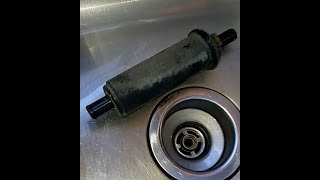
✅ What actually fixed it The carbon canister was completely clogged and bad. The technician confirmed this by trying to blow through the old canister (no air passed) versus the replacement part from a junkyard (air passed). Replacing the canister resolved the refueling problem. - NHTSA ODI #11629373 — An owner reported that shortly after they started driving, the check engine light came on; a diagnostic test at a local parts store confirmed a P0449 code for the evaporative emissions (EVAP) vent control valve.
- NHTSA ODI #11629374 — One owner described a check engine light for a P0449 EVAP vent control valve and noted that the failure would not allow them to pump gas into the car.
- NHTSA ODI #11467031 — A report indicates that a defective part was replaced specifically based on the diagnostic code P0449 after the check engine light had been on.
OEM Part Supersession History
31453-3K600→31453-3K600-FFF— Standard part revision by the manufacturer, likely for improved durability or material changes.
Heads up: The parts are interchangeable. 31453-3K600-FFF is the current replacement for the original part.
Diagnostic Flowchart
Used vs. New Parts: Buying Guide for This Vehicle
When a used part is the smart pick: For the Canister Close Valve and the Charcoal Canister, a used part from a junkyard can be a cost-effective option, as demonstrated in a repair video where a used canister fixed the issue. Given the high cost of a new canister, a used part is a reasonable gamble.
Donor-vehicle mileage cap: roughly under 100000 miles for the part to have meaningful remaining life.
What to inspect on the donor part:
- For the Canister Close Valve, visually inspect the connector pins for any green or white corrosion. Avoid parts from heavily rusted vehicles.
- For the Charcoal Canister, attempt to gently blow air through the ports. If air cannot pass through, it is clogged and useless.
- Check for any physical cracks or damage to the plastic housing of either component.
OEM-only on this vehicle (don't cheap out):
- While not strictly required, the OEM Canister Close Valve is generally preferred for fit and longevity. However, aftermarket options are widely used.
Aftermarket brands forum-validated for this vehicle:
- Standard Motor Products (SMP) is often cited by mechanics as a reliable alternative to OEM for electrical components like solenoids.
Brands owners have reported issues with on this vehicle:
- Dorman has a mixed reputation; some parts are fine, while others are considered lower quality and a 'last resort' by some mechanics. For a critical emissions component, it may be worth spending slightly more on OEM or a brand with a better reputation like SMP.
Real Owner Stories
Aggregated from forums and TSBs cited above. Mileages and costs reflect what owners reported in those sources.
2009 Hyundai Sonata
Symptoms: The previous owner had a problem where the car wouldn't take fuel; it wouldn't fill all the way and would shoot gas back out.
What fixed it: The carbon canister was found to be completely clogged and bad. After replacing it, the issue was resolved.
Source hint: YouTube comment by RApiiDfireMONKEY
2010 Hyundai Sonata
Symptoms: Check Engine Light with code P0449 and an inability to refuel the vehicle properly.
What fixed it: Two separate issues were fixed: the canister close valve, which had an internal electrical fault, was replaced to clear the P0449 code, and a separate, completely clogged EVAP filter in the vent line was replaced to fix the refueling problem.
Source hint: YouTube - Pine Hollow Auto Diagnostics video on a 2010 Sonata
Hyundai Sonata (similar to 2006-2010 model)
Symptoms: P0449 code appeared, potentially after a rear-end collision.
What fixed it: The root cause was a split fuel tube hose that allowed water to enter the EVAP system. The fix involved repairing the hose and replacing the water-saturated charcoal canister and filter.
Source hint: Hyundai Forums post
2011 Sonata
Symptoms: A persistent P0449 code remained even after all major EVAP components had been replaced.
What fixed it: The owner was advised that the final diagnostic step was to check the wiring continuity all the way back to the Powertrain Control Module (PCM) and verify the PCM's driver circuit, as a faulty PCM is a rare but possible cause.
Source hint: Reddit (r/AskMechanics) thread on a 2011 Sonata
Related OBD-II Codes
Frequently Asked Questions
Where is the canister close valve located on my 2006-2010 Sonata?
I'm having trouble filling my gas tank, the pump keeps shutting off. Is this related to the P0449 code?
What's the most likely part I need to replace for a P0449 code?
How can I test the vent valve myself before buying a new one?
I replaced the vent valve but the P0449 code is still there. What should I check next?
Is this P0449 problem also common on the Kia Optima or Hyundai Santa Fe from the same era?
Helpful Videos
We Have This Part in Stock


The information in this article is provided for general reference and educational purposes only. Vehicle specifications, procedures, and part compatibility can vary by production date, trim level, and region. Always consult your vehicle's factory service manual and verify part numbers before purchasing or performing repairs. Safety-critical components such as airbags, seat belts, and braking systems should be installed by a qualified professional.
- Hyundai Sonata:
- 🧭 Diagnostic Flowchart
- 🎬 Helpful Videos
- 🛍️ Shop This Part
- What's Unique About the 2006-2010 Hyundai Sonata
- Symptoms You May Notice
- Most Likely Causes
- Rare But Worth Checking
- Technical Service Bulletins (TSBs) & Recalls
- Diagnosis Steps
- Parts You'll Likely Need
- Related Codes That Often Appear With This One
- Platform-Specific Known Issues
- Mechanic-Grade Diagnostic Values
- Scan Tool Commands That Help
- Wiring & Ground Locations
- Real Owner Repair Stories
- OEM Part Supersession History
- Used vs. New Parts: Buying Guide for This Vehicle
- Real Owner Stories
- 2009 Hyundai Sonata
- 2010 Hyundai Sonata
- Hyundai Sonata (similar to 2006-2010 model)
- 2011 Sonata
- Related OBD-II Codes
- Frequently Asked Questions
- 🎟️ Get 5% Off