

P0449 on 2011-2013 Kia Sorento: EVAP Vent Valve Circuit Causes and Fixes
P0449 on a 2011-2013 Sorento almost always points to a faulty EVAP Canister Vent Valve Solenoid or a blockage in the vent lines. A Kia Technical Service Bulletin (TSB) specifically notes that spider webs can clog the vent hose, triggering this code. The fix is usually replacing the vent valve solenoid (also called a canister close valve) or cleaning the lines thoroughly.
- P0449 on a 2011-2013 Sorento is a circuit malfunction code for the EVAP vent valve.
- Before buying parts, always check the EVAP vent hoses for spider webs or debris, as this is a known issue covered by a Kia TSB.
- The most likely failed part is the EVAP Canister Vent Valve Solenoid, located near the charcoal canister at the rear of the vehicle.
- This is a relatively simple and inexpensive DIY repair that does not require specialized tools.
- Do not confuse the vent valve (rear of car) with the purge valve (in the engine bay).
- The Hyundai Santa Fe (2010-2012) is a platform-mate and suffers from the exact same issues.
What's Unique About the 2011-2013 Kia SORENTO

For the second-generation Kia Sorento (XM) and its platform-mate, the Hyundai Santa Fe, this code has a surprisingly common and specific cause: spiders. Kia issued a Technical Service Bulletin (TSB #PS162R1) for the Sorento, warning that spider webs can build up in the EVAP vent lines, causing a restriction that triggers code P0449 or P2422. This makes a visual inspection of the vent hoses for blockages a critical first step before replacing any parts. This issue is also noted on other Kia models like the Sportage.
Diagnostic Flowchart

Tap your situation to follow the diagnostic path that matches what you're seeing on this vehicle.
Symptoms You May Notice
- Check Engine Light is on
- Difficulty filling the fuel tank (pump clicks off frequently)
- Possible faint fuel smell (less common for this specific code)
- Trouble starting the vehicle immediately after refueling (less common)
- Replacing the gas cap. A loose or faulty gas cap typically causes large leak codes like P0455, not a circuit code like P0449.
- Replacing the EVAP Purge Valve. The purge valve (Kia's PCSV) is located in the engine bay 🎬 Watch: How to replace the engine bay purge valve and has its own set of diagnostic codes (e.g., P0441). P0449 specifically points to the Canister Close Valve (CCV) circuit at the rear of the vehicle.
Most Likely Causes

- Spider webs or debris in the EVAP vent hose 🔴 High Probability Kia issued TSB #PS162R1 specifically for this issue on the Sorento (XM). The design of the vent lines can be an attractive place for spiders to build nests. Another TSB for the Sportage (PS532) also highlights this exact issue, noting the most common area for nests is near the filler neck.
How to confirm: Disconnect the vent hose from the charcoal canister and the vent valve and visually inspect for blockages. Use a pipe cleaner or a thin wire to clear any debris. Compressed air is often ineffective and not recommended by Kia for this task.
Typical fix: Clean the vent hose thoroughly. If the blockage is severe, the hose may need to be replaced.
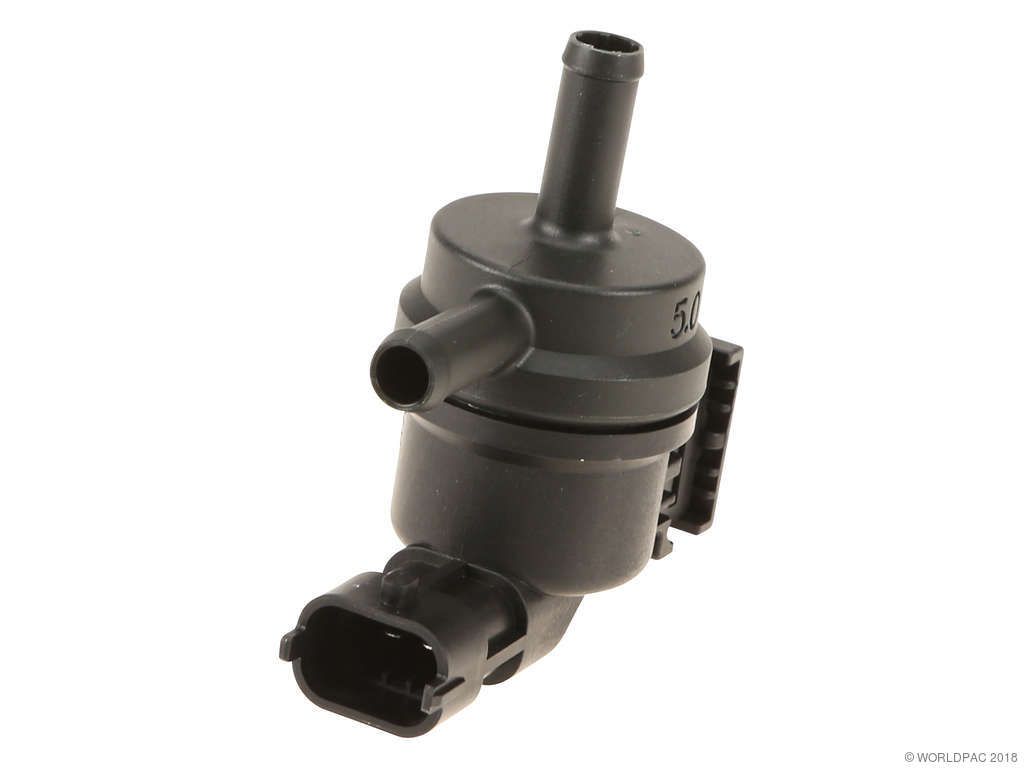
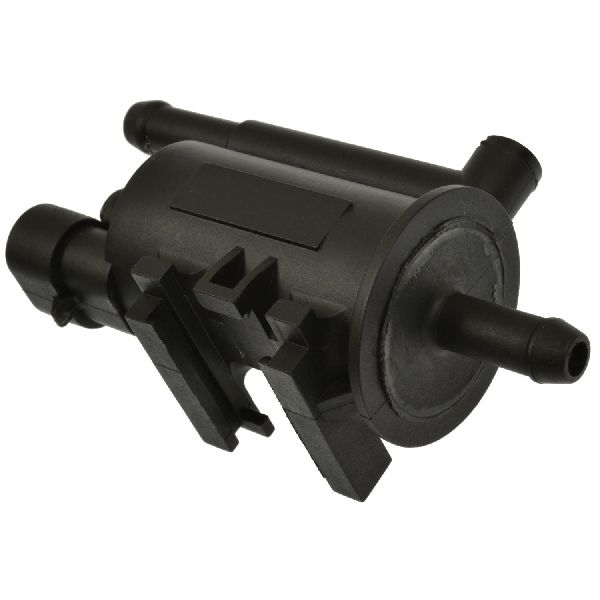
Est. part cost: $0-$30 - Faulty EVAP Canister Vent Valve Solenoid 🔴 High Probability → Shop Vapor Canister This is a common failure point across many vehicles due to its location under the car, exposed to the elements. It is an electromechanical part that can fail either electrically (circuit malfunction) or mechanically (stuck open/closed).
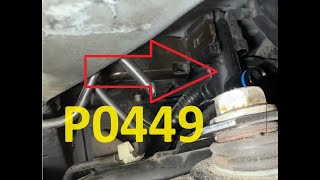
How to confirm: The solenoid is located near the charcoal canister under the rear of the vehicle. You can test it by applying 12V power and ground to its terminals; a healthy solenoid will make an audible click. You can also test for resistance across the terminals with a multimeter; the expected value is around 23-26 Ohms 🎬 Watch: How to test and fix the CCV circuit, though this spec is from an earlier model year. If you have an advanced scan tool, you can command the valve to cycle and listen for the click.
Typical fix: Replace the canister vent valve solenoid (also called a canister close valve or CCV).
Est. part cost: $40-$100 - Damaged wiring or corroded connector 🟡 Medium Probability The vent valve is located under the vehicle, exposing its wiring and 2-pin connector to moisture, salt, and road debris, which can lead to corrosion on the pins or physical damage to the wires over time.
How to confirm: Visually inspect the wiring harness and connector for the vent valve. Check for broken wires, green or white corrosion on the pins, or a loose connection. Use a multimeter to check for battery voltage on the power wire and for a good ground signal from the ECM at the connector with the key on. A more advanced test on this ground-switched circuit is to check for voltage on both pins with the connector plugged in and key on; seeing 12V on both pins indicates a good coil, while 12V and 0V points to an open coil inside the solenoid. Replacement connector pigtails are available if the original is damaged.
Typical fix: Repair the damaged section of wire or clean/replace the connector pigtail.
Est. part cost: $15-$50 - Blown fuse ⚪ Low Probability
How to confirm: Check the vehicle's fuse box diagrams (in the owner's manual and on the fuse box cover) for any fuses related to the emissions or EVAP system and inspect them. A user on Reddit with a P0449 code was advised to check fuses first as a simple diagnostic step.
Typical fix: Replace the blown fuse.
Est. part cost: $1-$5
Rare But Worth Checking
- Faulty Powertrain Control Module (PCM): → Shop Engine Control Module (ECM) This is extremely rare and should only be considered after all other possibilities (valve, wiring, blockages) have been exhaustively ruled out.
- Cracked or clogged charcoal canister: → Shop Vapor Canister While less common for a pure circuit code, a physically damaged canister or one saturated with fuel can sometimes contribute to vent valve issues.
Diagnosis Steps
- Read the code with an OBD-II scanner to confirm P0449 is present.
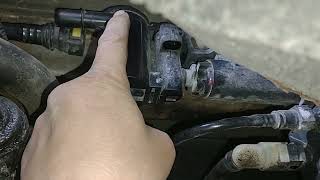
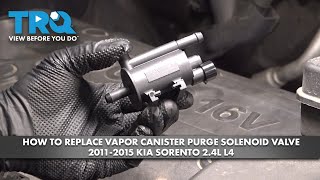
- Locate the EVAP charcoal canister and Canister Close Valve (CCV) under the rear of the vehicle, typically mounted near the spare tire area. 🎬 See how to locate and remove the canister solenoid
- Inspect the CCV's 2-pin electrical connector and wiring for any signs of damage, corrosion, or loose connections. Ensure the connector is fully seated.
- Disconnect the rubber vent hoses from the canister and valve. Thoroughly inspect the inside of the hoses for spider webs or other debris, as noted in TSB #PS162R1. Clean them out with a pipe cleaner or soft wire; do not use compressed air as it may not be effective.
- If the hoses are clear, test the CCV solenoid. Use a scan tool to command it on and off, or apply 12V power and ground directly to its pins to listen for a distinct click. No click indicates a failed solenoid.
- If the solenoid does not click, test its internal coil for resistance using a multimeter. The expected value is approximately 23-26 Ohms. An infinite reading indicates an open coil, requiring valve replacement.
- If the solenoid clicks and resistance is good, the problem is likely in the wiring or PCM. With the key on and connector plugged in, probe both wires. A healthy circuit will show ~12V on both pins. If you see 12V on one and 0V on the other, the solenoid coil is open.
- Check for any related fuses in the interior and engine bay fuse panels.
- If wiring and the valve are good, the issue could be a clogged charcoal canister, though this is less common for a circuit code.
- After repairs, clear the code with the scanner and perform a complete EVAP drive cycle to see if the light returns.
Parts You'll Likely Need
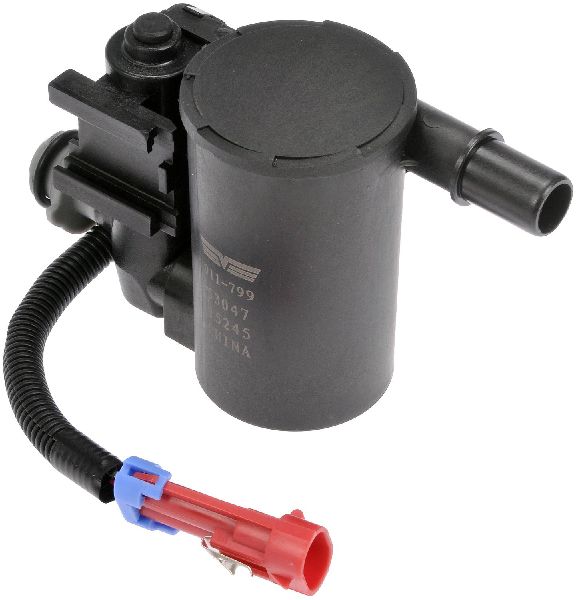
- EVAP Canister Close Valve (CCV)
(OEM #31430-0W000)— This solenoid is the most common part to fail electrically or mechanically, triggering the P0449 circuit code.
Trusted brands: Genuine Kia/Hyundai, Dorman (p/n 911-799), Standard Motor Products, SKP
OEM price range: $80-$120
Aftermarket price range: $40-$80
Related Codes That Often Appear With This One
- P2422 — This code means "Evaporative Emission System Vent Valve Stuck Closed." Kia's TSB #PS162R1 explicitly lists both P0449 and P2422 as potential results of spider web blockages in the vent lines.
Technical Service Bulletins (TSBs) & Recalls

- PS162R1: States that P0449 or P2422 on Sorento (XM) vehicles may be caused by spider webs in the EVAP vent lines.
- PS532 (Rev 1): A similar TSB for the Kia Sportage (QL) also identifies spider webs as a cause for P0449 and P2422, advising against using compressed air for cleaning.
Platform-Specific Known Issues
- TSB #PS162R1: Kia officially documented that spider webs in the EVAP vent lines can cause DTC P0449 or P2422 on Sorento (XM) models. The bulletin advises inspecting and cleaning the lines before replacing any components.
Mechanic-Grade Diagnostic Values
- Canister Close Valve (CCV) Coil Resistance — expected: 23-26 Ohms @ 68°F (20°C). Failure: An infinite resistance reading (OL) indicates an open coil and a failed valve.
- CCV Connector Voltage (Key On, Engine Off, Connector Plugged In) — expected: ~12 Volts on BOTH pins of the connector.. Failure: Reading ~12V on the power feed pin but 0V on the control side pin indicates an open circuit inside the solenoid's coil. This is a definitive test for a bad solenoid when the wiring is known to be good.
Scan Tool Commands That Help
- Kia GDS or equivalent bidirectional scanner: EVAP System Active Test / Vent Valve Control — To command the Canister Close Valve (CCV) solenoid on and off while listening for an audible 'click'. This directly tests the electrical integrity of the circuit from the PCM to the valve and the mechanical function of the solenoid itself, helping to quickly determine if the valve is responsive.
Wiring & Ground Locations
- Canister Close Valve Connector (A) — Under the vehicle at the rear, connected directly to the Canister Close Valve (CCV), which is mounted on or near the charcoal canister assembly.. This 2-pin connector is the primary test point for the P0449 circuit. All voltage, resistance, and command signal tests are performed here. Due to its exposed location, it is susceptible to corrosion and physical damage.
OEM Part Supersession History
31453-3K500 (Incorrect for Sorento)→31430-0W000 (Correct for Sorento)— Part number correction. 31430-0W000 is the correct OEM Canister Close Valve for the 2011-2013 Sorento (both 2.4L and 3.5L engines).
Heads up: Part number 31453-3K500 is often mistaken for this application but is correct for other Kia models like the Optima, Sportage, and Rio, not the Sorento of this generation.
Model Year Variations Within This Range
- 2011-2013: The Canister Close Valve (CCV), part number 31430-0W000, appears to be consistent across both the 2.4L I4 and 3.5L V6 engines offered in the Sorento for this model year range.
Helpful Videos

We Have This Part in Stock


The information in this article is provided for general reference and educational purposes only. Vehicle specifications, procedures, and part compatibility can vary by production date, trim level, and region. Always consult your vehicle's factory service manual and verify part numbers before purchasing or performing repairs. Safety-critical components such as airbags, seat belts, and braking systems should be installed by a qualified professional.
- Kia SORENTO:
- 🧭 Diagnostic Flowchart
- 🎬 Helpful Videos
- 🛍️ Shop This Part
- What's Unique About the 2011-2013 Kia SORENTO
- Symptoms You May Notice
- Most Likely Causes
- Rare But Worth Checking
- Diagnosis Steps
- Parts You'll Likely Need
- Related Codes That Often Appear With This One
- Technical Service Bulletins (TSBs) & Recalls
- Platform-Specific Known Issues
- Mechanic-Grade Diagnostic Values
- Scan Tool Commands That Help
- Wiring & Ground Locations
- OEM Part Supersession History
- Model Year Variations Within This Range
- 🎟️ Get 5% Off