

P0451 on 2014-2017 Kia Forte: EVAP Pressure Sensor Causes and Fixes
This code indicates a problem with the fuel tank pressure sensor's performance. On the 2014-2017 Forte, this is often linked to a faulty canister close valve or the pressure sensor itself, sometimes causing difficulty when refueling. A fix can range from $50 for a sensor to over $200 for a valve or canister assembly.
- P0451 on a 2014-2017 Kia Forte indicates a problem with the fuel tank pressure sensor's readings.
- A very common symptom specific to this car is the gas pump nozzle shutting off frequently when you try to refuel, as noted in official Kia TSBs.
- The most likely causes are a faulty Canister Close Valve (CCV) or the Fuel Tank Pressure Sensor (FTPS) itself.
- Before replacing the sensor, check for official TSBs related to your VIN, as the problem may be a faulty valve covered by a service campaign.
- This is generally a safe code to drive with, but it will cause an automatic failure on an emissions test.
What's Unique About the 2014-2017 Kia FORTE
For the second-generation Kia Forte (2014-2017), the P0451 code is specifically mentioned in manufacturer Technical Service Bulletins (TSBs) alongside symptoms like the fuel pump shutting off early during refueling. [⭐ MANUFACTURER TSB — highest authority] This points to a known issue with the EVAP system's venting components. The TSB clarifies the root cause is often a faulty 'air drain case' connected to the filler neck, which causes pressure problems that the sensor correctly reports as out of range. [⭐ MANUFACTURER TSB — highest authority] While the sensor itself can fail, the TSB suggests this external component is a primary suspect.
Diagnostic Flowchart
Tap your situation to follow the diagnostic path that matches what you're seeing on this vehicle.
Symptoms You May Notice
- Check Engine Light is on
- Difficulty filling the fuel tank (gas pump nozzle shuts off repeatedly). [⭐ MANUFACTURER TSB — highest authority]
- A faint smell of gasoline near the vehicle.
- Slightly reduced fuel economy.
- Gurgling sounds from the fuel tank area.
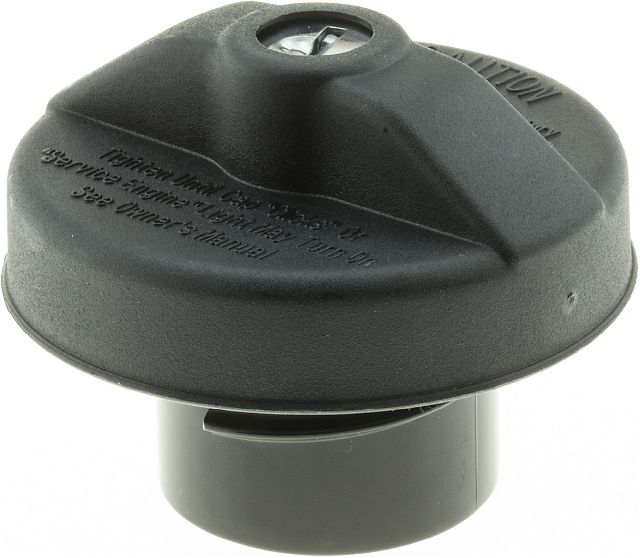
- Replacing the gas cap. While a loose or faulty gas cap can cause other EVAP codes (like P0455 or P0456 for leaks), it is an uncommon cause for a P0451 range/performance code which often points to a blockage or sensor error rather than a simple leak.
- Replacing the Canister Close Valve (CCV) without checking the TSB. For this specific vehicle and symptom set (P0451 + refueling issue), the TSB explicitly warns *not* to replace the CCV and to replace the Air Drain Case instead. [⭐ MANUFACTURER TSB — highest authority]
Most Likely Causes
- Faulty Air Drain Case 🔴 High Probability Kia TSB #TSBFUE038_R1 explicitly identifies a faulty air drain case as the cause for P0451/P0449 codes accompanied by refueling issues. The bulletin advises replacing this part instead of the Canister Close Valve (CCV). [⭐ MANUFACTURER TSB — highest authority]
How to confirm: The primary confirmation is the presence of both the P0451 code and the fuel nozzle shutting off during refueling, as described in the TSB. The part is located near the fuel filler neck, accessible by removing the passenger side rear wheel and well liner. [⭐ MANUFACTURER TSB — highest authority]
Typical fix: Replace the air drain case with the updated part number specified in the TSB. This involves removing the wheel/liner, loosening the filler neck, and swapping the two-piece case. 🎬 Watch: How to replace the air drain case and fix refueling issues. [⭐ MANUFACTURER TSB — highest authority]
Est. part cost: $15-$30 - Faulty Canister Close Valve (CCV) 🟡 Medium Probability → Shop Vapor Canister Though the TSB points to the air drain case, a failing CCV is a classic cause of EVAP pressure issues and refueling problems. It can get stuck, preventing the tank from venting properly. Owners have reported fixing the issue by replacing this valve.
How to confirm: A technician can command the valve to open and close using a diagnostic scan tool to check for an audible click. A visual inspection may also reveal damage. It is located on or near the charcoal canister under the rear of the vehicle.
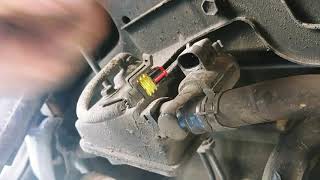
Typical fix: Replace the canister close valve. It is often sold as part of the entire charcoal canister assembly. 🎬 See this walkthrough for replacing the canister close valve.
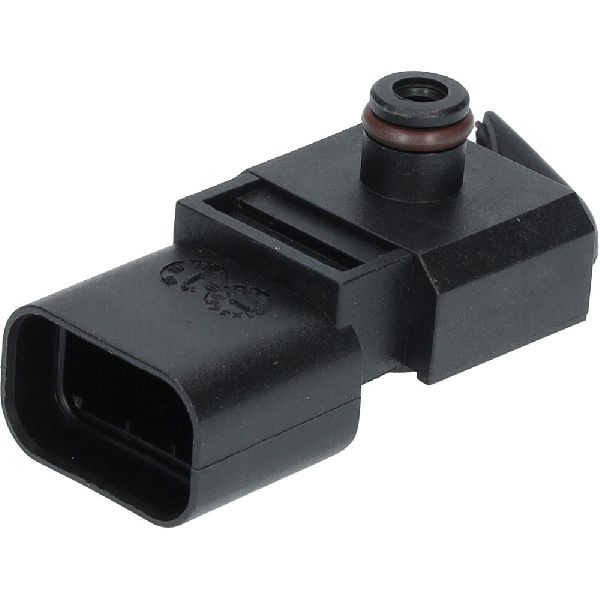
Est. part cost: $70-$120 - Faulty Fuel Tank Pressure Sensor (FTPS) 🟡 Medium Probability → Shop Fuel Tank
How to confirm: Use a scan tool to monitor the sensor's voltage or pressure readings. The reading should be stable and change when the gas cap is removed. If the readings are erratic, stuck, or don't change, the sensor is likely bad. Also check that the fuel pump assembly, which the sensor sits on, is properly sealed and tightened.
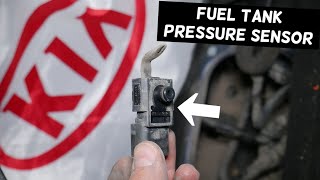
Typical fix: Replace the fuel tank pressure sensor. On the Forte, it is located on top of the fuel pump assembly, which is accessed from under the rear seat cushion. 🎬 Watch: How to locate and replace the fuel tank pressure sensor.
Est. part cost: $40-$100 - Clogged or Failed Charcoal Canister ⚪ Low Probability → Shop Vapor Canister
How to confirm: A visual inspection may show cracks or damage. A smoke test can reveal leaks or blockages. If the canister is saturated with fuel (often from over-filling the gas tank), it will need replacement. This can cause debris to contaminate other EVAP components.
Typical fix: Replace the charcoal canister assembly. The canister close valve is often attached to it.
Est. part cost: $150-$300 - Damaged or Disconnected EVAP Hoses ⚪ Low Probability
How to confirm: Visually inspect all hoses running from the fuel tank to the charcoal canister and to the engine for cracks, brittleness, or loose connections. A smoke test is the most effective way to find a leak in the hose network.
Typical fix: Replace the damaged section of hose.
Est. part cost: $10-$30
Rare But Worth Checking
- Wiring Harness Issue: The wiring to the fuel tank pressure sensor can become damaged or corroded, especially since it's located near the fuel tank. Check the connector and wiring for breaks, corrosion, or a bad ground before replacing the sensor itself.
- Loose Fuel Pump Locking Ring: The fuel tank pressure sensor sits on the fuel pump module. If the locking ring holding the module to the tank is loose, it can create a pressure variance and trigger a P0451 code. An owner on a forum reported fixing their code simply by tightening this ring.
Diagnosis Steps
- Check for TSBs: First, confirm if your vehicle falls under TSB #TSBFUE038 or #TSBFUE038_R1. If you have P0451 and the fuel nozzle shuts off when refueling, the TSB indicates the 'Air Drain Case' is the most likely culprit. [⭐ MANUFACTURER TSB — highest authority]
- Scan Tool Data: Connect an OBD-II scanner and observe the live data for the Fuel Tank Pressure Sensor. Note the reading with the engine off.
- Gas Cap Test: With the scan tool still connected, remove the gas cap. The pressure reading should change noticeably. If it doesn't, it points towards a faulty sensor or a blockage in the system.
- Inspect the Air Drain Case: If TSB symptoms are present, inspect the air drain case located behind the passenger rear wheel well liner, near the filler neck, for damage or blockage. [⭐ MANUFACTURER TSB — highest authority]
- Visual Inspection: Inspect the charcoal canister, canister close valve (CCV), and all visible EVAP hoses for cracks, damage, or loose connections. The canister is typically located under the rear of the vehicle.
- Test the Canister Close Valve (CCV): Use a bi-directional scan tool to command the CCV to open and close. You should hear a clicking sound. If it doesn't respond, test the valve's circuit and the valve itself.
- Test the Sensor Circuit: If the sensor readings are suspect, access the sensor on top of the fuel pump under the rear seat. Check the sensor's wiring for proper voltage (usually a 5V reference), ground, and signal continuity back to the PCM.
- Smoke Test: If a leak or blockage is suspected but not visible, a smoke test can be performed to pressurize the EVAP system with smoke, making any leaks or restrictions easy to spot.
Parts You'll Likely Need
- Air Drain Case
(OEM #31453-A5500 (for Forte YDm))— This is the specific part called out in Kia's TSB #TSBFUE038_R1 to fix the P0451 code when refueling issues are present. [⭐ MANUFACTURER TSB — highest authority]
Trusted brands: Kia Genuine
OEM price range: $15-$30
Aftermarket price range: N/A - Canister Close Valve
(OEM #31453-3K600)— A common failure point for EVAP systems that causes pressure-related codes and refueling problems, although the TSB for this specific issue points elsewhere.
Trusted brands: Kia Genuine, Dorman
OEM price range: $80-$115
Aftermarket price range: $60-$90 - Fuel Tank Pressure Sensor — The code directly implicates the sensor's performance. If the valves, wiring, and air drain case check out, the sensor itself is the next logical part to fail.
Trusted brands: Kia Genuine, Bosch, NTK, GPD
OEM price range: $70-$100
Aftermarket price range: $40-$75
Related Codes That Often Appear With This One
- P0449 — This code for the EVAP Vent Valve/Solenoid Circuit is often seen with P0451, as mentioned in Kia's TSBs. It points directly to an issue with the venting side of the EVAP system, which is consistent with a faulty air drain case or CCV. [⭐ MANUFACTURER TSB — highest authority, 21]
Technical Service Bulletins (TSBs) & Recalls
- TSBFUE038_R1: Addresses MIL illumination with DTCs P0449 or P0451 and/or early shut-off during fuel refill. Identifies the 'air drain case' as the root cause. [⭐ MANUFACTURER TSB — highest authority]
- TSBFUE038: An earlier version of the same bulletin addressing the same P0451 and refueling issues. [⭐ MANUFACTURER TSB — highest authority]
Platform-Specific Known Issues
- Kia issued Technical Service Bulletin #TSBFUE038_R1 on June 11, 2019, for 2014-2017 Forte models that may experience early shut-off during fuel refill and/or have a check engine light with DTC P0451 or P0449. The bulletin states the cause is a faulty 'air drain case' and instructs technicians to replace it with an updated part, warning them *not* to replace the Canister Close Valve for this specific condition. [⭐ MANUFACTURER TSB — highest authority]
Mechanic-Grade Diagnostic Values
- Fuel Tank Pressure Sensor (FTPS) Signal Voltage — expected: Approximately 2.5V with the gas cap removed (atmospheric pressure), key on, engine off.. Failure: Voltage is stuck high (near 5V) or low (near 0V), or does not change when a slight vacuum is applied to the sensor.
- FTPS Signal Voltage vs. Pressure — expected: 0.5V at -6.67 kPa (vacuum), 2.5V at 0 kPa (atmospheric), 4.5V at +6.67 kPa (pressure).. Failure: The sensor's voltage output does not correlate with the pressure/vacuum being applied, indicating a faulty sensor.
- FTPS Connector - Reference Voltage — expected: One of the three pins should show approximately 5V with the key on, engine off.. Failure: No 5V reference indicates a wiring problem or an issue with the PCM.
Scan Tool Commands That Help
- Kia GDS (Global Diagnostic System): Evap. Leakage Test — This is a guided diagnostic function to command system components and check for pressure integrity after initial checks or repairs are performed.
Wiring & Ground Locations
- Fuel Tank Pressure Sensor Connector — On top of the fuel pump assembly, accessible by removing the rear seat cushion and a service cover.. This 3-pin connector provides the sensor with power, ground, and returns the signal to the PCM. Damage or corrosion here will directly cause a P0451. The connector pigtail is available as a separate part (e.g., 31125-J9001, 31476-P4500) if the connector itself is broken.
- EVAP System Components — A service manual diagram shows the FTPS on the fuel tank, the Canister and Canister Close Valve (CCV) under the rear of the vehicle, and the Purge Control Solenoid Valve (PCSV) in the engine bay.. Provides a general layout for visually tracing hoses and wiring between the major components of the EVAP system during inspection.
Real Owner Repair Stories
- Reddit user on /r/kia (2017 Kia Forte with 95,000 miles) — Persistent Check Engine Light for EVAP issues, initially code P0441 (Incorrect Purge Flow).
❌ Tried (didn't work) Cleaning and tightening the gas cap., Replacing the gas cap., Replacing the vapor canister purge solenoid after a smoke test was performed.
✅ What actually fixed it The user's post details the unsuccessful attempts to fix a persistent EVAP light, even after a smoke test and replacing the purge valve. This highlights that the issue can be more complex than a simple leak or a common valve failure, aligning with the TSB's focus on the less-common Air Drain Case for P0451/P0449 codes.
"I Checked Everything" — The Actual Cause
- In a documented case for a related EVAP code (P0441) on a 2017 Forte, a smoke test was performed and the shop replaced the purge solenoid, but the check engine light returned. This indicates the fault was not a system leak that a smoke test could find, but likely a functional problem with a component not venting or sealing correctly under specific conditions, such as the issue with the 'Air Drain Case' described in TSB #TSBFUE038_R1.
OEM Part Supersession History
Varies→Varies— Component revisions and supplier changes.
Heads up: Multiple part numbers exist for seemingly identical components like canister close valves and filters across different Kia models and years. The TSB-specified 'Air Drain Case' (31453-A5500) is the critical part for the refueling issue. Always verify the correct part number with the vehicle's VIN before ordering to avoid incompatibility.
Model Year Variations Within This Range
- 2016-2018: Part listings for some components, like the A/C & Heater Assembly, show variations based on manufacturing location (e.g., 'Mexico built') and specific production dates (e.g., 'from 09/20/2016'). While not directly tied to the EVAP system in the search results, this indicates that mid-generation changes exist and reinforces the importance of using a VIN to confirm part compatibility for the EVAP system as well.
Helpful Videos

We Have This Part in Stock


The information in this article is provided for general reference and educational purposes only. Vehicle specifications, procedures, and part compatibility can vary by production date, trim level, and region. Always consult your vehicle's factory service manual and verify part numbers before purchasing or performing repairs. Safety-critical components such as airbags, seat belts, and braking systems should be installed by a qualified professional.
- Kia FORTE:
- 🧭 Diagnostic Flowchart
- 🎬 Helpful Videos
- 🛍️ Shop This Part
- What's Unique About the 2014-2017 Kia FORTE
- Symptoms You May Notice
- Most Likely Causes
- Rare But Worth Checking
- Diagnosis Steps
- Parts You'll Likely Need
- Related Codes That Often Appear With This One
- Technical Service Bulletins (TSBs) & Recalls
- Platform-Specific Known Issues
- Mechanic-Grade Diagnostic Values
- Scan Tool Commands That Help
- Wiring & Ground Locations
- Real Owner Repair Stories
- "I Checked Everything" — The Actual Cause
- OEM Part Supersession History
- Model Year Variations Within This Range
- 🎟️ Get 5% Off