

P0451 on 2014-2016 Mazda MAZDA3: EVAP Pressure Sensor Causes and Fixes
On a 2014-2016 Mazda3, code P0451 is most often caused by a faulty Fuel Tank Pressure (FTP) sensor or, in cold climates, a frozen canister vent hose as specified in a Mazda TSB. Replacing the sensor is a common fix, costing around $150-$250 for the part. Certain 2015-2016 models were also recalled for a faulty fuel shut-off valve that can cause this code.
- P0451 on a 2014-2016 Mazda3 means the Fuel Tank Pressure (FTP) sensor is providing an erratic or out-of-range signal.
- If you live in a cold climate, the first thing to suspect is a frozen canister vent hose, as per Mazda TSB #01-003-17-3297a.
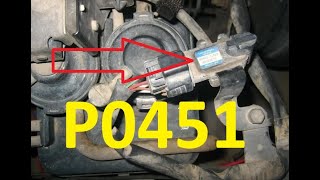
- The most common repair is replacing the Fuel Tank Pressure sensor itself, which is located on or near the fuel tank.
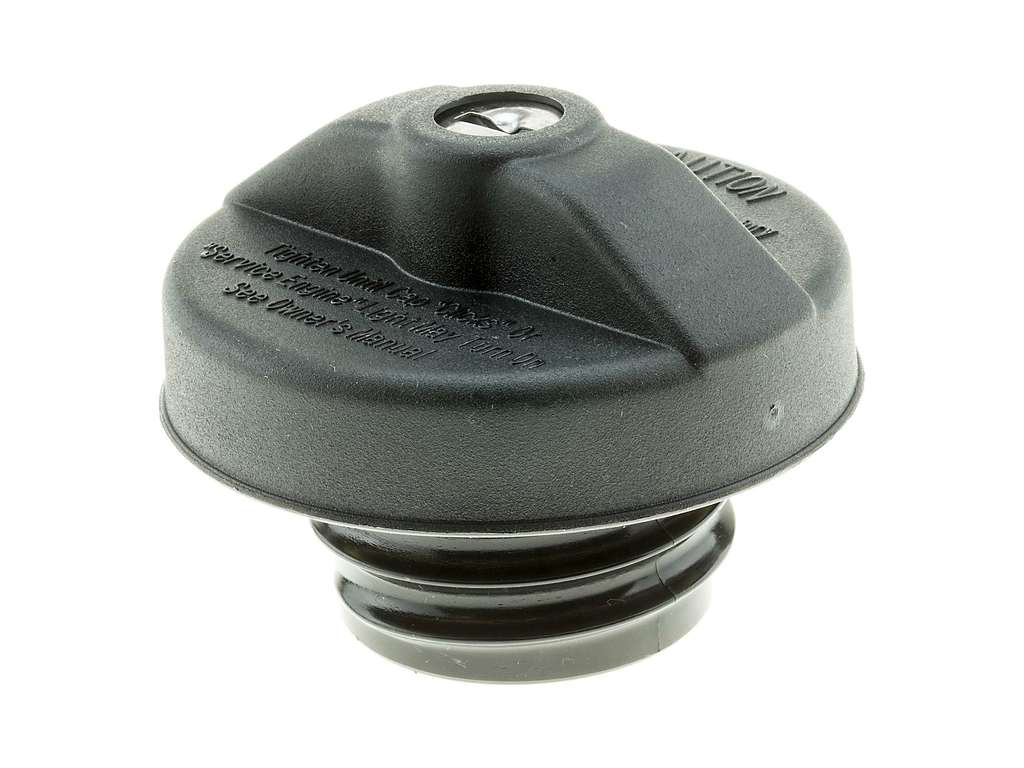
- Always check the gas cap first; it's a simple and cheap potential fix.
- The vehicle is safe to drive, but the issue should be fixed to pass emissions testing and prevent fuel vapor release.
What's Unique About the 2014-2016 Mazda MAZDA3
For the 2014-2016 Mazda3, this code is specifically addressed by a Technical Service Bulletin (TSB #01-003-17-3297a) for issues in cold weather. Mazda identified that water can accumulate and freeze in the canister vent hose, causing a restriction that triggers the P0451 code on cold starts. This is a known issue distinct from a simple sensor failure and has a specific repair procedure outlined by the manufacturer. Additionally, a recall (8615J) for some 2015-2016 models addresses a faulty fuel shut-off valve that can saturate the charcoal canister and trigger this code.
Diagnostic Flowchart
Tap your situation to follow the diagnostic path that matches what you're seeing on this vehicle.
Symptoms You May Notice
- Check Engine Light is on
- A faint smell of fuel, particularly when parked in an enclosed space like a garage.
- Possible hissing sound when removing the gas cap.
- Reduced fuel efficiency in some cases.
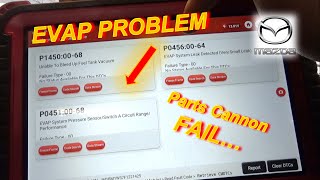
- Replacing the purge solenoid or vent valve. 🎬 Watch: Why replacing the purge solenoid often fails to fix P0451. While these are part of the EVAP system, P0451 specifically points to a problem with the pressure sensor's signal or performance ('characteristic malfunction'), not necessarily the function of the valves themselves.
Most Likely Causes
- Faulty Fuel Tank Pressure (FTP) Sensor 🔴 High Probability → Shop Fuel Tank Sensors can fail over time due to electrical faults or exposure to fuel vapors. A forum member on Mazdas247 reported a dealer diagnosed a 'shorted' sensor, potentially caused by an aftermarket undercoating application. Another user fixed the code by replacing an integrated 'Evaporative Hose with Sensor' assembly.
How to confirm: Test the sensor's three-wire connector with a multimeter. With the key on, you should find a 5-volt reference wire, a ground wire, and a signal wire. The signal voltage should be approximately 2.6V with the fuel cap off (equal to barometric pressure). Applying a small amount of vacuum should cause the voltage to drop toward 1.5V; if it doesn't change or is stuck high/low, the sensor is likely faulty.
Typical fix: Replace the Fuel Tank Pressure sensor. It is often sold as an assembly with a small hose. One owner on Mazdas247 noted it was a 10-minute job requiring only a flat-blade screwdriver for the quick-release connectors.
Est. part cost: $85-$250 - Frozen Water in Canister Vent Hose 🟡 Medium Probability → Shop Vapor Canister Mazda TSB #01-003-17-3297a specifically identifies this issue for 2014-2016 Mazda3s (both Japan and Mexico-built) in climates where temperatures drop below freezing. Water gets into the hose and freezes, causing a blockage and 'an increase in discharge resistance'.
How to confirm: This issue typically occurs on the first start of the day in below-freezing weather. A visual inspection of the vent hose near the charcoal canister may reveal ice or obstruction. The hose has a low point where water can collect.
Typical fix: Thaw and clear the hose. For sedan models, the TSB procedure is to simply cut the end of the hose at an angle to allow drainage. For 5-door hatchback models, the TSB specifies installing a new, re-routed Canister Hose (OEM Part No. PE01-13-971) and securing it with a tie-wrap to prevent future water accumulation.
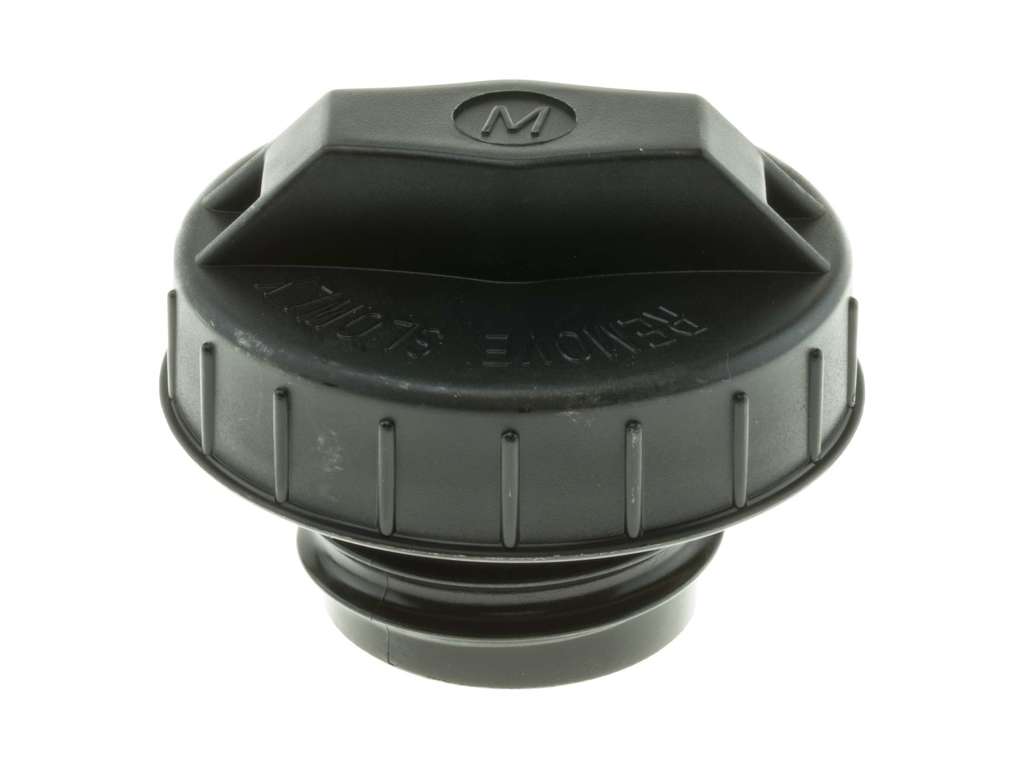
Est. part cost: $0-$30 (for new hose/tie-wrap if needed) - Loose or Faulty Gas Cap ⚪ Low Probability → Shop Fuel Tank Cap While a common cause for many EVAP codes, it's less likely for P0451, which points to a sensor performance issue rather than a simple large leak. However, a worn cap that doesn't vent correctly could theoretically cause erratic pressure readings.
How to confirm: Ensure the gas cap is tightened until it clicks. Check the cap's seal for cracks or damage. Replacing it is an easy and inexpensive troubleshooting step.
Typical fix: Tighten or replace the gas cap, preferably with an OEM part.
Est. part cost: $15-$40 - Damaged EVAP System Hoses or Wiring ⚪ Low Probability Hoses can crack with age, and the FTP sensor wiring is under the vehicle, exposed to the elements. A user on Reddit reported a P0451 code appearing after driving through saltwater, suggesting corrosion on the connector or wiring is a plausible cause.
How to confirm: Visually inspect all EVAP hoses for cracks and brittleness. Check the wiring harness and connector at the FTP sensor for corrosion, especially if exposed to road salt or water. A smoke test can definitively identify hard-to-see leaks in the hose system.
Typical fix: Repair the damaged wiring or replace the cracked hose section.
Est. part cost: $10-$50
Rare But Worth Checking
- Faulty Charcoal Canister (Saturated with Fuel): → Shop Vapor Canister This is a known issue for some Mexico-built 2015-2016 Mazda3s (manufactured May 21, 2015 - Aug 24, 2015) and was subject to Recall 8615J. A defective fuel shut-off valve allows raw fuel to enter and saturate the charcoal canister, which can trigger P0451 and potentially lead to fuel leaks.
- Faulty Powertrain Control Module (PCM): This is extremely rare, but a malfunctioning PCM can misinterpret sensor data. All other possibilities, including software updates mentioned in TSBs, should be exhausted before considering the PCM.
Diagnosis Steps
- Check for any other stored trouble codes that could provide more context, especially P013A.
- Inspect the gas cap to ensure it is tight and the seal is in good condition.
- If in a cold climate and the light appears on a cold start, prioritize inspecting the canister vent hose for ice per TSB #01-003-17-3297a.
- Check if your vehicle falls under Recall 8615J (Mexico-built, May-Aug 2015) for the faulty fuel shut-off valve.
- Visually inspect the FTP sensor connector and wiring for any signs of damage, corrosion, or loose connections. Pay close attention if the vehicle has been exposed to road salt or saltwater.
- Inspect the EVAP hoses connected to the fuel tank, charcoal canister, and purge valve for visible cracks or damage.
- If tools are available, back-probe the FTP sensor connector to test for 5V reference, ground, and a responsive signal voltage. The signal should be ~2.6V at atmospheric pressure.
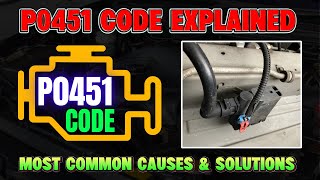
- If a leak is suspected but not visible, perform a smoke test on the EVAP system to pinpoint the source. 🎬 Watch: A quick breakdown of common P0451 causes and solutions.
Parts You'll Likely Need
- Fuel Tank Pressure Sensor
(OEM #TE69-42-58X (Example from a similar model, often sold as a hose/sensor assembly))— This is the most frequent point of failure for a P0451 code, as the code directly relates to the sensor's performance. Forum discussions confirm replacement is a common and effective fix.
Trusted brands: Mazda OE, Bosch, Duralast
OEM price range: $150-$275
Aftermarket price range: $85-$230 - Gas Cap — An inexpensive and easy first step in troubleshooting any EVAP code. A worn seal can cause pressure irregularities.
Trusted brands: Mazda OE, Stant
OEM price range: $25-$40
Aftermarket price range: $15-$30 - Canister Hose (Hatchback TSB Fix)
(OEM #PE01-13-971)— This specific part is required to perform the TSB fix for the frozen vent hose issue on 5-door hatchback models.
Trusted brands: Mazda OE
OEM price range: $20-$30
Related Codes That Often Appear With This One
- P013A — Mazda TSB 'Mil' and information related to Recall 8615J state that P0451 can appear with P013A (HO2S: Slow response). This is because the underlying issue, such as a saturated charcoal canister from a faulty shut-off valve, can affect both the EVAP pressure readings and the engine's air-fuel mixture, impacting the oxygen sensor's response.
Technical Service Bulletins (TSBs) & Recalls
- 01-003-17-3297a: CHECK ENGINE LIGHT ON WITH P0451:00 IN COLD WEATHER.
- Mil (related to Recall 8615J): MIL ON WITH DTC PO451 AND/OR PO13A.
Platform-Specific Known Issues
- Frozen Canister Vent Hose in Cold Weather: → Shop Vapor Canister A Mazda Technical Service Bulletin (TSB #01-003-17-3297a) was issued for 2014-2016 Mazda3s because water can accumulate and freeze in the canister vent hose in cold weather, causing P0451 to set on a cold start. The fix involves modifying or replacing a hose.
- Recall for Faulty Fuel Shut-Off Valve: Recall 8615J affects certain 2015-2016 Mazda3s built in Mexico from May 21, 2015, to August 24, 2015. A defective fuel shut-off valve can allow fuel to saturate the charcoal canister, triggering P0451 and/or P013A, and posing a risk of fuel leakage or engine stalling.
Mechanic-Grade Diagnostic Values
- Fuel Tank Pressure (FTP) Sensor Voltage — expected: Approx. 2.6 V with the fuel cap off (at atmospheric pressure).. Failure: Voltage is stuck high (near 5V), low (near 0V), or does not decrease from ~2.6V when a light vacuum is applied.
- FTP Sensor Live Data (Scan Tool) — expected: Should read near 0 psi or 0 inH2O at idle with the EVAP vent valve open.. Failure: Reading a significant positive or negative pressure (e.g., -1.0 PSI) when the system should be at atmospheric pressure indicates a sensor or blockage issue.
- FTP Sensor Reference Voltage — expected: Approx. 5.0 V on the reference wire at the sensor connector with key on, engine off.. Failure: Significantly less than 5V indicates a wiring or PCM issue.
Scan Tool Commands That Help
- Mazda M-MDS (or equivalent professional scanner): PID/DATA Monitor — Use to monitor live data PIDs such as 'FTP' (Fuel Tank Pressure in various units) and 'FTP V' (Fuel Tank Pressure Sensor Voltage) to see if the sensor is reporting rational values during idle, and while running system tests.
- Professional Scan Tool: EVAP System Leak Test (Gross Leak Test) — This is a bidirectional command that seals the EVAP system (closes the vent valve) and opens the purge valve to create a vacuum, then monitors the FTP sensor to see if the vacuum holds. It's used to verify the integrity of the system and the sensor's response after a repair.
Wiring & Ground Locations
- PCM (Powertrain Control Module) — Located at the left rear of the engine compartment.. The PCM provides the 5V reference and ground to the FTP sensor and interprets its signal wire. All three wires from the sensor terminate here.
- G01 (Ground Point) — Near the left headlight assembly.. This is a major chassis ground point in the engine bay. While not the specific ground for the FTP sensor itself (which is grounded through the PCM), a poor connection here can cause widespread electrical issues and erratic sensor behavior.
- Joint Box 1 — Located in the left kick panel, inside the cabin.. This is a major electrical junction. While not directly in the FTP sensor circuit, damage or corrosion here (e.g., from a water leak) could potentially affect PCM power or data lines.
Real Owner Repair Stories
- Reddit user r/mazda3 (2014 Mazda 3 2.0L with 92,000 miles) — Check Engine Light with code P0451.
✅ What actually fixed it The code appeared immediately after driving through and splashing saltwater. The strong implication is that saltwater caused corrosion on the FTP sensor's under-vehicle electrical connector or wiring, leading to the performance fault. The fix would be to clean or repair the affected connector/wiring. - Mazdas247 forum user 'qck' (2011 Mazda CX-9 (similar Mazda EVAP system)) — Check Engine Light with code P0451.
❌ Tried (didn't work) Initial owner troubleshooting.
✅ What actually fixed it A dealer diagnosed and replaced a 'shorted' fuel tank pressure sensor. The short was attributed to a recent aftermarket undercoating application that likely contaminated the sensor's electrical connector. The final repair was replacing the FTP sensor.
"I Checked Everything" — The Actual Cause
- The most common scenario for this vehicle where a smoke test passes but P0451 persists is the issue described in TSB #01-003-17-3297a. In below-freezing temperatures, water accumulates and freezes in a low point of the canister vent hose, creating a blockage. This blockage causes an out-of-range pressure reading on a cold start. However, once the vehicle warms up or in a heated shop, the ice melts, the blockage clears, and a smoke test would show no leaks, making the problem difficult to diagnose without knowledge of the TSB.
Model Year Variations Within This Range
- 2014-2016: While minor feature differences exist (e.g., standard backup camera on 2016 models), there are no documented changes to the core EVAP system, fuel tank pressure sensor, or related components that would alter the diagnosis or common causes of code P0451 across this three-year span. The primary causes (sensor failure, frozen hose TSB) are consistent for all three years.
Helpful Videos
We Have This Part in Stock


The information in this article is provided for general reference and educational purposes only. Vehicle specifications, procedures, and part compatibility can vary by production date, trim level, and region. Always consult your vehicle's factory service manual and verify part numbers before purchasing or performing repairs. Safety-critical components such as airbags, seat belts, and braking systems should be installed by a qualified professional.
- Mazda MAZDA3:
- 🧭 Diagnostic Flowchart
- 🎬 Helpful Videos
- 🛍️ Shop This Part
- What's Unique About the 2014-2016 Mazda MAZDA3
- Symptoms You May Notice
- Most Likely Causes
- Rare But Worth Checking
- Diagnosis Steps
- Parts You'll Likely Need
- Related Codes That Often Appear With This One
- Technical Service Bulletins (TSBs) & Recalls
- Platform-Specific Known Issues
- Mechanic-Grade Diagnostic Values
- Scan Tool Commands That Help
- Wiring & Ground Locations
- Real Owner Repair Stories
- "I Checked Everything" — The Actual Cause
- Model Year Variations Within This Range
- 🎟️ Get 5% Off