

P0452 on 2000-2019 Chevrolet Silverado: EVAP Pressure Sensor Low Input Causes and Fixes
For a 2000-2019 Silverado, code P0452 almost always means the Fuel Tank Pressure (FTP) sensor has failed or its wiring is damaged. The sensor is on top of the fuel tank and can be difficult to access. Expect to pay $25-$60 for a new sensor. Before replacing, check the wiring harness above the tank for breaks, as this is a common alternative cause.
- P0452 is an electrical fault, not a leak. Don't rush to replace the gas cap.
- The most likely fix is replacing the Fuel Tank Pressure (FTP) sensor located on top of the fuel tank.
- Before replacing the sensor, inspect its wiring harness for damage, as a broken wire right at the connector is a common secondary cause.
- The difficulty of this DIY repair depends heavily on your truck's generation, but it may be possible to do without dropping the tank or lifting the bed.
- The vehicle is safe to drive with this code, but it will fail an emissions test.
What's Unique About the 2000-2019 Chevrolet Silverado
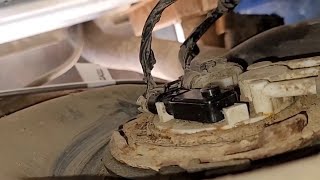
On the Silverado and its platform mates (Sierra, Tahoe, etc.), the P0452 code is overwhelmingly caused by a failed Fuel Tank Pressure (FTP) sensor or damaged wiring leading to it. Unlike leak codes (like P0455 or P0456) which often point to a loose gas cap, P0452 is an electrical fault code. The main challenge for Silverado owners is the sensor's location on top of the fuel tank, with access methods varying significantly across the three generations covered in this year range. Some owners have successfully replaced it without dropping the tank or lifting the bed.
Generation note: The 2000-2019 range covers three Silverado generations, and the procedure to access the FTP sensor differs: - 1st Gen (GMT800, 2000-2007): The sensor is on the fuel pump module. Access is often gained by removing the tank straps and partially lowering the rear of the fuel tank. Some owners have been able to reach it by hand without lowering the tank at all, especially on single cab short box models. - 2nd Gen (GMT900, 2007-2013): Access is tighter. Many owners find it necessary to remove the rear driveshaft to create enough room to lower the tank and reach the sensor. However, some owners report being able to replace it by feel, reaching over the tank from the side. 🎬 Watch: A quick fix for the sensor on older Silverados. - 3rd Gen (K2XX, 2014-2019): Many owners with long arms have successfully replaced the sensor by reaching between the frame, driveshaft, and exhaust without removing any components. This avoids the labor of dropping the tank or lifting the bed.
🎬 See this replacement walkthrough for 2014-2019 Chevy and GMC trucks.Symptoms You May Notice
- Check Engine Light is on
- Possible faint fuel odor due to the EVAP system being inoperative
- In rare cases on some GM models, this code can appear alongside a faulty fuel gauge reading, though this is often related to other codes like P0463 (Fuel Level Sensor).
- Hesitation or issues when pressing the accelerator pedal (as noted in NHTSA ODI #11724752).
- Replacing the gas cap. A loose or faulty gas cap typically causes a large leak code (like P0455) or a small leak code (P0442/P0456), not a sensor circuit low voltage code like P0452.
Most Likely Causes
- Failed Fuel Tank Pressure (FTP) Sensor 🔴 High Probability → Shop Fuel Tank The sensor is exposed to the elements on top of the fuel tank, and the electronic components can fail over time, leading to an internal short or open that causes a low voltage signal. The plastic and rubber components can also become brittle and break.
How to confirm: After verifying the wiring is intact and has proper 5V reference and ground, the sensor is the presumed culprit. A scan tool will show a voltage reading at or near zero (e.g., <0.1V), while a normal reading with the gas cap off should be around 1.3-1.7V.
Typical fix: Replace the Fuel Tank Pressure sensor. This involves accessing the top of the fuel tank, disconnecting the electrical connector, and pulling the old sensor out of its rubber grommet. Lubricating the new sensor's grommet helps with installation.
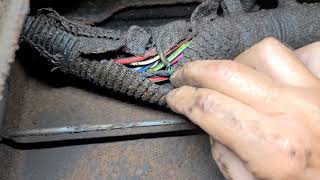
Est. part cost: $25-$60 - Damaged Wiring or Electrical Connector 🟡 Medium Probability The wiring harness runs along the frame and over the top of the fuel tank, where it can be damaged by road debris, corrosion, or even rodents chewing on the wires. A wire can break or chafe, causing a short to ground or an open circuit, which triggers the P0452 code. A common failure point is where the FTP sensor harness joins the main fuel pump harness, about 8 inches from the sensor.
How to confirm: Visually inspect the wiring harness leading to the FTP sensor for breaks, chafing, or corrosion. Wiggle the harness while watching live data on a scan tool to see if the voltage changes. 🎬 Watch: Professional diagnostic steps for a P0452 code on GM trucks. Use a multimeter to test for 5-volt reference (Gray wire) and a good ground (Black wire) at the sensor connector. If either is missing, trace the circuit back to the ECM.
Typical fix: Repair the broken or shorted wire, often with a butt splice and heat shrink tubing. If the connector itself is damaged, replace it with a new pigtail connector.
Est. part cost: $5-$25
Rare But Worth Checking
- Faulty Engine Control Module (ECM): This is extremely rare. The ECM should only be considered for replacement after the sensor and all related wiring have been thoroughly tested and proven to be good.
- Restricted EVAP Vent Line or Canister: A blockage in the EVAP system can prevent the sensor from properly re-zeroing its pressure reading, which in some cases can trigger this fault. This is uncommon and would likely be accompanied by other EVAP codes like P0446.
- Shared Circuit Interference: On some GM platforms, P0452 can appear alongside other low input codes like P0107 (MAP sensor) or P0532 (AC pressure sensor), suggesting a broader 5-volt reference circuit issue (NHTSA ODI #10787380).
Diagnosis Steps
- Connect a scan tool and confirm P0452 is the active code. Check for any other related EVAP codes.
- Using the scan tool's live data function, observe the Fuel Tank Pressure sensor voltage with the key on, engine off. A reading of 0.1V or less points towards the issue. A normal reading with the gas cap removed should be between 1.3V and 1.7V.
- Gain access to the FTP sensor connector on top of the fuel tank. The method will vary by vehicle generation (see 'generation_notes').
- Visually inspect the connector and wiring for any visible damage, corrosion, or breaks. Wiggle the harness near the connector to see if the voltage reading on the scan tool fluctuates, which would indicate a broken wire.
- Disconnect the sensor. With the key on, use a multimeter to test the electrical connector terminals: Check for a 4.8-5.2 volt reference signal (usually a Gray wire on Terminal 3) and less than 5 ohms of resistance to ground on the ground circuit (usually a Black or Tan wire on Terminal 2).
- If the 5V reference or ground is missing, the problem is in the wiring harness or the ECM. Trace the faulty circuit.
- If the 5V reference and ground are present, the signal wire (usually Dark Green on Terminal 1) may be shorted to ground, or the sensor itself has failed internally. A definitive wiring test is to jump the 5V reference pin to the signal pin on the harness connector with a fused jumper; the scan tool voltage should read over 4.7V. If it does, the wiring is good.
- If the wiring tests normal, the FTP sensor is the most likely cause of the problem. Replace the sensor.
Parts You'll Likely Need
- Fuel Tank Pressure Sensor
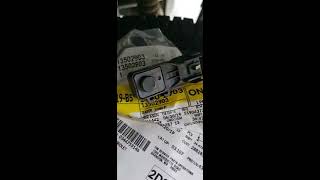
(OEM #13594536 (supercedes 13502903 for many 2014+ models), 13502903 (common for GMT900/early K2XX), Standard Motor Products AS302 (common aftermarket for GMT800))— This sensor is the most common failure point for code P0452. It fails internally, causing the low voltage reading.
Trusted brands: ACDelco, Delphi, Standard Motor Products
OEM price range: $40-$70
Aftermarket price range: $25-$50 - Fuel Tank Pressure Sensor Connector Pigtail — Needed if the original connector is corroded, melted, or has broken wires right at the connector body, preventing a secure connection or proper circuit continuity.
Trusted brands: ACDelco, Dorman
OEM price range: $20-$40
Aftermarket price range: $10-$25
Related Codes That Often Appear With This One
- P0446 (Evaporative Emission Control System Vent Control Circuit Malfunction) can sometimes appear with P0452, potentially pointing to a wiring issue common to both components or a restriction.
- P0463 (Fuel Level Sensor Circuit High) is occasionally seen alongside P0452, leading some owners to report that their fuel level appears very low or empty even with a full tank (NHTSA ODI #11615682).
Technical Service Bulletins (TSBs) & Recalls
- GM TSB #PIT5280: While not exclusively for P0452, this bulletin addresses various EVAP system diagnostic trouble codes and provides a comprehensive diagnostic flowchart for technicians, reinforcing the 'check wiring first' methodology before replacing components.
Mechanic-Grade Diagnostic Values
- FTP Sensor Voltage (KOEO, Gas Cap Off) — expected: 1.3 - 1.7 Volts. Failure: A reading of < 0.1V for 5+ seconds triggers the code. A reading stuck at 0.1V-0.2V indicates a failed sensor or shorted signal wire.
- 5-Volt Reference at Sensor Connector — expected: 4.8 - 5.2 Volts. Failure: Voltage below 4.8V indicates an open/high resistance or short to ground in the 5V reference circuit.
- Low Reference (Ground) Circuit Resistance — expected: < 5.0 Ohms. Failure: Resistance higher than 5.0 Ohms indicates an open or high resistance in the ground circuit back to the ECM.
- Signal Circuit Jumper Test — expected: > 4.7 Volts. Failure: With the sensor disconnected and a fused jumper between the 5V reference and signal wires, a reading below 4.7V on a scan tool indicates an open or short to ground in the signal wire.
Scan Tool Commands That Help
- GM Tech2 / GDS2: EVAP Service Bay Test — This is a comprehensive functional test that commands the entire EVAP system through a simulated drive cycle while the vehicle is stationary. It can help verify the integrity of the system and the sensor's response after a repair.
- GM Tech2 / GDS2: Output Control -> EVAP System -> Purge/Seal — This function allows a technician to manually command the purge and vent solenoids. By commanding purge to 20% while monitoring FTP sensor voltage, you can check for an erratic or non-responsive sensor.
Wiring & Ground Locations
- FTP Sensor Connector (B107) — On top of the fuel tank, plugged into the Fuel Tank Pressure sensor.. This is the primary test point. Pin 1: Signal (Dark Green), Pin 2: Low Reference/Ground (Tan or Black), Pin 3: 5V Reference (Gray).
- Harness Chafe Point — The wiring harness bundle on top of the fuel tank, specifically where the FTP sensor's short harness joins the main fuel pump module connector harness, about 8 inches from the sensor.. This area is prone to damage from debris and vibration, leading to broken or chafed wires, particularly the signal wire, which directly causes P0452 even if the sensor itself is good.
- ECM Low Reference — Internal to the Engine Control Module (ECM).. The FTP sensor does not use a chassis ground. It uses a dedicated 'low reference' circuit provided by the ECM. A high resistance on this circuit can cause faulty readings, but the issue would be in the wiring back to the ECM, not at a chassis ground point.
Real Owner Repair Stories
- GM-Trucks.com user 'ksiesel' (2018 GMC Sierra Crew Cab 6.5' bed) — P0452 code, Check Engine Light.
❌ Tried (didn't work) The owner first removed the FTP sensor (by feel, without dropping the tank) and tested it; the sensor itself was good.
✅ What actually fixed it Found a broken signal wire in the harness very near the FTP sensor connector. Repaired the wire with a butt splice, which resolved the code. - GM-Trucks.com user 'tjrado' (2016 Chevrolet Silverado 1500 LT Z71) — P0452 code, returned immediately after clearing.
❌ Tried (didn't work) Replacing the gas cap (P/N 22921366).
✅ What actually fixed it Replaced the Fuel Tank Pressure Sensor (ACDelco P/N 13502903). The owner was able to perform the replacement without dropping the tank. - YouTube user 'Chevy Silverado 1500 OBDII P0452 Bad Fuel Pressure Sensor Quick Fix' (2001 Chevrolet Silverado 1500 LS 5.3L) — P0452 code.
❌ Tried (didn't work) Checking the gas cap.
✅ What actually fixed it Replaced the FTP sensor (Standard Ignition P/N AS302). Access was gained by removing the tank straps and partially lowering the nearly-empty tank.
"I Checked Everything" — The Actual Cause
- Since P0452 is an electrical circuit code, the equivalent of a 'smoke test clean' scenario is when initial electrical tests are misleading. A common story is testing the FTP sensor itself and finding it functional, only to later discover the fault is a broken or shorted wire in the harness just inches away from the sensor's connector. An owner of an '18 Sierra reported this exact scenario; the sensor tested good, but a closer inspection of the harness revealed a broken signal wire, which was the true cause.
When the Usual Fixes Don't Work
- While replacing the FTP sensor is the most frequent fix, a significant minority of cases are resolved by repairing the wiring harness. One owner of a 2018 Sierra replaced the sensor to no avail, then tested the old sensor and found it was good. The actual problem was a broken signal wire in the harness on top of the tank. This highlights that assuming the sensor is bad without fully testing the circuit (5V reference, ground, and signal wire integrity) can lead to unnecessary parts replacement.
Documented NHTSA Reports
- An owner reported that after a mechanic retrieved code P0452, the fuel pump was replaced, but the failure reoccurred (NHTSA ODI #11724752).
- A report describes a check engine light due to code P0452, where the dealership identified the fuel tank pressure sensor as defective (NHTSA ODI #10448475).
OEM Part Supersession History
13502510→13502903— Standard part revision and consolidation by GM.
Model Year Variations Within This Range
- 2014-2019 (K2XX): On these later models, the FTP sensor wiring is often integrated into a sub-harness that also connects to the main fuel pump module. A common point of failure is the section of harness between the FTP sensor and this junction, which is located on top of the tank and subject to stress and debris.
- 2000-2019: The wire colors at the FTP sensor connector can vary. While Gray (5V Ref), Dark Green (Signal), and Black (Ground) are common, some models may use a Tan wire for the Low Reference/Ground circuit. Always verify with a multimeter rather than relying solely on color.
Diagnostic Flowchart
Other Known Issues on This Vehicle
Issues unrelated to this code that are worth knowing about as an owner of this generation:
- Cracked Dashboard 🟠 Medium — Extremely common on GMT900 (2007-2013) trucks, typically appearing near the passenger airbag and driver-side A-pillar. Less common but still present on K2XX models. (Ref: No recall was issued; GM deemed it a cosmetic issue not affecting safety. A class-action lawsuit was filed but was not successful.)
- AFM/DOD Lifter Failure 🔴 High — A significant issue on 5.3L and 6.0L V8 engines in GMT900 (2007-2013) trucks. Can occur anytime, but often seen between 70,000 and 120,000 miles. Results in misfires, ticking noises, and can lead to catastrophic engine damage if not addressed.
- Excessive Oil Consumption 🟠 Medium — Common on 2007-2013 models with the 5.3L V8, often linked to the Active Fuel Management (AFM) system. A faulty PCV system in the driver-side valve cover is a primary cause. (Ref: An updated valve cover was released by GM to address the PCV issue.)
- Transmission Shudder / "Chevy Shake" 🟠 Medium — Widespread on K2XX (2014-2019) models, particularly those with the 8-speed (8L90) and 6-speed (6L80) automatic transmissions. It manifests as a vibration or shudder during light acceleration, often between 25-80 mph. (Ref: Multiple TSBs have been issued, including GM #16-NA-175, which addresses torque converter issues. Fixes range from fluid flushes with updated fluid to complete torque converter replacement.)
- Instrument Cluster Failure (Stepper Motors) 🟡 Low — Very common on GMT800 (2000-2006) trucks. Gauges (speedometer, tachometer, etc.) become erratic or stop working entirely due to failed stepper motors on the circuit board.
- Steering Intermediate Shaft Noise 🟡 Low — A frequent complaint on GMT800 and GMT900 trucks (2000-2013), causing a clunking or popping noise in the steering column when turning or going over bumps. The issue is with the design of the telescoping shaft.
Used vs. New Parts: Buying Guide for This Vehicle
When a used part is the smart pick: A used part is generally NOT recommended for the Fuel Tank Pressure sensor itself. It is an electronic component prone to failure, and the labor to access it is significant enough that the cost savings of a used part are not worth the risk of premature failure. A used wiring connector pigtail from a junkyard is a perfectly acceptable and cost-effective repair if the original connector is damaged.
Donor-vehicle mileage cap: roughly under 100000 miles for the part to have meaningful remaining life.
What to inspect on the donor part:
- For a connector pigtail, inspect for brittle or cracked plastic.
- Ensure the locking tab is intact.
- Check for any corrosion (green or white powder) on the metal pins inside the connector.
- Ensure there are at least 4-6 inches of wire attached to allow for easy splicing.
OEM-only on this vehicle (don't cheap out):
- No parts for this specific repair are strictly 'OEM-only', but for electronic sensors like the FTP sensor, using an OEM (ACDelco) or a known OE-supplier brand is highly recommended for reliability.
Aftermarket brands forum-validated for this vehicle:
- ACDelco (OEM)
- Delphi
- Standard Motor Products (SMP)
- NTK
Brands owners have reported issues with on this vehicle:
- While no specific brand is universally cited as 'bad', owners on forums frequently advise against purchasing the cheapest available sensors from online marketplaces, as they have a higher reported failure rate compared to established brands.
Real Owner Stories
Aggregated from forums and TSBs cited above. Mileages and costs reflect what owners reported in those sources.
2000 Silverado
Symptoms: The Check Engine Light with code P0452 returned even after replacing the Fuel Tank Pressure sensor.
What fixed it: The owner was advised to check the wiring for the proper 5V reference and ground at the connector before assuming the new part was faulty, as the issue was likely in the circuit.
Source hint: ChevroletForum.com thread titled 'p0452-47526/'
2001 Silverado
Symptoms: Check Engine Light with code P0452.
What fixed it: The owner followed detailed diagnostic steps from a GM technician, which involved using a multimeter to test the sensor connector for a 5V reference on the Gray wire and a good ground on the Black wire to isolate the fault.
Source hint: BobIsTheOilGuy.com thread titled 'Troubleshooting P0452 2001 Silverado'
2014+ Silverado
Symptoms: Check Engine Light with code P0452.
What fixed it: The owner replaced the Fuel Tank Pressure sensor without having to drop the fuel tank or lift the truck bed.
Source hint: GM-Trucks.com thread titled 'p0452/'
2007 Silverado
Symptoms: Check Engine Light with code P0452.
What fixed it: The owner was able to replace the FTP sensor by feel, without removing the fuel tank or lifting the bed.
Source hint: GM-Trucks.com thread titled 'Fuel Tank Pressure Sensor P0452/'
NHTSA Reported Experience
Symptoms: An owner reported that their fuel level appeared very low or empty even with a full tank of gas, accompanied by codes P0452 and P0463.
What fixed it: According to NHTSA ODI #11615682, the repair shop replaced the fuel pump to address the sensor circuit and fuel level issues.
Related OBD-II Codes
Frequently Asked Questions
Can I replace the Fuel Tank Pressure (FTP) sensor on my Silverado without dropping the tank or lifting the bed?
I replaced the FTP sensor on my Silverado, but the P0452 code came back. What should I check next?
Where is the most common place for the FTP sensor wiring to fail on a Chevrolet Silverado?
What voltage should I see from the FTP sensor on my scan tool if it's working correctly?
Is there a GM Technical Service Bulletin (TSB) that can help diagnose P0452 on my truck?
My fuel gauge is reading incorrectly and I have a P0452 code. Are these related on my Silverado?
Helpful Videos
We Have This Part in Stock

The information in this article is provided for general reference and educational purposes only. Vehicle specifications, procedures, and part compatibility can vary by production date, trim level, and region. Always consult your vehicle's factory service manual and verify part numbers before purchasing or performing repairs. Safety-critical components such as airbags, seat belts, and braking systems should be installed by a qualified professional.
- Chevrolet Silverado:
- 🧭 Diagnostic Flowchart
- 🎬 Helpful Videos
- 🛍️ Shop This Part
- What's Unique About the 2000-2019 Chevrolet Silverado
- Symptoms You May Notice
- Most Likely Causes
- Rare But Worth Checking
- Diagnosis Steps
- Parts You'll Likely Need
- Related Codes That Often Appear With This One
- Technical Service Bulletins (TSBs) & Recalls
- Mechanic-Grade Diagnostic Values
- Scan Tool Commands That Help
- Wiring & Ground Locations
- Real Owner Repair Stories
- "I Checked Everything" — The Actual Cause
- When the Usual Fixes Don't Work
- Documented NHTSA Reports
- OEM Part Supersession History
- Model Year Variations Within This Range
- Other Known Issues on This Vehicle
- Used vs. New Parts: Buying Guide for This Vehicle
- Real Owner Stories
- 2000 Silverado
- 2001 Silverado
- 2014+ Silverado
- 2007 Silverado
- NHTSA Reported Experience
- Related OBD-II Codes
- Frequently Asked Questions
- 🎟️ Get 5% Off