

P0452 on 2019-2020 Dodge Charger: EVAP Pressure Switch Stuck Closed Causes and Fixes
This code means the EVAP system's pressure sensor is sending a low voltage signal to the car's computer. The most common cause is a faulty fuel tank pressure sensor. On some 2020 3.6L models, it can be a kinked purge line. For some 6.2L models, a PCM update is the fix. Expect to pay $25-$60 for the sensor part, with labor costs varying depending on whether the fuel tank needs to be lowered for access.
- P0452 on a 2019-2020 Charger is an electrical fault code, not a leak code.
- The most likely cause is a failed fuel tank pressure sensor, a known issue confirmed by Dodge TSBs.
- Do not replace the gas cap; it is not the solution for this specific code.
- Diagnosis involves checking the sensor's voltage with a scan tool and verifying its electrical circuit.
- The repair is DIY-friendly as the sensor is typically located behind the rear wheel well liner, not on top of the fuel tank.
- Check for applicable TSBs, as a kinked hose (2020 3.6L) or a PCM software update (2019 6.2L) could be the specific fix.
What's Unique About the 2019-2020 Dodge CHARGER
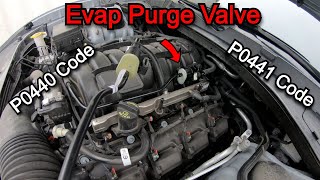
For the Dodge Charger (LD platform) and its mates (Challenger, 300), the P0452 code is frequently tied directly to a failed sensor or a specific manufacturing flaw rather than a random system leak. Dodge has issued Technical Service Bulletins (TSBs) acknowledging this. TSB #18-065-22 points to a PCM software update for the 6.2L Supercharged engine, while TSB #25-003-20 identifies a kinked EVAP purge line 🎬 Watch: How to replace the EVAP purge valve assembly on certain 2020 3.6L models. This is a key distinction, as many other EVAP-related codes point to leaks from components like the gas cap, which is an unlikely cause for P0452 on this vehicle.
Diagnostic Flowchart
Tap your situation to follow the diagnostic path that matches what you're seeing on this vehicle.
Symptoms You May Notice
- Check Engine Light is on
- Possible faint fuel smell
- In rare cases, difficulty refueling (pump clicks off repeatedly)
- Vehicle may fail to start when cold at times (specifically mentioned in TSB #18-065-22 for 6.2L engines)
- Replacing the gas cap. A loose or faulty gas cap typically triggers leak-related codes like P0455 or P0456, not a sensor circuit code like P0452.
- Replacing the EVAP purge valve or vent solenoid. While these are part of the EVAP system, P0452 specifically points to a voltage problem in the pressure sensor circuit. The only exception is the specific case of a kinked line per TSB #25-003-20, which may require replacing the purge valve assembly.
Most Likely Causes
- Faulty EVAP Fuel Tank Pressure Sensor 🔴 High Probability → Shop Fuel Tank This is a known issue acknowledged by Dodge in TSBs like #1806522, which state the pressure switch can get stuck closed. The sensor is a common failure point across many Chrysler/Dodge platforms.
How to confirm: Use a scan tool to monitor the EVAP pressure sensor voltage with the key on, engine off. A reading near or at zero volts (under 0.5V) confirms the low input fault. A healthy sensor should read around 1.3 to 2.5 volts with the gas cap off (at atmospheric pressure). Before replacing, jump the 5V reference wire to the signal wire at the connector; the scan tool should then read ~5V, confirming the wiring to the PCM is good.
Typical fix: Replace the fuel tank pressure sensor.
Est. part cost: $25-$60 - Wiring or Connector Issue 🟡 Medium Probability The sensor and its wiring are located behind the rear wheel well liner, exposing them to road debris and moisture, which can lead to corrosion or damage over time.
How to confirm: Visually inspect the wiring harness and connector leading to the pressure sensor for breaks, corrosion, or loose pins. Test for 5-volt reference and a good ground at the connector with a multimeter. Check for a short to ground on the signal wire.
Typical fix: Repair the damaged section of the wiring harness or clean/replace the connector.
Est. part cost: $10-$50 - Kinked EVAP Purge Line ⚪ Low Probability TSB #25-003-20 was issued for 2020 Chargers, Challengers, and 300s with the 3.6L engine built between May 19, 2020, and June 22, 2020. It identifies an improperly routed/kinked EVAP purge line in the engine bay as a cause for P0452, often paired with P0441.
How to confirm: Check the vehicle's build date. Visually inspect the EVAP purge line near the brake booster in the engine bay for kinks or improper routing as shown in the TSB diagrams.
Typical fix: Reroute the line correctly and, if damaged, replace the EVAP purge valve assembly.
Est. part cost: $50-$100 for the assembly if needed.
Rare But Worth Checking
- Faulty Powertrain Control Module (PCM) or Software: This is rare, but not impossible. TSB #18-065-22 specifically calls for a PCM software update (flash) to resolve P0452 on 2019 6.2L Supercharged models. The PCM should only be considered after the sensor and its entire circuit have been thoroughly tested and confirmed to be in good working order.
Diagnosis Steps
- Connect an OBD-II scanner to verify code P0452 is present and check for any other related EVAP codes like P0441, P0455, or P0456.
- Use the scanner's live data function to view the EVAP/Fuel Tank Pressure sensor voltage. With the key on (engine off), the voltage should be low, likely under 0.5V. Remove the gas cap; the voltage should ideally rise to atmospheric pressure, around 1.3V - 2.5V. If it remains stuck low, the fault is confirmed.
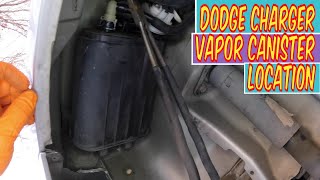
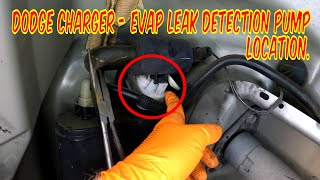
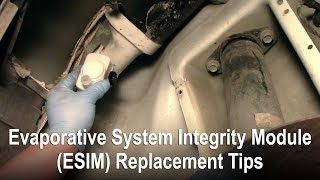
- Locate the EVAP pressure sensor. On the LD platform Charger, it is part of the Evaporative System Integrity Module (ESIM) or leak detection pump, located on the EVAP canister behind the passenger side rear wheel well liner. Access requires removing the wheel and liner.
- Inspect the sensor's electrical connector and wiring for any visible damage, corrosion, or loose connections.
- Disconnect the sensor and use a multimeter to test the connector. You should find a 5-volt reference wire, a ground wire, and a signal wire. Confirm the 5V and ground are present.
- If the 5V reference and ground are good, the pressure sensor is the most likely cause. Replace the sensor/ESIM assembly.
- If the 5V reference or ground is missing, trace the wiring back toward the PCM to find the open or short in the circuit.
- For 2020 3.6L models, also inspect the EVAP purge line in the engine bay for kinks per TSB #25-003-20.
- For 2019 6.2L SC models, check with a dealer if TSB #18-065-22 (PCM flash) applies to your VIN.
- After the repair, clear the code with the scanner and perform a drive cycle to ensure the Check Engine Light does not return.
Parts You'll Likely Need
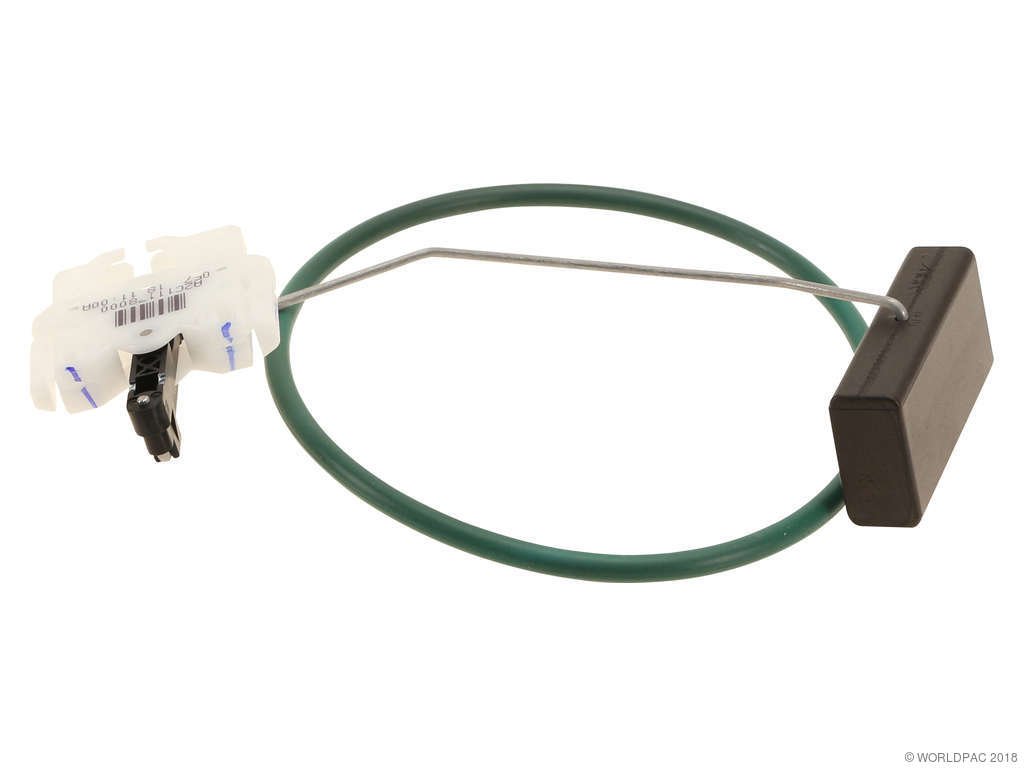
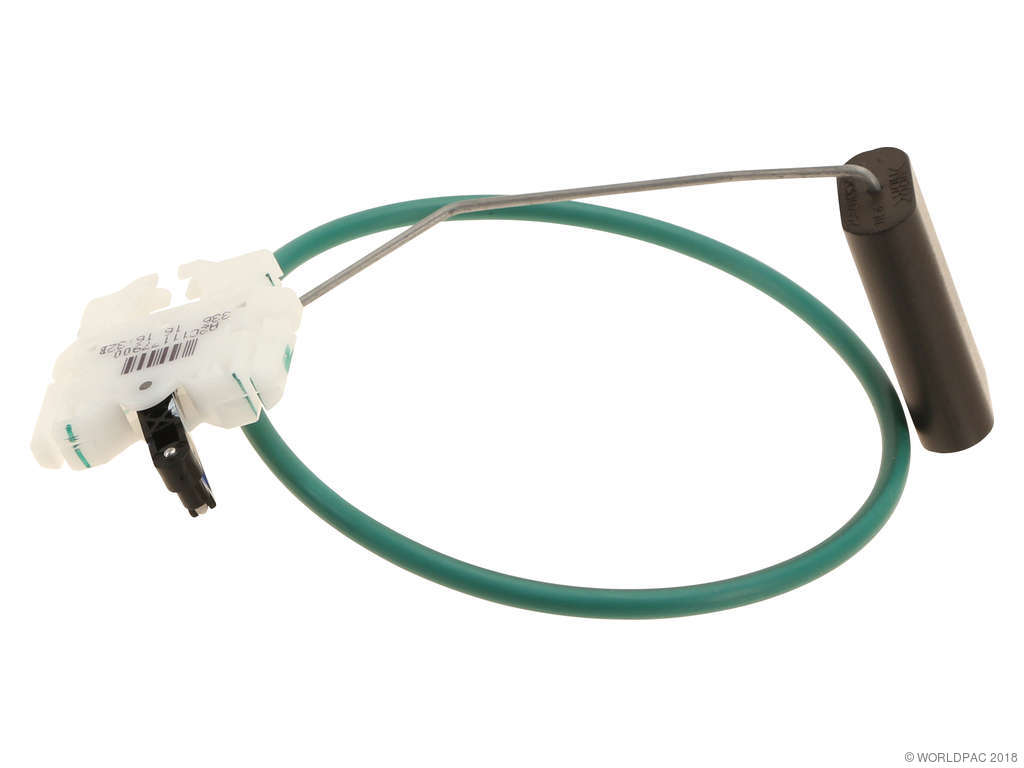
- EVAP Fuel Tank Pressure Sensor / ESIM
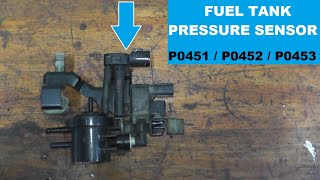
(OEM #68525698AA (supersedes 4593949AB))— This sensor/switch assembly is the primary cause of code P0452 on this vehicle, as it can fail internally and report an incorrect low voltage. The part number is often shared with the Challenger.
Trusted brands: Mopar, Bosch, Delphi, NTK
OEM price range: $40-$60
Aftermarket price range: $25-$45
Related Codes That Often Appear With This One
- P0441 — Incorrect Purge Flow. A faulty pressure sensor can provide bad data, or a kinked purge line can directly cause both codes to appear simultaneously. This is explicitly mentioned in TSB #25-003-20.
- P0456 — EVAP System Small Leak. If the sensor is providing erratic or incorrect readings, the PCM might incorrectly flag a small leak. TSB #18-065-22 lists this code in conjunction with P0452, and the fix for some models is a PCM software update.
- P0455 — EVAP System Large Leak. Similar to P0456, a malfunctioning sensor can confuse the PCM's leak detection logic. This is also cited in TSB #18-065-22.
Technical Service Bulletins (TSBs) & Recalls
- Bulletin #25-003-20: Notes P0452 may be set along with P0441 on specific 2020 3.6L models due to a kinked purge line.
- Bulletin #18-065-22: Lists P0452 as a potential code on 2019 6.2L models that can be fixed with a PCM software update.
- Bulletin #2500320: A repeat of bulletin #25-003-20, confirming the link between P0441 and P0452.
- Bulletin #1806522: The NHTSA ID for TSB 18-065-22, confirming the link to various EVAP codes.
Platform-Specific Known Issues
- TSB #25-003-20: Affects 2020 3.6L models built from May 19 to June 22, 2020. A kinked EVAP purge line can cause P0452 and P0441. The fix is to inspect and reroute/replace the line.
- TSB #18-065-22: Affects 2019 6.2L Supercharged models. Recommends a PCM software update to fix P0452, which may also be accompanied by other EVAP codes or a cold no-start condition.
Mechanic-Grade Diagnostic Values
- Fuel Tank Pressure (FTP) Sensor Voltage (Key On, Engine Off, Gas Cap On) — expected: Below 0.5V (or as low as 0.2V) when the P0452 code is active.. Failure: A reading consistently below 0.5V indicates the 'low input' fault condition.
- Fuel Tank Pressure (FTP) Sensor Voltage (Key On, Engine Off, Gas Cap Off) — expected: Approximately 1.3V to 2.5V.. Failure: If the voltage remains stuck below 0.5V after removing the cap, it strongly suggests a faulty sensor or a circuit issue, not a tank pressure problem.
- FTP Sensor Connector 5V Reference Pin — expected: ~5.0 Volts DC with the key on, engine off.. Failure: No voltage or significantly low voltage indicates an open or short in the reference circuit from the PCM.
- FTP Sensor Connector Ground Pin — expected: Near 0 Ohms resistance to a known good chassis ground.. Failure: High or infinite resistance indicates a bad ground connection, which can cause incorrect sensor readings.
- Jumping 5V Reference to Signal Wire at Sensor Connector — expected: Scan tool should display ~5.0 Volts for the FTP sensor PID.. Failure: If the scan tool still reads low voltage, it indicates a problem in the signal wire or the PCM itself, not the sensor.
Scan Tool Commands That Help
- wiTECH (or advanced aftermarket): EVAP System Test / Leak Test — While P0452 is a circuit code, running the EVAP system self-test after a repair can verify the integrity of the entire system. This command seals the EVAP system and monitors pressure to ensure all components, including the newly repaired sensor circuit, are functioning correctly under operational conditions.
Wiring & Ground Locations
- Fuel Pump Module Connector — On top of the fuel pump module, accessible under the rear seat.. While the FTP sensor is on the canister, the fuel pump module connector carries power and ground for the entire fuel system. A TSB (08-152-23) notes a pinout change on replacement fuel pumps for 2011-2016 models, requiring a harness splice. While this TSB predates the 2019-2020 models, it highlights a history of critical wiring changes in this area. A poor connection or incorrect wiring here could potentially affect shared ground or power circuits.
- G304 — In the trunk area, near the deck lid latch.. This is a major chassis ground point for components in the rear of the vehicle. The EVAP canister and FTP sensor are located behind the rear wheel well, and their ground circuit may tie into harnesses that use this ground point. A corroded or loose G304 could cause intermittent or faulty readings from rear-mounted sensors.
- FTP Sensor Connector — Connected to the EVAP pressure sensor/ESIM on the charcoal canister, located behind the passenger side rear wheel well liner.. This is the primary point of failure for wiring issues. It has three pins: 5V reference, signal, and ground. Testing voltage and ground at this specific connector is the most direct way to diagnose the circuit.
OEM Part Supersession History
4593949AA, 4593949AB→68525698AA— Part has been updated by the manufacturer. This is a common revision for Mopar parts to improve reliability or address known failure modes.
Heads up: The new part number (68525698AA) is a direct replacement for the older numbers and should be fully compatible.
Helpful Videos
We Have This Part in Stock

The information in this article is provided for general reference and educational purposes only. Vehicle specifications, procedures, and part compatibility can vary by production date, trim level, and region. Always consult your vehicle's factory service manual and verify part numbers before purchasing or performing repairs. Safety-critical components such as airbags, seat belts, and braking systems should be installed by a qualified professional.
- Dodge CHARGER:
- 🧭 Diagnostic Flowchart
- 🎬 Helpful Videos
- 🛍️ Shop This Part
- What's Unique About the 2019-2020 Dodge CHARGER
- Symptoms You May Notice
- Most Likely Causes
- Rare But Worth Checking
- Diagnosis Steps
- Parts You'll Likely Need
- Related Codes That Often Appear With This One
- Technical Service Bulletins (TSBs) & Recalls
- Platform-Specific Known Issues
- Mechanic-Grade Diagnostic Values
- Scan Tool Commands That Help
- Wiring & Ground Locations
- OEM Part Supersession History
- 🎟️ Get 5% Off