

P0452 on 2012-2018 Ford Focus 2.0L: More Than Just a Sensor Fault
On this specific Ford Focus, P0452 is almost never a bad sensor. It's a key symptom of a stuck canister purge valve causing excessive vacuum that can deform the fuel tank. Check if your vehicle is covered by Ford Safety Recall 18S32, as the repair may be free.
- For a 2012-2018 Ford Focus, P0452 is a major red flag for a stuck canister purge valve, not just a bad sensor.
- Immediately check if your vehicle's VIN has an open Safety Recall 18S32. The repair could be free at a Ford dealer.
- Look for companion code P1450, which confirms the excessive vacuum problem.
- Do not replace the Fuel Tank Pressure (FTP) sensor without first addressing the purge valve; it will not solve the problem.
- To prevent stalling, Ford recommended keeping the fuel tank at least half full until the recall repair is completed.
What's Unique About the 2012-2018 Ford Focus
For the 2012-2018 Focus with the 2.0L GDI and 2.0L GTDI engines, P0452 is a well-documented symptom of a larger problem addressed by Ford Safety Recall 18S32 (NHTSA #18V735). The root cause is typically a canister purge valve (CPV) that sticks open. This creates a powerful, constant vacuum in the fuel system that can physically deform the plastic fuel tank, leading to erratic fuel gauge readings, stalling, and a specific cluster of diagnostic codes including P0452 and P1450.
Symptoms You May Notice
- Check Engine Light is on
- Engine stalling, especially when the fuel level is below half a tank
- Erratic or inaccurate fuel gauge readings and Distance-To-Empty (DTE) display
- Difficulty starting the engine, particularly after refueling
- A visible 'sucking in' or deformation of the fuel tank upon inspection
- Hesitation, rough idle, or loss of power
- Replacing only the Fuel Tank Pressure (FTP) sensor. This does not fix the underlying high-vacuum condition caused by the stuck purge valve, and the code will return.
- Replacing the capless fuel filler neck. While this can cause other EVAP leak codes (like P0456 for a small leak), it does not cause the specific 'low input' P0452 code on this vehicle.
Most Likely Causes
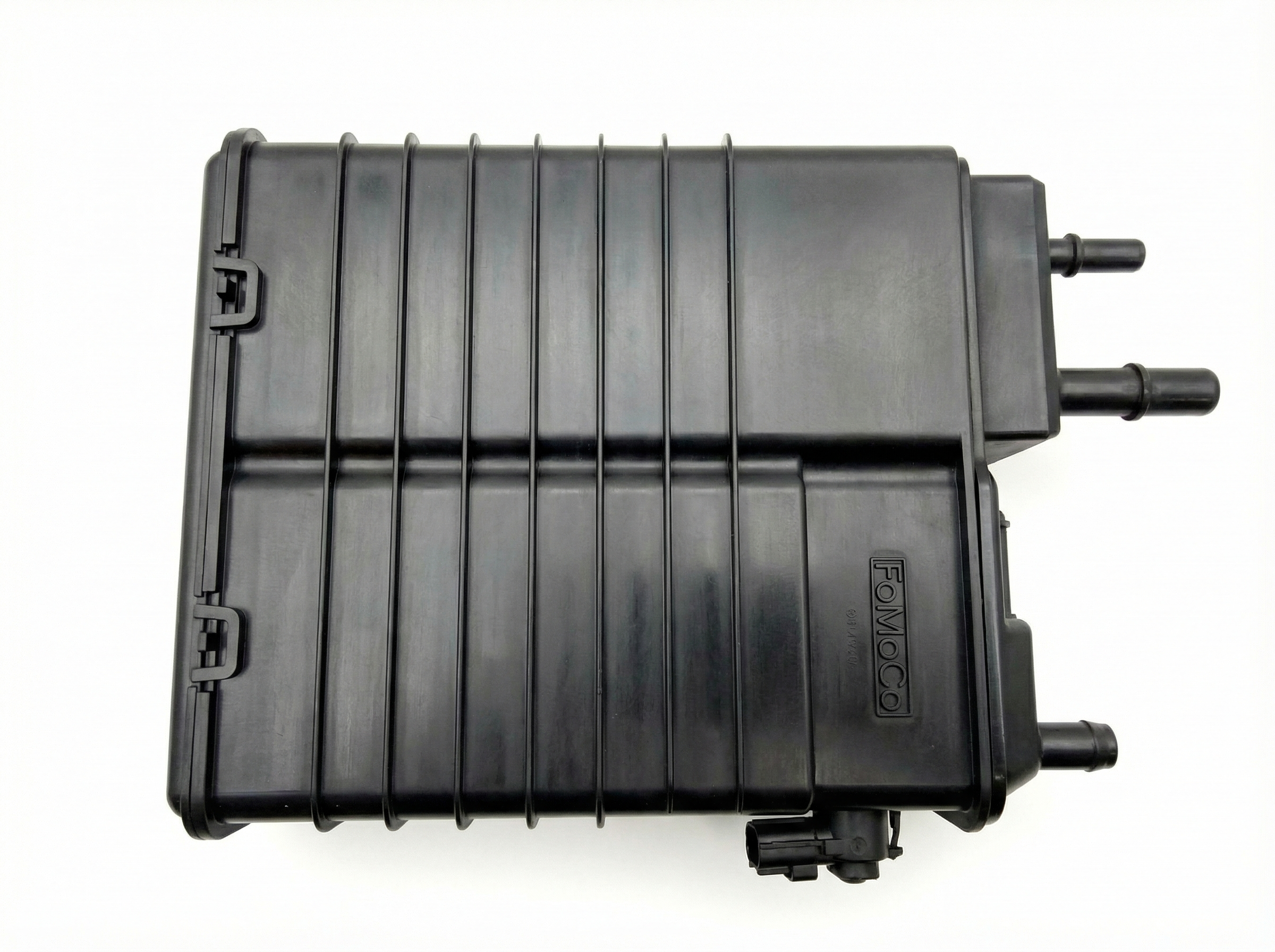
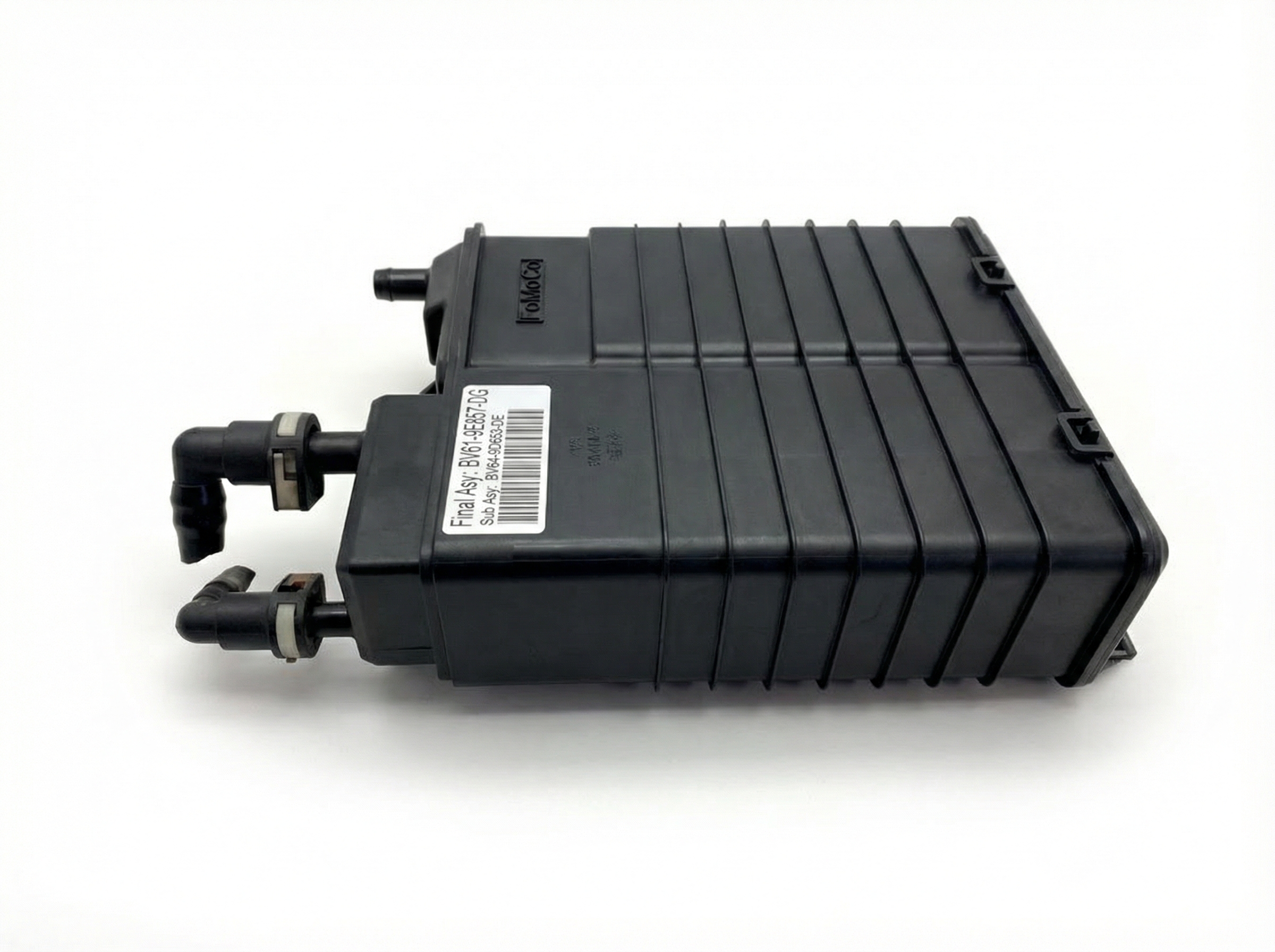
- Stuck-Open Canister Purge Valve (CPV) 🔴 High Probability → Shop Vapor Canister This is a widely documented failure for this platform, leading to Ford Recall 18S32. The recall applies to 2.0L GDI vehicles built before April 13, 2017, and 2.0L GTDI (ST models) built before Feb. 2, 2018.
How to confirm: Check for companion code P1450 ('Unable To Bleed Up Fuel Tank Vacuum'). Visually inspect the fuel tank (located under the rear of the car) for signs of deformation or collapse; deformation greater than 25mm (1 inch) warrants replacement. Contact a Ford dealer with your VIN to see if recall 18S32 is open for your vehicle.
Typical fix: The official recall procedure involves reprogramming the PCM with updated software. Dealers will also inspect and, if necessary, replace the canister purge valve, carbon canister, fuel tank, and fuel delivery module, free of charge.
Est. part cost: $40-$1300 - Faulty Fuel Tank Pressure (FTP) Sensor ⚪ Low Probability → Shop Fuel Tank
How to confirm: If the purge valve is confirmed to be working correctly and there is no excessive vacuum, test the sensor's voltage. With the gas cap off and engine off (KOEO), the signal should be around 2.5V - 2.6V. A reading near 0V indicates a failed sensor or a short to ground.
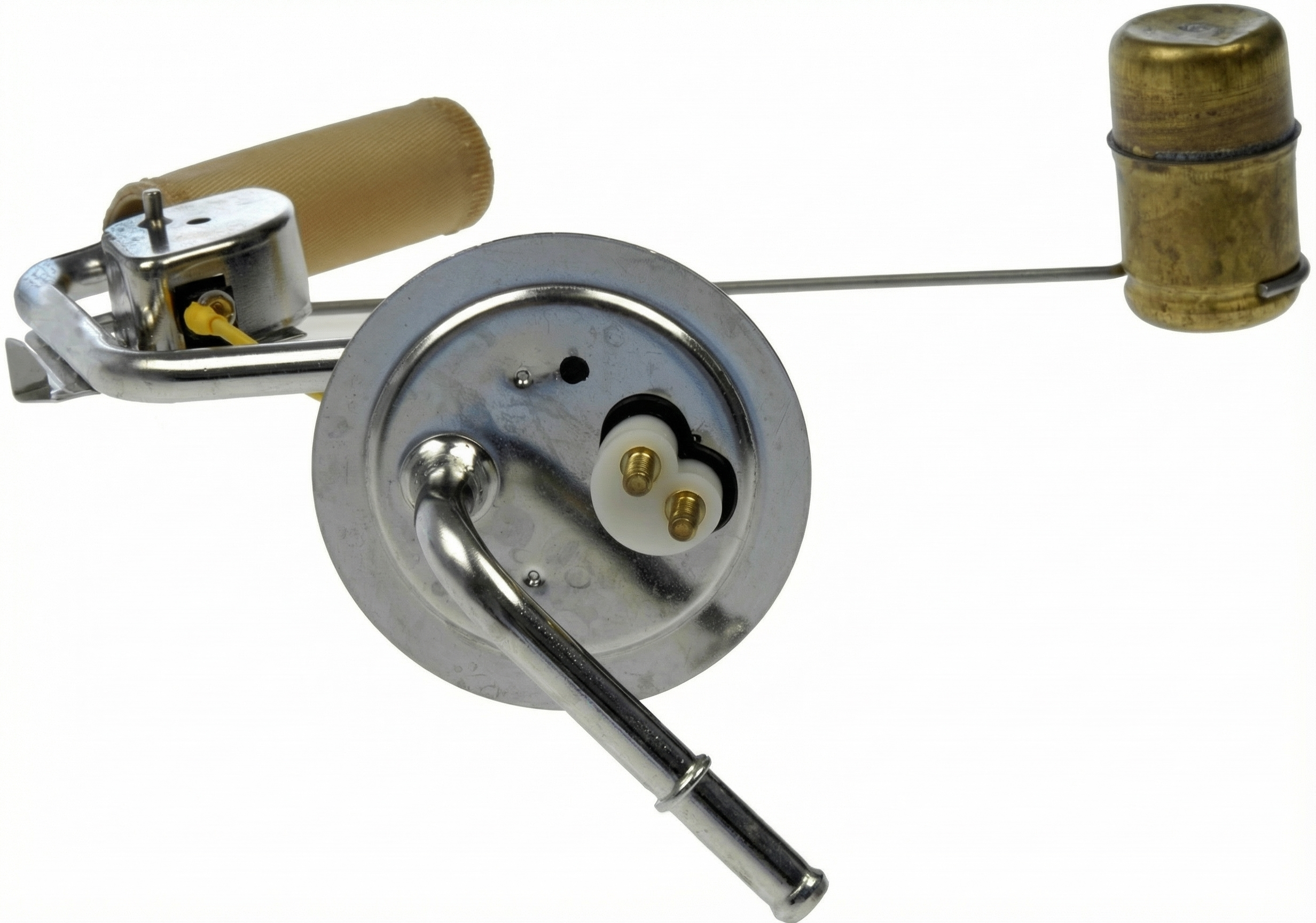
Typical fix: Replace the FTP sensor. On the Focus, the sensor is often integrated into a fuel line/tube assembly on top of the fuel tank, requiring the tank to be lowered for access.
Est. part cost: $30-$70 - Wiring Issue to FTP Sensor ⚪ Low Probability
How to confirm: Inspect the wiring harness and connector for the FTP sensor for damage, corrosion, or a short to ground. Check for 5V reference voltage and a good ground at the connector. Check for resistance to ground on the signal wire with the sensor and PCM disconnected; it should be greater than 1 MΩ.
Typical fix: Repair the damaged section of the wiring harness or clean/replace the connector.
Est. part cost: $5-$50
Rare But Worth Checking
- Faulty Powertrain Control Module (PCM): This is extremely rare. All other possibilities, especially the recall-related issue, must be exhaustively ruled out before considering a PCM failure.
Diagnosis Steps
- Check for Recalls: Before any diagnosis, contact a Ford dealership or use the NHTSA website with your VIN to determine if Safety Recall 18S32 (or the subsequent software update recall 19V-515) is open for your vehicle. If it is, the repair will be performed for free.
- Scan for Other Codes: Check for the presence of companion codes, especially P1450. The combination of P0452 and P1450 strongly indicates the recall-related issue.
- Inspect the Fuel Tank: → Shop Fuel Tank Safely raise the vehicle and visually inspect the plastic fuel tank for any signs of collapse, suction, or deformation. A deformed tank is a clear sign of the stuck purge valve problem. 🎬 Watch: See what a deformed fuel tank looks like
- Test the Purge Valve: → Shop Vapor Canister If you must diagnose further, locate the canister purge valve (CPV) in the engine bay and test its operation. When disconnected, it should be closed and hold vacuum.
- Test the FTP Sensor Circuit: Only if all signs point away from the common purge valve issue should you proceed to test the FTP sensor and its wiring for shorts or opens. The sensor is located on top of the fuel tank.
Parts You'll Likely Need
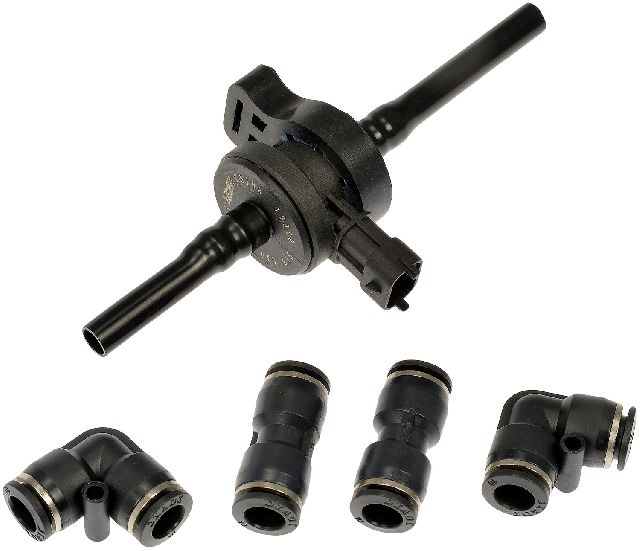
- Canister Purge Valve / Solenoid
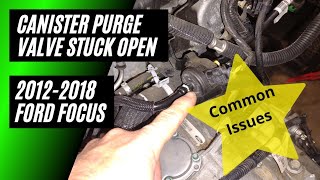
(OEM #BV6Z-9D289-E (supersedes BV6Z-9D289-D). Motorcraft part is CX2310.)🎬 Watch: Step-by-step canister purge valve replacement guide — This is the primary point of failure that causes the P0452 code on this vehicle by sticking open and creating excessive vacuum.
Trusted brands: Motorcraft, Dorman, Bosch
OEM price range: $60-$90
Aftermarket price range: $40-$70 - Fuel Tank — Often required if the original tank has been physically deformed or crushed by the excessive vacuum from the failed purge valve.
Trusted brands: Ford OEM
OEM price range: $800-$1200
Aftermarket price range: $500-$800 - Fuel Tank Pressure Sensor
(OEM #BV6Z-9C047-A (for 2.0L sedan). Note: This is often part of a larger tube assembly.)— This is rarely the actual cause, but may be replaced if it fails diagnostic testing after the primary purge valve issue is ruled out.
Trusted brands: Motorcraft, Bosch
OEM price range: $50-$80
Aftermarket price range: $30-$70
Related Codes That Often Appear With This One
- P1450 — Stands for 'Unable To Bleed Up Fuel Tank Vacuum'. It's the most common companion code and directly confirms the excessive vacuum condition caused by the stuck purge valve.
- P0460 — Stands for 'Fuel Level Sensor 'A' Circuit'. This code appears when the fuel tank deformation physically damages or interferes with the fuel level sending unit inside the tank.
- P0443 — Stands for 'Evaporative Emission System Purge Control Valve Circuit'. This code may appear if the purge valve has an electrical fault in addition to being mechanically stuck.
- P0456, P0420, P2196 — These codes for small EVAP leaks, catalyst efficiency, and O2 sensor signals are also listed in Ford's official recall documents as potential companion codes related to the overall fuel vapor system malfunction.
Technical Service Bulletins (TSBs) & Recalls
- Ford Safety Recall 18S32 (NHTSA #18V735): Addresses the malfunctioning canister purge valve, which may lead to excessive vacuum in the fuel tank, causing stalling and other issues. The fix includes a PCM reprogram and inspection/replacement of the CPV, carbon canister, fuel tank, and fuel delivery module.
- Ford TSB 19-2364: Provides updated service procedures related to the purge valve and fuel tank deformation issue, including requirements for submitting digital images of a deformed tank before ordering a replacement.
- Ford Safety Recall 19V-515: A follow-up recall for vehicles that had the 18S32 recall performed but did not receive the correct PCM software update needed to detect a malfunctioning CPV.
- Bulletin #16-0062: Notes that vehicles may exhibit an illuminated MIL with DTCs P0420, P1450, P0443, P0452, P0456, P0460 and/or P2196, often accompanied by inaccurate distance to empty readings.
- Bulletin #15-0034: Confirms that certain vehicles may have incorrect fuel gauge indication lamps alongside diagnostic codes P0420, P1450, P0452, P0456, P0460 or P2196.
Platform-Specific Known Issues
- A stuck-open canister purge valve is a known systemic issue covered by Ford Safety Recall 18S32 (NHTSA #18V735) and TSB 19-2364. The failure creates extreme vacuum, which can collapse the fuel tank, cause stalling, and trigger codes P0452 and P1450. 🎬 Watch: Learn more about this common point of failure
- Even after the recall repair, some vehicles required a second software update under recall 19V-515 because the initial PCM flash was not properly implemented, failing to enable the new CPV monitoring logic.
Mechanic-Grade Diagnostic Values
- FTP Sensor Voltage (KOEO, gas cap off) — expected: ~2.5V - 2.6V DC. Failure: A reading below 0.22V - 0.25V will trigger DTC P0452. A reading near 0V suggests a short to ground or failed sensor.
- FTP Sensor 5V Reference Voltage (at connector) — expected: ~5.0V DC. Failure: No voltage indicates an open in the reference circuit from the PCM.
- Canister Purge Valve (CPV) Solenoid Resistance — expected: 20-30 Ohms. Failure: A reading significantly outside this range indicates a failed solenoid coil.
- FTP Sensor Signal Wire to Ground Resistance (sensor & PCM disconnected) — expected: > 1 MΩ (Megaohm). Failure: Low resistance (near 0 Ω) indicates a short to ground in the signal wire.
Scan Tool Commands That Help
- Ford IDS (or equivalent bidirectional scanner): EVAP System Test / Purge/Seal — This is a guided diagnostic test that commands the purge and vent solenoids and monitors the FTP sensor to check for leaks and blockages. It can confirm if the system is holding vacuum correctly.
- Ford IDS (or equivalent bidirectional scanner): Datalogger: EVAPCP (EVAP Canister Purge Valve Command) & FTP (Fuel Tank Pressure) — Manually command the purge valve (EVAPCP) from 0% to a higher duty cycle while monitoring the FTP voltage. With the engine running and the valve commanded off (0%), the FTP voltage should remain steady (~2.6V). If the voltage drops, it confirms the purge valve is mechanically stuck open and leaking vacuum into the tank.
Wiring & Ground Locations
- Canister Purge Valve (CPV) — In the engine bay, near the intake manifold, just to the rear of the throttle body.. This is the most common point of failure. Accessing its electrical connector is necessary for resistance testing and checking for command voltage from the PCM.
- Fuel Tank Pressure (FTP) Sensor — On top of the fuel tank, often integrated into a vapor tube assembly. Access requires lowering the fuel tank.. This is the sensor that reports the low voltage condition. Its wiring harness is susceptible to damage, and the connector is the primary test point for reference voltage, ground, and signal.
- PCM Connector E (80-Pin) — At the Powertrain Control Module (PCM) in the engine bay.. Pin 63 is the 5V reference (VREF) for the FTP sensor. This is a key test point for checking continuity back from the sensor if the 5V reference is missing at the sensor connector.
- G104 Ground — Left side of the engine compartment.. This is a major ground point for the engine control system. While not directly cited for P0452, a poor ground here can cause a variety of sensor-related issues.
Real Owner Repair Stories
- Reddit user u/elder-em0 (2015 Ford Focus SE) — Car would not start, P0452 code was present. Previously had sluggishness and a main fuel pump replacement.
❌ Tried (didn't work) Initial diagnosis focused on the EVAP system due to the P0452 code.
✅ What actually fixed it The no-start condition was ultimately diagnosed by a garage as a failed high-pressure fuel pump, not the FTP sensor or purge valve. This highlights that while P0452 is related to the EVAP system, it can appear alongside other unrelated, more severe fuel system failures.
OEM Part Supersession History
BV6Z-9D289-D→BV6Z-9D289-E— Part revision by Ford, likely for improved durability to address the sticking issue.
Heads up: The new part BV6Z-9D289-E is a direct replacement for the older -D version.BV6Z-9D289-B→BV6Z-9D289-R (and others)— Multiple revisions of this part exist.
Heads up: It is critical to verify the correct part number for your specific VIN, as several versions have been released.
Model Year Variations Within This Range
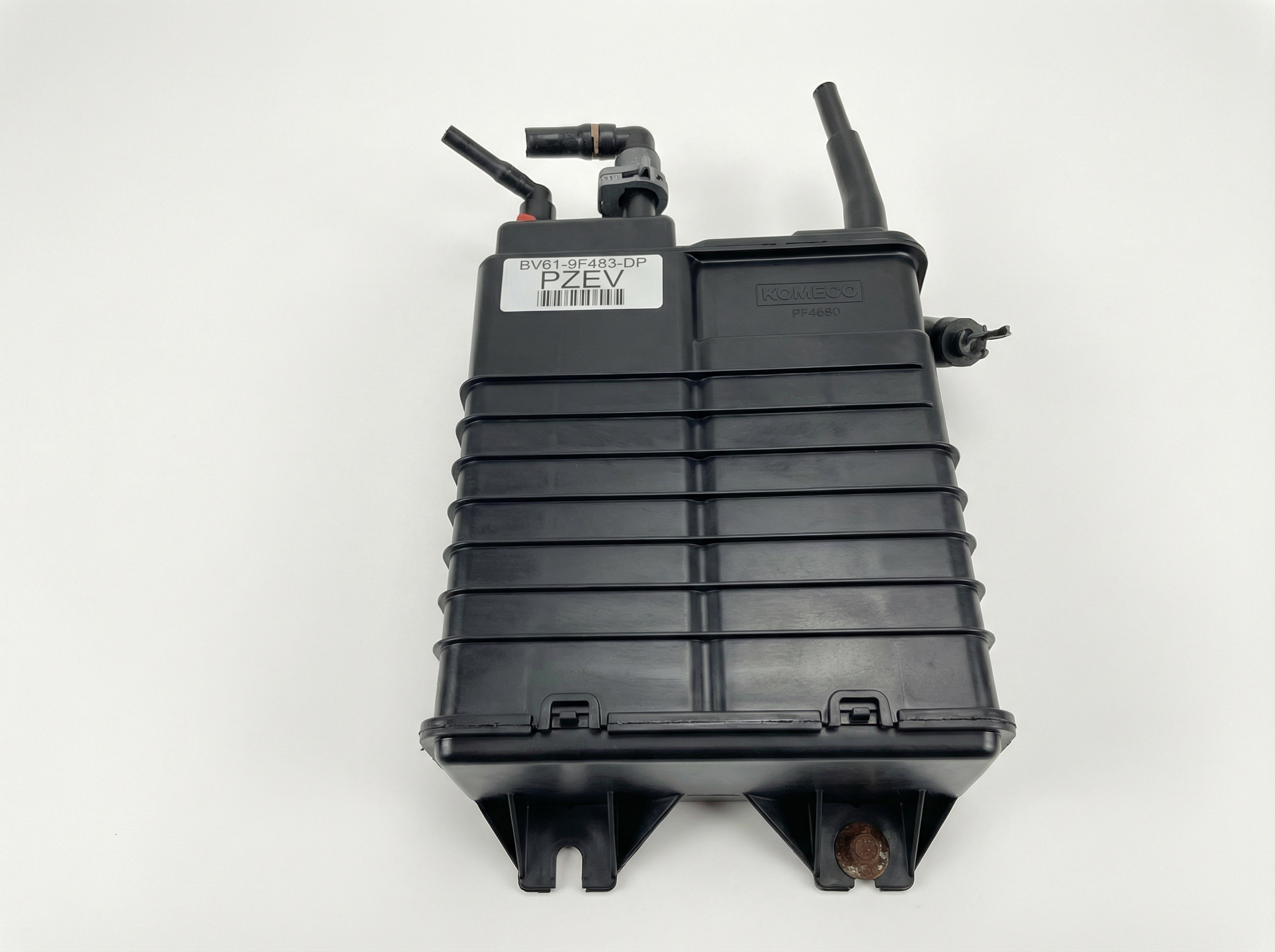
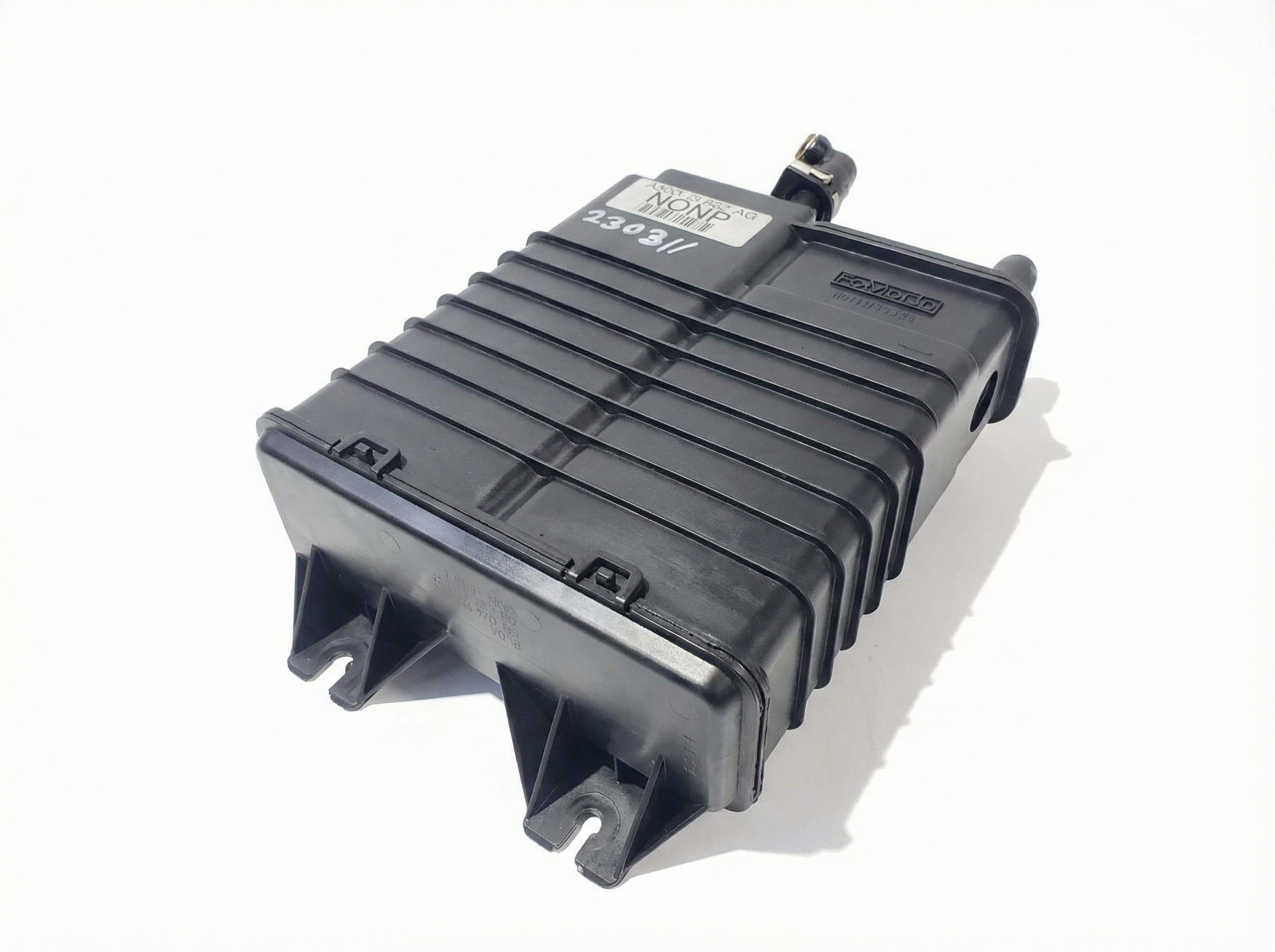
- 2012-2018: Vehicles were built with either a PZEV (Partial Zero Emission Vehicle) or a non-PZEV (Federal) emissions system, primarily for different US states. The vapor canisters for these two systems are different and are NOT interchangeable. Installing the wrong canister will cause persistent EVAP codes. The emissions type can be verified by checking the Vehicle Emission Control Information (VECI) sticker under the hood.
Diagnostic Flowchart
Other Known Issues on This Vehicle
Issues unrelated to this code that are worth knowing about as an owner of this generation:
- DPS6 'PowerShift' Dual-Clutch Transmission Failure 🔴 High — Extremely common on automatic models from 2012-2016, with issues continuing through 2018. Problems include shuddering, jerking, hesitation, and complete loss of drive. (Ref: Multiple warranty extensions and customer satisfaction programs were issued, but no universal safety recall for the core issue. Class-action lawsuits were filed.)
- Passenger-Side Hydraulic Engine Mount Collapse 🟠 Medium — Very common failure. The fluid-filled mount collapses, causing severe vibration in the cabin at idle and clunking noises.
- Electric Power Steering Rack (EPAS) Failure 🔴 High — A common failure point, often occurring suddenly and resulting in a total loss of power steering assist. (Ref: Ford issued TSBs to guide dealers on software updates, but often the entire rack requires replacement. Fault code U3000 is common.)
Used vs. New Parts: Buying Guide for This Vehicle
When a used part is the smart pick: A used fuel tank from a low-mileage donor vehicle that has not suffered from the purge valve failure can be a cost-effective option if your tank is deformed. A used canister purge valve is NOT recommended, as it is the primary failure point and a used part has an unknown history and high risk of failure.
Donor-vehicle mileage cap: roughly under 60000 miles for the part to have meaningful remaining life.
What to inspect on the donor part:
- For a fuel tank: Inspect thoroughly for any signs of collapse, warping, or stress marks, especially around the top surface.
- For a fuel tank: Ensure the donor vehicle's VIN is not part of the affected range for recall 18S32, or has proof the recall was performed early in its life.
- For any part: Check the vehicle's history to ensure it's not from a high-salt/rust-belt region, which could compromise electrical connectors and metal fittings.
OEM-only on this vehicle (don't cheap out):
- Canister Purge Valve: Given that this is a known defect part, using the latest revision OEM (Motorcraft) part is the most reliable fix to ensure you get the updated design.
Aftermarket brands forum-validated for this vehicle:
- Bosch and Dorman are frequently cited as reliable aftermarket alternatives for the canister purge valve if an OEM part is not available.
Brands owners have reported issues with on this vehicle:
- Avoid unbranded, no-name parts from online marketplaces for the canister purge valve, as their quality control and durability are questionable for this specific, high-failure-rate component.
Documented NHTSA Reports
NHTSA ODI #11427851
Reported Symptoms: An owner reported an illuminated malfunction indicator lamp (MIL) with diagnostic trouble codes P0420, P1450, P0443, P0452, P0456, P0460 and/or P2196.
NHTSA ODI #11443669
Reported Symptoms: This report describes symptoms including an illuminated MIL with DTCs P0420, P1450, P0443, P0452, P0456, P0460 and/or P2196, along with inaccurate or erratic fuel gauge indication and inaccurate distance to empty (DTE).
Real Owner Stories
Aggregated from forums and TSBs cited above. Mileages and costs reflect what owners reported in those sources.
2015 Ford Focus SE
Symptoms: The car will not start and is giving a P0452 code. It previously felt very sluggish and had the fuel pump and PVC valve replaced.
What fixed it: The context indicates this is a symptom of the recall-related purge valve failure, though the specific final fix for this user is pending diagnosis of the P0452 code.
Source hint: Reddit r/FordFocus
2014 Ford Focus
Symptoms: Getting codes P1450 and P0452 along with stalling issues.
What fixed it: Dealer repair under recall 18S32, which included a new purge valve, PCM flash, and fuel tank inspection.
Source hint: Focus Fanatics Forum thread titled 'P1450 and P0452'
2013 Ford Focus
Symptoms: Check engine light with codes P0452 and P1450.
What fixed it: DIY replacement of the canister purge valve using part Motorcraft CX2310.
Source hint: Reddit r/FordFocus thread titled 'Check Engine Light P0452 & P1450'
Related OBD-II Codes
Frequently Asked Questions
Is my 2014 Ford Focus covered under a recall for the P0452 code?
What should I do if my Focus was already 'fixed' under recall 18S32 but the light is back on?
Can a bad purge valve actually damage my fuel tank on a 2012-2018 Focus?
Why does my fuel gauge show 'Distance-To-Empty' errors along with the P0452 code?
Where is the Fuel Tank Pressure (FTP) sensor located on the 2.0L GDI Focus?
What is the specific voltage I should see from the FTP sensor if it's working correctly?
Helpful Videos



Used OEM Parts in Stock

New Aftermarket Parts Available


The information in this article is provided for general reference and educational purposes only. Vehicle specifications, procedures, and part compatibility can vary by production date, trim level, and region. Always consult your vehicle's factory service manual and verify part numbers before purchasing or performing repairs. Safety-critical components such as airbags, seat belts, and braking systems should be installed by a qualified professional.
- Ford Focus:
- 🧭 Diagnostic Flowchart
- 🎬 Helpful Videos
- 🛍️ Shop This Part
- What's Unique About the 2012-2018 Ford Focus
- Symptoms You May Notice
- Most Likely Causes
- Rare But Worth Checking
- Diagnosis Steps
- Parts You'll Likely Need
- Related Codes That Often Appear With This One
- Technical Service Bulletins (TSBs) & Recalls
- Platform-Specific Known Issues
- Mechanic-Grade Diagnostic Values
- Scan Tool Commands That Help
- Wiring & Ground Locations
- Real Owner Repair Stories
- OEM Part Supersession History
- Model Year Variations Within This Range
- Other Known Issues on This Vehicle
- Used vs. New Parts: Buying Guide for This Vehicle
- Documented NHTSA Reports
- NHTSA ODI #11427851
- NHTSA ODI #11443669
- Real Owner Stories
- 2015 Ford Focus SE
- 2014 Ford Focus
- 2013 Ford Focus
- Related OBD-II Codes
- Frequently Asked Questions
- 🎟️ Get 5% Off