

P0452 on 2017-2022 Honda CR-V: EVAP Pressure Sensor Low Input Causes and Fixes
This code almost always points to a faulty Fuel Tank Pressure (FTP) sensor or its wiring. On this CR-V, the sensor is integrated into the fuel pump assembly inside the fuel tank, making replacement moderately difficult. Expect to pay $40-$80 for an aftermarket sensor or over $250 for the complete OEM fuel pump assembly, which is often the required part.
- P0452 on a 2017-2022 CR-V points directly to an electrical fault in the Fuel Tank Pressure (FTP) sensor circuit, not a vapor leak.
- The most likely cause is a failed FTP sensor, which is integrated into the fuel pump module inside the fuel tank.
- Replacement requires removing the rear seat to access the fuel pump, and typically the entire fuel pump assembly must be replaced.
- Before replacing the assembly, always test the wiring for 5V reference, ground, and signal integrity to rule out a simple wiring fault.
- You can continue to drive the vehicle, but you will not pass an emissions inspection until the issue is resolved.
What's Unique About the 2017-2022 Honda CR-V
On the 5th generation Honda CR-V (2017-2022), the Fuel Tank Pressure (FTP) sensor is located inside the fuel tank as part of the fuel pump module. This placement protects it from road debris but also makes diagnosis and replacement more involved than on vehicles where the sensor is mounted externally. Access is typically gained by removing the rear seats to get to an access panel on the vehicle floor. Crucially, Honda may not sell the sensor separately, often requiring the replacement of the entire fuel pump assembly (OEM Part # 17045-TLA-A00 or similar).
Symptoms You May Notice
- Check Engine Light is illuminated on the dashboard.
- Possible slight decrease in fuel efficiency.
- A faint fuel odor may be noticeable in some cases.
- Failure to pass an emissions (smog) test.
- Replacing the charcoal canister or purge valve. This code points to an electrical circuit issue with the pressure sensor, not a system leak or a faulty valve. Replacing these parts will not resolve a P0452.
Most Likely Causes
- Faulty Fuel Tank Pressure (FTP) Sensor 🔴 High Probability → Shop Fuel Tank The FTP sensor is an electronic component that can fail over time due to age and thermal cycles. On this CR-V, it is integrated into the fuel pump module, and an internal short is a common failure mode.
How to confirm: After verifying the wiring is intact, the sensor is the most likely cause. A professional scan tool (like the Honda HDS) can monitor the sensor's voltage in live data; if it's stuck low (below 0.3V) and doesn't respond to pressure changes, it has failed. Disconnecting the sensor 🎬 Watch: How to diagnose a P0452 circuit low voltage code should cause the voltage to jump to 5V on the scan tool; if it does, the sensor is confirmed bad.
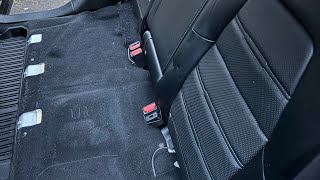
Typical fix: Replace the Fuel Tank Pressure sensor. This requires accessing the top of the fuel tank, which is done by removing the rear seat. 🎬 See this quick guide on removing the rear seats Since the sensor is part of the fuel pump assembly, the entire module is typically replaced.
Est. part cost: $40-$150 - Wiring or Connector Issue 🟡 Medium Probability The wiring harness leading to the fuel tank can be susceptible to damage from road debris, corrosion, or rodent damage, though this is less common on newer vehicles.
How to confirm: Visually inspect the wiring harness and connector leading to the fuel tank for any signs of damage, corrosion, or loose pins. Use a multimeter to check for the correct 5-volt reference, a good ground, and the signal wire integrity at the sensor connector. An open or short in the signal or ground wire will cause a low voltage reading.
Typical fix: Repair the damaged section of the wiring harness or clean/replace the faulty connector.
Est. part cost: $5-$50 - Loose or Faulty Gas Cap ⚪ Low Probability → Shop Fuel Tank Cap While a loose gas cap typically causes large leak codes (like P0455 or P0456), it's a simple check that should not be overlooked. An improperly seated or faulty cap can, in rare instances, cause erratic pressure readings that might be misinterpreted by the PCM, though it's not the primary cause for a 'low input' electrical code.
How to confirm: Ensure the gas cap is tightened until it clicks. Inspect the cap's seal for cracks or damage. If the code returns immediately after tightening and clearing, this is not the cause.
Typical fix: Tighten or replace the gas cap.
Est. part cost: $15-$40
Rare But Worth Checking
- Faulty Powertrain Control Module (PCM): This is extremely rare. The PCM should only be considered after all other possibilities, including the sensor and its entire circuit, have been exhaustively tested and ruled out. A technician may attempt to substitute a known-good PCM for final diagnosis.
Diagnosis Steps
- Retrieve the P0452 code and any other stored codes with an OBD-II scanner.
- Check the freeze frame data to understand the conditions (engine temp, speed, etc.) under which the code was set.
- Inspect the gas cap to ensure it is tight and the seal is in good condition. Tighten if loose, clear the code, and see if it returns.
- Use a scan tool with live data capabilities to monitor the Fuel Tank Pressure (FTP) sensor voltage. It will likely read very low (e.g., under 0.3V).
- Gain access to the fuel pump module connector on top of the fuel tank, located under the rear seats.
- Visually inspect the connector and wiring for any obvious damage, corrosion, or loose connections.
- With the key on and engine off, use a multimeter to test the wiring at the sensor's connector. Verify you have a 5-volt reference, a solid ground, and check the signal wire for shorts to ground.
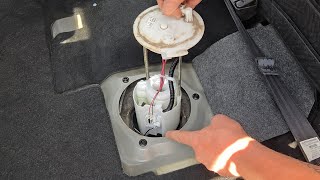
- If the wiring and connectors are confirmed to be good, the FTP sensor itself is faulty. Since it is integrated, the entire fuel pump module should be replaced. 🎬 Watch: Step-by-step fuel pump replacement walkthrough
Parts You'll Likely Need
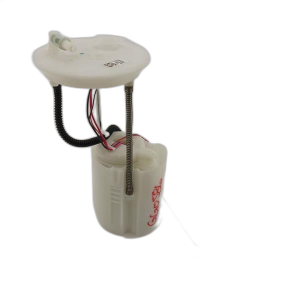
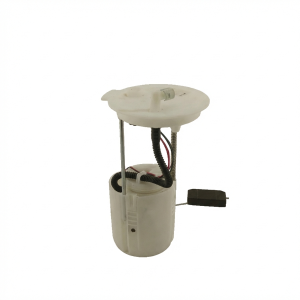
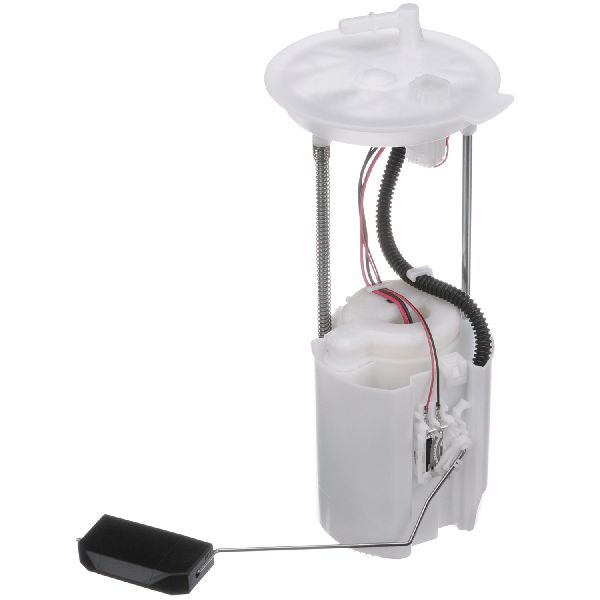
- Fuel Pump Module Assembly
(OEM #17045-TLA-A00, 17045-TLA-A01, 17045-TLA-A02)— The Fuel Tank Pressure (FTP) sensor is integrated into the fuel pump assembly on this CR-V generation. A P0452 code is most commonly caused by the failure of this sensor, requiring the replacement of the entire module.
Trusted brands: Honda (OEM), Denso, Delphi
OEM price range: $280-$400
Aftermarket price range: $150-$250
Mechanic-Grade Diagnostic Values
- FTP Sensor Voltage (Live Data) — expected: Above 0.3V with gas cap off (atmospheric pressure). Failure: Voltage is less than 0.3V (or 0.22V per some service docs), indicating a low input fault.
- 5V Reference at FTP Sensor Connector — expected: Approximately 5.0V. Failure: Voltage is significantly lower than 5.0V or absent, indicating an open or short in the VCC6 wire from the PCM.
- Signal Wire (P/SNSR2 OUT) Short to Ground Test — expected: 1 MΩ or more (infinite resistance). Failure: Low resistance (near 0 Ω) indicates a short circuit in the signal wire to ground.
- VCC6 Wire Open Circuit Test — expected: 1.0 Ω or less. Failure: High or infinite resistance indicates a break (open circuit) in the 5V reference wire between the PCM and the sensor.
Scan Tool Commands That Help
- Honda Diagnostic System (HDS): EVAP System Check — Used as the initial step in the official diagnostic procedure to verify the malfunction threshold by monitoring the FTP sensor voltage after relieving tank pressure.
- Honda Diagnostic System (HDS): Monitor OBD STATUS for DTC P0452 — Used after initial checks to see if the fault is actively 'FAILED' or if it was an 'intermittent failure' that has since 'PASSED'. This helps differentiate between a hard fault and a connection issue.
- Honda Diagnostic System (HDS): Jump SCS line — This is a preparatory step before performing resistance (continuity/short) checks on the wiring harness to ensure the system is in a safe diagnostic state.
Wiring & Ground Locations
- FTP Sensor 3P Connector — On top of the fuel pump module, accessible under the rear seats.. This is the primary connection point for testing the sensor's 5V reference, ground, and signal wires with a multimeter.
- PCM Connector E (80P), Pin 63 — At the Powertrain Control Module (PCM).. This is the termination point for the 5V reference wire (VCC6). It's used as a test point when checking for an open circuit in the reference wire.
- PCM Connector A (50P) — At the Powertrain Control Module (PCM).. This connector contains the signal wire (P/SNSR2 OUT) from the FTP sensor. It is disconnected to isolate the circuit when testing for a short to ground.
OEM Part Supersession History
17045-TLA-A00→17045-TLA-A01, then 17045-TLA-A02— Standard part revision by the manufacturer, likely for minor improvements in materials or design.
Heads up: All part numbers (A00, A01, A02) are interchangeable for the 2017-2022 Honda CR-V (non-hybrid).
Diagnostic Flowchart
Other Known Issues on This Vehicle
Issues unrelated to this code that are worth knowing about as an owner of this generation:
- Fuel Dilution in Oil (1.5T Engine) 🔴 High — More common on 2017-2018 models, especially in cold climates with frequent short trips. Can lead to premature engine wear. (Ref: Honda issued TSBs (e.g., 18-114) and a warranty extension to address the issue with software updates and sometimes an A/C control unit replacement.)
- Infotainment System Glitches 🟠 Medium — Common on 2017-2019 models. Symptoms include the screen freezing, going black, random beeping, or being unresponsive. (Ref: Honda addressed this with TSB A19-066, which involves a software update performed by the dealer. A class-action lawsuit was also filed regarding this issue.)
- Parasitic Battery Drain 🟠 Medium — Primarily affects 2017-2019 models, causing the battery to die after the vehicle sits for a few days. (Ref: TSB A19-039 was released to fix a software flaw where the Powertrain Control Module (PCM) and Vehicle Stability Assist (VSA) module do not fully shut down, causing a continuous power draw.)
- 'Sticky' Steering Feel 🔴 High — Affects later models in this generation (primarily 2022+) and became more prominent in the next generation. Owners report a momentary notchiness or increased effort required to turn the wheel at highway speeds. (Ref: Honda issued TSB 23-037 and a subsequent investigation/recall was initiated by NHTSA (EA23003) to address a manufacturing defect in the electronic power steering rack.)
Used vs. New Parts: Buying Guide for This Vehicle
When a used part is the smart pick: For this specific repair, a used part is generally NOT recommended. The failure is an electronic sensor integrated into the fuel pump. The labor to access the part is significant, making it unwise to risk an early failure with a used component of unknown age and condition.
Donor-vehicle mileage cap: roughly under 30000 miles for the part to have meaningful remaining life.
What to inspect on the donor part:
- Verify the part number (17045-TLA-A02 or its predecessors) matches exactly.
- Inspect the electrical connector for any signs of corrosion, melting, or bent pins.
- Ensure the plastic housing of the module is free from cracks or damage.
- Obtain a part from a vehicle with the lowest possible mileage and a known history, if possible.
OEM-only on this vehicle (don't cheap out):
- Fuel Pump Module Assembly
Aftermarket brands forum-validated for this vehicle:
- Denso
- Delphi
Brands owners have reported issues with on this vehicle:
- Unbranded, 'white-box' parts from online marketplaces should be avoided due to high failure rates and potential for incorrect sensor calibration.
Real Owner Stories
Aggregated from forums and TSBs cited above. Mileages and costs reflect what owners reported in those sources.
2017-2022 Honda CR-V
Symptoms: Check Engine Light illuminated, possible slight decrease in fuel efficiency, and a faint fuel odor was noticeable.
What fixed it: Replacement of the entire fuel pump module assembly because the integrated Fuel Tank Pressure (FTP) sensor had an internal short.
Source hint: CR-V Owners Club (crvownersclub.com)
2017-2022 Honda CR-V
Symptoms: The vehicle failed an emissions (smog) test due to the P0452 code being stored in the PCM.
What fixed it: Repairing a damaged section of the wiring harness leading to the fuel tank connector that had been affected by road debris or corrosion.
Source hint: Honda-Tech (honda-tech.com)
Related OBD-II Codes
Frequently Asked Questions
Where is the Fuel Tank Pressure (FTP) sensor located on my 2017-2022 Honda CR-V?
Can I just replace the sensor itself to fix the P0452 code?
Is there a TSB for the P0452 code on the 1.5T engine?
Should I buy a used fuel pump module to save money on this repair?
What aftermarket brands are recommended if I don't want to buy the OEM Honda fuel pump module?
Will a loose gas cap cause a P0452 code on my CR-V?
Helpful Videos
Used OEM Parts in Stock
New Aftermarket Parts Available


The information in this article is provided for general reference and educational purposes only. Vehicle specifications, procedures, and part compatibility can vary by production date, trim level, and region. Always consult your vehicle's factory service manual and verify part numbers before purchasing or performing repairs. Safety-critical components such as airbags, seat belts, and braking systems should be installed by a qualified professional.
- Honda CR-V:
- 🧭 Diagnostic Flowchart
- 🎬 Helpful Videos
- 🛍️ Shop This Part
- What's Unique About the 2017-2022 Honda CR-V
- Symptoms You May Notice
- Most Likely Causes
- Rare But Worth Checking
- Diagnosis Steps
- Parts You'll Likely Need
- Mechanic-Grade Diagnostic Values
- Scan Tool Commands That Help
- Wiring & Ground Locations
- OEM Part Supersession History
- Other Known Issues on This Vehicle
- Used vs. New Parts: Buying Guide for This Vehicle
- Real Owner Stories
- 2017-2022 Honda CR-V
- 2017-2022 Honda CR-V
- Related OBD-II Codes
- Frequently Asked Questions
- 🎟️ Get 5% Off